Blog

How Virginia Woolf’s Water Garden Transformed Modern Literature (And What It Means for Your Pond)

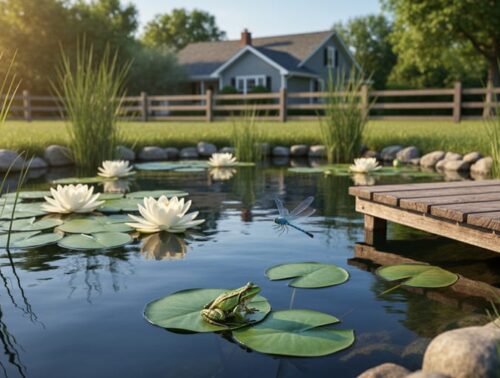
Virginia Woolf’s 1919 short story “Kew Gardens” transforms London’s famous botanical gardens into a meditation on human consciousness, memory, and the natural world—and it holds surprising lessons for anyone designing their own backyard water garden. The story follows four groups of visitors wandering past a flower bed, their conversations drifting like the shadows of leaves while Woolf’s narrator zooms in on a snail navigating the undergrowth. This experimental narrative technique mirrors the layered ecosystems in successful ponds: surface reflections, mid-water movement, and substrate life all existing …

Read more How Virginia Woolf’s Water Garden Transformed Modern Literature (And What It Means for Your Pond)

How Your Natural Wildlife Pond Becomes a Living Bridge Between Water and Land

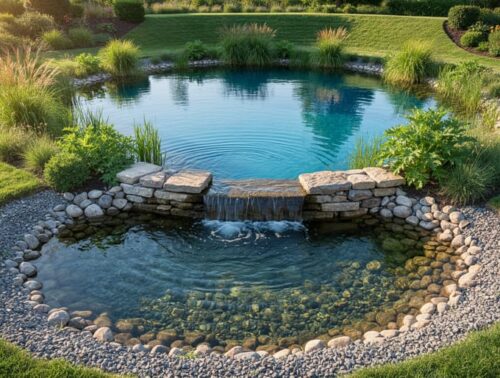
Transform your pond into a thriving wildlife haven by creating distinct planting zones that guide creatures seamlessly between water and garden. Position marginal plants like rushes and irises at the water’s edge to provide amphibian exit routes and dragonfly perches. Extend native ground covers and low shrubs 2-3 feet from the pond margin to create protective corridors where frogs and lizards can safely travel without exposure to predators.
Select plants that serve multiple wildlife functions throughout the seasons. Hardy water lilies offer summer shade for fish while their pads become landing platforms for diving beetles. …

Read more How Your Natural Wildlife Pond Becomes a Living Bridge Between Water and Land

Keep Your Water Garden Thriving Through Winter: The Insulation Secret

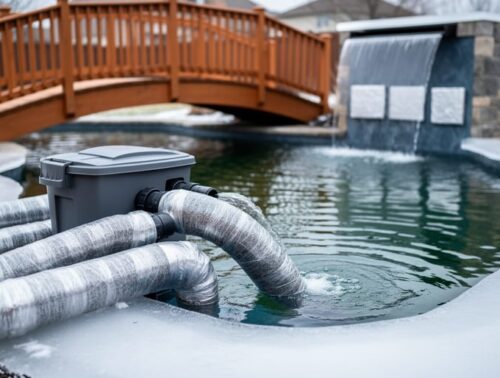
Wrap your water tank with closed-cell foam insulation boards, securing them with waterproof tape or cable ties to create a protective barrier that maintains stable water temperatures year-round. This simple upgrade prevents dramatic temperature swings that stress fish, slows algae growth during hot spells, and reduces ice formation in winter—protecting both your aquatic life and your investment.
Focus insulation efforts on the tank’s sides and top first, as these areas experience the greatest heat transfer. For above-ground tanks, create a complete sleeve using 1-2 inch thick foam boards cut to size, leaving access panels …

Read more Keep Your Water Garden Thriving Through Winter: The Insulation Secret

Protect Your Smart Pond From Hackers (Yes, Really)

Monitor your smart pond equipment for unauthorized access by setting up Python scripts that track login attempts to your Wi-Fi-connected pumps, feeders, and sensors. Install a simple network scanner that alerts you via text when unknown devices try connecting to your pond’s control system. Create password strength checkers that verify your pond automation credentials meet security standards before hackers exploit default manufacturer passwords.
Your investment in smart pond technology deserves the same protection as your home security system. Whether you’ve installed automated UV clarifiers, app-controlled waterfall …

Read more Protect Your Smart Pond From Hackers (Yes, Really)

How Enhanced Nutrient Removal Transforms Your Pond Into a Thriving Ecosystem

Reduce excess nutrients in your pond by installing marginal plants like water iris, rushes, and pickerelweed around the edges—their root systems act as natural filters, absorbing nitrogen and phosphorus before these nutrients fuel algae blooms. Plant them densely in the shallow zones where water meets land, aiming for coverage across at least one-third of your pond’s perimeter.
Add submerged oxygenators such as hornwort or anacharis throughout deeper areas. These underwater workhorses consume dissolved nutrients while releasing oxygen, creating conditions that support beneficial bacteria and discourage the green, murky water…

Read more How Enhanced Nutrient Removal Transforms Your Pond Into a Thriving Ecosystem

Why Your Backyard Pond Depends on Healthy Ocean Ecosystems

Look through the clear water of your backyard pond, and you’re witnessing the same delicate balance that sustains our vast oceans. The tiny ecosystem thriving in your water garden operates on identical principles as marine aquatic ecosystems—complex networks where every plant, fish, and microorganism plays a crucial role in maintaining water quality and supporting life.
Marine aquatic ecosystems face unprecedented challenges today, from pollution and temperature changes to habitat loss and nutrient imbalances. These aren’t distant problems affecting only oceanographers and marine biologists. The same forces threatening…

Read more Why Your Backyard Pond Depends on Healthy Ocean Ecosystems

How Smart Water Management Turns Your Garden into a Climate Survivor

Position your pond or water feature where you can observe natural drainage patterns during heavy rain—watch where water pools and flows across your yard for at least one storm cycle before finalizing placement. This single observation will prevent 90% of flooding headaches down the road.
Install overflow routes immediately, even before your water garden is complete. Dig a shallow swale or gravel channel that directs excess water away from foundations and toward rain gardens or permeable areas. During unexpected downpours, this pre-planned escape route protects both your feature and your home’s foundation from water damage….

Read more How Smart Water Management Turns Your Garden into a Climate Survivor

How Water Flows Through Your Aquaponics System (And Why It Matters)

Sketch your aquaponic system on paper before you start building, marking every pump, pipe, and grow bed with arrows showing exactly where water enters and exits. This simple visual map becomes your troubleshooting companion when flow problems arise—I learned this after spending three frustrating hours trying to figure out why my fish tank was draining too slowly, only to realize I’d forgotten to account for a clogged standpipe.
Understanding how water circulates through your system transforms you from someone following instructions to someone who can actually fix problems and make improvements. The beauty of aquaponics lies …

Read more How Water Flows Through Your Aquaponics System (And Why It Matters)

Why Organic Sediment Is Suffocating Your Pond (And How to Fix It)

Look at the bottom of your pond right now. That dark, mucky layer isn’t just harmless dirt – it’s organic sediment, a buildup of decomposed leaves, fish waste, uneaten food, and plant material that can quietly sabotage your pond’s health. This accumulation acts like a slow-release pollution system, consuming oxygen, fueling algae blooms, creating murky water, and releasing unpleasant odors that turn your peaceful water feature into a maintenance headache.
Understanding organic sediment is your first step toward a thriving, crystal-clear pond. Unlike inorganic sediment (clay, sand, or rock particles), organic …

Read more Why Organic Sediment Is Suffocating Your Pond (And How to Fix It)

Build a Venturi Pump That Actually Works for Your Water Feature

Build your own venturi pump in an afternoon using common PVC pipe fittings from any hardware store. Cut a 1-inch PVC pipe at precise angles to create a narrowed throat section, attach a T-junction at the constriction point, and connect your suction line to draw water or air through the side port while your main water supply flows through the center channel.
Start by understanding this simple principle: when water speeds up through a narrow section, it creates lower pressure that pulls fluid from a side inlet. This means you can aerate pond water, remove debris, or create circulation without electricity or moving parts that break …

Read more Build a Venturi Pump That Actually Works for Your Water Feature