
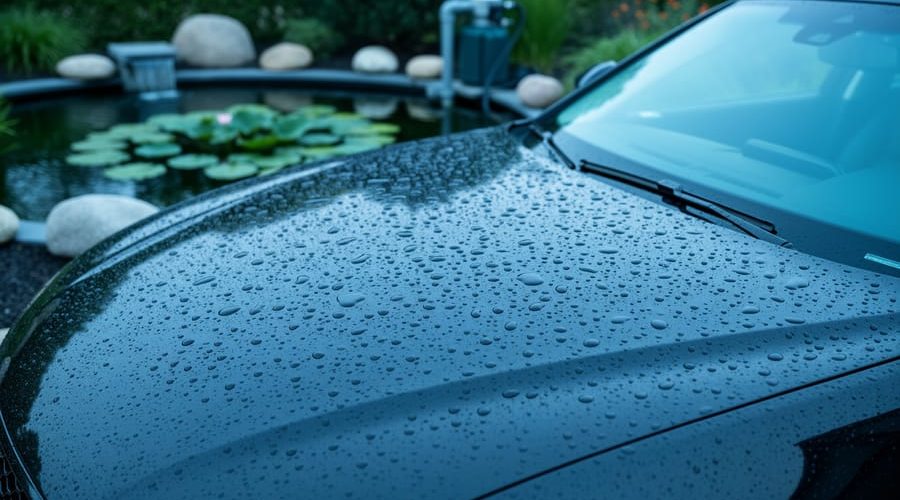
How Ceramic Coating Reduces Washing Runoff Near Your Garden Pond
Ceramic coating is a liquid polymer protection applied to vehicle surfaces that chemically bonds to the paint, creating a durable shield that repels water, dirt, and contaminants far more effectively than traditional wax. For pond owners who wash their cars near their water features, this protective layer solves a critical problem: it dramatically reduces both the frequency of washing needed and the volume of soap-laden runoff that can threaten aquatic life.
If you’ve ever felt torn between keeping your car clean and protecting your pond ecosystem, you’re facing a genuine dilemma. Every time you soap up your vehicle near your garden pond, detergents, oils, and chemical residues flow toward the very water you’ve worked so hard to balance. Fish, beneficial bacteria, and aquatic plants can all suffer when washing chemicals disrupt the delicate pH and introduce toxins.
Here’s where ceramic coating changes the equation. Because the hydrophobic surface prevents dirt from bonding to your paint, your car stays cleaner longer and often needs only a quick rinse instead of a full soap-down. Light rain or a simple hose-off can remove surface dust that would otherwise require scrubbing with detergent. That means fewer chemicals entering your pond’s watershed and less stress on your filtration system.
This article walks you through exactly what ceramic coating is, how it creates that protective barrier, the different types available, and practical ways to use this technology to safeguard your pond while maintaining your vehicle. Whether you’re exploring ceramic coating Australia options or simply curious about reducing your environmental footprint, you’ll discover how one application can protect both your car and your water garden for years to come.
What Ceramic Coating Means for Your Vehicle
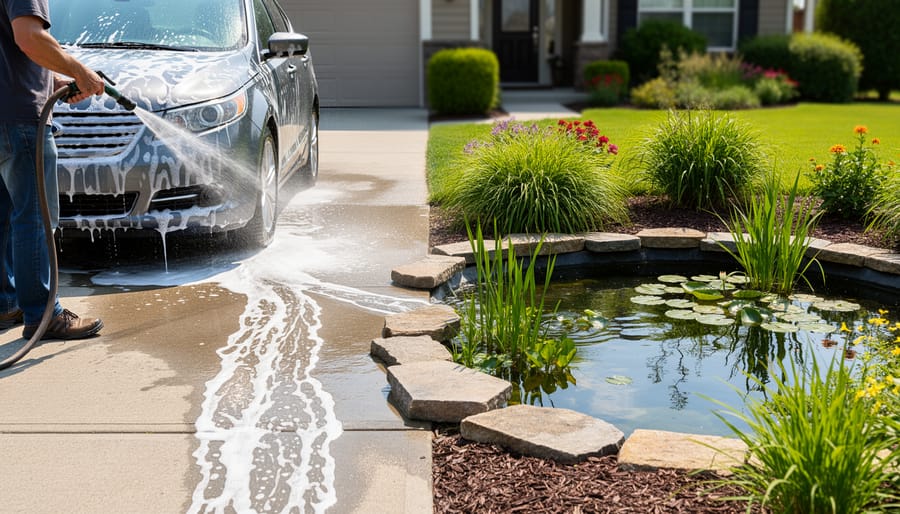
Ceramic coating is a liquid polymer treatment that you apply to your vehicle’s exterior surfaces, where it chemically bonds with the factory paint to form a permanent, protective layer. Unlike traditional wax or sealant that sits on top of the paint and washes away over time, ceramic coating actually creates a new, semi-permanent surface at the molecular level.
Think of it as giving your car an invisible, ultra-slick skin that repels water and dirt the way a duck’s feathers shed rain. This hydrophobic effect means water beads up into tight droplets and rolls right off, taking loose dirt and grime with it. For pond owners, this translates to a simple but powerful benefit: your vehicle stays cleaner between washes, so you don’t need to use soap and chemicals near your water garden nearly as often.
Here are the key terms that help explain how this works:
- Hydrophobic Effect
- The coating’s ability to repel water, causing it to bead up and roll off rather than spreading across the surface. This keeps your vehicle drier and cleaner with less effort.
- Chemical Bonding
- The process where the polymer molecules in the coating form permanent connections with your paint’s molecules, creating a bond that won’t wash away like wax does.
- Polymer Layer
- A protective coating made of repeating molecular chains that creates a hard, glass-like shield over your paint. This layer is what provides the durability and slickness.
- Self-Cleaning Properties
- The coating’s smooth surface prevents dirt from sticking, allowing rain and light rinses to remove most contaminants without soap or scrubbing.
The practical upshot for your pond is straightforward: a coated vehicle might need only one or two proper washes per month instead of weekly scrubbing sessions. That’s a dramatic reduction in the soap, detergents, and chemical-laden water that could potentially run off toward your garden pond. The coating doesn’t eliminate washing entirely, but it cuts down the frequency so much that you’ll use a fraction of the cleaning products you’d normally need throughout the year.
How Ceramic Coating Works to Keep Vehicles Cleaner
The Hydrophobic Shield
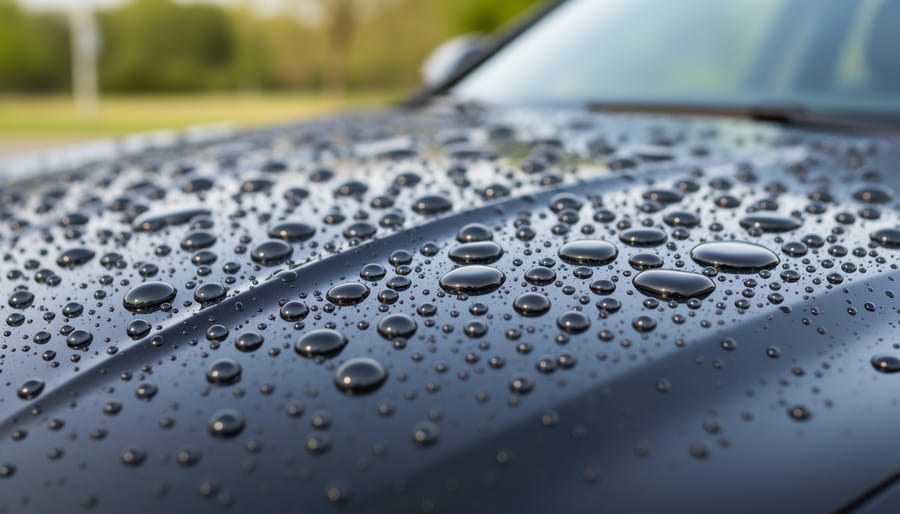
When raindrops hit a ceramic-coated surface, they don’t spread out and stick like they do on regular paint. Instead, they form tight, round beads that sit on top of the coating. This happens because the coating creates an extremely slippery, water-repelling barrier that won’t let moisture grab hold.
As these beads roll off your vehicle, they pick up loose dirt, dust, and grime along the way. Think of it like marbles rolling across a table and sweeping crumbs with them. The water can’t penetrate the coating’s surface, so it has nowhere to go except down and off, taking contaminants with it.
For pond owners, this means nature does much of your cleaning work. A rainstorm becomes a free car wash. The dirt that would normally require soap and scrubbing to remove simply slides away with the next shower. You’re not hosing down your car every week and sending soapy water toward your pond. Instead, rainwater handles the maintenance, and what washes off is mostly plain water with the dirt it collected, nothing more.
Why Dirt Doesn’t Stick
The ceramic coating creates a chemically sealed surface that fundamentally changes how dirt interacts with your vehicle’s paint. Without coating, bare paint is porous at a microscopic level, with tiny valleys and imperfections where contaminants can lodge and bond. Dust particles, road grime, and organic matter settle into these spaces and cling through chemical adhesion.
When you apply ceramic coating, you fill those microscopic gaps with a hard, smooth layer. Contaminants that land on this sealed surface can’t find anywhere to grip. They sit on top rather than embedding themselves, held only by weak surface tension instead of chemical bonds.
This makes a huge difference for pond owners trying to minimize washing. The dirt that does accumulate during normal driving stays loose and superficial. Most of it rinses off with nothing more than a gentle spray from your garden hose, no soap required. You’re not scrubbing embedded grime that needs detergents to release. This means less chemical runoff risk near your pond, since you can handle routine cleaning with plain water and save actual washing for the few times when something genuinely sticky appears.
Different Ceramic Coating Options for Pond Owners
Professional-Grade Coatings
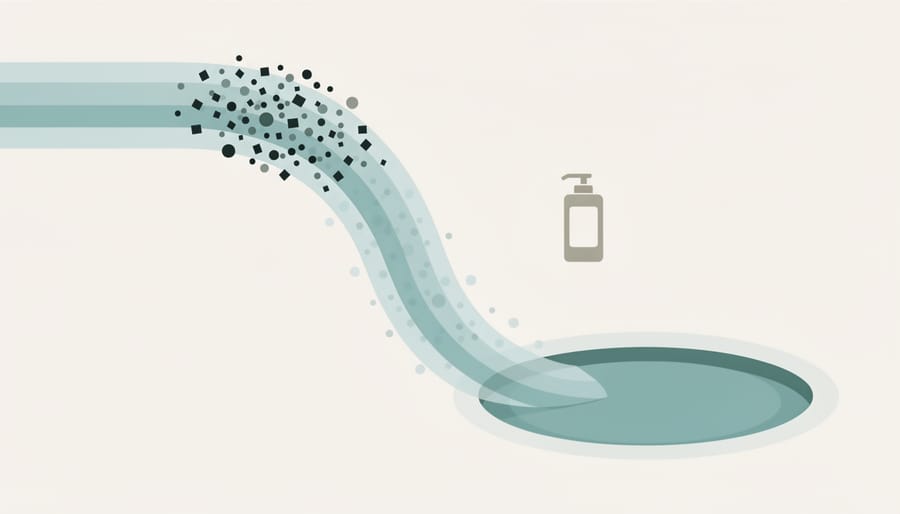
Professional-grade ceramic coatings deliver the longest protection, typically lasting five to ten years when properly maintained. A detailer applies these coatings in a controlled environment, ensuring your vehicle’s paint is thoroughly decontaminated, polished, and perfectly prepared before application. This prep work matters because any imperfections get sealed under the coating.
The real advantage for pond owners? You might wash your vehicle just once a month instead of weekly. That’s 40 fewer washes per year releasing soap and chemicals near your water garden. Premium coatings like Gtechniq Crystal Serum or Modesta create an incredibly slick surface that sheds dirt during rainstorms, so nature does much of the cleaning work for you.
Expect to pay $800 to $2,500 depending on your vehicle’s size and the coating’s durability rating. While that sounds steep, consider the trade-off: a decade of reduced washing frequency means less contaminated runoff threatening your fish and plants, plus savings on car wash products you won’t need.
DIY Ceramic Coating Kits
DIY ceramic coating kits bridge the gap between professional applications and spray sealants, offering 2-5 years of protection at a fraction of the cost of detailing services. These kits typically run $50-150 and include everything needed: the coating solution, applicator pads, prep sprays, and microfiber cloths.
The trade-off is elbow grease and attention to detail. You’ll spend 4-6 hours on surface preparation, washing, claying, and polishing to remove all contaminants before coating. Any dirt or wax residue left behind creates weak spots where the coating won’t bond properly.
Application happens in sections, working the liquid into the paint with cross-hatch motions, then buffing off the residue after it flashes (usually 1-3 minutes). Most kits provide two coats, with a 12-24 hour cure between layers.
The benefit for pond owners is significant: you control where and when the application happens, keeping all prep chemicals well away from your water garden during the process.
Ceramic Spray Sealants
Ceramic spray sealants offer the most beginner-friendly entry point into ceramic protection. You spray them onto a clean, dry surface and wipe them in with a microfiber cloth, the entire process takes 30-60 minutes for most vehicles. These products typically last three to twelve months depending on weather exposure and how often you drive.
The short lifespan actually works in your favor as a pond owner testing this approach. You can apply a spray sealant in spring, track how much less frequently you need to wash through summer, and decide whether to upgrade to a longer-lasting option before winter. If you’re not satisfied, you’ve only invested $20-40 and an hour of time.
Most spray sealants need reapplication every few months. This regular renewal keeps protection fresh without requiring the surface preparation that permanent coatings demand, and you can time applications for seasons when you’re already doing other vehicle maintenance away from the pond area.
How Ceramic Coating Protects Your Garden Pond
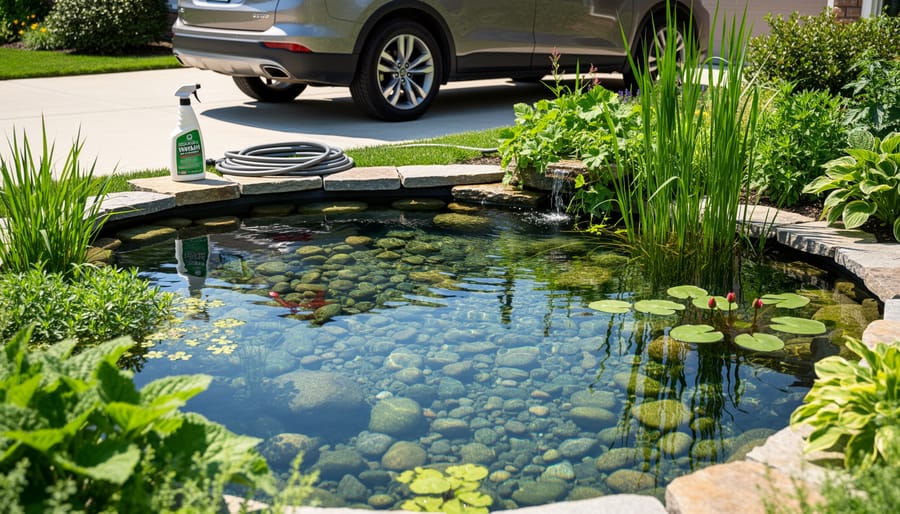
The connection between ceramic coating and pond health is more direct than most water gardeners realize. Every time you wash your vehicle near your pond, you’re introducing detergents, degreasers, and chemical residues into the surrounding soil and drainage patterns. A single car wash can release several gallons of soapy water containing phosphates, surfactants, and synthetic fragrances, all substances that can disrupt your pond’s delicate ecosystem. Ceramic coating changes this equation by dramatically reducing how often you need to wash.
The math tells the story. If you’re washing your car weekly, you’re performing about 52 washes per year. Switch to a ceramic-coated vehicle that only needs washing monthly, and you drop to 12 washes. That’s 40 fewer opportunities for soap and chemicals to migrate toward your water garden. Each wash you eliminate means approximately 10-20 gallons of contaminated runoff that never enters the soil near your pond.
Beyond reducing wash frequency, ceramic coating allows many cleanings to happen without any soap at all. When dirt hasn’t bonded to the paint, a plain water rinse removes most surface contamination. You’ll find yourself reaching for the hose instead of the bucket of suds, especially for light dust or pollen. This shift to water-only maintenance is perhaps the biggest win for pond owners, you’re not just washing less, you’re often washing cleaner.
The coating also shortens the washes you do perform. Because contaminants release easily, you spend less time scrubbing and less time with soap sitting on the vehicle’s surface. Shorter wash times mean less runoff volume and fewer chemicals pooling around your driveway or lawn. Your fish and beneficial bacteria face considerably less chemical exposure over the course of a year, letting your pond maintain its natural balance with less intervention from you.
Real-World Benefits for Pond Owners
Fewer Washes, Healthier Water
When you wash your vehicle weekly, you’re introducing soap, wax residue, and cleaning chemicals to your property up to 52 times a year. Each wash sends gallons of contaminated water across your driveway or lawn, where it can seep toward your pond. With ceramic coating, you’ll typically need only 12-15 full washes annually, cutting that chemical exposure by more than 70%.
This dramatic reduction means your pond ecosystem faces far fewer opportunities for harmful runoff. The phosphates in car soaps fuel algae blooms. Surfactants disrupt the protective slime coating on fish. Even biodegradable soaps alter water chemistry when they enter in quantity. By washing three-quarters less often, you’re not just reducing chemicals, you’re giving beneficial bacteria time to process what little does enter.
Most ceramic-coated vehicles stay presentable with occasional plain water rinses between those 12-15 proper washes. During dry months, you might go six weeks without any washing at all. This extends the periods when your pond faces zero runoff risk from vehicle maintenance, letting the natural balance stay stable and your fish thrive without the stress of repeated chemical exposure.
Plain Water Rinses Often Suffice
With a ceramic-coated vehicle, you’ll find that most cleaning sessions require nothing more than a garden hose and plain water. The coating’s slick surface prevents dirt, dust, and light grime from bonding to the paint, so these contaminants simply rinse away under moderate water pressure. This means you can maintain a clean car without introducing any soaps, detergents, or chemical cleaners into your pond environment.
For pond owners, this changes everything. Those weekly washes that once sent sudsy runoff streaming toward your water garden can now be replaced with quick, soap-free rinses. The only time you’ll need actual car wash products is when facing stubborn contaminants like bird droppings, tree sap, or road tar. Even then, you can spot-treat these areas away from the pond rather than doing a full chemical wash. This dramatic reduction in soap use directly supports your efforts to keep water crystal clear by eliminating the primary source of washing-related contamination.
Protecting Your Investment in Both Car and Pond
A ceramic coating does double duty for your wallet. On the vehicle side, it shields your paint from UV damage, oxidation, and chemical etching that would otherwise dull the finish and hurt resale value. Cars with well-maintained ceramic coatings command higher prices because the paint looks newer for longer. You’re protecting a significant asset that sits in your driveway.
Meanwhile, your garden pond represents hundreds or thousands of dollars in pumps, filters, plants, and fish. A single algae bloom triggered by phosphate-laden car soap can cost you weeks of remediation work and replacement fish. By cutting your annual washing from fifty-plus events to a dozen or so, you dramatically reduce the risk of accidental contamination. The coating becomes an insurance policy for both investments. You maintain your car’s appearance without gambling with your pond’s stability, and that peace of mind is worth considering when you weigh the initial application cost.
What to Consider Before Coating Your Vehicle
Before you commit to coating your vehicle, think through a few practical considerations specific to your situation as a pond owner.
Cost and Value Balance
Professional ceramic coating typically runs $500 to $2,000 depending on your vehicle’s size and the coating quality. DIY kits range from $50 to $150. While that sounds steep, compare it against weekly car washes at $15-25 each. If you wash 40 times yearly now, that’s $600-1,000 spent washing, plus the ongoing risk to your pond. A coating that lasts five years while cutting washes by 70% pays for itself while protecting your water garden.
Surface Preparation Matters
The coating only works properly on clean, decontaminated paint. Your car needs washing, clay bar treatment, and often polishing before application. This prep work generates the most chemical runoff you’ll produce in years. Plan to do this work away from your pond, ideally at a professional detailer’s facility or in a driveway section where water drains away from your water garden.
Application Location Is Critical
Never apply ceramic coating near your pond. The solvents and uncured coating chemicals are more concentrated than any wash soap. If doing it yourself, work in a garage or covered area with controlled drainage. Wait 24 hours after application before parking where rain could wash residue toward your pond, just as you’d manage stormwater runoff from other property areas.
Ongoing Maintenance Expectations
Ceramic coating isn’t magic. You’ll still wash your car, just far less often. Budget for occasional top-up sprays (every 6-12 months) to maintain peak performance. Think of the coating as upgrading your property’s natural water filters work by reducing what needs filtering in the first place.
Common Questions About Ceramic Coating and Pond Safety
Is ceramic coating harmful to fish once it’s cured?
No, fully cured ceramic coating is chemically inert and won’t leach into water. The coating bonds permanently to your vehicle’s paint, becoming a stable glass-like layer that doesn’t dissolve or break down in rain.
Can I still wash my car near the pond after coating it?
Yes, but only after the coating has fully cured (typically 7 days). Even then, plain water rinses are best near the pond. If you need soap, wash away from the pond or use a designated area where runoff is directed away from your water garden.
Will rain wash the coating into my pond?
Once cured, the coating is permanently bonded and won’t wash off. Rain simply beads up and rolls off the protective layer, which is exactly how the coating works to keep your vehicle clean without chemicals entering nearby water.
Does ceramic coating eliminate all washing?
No coating eliminates washing entirely, but ceramic protection dramatically reduces frequency. You’ll likely wash 12-15 times per year instead of 50+, and many of those cleanings can be simple hose rinses rather than full soap-and-scrub sessions.
Understanding these practical considerations helps you make informed decisions that align with your pond safety tips and vehicle care goals. The key concern for most pond owners centers on the application period, when the coating hasn’t yet cured. During this week-long curing window, park your vehicle away from the pond and avoid any water contact that could carry uncured product toward your ecosystem.
After curing completes, the coating becomes a protective barrier rather than a potential contaminant. Think of it as a permanent glass shield on your paint. This shield doesn’t wear away in normal conditions, though it will gradually lose effectiveness over years of UV exposure, abrasion from dirt, and environmental exposure. Professional coatings typically maintain strong protection for five to ten years, while DIY products last two to five years before requiring reapplication.
The reduction in washing doesn’t mean your vehicle stays pristine without effort. Dust still accumulates, bird droppings still land, and road grime still appears. The difference is that these contaminants sit on top of the coating rather than bonding to bare paint, making removal far easier and less frequent. A quick spray with the hose often handles what would previously have required a full bucket wash with chemicals.
Ceramic coating offers pond owners a straightforward way to protect their water gardens while keeping vehicles clean. By cutting wash frequency from weekly to monthly or less, you’re dramatically reducing the soap, wax, and chemical runoff that threatens fish and plants. The coating’s hydrophobic surface lets rain and simple water rinses handle most cleaning, which means fewer washes overall and far less contaminated water anywhere near your pond.
The upfront cost might seem significant, but consider what you’re protecting. Your pond represents hours of work and careful ecosystem balance. Every wash you skip is one less opportunity for harmful chemicals to reach the water. Over several years, the coating pays for itself in reduced detailing costs while giving you peace of mind about your pond’s health.
You don’t have to choose between a clean vehicle and a thriving water garden. Ceramic coating lets you maintain both without compromise. Start by evaluating which coating type fits your budget and DIY comfort level, then take the step that protects everything you’ve built. Your fish, plants, and future self will appreciate the choice.