
How Watering Regulations Could Shut Down Your Water Garden (And What to Do About It)
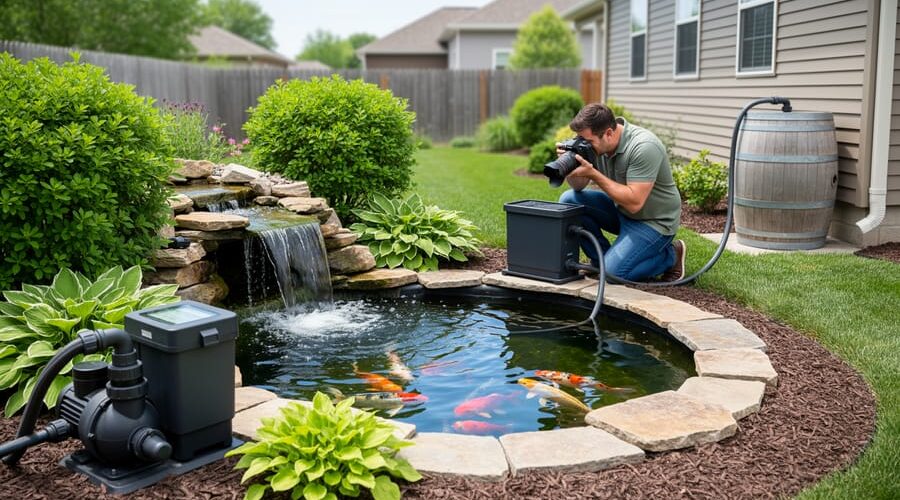
Check your local water district’s website or call their office to understand which restrictions apply to ornamental ponds and water features—many regions exempt established aquatic ecosystems from standard lawn watering bans because they’re closed-loop systems. Document your pond’s recirculating nature by photographing your pump setup and filtration system, as this evidence proves you’re not continuously consuming fresh water like traditional irrigation.
Request a formal exemption in writing if your municipality doesn’t automatically exclude ponds from drought orders, explaining that your water garden only requires occasional top-ups for evaporation, typically 1-2 inches per week during peak summer. Include details about the living ecosystem you maintain, emphasizing that fish and beneficial bacteria depend on stable water conditions for survival—a compelling argument that resonates with officials tasked with balancing conservation and animal welfare.
Install a rain barrel system connected to your downspouts to capture runoff for pond refills, demonstrating proactive water conservation while maintaining full legal compliance. This approach often satisfies regulators who appreciate homeowners taking initiative to reduce municipal water demand. Position the barrel near your pond’s edge to simplify gravity-fed or pump-assisted transfers.
Join or start a local water gardening advocacy group to collectively address unreasonable regulations that fail to distinguish between wasteful lawn irrigation and sustainable pond keeping. Municipal codes often overlook the ecological benefits and minimal water consumption of well-maintained aquatic gardens, but organized community voices carry significant weight in policy revisions. Your established pond isn’t just a decorative feature—it’s a living habitat that deserves recognition under sensible conservation frameworks.
Why Water Gardens Are Different From Lawns (And Why That Matters)
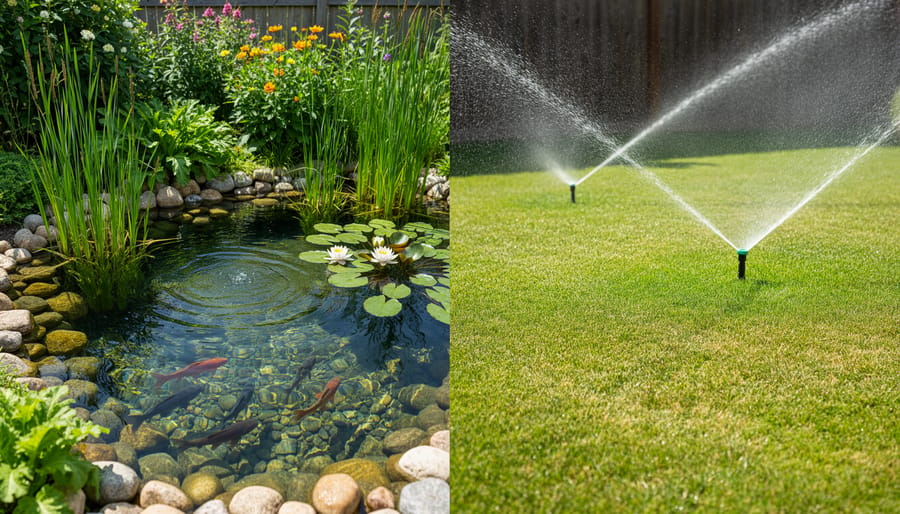
Here’s something that might surprise you: your backyard pond uses far less water than the lawn it replaced. Yet when watering restrictions hit your neighborhood, regulators often lump all outdoor water use into the same category. Let’s talk about why that doesn’t quite add up.
Think about how your lawn works. Every time you water it, that moisture disappears into the soil, gets absorbed by grass roots, and evaporates into the air. Come next week, you’re starting from scratch again. It’s a one-way street where water constantly needs replenishing.
Your water garden operates completely differently. The same water circulates through your pond day after day, month after month. Sure, you’ll lose some to evaporation, especially during hot summer days, but we’re talking about topping off what’s already there, not filling from empty each time. Most pond owners only need to add a few inches of water weekly during peak summer, and even less during cooler months.
Here’s a real-world comparison: a typical 1,000 square foot lawn might need 600 gallons per week during summer. A similarly-sized pond might only need 50-100 gallons to replace what evaporated. That’s an 80-90% reduction in water consumption. When you factor in that water garden design creates a closed ecosystem, the environmental benefits become even clearer.
So why do regulations treat them the same? Unfortunately, most water restriction ordinances were written with irrigation in mind. The language typically prohibits outdoor watering without distinguishing between consumptive use like sprinklers and conservation-minded features like ponds. Municipal water authorities often lack specific expertise in water gardening, so they default to broad restrictions that sound fair on paper but don’t reflect how different water features actually function.
This disconnect matters because it affects both compliance and advocacy. Understanding these differences helps you communicate effectively with local officials and potentially secure exemptions for your pond.
The Types of Watering Regulations You Might Face
Drought-Based Restrictions
During water shortages, many communities implement temporary drought-based restrictions that can affect your water garden. Understanding these systems helps you stay compliant while protecting your aquatic friends.
Most municipalities use a staged approach, typically ranging from Stage 1 (voluntary conservation) to Stage 4 or 5 (emergency restrictions). Each stage introduces progressively stricter limitations. Stage 1 might simply encourage shorter watering times, while Stage 3 could ban all outdoor watering except for essential needs. Stage 4 or 5 often means severe cutbacks affecting nearly all non-essential water use.
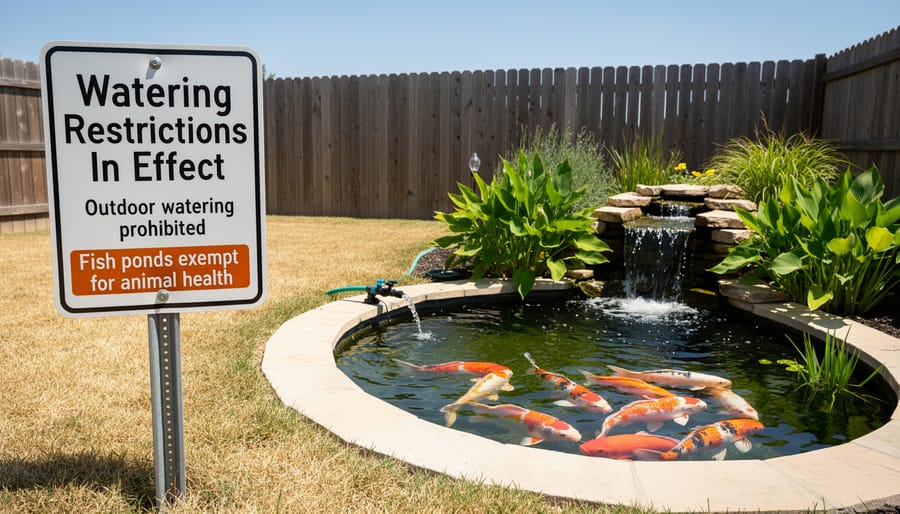
Here’s the good news for pond owners: established water gardens are frequently exempt or given special consideration because they support living creatures. However, you’ll likely need to minimize topping off your pond and may need to demonstrate that water additions are necessary for fish health rather than aesthetics.
During these periods, focus on reducing evaporation by adding floating plants or shade structures. Check for leaks promptly and repair them immediately. Keep records of your water usage to show authorities you’re being responsible.
If restrictions seem unreasonable for maintaining aquatic life, contact your water district. They often make accommodations when you explain the situation clearly and show you’re committed to conservation wherever possible.
Permanent Watering Schedules
Many communities have year-round watering schedules that stick around regardless of drought conditions. These permanent rules are designed to prevent waste and manage peak demand on water systems, and the good news is they’re usually pretty straightforward once you understand them.
The most common system is odd/even day scheduling based on your street address. If your house number ends in an odd digit, you water on odd-numbered days; even addresses water on even days. Some cities divide neighborhoods into zones with assigned days instead. Either way, this spreads out water usage across the week rather than everyone watering on Saturday morning.
Time-of-day restrictions are equally important. Most regulations prohibit watering between 10 a.m. and 6 p.m. when evaporation rates are highest. Early morning (before 9 a.m.) is typically the sweet spot for garden watering, though evening hours often work too.
Seasonal calendars add another layer, with some communities reducing allowable watering days in summer or implementing winter blackout periods when outdoor irrigation isn’t needed. Here’s what matters for your water garden: these schedules usually apply to lawn and landscape irrigation, not pond maintenance. Topping off your pond to replace evaporation or running a waterfall typically falls outside these restrictions, but always verify with your local water utility to be certain.
Water Garden-Specific Exemptions
Good news for water gardeners: many municipalities recognize that ponds and water features aren’t the same as watering your lawn, and they often include specific exemptions in their regulations. The key is knowing where to look and whether your setup qualifies.
Start by checking your local water district’s website or calling their customer service line directly. Search for terms like “drought exemptions,” “water use variance,” or “ornamental pond regulations.” Some areas require you to register your pond to receive an exemption, while others automatically exclude established water gardens from restrictions.
What typically qualifies? Most exemptions apply to recirculating systems where you’re not constantly adding fresh water. If your pond has a pump that cycles the same water through filters and waterfalls, you’re usually in good standing. The critical factor is that you’re only replacing water lost to evaporation, not draining and refilling regularly.
Here’s what regulators commonly look for: an established ecosystem with fish or aquatic plants (not just decorative fountains), a recirculating pump system, and reasonable water volume relative to your property size. Some districts even require that ponds be at least six months old to qualify, ensuring they’re genuine habitats rather than loopholes around watering bans.
My neighbor faced this situation last summer and discovered his pond was exempt simply by filling out a one-page form online. The whole process took fifteen minutes. Don’t assume you’re restricted without investigating. Documentation helps too, so keep receipts for pond equipment and take dated photos showing your established ecosystem. Being proactive protects both your investment and your aquatic friends.
Finding Out What Rules Apply to Your Water Garden
Who to Contact First
When you’re wondering how watering regulations might affect your pond or water garden, don’t panic! Your first step is figuring out who makes the rules in your area, and fortunately, there are some friendly resources ready to help.
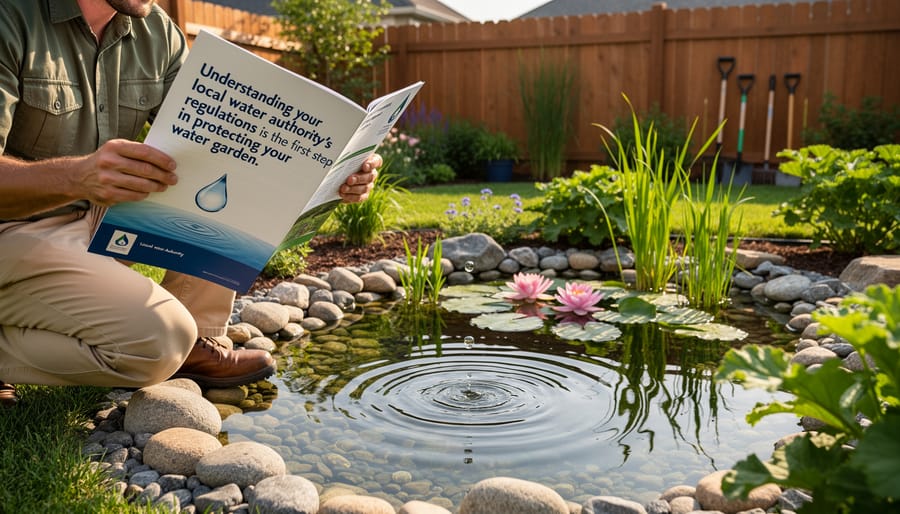
Start with your municipal water department. Give them a call or check their website for current restrictions. I’ve found that most water department staff are surprisingly helpful once you explain you’re maintaining a pond ecosystem, not just watering a lawn. They can clarify whether your water feature falls under restrictions and point you toward any exemption processes.
Next, if you live in a community with a homeowners association, reach out to them too. HOAs sometimes have their own additional guidelines about outdoor water use, and it’s better to know upfront than get a surprise notice later.
Finally, don’t overlook your local Cooperative Extension office. These folks are absolute gems! They understand the agricultural and ecological side of water use and can offer guidance on water-efficient pond management. They might even know about exemptions specifically for livestock watering that could apply to your koi or goldfish. Plus, they’re usually genuinely excited to help fellow outdoor enthusiasts solve problems creatively.
Questions to Ask
When you contact your local water authority, come prepared with specific questions to get the clarity you need. Start by asking about the difference between filling a new pond versus topping off an existing one—many regulations treat these scenarios differently, and you might find that maintaining an established pond has more lenient rules than starting from scratch.
Here’s what you should ask: Are there exemptions for ponds with fish or other aquatic life? This is crucial because some jurisdictions recognize that drastically reducing water levels can harm or kill your finned friends. Find out if fish health concerns qualify for special permits or temporary exemptions during restrictions.
Don’t forget to ask about documentation. Do you need to register your pond with the city? Should you keep water bills showing baseline usage? Some areas require photos proving your pond existed before restrictions began. Ask if there’s a specific form to request an exemption and what supporting evidence they need.
Finally, inquire about penalties for non-compliance and whether there’s an appeal process. Understanding the full picture helps you make informed decisions about your water garden’s future while staying on the right side of local regulations.
Getting It in Writing
Here’s a tip I learned the hard way: when your local water authority tells you your pond is exempt from watering restrictions, get it in writing. A friendly phone conversation is great, but memories fade and personnel change. Documentation protects both you and your finned friends.
Start by sending a brief email to your water district explaining your situation. Include details like your pond size, whether it houses fish, and how you maintain water levels. Ask specifically if your pond qualifies for any exemptions under current regulations. Keep the tone polite and informative rather than confrontational.
Save all responses in a dedicated folder, whether they arrive by email or postal mail. If you receive verbal confirmation, follow up with an email summarizing the conversation: “Thanks for confirming on our call today that my 500-gallon koi pond is exempt from filling restrictions.” This creates a paper trail.
Having official documentation means you can confidently maintain your pond without worry. If a neighbor questions your water use or an inspector visits during restrictions, you’ll have immediate proof of compliance. It’s a simple step that brings tremendous peace of mind.
Smart Strategies to Stay Compliant Without Harming Your Pond
Reducing Evaporation Loss
Evaporation can steal hundreds of gallons from your pond each week, especially during hot, dry periods when watering restrictions hit hardest. The good news? You can dramatically cut water loss with some clever strategies that actually enhance your pond’s beauty.
Let’s start with nature’s own solution: floating plants. Water lilies, water lettuce, and water hyacinth don’t just look gorgeous—they act like living umbrellas, shading the water surface and blocking direct sunlight. I’ve seen ponds with 60-70% surface coverage reduce evaporation by nearly half! Plus, fish love the shade and shelter these plants provide.
Strategic shading works wonders too. Position your pond near deciduous trees that offer summer shade but allow winter sunlight, or install a pergola on the sunny side. Just keep tree placement thoughtful to avoid excessive leaf drop.
Wind is evaporation’s sneaky accomplice. A simple windbreak—whether it’s a decorative fence, dense shrubs, or strategically placed boulders—can make a surprising difference. I’ve noticed my own pond stays fuller on breezy days since adding a hedge along the prevailing wind direction.
Pond design matters from the start. Deeper ponds with smaller surface areas lose less water than shallow, sprawling ones. If you’re planning a new pond, consider a more vertical design. And don’t overlook smart water management technology like automatic top-up systems with float valves—they help you track exactly how much water you’re using while staying compliant with local regulations.
Rainwater Harvesting for Top-Offs
Want to turn Mother Nature into your personal pond-filling assistant? Rainwater harvesting is one of the smartest moves you can make, especially when drought restrictions threaten your water garden. The best part? You probably already have most of what you need to get started.
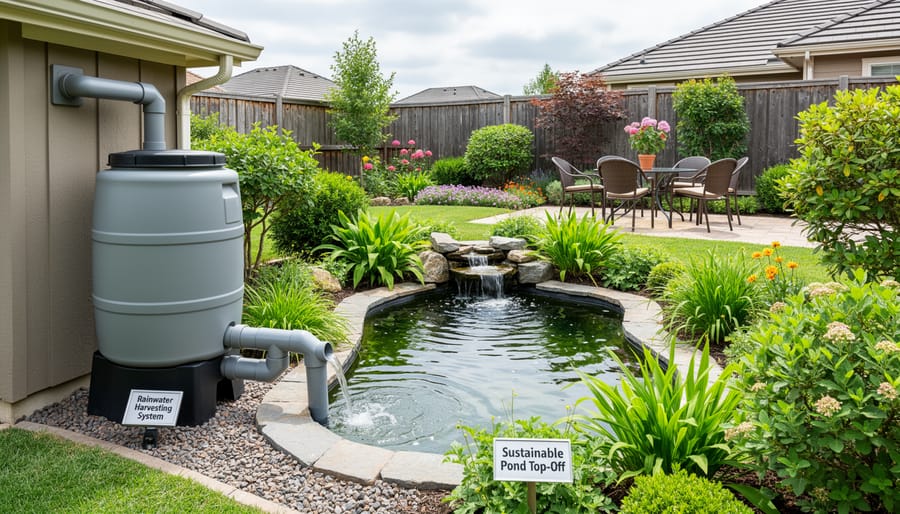
Your roof is a massive water collector just waiting to be tapped. A simple rain barrel connected to a downspout can capture hundreds of gallons during a single storm. For pond maintenance, position barrels near your water feature for easy access. I started with just two 55-gallon barrels and was amazed at how quickly they filled during spring rains.
Here’s a quick setup: Attach a diverter kit to your downspout (available at any hardware store for under twenty dollars), connect it to food-grade barrels, and add a spigot near the bottom for easy filling of watering cans or buckets. For larger ponds, consider linking multiple barrels together with overflow hoses.
The beauty of rainwater for top-offs? It’s naturally soft, free of chlorine and chloramines, and your fish will love it. Plus, when watering restrictions hit, you’ve got a personal reserve that’s completely regulation-friendly. Many municipalities even encourage rainwater collection and may offer rebates on collection systems.
Just remember to cover barrels with fine mesh to keep out debris and mosquitoes, and you’re golden.
Timing Your Water Additions
The key to working within watering restrictions is planning your top-offs strategically. Most regulations allow specific days or times, so align your pond maintenance with those windows. I’ve found early morning works beautifully—the water temperature stays stable, evaporation is minimal, and it fits perfectly within typical watering schedules.
Instead of waiting until your pond level drops significantly, schedule smaller, regular additions during your allowed periods. This approach maintains healthy pond conditions without shocking your fish with sudden temperature or chemistry changes. Think of it like sipping water throughout the day rather than gulping it all at once.
Keep a simple log or calendar reminder for your permitted watering days. Mark down when you add water and approximately how much. This habit helps you spot patterns in evaporation rates and proves helpful if neighbors or authorities ever question your water use.
During extreme heat waves when evaporation accelerates, prioritize fish safety over perfect water levels. A slightly lower pond that’s topped off gradually beats a stressed ecosystem from irregular, large water additions. Remember, you’re not just adding water—you’re maintaining a living environment that depends on consistency and careful timing.
When Fish Health Meets Water Restrictions: Your Rights and Options
Here’s something I learned the hard way during our town’s severe drought restrictions a few years back: fish don’t care about water bans, and unfortunately, neither does evaporation. When my koi pond dropped six inches below normal during a hot July week, I watched my beloved fish becoming stressed and sluggish. That’s when I discovered that most watering regulations actually include provisions for animal welfare, you just need to know how to access them.
The good news is that fish are legally considered animals under most municipal codes, which means their health and welfare typically trump blanket watering restrictions. However, you can’t just claim you need to top off your pond without proper documentation. Most water districts require some form of verification that you’re maintaining water levels for living creatures, not just aesthetic purposes.
Start by documenting your pond’s inhabitants with photographs showing the fish clearly visible in the water. Keep a simple log noting water levels, temperatures, and any signs of fish stress like gasping at the surface or erratic swimming. This doesn’t need to be fancy, just a notebook with dates and observations works perfectly.
If restrictions tighten, contact your local veterinarian who works with fish or aquatic animals. Many will provide a letter confirming that your pond houses living animals requiring stable water conditions for survival. I’ve found that most vets are quite familiar with this request and can usually draft something within a day or two. The letter should specify the number and type of fish, recommended water depth ranges, and health consequences of inadequate water volume.
Present this documentation to your water district’s customer service department. In my experience, they’ve been surprisingly accommodating once they understand you’re caring for animals, not just filling a decorative feature. Many districts offer special exemption permits or allow pond refilling during specific hours.
Remember that emergency provisions exist in nearly all regulations. If fish are in immediate danger due to critically low water levels, you generally have the right to add water to prevent animal suffering. Keep your veterinarian’s contact information handy and document the emergency with photos and notes. This creates a paper trail showing you acted responsibly and only when necessary to preserve animal welfare.
How to Advocate for Water Garden Exemptions in Your Community
Making the Case to Local Officials
If you need to discuss watering regulations with your town or city officials, having the right information makes all the difference. The key is helping them understand that ponds aren’t water wasters—they’re actually water savers compared to traditional landscaping.
Here’s your strongest argument: a properly maintained pond is a closed system. Unlike lawns that need constant watering throughout summer, your pond only requires occasional top-ups to replace water lost to evaporation. Studies show that ponds typically use 30-50% less water than an equivalent area of lawn when you factor in regular irrigation needs. That’s a significant water savings!
Don’t forget to mention the ecosystem benefits. Your pond supports local wildlife, provides habitat for beneficial insects, and creates a cooling microclimate in your yard. These environmental perks align with many municipalities’ sustainability goals.
When I spoke with my local water district during our last drought, I brought documentation showing my monthly water usage before and after installing my pond. The numbers spoke for themselves—my consumption actually dropped! I also emphasized that my pond water gets recycled through filtration rather than running down storm drains like lawn irrigation.
Bring supporting documentation to any meetings: your water bills, photos of your pond’s filtration system, and information about recirculating pumps. Frame your pond as part of the solution, not the problem. Most officials appreciate residents who take a proactive, informed approach. You might even inspire them to create specific exemptions for water features in future regulations.
Connecting With Other Water Gardeners
You don’t have to navigate watering regulations alone! Connecting with other water gardeners creates a powerful network of support, shared knowledge, and collective voice when it comes to local policies.
Start by searching for local pond clubs or water gardening societies in your area. These groups often meet monthly to share experiences, troubleshoot problems, and discuss exactly these kinds of regulatory challenges. Members frequently have firsthand knowledge about which local officials are sympathetic to pond exemptions and what arguments work best in your community.
Online forums dedicated to water gardening policy and regulation have become invaluable resources too. Here, pond enthusiasts from different regions share their success stories about obtaining exemptions, provide templates for letters to council members, and offer moral support during frustrating regulatory battles. I’ve personally found that hearing how someone in a similar climate managed their water restrictions gave me the confidence to approach my own council.
Consider forming a local advocacy group if one doesn’t exist. There’s real strength in numbers when approaching municipal authorities. A delegation of responsible pond owners presenting unified, well-researched proposals carries far more weight than individual requests. You might organize neighborhood pond tours to demonstrate responsible water usage, or create informational materials showing the environmental benefits of backyard water features. Together, you can help shape sensible policies that recognize the ecological value of garden ponds while respecting genuine conservation needs.
Resources and Tools for Staying Informed
Navigating watering regulations doesn’t have to feel overwhelming when you have the right resources at your fingertips. I’ve pulled together some genuinely helpful tools that’ll keep you informed and empowered as rules and restrictions evolve in your area.
Start with your local water authority website. These sites are goldmine resources that post current restrictions, exemption applications, and drought status updates. Most allow you to sign up for email or text alerts, so you’ll know immediately when regulations change. I check mine every few months, and it’s saved me from accidentally violating new rules more than once.
The Water Gardening Policy and Regulation Forum is an excellent online community where pond owners share experiences navigating local ordinances. Members discuss successful exemption applications, interpretation of confusing rules, and regional differences in enforcement. It’s reassuring to connect with others facing similar challenges.
For tech-savvy gardeners, water conservation apps like Dropcountr and WaterMyYard help track your pond’s water levels and evaporation rates. These apps can document your actual water usage, which becomes incredibly valuable if you need to prove compliance or apply for exemptions. Some even calculate how much rainwater harvesting could offset your pond’s needs.
Professional organizations like the Association of Professional Pond Contractors offer members access to regulatory updates and advocacy efforts. Even if you’re maintaining your own pond, their resources section provides valuable insights into industry standards and best practices for water conservation.
Your local cooperative extension office is another underutilized resource. Their horticultural agents understand regional water issues and can offer personalized advice on maintaining ponds during restrictions while supporting local ecosystems and wildlife.
Here’s the thing I’ve learned after years of maintaining water gardens through various droughts and restrictions: watering regulations don’t spell the end of your beloved pond. They’re simply an invitation to become a smarter, more thoughtful water gardener.
I’ll be honest—when I first heard about watering restrictions in my area, I panicked. I imagined my fish gasping for air and my water lilies shriveling up. But that’s not how it works. With a little research and some adjustments to how I managed my pond, I actually ended up with a healthier, more efficient system than before.
The key is being proactive. Don’t wait until enforcement officers knock on your door. Check your local regulations now, even if there aren’t any drought restrictions in place. Understand what exemptions exist for decorative ponds and water features. Many municipalities recognize that established water gardens are living ecosystems, not luxuries that waste water.
Connect with your local water gardening community—whether that’s online forums, social media groups, or your neighborhood pond club. These folks are navigating the same challenges and often have creative solutions you haven’t considered. Plus, there’s real power in numbers when it comes to advocating for reasonable policies that protect both our precious water resources and the aquatic life depending on them.
Remember, responsible water gardening actually supports environmental goals. Your pond provides habitat for beneficial insects, supports pollinators, and creates a mini-ecosystem in your backyard. By managing it wisely—recirculating water, minimizing evaporation, and maintaining proper balance—you’re demonstrating that conservation and beauty can absolutely coexist. Keep enjoying your water garden with confidence and care.