The Filter Media Your Pond Actually Needs (Not What Big Brands Push)

Choose mechanical media like foam pads or filter brushes as your first line of defense—they trap visible debris before it clogs your biological media, and you’ll clean them every 1-2 weeks during peak season. Layer biological media such as ceramic rings or bio-balls in the chamber after mechanical filtration, creating maximum surface area where beneficial bacteria colonize to convert harmful ammonia into safer nitrates. Add activated carbon or zeolite as chemical media when you’re battling algae blooms, medication residue, or persistent odors, but replace them monthly since they become saturated and stop working.
Your …

Read more The Filter Media Your Pond Actually Needs (Not What Big Brands Push)

Transform Your Pond into a Healing Sanctuary with Garden Therapy

Position your meditation bench within direct sight of moving water—the sound of a waterfall or fountain activates your parasympathetic nervous system within 3-5 minutes, measurably lowering cortisol levels. Plant lavender, jasmine, and chamomile in clusters along pathways where brushing against foliage releases calming aromatics during evening walks. Create shallow ledges at 6-8 inches deep specifically for marginal plants like sweet flag and marsh marigold, which provide textured visual focal points that reduce mental fatigue better than open water alone.
Your wellness garden works because it engages all five senses …

Read more Transform Your Pond into a Healing Sanctuary with Garden Therapy

Why Coastal Quail Need Your Waterside Garden (And How to Help Them Nest)

Position your quail nesting box 12-18 inches above ground near dense shrubs or tall grasses where these ground-dwelling birds feel naturally secure. Mount it on a sturdy post or fence rail with the entrance facing away from prevailing winds, and angle the floor slightly forward to prevent water accumulation during rain.
Design the box with dimensions of 12 inches wide, 12 inches deep, and 10 inches tall – spacious enough for a covey of 6-8 quail to roost comfortably. Cut a 3-inch entrance hole positioned low on the front panel, since quail prefer ground-level access rather than perching high like songbirds.
Line the bottom …

Read more Why Coastal Quail Need Your Waterside Garden (And How to Help Them Nest)

How a Network Digital Twin Can Save Your Pond (Before Problems Start)

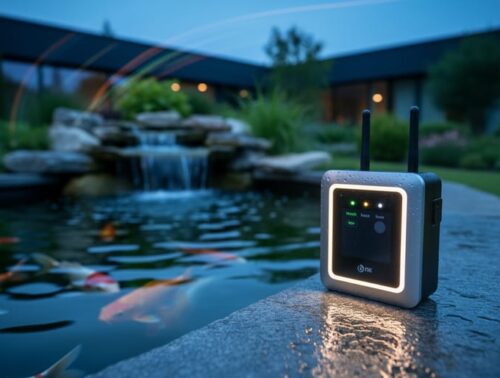
Imagine standing at your pond’s edge with a crystal ball that shows exactly what’s happening beneath the surface right now—oxygen levels shifting by the hour, that algae bloom forming three days before it appears, or the perfect moment to adjust your filtration. That’s essentially what a network digital twin does for your pond, except it’s not magic. It’s smart technology creating a living, breathing virtual copy of your water garden that updates in real-time.
Think of it as having a miniature version of your pond living inside your phone or computer. Sensors scattered throughout your actual pond …

Read more How a Network Digital Twin Can Save Your Pond (Before Problems Start)

These Edible Bog Plants Will Transform Your Pond Into a Productive Oasis

Your pond can produce fresh, edible harvests while looking beautiful and supporting a healthy ecosystem. Bog plants thrive in the shallow, waterlogged margins of water features where conventional vegetables struggle, turning otherwise decorative spaces into productive growing zones. Many water gardeners don’t realize they’re already creating perfect conditions for crops like watercress, water celery, and arrowhead tubers just by maintaining their pond edges.
The key is choosing plants that serve multiple purposes. Edible bog varieties filter water naturally, provide habitat for beneficial insects and amphibians, and give…

Read more These Edible Bog Plants Will Transform Your Pond Into a Productive Oasis

These Traditional Japanese Materials Create Stunning, Eco-Friendly Water Gardens

Choose river stones and weathered granite for authentic Japanese aesthetics that naturally filter water and prevent erosion for decades without degrading. These materials develop character over time through mineral deposits and moss growth, eliminating the need for replacement while maintaining your water garden’s ecological balance.
Source bamboo fencing and edging from renewable harvests rather than pressure-treated lumber, creating natural barriers that decompose without releasing toxins into your pond ecosystem. Bamboo’s three-to-five-year growth cycle makes it one of the most sustainable hardscape options available…

Read more These Traditional Japanese Materials Create Stunning, Eco-Friendly Water Gardens

Rain Gardens That Actually Survive Your Climate (And Look Beautiful Doing It)

Transform your waterlogged lawn into a thriving rain garden that captures runoff before it floods your foundation or overwhelms storm drains. Position your garden in natural low spots at least 10 feet from your house, where water already pools after heavy storms. Test drainage by digging an 8-inch hole and filling it with water—it should empty within 24 hours for ideal rain garden performance.
Design your basin with a gentle 4-6 inch depression that spreads across 100-300 square feet, allowing water to pool temporarily before soaking into enriched soil. Layer your planting bed with a custom mix of 50% sand, 30% topsoil, and 20% …

Read more Rain Gardens That Actually Survive Your Climate (And Look Beautiful Doing It)

How Pond Lighting Changes Your Water’s Hidden World

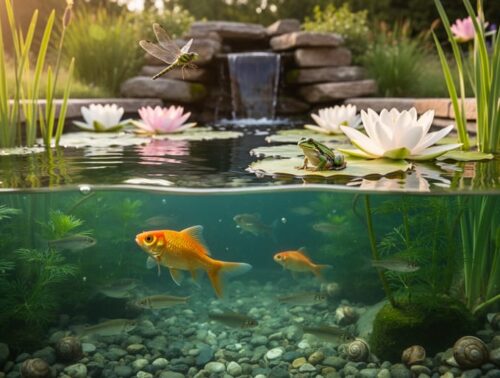
Picture your pond as a tiny world where every plant, fish, and microorganism plays a vital role in keeping the water crystal clear and healthy. Understanding this underwater community isn’t just fascinating science—it’s the key to making smart lighting decisions that enhance your pond’s beauty without disrupting its delicate balance.
Here’s what most pond owners miss: the wrong lighting can trigger explosive algae growth, stress your fish, and turn your peaceful water feature into a maintenance nightmare. But when you grasp how sunlight, nutrients, and living creatures interact in your pond’s …

Read more How Pond Lighting Changes Your Water’s Hidden World

How Project WILD Aquatic Transforms Your Backyard Pond Into a Living Classroom

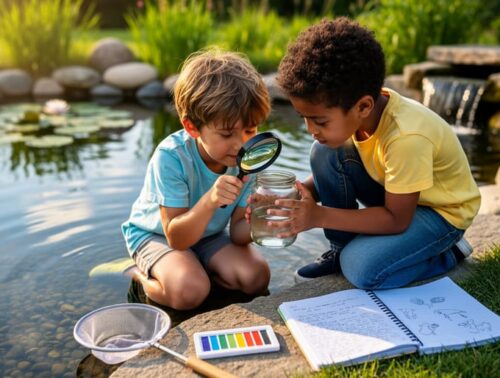
Transform your backyard pond into an interactive learning space by introducing fish identification activities that help children and adults connect with aquatic life firsthand. Project WILD Aquatic is an award-winning conservation education program that teaches water ecology through hands-on workshops and activities, making it perfect for pond owners who want to deepen their understanding of the ecosystem thriving right in their own garden.
Start by learning to identify the fish species visiting or living in your pond through simple observation techniques. Use a clear viewing tube or lean over the water’s edge during feeding …

Read more How Project WILD Aquatic Transforms Your Backyard Pond Into a Living Classroom

Why Your Koi Keep Dying (And How the Right Filtration Saves Them)

**Design your koi pond filtration system with three times the volume capacity of your actual pond**—koi produce significantly more waste than goldfish or other pond inhabitants, and undersized filtration is the primary reason most koi ponds fail within their first year.
Your filtration system serves as the life-support mechanism for your koi, removing toxic ammonia and nitrites while maintaining crystal-clear water. Unlike decorative water features where simple pumps suffice, koi ponds demand robust biological and mechanical filtration that operates 24/7. The stakes are high: inadequate filtration leads to poor water quality, …

Read more Why Your Koi Keep Dying (And How the Right Filtration Saves Them)