
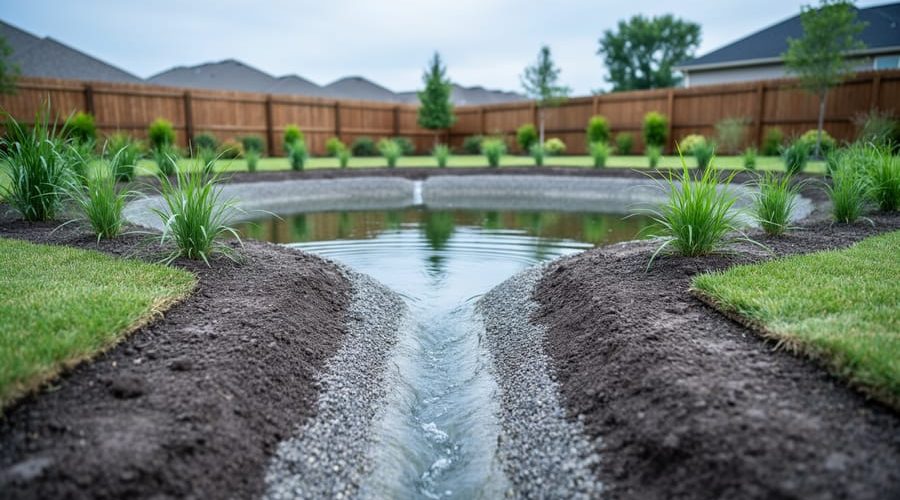
How to Understand and Navigate Municipal Regional Stormwater Permits for Your Water Garden
A municipal regional stormwater permit is a legal authorization issued by local or regional water authorities that regulates how stormwater runoff is managed on a property or within a development. These permits exist to protect local waterways, prevent flooding, and control pollution by ensuring that rainwater flowing across land surfaces doesn’t overwhelm drainage systems or carry harmful sediments and chemicals into streams, rivers, and wetlands.
If you’re planning a water garden, pond, or other landscape feature that alters how water moves across your property, you might need one of these permits depending on where you live and the scale of your project. The regulations typically focus on projects that change natural drainage patterns, increase impervious surfaces like patios or paths around your pond, or disturb significant amounts of soil during construction.
Here’s what catches many water gardeners by surprise: these permits aren’t just for massive commercial developments. Homeowners who excavate for a backyard pond, redirect runoff to fill a water feature, or create berms and swales to manage drainage can all trigger permit requirements. The specific thresholds vary wildly by region. Some municipalities regulate any project that disturbs more than a certain area of soil, while others focus on how much runoff your finished landscape will generate compared to its natural state.
The good news? Once you understand what these permits cover and why they matter, the application process becomes much less intimidating. Most regional stormwater programs provide clear guidance on which projects need permits, what documentation you’ll need, and how to design your water garden to meet local standards. Getting it right from the start saves you from costly fines, project delays, or even having to remove a pond you’ve already built.
This guide will walk you through everything you need to know.
What Municipal Regional Stormwater Permits Actually Are
A municipal regional stormwater permit is a regulatory document issued by local councils, regional water authorities, or state environmental agencies to manage how rainwater runoff flows across properties and into public drainage systems. These permits exist to control stormwater discharge, prevent pollution from entering waterways, reduce flooding risks, and protect natural ecosystems from the impacts of urban development. When you’re planning a water garden, you might encounter these permits because any alteration to your property’s drainage patterns, whether it’s excavating a pond, redirecting runoff, or changing how water flows across your land, can affect the broader stormwater management system in your area.
The purpose behind these permits isn’t just bureaucratic paperwork. They’re designed to prevent sediment, chemicals, and excess nutrients from washing into creeks, rivers, and coastal waters. They help manage flood risks by ensuring new projects don’t overload drainage infrastructure or increase runoff volume beyond what the system can handle. For water gardeners, this means authorities want to know your pond won’t become a pollution source during heavy rain, won’t overflow and flood neighbouring properties, and won’t disrupt the natural flow of water through your suburb or region.
Who issues these permits varies by location. In some areas, it’s your local council’s environmental or planning department. In others, a regional water utility or catchment management authority handles stormwater oversight. The regulatory framework typically stems from state or national environmental protection laws, but the specific rules get interpreted and enforced at the local or regional level. This is why requirements differ so much from one suburb to the next, each authority tailors its stormwater management approach to local conditions, soil types, existing infrastructure, and the sensitivity of nearby waterways.
These permits function as part of a larger regional stormwater management system. That system includes drainage networks, retention basins, wetlands, and natural waterways that collectively handle rain runoff from thousands of properties. Your backyard water garden becomes one small piece of this interconnected puzzle. If you’re familiar with specialized frameworks like REG permitting in certain regions, you’ll recognize the principle: authorities need to track how individual projects contribute to the overall stormwater picture, ensuring that one person’s pond doesn’t create problems downstream for everyone else.
How These Permits Connect to Your Water Garden
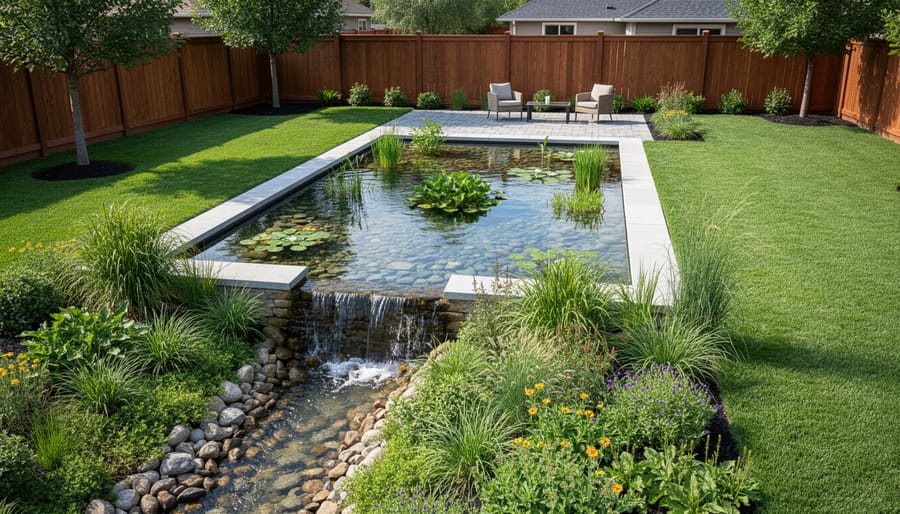
Your backyard water garden sits at the crossroads of personal landscaping and public infrastructure. When you dig a pond or add a waterfall, you’re not just moving dirt and circulating water, you’re potentially altering how stormwater flows through your property and into the broader drainage network that your municipality manages. Regional stormwater permits exist because what happens in one yard can ripple through the watershed, affecting neighbors, streams, and municipal systems downstream.
The connection hinges on runoff. Rain that hits your property has to go somewhere. Before your water garden, that runoff followed a predictable path, across your lawn, into storm drains, eventually reaching rivers or treatment facilities. When you excavate for a pond, reshape terrain, or create new impervious surfaces (like a patio around your feature), you change the volume, speed, and direction of that runoff. A large pond might capture and slow stormwater, which sounds beneficial. But if it overflows during heavy rain, or if you’ve compacted soil and reduced natural absorption, you could be sending surges of water into systems designed for different loads.
Common triggers that bring water gardens under permit scrutiny include project scale (larger ponds affect more runoff), the total area you’re disturbing or paving, proximity to natural waterways or wetlands, and excavation depth (deep digging can intersect with groundwater or drainage infrastructure). Some regions focus on whether your pond connects to existing stormwater systems or discharges beyond your property line. Others look at cumulative impact, if every household in a watershed added unpermitted ponds, the collective effect on flooding and water quality could be significant.
Authorities don’t regulate water gardens to make your life difficult. They’re protecting shared resources and managing risk across thousands of properties. Your local rules might be lenient if you’re building a small, self-contained feature far from sensitive areas. Or they might be strict if you’re in a flood-prone zone, near protected habitat, or working with clay soils that complicate drainage. The only way to know is to check with your specific regional authority, because one-size-fits-all guidance doesn’t exist in stormwater management.
What You’ll Need Before Applying
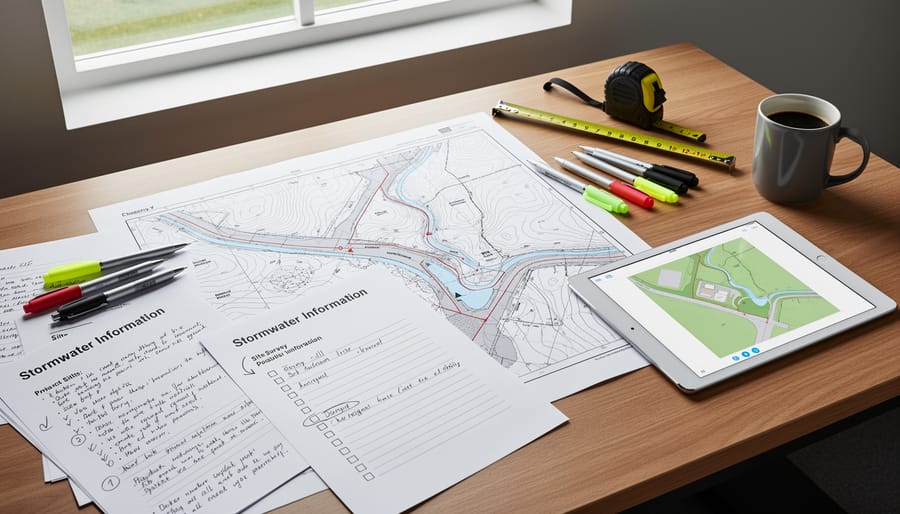
Before you reach out to your local authority or begin filling out forms, it’s helpful to gather the baseline information about your property and your proposed water garden project. Think of this as assembling your project toolkit, having these details ready will make conversations with officials more productive and any application process smoother. You won’t necessarily need everything listed here, but collecting these materials early saves time and shows you’re serious about compliance.
Start with basic property documentation. Pull together any existing site plans, property surveys, or plot maps that show your lot boundaries, existing structures, and topography. If you don’t have these on hand, your local planning office or property records database often has copies available for a small fee or free online access. You’ll also want to know your property’s legal description and parcel number, which you can find on your deed or tax assessment.
Next, sketch out your project specifications, even if it’s a rough drawing. Note the intended pond size (length, width, estimated depth), location on your property (distance from property lines, buildings, and any natural waterways), and any features like waterfalls, streams, or filtration systems. If your design involves excavation, estimate the volume of earth you’ll move and where runoff will flow during heavy rain.
Here’s a practical checklist of what you might need:
- Property survey or site plan showing lot boundaries and existing features
- Pond dimensions and location sketch with measurements
- Estimated water capacity and source (municipal water, well, rainwater collection)
- Drainage and overflow plan showing where excess water will go
- Photos of the current site and surrounding area
- Contact details for your local stormwater or environmental management authority
- Project timeline indicating when you plan to start and finish construction
Finally, identify your local stormwater authority. This might be your city’s environmental services department, a regional water management district, or a county planning office. Write down their phone number, email, and office hours. Some jurisdictions offer online portals where you can submit inquiries or applications, so check their website first. Having this contact information ready means you can quickly ask targeted questions about your specific project rather than guessing whether you need formal approval.
Finding Out If Your Water Garden Needs a Permit
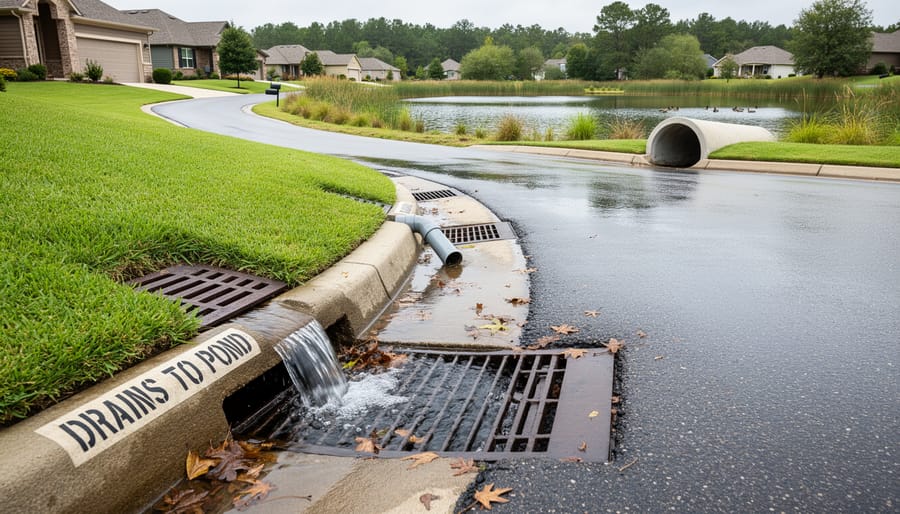
Figuring out whether your water garden project needs a permit starts with research, not assumptions. Regulatory requirements vary significantly by location, and what applies in one municipality may not apply in another. The good news is that most regional stormwater authorities make basic information accessible, and a methodical approach will give you clarity.
Start by identifying which authority governs stormwater management in your area. This is rarely your general city council or county office. Look for dedicated stormwater utilities, watershed districts, regional water quality boards, or environmental management agencies. Your property tax bill sometimes lists a stormwater utility fee, which can point you toward the right agency. If you’re unsure, your local planning or building department can direct you to the correct authority.
Once you know who regulates stormwater in your region, follow these steps to determine your permit needs:
- Check the authority’s website for homeowner resources, permit databases, or FAQ sections. Many agencies publish exemption lists, project thresholds, and application requirements online.
- Review any published regulations or ordinances specific to residential stormwater projects. Look for language about impervious surfaces, excavation limits, and water feature construction.
- Contact the authority directly with your project details. Be ready to describe your pond’s size, depth, location on your property, how it will be filled and drained, and its proximity to any natural waterways or drainage easements.
- Document the guidance you receive in writing. Request an email confirmation or reference number for the conversation, especially if they tell you no permit is needed.
- Assess whether a formal permit application is required based on their response, or if your project qualifies for an exemption or a simpler notification process.
When you contact the authority, specificity helps. Rather than asking, “Do I need a permit for a pond?” describe your actual project: “I’m planning a 3-meter-by-2-meter water garden with a recirculating pump, no connection to stormwater drains, located 15 meters from the nearest street.” This gives them enough detail to provide accurate guidance.
Keep in mind that water ordinances often layer multiple requirements. A project might be exempt from a regional stormwater permit but still need approval from your homeowners association or local building department for excavation. The stormwater authority can clarify their piece of the puzzle, but you may need to verify other approvals separately.
If the authority’s initial answer is unclear or contradictory, ask for clarification rather than proceeding on guesswork. Some agencies distinguish between decorative features and functional stormwater infrastructure, and understanding that distinction can determine whether you need a full permit, a simple exemption form, or nothing at all.
Navigating the Permit Application Process
Once you’ve confirmed your project needs a permit, the application process itself is usually straightforward, if you start early and prepare thoroughly.
Most regional stormwater authorities provide application forms on their websites or at their offices. Download the forms, read the instructions carefully, and gather everything you’ll need: your site plan showing the pond location and dimensions, property surveys, drainage calculations if required, and photographs of the existing site. Some authorities ask for detailed project specifications, including pond depth, liner type, overflow design, and how you’ll manage runoff during and after construction.
Fill out the forms completely. Don’t skip sections or leave blanks, incomplete applications get rejected or delayed. Include accurate measurements and descriptions. If a question doesn’t apply to your project, write “not applicable” rather than leaving it empty.
Submit your application along with all required plans and any applicable fees. Fee amounts vary widely by jurisdiction; check the authority’s fee schedule in advance. Processing times differ, too. Some regions approve simple backyard ponds in a few weeks, while others take months, especially if they request additional information or plan revisions.
Expect questions from the reviewer. They might ask you to clarify your overflow design, adjust drainage paths, or add erosion controls during construction. Respond quickly and provide exactly what they request, delays often happen because applicants don’t reply promptly or submit incomplete revisions.
Once approved, you’ll receive a permit or written confirmation, sometimes with conditions attached. Read every condition carefully. You might need to notify the authority before starting work, allow inspections at certain stages, or install specific features like sediment barriers.
Timeline matters. Applying the week before you want to dig guarantees frustration. Start the permit process at least a month or two before your planned construction date, longer if your project is complex or your region has known backlogs. This buffer lets you adjust plans, answer questions, and still break ground on schedule.
Important Compliance and Safety Considerations
Skipping permits can lead to serious consequences that extend well beyond your backyard. If your water garden requires a stormwater permit and you proceed without one, local authorities have the power to issue stop-work orders, impose fines, or even require you to dismantle the entire feature at your own expense. Enforcement actions vary by jurisdiction, but compliance teams routinely investigate reports from neighbors or identify unpermitted projects through aerial surveys and site inspections. The cost of retroactive compliance, legal fees, and potential penalties often exceeds what you would have paid to apply properly from the start.
Beyond regulatory penalties, non-compliance carries environmental and legal risks. A poorly designed pond that discharges sediment, fertilizers, or other pollutants into stormwater systems can degrade local waterways, harm aquatic life, and violate water quality laws. If your runoff contributes to flooding or contamination on neighboring properties, you may face liability claims from affected landowners. Permits exist to ensure projects meet baseline standards for public health and environmental protection. Treating them as optional puts both your investment and your local ecosystem at risk. When in doubt, reach out to your regional authority before breaking ground.
Designing Your Water Garden to Meet Stormwater Standards
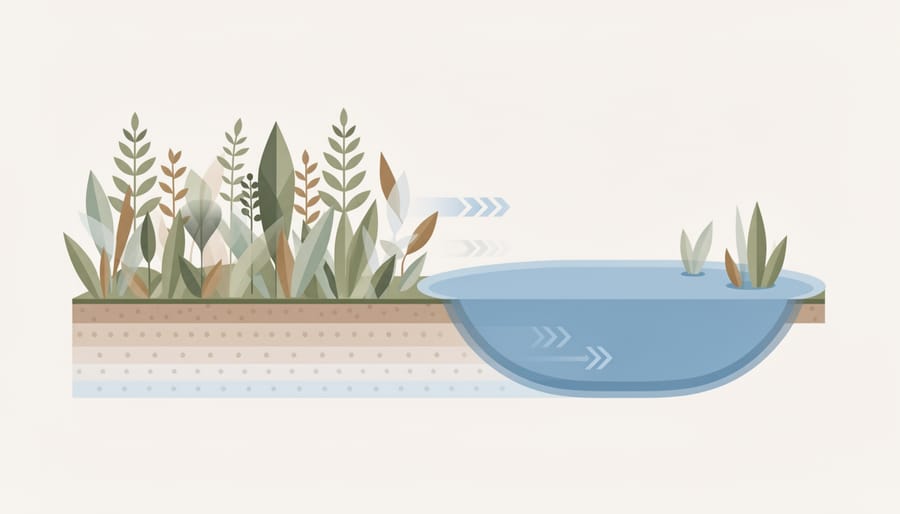
Design choices you make before breaking ground can help your water garden align naturally with stormwater regulations while creating the aesthetic you want. Rather than viewing permit requirements as restrictions, think of them as guardrails that protect both your investment and the surrounding watershed. Many compliant designs are actually more resilient, require less maintenance, and support healthier ecosystems than features built without these considerations in mind.
Start with filtration systems that handle sediment and prevent pollutants from entering municipal drainage networks. Mechanical and biological filters not only keep your pond clear, they trap debris, break down organic matter, and reduce nutrient loading that could otherwise manage stormwater impacts downstream. Gravel beds, wetland zones with marginal plants, and skimmers all contribute to water quality while satisfying regulatory concerns about runoff contamination.
Consider incorporating these features to support both compliance and ecological health:
- Overflow structures that direct excess water to approved drainage points, not neighboring properties or natural waterways
- Vegetated buffer zones around the pond perimeter to slow runoff and filter sediments
- Native aquatic and marginal plants that stabilize soil, absorb nutrients, and reduce erosion
- Permeable edging materials that allow water infiltration rather than creating impervious surfaces
- Sediment traps or forebays that capture particles before they reach the main pond
Native plants deserve special attention. Many regional authorities encourage or require vegetation that supports local wildlife and naturally filters stormwater. Species adapted to your climate need less intervention, reduce chemical inputs, and demonstrate your commitment to working with the landscape rather than against it. When you submit plans, highlighting these design elements shows reviewers you understand the connection between your project and broader water quality goals.
How to Verify Compliance and Next Steps After Approval
Once your permit is approved, keeping your water garden compliant isn’t difficult, but it does require some attention to detail. Start by filing your approval documents somewhere safe, a folder labeled “Water Garden Permits” works well. Include the original permit, any conditions or amendments, your submitted site plans, and correspondence with the permitting authority. These records prove compliance if questions arise later and serve as a reference if you modify the project.
Many regional authorities conduct post-approval inspections, especially for larger projects or those near sensitive waterways. If an inspector schedules a visit, have your documentation ready and be prepared to show how your completed pond matches the approved plans. They’ll typically check drainage patterns, overflow management, and erosion controls. If you’ve installed native plant buffers or filtration systems as required, point these out clearly.
Ongoing compliance means maintaining your pond according to the approved design. Clean filters regularly, keep vegetation from blocking drainage paths, and monitor overflow areas during heavy rain. If something isn’t working as planned, don’t ignore it. Contact your permitting authority to discuss adjustments before problems develop.
What happens if your plans change? Expanding the pond, rerouting drainage, or adding hardscaping near the water feature may trigger permit amendments. Before making changes, contact the original permitting office and describe what you want to do. Minor tweaks might require just a letter; significant alterations could need a new application. It’s always easier to get approval upfront than to fix violations after the fact.
Check your permit conditions for renewal requirements. Some permits are one-time approvals; others require periodic renewals or compliance reports. Mark these dates on your calendar so you don’t miss deadlines.
Common Questions About Stormwater Permits and Water Gardens
Water gardeners often have similar questions when they first encounter regional stormwater permit requirements. Here are answers to the most common concerns.
Do small decorative ponds need permits?
It depends entirely on your local regulations. Some jurisdictions exempt small backyard water features under certain size or volume thresholds, while others regulate any constructed pond that affects stormwater flow. Contact your regional authority to find out where your project falls.
What if I already built my water garden without a permit?
Reach out to your local stormwater authority immediately. Many agencies allow retroactive permit applications, though you may face fines or be required to modify the pond to meet current standards. Addressing the situation proactively is far better than waiting for enforcement action.
How long does the approval process typically take?
Timelines vary widely by region and project complexity. Simple applications might be reviewed in a few weeks, while more complex projects requiring detailed drainage plans or environmental assessments can take several months. Always start the process well before you plan to begin construction.
What happens if my permit application is denied?
Denials usually come with specific reasons, such as concerns about runoff volume, proximity to sensitive areas, or inadequate drainage plans. You can often address these issues by revising your design and resubmitting, or by seeking a variance if special circumstances apply.
Another question that comes up frequently is whether decorative features automatically qualify for exemptions. The answer is not straightforward. While some regions do exempt purely ornamental ponds that have minimal impact on stormwater systems, the exemption criteria vary. A small raised container pond on a patio might be exempt, but an in-ground pond that collects runoff from your yard probably is not. The distinction often hinges on whether the feature interacts with the natural drainage pattern of your property.
If you are unsure about your specific situation, documenting your conversation with local authorities is critical for ongoing compliance. Keep notes on who you spoke with, what information they provided, and any reference numbers or case files they assign. This record protects you if questions arise later and helps you track any conditions or reporting requirements attached to your approval.
Understanding municipal regional stormwater permits might feel like just another hurdle between you and your dream water garden, but here’s a better way to think about it: these permits are your blueprint for becoming a responsible steward of your local watershed. When you take the time to understand what’s required and work within those guidelines, you’re not just checking boxes, you’re actively protecting the streams, rivers, and ecosystems that make your community thrive.
Every backyard pond connects to something larger. The water that flows through your property eventually joins the regional stormwater system, and by designing your feature thoughtfully, you contribute to cleaner waterways and healthier habitats for everyone downstream. That’s worth celebrating, not dreading.
The most important step you can take is reaching out to your local stormwater authority early in your planning process. Don’t wait until you’ve mapped out every detail or purchased materials. A quick conversation can save you time, money, and frustration while ensuring your project meets all necessary standards. Most officials genuinely want to help, they’d rather guide you toward compliance upfront than deal with issues later.
Treat the permit process as part of your project’s foundation, not an afterthought. You’ve already invested thought and care into creating a beautiful water feature. Extending that same attention to regulatory compliance ensures your pond remains a source of pride and enjoyment for years to come, without the worry of fines, removal orders, or environmental harm. Good stewardship starts with understanding the rules, and you’re already on the right path.