
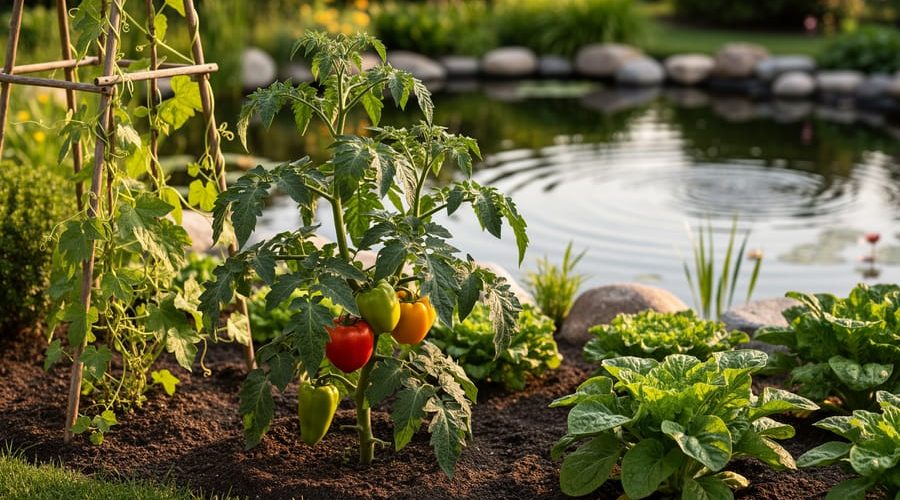
Drought Resistant Vegetable Plants That Thrive Around Your Water Garden
Drought resistant vegetable plants let you grow food with less water, making them perfect for dry climates, water-restricted areas, or gardens where irrigation is impractical. Varieties like tomatoes, peppers, beans, and squash have evolved deep root systems and water-storing leaves that help them thrive when rainfall is scarce. For water gardeners who’ve invested time and resources into their ponds, these low-water vegetables solve a real problem: you can cultivate a productive kitchen garden nearby without competing for the same water supply or stressing your pond’s ecosystem.
I learned this the hard way after planting a traditional vegetable patch next to my backyard pond a few years ago. Between watering the garden and maintaining pond levels during a particularly hot summer, I was stuck choosing which project got priority. The pond won, but I watched my cucumbers wilt. That experience pushed me to research vegetables that could handle neglect, and what I discovered changed how I approach food gardening around water features.
The beauty of drought-tolerant vegetables goes beyond simple survival. These plants actually perform better when you skip frequent watering, developing stronger root systems and often more concentrated flavors. They’re naturals for raised beds, containers positioned near your pond, or in-ground gardens that rely on occasional deep watering rather than daily sprinkling. Many gardeners assume growing food requires constant attention and abundant water, but selecting the right varieties flips that assumption completely.
This guide walks you through the most reliable drought-resistant vegetables for 2026, explains how their water needs mesh with water garden environments, and covers the techniques that maximize production while respecting local water regulations.
Why Drought Resistant Vegetables Make Sense for Water Gardeners
When you’ve invested time and resources into building a thriving water garden, the last thing you want is your vegetable patch competing for the same water supply. That’s precisely why drought-resistant vegetable plants make such practical companions to ponds and water features.
Your pond’s health depends on maintaining consistent water levels. Every gallon diverted to thirsty tomatoes or water-hungry cucumbers means more frequent top-ups, increased evaporation stress on fish, and potential swings in water chemistry. Drought-resistant vegetables eliminate this tug-of-war entirely. They flourish on deep, infrequent watering, often just rainfall in many climates, leaving your pond’s water budget untouched for what matters most: supporting aquatic life and keeping filtration systems running efficiently.
Water restrictions add another layer of urgency. When municipalities impose outdoor watering limits during drought periods, pond owners face tough choices. Do you fill the pond or water the garden? Drought-tolerant vegetables remove that dilemma. They’re bred and selected for exactly these conditions, thriving with minimal supplemental irrigation even when your watering days are cut to once weekly.
Beyond compliance, there’s an ecological elegance to this approach. Your water garden already demonstrates environmental stewardship, it supports pollinators, provides wildlife habitat, and creates a mini-ecosystem. Surrounding it with drought-resistant vegetable plants extends that philosophy. You’re not fighting nature with constant irrigation. Instead, you’re working with your climate and soil conditions, creating a garden that sustains itself and you without draining resources.
The practical payoff is simple: more vegetables, healthier ponds, less guilt, and significantly lower water bills. When both elements of your garden are designed for resilience rather than dependence, you’ve built something that performs beautifully whether rain arrives or doesn’t.
Understanding Your Water Garden’s Microclimate
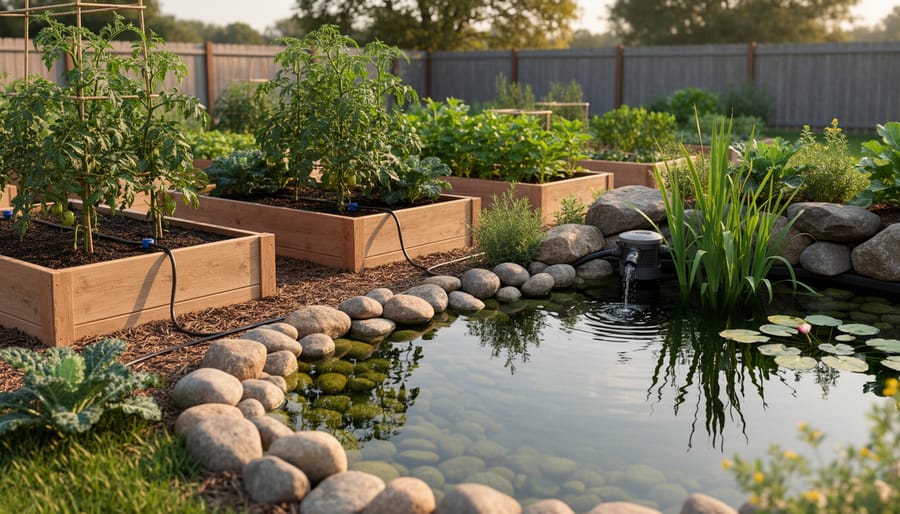
Your pond creates its own little weather system, and understanding those conditions will help you position drought resistant vegetable plants exactly where they’ll thrive with minimal water input.
The area immediately surrounding your pond stays noticeably more humid than the rest of your yard. Water evaporating from the pond surface raises moisture levels within 10 to 15 feet, especially on calm days. This microclimate means vegetables positioned just beyond the pond’s edge can tolerate slightly drier soil because the air around them stays moister. Swiss chard and leafy greens particularly benefit from this setup, growing lush foliage even when you’re watering less frequently.
Reflective heat is another factor most gardeners overlook. Your pond’s surface bounces sunlight and warmth back onto surrounding areas, creating hotter conditions than an open garden bed would experience. Heat-loving drought resistant vegetable plants like tomatoes, peppers, and eggplant excel in these spots. Position them on the south or west side of your pond where reflected heat is strongest, and they’ll produce abundantly while their roots stay drier than traditional vegetables would tolerate.
Shade patterns shift throughout the day as the sun moves across your water garden. Taller pond plants, decorative grasses, or structures create pockets of partial shade that work beautifully for vegetables like lettuce and herbs during summer heat. Map where shade falls at midday and in late afternoon. Those cooler zones let you extend the growing season for greens that would normally bolt in full sun.
Pay attention to prevailing winds, too. Breezy spots near your pond dry out faster as moving air pulls moisture from both soil and leaves. Reserve these areas for genuinely xeric vegetables like rosemary, thyme, and Mediterranean herbs that prefer excellent air circulation and quick-draining conditions.
Test your specific site by monitoring soil moisture at different distances from the pond over a few days. You’ll likely find distinct zones where certain drought resistant vegetable plants naturally perform better with your existing watering routine.
Top Drought Resistant Vegetable Plants for Water Garden Settings
Leafy Greens That Handle Dry Spells
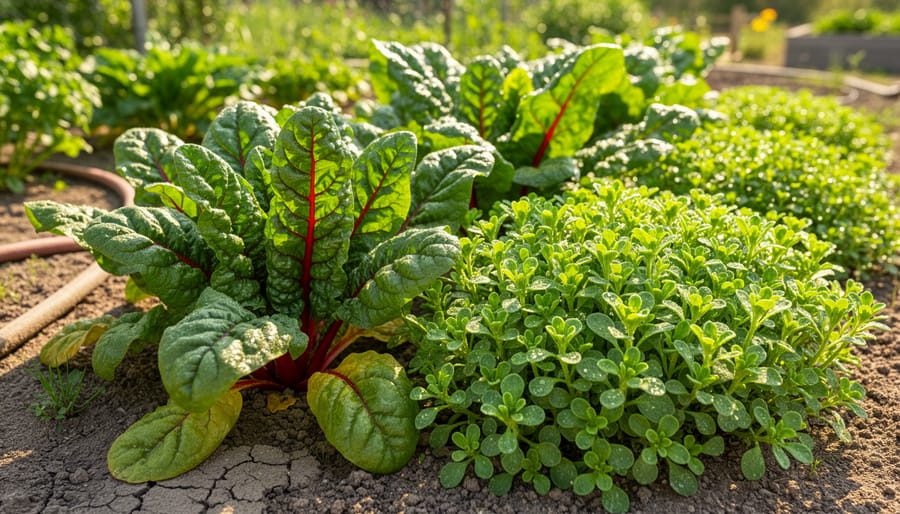
Swiss chard stands out as a champion among drought-resistant leafy greens, tolerating both heat and inconsistent watering while producing vibrant stems in rainbow colors that complement any water garden’s aesthetic. Unlike traditional spinach that bolts in hot weather, chard keeps producing leaves all summer with just one deep watering per week once established. You can harvest outer leaves continuously while the plant regenerates from the center, giving you months of fresh greens from a single planting.
New Zealand spinach (Tetragonia tetragonioides) isn’t actually related to true spinach, but it tastes similar and thrives in conditions that would kill conventional varieties. This sprawling ground cover loves heat, needs minimal water after its first month, and produces tender leaves throughout summer. Plant it near the sunny side of your pond where reflected heat might stress other vegetables, it’ll flourish there while providing attractive ground coverage.
Purslane deserves recognition beyond its reputation as a weed. This succulent green stores water in its fleshy leaves, making it practically drought-proof once established. The crisp, lemony leaves add texture to salads and contain more omega-3 fatty acids than most fish. During periods requiring heat stress care for your pond, purslane keeps producing without demanding extra irrigation. It self-seeds readily, so one planting can provide volunteers for years.
All three greens develop surprisingly deep roots when watered deeply but infrequently, allowing them to access soil moisture while your pond maintains its own water level independently.
Heat-Loving Fruiting Vegetables
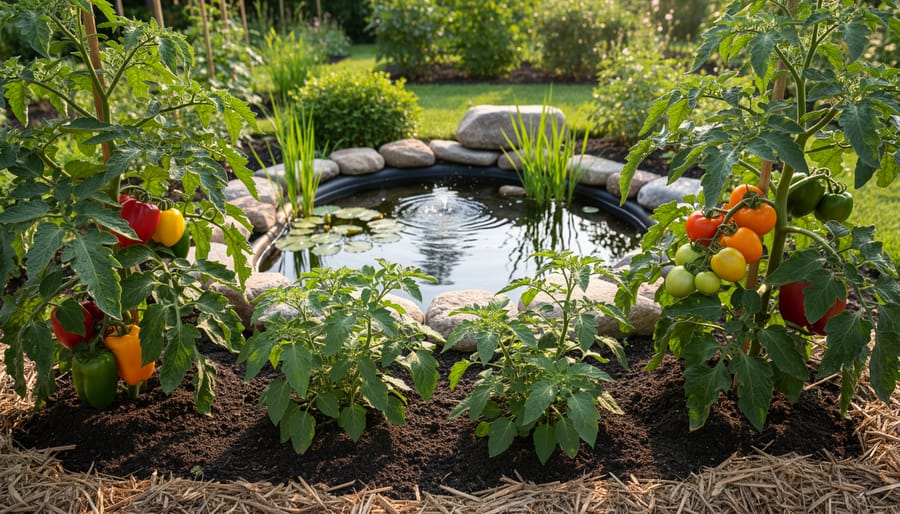
Heat-loving fruiting vegetables are perfect drought-resistant companions for water gardens because they thrive in hot, sunny conditions with less frequent watering. These plants develop extensive root systems when watered deeply but infrequently, making them remarkably self-sufficient once established.
Tomatoes excel in dry conditions when you choose the right varieties. ‘Heatwave II’ and ‘Phoenix’ were bred specifically for hot, arid climates and produce heavily with minimal water. ‘San Marzano’ and ‘Roma’ paste tomatoes also tolerate drought exceptionally well, developing concentrated flavor when slightly stressed. Position these varieties in full sun areas around your pond where reflected heat intensifies growing conditions. Water deeply once weekly rather than daily shallow watering, which encourages surface roots and water dependency.
Peppers actually prefer their soil on the dry side between waterings. Both sweet bell peppers and hot varieties like jalapeños, serranos, and cayenne perform better with drought stress, which concentrates their flavor and heat. Overwatering peppers near your pond leads to bland fruit and root problems, so plant them in well-draining areas where they receive morning sun but afternoon shade from pond-side structures.
| Vegetable | Water Frequency | Days to Harvest | Best Water Garden Placement |
|---|---|---|---|
| Heatwave II Tomato | Weekly deep soak | 68-70 days | Full sun, south side of pond |
| Bell Peppers | Every 5-7 days | 60-80 days | Morning sun, afternoon shade |
| Eggplant | Every 7-10 days | 70-85 days | Hot, reflective areas near rocks |
| Clemson Spineless Okra | Every 7-10 days | 50-60 days | Full sun, well-drained edges |
Eggplant tolerates heat and drought better than most gardeners realize. Varieties like ‘Black Beauty’ and ‘Ichiban’ produce prolifically when established, requiring water only when the top three inches of soil dry completely. The humidity from your nearby pond benefits eggplant during hot afternoons without requiring direct watering.
Okra is practically bulletproof in dry conditions. ‘Clemson Spineless’ and ‘Burgundy’ varieties laugh at drought, producing tender pods throughout summer with weekly watering at most. Plant okra where it receives maximum heat reflection from pond rocks or edging. The taller the plants grow, the more drought-tolerant they become, often requiring no supplemental water by mid-season if you’ve mulched properly.
Root Vegetables Built for Dry Soil
Root vegetables naturally excel in dry conditions because they send taproots deep into the soil to find moisture reserves far below the surface. This makes them perfect companions for your water garden areas where you want food production without constant irrigation.
Carrots thrive when soil dries between waterings. Once established, their long taproots can reach 12-18 inches down, tapping into moisture that surface-watering vegetables miss. Plant varieties like ‘Imperator’ or ‘Danvers’ for the longest roots. Space them properly and thin ruthlessly so each carrot develops a strong taproot rather than competing for water.
Beets handle heat and dry spells remarkably well, especially after their first three weeks. Their deep roots pull nutrients and water from lower soil layers while their broad leaves shade the ground, reducing evaporation. Both the roots and greens are edible, giving you two harvests from one plant. Detroit Dark Red and Chioggia varieties perform consistently in low-water conditions.
Radishes grow so quickly they outpace drought stress. Plant them in 3-4 week succession rather than all at once. French Breakfast and Daikon types develop longer roots that reach deeper moisture. They’re ready to harvest in 25-30 days, before dry soil becomes a serious problem.
Jerusalem artichokes are nearly indestructible once established. These tall plants develop extensive underground tuber systems that store water and nutrients. Plant them once and they’ll return year after year with almost no care. Position them where their 6-8 foot height won’t shade your pond, and harvest tubers as needed throughout winter.
Drought-Proof Herbs and Aromatics
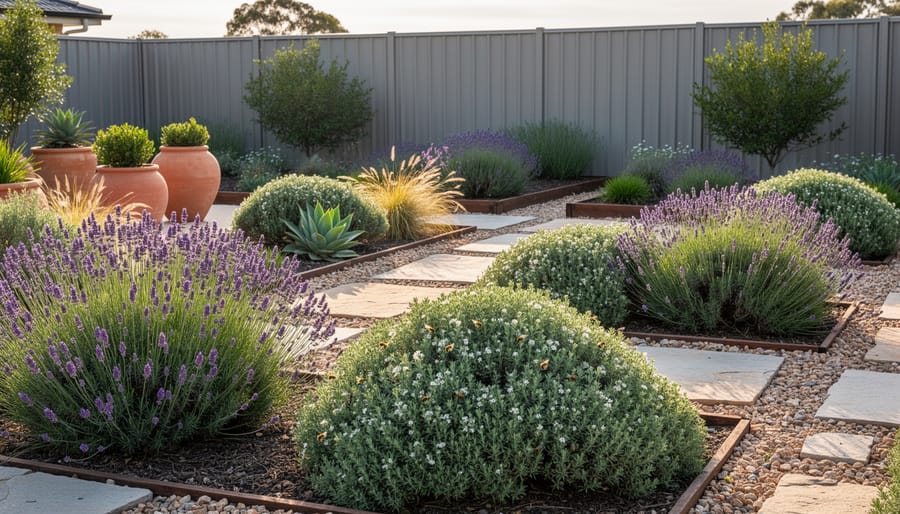
Mediterranean herbs deliver the perfect combination of drought tolerance and culinary versatility for water garden settings. These aromatics evolved in hot, dry climates and thrive with almost no supplemental watering once established, making them ideal drought resistant vegetable plants for areas surrounding your pond.
Rosemary stands out as the most resilient herb, surviving months without irrigation while providing year-round greenery that complements pond aesthetics. Plant it in well-draining soil near stone borders or pathways where reflected heat from your water feature actually benefits its growth. Thyme creates beautiful ground cover in sunny spots, tolerating foot traffic and requiring water only during extreme drought.
Oregano and sage both flourish in the same conditions, preferring dry soil between waterings. These herbs actually develop more concentrated flavors when slightly stressed by drought, a bonus for cooks. Position them on berms or elevated areas where drainage is excellent and they’ll never compete with your pond for water resources.
Bay laurel, lavender, and marjoram round out your drought-proof herb garden. All three handle heat exceptionally well and add structural interest around water features. These herbs need deep watering only every two to three weeks during establishment, then survive entirely on rainfall in most climates. Their silvery-green foliage and compact growth habits create a natural transition between pond edges and vegetable beds.
Beans, Squash, and Other Resilient Producers
Tepary beans stand out among drought-resistant vegetable plants for their incredible heat tolerance, they’ll produce pods even when temperatures push past 100°F and water is scarce. These Native American heirlooms need only 10-12 inches of water for the entire growing season, making them ideal for the perimeter of your water garden where you want food production without competing for pond resources.
Cowpeas (black-eyed peas) deliver similar resilience, actually preferring dry conditions once established. Plant them in the sunniest, driest spots near your pond’s edge, and they’ll fix nitrogen in your soil while producing abundantly with just occasional deep watering.
For winter squash, look for varieties like ‘Hopi Grey’ or ‘Desert Cushaw’ that were bred in arid regions. Their sprawling vines create attractive ground cover around water features, and their deep root systems pull moisture from lower soil layers rather than requiring constant irrigation. One thorough watering per week during fruit development is typically sufficient.
Even zucchini has drought-resistant cousins worth growing. Middle Eastern varieties like ‘Costata Romanesco’ handle heat and dry spells far better than standard types, giving you prolific harvests with half the water demand of conventional squash.
Smart Watering Techniques That Complement Your Pond Maintenance
Your water garden already has a rhythm, top-offs every few days, occasional skimmer cleaning, filter maintenance on schedule. Your vegetable patch needs its own watering routine, one that operates independently while respecting the pond’s needs. The key is delivering water directly to plant roots without creating runoff that might carry soil or nutrients into your pond.
Mulching makes the biggest difference with the least effort. After planting your drought-resistant vegetables, spread three to four inches of organic mulch around each plant, keeping it an inch away from stems. Straw, shredded leaves, or untreated wood chips work beautifully. This barrier keeps soil cool, slows evaporation, and reduces watering frequency by half. Your tomatoes and peppers might need water once a week instead of three times, which matters during restrictions. The pond skimmer collects similar organic debris, and that makes excellent mulch after a quick rinse to remove any algae residue. Just spread skimmer contents around your vegetables rather than composting them separately.
Deep watering trumps frequent shallow sprinkling every time. When you water drought-resistant vegetables, saturate the soil to eight inches down, then let it dry before watering again. This encourages roots to grow deeper, making plants genuinely drought-tolerant rather than just surviving. Check soil moisture four inches down with your finger before deciding to water.
A basic drip system runs on a separate timer from pond equipment, preventing any confusion about water allocation. Here is how to set one up:
- Run a dedicated line from your outdoor faucet or rain barrel to the vegetable beds, keeping it completely separate from pond plumbing.
- Install drip emitters or soaker hoses along each row, positioning them directly over root zones rather than broadcasting water across the entire bed.
- Connect an automatic timer set for early morning watering (between 4 and 7 AM) when evaporation is minimal and pond systems typically run their pre-scheduled maintenance cycles.
- Program longer intervals between waterings (every three to five days) with extended run times (45 to 60 minutes) rather than daily brief waterings.
- Add a backflow preventer if your local code requires separation between irrigation and pond water sources.
Coordinate your vegetable watering with stormwater planning to capture roof runoff for vegetable beds while directing overflow away from the pond during heavy rain. Position vegetable beds on slight slopes that drain away from pond edges, preventing irrigation runoff from introducing sediment or fertilizer into pond water. This separation protects water quality while giving your drought-resistant vegetables exactly what they need without waste.
Regional Compliance: Meeting Water Restrictions Without Sacrificing Your Garden
Water restrictions don’t have to derail your vegetable garden plans, but you need to understand what regulations apply to your property and how to stay compliant while feeding your family.
Start by contacting your local water authority to clarify whether your vegetable beds fall under residential landscape irrigation limits or if exemptions exist for food production. Many jurisdictions treat edible gardens more leniently than ornamental landscaping, particularly when you demonstrate water-efficient practices. Get this clarification in writing, because enforcement officers may not distinguish between a rose bed and a tomato patch during inspections.
Your pond complicates matters slightly, since authorities often regulate decorative water features differently than food gardens. If you haven’t already navigated water garden permitting now is the time to ensure your pond registration is current and separate from your vegetable growing areas in any documentation you submit.
When choosing drought resistant vegetable plants for compliance, focus on varieties specifically bred for low water use that appear on your region’s approved plant lists if such lists exist. Many water districts publish guides identifying which crops qualify for reduced restrictions. Prioritize vegetables from the previous sections that naturally require 30 to 50 percent less water than conventional varieties.
Document everything. Photograph your mulched beds, keep receipts for drip irrigation components, log your watering schedule, and save seed packets showing drought-tolerant variety names. This paper trail protects you if questions arise about your water usage and demonstrates good-faith conservation efforts that can influence enforcement decisions favorably.
Install a separate meter for your vegetable beds if regulations base penalties on total household consumption. The modest installation cost often pays for itself by preventing your food garden from triggering penalty tiers that apply to overall property water use. This separation also gives you precise data about how little water your drought resistant vegetable plants actually need, strengthening any appeals or exemption requests you might file.
Common Mistakes Water Gardeners Make with Vegetable Growing
The biggest trap? Treating vegetable beds like an extension of your pond. Just because you’ve got abundant water nearby doesn’t mean your tomatoes want daily drenching. Overwatering drought-resistant vegetables actually weakens their root systems and invites disease, negating the very resilience you selected them for. Water deeply once or twice weekly instead of frequent shallow watering, even when your pond needs topping up.
Many water gardeners assume pond water makes excellent vegetable irrigation. Stop right there. Without testing, you’re potentially introducing algae blooms, fish waste concentrations, chemical treatments, or even unwanted nutrients that affect vegetable flavor and safety. If you’ve treated your pond with algaecides or fish medications recently, those compounds absolutely shouldn’t reach edible plants. Get your pond water tested before using it on vegetables, or stick with municipal water for food crops.
Ignoring drainage around your pond perimeter creates another problem. That beautiful water feature might be keeping surrounding soil perpetually damp, which contradicts everything drought-resistant vegetables need. Poor drainage leads to root rot, fungal issues, and stunted growth in varieties bred for drier conditions. Install raised beds or improve soil structure with compost and sand to ensure excess moisture drains away, even during pond overflows.
The habit mistake sneaks up on longtime gardeners: automatically planting cucumbers, lettuce, and celery because that’s what you’ve always grown. These water-hungry crops don’t belong near ponds when you’re aiming for drought tolerance. Also, be cautious about introducing potentially invasive species through vegetable varieties that self-seed aggressively. Choose established drought-resistant varieties instead, peppers, beans, Mediterranean herbs, that align with conservation goals rather than fighting against them.
Creating a Year-Round Planting Schedule
A successful year-round schedule pairs drought-resistant vegetables with your pond’s maintenance calendar, ensuring neither system competes for time or water during critical periods. The key is planting cool-season varieties when natural rainfall is abundant and warm-season crops when evaporation peaks but the plants need minimal irrigation.
| Season | Drought-Resistant Vegetables | Watering Frequency |
|---|---|---|
| Spring | Radishes, beets, Swiss chard, peas | Weekly deep watering |
| Summer | Tomatoes, peppers, eggplant, okra | Every 7-10 days |
| Fall | Carrots, turnips, kale, arugula | Every 10-14 days |
| Winter | Garlic, fava beans, winter lettuce | Natural rainfall only |
Start spring plantings in early March with quick-maturing radishes and beets that capitalize on cooler temperatures and natural moisture. Succession plant every three weeks until mid-May, staggering harvests so you’re not overwhelmed during pond cleaning season. Transition to heat-lovers like peppers and tomatoes in late May, giving them six weeks to establish deep roots before summer water restrictions typically begin in July.
Summer is when your planning pays off. Established drought-resistant vegetables require only biweekly deep soaking during peak heat, freeing you to focus on pond aeration and algae control. Plant a second wave of beans in mid-July for fall harvest, and start cool-season seedlings indoors in late August.
As temperatures drop in September, plant carrots, turnips and leafy greens that thrive in autumn’s moderate conditions. These crops mature slowly with minimal watering, often relying entirely on seasonal rains. Before the first frost, plant garlic cloves and fava beans that overwinter with zero irrigation. This timing aligns perfectly with when you winterize water garden equipment, allowing you to focus on pond preparation rather than vegetable care. Winter vegetables remain dormant until spring, requiring no attention while your pond rests under reduced biological activity.
Your water garden and the surrounding landscape don’t have to compete for resources. By choosing drought resistant vegetable plants, you create a balanced ecosystem where both features support each other instead of fighting for the same water supply. The pond stays healthy, your vegetables produce abundantly, and you meet conservation requirements without sacrifice.
Start small if this approach feels unfamiliar. Plant a few Mediterranean herbs near your pond’s sunny edges, or tuck heat-loving tomatoes into well-drained beds away from the water feature. As you gain confidence, expand your plantings with root vegetables and beans that practically thrive on neglect. Track what works in your specific microclimate, and adjust your selections each season.
The beauty of this partnership lies in its flexibility. Drought resistant vegetable plants free you from constant watering schedules, giving you more time to enjoy your pond instead of maintaining it frantically during restrictions. Your garden becomes more resilient, more productive, and frankly, more interesting when you stop treating every plant the same way.
Conservation and abundance aren’t opposing goals. With thoughtful planning and the right varieties, your property transforms into a showcase of what water-wise gardening can achieve, proving that limits inspire creativity rather than restrict it.