
Keep Your Water Garden Thriving When the Heat Hits Hard
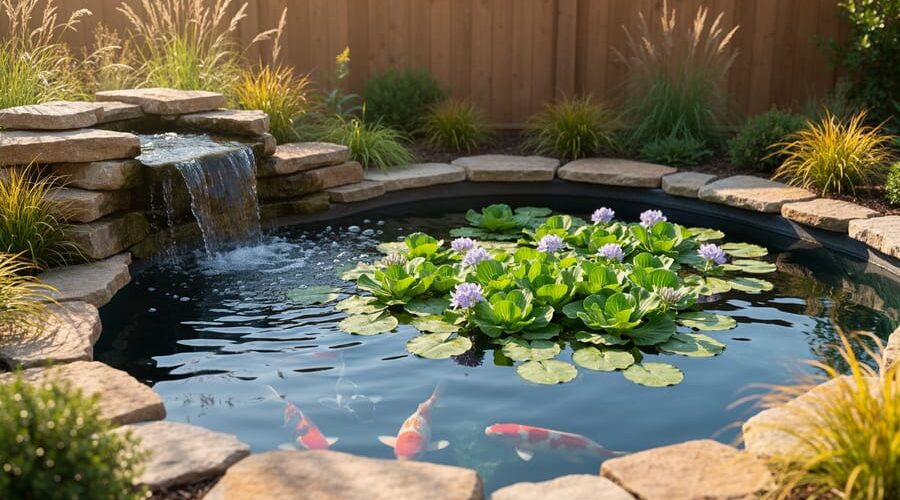
Position your pond in morning sun rather than afternoon sun to reduce heat exposure during the hottest parts of the day. Add floating plants like water lettuce or water hyacinth to cover 40-60% of your pond’s surface, creating natural shade that can lower water temperature by up to 10 degrees. Install a fountain or waterfall to increase oxygen levels, since warm water holds less dissolved oxygen that fish desperately need during heatwaves.
Water resilience isn’t about fighting nature—it’s about working with it. When temperatures soar and droughts stretch longer each summer, your backyard pond faces real threats: algae blooms, fish stress, evaporation loss, and plant damage. I learned this the hard way during my first brutal heatwave, watching my once-crystal pond turn green in just three days.
The good news? You can build a pond that not only survives extreme heat but thrives through it. Whether you’re dealing with an emergency right now or planning ahead for next summer, the strategies are surprisingly straightforward. Think deeper water zones that stay cool, strategic plant placement that provides shade without choking your pond, and smart equipment choices that work harder when temperatures climb.
This guide walks you through both immediate fixes when the thermometer spikes and long-term design principles that make your water garden genuinely heat-resistant. You’ll learn which plants laugh at 100-degree days, how to keep fish happy when the water warms, and regional tweaks that matter for your specific climate zone.
What Water Resilience Really Means for Your Pond
Water resilience isn’t about creating a pond that never changes or faces challenges. Instead, it’s about building a water garden that can bounce back quickly when stressful conditions hit. Think of it like this: a resilient pond is one that can handle a week of scorching 95-degree days without crashing into an algae bloom or losing fish to low oxygen levels.
In practical terms, water resilience means your pond maintains its core balance even when nature throws curveballs. During extended heatwaves, a resilient pond keeps water quality stable despite increased evaporation. When rainfall drops below normal for weeks on end, your water garden doesn’t turn into a muddy mess or require constant topping off. And when temperatures swing wildly between day and night, the ecosystem stays steady rather than stressing your fish and plants.
I learned this lesson the hard way during my first summer managing a backyard pond. A brutal heat spell sent temperatures soaring, and within days, my crystal-clear water turned pea-soup green. My fish gasped at the surface, and I was frantically adding water daily just to keep up with evaporation. That’s when I realized my pond wasn’t resilient. It couldn’t handle stress.
A truly resilient water garden has built-in buffers. It includes enough plants to provide shade and oxygenate water naturally. The design allows for proper circulation so warm surface water doesn’t just sit there cooking everything below. The depth provides cooler zones where fish can retreat. And the overall ecosystem is diverse enough that if one element struggles, others compensate. Resilience is about creating a system that adapts, recovers, and thrives despite whatever weather challenges come your way.
How Heatwaves Attack Your Water Garden
The Oxygen Crisis
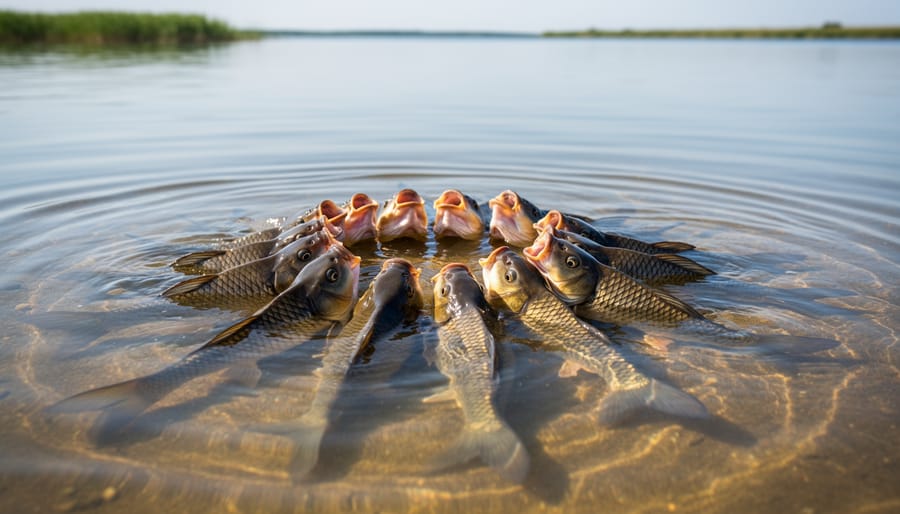
Here’s the thing about heatwaves that catches many pond owners by surprise: as your water temperature climbs, it actually holds less dissolved oxygen. It’s like your pond is slowly suffocating, and your fish and beneficial bacteria are struggling to breathe. I learned this the hard way one scorching July when I noticed my goldfish hanging near the surface, gulping air like they’d just run a marathon.
When water temperatures rise above 75°F, oxygen levels drop significantly. Your hardworking beneficial bacteria that keep ammonia and nitrites in check? They need oxygen too, and when they don’t get enough, your pond’s natural filtration system starts failing right when you need it most.
Watch for these warning signs: fish gathering at the surface or near waterfalls, gasping behavior, lethargy, or algae blooms that seem to appear overnight. You might also notice a cloudy appearance or unpleasant odor, both signs that oxygen-deprived bacteria aren’t doing their job. If you spot these symptoms during a heatwave, your pond is telling you it needs help fast. The good news? There are practical solutions to get oxygen levels back up and prevent future crises.
Evaporation and Water Loss
During a heatwave, your pond can lose water at an alarming rate through evaporation. On scorching days, you might notice the water level dropping by an inch or more in just 24 hours, especially in shallow areas or smaller ponds. I’ve seen beautiful garden ponds shrink dramatically during week-long heat spells, leaving liner edges exposed and plants stranded.
This rapid water loss triggers a domino effect that challenges your entire ecosystem. As water evaporates, minerals and dissolved compounds stay behind, becoming increasingly concentrated. Think of it like reducing a sauce on the stove – what remains becomes more potent. Nutrient levels spike, pH can shift dramatically, and beneficial bacteria struggle to maintain balance in these changing conditions.
The warming water holds less dissolved oxygen, making fish stressed and gasping at the surface. Meanwhile, algae often thrives in these warm, nutrient-rich conditions, turning crystal-clear water murky green seemingly overnight. Aquatic plants may find their roots exposed or their leaves scorched above the dropping waterline. Understanding these cascading effects helps you recognize early warning signs and take action before minor issues become major problems during extended heat events.
Algae Blooms and Water Quality
When temperatures soar during a heatwave, your pond can transform into a green soup practically overnight. Heat acts like fertilizer for algae, accelerating growth and turning your beautiful water feature murky and uninviting. I’ve watched my own pond go from crystal clear to pea-green in just three days during an unexpected heat spell, and let me tell you, it’s frustrating!
Here’s what’s happening beneath the surface: warm water holds less dissolved oxygen, which stresses beneficial bacteria that normally keep things balanced. Meanwhile, algae absolutely thrives in these conditions, multiplying rapidly and consuming nutrients faster than you can say “green water.” This creates a cascade effect where water clarity plummets, pH levels swing wildly, and the overall chemistry becomes unstable.
The good news? Understanding this connection is your first step toward controlling algae blooms before they take over. During heatwaves, monitor your water daily and watch for that telltale greenish tint or sudden cloudiness. Early detection means you can intervene quickly with shade solutions, beneficial bacteria boosters, or mechanical filtration adjustments. Think of it as being proactive rather than reactive, which saves you time, money, and keeps your pond ecosystem healthy through extreme weather.
Building Heat Resilience Into Your Water Garden Design
Depth Matters More Than You Think
Here’s something I learned the hard way during my first scorching summer: a shallow pond is like a hot tub you never asked for! When temperatures soar, shallow water heats up incredibly fast, stressing fish and cooking delicate plants. The magic number? Aim for at least 24 inches deep, but 36 inches is even better.
Deeper ponds create what’s called thermal stratification. Think of it like layers in a cake. The top layer warms up during the day, but the bottom stays refreshingly cool, giving your fish a comfortable retreat when things get toasty. This cool zone can be 10 to 15 degrees cooler than the surface during peak heat.
When you’re planning your water feature, depth should be a priority in your pond design principles. If you already have a shallow pond, consider excavating deeper zones or adding a separate deeper section. Your fish will thank you by staying healthy and active, even when the thermometer climbs. Remember, deeper water also stays more stable overnight, preventing the dramatic temperature swings that really stress aquatic life.
Strategic Shade Solutions
One of the most effective ways to build heat resilience in your water garden is creating thoughtful shade coverage. Think of it as giving your pond a protective umbrella during those scorching summer days!
Let’s start with natural shading, which I personally love because it looks gorgeous and does double duty. Planting trees or large shrubs on the south and west sides of your pond provides dappled shade during the hottest afternoon hours. Deciduous trees like willows or Japanese maples work beautifully, offering summer shade while allowing winter sunlight through. Just remember to plant far enough away that roots won’t interfere with your pond liner, typically at least 10 feet from the edge.
Aquatic plants themselves provide fantastic surface shade. Water lilies are your best friend here, with their floating leaves creating natural cooling zones. Aim for about 40-60% surface coverage during summer months. Floating plants like water lettuce or water hyacinth add extra shade quickly, though you’ll need to thin them regularly so they don’t take over completely.
For artificial solutions, shade sails have become my go-to recommendation. These fabric canopies are affordable, easy to install, and adjustable. Position them to block afternoon sun while still allowing morning light. Install posts around your pond perimeter, attach the sail corners using tension hardware, and you’re done! Choose light-colored, UV-resistant fabric for maximum heat reflection.
Pergolas or arbors offer another stylish option, especially when combined with climbing vines. This creates a living shade structure that improves year after year while adding vertical interest to your garden space.
Water Movement Is Your Best Defense
Here’s the thing I’ve learned from decades of keeping ponds healthy through scorching summers: still water is struggling water. When temperatures soar, oxygen levels plummet, and that’s when your fish start gasping at the surface and algae blooms take over. The solution? Keep that water moving.
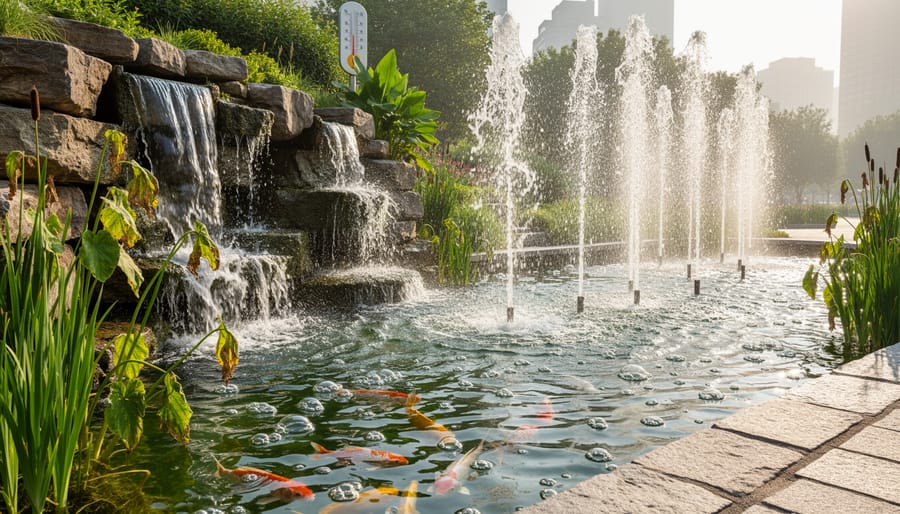
Think of circulation like giving your pond a constant breath of fresh air. Fountains are my favorite starting point because they’re both functional and beautiful. Every droplet that shoots into the air picks up oxygen before splashing back down. I added a simple fountain to my backyard pond five years ago, and the difference during heat waves was remarkable. My goldfish were noticeably more active, and the water stayed clearer.
Waterfalls create even more turbulence, which means better oxygen exchange. If you already have a waterfall feature, consider increasing its flow rate during extreme heat. The sound alone is therapeutic during those sweltering afternoons!
For larger ponds or when aesthetics aren’t your primary concern, pond aeration systems are absolute workhorses. These underwater bubblers might not look fancy, but they circulate oxygen throughout the entire water column, reaching depths that surface features can’t. I run mine 24/7 during summer, and it’s worth every penny on the electric bill. Your fish will thank you, and you’ll spend less time fighting green water.
Plant Choices That Beat the Heat
Surface Coverage Champions
Think of floating plants as nature’s built-in sun umbrellas for your pond. When temperatures soar, these leafy champions create cooling shade that can lower water temperature by several degrees while dramatically cutting evaporation. It’s like giving your pond its own personal air conditioning system!
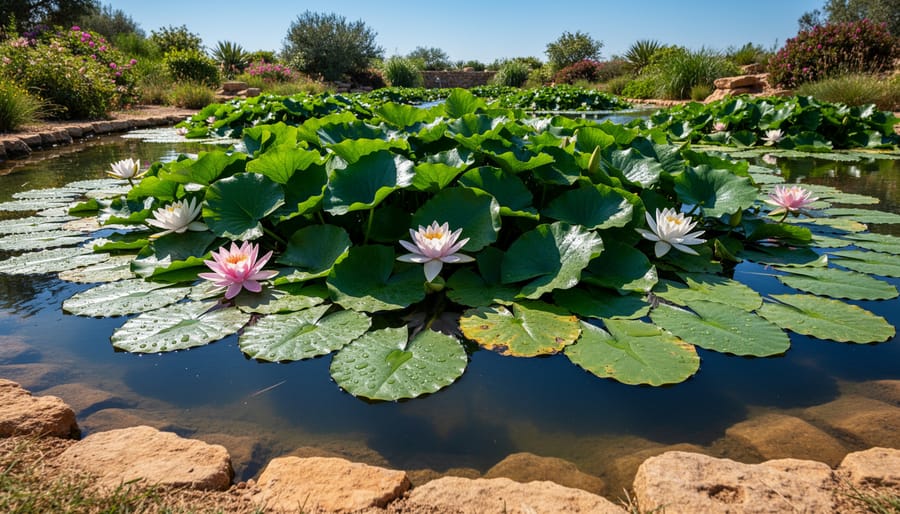
Water lilies are absolute superstars in this category. Their broad, flat leaves spread across the surface like protective shields, and they’re surprisingly tough once established. Hardy varieties can handle everything from intense sun to temperature swings. For best results with these beauties, check out our comprehensive water lily care guide to get them thriving from the start.
Lotus plants are another fantastic choice, especially if you want drama and height. Their umbrella-like leaves rise above the water, creating multiple layers of shade and adding vertical interest to your pond. They’re incredibly heat-tolerant and actually love full sun.
Don’t overlook smaller floating plants like water hyacinth or frogbit for filling gaps between larger plants. Aim to cover about 50-70 percent of your pond’s surface during peak summer months. This sweet spot provides shade and evaporation protection while still allowing oxygen exchange and leaving room for fish to surface.
Oxygenating Plants for Summer
When temperatures soar, submerged oxygenating plants become your pond’s best friends. These underwater champions work overtime during summer, releasing oxygen that fish desperately need when warm water naturally holds less of it.
Hornwort is my top recommendation for hot climates. This floating wonder doesn’t even need planting and thrives in warmer water. Just toss bunches into your pond, and it gets to work immediately. I’ve seen it rescue struggling ponds during week-long heatwaves.
Anacharis is another reliable performer that tolerates heat well. Plant it in containers with gravel, spacing bunches about six inches apart. It grows quickly, so you’ll need to trim it back occasionally, which actually helps because you can relocate those cuttings to other areas.
Water sprite adapts beautifully to temperature changes and can grow either submerged or floating. For summer resilience, keep it anchored in shallow areas where it receives partial shade.
Care is wonderfully simple: these plants naturally thin themselves in extreme conditions, so remove any brown or decaying portions weekly. During heatwaves, add extra bunches since oxygen demand increases. Plan for one bunch per two square feet of water surface for optimal results.
Heat-Tolerant Marginal Plants
The edges of your pond deserve plants that won’t surrender when temperatures soar. Marginal plants are your secret weapon because they provide valuable shade for fish while filtering nutrients that would otherwise fuel algae growth.
I’ve had fantastic success with pickerel rush, which thrives even when my pond edges reach scorching temperatures. Its glossy leaves stay perky, and the purple flower spikes add a cheerful touch. Arrowhead is another champion, with its distinctive arrow-shaped foliage that remains crisp through heatwaves.
For a softer look, try dwarf papyrus, which creates a lovely fountain effect and tolerates blazing sun beautifully. Water hibiscus produces stunning blooms that actually prefer the heat, while cardinal flower brings vibrant red color to your pond margins without wilting.
Position these plants along the southern and western edges where they’ll intercept the harshest afternoon sun, creating cooling shade for your water below and giving fish comfortable refuges during peak heat hours.
Protecting Your Fish During Heat Emergencies
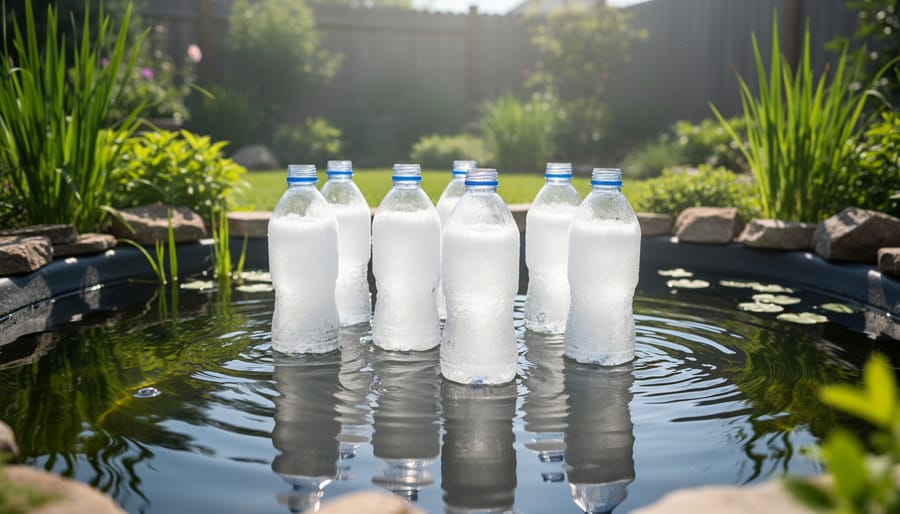
Emergency Cooling Techniques
When your pond water temperature spikes dangerously during a heatwave, quick action can save your fish and plants. Here’s how to cool things down safely without shocking your aquatic friends.
Start with the ice bottle method, which gives you controlled, gradual cooling. Fill clean plastic bottles three-quarters full with water, freeze them solid, then float two or three bottles in your pond. This slowly releases cold without creating sudden temperature swings that stress fish. Replace bottles as they melt, keeping a rotation going in your freezer.
For faster results, combine ice bottles with partial water changes. Remove about 10-15% of your pond water and replace it with fresh, cooler water from your garden hose. Let the hose run for a few minutes first to flush out any hot water sitting in the line. Add the new water slowly over 20-30 minutes rather than dumping it in all at once.
During my first serious heatwave, I learned this the hard way when I added too much cold water too quickly and watched my goldfish dart around in distress. Patience really matters here! Monitor your pond thermometer throughout the process, aiming to lower the temperature by just 2-3 degrees per hour. This gentle approach keeps everyone comfortable while you work toward a safer range.
Feeding Adjustments in Hot Weather
During heatwaves, your fish’s metabolism actually slows down as oxygen levels drop in warmer water. This might sound counterintuitive, but it’s the perfect time to cut back on feeding. When fish are less active, they need less food, and any uneaten food quickly decomposes in hot water, creating ammonia spikes that further stress your aquatic friends.
I learned this the hard way one July when I kept my regular feeding schedule during a scorcher. The water turned cloudy within days, and my fish were gasping at the surface. Now I follow a simple rule: when temperatures climb above 85°F, I reduce feeding to once daily or even every other day, offering only what fish can consume in two to three minutes.
Watch your fish closely. If they’re hanging near the surface or seem lethargic, skip a feeding entirely. Remember, healthy fish can actually go several days without food, but they can’t survive poor water quality. Think of it as a temporary diet that protects both your fish and your pond’s delicate balance.
Monitoring Your Fish for Heat Stress
Your fish will tell you when the heat becomes too much—you just need to know their language! Watch for fish gasping at the water’s surface, which signals low oxygen levels. This is your first red flag. You might also notice them gathering near waterfalls or fountain spray where oxygen is slightly higher, or they may become unusually lethargic and stop their normal feeding routine.
Check for rapid gill movement, another clear sign of distress. During extreme heat, suspended feeding is normal behavior—don’t panic if they’re not interested in food. However, if you spot fish lying on their sides or swimming erratically, take immediate action by increasing aeration and performing a partial water change with cooler water.
Maintaining excellent koi pond health during heatwaves means checking your fish twice daily during extreme temperatures. Trust your observations—you know your fish best, and catching stress early prevents serious problems down the road.
Your Daily Heat Management Routine
Managing your water garden through a heatwave doesn’t have to be overwhelming. I’ve found that breaking tasks into morning and evening routines makes it much easier to stay on top of things without feeling stressed. Here’s the practical checklist I follow during hot spells.
Start your morning routine early, ideally before 9 AM when temperatures are still manageable. First, check your water level and top off as needed. I always keep my garden hose nearby during heat waves to make this quick. Next, observe your fish behavior. Are they gasping at the surface or hiding in deeper areas? This tells you a lot about oxygen levels. Test your water temperature with a simple thermometer and make note of any readings above 80°F, as this is when problems typically start.
Give your plants a quick inspection, looking for wilting leaves or signs of stress. Remove any dead plant material you spot since decomposition depletes oxygen. Check that your pump and filtration system are running smoothly. A clogged filter during a heatwave can spell disaster.
Your evening routine should happen after the sun’s intensity has dropped, usually after 6 PM. This is the perfect time to add fresh water if levels have dropped throughout the day. Run any fountains or aerators you have, as the cooler evening air makes oxygenation more effective. I like to do a second fish check, ensuring they’re more active now that temperatures have dropped.
If you have marginal plants in containers, this is when you might need to move the most vulnerable ones to shadier spots. Finally, take a moment to clean your skimmer basket if you have one, removing leaves and debris that accumulated during the day.
The key is consistency. These routines take maybe 15 minutes each, but they make all the difference in keeping your water garden thriving when the mercury rises.
Regional Considerations: Adapting to Your Climate
Your water garden’s resilience strategy needs to reflect where you actually live. I learned this the hard way when I moved from the Pacific Northwest to Arizona and tried using the same summertime pond care approach. Spoiler alert: it didn’t go well!
If you’re in desert regions like the Southwest, your biggest challenge is relentless sun and low humidity. Your water can evaporate two inches or more per day during peak summer. Focus on shade structures, deeper ponds that resist temperature swings, and heat-loving plants like tropical water lilies. I’ve found that adding a small waterfall helps with evaporation cooling, though you’ll need to top off water frequently.
Humid climates like the Southeast face different issues. Your water won’t evaporate as quickly, but high temperatures combined with humidity create perfect conditions for algae blooms and oxygen depletion. Here, circulation is your best friend. Invest in aeration systems and position your pond where it catches morning sun but afternoon shade. Native plants adapted to your muggy summers will thrive better than imports.
The trickiest situations are areas experiencing new heat patterns due to climate change. If your region traditionally had mild summers but now faces regular heatwaves, your existing pond might not be equipped to handle the stress. Start by monitoring water temperature during hot spells. If you’re consistently hitting above 80 degrees Fahrenheit, it’s time to retrofit with shade solutions and upgrade your aeration.
Talk to local water gardening groups or nearby pond supply shops. They’ll know exactly which challenges your specific microclimate presents and what solutions work best for your neighbors.
You’ve got this! Protecting your water garden through extreme heat might feel overwhelming at first, but remember that every strategy we’ve covered is something you can absolutely master. Whether you’re adding shade sails, introducing more oxygenating plants, or simply checking your water levels more frequently, each action builds your garden’s resilience. The beauty of water gardening is that it teaches us to work with nature, not against it, and that includes adapting to our changing climate.
Last summer, when temperatures soared past 105 degrees for a week straight, I watched my neighbor panic over her pond. But because she’d followed these basic preparation steps—added floating plants, installed a backup aerator, and created deeper zones—her fish thrived while others struggled. She told me later that the confidence she gained from being prepared was worth every bit of effort.
Start small if you need to. Pick one or two strategies that fit your situation and build from there. Your water garden is tougher than you think, and with your attention and these tools, it’ll weather whatever heat comes your way.