
Why Your Pond’s Health Depends on a Redox Potential Meter
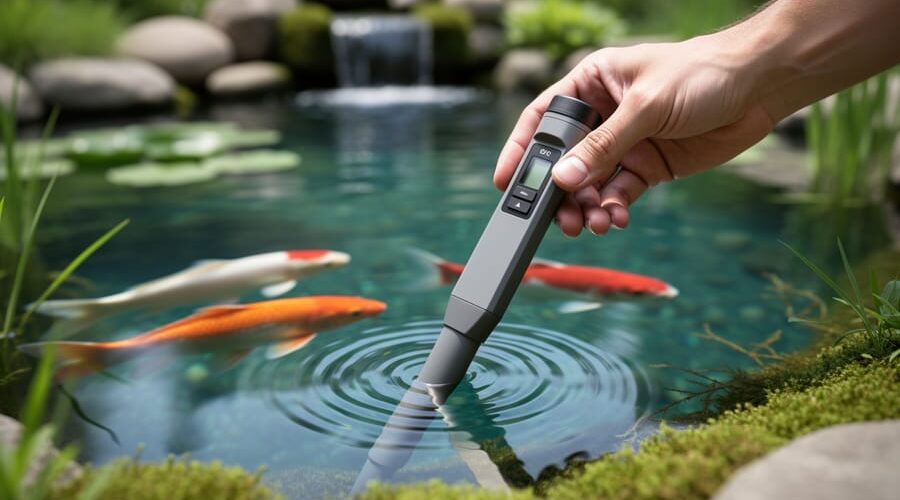
Your pond’s water holds invisible electrical signals that tell you whether it’s thriving or heading toward trouble. A redox potential meter measures these signals, giving you a numerical reading (in millivolts) that reveals the oxidation-reduction balance in your water. Think of it as taking your pond’s pulse.
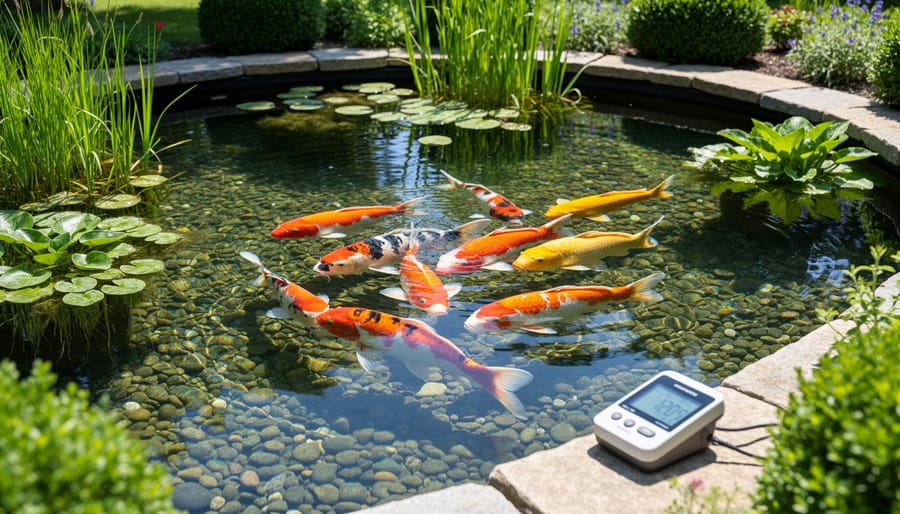
Most pond owners rely solely on pH tests and ammonia strips for water quality monitoringbut they’re missing half the story. Redox readings between 300-400mV typically indicate healthy, oxygen-rich water where beneficial bacteria flourish and fish thrive. Drop below 200mV, and you’re looking at stagnant conditions where harmful anaerobic bacteria take over. Spike above 450mV, and your water might be too oxidized from excessive chemicals or algae treatments.
I’ll admit, when I first heard about redox monitoring, it sounded unnecessarily technical. Why add another meter to my pond maintenance routine? Then I watched a friend struggle with persistent algae blooms despite perfect pH and acceptable ammonia levels. His redox readings told the real story: his pond was stuck at 150mV, creating conditions where problem organisms thrived while good bacteria couldn’t establish.
Here’s what makes redox meters valuable. They catch problems before they become visible. You’ll spot deteriorating conditions days or even weeks before fish start gasping at the surface or water turns murky. The readings also help you understand whether your filtration upgrades, aeration improvements, or bacterial treatments are actually working.
This guide will show you exactly what redox meters measure, which features matter for pond applications, and how to interpret readings in practical terms that directly improve your water quality. No chemistry degree required.
What Redox Potential Actually Means for Your Pond
Think of redox potential as your pond’s chemical scorecard. It measures the balance between oxidizing substances (like oxygen) that give electrons and reducing substances (like organic waste and decaying matter) that take electrons. This invisible tug-of-war happening in your water determines whether your pond environment leans toward fresh, oxygen-rich conditions or stagnant, oxygen-depleted ones.
When your pond has a healthy redox potential, beneficial bacteria thrive and do their job breaking down waste efficiently. The water stays clearer, smells fresher, and creates a better environment for everything living in it. A positive redox reading (typically above 200 millivolts) tells you there’s plenty of oxidizing activity, which is exactly what you want for good fish health and a balanced ecosystem.
On the flip side, a low or negative redox reading signals trouble. Your pond might be accumulating too much organic matter, lacking sufficient oxygen, or dealing with an overgrowth of anaerobic bacteria (the kind that don’t need oxygen and often produce unpleasant smells). Fish become stressed in these conditions because the water chemistry shifts against them.
The beauty of understanding redox potential is that it gives you an early warning system. You can spot problems developing before they become visible issues like algae blooms or sick fish. Most pond owners rely on pH and dissolved oxygen tests, but redox potential adds another dimension to your understanding. It shows you the overall chemical activity in your water, helping you make smarter decisions about filtration, aeration, and maintenance timing.
Signs Your Pond’s Redox Balance Is Off
Your pond will tell you when something’s wrong, usually before any fancy equipment does. The trick is learning to read these warning signs before they turn into full-blown disasters.
Murky or cloudy water is often the first red flag. If your pond suddenly looks like someone dumped a bucket of milk in it, or the water takes on a grayish-green tint that won’t clear up, you’re probably dealing with redox issues. Clear water doesn’t guarantee perfect balance, but persistent cloudiness almost always signals trouble.
Then there’s the smell test. A healthy pond smells earthy, maybe a bit like fresh-cut grass after rain. But when redox levels drop too low, you’ll notice a rotten egg odor or that unmistakable swamp smell. This happens because harmful anaerobic bacteria start producing hydrogen sulfide and other nasty compounds. Trust your nose on this one.
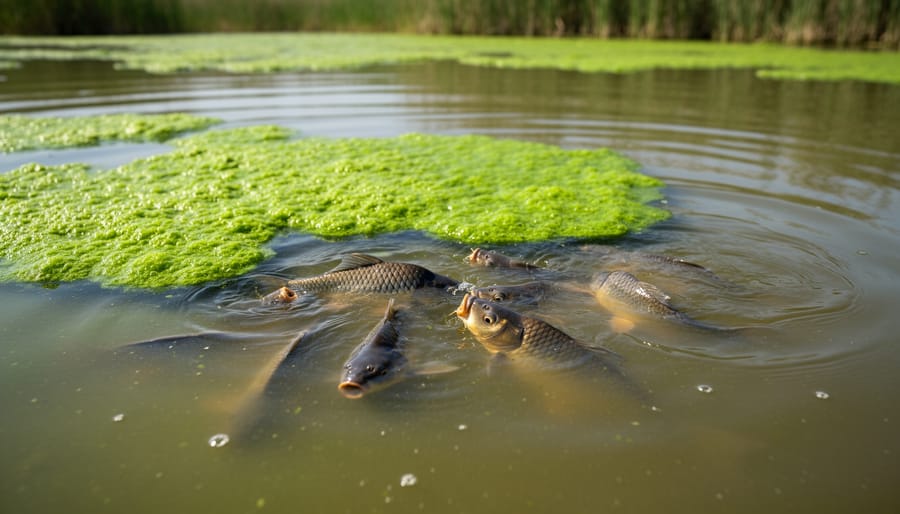
Algae blooms tell their own story. Sure, a little algae is normal, but if you’re suddenly battling thick green pea soup or stringy mats of algae covering everything, your pond’s redox balance has likely shifted. Algae thrives in low-oxygen, low-redox conditions where beneficial bacteria can’t keep up.
Watch your fish behavior closely. Are they gasping at the surface more than usual? Hanging out near waterfalls or fountain spray? Acting lethargic or losing their appetite? Fish are incredibly sensitive to water quality changes and they’ll show stress symptoms before your test kit registers problems.
Your plants provide clues too. Yellowing leaves, stunted growth, or plants that simply refuse to thrive despite good light and regular feeding often point to underlying water chemistry issues. Poor redox potential means nutrients aren’t cycling properly through the pond ecosystem.
If you’re seeing two or more of these symptoms together, it’s definitely time to start monitoring your redox levels more carefully. These signs mean your pond’s natural balance has tipped, and without intervention, conditions will only get worse.
Understanding Redox Potential Meters
How Redox Meters Work (The Simple Version)
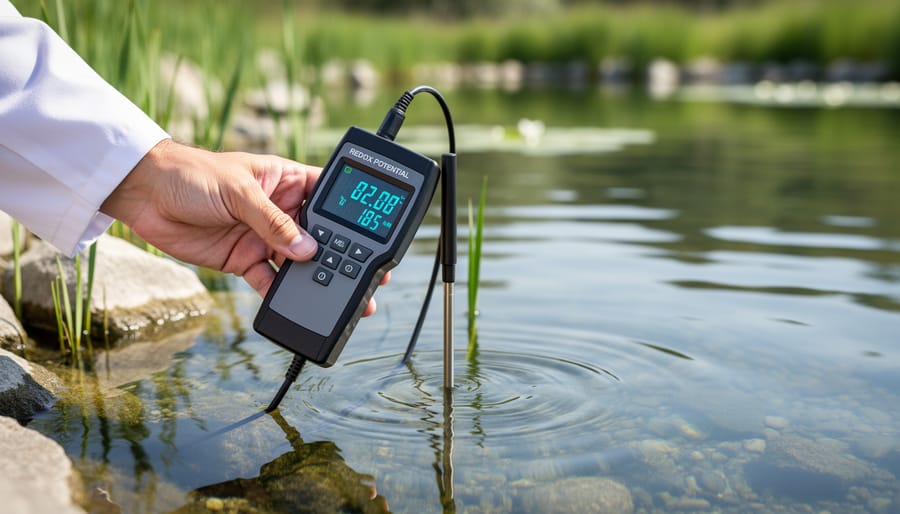
Here’s the thing about redox meters: they’re surprisingly straightforward devices doing something that sounds complicated. At the heart of every redox meter is a special probe that you place directly in your pond water. This probe contains two electrodes (think of them as sensors) that measure the electrical activity happening between the water molecules and dissolved substances.
When you dip the probe in, those electrodes detect how easily electrons move around in the water. Healthy pond water with plenty of oxygen and beneficial bacteria creates lots of electron movement. The probe picks up on this electrical energy and sends that information to the meter’s display.
The meter translates this electrical potential into a number measured in millivolts (mV). You’ll see readings typically ranging from -200 mV to +600 mV, though most pond owners work within the 200-400 mV sweet spot. Higher numbers generally mean your water is more oxidized and healthier. Lower numbers suggest your pond might be struggling with too much organic waste or not enough oxygen.
Think of it like taking your pond’s temperature, except instead of measuring heat, you’re measuring the water’s ability to support life. The probe does all the scientific work. You just read the number and compare it to healthy ranges. No chemistry degree required, which is exactly why these meters have become so popular among regular pond owners like us.
What the Numbers Tell You
When you first look at your meter’s display, those numbers might seem mysterious. But here’s the good news: reading redox potential is actually pretty straightforward once you understand what you’re looking at. The meter measures electrical potential in millivolts (mV), and those numbers tell an important story about what’s happening beneath your pond’s surface.
Think of the millivolt scale as a health report card for your water. Readings between 300 and 400 mV signal that your pond is doing great. At this range, there’s plenty of dissolved oxygen, beneficial bacteria are thriving, and your fish are swimming in a well-balanced environment. healthy lakes and rivers typically maintain readings in this sweet spot.
| Redox Reading (mV) | Pond Condition | What You Should Do |
|---|---|---|
| 300-400 mV | Excellent. Water is well-oxygenated and balanced. | Keep up current maintenance routine |
| 200-300 mV | Acceptable but declining. Watch for changes. | Check aeration, reduce feeding slightly |
| 100-200 mV | Concerning. Low oxygen, increasing waste. | Add aeration immediately, test water chemistry |
| Below 100 mV | Danger zone. Toxic gases may be forming. | Emergency action needed. Major water change required |
Readings that drop between 200 and 300 mV mean your pond is starting to struggle. Maybe you’ve been feeding heavily, or perhaps leaves have accumulated. The good news is you’ve caught it early.
Below 200 mV? Now we’re in problem territory. Your pond is running out of oxygen, and harmful bacteria are starting to outnumber the helpful ones. You’ll need to take action quickly.
Drop below 100 mV and you’re in the danger zone. At these low readings, toxic hydrogen sulfide can form, and your fish are genuinely at risk. This is an emergency situation requiring immediate intervention.
Who Really Needs a Redox Meter
Let’s be honest: most backyard water gardens don’t need a redox meter. If you’ve got a small preformed pond with a handful of goldfish and some water lilies, you’re better off spending that money on a quality mechanical filter or more plants. Simple weekly water testing with basic kits will tell you everything you need to know.
But certain situations absolutely justify the investment. Koi ponds are prime candidates, especially if you’ve got expensive fish or a heavily stocked system where water quality crashes can happen fast. I learned this the hard way when I lost three beautiful koi during a hot summer before I started monitoring redox levels properly. Aquaponics systems also benefit enormously since you’re balancing both fish health and plant nutrient needs. The same goes for commercial fish breeding operations or quarantine tanks where precision matters.
Heavily planted ponds over 3,000 gallons where biological processes get complex? A redox meter helps you stay ahead of problems rather than reacting after fish start gasping at the surface. Smaller setups under 1,000 gallons with moderate stocking? Save your money. Master the basics first: regular partial water changes, appropriate filtration, and standard ammonia, nitrite, and pH testing will serve you better than fancy equipment you don’t fully understand yet.
Choosing the Right Redox Meter for Your Pond
Shopping for a redox meter can feel overwhelming at first, but understanding what separates a basic model from a professional one will help you spend your money wisely. The good news? You don’t need the most expensive option to maintain a healthy pond.
Let’s start with the basics. Redox meters fall into three categories: handheld testers, continuous monitors, and combination meters. Handheld testers are perfect if you plan to check your pond weekly or monthly. They’re portable, affordable, and give you a reading in seconds. Continuous monitors stay in your pond 24/7, providing constant measurements. These work brilliantly if you have a koi collection or a heavily stocked pond where water quality can shift quickly. Combination meters measure both redox potential and pH, which gives you a more complete picture of your water chemistry.
For most backyard ponds under 5,000 gallons, a handheld tester priced between $50 and $150 will do everything you need. Look for one with automatic temperature compensation, since temperature affects redox readings. A replaceable probe is another must-have feature. Probes wear out over time, and replacing just the probe costs far less than buying a whole new meter.
Budget meters under $50 exist, but I’ve learned the hard way they can be frustratingly inconsistent. The readings jump around, and the probes degrade within months. Not worth the headache. Mid-range meters ($150-$300) offer better accuracy, faster response times, and usually come with calibration solutions. If you’re serious about water quality or managing a large pond, this price range delivers real value.
Professional-grade meters run $300 and up. These include data logging, waterproof construction, and laboratory accuracy. Unless you’re running a commercial fish farm or breeding rare koi, you probably don’t need this level of precision.
Here’s what matters most: calibration capability and probe quality. Your meter should allow easy calibration with standard solutions (usually at 200mV or 400mV). The probe should be replaceable and available from the manufacturer. Check reviews specifically mentioning durability. A meter that fails after three months isn’t a bargain at any price.
One feature I genuinely appreciate is a hold function. This lets you stick the probe in your pond, walk back to shore, and read the display without squinting over the water. Simple, but incredibly practical.
Don’t forget you’ll need storage solution for the probe between uses. Most manufacturers include a small bottle, but you’ll need to buy more. Factor this into your ongoing costs.
How to Use Your Redox Meter Correctly
Getting accurate readings from your redox meter isn’t complicated, but following the right steps makes all the difference. I learned this the hard way after getting inconsistent readings for weeks before realizing I was testing in the wrong spot! Let me walk you through the proper technique so you can start monitoring your pond’s health with confidence.
First things first: probe care matters more than you might think. Always rinse your probe with distilled water before and after each use. Store it according to the manufacturer’s instructions, which usually means keeping the tip moist in storage solution. A dried-out probe gives wildly inaccurate readings and may need replacing sooner than expected.
Here’s how to take a proper measurement:
- Remove the protective cap from your probe and rinse it gently with distilled water.
- Submerge the probe at least 6 inches below the water surface, away from the edges of your pond. Mid-depth in an area with good water circulation works best.
- Hold the probe steady and wait for the reading to stabilize. This typically takes 30 seconds to 2 minutes, depending on your meter.
- Record the reading along with the date, time, and water temperature. Temperature affects redox values, so this context helps you spot patterns.
- Rinse the probe with distilled water and return it to proper storage.
Location matters significantly. Don’t test right next to your waterfall or fountain where oxygen levels spike temporarily. Avoid areas near the bottom where sediment accumulates. Instead, choose a spot that represents your pond’s typical conditions. I always test in the same location, about halfway between my skimmer and the deepest point.
Timing your tests creates better insights than single random readings. Test at the same time each day if possible. Early morning readings tend to be lower because plants haven’t been producing oxygen overnight. Late afternoon readings reflect peak photosynthesis activity. Testing weekly is sufficient for most ponds, but daily checks help during problem periods or after adding treatments.
Keep a simple log in a notebook or smartphone app. Regular water testing reveals trends that single measurements miss. You’ll notice seasonal patterns, see how weather affects your readings, and catch problems before they become crises. My log saved my koi last summer when I spotted a gradual downward trend that signaled developing anaerobic conditions.
Managing Redox Levels to Keep Your Pond Healthy
When Readings Are Too Low
When your redox meter consistently shows readings below 200 mV, your pond is telling you it’s struggling. Low readings indicate reducing conditions, which basically means your water doesn’t have enough dissolved oxygen to keep things balanced. The beneficial aerobic bacteria that break down waste can’t do their job properly, and nastier anaerobic bacteria start taking over. You’ll often notice murky water, unpleasant smells (that rotten egg odor is hydrogen sulfide), and stressed fish.
The most common culprit? oxygen-depletion in sediment combined with too much organic matter decomposing at once. Leaves, fish waste, and uneaten food all consume oxygen as they break down, pushing your redox levels into dangerous territory.
The good news is you can turn things around. Start by increasing aeration immediately. Add an air pump with stones, or upgrade your existing system. More oxygen means your beneficial bacteria can get back to work breaking down waste efficiently.
Next, reduce the organic load. Remove fallen leaves, trim back overgrown plants, and check that you’re not overfeeding your fish. Sometimes less really is more. I learned this the hard way after a particularly leafy autumn left my pond readings in the 150 mV range for weeks.
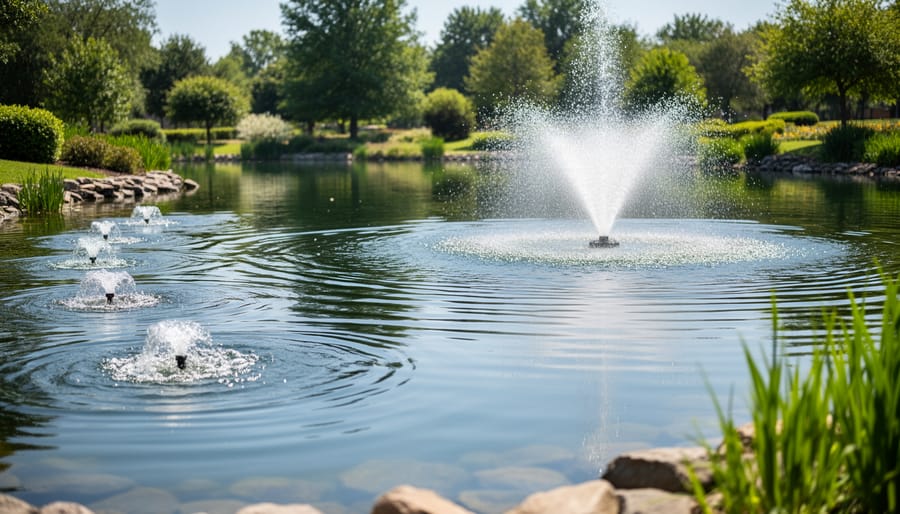
Adding a fountain or waterfall creates surface agitation, which naturally oxygenates your water while looking beautiful. Two birds, one stone.
Consider introducing beneficial bacteria supplements, especially after you’ve improved aeration. These helpful microbes will establish colonies faster and help process accumulated waste.
Monitor your readings daily during recovery. You should see gradual improvement over one to two weeks as conditions stabilize.
When Readings Are Too High
Here’s something most pond owners never worry about: readings that shoot too high on your redox meter. While low readings are the usual concern, occasionally you’ll see numbers climbing above 400 or even 500 mV. Don’t panic, but don’t ignore it either.
These sky-high readings typically happen after someone gets a bit enthusiastic with oxidizing treatments. Maybe you added hydrogen peroxide to fight algae, used potassium permanganate for parasites, or installed a new UV sterilizer while running an ozonator. All these treatments pump oxidizing power into your water, and your meter is simply telling you the truth about what’s happening.
The good news? Your pond isn’t in danger. The tricky part is resisting the urge to dump in dechlorinators or other reducing agents to “fix” the problem quickly. That’s how you end up on a chemical roller coaster, swinging from one extreme to the other.
Instead, take a breath and let nature do most of the work. Stop any oxidizing treatments temporarily. Your beneficial bacteria will gradually consume the excess oxidizers as they break down organic matter. Partial water changes help dilute things gently. Within a few days, readings usually drift back to the healthy 300-400 mV range without any heroic interventions. Patience beats panic every time.
Creating a Monitoring Routine
The best approach? Test daily for the first two weeks after setup or any major change. I learned this the hard way when my pond crashed three days after adding new plants, and I’d only been checking weekly. Daily readings help you learn your pond’s normal range, which typically sits between 250-350 mV for healthy systems.
Once things stabilize, drop to twice weekly checks during active seasons. Test in the morning before feeding and again in late afternoon. You’ll spot trouble when readings dip 50 mV or more below your baseline. That’s your early warning system kicking in.
Keep a simple log, nothing fancy. Jot down the date, time, reading, and weather. Patterns emerge quickly. I noticed my readings always dropped before visible algae blooms, giving me a three-day head start on treatment.
During winter, weekly testing works fine since biological activity slows dramatically. But bump back to frequent checks when spring arrives and temperatures climb past 50°F. Your redox meter catches problems while they’re invisible, giving you time to adjust filtration, add beneficial bacteria, or increase aeration before fish start gasping or water turns murky.
Common Mistakes to Avoid
Even the best equipment won’t serve you well if you’re making some common errors. Let’s talk about what trips up most pond owners so you can avoid these pitfalls from the start.
Skipping proper calibration is the number one mistake I see. Many people pull their redox meter out of the box, stick it in the water, and assume the reading is accurate. Wrong! These devices need regular calibration with standard solutions, typically every few weeks during active use. Think of it like tuning a guitar. You wouldn’t expect perfect sound without tuning, and you shouldn’t expect accurate readings without calibration. Keep a log of when you last calibrated your meter, and don’t let more than a month go by without checking it.
The trend tracking issue ties directly into another big mistake: overreacting to individual readings. Your pond isn’t a chemistry lab with perfectly stable conditions. Weather changes, fish feeding times, and even time of day affect redox levels. I learned this the hard way when I panicked over a low morning reading and added too many beneficial bacteria, which threw everything off balance for a week.
Probe maintenance gets overlooked constantly. That little probe sitting in your pond water? It needs attention. Clean it gently with a soft cloth every week or two, and store it properly in storage solution when not in use. Letting it dry out completely ruins the sensor, and a dirty probe gives you garbage data. Simple care goes a long way.
Finally, people misinterpret what redox actually tells them. A high reading doesn’t automatically mean your pond is healthy, just like a low reading doesn’t mean disaster is imminent. Context matters. Consider your fish load, plants, filtration, and other water parameters before drawing conclusions.
So, should you rush out and buy a redox potential meter for your pond? That depends entirely on your situation and goals.
If you’re managing a koi pond, running a filtration system, or dealing with persistent water quality challenges, a redox meter can provide valuable insights that other testing methods miss. It gives you an early warning system for problems brewing beneath the surface, literally. For simpler garden ponds with fewer fish and plenty of plants, you might find that regular observation and basic water testing meet your needs perfectly well.
Think of redox monitoring as one piece of a larger puzzle. It works alongside your regular pond management routine, not as a replacement for it. You’ll still need to test pH, remove debris, maintain your filter, and watch your fish behavior. The meter simply adds another layer of understanding about what’s happening in your water.
The beauty of pond keeping is that you can start simple and add tools as your knowledge grows. Maybe you begin with visual checks and a basic test kit, then later decide that tracking ORP would help fine-tune your system. There’s no wrong approach.
What matters most is maintaining a healthy environment for your pond life, and there are many ways to achieve that goal. A redox meter might become your favorite diagnostic tool, or it might remain a nice-to-have gadget. Either way, understanding what it measures helps you make better decisions about your pond’s wellbeing.