
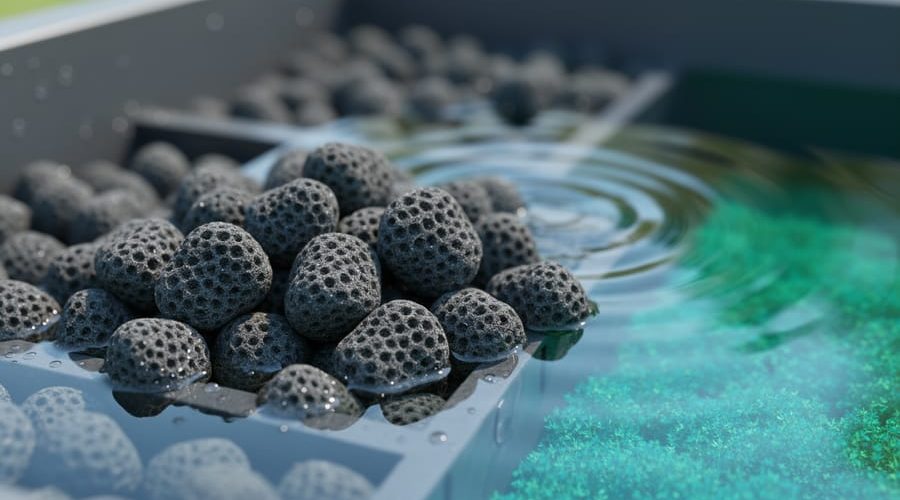
What Is Zeolite Water Filtration (and How Does It Work)?
Zeolite water filtration uses naturally occurring volcanic minerals with a honeycomb-like structure to trap ammonia, heavy metals, and other harmful compounds in pond and water feature systems. These microporous aluminosilicate crystals act like tiny molecular sieves, pulling toxins out of the water through a process called ion exchange while leaving beneficial elements behind.
If you’ve struggled with cloudy water, algae blooms, or fish health issues despite regular maintenance, zeolites might be the missing piece in your filtration setup. They’re particularly valuable in koi ponds and heavily stocked water gardens where fish waste quickly builds up ammonia levels that standard mechanical filters can’t handle alone.
What makes zeolite different from other filter media is its selectivity. Rather than just catching debris like foam or brushes do, zeolite actively removes dissolved pollutants you can’t see. A single pound of zeolite offers about 100 square meters of internal surface area, which translates to serious filtration capacity in a compact package. You can tuck it into an existing filter chamber, use it in mesh bags, or incorporate it into a dedicated reactor.
This guide walks you through exactly how zeolite filtration works at the molecular level, what types and forms you’ll find on the market in 2026, where it makes the biggest difference in real-world pond setups, and how to maintain it so it keeps performing season after season. Whether you’re planning a new water feature or troubleshooting an existing one, you’ll learn when zeolite is worth adding and when your money is better spent elsewhere.
What Is Zeolite?
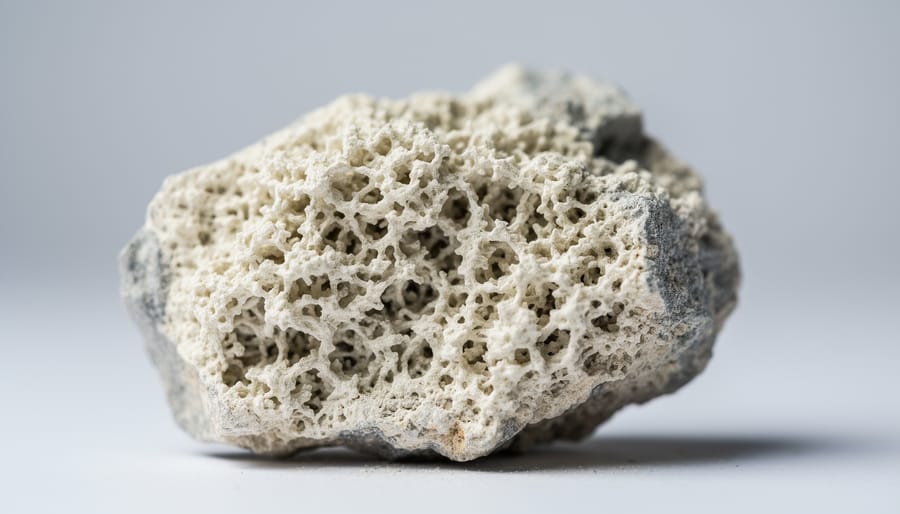
Zeolite is a naturally occurring volcanic mineral that formed millions of years ago when volcanic ash and lava reacted with alkaline groundwater. Think of it as nature’s microscopic sponge, created through ancient geological processes. The result is a crystal structure riddled with tiny, uniform pores and cavities that give zeolite its remarkable filtering abilities.
What makes zeolite special for pond filtration is this honeycomb-like structure at the molecular level. These microscopic channels and chambers act like tiny traps, capturing and holding onto specific particles and molecules as water flows through. The mineral’s framework is made up of aluminum, silicon, and oxygen atoms arranged in a precise lattice pattern that creates countless internal passageways.
- Microporous
- Refers to the tiny, uniform pore structure within zeolite crystals that allows water molecules to pass through while trapping larger contaminant molecules. These pores measure just a few nanometers across, creating an enormous surface area for filtration.
- Ion Exchange
- The process by which zeolite swaps harmless minerals for toxic substances in your pond water. Zeolite releases beneficial calcium or sodium ions while capturing harmful ammonia and heavy metal ions in the pore structure.
- Clinoptilolite
- The most common type of natural zeolite used in pond filtration, valued for its strong affinity for ammonia removal. It’s mined from volcanic ash deposits and represents the go-to choice for most water garden applications.
- Natural vs Synthetic Zeolite
- Natural zeolites are mined from volcanic deposits and offer broad-spectrum filtration at lower cost. Synthetic zeolites are lab-created for specific industrial applications but are rarely necessary for pond use.
For pond keepers, the most important characteristic is zeolite’s negative electrical charge. This charge attracts and holds positively charged particles like ammonia, which happens to be one of the most dangerous toxins in fish ponds. The mineral essentially pulls harmful substances out of the water column and locks them away in its crystalline structure, preventing them from harming your fish or fueling algae growth.
How Zeolite Water Filtration Works
The Ion Exchange Process
Zeolite works through a process called cation exchange, where its crystalline structure acts like a molecular magnet with a negative charge. Think of zeolite’s surface as having millions of tiny parking spaces, each with a strong preference for certain guests. When pond water flows through zeolite media, positively charged particles, particularly ammonia ions (NH4+) and heavy metal ions like lead, copper, and zinc, are drawn into these microporous chambers and held tight.
The magic happens because zeolite naturally contains loosely bound sodium and potassium ions within its framework. When toxic ammonia molecules encounter zeolite, they bump these benign ions out of their spots and take their place. The zeolite essentially trades harmless minerals for harmful contaminants, a swap that dramatically improves water quality. This exchange happens rapidly and continuously as water circulates through your filter, making zeolite ammonium removal exceptionally effective in pond applications.
The released sodium and potassium ions actually benefit your pond ecosystem in small quantities, supporting plant growth without harming fish. Meanwhile, the captured ammonia remains locked inside the zeolite’s cage-like structure until you recharge the media. Heavy metals follow the same pattern, zeolite preferentially grabs toxic copper or lead ions while releasing safe minerals back into the water, functioning as a form of natural water softening that protects both fish and beneficial bacteria colonies.
What Zeolite Removes from Pond Water
Zeolite’s selective filtration targets the most troublesome compounds in pond water, making it particularly valuable for water gardens. Its microporous structure acts like a molecular trap, pulling specific pollutants from the water while leaving beneficial minerals untouched.
The primary contaminants zeolite removes include:
- Ammonia (NH3/NH4+), the most toxic waste product from fish metabolism and decomposing organic matter
- Heavy metals like lead, mercury, cadmium, and copper that leach from pipes, runoff, or decorative elements
- Chloramines, disinfection byproducts from municipal water that harm fish and beneficial bacteria
- Cesium and strontium, radioactive trace elements occasionally present in groundwater
- Certain odor-causing organic compounds that create that swampy smell
Ammonia deserves special attention because it’s the number one killer in ponds. Fish constantly excrete it, and even low concentrations burn gills, stress immune systems, and can prove fatal. Zeolite binds ammonia ions rapidly, often reducing levels within hours rather than days.
While zeolite captures some nitrates, it’s less effective with them than with ammonia. The mineral works best on positively charged particles, and ammonia fits that profile perfectly. Heavy metal removal is a bonus feature that protects fish health long-term, especially in urban ponds near roads or industrial areas where contamination sneaks in through rainwater.
Types of Zeolite for Water Features
Natural vs. Synthetic Zeolite
When choosing zeolite for your pond, you’ll encounter two main categories: natural and synthetic. Understanding the difference helps you make the right call for your water garden.
Natural zeolite, primarily clinoptilolite, forms over millions of years through volcanic activity. It’s mined from deposits worldwide and has been the go-to choice for pond keepers because it’s affordable, widely available, and effective at capturing ammonia. The porous structure works beautifully for biological filtration, giving beneficial bacteria plenty of surface area to colonize while the mineral itself tackles ammonia through ion exchange.
Synthetic zeolites are lab-created with precise molecular structures designed for specific industrial applications. While they can offer higher ammonia capacity in some cases, they’re significantly more expensive and usually overkill for typical pond use.
For water gardens, natural clinoptilolite wins on practicality. It performs reliably, costs less, and you can easily find it in pond supply stores. The slight efficiency advantage of synthetic versions rarely justifies the price jump unless you’re running a commercial fish operation with extreme bioload demands. Stick with natural zeolite, it’s what experienced pond keepers trust.
Forms and Formats
Zeolite comes in several physical formats, and choosing the right one depends on your specific filtration setup and maintenance preferences.
Loose granules are the most versatile option. These small, irregular pieces typically range from 3mm to 8mm and work well in most pond filters. You can pour them directly into filter chambers, bio-filter compartments, or media baskets. The loose format gives you flexibility with quantity and placement, though you’ll need some type of mesh bag or containment if your filter lacks built-in media trays.
Mesh bags contain pre-packaged zeolite granules in durable netting. They’re incredibly convenient for canister filters and hang-on systems where you need contained, easy-to-remove media. Just drop the bag in your filter chamber and replace or recharge when needed. The trade-off is slightly reduced surface area contact compared to loose media, but the convenience usually outweighs this minor limitation.
Filter blocks or plates are solid zeolite pieces shaped to fit specific filter models. These work beautifully in pressurized filters and box filters where you stack media layers. They provide excellent water flow paths and resist compaction, though they’re less adaptable if you switch filtration systems.
Zeolite powder is the finest form, useful for emergency ammonia situations. You can sprinkle it directly in ponds during crises, but it’s too fine for most mechanical filters and will clog traditional media chambers. Reserve powder for targeted interventions rather than everyday filtration.
Particle Size Considerations
Zeolite grain size directly affects how water moves through your filter and how effectively it captures contaminants. Finer particles (1-3mm) offer more surface area for ion exchange, meaning faster ammonia removal and better filtration efficiency. However, they pack tighter and can slow flow rates, potentially causing backpressure in your pump system.
Coarser grains (5-8mm) allow water to flow freely, making them ideal for high-volume pond filters where maintaining flow is critical. They won’t clog as easily but provide less total surface area for filtration.
Most pond keepers find 3-5mm zeolite hits the sweet spot, enough surface area for effective ammonia control without restricting flow. If you’re using zeolite in a canister or pressure filter, stick with medium grades. For gravity-fed systems or large biofilters, you can go coarser without sacrificing performance.
Uses of Zeolite in Ponds and Water Features
In Biological Filtration Systems
Zeolite works beautifully alongside your biological filter media rather than replacing it. In a typical bio-filter setup that uses three stages of filtration add zeolite to the mechanical or chemical stage before water reaches your bio-media. This positioning lets zeolite capture ammonia first, preventing it from overwhelming your beneficial bacteria colonies during startup periods or seasonal stress.
Place zeolite granules in mesh bags positioned between pre-filter foam and ceramic bio-rings. The rough, porous surface of zeolite actually provides excellent colonization sites for nitrifying bacteria while simultaneously performing ion exchange. You’re getting dual benefits: ammonia removal through chemical action and additional bio-surface area for bacterial growth.
For koi ponds, use about 1 to 2 pounds of zeolite per 100 gallons of pond water as a starting point. Position bags where water flow is moderate, not rushing past too quickly. This gives adequate contact time for ion exchange while maintaining the flow rate your beneficial bacteria need for oxygen. Check zeolite monthly and recharge when ammonia readings start creeping up despite healthy bacterial populations.
Emergency Ammonia Control
When ammonia levels suddenly spike in your pond, whether from overfeeding, fish disease treatment, or decomposing organic matter, zeolite becomes your emergency response tool. Unlike biological filters that take weeks to establish, zeolite starts binding ammonia immediately upon contact with water.
During a crisis, place zeolite in mesh bags directly into your pond or position it in the filter’s fastest-flowing section. For acute situations, you can use double your normal amount temporarily. I’ve seen zeolite drop dangerous ammonia readings to safe levels within 24 hours during medication treatments that killed beneficial bacteria. It’s especially valuable during spring startup when bio-filters haven’t fully activated yet, or after heavy rainfall overwhelms your system with debris.
Supporting Heavy Fish Loads
When you’re keeping koi or goldfish in high numbers, ammonia builds up fast, far faster than beneficial bacteria alone can process. A single koi can produce significant waste, and a pond stocked with a dozen or more fish pushes standard biological filtration to its limits. This is where zeolite becomes essential backup support.
In heavily stocked environments, zeolite acts as an ammonia buffer during peak waste periods. While your bio-filter colonies work to convert ammonia through the nitrogen cycle, zeolite immediately traps excess ammonia ions before they reach toxic levels. This dual-action approach, biological conversion plus chemical adsorption, keeps water parameters stable even when fish loads spike during feeding times or warm summer months.
Many koi keepers integrate zeolite directly into their multi-stage filtration systems, placing it after mechanical filtration but before the main biological media. Some pond owners combine it with natural cube filtration for comprehensive coverage. Calculate roughly one pound of zeolite per 100 gallons for heavily stocked ponds, adjusting based on fish size and feeding intensity.
The result is healthier fish with brighter colors, fewer stress-related illnesses, and more flexibility in stocking levels without compromising water quality.
Benefits for Water Gardens and Ponds
Adding zeolite to your pond filtration system delivers tangible improvements you’ll actually notice. The most immediate change is water clarity. Zeolite’s ammonia-trapping action removes one of the key nutrients that fuel suspended algae blooms, those frustrating greenish clouds that make your water look murky. Within days of adding zeolite to my koi pond filter, I watched the water shift from slightly hazy to crystal clear, letting me see fish at depths I hadn’t managed in weeks.
Your fish benefit directly from lower ammonia levels. Ammonia is toxic to fish even at concentrations we can’t detect by sight or smell. Zeolite acts as a safety buffer, especially during spring when beneficial bacteria colonies are still establishing or after heavy feeding periods. I’ve seen stressed fish with clamped fins and rapid gill movement calm down noticeably once zeolite-enhanced filtration kicked in. Healthier fish means fewer disease outbreaks and less need for chemical interventions.
The algae reduction extends beyond water column clarity. String algae and blanketweed grow less aggressively when zeolite keeps ammonia and nitrate levels in check. You’ll still need to do regular maintenance, but you won’t be pulling out armfuls of filamentous growth every other day.
Perhaps zeolite’s biggest advantage is its natural, chemical-free approach. Unlike algaecides or ammonia neutralizers that add substances to your pond, zeolite simply captures existing contaminants. There’s no residue, no pH shock, and no risk of overdosing. For water gardeners who prefer working with nature rather than against it, zeolite fits perfectly into a holistic pond care philosophy.
How to Use Zeolite in Your Pond Filter
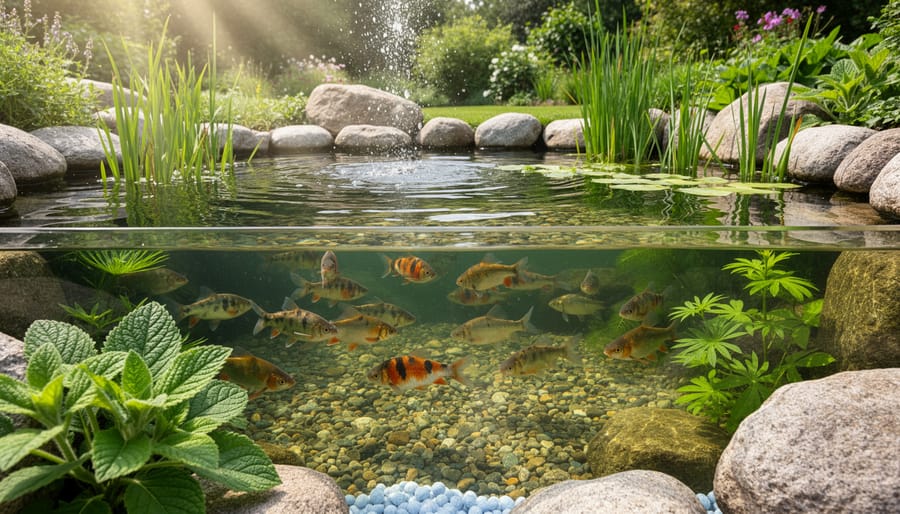
Adding zeolite to your pond filter is straightforward once you know the basics. Start by calculating how much you need, a good rule of thumb is one cup of zeolite per 100 gallons of pond water, though heavily stocked koi ponds might benefit from doubling that amount.
First, rinse your zeolite thoroughly under running water to remove dust and fines that could cloud your pond. Place it in a mesh filter bag or dedicated media chamber, this makes future removal and recharging much easier. Never just dump loose zeolite into your filter box where it can migrate and clog pumps.
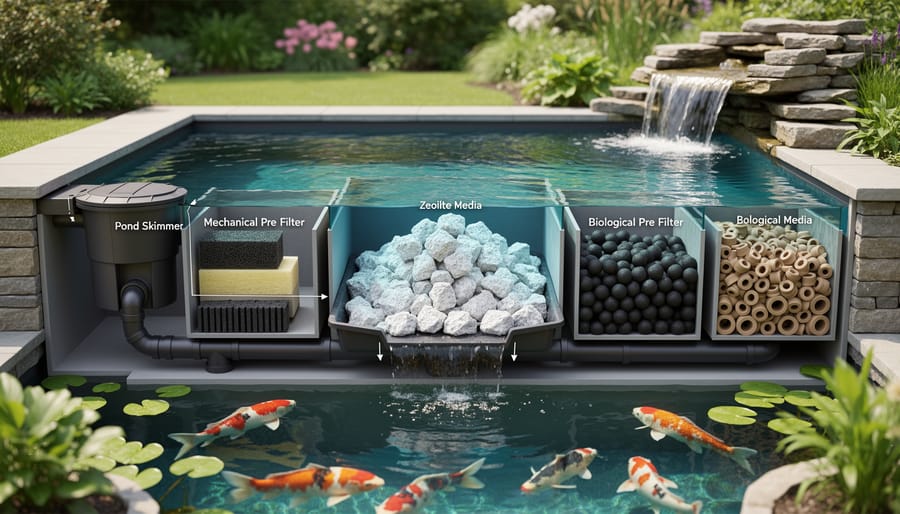
Position zeolite after your mechanical filtration stage but before biological media. This placement lets it work on ammonia without competing with beneficial bacteria for space. In multi-chamber filters, the second or third chamber works perfectly. For canister filters, place zeolite in a dedicated media tray between sponge layers and bio-rings.
If you’re retrofitting an existing system, don’t remove your current bio-media. Simply add zeolite alongside it in an available space or swap out a portion of less effective media. The two work together beautifully, zeolite handles ammonia spikes while bacteria colonize and process waste long-term.
Check water flow after installation to ensure zeolite hasn’t restricted circulation. You want water passing through the media, not around it. If flow seems reduced, you may have packed it too tightly or used too fine a grain size.
Monitor ammonia levels weekly for the first month to gauge effectiveness. You’ll likely see immediate improvement in water clarity and reduced ammonia readings. For ongoing success, follow regular maintenance tips including monthly checks of zeolite saturation and quarterly recharging cycles to keep your filtration system performing at its peak.
Recharging and Maintaining Zeolite Media
One of zeolite’s best features is that you don’t throw it away when it’s exhausted. You can regenerate it multiple times, saving money and keeping it working effectively in your pond filter.
You’ll know it’s time to recharge your zeolite when you notice ammonia levels creeping up despite your filter running normally, or when your pond water loses clarity even though everything else seems fine. Most pond keepers recharge their zeolite every 4-6 weeks during active months, though heavily stocked koi ponds might need it every 2-3 weeks.
The regeneration process is straightforward. Remove the zeolite from your filter and rinse it thoroughly with pond or dechlorinated tap water to flush out trapped debris. Then submerge it completely in a strong salt solution, about 2 cups of non-iodized salt per gallon of water works well. Let it soak for at least 12 hours, though 24 hours is better. The salt draws out the captured ammonia and heavy metals through reverse ion exchange, essentially resetting the zeolite’s filtration capacity.
After soaking, rinse the zeolite multiple times with fresh water until the salt smell disappears. You don’t want to add salty media back into your pond. Let it drain, then return it to your filter system.
Even with regular recharging, zeolite eventually loses effectiveness as its microporous structure degrades. Plan to replace it completely every 12-18 months, or sooner if recharging stops restoring its performance. If the granules start breaking down into dust or clumping together, that’s your signal for fresh media.
Between recharges, a quick rinse during routine filter maintenance keeps debris from clogging the surface and maintains good water flow.
Zeolite vs. Other Filtration Media
Zeolite excels at ammonia removal and heavy metal capture, but it’s not a jack-of-all-trades. Understanding how it stacks up against other common pond media helps you build a truly effective filtration system.
Activated carbon outperforms zeolite for removing dissolved organic compounds, tannins, and medications. If your water has a yellow tint or lingering treatment residues, carbon is your go-to. However, it doesn’t touch ammonia. The two work brilliantly together: carbon handles organics while zeolite tackles nitrogen waste.
Ceramic rings and bio-balls provide enormous surface area for beneficial bacteria colonies but offer no chemical filtration. They’re mechanical and biological workhorses that complement zeolite perfectly. In a multi-stage filter, place zeolite after your bio-media so beneficial bacteria can establish first, then let zeolite catch whatever ammonia slips through.
Lava rock offers similar bacterial colonization benefits to ceramic rings, with slightly better ammonia adsorption than smooth media, but it can’t match zeolite’s targeted ion-exchange capacity. Think of lava rock as a solid biological foundation, zeolite as your chemical specialist.
The real power comes from combination. A well-designed pond filter might use bio-balls for bacteria, zeolite for ammonia control, and activated carbon for water clarity. Zeolite becomes essential when you’re dealing with heavy fish loads, seasonal ammonia spikes, or establishing new ponds where beneficial bacteria populations haven’t matured yet. It won’t replace your biological filtration, but it’s the best insurance policy against toxic ammonia while maintaining pond pH balance naturally.
Common Questions About Zeolite Filtration
Pond owners considering zeolite often have practical questions about how this filtration media fits into their existing systems and whether it’s worth the investment. Here are the most common concerns I hear from water gardeners exploring zeolite filtration.
Does zeolite harm beneficial bacteria in my pond?
No, zeolite actually supports beneficial bacteria by providing an excellent surface for colonization while controlling ammonia levels that bacteria need to process. The two work together rather than competing.
How long does zeolite last before needing replacement?
With regular recharging using salt brine, zeolite can last 3-5 years or longer. Without recharging, it becomes saturated in 4-8 weeks depending on your pond’s bioload.
Will zeolite change my pond’s pH?
Natural clinoptilolite typically has minimal impact on pH, though it may cause a slight temporary increase when first added. Monitor pH during initial use and after recharging.
Is zeolite safe for all fish and aquatic plants?
Yes, natural zeolite is completely safe for fish, koi, goldfish, and pond plants. It’s a non-toxic mineral that won’t leach harmful substances into your water.
The cost question deserves deeper consideration. While zeolite costs more upfront than basic filter media like lava rock, its ability to be recharged and reused makes it economical over time. A typical pond filter might need 2-5 pounds of zeolite, costing $15-40 initially, but that same media can serve you for years with proper maintenance.
Quantity calculations are straightforward: use roughly one pound of zeolite per 100 gallons of pond water as a starting point, then adjust based on your fish load and filtration setup. Heavily stocked koi ponds benefit from doubling that amount, while lightly stocked ornamental ponds can use less. The beauty of zeolite is that you can start with a modest amount, monitor your water parameters, and add more if needed rather than overcommitting from the start.
Types or components
Zeolite filtration systems for water features contain several key components that work together to purify pond water effectively.
The zeolite media itself forms the heart of the system, typically natural clinoptilolite in granular form, sized between 3-8mm for optimal water flow and contact time. This porous mineral provides the ion-exchange surface area where ammonia removal happens.
A containment vessel holds the zeolite in place within your filtration setup. This might be a dedicated filter chamber, a mesh media bag for retrofitting existing filters, or a canister filter housing for pressurized systems. The container must allow water to flow through the zeolite bed without channeling around it.
Pre-filtration elements like foam pads or mechanical filter brushes catch debris before water reaches the zeolite, preventing clogging and extending media life. Skipping this step reduces zeolite effectiveness significantly.
Flow control mechanisms regulate water speed through the zeolite bed, too fast and ammonia doesn’t get captured, too slow and you reduce overall pond circulation. Adjustable valves or flow-rated pump selection solve this balance.
Many pond keepers also include regeneration supplies (non-iodized salt for recharging saturated media) and testing kits to monitor ammonia levels and determine when maintenance is needed.
Zeolite water filtration brings a proven, natural solution to one of your water garden’s biggest challenges: maintaining stable, healthy water chemistry. This volcanic mineral quietly works behind the scenes, trapping ammonia and heavy metals while supporting your beneficial bacteria colony. It’s not a magic fix that replaces good pond management, but it’s an incredibly valuable tool that complements your existing filtration setup.
What makes zeolite special is its versatility. Whether you’re battling seasonal ammonia spikes, supporting a thriving koi population, or simply want clearer water without harsh chemicals, zeolite adapts to your needs. The recharging process means you’re not constantly buying replacements, and the natural ion-exchange mechanism works continuously without electricity or moving parts.
Start small if you’re curious. Add a mesh bag of zeolite to your bio-filter and monitor your ammonia levels over a few weeks. You’ll likely notice the difference. As you gain confidence, you can adjust quantities and placement to optimize performance for your specific pond ecosystem. Your fish, plants, and water clarity will thank you for giving this time-tested filtration technology a try.