
What Is Dissolved Oxygen in Ponds (and Why Does It Matter)?
Dissolved oxygen is the amount of oxygen gas present in your pond water, measured in parts per million (ppm) or milligrams per liter (mg/L). Most healthy ponds need at least 5-6 ppm to support fish, beneficial bacteria, and a balanced ecosystem, though the exact requirement varies depending on what you’re stocking and the season.
If you’ve noticed fish gasping at the surface on warm mornings, algae blooms taking over, or foul odors wafting from your water garden, low dissolved oxygen is likely the culprit. Oxygen doesn’t just appear in water on its own in sufficient quantities. It enters through surface agitation, photosynthesis from aquatic plants during daylight, and deliberate aeration systems you install. At the same time, fish respiration, decaying organic matter, and warm temperatures constantly deplete it.
Understanding dissolved oxygen transforms pond keeping from guesswork into something you can actively manage. You’ll learn to spot the warning signs before a crisis hits, choose the right aeration method for your setup, and adjust your maintenance routine with the seasons. The difference between a thriving pond and a struggling one often comes down to a few ppm of oxygen you can’t even see.
This guide breaks down what dissolved oxygen actually does in your pond, how different pond types handle oxygen differently, the tools and techniques that raise levels effectively, and the practical steps to test and troubleshoot problems before they escalate. Whether you’re troubleshooting an existing issue or planning a new water feature, you’ll walk away knowing exactly how to keep your pond breathing easy year-round.
What Dissolved Oxygen Really Means for Your Pond
Dissolved oxygen is exactly what it sounds like: invisible oxygen gas molecules mixed into your pond water, just as CO2 bubbles dissolve into your favorite fizzy drink. The difference? In soda, you want that fizz to escape when you pop the cap. In your pond, you want oxygen to stick around so fish, beneficial bacteria, and other aquatic life can breathe.
We measure dissolved oxygen in parts per million (ppm) or milligrams per liter (mg/L), two different labels for the same thing. Think of it as counting how many oxygen molecules are floating in each liter of pond water. For most garden ponds with fish, you’re aiming for 5 to 8 ppm. That’s the sweet spot where koi cruise comfortably, plants thrive, and the whole ecosystem hums along.
- ppm (parts per million)
- A measurement of dissolved oxygen concentration. One ppm equals one milligram of oxygen per liter of water.
- mg/L (milligrams per liter)
- Another way to express dissolved oxygen levels, numerically identical to ppm. Most test kits use mg/L on their scales.
- Saturation
- The maximum amount of oxygen water can hold at a given temperature and pressure. Cold water holds more oxygen than warm water at 100% saturation.
- Hypoxia
- Dangerously low oxygen levels, typically below 3 ppm. Fish struggle to breathe, beneficial bacteria slow down, and pond health declines rapidly.
- Supersaturation
- When dissolved oxygen exceeds 100% saturation, usually from excessive algae photosynthesis or mechanical over-aeration. Rare in typical ponds but can stress fish.
When oxygen drops below 3 ppm, you’ve crossed into hypoxia territory. Fish gasp at the surface, good bacteria can’t break down waste effectively, and the whole system starts to suffer. On the flip side, levels that climb too high, above 12 ppm or so, can also cause problems, though that’s far less common in backyard ponds. The key is understanding that dissolved oxygen isn’t a fixed number. It shifts throughout the day and across seasons, responding to temperature, sunlight, and activity in your pond.
How Dissolved Oxygen Gets Into (and Out of) Your Pond
Your pond constantly exchanges oxygen with the environment in a natural give-and-take that runs around the clock. Understanding where oxygen comes from, and where it goes, helps you spot problems early and create conditions where your pond practically maintains itself.
Oxygen enters your pond through three main pathways. The water surface acts as a slow but steady gateway: oxygen from the air dissolves directly into the water through a process called diffusion, like sugar gradually mixing into coffee. This happens most effectively when the surface is rippled or moving, which is why a gentle breeze helps. During daylight hours, aquatic plants and algae become oxygen factories through photosynthesis, they absorb carbon dioxide and release oxygen as a byproduct, much like trees do on land. Your submerged plants are working hardest on sunny afternoons, pumping oxygen directly into the water column. Finally, anything that churns or agitates the water, a fountain, waterfall, bubbler, or even a skimmer return, speeds up that surface exchange dramatically by exposing more water to air and breaking up the boundary layer where diffusion happens.
But oxygen doesn’t just accumulate. Your pond uses it constantly:
- Fish respiration, every breath a koi or goldfish takes pulls dissolved oxygen from the water
- Plant respiration at night, when photosynthesis stops after sunset, plants switch to consuming oxygen just like fish
- Bacterial decomposition, beneficial bacteria breaking down fish waste, uneaten food, and decaying leaves require oxygen to do their job
- Thermal stratification, warm water holds significantly less oxygen than cold water, so summer conditions naturally reduce carrying capacity
This is why early morning, especially on hot summer days, can be the danger zone. Plants have been consuming oxygen all night instead of producing it, fish have been breathing steadily, bacteria are still working, and the warm water simply can’t hold much to begin with. That’s the moment you might see fish hanging at the surface or near your waterfall, they’re seeking oxygen-rich areas because the rest of the pond has been depleted overnight.
The beauty of this system is that once you recognize the rhythm, you can work with it rather than fighting it.
Understanding Dissolved Oxygen Regimes in Ponds
Your pond’s oxygen levels aren’t static. They follow natural rhythms that shift hour by hour and season by season, creating what scientists call dissolved oxygen regimes. Understanding these patterns transforms pond care from guessing to informed management.
On a sunny afternoon, your pond is an oxygen factory. Aquatic plants and algae photosynthesize vigorously, pumping dissolved oxygen into the water. Levels might climb to 8 or even 10 ppm during peak sunlight. But when the sun sets, everything flips. Plants stop producing oxygen and join fish and bacteria in consuming it through respiration. By dawn, especially on warm summer nights, oxygen can drop to 4 ppm or lower, the danger zone for many fish.
This daily swing is completely normal. The problem arises when you don’t expect it. Many pond keepers test oxygen midday, see great numbers, and assume everything’s fine. Then they find fish gasping at sunrise, confused about what went wrong. The oxygen didn’t disappear overnight by accident. It followed the predictable rhythm of respiration without photosynthesis to balance it.
Seasonal patterns are just as important. Spring water is cold, and cold water holds oxygen like a sponge holds water, efficiently and abundantly. Your pond might cruise at 7-9 ppm without any help from you. Come July, though, warm water struggles to hold oxygen. The same pond might strain to maintain 5 ppm even with aeration, because physics dictates that warm water dissolves less gas.
These regimes aren’t problems to fix. They’re natural cycles to work with. Understanding them means you can add extra aeration before a heat wave, reduce feeding during oxygen-depleted mornings, or time new fish introductions for spring when the water’s naturally oxygen-rich. You’re not fighting your pond’s ecosystem. You’re learning its language and responding intelligently to what it’s telling you.
Different Pond Types and Their Oxygen Needs
Not all ponds breathe the same way. The dissolved oxygen regime your pond needs depends entirely on what lives in it and how you’ve designed the ecosystem.
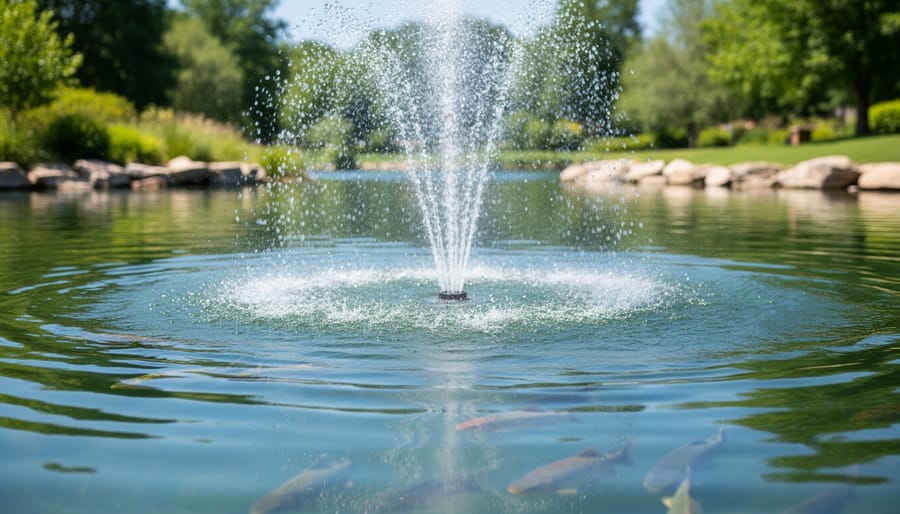
Fish ponds demand the most consistent attention to oxygen levels. Koi and goldfish thrive when DO stays above 5 ppm, and they’ll show stress quickly if levels drop below that threshold. During hot summer months, when warm water holds less oxygen and fish metabolism speeds up, you might need 6-7 ppm to keep your finned friends comfortable. These ponds benefit from reliable aeration, think fountains, waterfalls, or pond bubblers running during the warmest parts of the day and overnight when plants stop producing oxygen.
Wildlife ponds operate on a more forgiving rhythm. Frogs, newts, and native insects tolerate wider oxygen swings because they’ve evolved alongside natural fluctuations. These ponds can handle occasional dips to 3-4 ppm without crisis, especially if you’ve included plenty of shallow margins where atmospheric diffusion works efficiently. The key is avoiding prolonged periods of low oxygen rather than maintaining perfect levels around the clock.
Plant-focused water gardens sit somewhere in between. If you’re growing water lilies, lotus, and decorative marginals primarily for aesthetics, your oxygen regime balances the needs of those plants with any fish you’ve added for mosquito control. Submerged oxygenators like hornwort become your best allies here, pumping out oxygen during sunny days while looking lush and green.
Natural ecosystem ponds are the low-maintenance dream when properly established. With balanced plant cover, minimal fish load, and good surface area for gas exchange, these ponds self-regulate remarkably well. The diverse mix of plants, beneficial bacteria, and small aquatic life creates overlapping oxygen sources that compensate for each other’s quiet periods.
Signs Your Pond’s Oxygen Balance Is Off
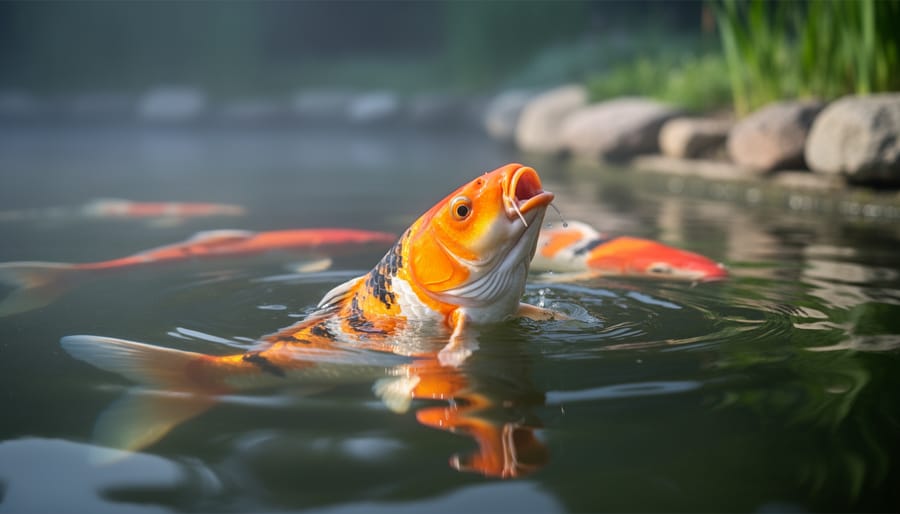
Your pond will often signal oxygen trouble before things get critical, you just need to know what to watch for. Fish are usually the first alarm system. If you notice them congregating at the surface early in the morning, mouths opening and closing as if they’re gulping air, that’s classic oxygen depletion. They’re literally trying to breathe from the thin oxygen-rich layer right at the water’s edge. You might also see them hovering near your fountain or waterfall, where churning water holds more dissolved oxygen than the still depths.
Here are the most reliable warning signs that your pond’s oxygen balance has shifted:
- Fish gasping at the surface, especially at dawn when overnight respiration has depleted oxygen
- Sudden algae blooms followed by massive die-offs that cloud the water
- Water turning murky or developing a gray-green tinge within days
- Foul, swampy odors (like rotten eggs) indicating anaerobic decomposition
- Fish deaths with no obvious disease symptoms, particularly during hot weather
Smell is another underrated indicator. A healthy pond smells fresh, slightly earthy. When oxygen drops and bacteria switch to anaerobic processes, you’ll notice a sulfurous stench. That’s hydrogen sulfide from decomposing organic matter, a clear sign your nutrient buildup is overwhelming available oxygen.
Less common but worth noting: supersaturation can occur in heavily planted ponds during intense afternoon sun. Fish may act erratic or develop tiny bubbles under their skin. It’s rare in typical backyard ponds but shows that oxygen balance works both ways.
Practical Ways to Support Healthy Oxygen Levels
Supporting healthy oxygen levels in your pond doesn’t require expensive equipment or a chemistry degree. Most solutions work with natural processes you’ve already got happening in your water garden.
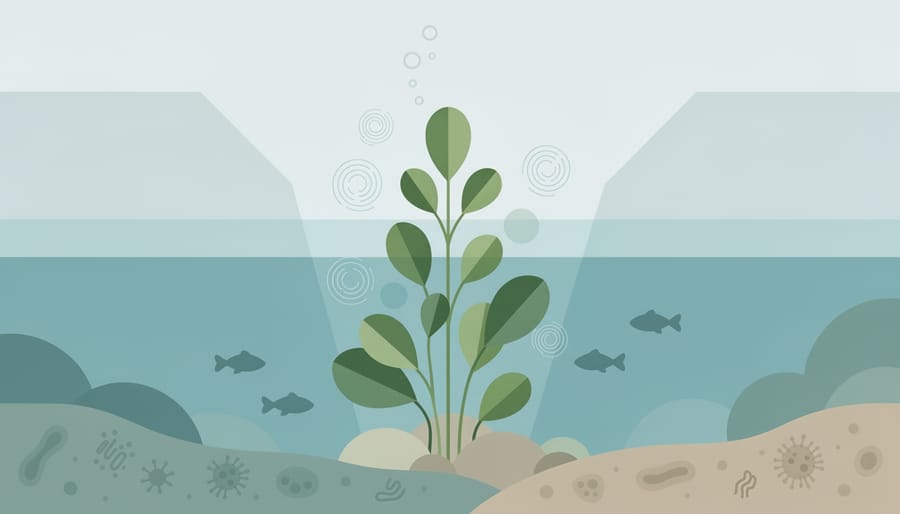
Add oxygen-producing plants strategically. Submerged oxygenators like hornwort, anacharis, and cabomba pump oxygen directly into the water during daylight through photosynthesis. They’re the workhorses of pond balance. Plant them in clumps around your pond rather than concentrating them in one spot, which spreads oxygen more evenly. These plants also compete with algae for nutrients, giving you a double benefit. Just remember they consume oxygen at night, so pair them with other strategies if you have heavy fish loads.
Install aeration that fits your setup. Moving water absorbs oxygen from the air. A simple fountain breaks the surface and creates ripples that increase gas exchange. Air stones and bubblers work well in deeper ponds where surface movement alone won’t reach bottom layers. Waterfalls combine aesthetics with function, especially if water tumbles over rocks. You don’t need all three. Pick what suits your pond size, depth, and style. The key is consistent surface agitation, not massive splashing.
Cut back on organic debris. Every fallen leaf, uneaten fish pellet, and dead plant stem consumes oxygen as it decomposes. Net out leaves regularly, especially in autumn. Feed fish only what they’ll eat in a few minutes, and remove any leftovers. Trim dying foliage before it rots. Think of organic matter as an oxygen debt you’re preventing.
Keep algae in check without chemicals. A bit of algae is normal, but dense blooms steal oxygen when they die off suddenly. Barley straw bundles release compounds that inhibit algae growth as they break down slowly. Adding shade plants like water lilies reduces sunlight that fuels algae explosions. Manual removal with a pond net works for string algae before it takes over.
Adjust for the seasons. Run your aeration longer during hot summer nights when oxygen drops fastest. In winter, if your pond ices over, keep at least a small hole open with a floating heater or bubbler so gas exchange can continue. Your fish need less oxygen in cold water, but they still need some circulation.
When and How to Measure Dissolved Oxygen
You don’t need to test dissolved oxygen in your pond every week, or even every month, if everything’s running smoothly. But when you’re troubleshooting a problem or making changes, measuring DO gives you concrete answers instead of guesswork.
Testing becomes genuinely useful after unexplained fish loss, during summer heat waves when oxygen naturally drops, or before adding new fish to verify your pond can support the increased load. If you’ve just installed aeration equipment or added lots of plants, a few measurements over several days show whether your changes are working.
Timing matters more than most people realize. Test at dawn to catch your pond’s lowest oxygen point, after a full night of respiration with no photosynthesis. That’s when stressed fish show symptoms, so it’s the reading that reveals potential trouble. An afternoon test during sunny weather captures the peak DO from active plant photosynthesis, giving you the upper range. Testing both times paints the full picture of your pond’s oxygen regime.
For equipment, digital dissolved oxygen meters offer precision and instant readings, though they cost anywhere from fifty to several hundred dollars and require occasional calibration. Chemical test kits work similarly to aquarium kits, you add reagents to a water sample and match the color to a chart. They’re cheaper and don’t need batteries, but reading subtle color differences takes practice.
Here’s the reassuring truth: most balanced ponds don’t require regular testing. Healthy fish behavior, clear water, and thriving plants tell you what you need to know. Save the meter for detective work when something feels off.
Common Questions About Pond Oxygen
Can you have too much oxygen in a pond?
Yes, though it’s rare in backyard ponds. Supersaturation can occur from excessive aeration or algae blooms on sunny days, potentially stressing fish with gas bubble disease. Most home setups stay well within safe limits.
Do waterfalls really help in winter?
Absolutely. Moving water prevents complete surface freezing and maintains gas exchange even in cold weather. The agitation keeps a hole open for oxygen to enter and harmful gases to escape, which matters more than the temperature effect.
How quickly can oxygen levels drop?
Faster than most people expect. On a hot summer night with lots of fish and decaying leaves, DO can plummet from healthy levels to dangerously low in just a few hours. That’s why early morning is the riskiest time.
Will more plants always mean more oxygen?
Not necessarily. Plants produce oxygen during the day but consume it at night, so an overstuffed pond can actually crash harder after dark. Balance is key, you want enough oxygenators to help during sunny hours without overwhelming the nighttime budget.
What’s the biggest oxygen mistake beginners make?
Overfeeding fish, hands down. Uneaten food and excess fish waste fuel bacterial decomposition, which devours oxygen. Combined with the fish’s own respiration needs, it creates a demand spike that overwhelms natural supply, especially in smaller or overstocked ponds.
Should I run my aerator all the time?
For most ponds, yes, continuous operation maintains steady oxygen levels and prevents the dangerous overnight dips. If you’re trying to save energy, run it at least from evening through early morning when respiration peaks and photosynthesis stops.
These questions come up constantly in pond-keeping circles, and they all point back to the same truth: oxygen management is about understanding rhythms and trade-offs, not chasing perfect numbers. Once you grasp how your specific pond breathes throughout the day and across seasons, you’ll make better decisions about stocking levels, feeding schedules, and when to intervene with aeration or plant adjustments. Trust what you observe at the water’s surface, and remember that a little preventive thinking beats a lot of emergency troubleshooting.
Think of dissolved oxygen as your pond’s pulse, a vital sign you can’t see but that keeps everything alive and thriving. Once you understand that oxygen levels naturally rise and fall with the sun, the seasons, and the life in your water, maintaining a healthy pond stops feeling like guesswork and starts feeling like partnership with nature.
You’re not fighting against your pond’s rhythms. You’re working with them. When you add oxygenating plants, position a fountain, or clear away decaying leaves, you’re supporting the natural cycles that already want to happen. You’re helping your pond breathe.
The best part? You don’t need expensive equipment or a degree in aquatic biology to get this right. Pay attention to your fish. Watch how your plants grow. Notice the patterns. Most of the time, a balanced pond will tell you what it needs if you know what to look for.
Your pond is a living system, and dissolved oxygen is what keeps that system humming. Now that you understand how it works, you have the knowledge to create the kind of clear, vibrant, fish-filled water garden you’ve always wanted, one breath at a time.