
What Is Advanced Water Treatment Technology (and How Does It Work in Your Pond)?
Advanced water treatment technologies are filtration and purification systems that go beyond standard mechanical and biological filters to actively remove contaminants, control algae, and maintain crystal-clear water through UV sterilization, ozone injection, protein skimmers, and advanced oxidation processes.
If you’ve already got a basic filter and pump running but your pond still struggles with green water, persistent algae blooms, or cloudy conditions, you’re probably wondering whether stepping up to one of these specialized systems makes sense for your setup. These technologies aren’t necessary for every water feature, but they solve specific problems that mechanical and biological filtration alone can’t handle. Understanding what each system actually does helps you decide whether you need one and which type matches your pond’s challenges.
I spent years battling string algae and murky water in my koi pond with weekly scrubbing sessions and constant chemical adjustments. Adding a UV clarifier changed everything within two weeks. The water cleared, maintenance dropped to a fraction of the time, and I finally understood why these systems earn their “advanced” label. They target problems at the molecular or microscopic level rather than just trapping debris.
This guide breaks down the main categories of advanced treatment, explains how each technology works in plain terms, and walks you through real-world applications so you can match solutions to your specific water quality issues. You’ll finish with a clear sense of which systems deliver results for ponds like yours and which ones you can skip.
What Advanced Water Treatment Technologies Really Mean for Your Pond
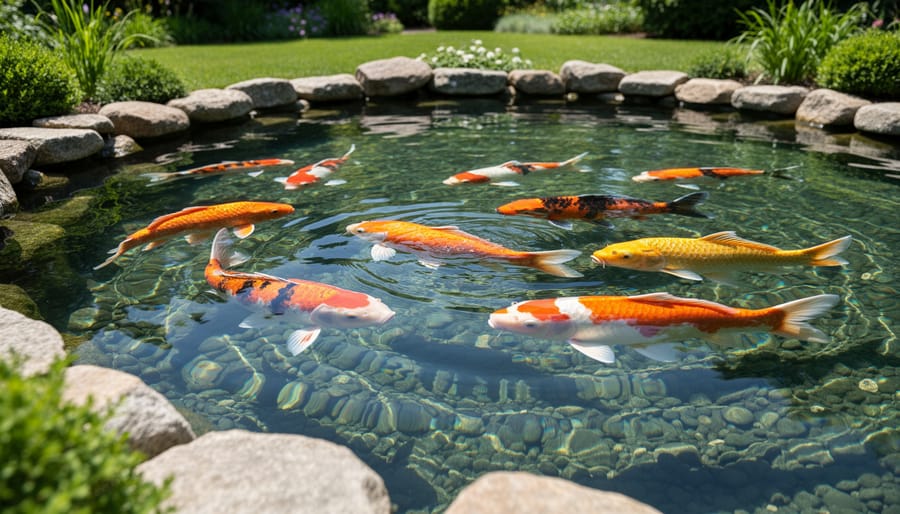
When most pond owners think about filtration, they picture a simple pump pulling water through foam or matting to catch leaves and debris. That’s traditional mechanical filtration, and it’s essential, but it’s also just the first step. Advanced water treatment technologies go further by actively targeting problems that basic filters can’t touch: dissolved waste products from fish, microscopic algae that clouds your water, and chemical imbalances that stress aquatic life.
The key difference lies in how these systems work. Traditional filters are passive, water flows through, large particles get trapped, and that’s it. Advanced systems are active, meaning they use biological processes, ultraviolet light, chemical reactions, or specialized media to break down, neutralize, or remove contaminants at the molecular level. Think of it this way: a basic filter is like sweeping your floor, while advanced treatment is like disinfecting and deodorizing it at the same time.
To understand what pond professionals mean when they talk about advanced treatment, here are the core concepts:
- Biological Load
- The total amount of waste produced by fish, decaying plants, and uneaten food in your pond. Higher biological load means more dissolved ammonia and nitrites that basic filters won’t capture.
- Dissolved Organics
- Microscopic waste particles and compounds that pass right through mechanical filters, causing water discoloration and foam on the surface. These require biological or chemical treatment to remove.
- Oxidation
- A chemical process that breaks down organic waste and kills pathogens by adding oxygen or ozone. Advanced systems like UV sterilizers and ozone generators use controlled oxidation to purify water.
- Mechanical versus Chemical Filtration
- Mechanical systems physically trap particles, while chemical filtration uses activated carbon, resins, or reactions to bind or neutralize dissolved contaminants like ammonia, chlorine, or heavy metals.
The ultimate goal of advanced treatment isn’t just clear water, it’s stable water. These technologies work together to maintain healthy pond pH balance reduce toxic ammonia spikes, control algae blooms before they start, and create an environment where fish thrive and maintenance becomes less of a weekly battle. You’re not just removing visible dirt; you’re managing the invisible chemistry that makes or breaks a healthy pond ecosystem.
How Advanced Water Treatment Works in Water Features
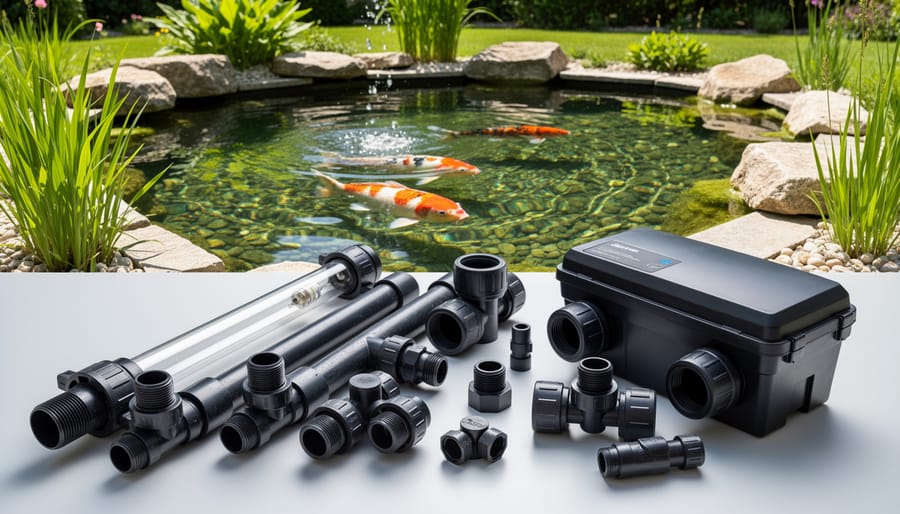
The Role of Beneficial Bacteria
Biological filtration relies on colonies of beneficial bacteria that convert harmful fish waste into less toxic compounds. When fish excrete ammonia through their gills and waste, it quickly becomes lethal in enclosed pond systems. Beneficial bacteria step in as your pond’s cleanup crew.
The process happens in two stages. First, Nitrosomonas bacteria consume ammonia and convert it to nitrite (still toxic). Then Nitrobacter bacteria transform nitrite into nitrate, which is relatively harmless at typical pond concentrations and gets absorbed by plants or removed through water changes.
These bacteria don’t just float freely. They form sticky biofilms on filter media surfaces, creating dense communities that process waste efficiently. Think of biofilm as a living carpet coating your filter materials. The thicker and more established the biofilm, the more waste your system can handle.
Advanced biological filters maximize this process by providing enormous surface area for bacterial colonies. Media like plastic bio-balls, ceramic rings, or foam pads give bacteria millions of attachment points. Proper water flow delivers oxygen and waste to the biofilm without washing it away, letting the bacterial population thrive and keep your water chemistry stable.
Physical and Chemical Treatment Methods
While beneficial bacteria handle the biological side of water treatment, physical and chemical methods tackle problems bacteria can’t solve, suspended algae cells, pathogens, and dissolved compounds that cloud water or harm fish.
UV clarifiers use ultraviolet light to rupture algae cell walls and damage pathogen DNA as water flows past the bulb. They’re brilliant for green water problems and disease control, but they don’t remove the dead algae (you still need mechanical filtration) and they won’t touch string algae growing on surfaces.
Ozone systems inject ozone gas into the water, where it oxidizes organic compounds, breaks down colours and odours, and kills microorganisms more aggressively than UV. The water comes out exceptionally clear, almost polished. Ozone’s powerful but requires careful sizing, too much can irritate fish gills, and the gas must fully dissipate before water returns to the pond.
Protein skimmers create masses of fine bubbles that attract dissolved organic molecules. These organics stick to bubble surfaces and collect as foam you remove from the system, preventing them from breaking down into ammonia. They’re popular in heavily stocked koi ponds where protein waste would otherwise overwhelm biological filters.
Ion exchange medialike zeolite filtration chemically binds ammonia molecules directly from the water. It works fast, useful during emergencies or system startups, but the media saturates and needs recharging or replacement, making it more of a supplement than a primary treatment method.
Types of Advanced Treatment Systems for Ponds and Water Gardens
UV Sterilizers and Clarifiers
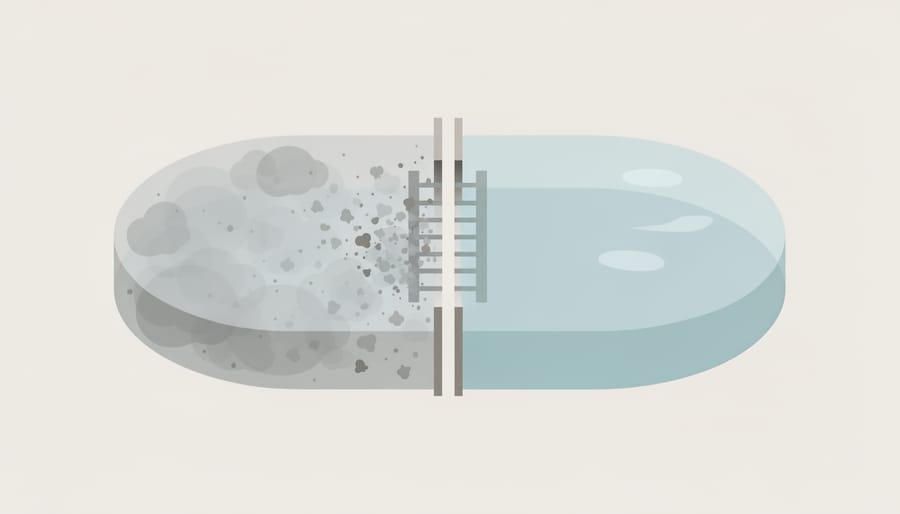
UV sterilizers pass pond water through a chamber housing a bulb that emits ultraviolet light at a specific wavelength (typically 254 nanometers). As algae cells and pathogens flow past, the UV kills microorganisms by damaging their DNA so they can’t reproduce. Within a few days, free-floating green algae die off and your water clears, it’s like sunburn on a cellular level, but controlled and contained in a sealed tube.
Sizing matters. A rough rule: you need about 10 watts of UV power per 1,000 gallons of pond water, though flow rate through the unit is just as important as wattage. If water rushes past the bulb too quickly, it doesn’t get enough exposure; too slow and you’re wasting capacity. Most units list a maximum flow rate on the box, match it to your pump output.
UV clarifiers excel at knocking out green water blooms and reducing pathogen loads, but they can’t remove string algae clinging to rocks, won’t filter out solid waste, and do nothing for dissolved nutrients feeding the algae in the first place. You still need mechanical and biological filtration. The bulbs also lose effectiveness after 8-12 months of continuous use, even if they still glow, so annual replacement is part of the deal.
Pressurized and Bead Filters
Pressurized filters house biological and mechanical filtration media inside a sealed canister that pumps water under pressure. The pressure lets you push water uphill to waterfalls or streams without needing gravity flow through the filter first. Most models include a backwash valve, when waste builds up, you flip the valve and reverse water flow to flush debris out through a drain line without opening the filter or disturbing the beneficial bacteria colonies living on the media.
Bead filters use small plastic spheres (typically 3-5mm diameter) as filtration media packed densely in a chamber. Water flows through the gaps between beads, which trap particles as small as 30 microns while providing enormous surface area for nitrifying bacteria to colonize, often 1,000+ square feet of bacteria habitat per cubic foot of beads. When the beads clog with waste, you backwash by reversing flow and agitating the beads, which scrub against each other to release trapped debris while the bacteria film stays attached.
Both systems work well for koi ponds where you need strong biological filtration in a compact footprint. Size them generously, bead filters especially lose efficiency as they load up between backwash cycles.
Protein Skimmers and Foam Fractionators
Protein skimmers work by mixing air with pond water to create a dense foam that traps dissolved proteins, amino acids, and other organic compounds before bacteria can break them down into ammonia. The foam rises into a collection cup where the concentrated waste gets removed entirely from your system, not just filtered and converted like traditional biological filtration does.
These systems came from saltwater aquarium technology but they’re gaining ground in large koi ponds where heavy feeding produces a constant stream of dissolved organics. The benefit shows up as reduced bioload on your biological filter and clearer water with less yellowing. You’ll typically see foam fractionators on ponds with dense fish populations (think 20+ large koi in 3,000 gallons) where waste accumulates faster than standard filtration can process it comfortably.
Ozone Generators
Ozone generators inject ozone gas into pond water, where it rapidly oxidizes dissolved organic compounds, breaks down ammonia and nitrites, and kills bacteria and parasites more aggressively than UV alone. The ozone molecules are unstable and revert to oxygen within minutes, leaving no chemical residue. For heavily stocked koi ponds or systems struggling with persistent water clarity issues despite other filtration, ozone can deliver dramatic results.
The downside? Ozone is toxic to fish and humans at high concentrations, so these systems require careful design with proper contact chambers and off-gassing before water returns to the pond. They’re also more expensive to purchase and maintain than UV clarifiers. Ozone makes sense when you’ve maxed out conventional treatment and need the next level of oxidation power, but it’s overkill for most backyard water gardens.
Moving Bed Bioreactors (MBBR)
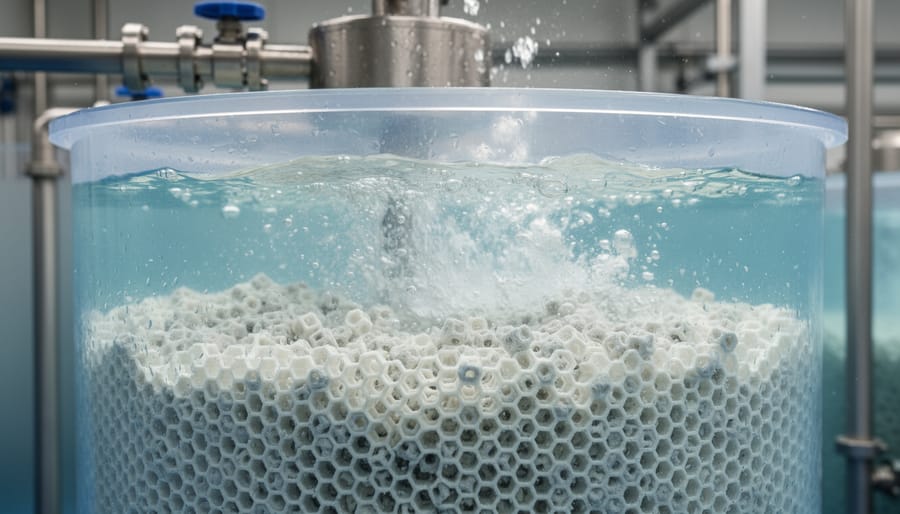
Moving bed bioreactors use small pieces of specially designed plastic media that float and tumble continuously in the water flow, creating a massive surface area for beneficial bacteria to colonize. Unlike static filter media that bacteria grow on in fixed positions, these lightweight cylindrical or wheel-shaped pieces move constantly through aeration or water current, which prevents clogging and keeps the bacterial colonies exposed to fresh oxygenated water. Each piece of media has internal structures, like spokes on a wheel, that protect the biofilm from being scrubbed off while maximizing colonization space. In koi pond applications, MBBR chambers typically fill about 50-70% with media, leaving room for movement. The constant tumbling means you get highly efficient biological filtration in a relatively compact space, and the system is largely self-cleaning since the media motion sheds excess biofilm naturally. MBBR technology has become popular in high-end koi systems because it handles heavy feeding schedules and fish waste loads without the frequent cleaning traditional bio-media requires.
When and Why You’d Use Advanced Treatment in Your Water Feature
Most pond owners get by fine with traditional filters and regular care, but certain situations call for stepping up your game. You’ll know it’s time to consider advanced treatment when basic maintenance just isn’t cutting it anymore, and your pond keeps throwing the same problems at you season after season.
High fish loads push the limits of conventional filtration fast. If you’re keeping a serious koi collection or breeding fish, waste production outpaces what mechanical and basic biological filters can handle. Ammonia spikes, cloudy water, and stressed fish become recurring headaches. Advanced treatment systems like moving bed bioreactors and protein skimmers are designed precisely for these high-bioload scenarios, processing waste before it compromises water quality.
Persistent algae issues often signal that you need more than just a pump and filter box. Here are the telltale signs that basic treatment isn’t enough:
- Green water that returns within days of clearing, no matter how often you clean filters
- String algae coating rocks and plants despite regular removal and maintenance efforts
- Fish gasping at the surface or showing signs of stress even when oxygen levels seem adequate
- Foul odors that linger despite water changes and increased circulation
- Chronic pH swings or ammonia readings that never stabilize
UV clarifiers and ozone systems tackle these problems by attacking algae at the cellular level and breaking down dissolved organics that fuel blooms.
Space constraints make advanced treatment attractive too. A pressurized bead filter or compact MBBR setup delivers powerful biological filtration in a fraction of the footprint that traditional bog filters or settlement chambers require. Perfect when you’re working with a small urban garden or courtyard pond.
Natural swimming ponds demand crystal-clear water for both aesthetics and health reasons. You can’t see the bottom of a murky swimming pond, which creates safety concerns alongside the obvious aesthetic disappointment. Advanced treatment keeps the water safe and inviting without relying on chlorine or harsh chemicals. Combining biological filtration with UV sterilization and fine mechanical filtration creates swimmable water quality consistently.
Aesthetic goals drive many upgrades. If you want that glass-like clarity where you can count scales on fish from across the garden, advanced filtration technologies deliver results that basic systems simply can’t match. Just keep expectations realistic, even the best equipment won’t eliminate all maintenance, and water chemistry still requires regular monitoring. What advanced treatment does is make crystal-clear maintenance more achievable and less labor-intensive once you’ve dialed in the right system for your setup.
Choosing the Right System for Your Pond Setup
Choosing the right advanced treatment system starts with your pond’s actual conditions, not the latest gadget you saw online. Measure your pond volume accurately, count your fish, and honestly assess how much time you want to spend on weekly maintenance. A 500-gallon goldfish pond needs completely different treatment than a 3,000-gallon koi setup.
Start with the basics and layer up. Every advanced system still needs mechanical pre-filtration, a skimmer or settling chamber that catches leaves and debris before they reach your biological or UV components. Without this first line of defense, you’ll clog expensive equipment and waste money on premature media replacement. Once mechanical filtration handles the big stuff, add biological filtration sized for your fish load (not just pond volume). From there, consider UV if algae blooms are your main headache, or a protein skimmer if you’re fighting murky water despite clean filters.
Budget realistically for the whole system, not just the headline equipment. A pressurized bead filter might cost $800, but you’ll also need proper plumbing, unions for maintenance access, a quality pump, and potentially smart water flow meters to monitor performance. Installation often doubles the equipment cost if you’re hiring help.
Ask yourself these questions before buying: What specific problem am I solving? Can I reach all components for cleaning? Do I have reliable electrical supply? Will this integrate with my existing setup, or am I starting fresh? Advanced doesn’t mean complicated, the best system is one you’ll actually maintain consistently, not the one with the most features you’ll never use.
Common Questions About Advanced Water Treatment
Do I really need advanced filtration for my pond?
It depends on your goals and challenges. If you have persistent green water, high fish loads, or want swimming-pool clarity, advanced treatment helps. A basic pond with moderate fish and realistic expectations often does fine with mechanical and biological filtration alone.
How much does it cost to run a UV sterilizer?
A typical 40-watt UV unit costs roughly $5-8 per month in electricity if running 24/7. Bulb replacement every 12-14 months adds another $50-100, making annual operating costs around $110-150 for a mid-sized pond.
Can I add these systems to my existing pond filter?
Most advanced technologies work as add-ons to your current setup. UV sterilizers and protein skimmers typically plumb in-line after your mechanical filter, while bead filters and MBBRs often replace or supplement existing biological chambers.
Will advanced treatment eliminate all algae?
No system removes every trace of algae. UV sterilizers excel at clearing green water (suspended algae) but don’t touch string algae on rocks. Managing nutrients through filtration and water changes remains essential, technology helps but isn’t magic.
Are these systems difficult to maintain?
Maintenance varies by technology. UV bulbs need annual replacement, bead filters require backwashing every few weeks, and protein skimmers need emptying when the collection cup fills. Most tasks take 10-15 minutes once you know the routine.
Can I install these myself or do I need a professional?
UV sterilizers and many pressurized filters are DIY-friendly with basic plumbing skills. Ozone systems and complex multi-chamber setups benefit from professional installation due to safety concerns and precise tuning requirements.
What happens if the power goes out?
Your pond won’t crash immediately, but extended outages stress the system. Biological filters lose some bacteria without flow, UV protection stops, and water quality gradually declines. Battery backup or a generator helps for critical koi ponds.
These questions come up constantly in pond forums and at garden centers. The cost concern is real, you’re looking at several hundred dollars for entry-level equipment, plus ongoing electricity and replacement parts. That said, many pond owners find the reduction in hands-on algae scrubbing and water clarity improvements worth the investment.
Compatibility worries usually stem from not understanding how modular these systems are. You don’t have to rip out your entire filter setup. Adding a UV unit between your pump and existing filter, for instance, upgrades performance without starting from scratch. The key is matching flow rates so water moves through each treatment stage at the designed speed.
The maintenance reality sits somewhere between “set and forget” and “constant fussing.” You’ll spend less time physically cleaning your pond, but you trade that for scheduled equipment tasks. Skipping bulb changes or backwash cycles undermines the whole system, so factor in whether you’ll actually keep up with the routine before buying.
My Experience Adding UV and Bead Filtration
I’ll be honest: I resisted upgrading my backyard pond for years because the existing setup seemed good enough. Sure, the water had that perpetual greenish tint every spring, and I spent Saturday mornings scrubbing algae off the liner rocks, but it functioned. My koi were healthy. Why fix what wasn’t broken?
The tipping point came when I added three more fish. Within two weeks, the water clarity went from okay to outright murky. I could barely see the fish six inches below the surface. My pump-and-pad filter couldn’t keep up with the increased bioload.
After reading through options, I installed a pressurized bead filter paired with a 40-watt UV clarifier. The installation took me most of a weekend, plumbing the connections, getting the flow direction right, mounting the UV unit where it wouldn’t get splashed. Not complicated, but fiddly work that required multiple hardware store trips.
The results surprised me. Within five days, the green haze started clearing. By week three, I had water clarity I’d never seen before. I could watch the koi swim along the bottom, spot their feeding patterns, actually enjoy the pond again instead of constantly battling algae.
Was it worth the investment? For my situation, absolutely. The clarity transformed how I experienced the pond. But here’s the caveat: I still clean the bead filter every two weeks and replace the UV bulb annually. Advanced treatment reduced my maintenance burden, but it didn’t eliminate it. And for smaller ponds with lighter fish loads, a simpler approach might deliver perfectly acceptable results without the expense.
Advanced water treatment technologies offer pond owners genuinely powerful ways to tackle water quality challenges that basic filtration struggles to solve. UV clarifiers knock out green water algae. Protein skimmers remove dissolved organics before they cloud your pond. Moving bed bioreactors support massive beneficial bacteria populations in compact spaces. These systems work, and they can transform problem ponds into crystal-clear showcases.
But here’s what matters most: the right system for your pond depends entirely on what you’re dealing with. A small water garden with a few goldfish doesn’t need ozone treatment. A heavily stocked koi pond might thrive with a bead filter and UV combination but struggle without adequate biological capacity. Advanced technology solves specific problems, not universal ones.
Before you invest in high-tech equipment, spend time understanding your pond. Test your water regularly. Watch how it responds through the seasons. Identify your actual challenges, persistent algae, cloudy water, ammonia spikes, excessive fish waste. Match the technology to the problem, not the other way around.
And remember, no matter how advanced your treatment system becomes, it never replaces regular maintenance. You’ll still need to clean filters, check equipment, monitor water parameters, and stay involved with your pond’s health. Advanced systems are tools that make your job easier and more effective, but they’re not set-and-forget solutions. The best pond care combines smart technology with consistent hands-on attention.