
What Is an Arboreal Forest? (And Why It Matters for Wildlife)
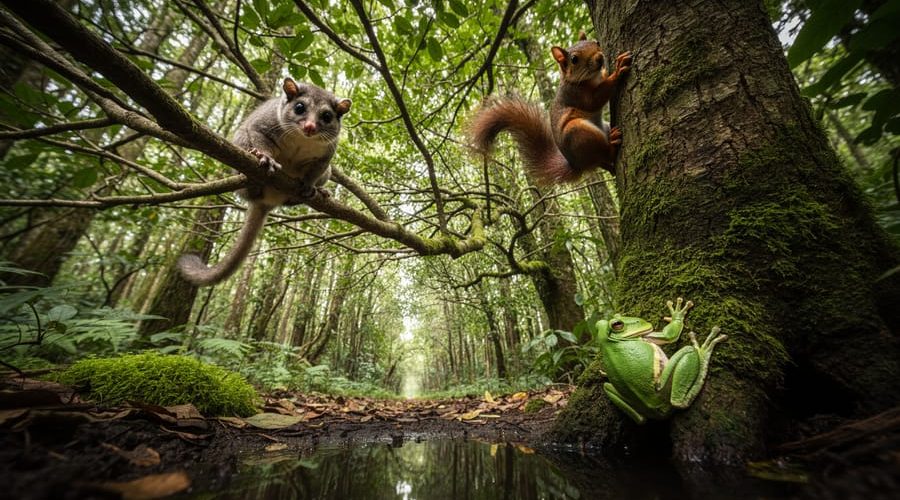
An arboreal forest is a woodland ecosystem dominated by trees and characterized by a rich canopy layer that supports mammals, birds, and other wildlife species living primarily or entirely above ground. The term “arboreal” refers to tree-dwelling life, and these forests create multi-layered habitats where animals feed, nest, and travel through interconnected branches rather than on the forest floor.
Understanding arboreal forests matters because they support some of the planet’s most diverse wildlife communities, from possums and squirrels to koalas and tree frogs. Even if you’re focused on creating a watering oasis for wildlife in your backyard, the principles behind arboreal habitats can transform how you think about your entire outdoor space.
Your garden isn’t just a pond surrounded by grass. Trees near water features create vertical habitat that attracts a completely different set of wildlife than ground-level plants alone. When you understand how arboreal ecosystems function, you can design your yard to support creatures that might otherwise pass right over it.
This guide breaks down what makes a forest truly arboreal, how tree canopy layers work together, the types of structures that matter most to tree-dwelling animals, and practical ways to apply these concepts around your pond and garden. You’ll learn which features attract arboreal wildlife and how simple additions like native trees, climbing plants, and strategic branch placement can turn your backyard into a thriving vertical ecosystem that complements your water garden beautifully.
What ‘Arboreal Forest’ Really Means
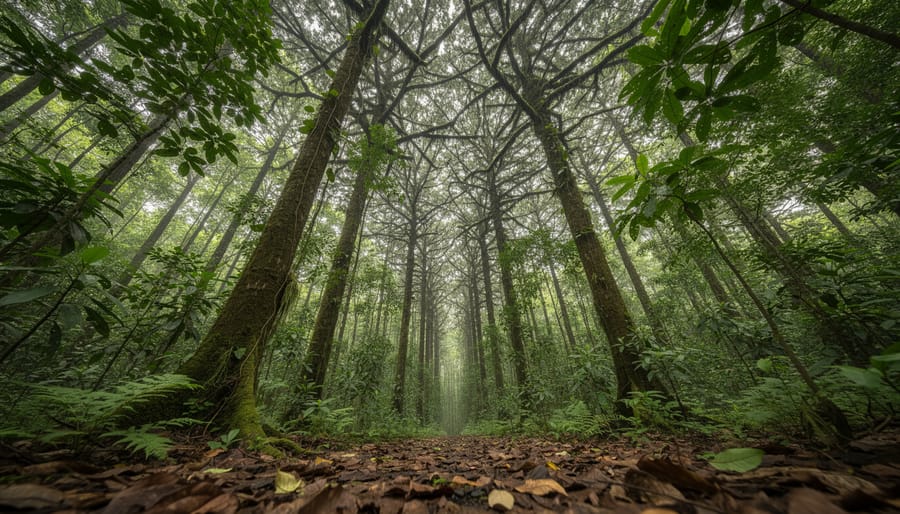
An arboreal forest is a woodland ecosystem where life happens vertically as much as horizontally. The word “arboreal” comes from the Latin arbor, meaning tree, and it refers to anything that lives in, on, or among trees. When we call a forest arboreal, we’re describing a place where the trees create a layered, three-dimensional world, a living structure that rises from the forest floor up through multiple levels of branches and leaves, each layer offering different conditions, food sources, and shelter for wildlife.
What makes arboreal forests special is their dense, multi-layered canopy. Instead of just ground and sky with some trees in between, these forests develop distinct vertical zones. You’ve got towering emergent trees poking above the main canopy, a thick mid-level canopy where most of the action happens, a shadier understory beneath, and finally the forest floor. Each zone hosts its own community of mammals, birds, insects, and other creatures that have adapted to life at that particular height.
To understand this concept better, here are the key terms:
- Arboreal
- Describes organisms that live primarily in trees rather than on the ground. Squirrels, tree frogs, and many birds are arboreal species.
- Canopy layer
- The upper level of branches and foliage formed by the crowns of mature trees. This is typically the most biodiverse zone in an arboreal forest.
- Understory
- The layer of vegetation beneath the main canopy, including smaller trees, shrubs, and saplings that tolerate lower light levels.
- Vertical structure
- The arrangement of vegetation in distinct height layers from ground to treetops. More vertical structure generally means more habitat niches for different species.
- Habitat complexity
- The variety of physical structures and microclimates within the forest. Greater complexity supports more diverse wildlife communities.
This vertical architecture is what transforms a simple stand of trees into a true arboreal forest, a place where wildlife can feed, travel, nest, and shelter without ever touching the ground.
How Arboreal Forests Work as Living Systems
Think of an arboreal forest as a high-rise apartment building for wildlife, with each floor offering different living conditions, food sources, and neighbours. Unlike a flat meadow or grassland, these forests stack life vertically in distinct layers that work together as an interconnected system.
The structure starts at the top with the emergent layer, where the tallest trees poke above the rest, their crowns catching full sun and wind. Just below sits the main canopy, a dense, continuous ceiling of interlocking branches and leaves that forms the forest’s powerhouse. This is where most photosynthesis happens, converting sunlight into energy that fuels the entire system. Beneath the canopy, the understory receives filtered, dappled light, creating a shadier middle zone where smaller trees, saplings, and shade-tolerant shrubs grow. Finally, the forest floor, dim, humid, and rich with decomposing leaves, completes the vertical stack.
Each layer supports different creatures. Squirrels, tree frogs, and countless insects move between levels, while birds might nest in the canopy but feed on the forest floor. The overlapping branches create what scientists call “canopy connectivity”, basically, a highway system in the treetops that lets animals travel without ever touching the ground. This matters enormously for species that depend on trees for safety.
Energy flows downward in this system. Leaves capture sunlight above, then drop to feed decomposers below. Nutrients cycle back up through tree roots, creating a continuous loop. Dead branches and hollow trunks scattered throughout the layers provide crucial nesting cavities, while the mix of tree species ensures something is always flowering, fruiting, or producing seeds across seasons. For more detail on how these vertical zones function in tropical systems, the Smithsonian has rainforest layers explained with helpful diagrams.
What makes this all work is complexity. The more varied the tree species, heights, and ages, the more niches exist for wildlife. A healthy arboreal forest isn’t just tall trees, it’s a three-dimensional habitat with something happening at every level.
Different Types of Arboreal Forests
Tropical Rainforest Canopies
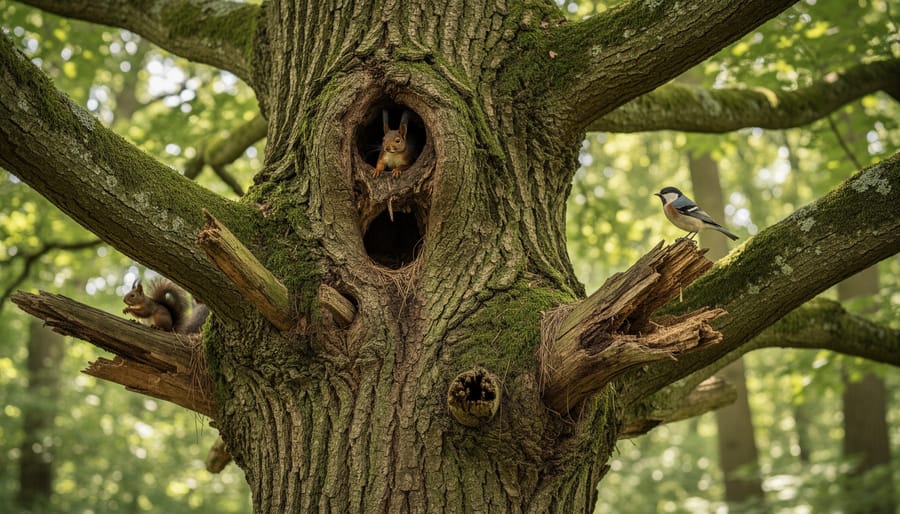
Tropical rainforests represent the pinnacle of arboreal architecture. These evergreen giants, think Amazon, Congo Basin, Southeast Asian jungles, pack more life into their towering canopies than any other forest type on Earth. The tree crowns weave together so tightly that sunlight barely penetrates, creating a humid, green-filtered world 100 to 200 feet above the ground. Scientists estimate the canopy holds most species in these forests, monkeys, sloths, tree frogs, orchids, bromeliads, and thousands of insects live their entire lives without ever touching the forest floor. Vines loop between branches like highways, and epiphytes (air plants) colonize every available perch. It’s chaotic, stratified, and humming with activity year-round, making tropical rainforest canopies the ultimate example of what “arboreal” really means.
Temperate Deciduous Forests
Temperate deciduous forests create a dynamic arboreal habitat that transforms dramatically through the year. Found across much of eastern North America, central Europe, and parts of Asia, these woodlands lose their leaves each autumn, opening the canopy to winter sunlight before leafing out again in spring. This seasonal rhythm shapes how tree-dwelling mammals use the forest, squirrels and raccoons stay active year-round by adapting to the bare-branch winter canopy, while others like dormice hibernate when food grows scarce.
The multi-layered structure develops fully in summer, when oaks, maples, and beeches form a dense green ceiling 60 to 100 feet overhead. Beneath that, smaller trees like dogwoods and redbuds create a mid-story, and shrubs fill the understory. Come fall, the leaf drop provides a nutrient-rich forest floor that supports decomposers and ground-dwellers, completing the cycle that keeps the whole system thriving season after season.
Coniferous and Mixed Forests
Coniferous and mixed forests dominate cooler regions, think of the vast boreal stretches across Canada and northern Europe, or the pine-covered mountain slopes of the Rockies. These arboreal forests stay green year-round where conifers like spruce, fir, and pine form the canopy, creating stable habitat through harsh winters. Mixed forests blend evergreens with deciduous hardwoods, offering wildlife the best of both worlds: winter shelter in the conifers and summer food abundance from the broadleaf trees. The denser, year-round cover makes these forests especially valuable for mammals like squirrels, martens, and flying squirrels that need reliable protection and navigation routes through the canopy regardless of season.
Woodland Gardens and Urban Arboreal Spaces
You don’t need a vast wilderness to create arboreal habitat. A cluster of mature trees in your backyard, a neighborhood park with layered plantings, or even a few well-chosen specimens around your pond can support tree-dwelling wildlife. The key is vertical structure, different heights of vegetation that give animals places to nest, forage, and travel. A single old oak with dense branches provides shelter for squirrels, songbirds, and insects. Add understory shrubs and you’ve created multiple canopy zones. Urban arboreal spaces work best when they connect to other green areas, forming wildlife corridors that let animals move safely through developed landscapes. Even small-scale habitat matters.
Why Arboreal Forests Matter for Tree-Dwelling Animals
Arboreal forests function as complete living cities for wildlife that rarely touches the ground. The dense, interconnected canopy creates what biologists call a “highway system” through the trees, squirrels, possums, gliders, monkeys, and countless birds can travel, feed, and raise young without ever descending to the forest floor. This vertical habitat is irreplaceable. You can’t substitute it with grassland or scattered trees; the magic happens when mature trees grow close enough that their branches interlock, creating continuous pathways and a sheltered environment that supports specialized tree-dwellers.
These complex tree-dwelling habitats provide benefits no other ecosystem can replicate:
- Continuous canopy allows safe movement between feeding and nesting areas without exposure to ground predators
- Tree hollows, branch forks, and dense foliage offer secure nesting and denning sites for mammals, birds, and insects
- Year-round food diversity from nuts, seeds, fruits, nectar, leaves, and the insects that live on them
- Protection from ground-based predators like foxes, feral cats, and snakes
- Temperature regulation through shade and humidity control, creating microclimates that buffer extreme weather
Forest management that preserves these features, maintaining canopy connectivity, protecting old-growth trees with hollows, allowing deadwood to remain standing, directly determines which species can survive in an area. When forests are fragmented or thinned too aggressively, tree-dwelling mammals lose the pathways and shelter they need. Even in your own garden, thinking about vertical structure matters. Native trees planted near your pond for birds create perching spots and insect-rich canopy that extends the arboreal habitat principle right into suburban backyards, supporting local wildlife at every scale.
Bringing Arboreal Habitat Principles to Your Property
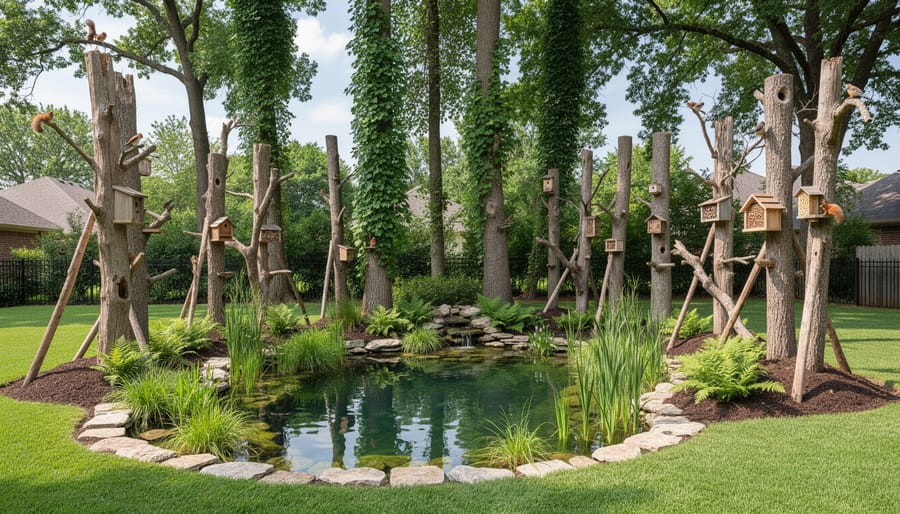
You don’t need a hundred acres of forest to give arboreal wildlife a helping hand. Even a backyard pond surrounded by a few thoughtfully chosen trees can become a valuable mini-habitat for tree-dwelling birds, squirrels, insects, and other creatures that spend their lives above ground.
Start by planting native trees and shrubs that match your region’s natural forests. Choose a mix of heights and types: a tall canopy tree like an oak or eucalyptus, mid-height understory trees such as dogwood or wattle, and dense shrubs at ground level. This layered approach mimics the structure of a natural arboreal forest, giving wildlife multiple levels to move through, nest in, and forage from.
Leave standing dead wood (snags) and fallen logs where they won’t cause hazards. Woodpeckers, owls, and cavity-nesting birds rely on these for shelter and breeding sites, while insects colonize the decaying wood and become food for other animals. If you’re managing trees around your pond in wildlife zones, one or two carefully placed snags can attract remarkable biodiversity.
Think about connectivity. If your neighbors have mature trees, a hedgerow or a line of shrubs linking your property to theirs creates a wildlife corridor, letting arboreal animals move safely between feeding and nesting areas without crossing open ground.
Finally, resist the urge to over-tidy. Leaf litter, loose bark, and a bit of undergrowth support the insects and small creatures that feed tree-dwelling wildlife higher up. By borrowing these principles from arboreal forests, your pond’s surroundings become more than scenery, they become habitat.
Common Questions About Arboreal Forests
What makes a forest ‘arboreal’ versus just ‘wooded’?
The key difference is the presence of a well-developed, multi-layered canopy that supports tree-dwelling wildlife. While any area with trees can be called wooded, an arboreal forest has enough vertical structure and canopy density to create distinct habitats for animals that spend most of their lives above the ground.
Do arboreal mammals only live in forests?
No, arboreal mammals can thrive anywhere with sufficient tree cover and vertical structure. Urban parks, suburban yards with mature trees, and even landscape gardens can support squirrels, raccoons, and other tree-dwelling species if they provide suitable canopy habitat and food sources.
Can my backyard become arboreal habitat?
Absolutely. Even a few well-chosen native trees planted around your pond can create mini arboreal zones. Focus on layering, tall canopy trees, midstory shrubs, and groundcover, to mimic forest structure on a smaller scale.
What’s the difference between canopy and understory?
The canopy is the upper layer formed by the crowns of the tallest trees, where most sunlight hits and many animals feed and nest. The understory sits below, made up of smaller trees, shrubs, and saplings that thrive in the filtered light beneath the canopy.
These questions come up often when pond owners start thinking about the wooded areas around their water features. You don’t need a massive forest to make a difference. Even small changes, like letting a section of your property grow more naturally or adding a couple of native oaks, can invite tree-dwelling wildlife into your garden. The more you understand how arboreal systems work, the easier it becomes to spot opportunities in your own landscape.
Understanding arboreal forests opens up a whole new way of looking at the trees around us. These aren’t just collections of trunks and branches, they’re vertical worlds, layered ecosystems where squirrels leap between branches, woodpeckers drill for insects, and countless creatures make their homes above the ground. When we recognize how these forest systems work, we become better stewards of the green spaces we tend, whether that’s a sprawling woodland edge or a few mature oaks near our backyard pond.
The beauty of this knowledge is that it scales down beautifully. You don’t need acres of old-growth forest to make a difference. Adding native trees to your property, letting that dead snag stand for cavity nesters, or simply thinking about vertical structure when you plant creates valuable arboreal habitat. Your pond already draws wildlife to your yard, now you can give them places to live, nest, and thrive in the branches overhead.
Every garden with thoughtful tree plantings becomes a tiny refuge, a stepping stone in the larger landscape that arboreal animals need to move, feed, and survive. That’s genuinely exciting. As pond and garden enthusiasts, we’re already creating habitats where water meets land. Adding the vertical dimension means we’re supporting wildlife from the forest floor right up to the treetops. That’s a complete ecosystem, and you’re the one making it happen.