
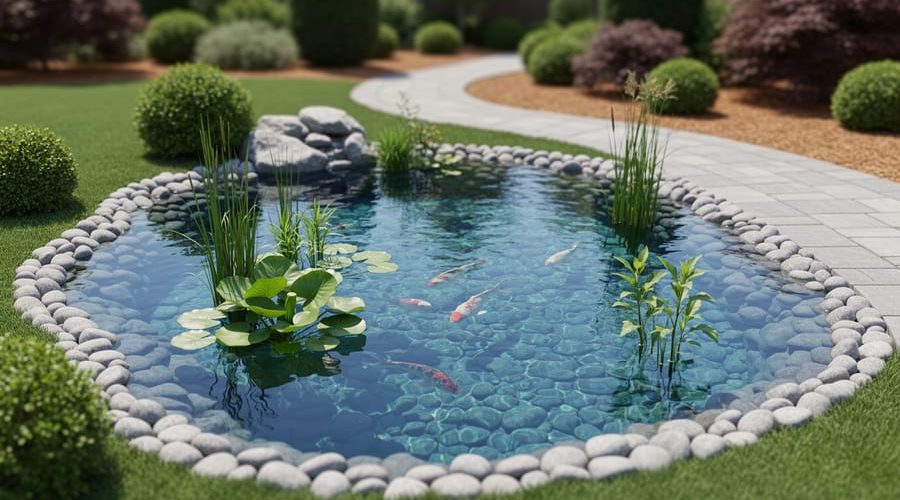
How to Design an Elegant Pond That Makes Your Neighbors Jealous
Creating an elegant pond means balancing visual refinement with functional design principles that work together from day one. The difference between a beautiful water feature and a truly sophisticated one comes down to intentional choices in shape, proportion, material selection, and plant placement. You’ll achieve that polished look by anchoring your design around a clear focal point, limiting your color palette to two or three harmonious tones, and using clean lines whether you’re working with formal geometry or naturalistic curves.
I’ve seen too many enthusiastic pond builders dive in with every idea at once, ending up with a cluttered feature that feels chaotic rather than calming. The secret to elegance isn’t adding more elements. It’s about editing ruthlessly and making each component earn its place. Think of your pond as a composition where negative space matters as much as the features themselves.
The practical side matters just as much as aesthetics. Poor planning leads to maintenance headaches that quickly diminish any visual appeal. Proper filtration tucked discreetly from view, thoughtful edging that defines boundaries without overwhelming them, and strategic plant selection that offers year-round interest without constant intervention are all part of the equation.
This guide walks you through the core principles that separate amateur attempts from genuinely refined water features, then shows you exactly how to apply them. Whether you’re starting fresh or rethinking an existing pond, understanding these fundamentals will transform your approach and your results.
What Makes a Pond Design ‘Elegant’ (And Why It Matters)
Elegance in pond design isn’t about gilded fountains or imported stone, it’s the delicate art of making every element feel purposeful. An elegant pond whispers rather than shouts, drawing the eye through carefully considered proportions, restrained plant choices, and seamless integration with its surroundings.
At its core, elegant design rests on three pillars: simplicity, intentionality, and harmony. Simplicity means resisting the urge to cram every attractive feature into one space. A few well-placed water lilies create more impact than a dozen competing species fighting for attention. Intentionality shows in every choice, from the curve of your pond’s edge to the color palette of marginal plants. Nothing appears by accident. Harmony ties your water feature to the broader landscape, echoing materials from your home’s exterior or complementing existing garden beds rather than clashing with them.
Why does this matter beyond aesthetics? An elegantly designed pond can boost your property value by 5 to 15 percent, particularly when it enhances outdoor living spaces and doesn’t overwhelm the lot. Real estate agents consistently note that well-integrated water features appeal to buyers seeking move-in-ready outdoor sanctuaries.
More immediately, elegant design creates tranquility. Clean lines and uncluttered plantings produce calming visual rhythms that busy, chaotic arrangements simply can’t match. Your pond becomes a retreat, not a maintenance burden demanding constant attention.
Here’s the practical bonus: elegance actually simplifies upkeep. When you design with intention, choosing plants suited to their positions and scaling features appropriately, you avoid the endless pruning, repositioning, and problem-solving that plague overstuffed ponds. Fewer, better-chosen elements mean less work and more enjoyment. The pond that looks effortless often is, because someone planned it that way from the start.
The Foundation: Choosing Your Pond’s Shape and Placement
Formal Elegance: Geometric Shapes That Command Attention
Geometric pond shapes deliver instant sophistication through their intentional, human-made precision. Rectangles work beautifully in contemporary settings, especially when aligned with your home’s architecture or patio edges. They create visual continuity and make spaces feel larger through their clean, extending lines. Position a rectangular pond parallel to your deck or garden wall to enhance this effect.
Circular ponds bring classical elegance to traditional landscapes. Their symmetry creates natural focal points that draw the eye inward, perfect for centering in a formal garden room or as the endpoint of a pathway. The continuous curve feels complete and self-contained, requiring minimal surrounding elements to achieve impact.
Ovals offer a softer take on formality, working well in narrower spaces where circles would overwhelm. They guide movement through their elongated shape while maintaining geometric discipline.
The power of these shapes lies in their restraint. Clean edges demand precision in construction and maintenance, but that very exactness creates the commanding presence that defines formal elegance. Your plants and hardscape become framed artworks rather than random clusters, each element intentionally placed within the geometric boundary you’ve established.
Natural Elegance: Organic Curves That Feel Timeless
Organic curves create a sense of effortless beauty that feels like it’s always been part of your landscape. Unlike rigid geometric shapes, naturalistic pond designs work with your yard’s existing contours rather than fighting against them.
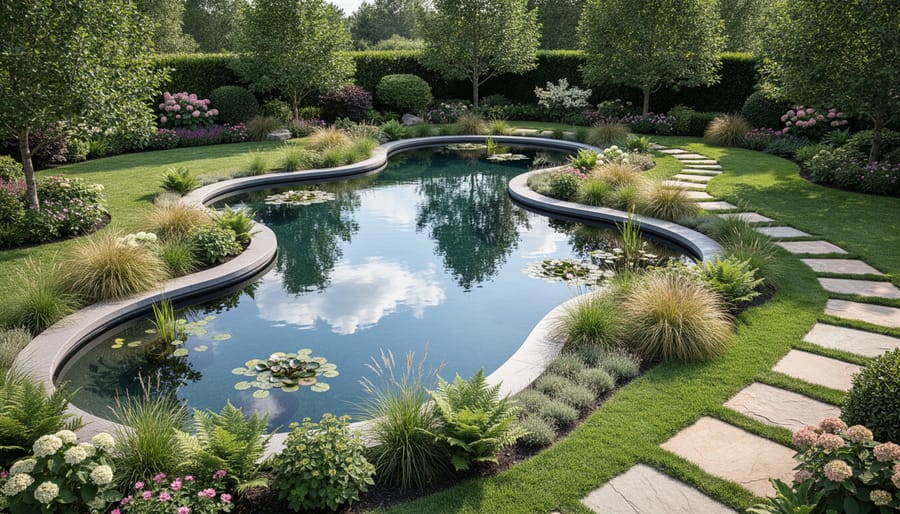
The key to elegant organic design is intentional asymmetry. Think kidney beans, gentle S-curves, and irregular ovals, shapes you’d find in nature, but refined. Avoid perfectly symmetrical kidney shapes or obviously artificial curves that telegraph “I tried to make this look natural.” Instead, sketch curves that flow smoothly without sharp angles, creating visual interest from different viewing angles.
Study natural ponds and streams for inspiration. Notice how shorelines rarely follow predictable patterns, there are shallow bays, subtle peninsulas, and varied depths that create dimension. Replicate this by varying your pond’s width and creating small coves or gentle protrusions.
The elegance comes from restraint: organic doesn’t mean chaotic. Keep your curves smooth and purposeful, allowing each bend to guide the eye naturally around your pond. This timeless approach ages beautifully as plants mature and soften the edges, creating a water feature that looks increasingly established rather than overgrown.
Flora Artistry: Choosing Plants That Elevate Your Design
Water Lilies: The Crown Jewels of Pond Elegance
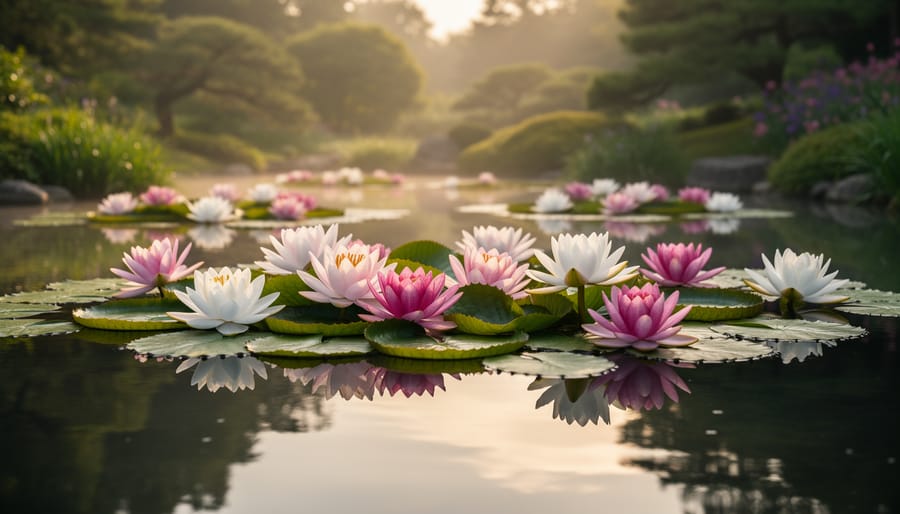
Water lilies earn their reputation as the crown jewels of pond design for good reason. These floating beauties instantly signal refinement while serving practical purposes, their broad pads shade the water, reducing algae growth and keeping fish comfortable. When you’re selecting varieties, understand the fundamental split between hardy and tropical types. Hardy water lilies survive winter in most climates, bloom reliably from spring through fall, and come in whites, yellows, pinks, and deep reds. Tropical varieties offer more exotic colors like vibrant blues and purples, plus they’re often fragrant, but they won’t survive freezing temperatures without special care.
Color choice matters enormously for your overall aesthetic. White lilies create classic, timeless elegance that works with any design style. Soft pinks add romantic charm to cottage-style ponds, while deep reds make dramatic statements in contemporary settings. For maximum impact through Flora pond artistry place your lilies intentionally rather than scattering them randomly. Position them to create visual breathing room, cover about 40-60% of your water surface, leaving open water that lets visitors appreciate both the blooms and their reflections. Plant showpiece varieties where they’ll be viewed from your main vantage points, and resist the temptation to overcrowd. Three well-placed lilies in complementary colors will always look more elegant than seven competing for attention.
Architectural Plants That Add Drama
These are the plants that make people stop and stare. While water lilies float serenely on the surface, architectural plants shoot skyward or unfurl bold foliage that creates instant visual impact.
Iris varieties like Japanese iris and yellow flag bring sword-like leaves that punctuate your pond’s edge with clean vertical lines. Their brief but stunning bloom periods add splashes of purple, yellow, or white that feel intentional rather than fussy. Plant them in groups of three or five for rhythm without overcrowding.
Papyrus and its cousin umbrella palm deliver that exotic, architectural presence that photographs beautifully. Their tall, umbrella-like tops create living sculptures that sway gently in the breeze. Just remember these are tropical show-offs that need winter protection in most climates.
For year-round drama, horsetail (Equisetum) provides striking segmented stems that look almost prehistoric. Keep it contained though, this ancient plant spreads aggressively if not controlled.
Lotus deserves special mention for its enormous, dinner-plate leaves that hover above water on sturdy stems. Even without flowers, lotus creates an unmistakable statement of elegance.
The key is restraint. Choose one or two architectural varieties as focal points rather than turning your pond into a botanical circus.
The Supporting Cast: Complementary Textures and Colors
Once you’ve chosen your statement plants, the real artistry begins, selecting complementary species that enhance rather than compete. Think of these as the supporting actors that make your stars shine brighter.
Ornamental grasses like Japanese sweet flag or fiber optic grass add gentle movement and fine texture without demanding attention. They soften hard edges and create visual breathing room between bolder specimens. Place them in drifts of three to five plants rather than scattering singles throughout your pond.
Delicate bloomers like marsh marigolds or forget-me-nots provide seasonal color pops that come and go gracefully. The key is restraint, choose two or three complementary colors maximum. A pond with every hue of the rainbow reads as chaotic, not elegant.
Ground covers like creeping Jenny or baby tears work beautifully around pond edges, blending your water feature into the surrounding landscape while suppressing weeds. They create a finished frame without adding visual weight.
The golden rule: when in doubt, leave it out. Elegant design always favors intentional simplicity over abundance. Your supporting plants should whisper, never shout.
Hardscape Elements That Define Sophistication
The materials surrounding your pond matter just as much as the water feature itself. Think of hardscape as the jewelry that frames a beautiful painting, when chosen thoughtfully, it elevates everything within.
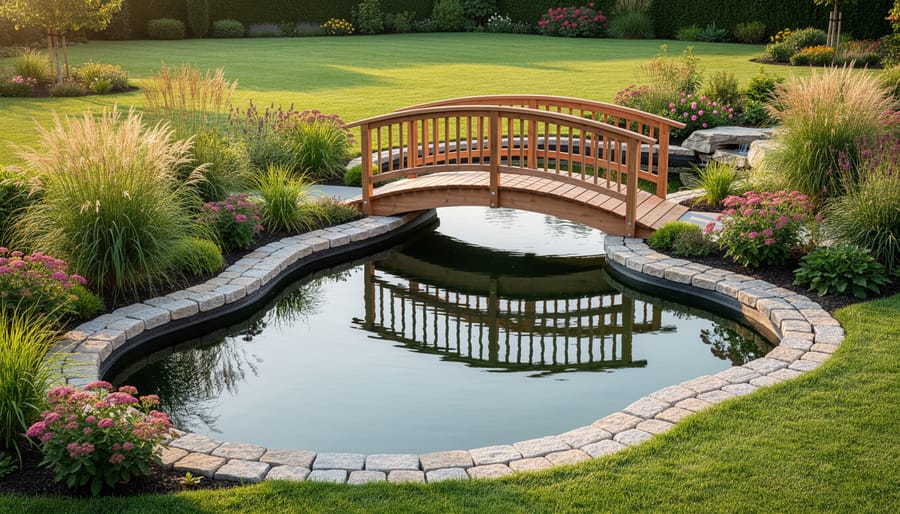
Start with edging that creates definition without harsh boundaries. Natural stone coping in irregular pieces softens the transition between water and land, while cut bluestone or granite delivers crisp, modern sophistication. The key? Match your home’s architectural style. A contemporary house calls for clean-lined pavers or poured concrete edges. A cottage garden setting begs for weathered fieldstone or rounded river rock that looks like it’s been there for decades.
Avoid the biggest mistake in pond edging: the visible liner edge. Your stonework should overhang the water by at least two inches, completely hiding any synthetic materials. This single detail separates amateur installations from professional-looking designs.
Pathways leading to and around your pond extend its presence into your broader landscape. Decomposed granite creates an elegant, permeable surface that complements natural pond styles. Stepping stones placed in lawn or groundcover add intrigue while protecting turf. For formal designs, consider the same pavers used on your patio, creating visual continuity that makes the pond feel intentionally integrated rather than dropped into place.
Bridges introduce vertical interest and draw the eye across water, but restraint matters here. A simple flat bridge in dark-stained cedar or composite lumber suits most residential ponds. Reserve arched or ornamental bridges for larger features where their scale makes sense. A too-elaborate bridge in a modest pond screams “lawn ornament” rather than sophisticated design.
Decorative stones deserve careful curation. Choose two or three complementary types rather than a hodgepodge. For texture contrast, pair smooth river cobbles with angular weathered boulders. Position larger accent stones as focal points, at curves, near plantings, or flanking a waterfall. Scatter them thoughtfully, as nature would, not in rigid patterns.
The most elegant hardscapes feel inevitable, as though they’ve always belonged in that exact spot. Before permanently setting any stone, live with the placement for a few days. Walk around it. View it from your house and patio. Trust your eye, if something feels forced, it probably is. Sophisticated design whispers; it doesn’t shout.
Water Features That Add Movement Without Distraction
Movement breathes life into your pond, but the wrong water feature can shatter the sophisticated atmosphere you’ve worked so hard to create. The goal is choreographing a water symphony that complements rather than competes with your design.
Scale Is Everything
Your fountain or waterfall must match your pond’s size. A massive cascading waterfall in a 6-foot pond looks cartoonish, while a tiny bubbler in a large pond disappears entirely. As a rule, your water feature’s width should be roughly one-fifth to one-third of the pond’s widest dimension. For sound, stand where you’ll typically enjoy the pond and imagine the volume, you want gentle background music, not a roaring concert.
Formal vs. Natural Styles
Geometric ponds pair beautifully with structured fountains, a central jet, tiered bowl, or sleek spout that reinforces clean lines. These work best when perfectly centered or placed at a deliberate focal point. Natural ponds demand organic features: streams that meander between rocks, waterfalls that tumble over layered stone, or gentle spillways hidden among plants. Mixing styles, like plunking a formal fountain in a kidney-shaped pond, instantly kills elegance.
Managing the Soundscape
Water hitting water creates soothing white noise. Water hitting rock creates sharper, more prominent sounds. Adjust your ambiance by changing what your water lands on. Submerged rocks below a waterfall soften the sound, while exposed stone amplifies it. For streams, multiple small drops sound more refined than one dramatic plunge. And here’s a secret: you can always turn down a pump, but you can’t turn up one that’s too weak. Buy slightly more capacity than you think you need, then dial it back until the sound feels just right.
The Magic of Lighting: Showcasing Your Pond After Dark
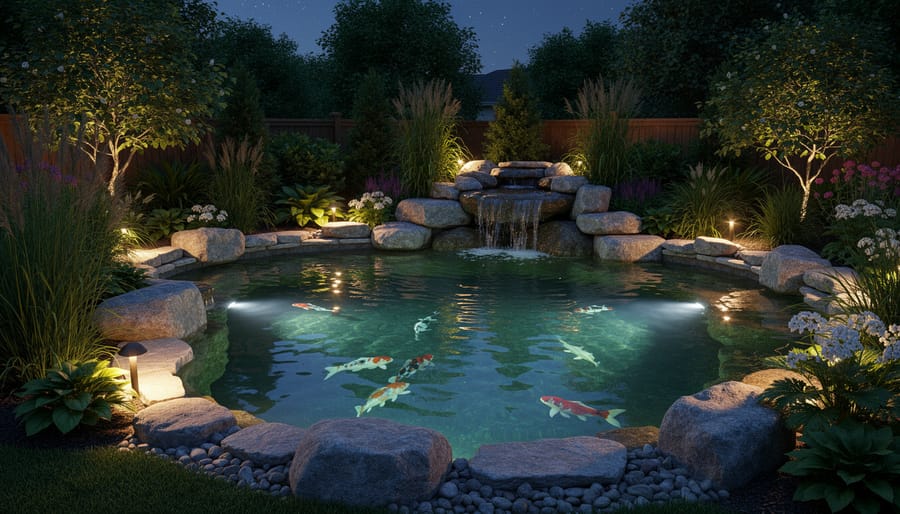
The right lighting transforms your pond from a daytime focal point into an enchanting evening centerpiece. But here’s the trick: less is genuinely more. Strategic lighting whispers rather than shouts, revealing your pond’s best features while preserving the mystery that makes nighttime water features so captivating.
Start with these layers to build sophisticated illumination:
- Install submersible lights near your most dramatic plants, water lilies, architectural grasses, or statement rocks, to create glowing focal points from below the surface.
- Add uplighting behind or beside vertical plants like papyrus or iris, casting striking silhouettes against fences, walls, or the night sky.
- Place low-voltage pathway lights along walking routes for safety, positioning them to spill gentle illumination toward the water’s edge without pointing directly at the pond.
- Include one or two accent lights for waterfalls or fountains, highlighting the movement of water without flooding the entire feature.
The goal with strategic pond lighting is creating depth and dimension. Underwater lights work beautifully in clear water, making your pond seem to glow from within. Choose warm white tones for classic elegance, they’re more forgiving than cool blues or harsh whites that can look artificial.
Position lights to graze surfaces at angles rather than blasting them head-on. This technique reveals texture in rocks, emphasizes plant shapes, and creates shadows that add intrigue. And please, resist the temptation to light everything. Dark spaces between lit features give your eye places to rest and make the illuminated areas stand out. Three to five well-placed lights often create more impact than a dozen scattered randomly around the perimeter.
Common Elegance Killers (And How to Avoid Them)
Even the most thoughtfully designed pond can lose its elegance through a few common missteps. Recognizing these pitfalls before they happen saves you from costly do-overs and keeps your water feature looking intentional rather than accidental.
Clutter catastrophe tops the list. That adorable garden gnome seemed perfect at the store, but adding it alongside the decorative bridge, the faux heron, three different sizes of rocks, and a collection of ceramic toads creates visual noise. Elegant design thrives on restraint. Choose one or two focal pieces maximum, and let your plants and water be the stars.
Mismatched materials break the visual flow faster than anything else. Mixing river rock edging with manufactured concrete pavers, then adding limestone boulders and brick pathways creates a confused aesthetic. Stick to two materials that complement your home’s exterior, and repeat them throughout the pond area for cohesion.
Scaling disasters happen when features don’t match pond size. A massive fountain in a small pond overwhelms the space, while tiny rocks around a large pond look lost and unfinished. Your waterfall should be proportional to pond volume, and edging stones should feel substantial enough to anchor the water feature visually.
Algae blooms destroy elegance instantly, turning your clear water into pea soup. Prevent this eyesore through proper plant coverage (aim for 60-70% surface shade), adequate filtration, and avoiding overfeeding fish. Consider implementing self-sustaining maintenance practices that keep water naturally balanced.
Visible equipment screams amateur hour. Exposed pump cords, filters sitting poolside, and visible liner edges all detract from sophistication. Tuck equipment behind plants or rocks, bury electrical lines properly, and ensure liner sits below your edging stones with an adequate overhang.
Overgrown chaos happens when you neglect seasonal trimming. What started as elegant plant groupings becomes a jungle that hides your pond entirely. Schedule quarterly pruning sessions to maintain your original vision and prevent vigorous growers from dominating the scene.
Maintaining Elegance: Keeping Your Pond Looking Its Best
Elegant design doesn’t end when you finish construction, it requires consistent care to keep that polished look. The good news? A well-designed pond is easier to maintain than a poorly planned one, and a few strategic routines prevent the chaos that undermines sophistication.
Start with a weekly walkthrough to catch small issues before they snowball. Skim debris from the surface, check water levels (especially during hot weather), and deadhead spent blooms on water lilies and marginal plants. This fifteen-minute habit keeps your pond looking intentional rather than neglected. During growing season, pull any duckweed or invasive plant runners that threaten to overtake your carefully balanced composition.
Monthly tasks focus on preserving water clarity and plant health. Test your water parameters and adjust if needed, stable pH and low nutrient levels prevent algae blooms that cloud elegant sightlines. Thin overcrowded plant growth before it obscures your design’s clean lines. Trim back aggressive growers like irises or rushes to maintain their architectural form rather than letting them become shaggy masses. Clean your pump intake and check filter media to ensure equipment runs quietly and efficiently.
Seasonal maintenance preserves your pond through changing conditions. In spring, divide overgrown plants, refresh mulch around edges, and gradually restart feeding schedules. Summer demands vigilance with water levels and algae control, top off regularly and add beneficial bacteria to outcompete nuisance growth. Fall cleanup is critical: net falling leaves before they sink and decay, cut back dying foliage, and remove tender plants before frost. Winter preparations include running de-icers in cold climates and scaling back feeding as fish metabolism slows.
The secret to effortless elegance is editing ruthlessly. Remove plants that have outgrown their space or lost their form. Replace worn edging stones before they crumble. Keep only decorative elements that genuinely enhance your design, resist accumulating pond ornaments that create visual clutter. A restrained, well-maintained composition always looks more sophisticated than an overstuffed one, no matter how much effort went into installation.
Creating an elegant pond isn’t reserved for professional landscape designers or unlimited budgets. With the principles we’ve covered, thoughtful plant selection, harmonious hardscaping, and intentional simplicity, you can transform any water feature into a stunning focal point that reflects your personal style.
The beauty of pond elegant design lies in its flexibility. You don’t need to implement every strategy at once. Start with one element that excites you most. Maybe it’s adding those dramatic water lilies you’ve been eyeing, upgrading your pond edging with natural stone, or installing subtle lighting to showcase your hard work after sunset. Each improvement builds on the last, gradually elevating your pond from ordinary to extraordinary.
Remember, the most elegant designs often emerge from restraint rather than excess. Trust your instincts about what feels balanced and peaceful to you. Your pond should be a retreat that brings you joy every time you see it, not a source of stress or constant upkeep.
As you refine your design, you’ll discover that flora artistry becomes second nature, you’ll instinctively know which plants complement each other and where that new Japanese maple would look perfect beside the water’s edge. Your backyard sanctuary is waiting. The journey from planning to reality might take a season or two, but the reward is a tranquil oasis that makes coming home feel like a daily escape to somewhere special.