
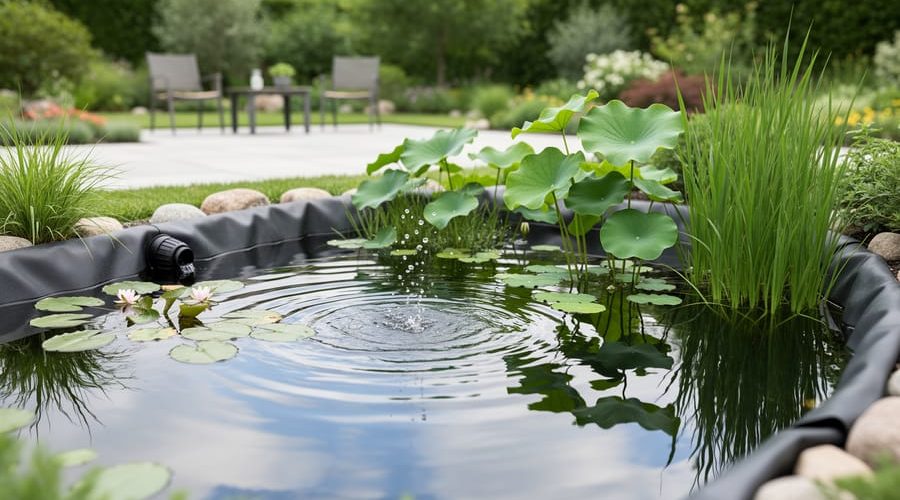
Flora Pond: Where Art Meets Water in Your Backyard
A flora pond transforms your backyard into a living water garden where aquatic plants take center stage, creating a serene, low-maintenance alternative to traditional fish ponds. Unlike conventional ponds designed around koi or goldfish, flora ponds prioritize plant health and aesthetic composition, letting water lilies, lotus, marginal rushes, and submerged oxygenators create their own balanced ecosystem. You can build one in a weekend with a flexible liner, a pump for gentle circulation, and a thoughtful selection of plants suited to your climate and sunlight conditions.
The appeal goes beyond simplicity. Flora ponds offer a quieter, more contemplative experience. Without fish demanding daily feeding and heavy filtration, you’re free to focus on seasonal blooms, foliage textures, and the gradual dance of plant growth across the water’s surface. The water stays clearer with fewer nutrients fueling algae, and beneficial insects, frogs, and dragonflies arrive on their own to complete the picture.
Creating a successful flora pond requires understanding how different plant types work together. Floating plants shade the water and compete with algae. Marginals soften edges and provide vertical interest. Submerged plants oxygenate and filter. Getting the balance right means your pond practically maintains itself, rewarding you with color, movement, and tranquility from spring through fall. Whether you’re drawn to the drama of tall irises and cattails or the elegance of dwarf water lilies in a container setup, the design possibilities are endlessly flexible and deeply personal.
What Makes a Flora Pond Different
A flora pond flips the traditional water gardening script. Instead of designing around fish and treating plants as afterthoughts or mere decoration, you’re creating a living canvas where aquatic flora takes center stage. Think of it as the difference between a koi showcase and a water garden masterpiece, both are beautiful, but the design priorities are fundamentally different.
The plant-first philosophy means every decision flows from what benefits your aquatic plants. You’re choosing depths based on what lotus, water lilies, and marginals need to thrive. You’re planning sight lines to showcase a variegated iris or the architectural drama of papyrus. Filtration becomes gentler because you’re not managing heavy fish waste, plants themselves become part of your biological filtration system, their roots pulling nutrients from the water while their foliage creates stunning reflections.
This approach creates a fascinating balance between aesthetics and ecosystem health. Your pond becomes self-regulating in ways that heavily-stocked fish ponds can’t match. Plants oxygenate the water, shade out algae, provide shelter for beneficial insects and small wildlife, and create a food web that supports frogs, dragonflies, and water beetles. You’re essentially building a miniature wetland ecosystem rather than an ornamental fish tank.
Flora ponds are gaining traction because water gardeners are rediscovering what nature has always known: diverse plant communities create resilient, beautiful ecosystems. They offer lower maintenance once established, reduced equipment needs compared to koi ponds, and most importantly, they change dramatically through the seasons. Your spring iris gives way to summer lilies, then autumn sedges, it’s a garden that never stops performing. For anyone who loves plants as much as water, a flora pond lets you indulge both passions in one breathtaking feature.
Designing Your Flora Pond Canvas
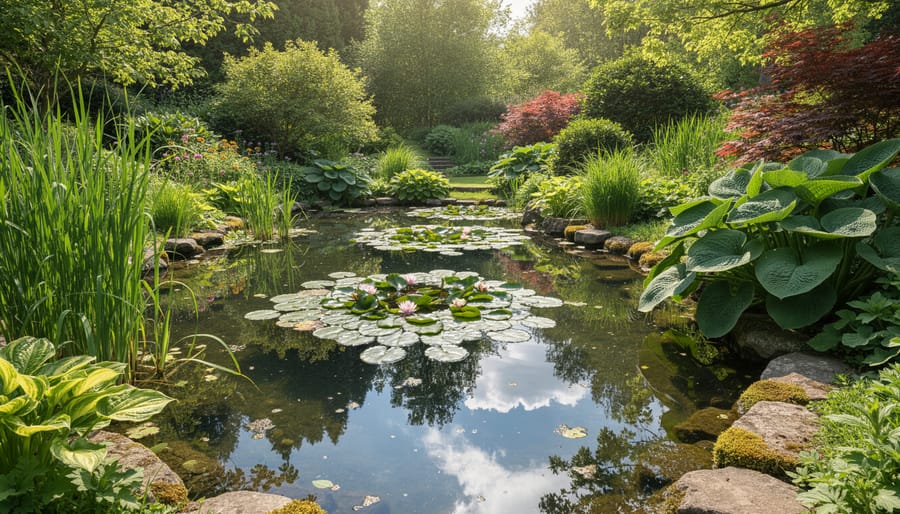
Choosing Your Pond’s Personality
Your flora pond’s style should reflect both your home’s architecture and your personal aesthetic preferences. Think of it as choosing the mood for your outdoor gallery.
A naturalistic flora pond mimics nature’s wild beauty, with irregular shapes, meandering edges, and native plants that look like they’ve always belonged. This style suits country properties and bush settings, where the pond becomes a seamless extension of the surrounding landscape. It’s perfect if you love discovering new blooms as if they appeared by chance.
Formal flora ponds feature geometric shapes, rectangles, circles, or symmetrical curves, with structured plantings and clean lines. They complement contemporary homes and heritage properties beautifully. Picture neatly clipped edges, repeated plant groupings, and perhaps a central fountain surrounded by water lilies in perfect symmetry.
Cottage garden flora ponds overflow with abundance and charm. They’re slightly wild but deliberately so, mixing soft edges with prolific flowering plants in romantic combinations. This approach through artistic pond design creates that “secret garden” feeling everyone adores.
Modern minimalist flora ponds embrace simplicity, featuring limited plant varieties chosen for bold architectural form rather than profuse blooms. Clean rectangular pools with single-species plantings and plenty of negative space create striking statements in urban gardens.
Your choice isn’t permanent, flora ponds evolve, but starting with a clear style vision helps guide every decision that follows, from pond shape to plant selection.
Depth Zones and Planting Shelves
Creating depth zones is like building a multi-story apartment complex for your plants, each species has its preferred living level. Most flora ponds need at least three distinct zones: a deep zone (45-90cm) for water lilies and oxygenators, a shallow zone (15-30cm) for mid-level aquatics, and marginal shelves (5-15cm) where bog-loving plants thrive.
| Zone Type | Ideal Depth | Typical Plants |
|---|---|---|
| Deep Water | 45-90cm | Water lilies, lotus, submerged oxygenators |
| Shallow Water | 15-30cm | Pickerel rush, water iris, dwarf cattails |
| Marginal Shelf | 5-15cm | Rushes, sedges, cardinal flower, marsh marigold |
| Bog Zone | 0-5cm (saturated soil) | Cannas, Japanese iris, astilbe |
Build your shelves 30-45cm wide to accommodate pots or free-planting, stepping them down like terraced hillsides rather than creating abrupt drops. This gradual transition looks more natural and gives you flexibility in plant placement. When planning these levels, consider how strategic pond lighting will highlight different zones after dark, as uplighting shallow shelves creates stunning silhouettes of tall marginals. Sketch your pond’s cross-section before digging to ensure you’ve allocated enough real estate for each plant community you want to grow.
The Artist’s Palette: Selecting Flora for Your Pond
Layering for Visual Impact
Creating visual depth in your flora pond is all about thinking in layers, much like painting a landscape. Start with your foundation: submerged oxygenators like hornwort or anacharis that live entirely underwater, adding movement and clarity while supporting your ecosystem.
Next comes the middle layer, floating plants such as water lilies or water hawthorn. These create horizontal interest at the water’s surface, their leaves offering contrast against the reflective water. Position them to cover roughly 40-60% of the surface, leaving open water for visual breathing room.
Your vertical accent layer features emergent plants that rise dramatically above water level. Think cattails, pickerelweed, or elegant iris varieties. Place taller species toward the back or sides to frame your view without blocking shorter plants.
Don’t forget the transitions. Marginal plants like marsh marigolds or dwarf papyrus bridge the gap between water and land, softening edges and creating a naturalistic flow. Position these along your pond’s perimeter at varying heights.
The magic happens when sunlight filters through this living architecture, casting shadows and creating dimension that changes throughout the day.
Color Theory in Water Gardens
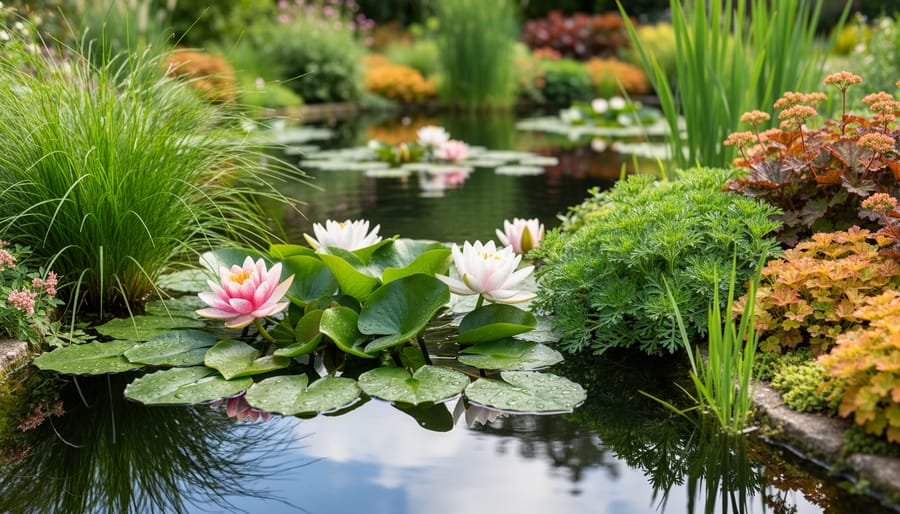
Color works differently in water than on land, reflections, ripples, and changing light transform how we perceive hues throughout the day. Start with a foundation: decide whether you want harmony (analogous colors like purples, blues, and pinks) or the power of contrast (opposites like yellow and purple). I’ve found that hot colors, reds, oranges, yellows, draw the eye and make spaces feel intimate, while cool blues and whites recede, creating calm and expanding perceived space.
Plan your bloom succession so something’s always performing. Early spring might feature yellow marsh marigolds, summer explodes with pink lotuses and red water lilies, then autumn brings the burgundy foliage of certain irises. Don’t overlook foliage color between blooms, chartreuse sweet flag, blue-grey hostas, and deep green arrowhead create interest year-round. The water itself becomes your canvas, doubling every color choice through reflection.
Texture and Form
While color draws the eye, texture and form create the structural foundation that makes your flora pond interesting every single day, not just when flowers appear. Think of leaf shape and texture as the bones of your design, they’re what you’ll see most of the year.
Contrast is your friend here. Pair the fine, feathery foliage of parrot’s feather with the bold, plate-sized leaves of lotus. Set spiky iris blades against the rounded pads of water lilies. This interplay creates visual tension and depth that photographs beautifully and keeps your pond from looking flat or monotonous.
Consider scale too. Large leaves like taro or canna create dramatic focal points and anchor the design, while smaller textured plants like creeping Jenny or mosaic plant fill gaps and soften edges. The vertical thrust of rushes and cattails adds height, breaking up horizontal water surfaces.
I arrange plants so textures touch or overlap slightly at maturity, that’s where the magic happens. A bold-leafed plant looks even bolder when it emerges from a sea of fine, delicate foliage. Layer at least three different leaf forms in each viewing area for richness that holds attention season after season.
Building Your Flora Pond: The Essentials
Filtration and Water Quality for Plant Health
Unlike koi ponds that demand heavy mechanical and biological filtration, flora ponds thrive on a gentler approach. Your plants themselves become the primary filtration system, pulling nutrients directly from the water and starving algae of the resources they need to bloom.
Most flora ponds do well with a simple pump and biofilter combination rated for your pond volume. You’re not dealing with the heavy waste load fish produce, so you can often downsize equipment compared to what koi keepers need. A circulation rate of once per hour through the filter works for most plant-centered designs.
The real magic happens through plant-based filtration. Submerged plants like hornwort and anacharis act as living nutrient sponges, while marginals send their roots through the water column absorbing dissolved compounds. This biological balance naturally clarifies water without harsh UV sterilizers or oversized mechanical filters.
I’ve found that starting with 60-70% plant coverage gives your flora pond the best chance at self-regulating water quality. You’ll still want basic filtration to keep water moving and prevent stagnation, but let your plants do the heavy lifting. Test water weekly at first, adjusting plant density if you see persistent clarity issues.
Substrate and Planting Media
The right growing medium makes the difference between thriving aquatic plants and struggling specimens. Avoid garden soil or potting mix, they’ll cloud your water and float away. Instead, use heavy clay-based aquatic soil or specialized pond planting substrate that stays put underwater. For most pond plants, fill containers two-thirds with aquatic soil, then top with pea gravel to anchor everything and prevent fish from stirring up sediment.
Container planting gives you flexibility to rearrange your composition and makes dividing plants easier, but free-planting directly into substrate pockets creates a more natural look. If you choose the free-planting route, build dedicated planting shelves with contained soil areas surrounded by gravel. Deep-water plants like lilies need at least six inches of substrate, while marginals thrive in just three to four inches. Skip the fertilizer tablets initially, your plants need time to establish roots first.
Planting Techniques for Maximum Artistry
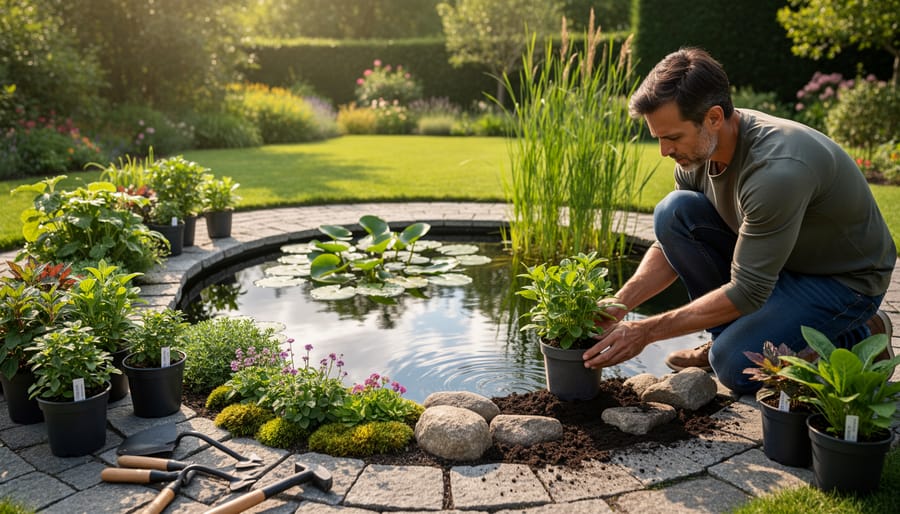
The way you plant transforms a collection of aquatic species into a cohesive work of art. Start by visualizing your pond from every angle where people will view it. Most flora ponds benefit from taller plants at the back or center, stepping down to shorter specimens at the edges, creating depth and allowing every plant to be seen.
Container planting offers flexibility and control. Use fabric aquatic baskets rather than solid pots, as they allow roots to breathe and beneficial bacteria to colonize. Place containers at varying heights on your planting shelves, creating a more natural, layered appearance rather than a uniform terrace. Group plants in odd numbers (threes, fives, sevens) and cluster them by species for impact rather than scattering singles around the pond.
For spacing, resist the urge to pack plants tightly for immediate fullness. Aquatic plants grow vigorously, and overcrowding leads to competition and maintenance headaches. Leave room for at least one season of growth, positioning containers 12-18 inches apart depending on mature spread.
Create natural-looking arrangements by avoiding straight lines and symmetrical patterns. Think about how plants grow in nature: in drifts, clusters, and irregular groupings. Tuck smaller specimens between larger ones, let some foliage overhang the water’s edge, and use floating plants to soften hard edges. Consider principles from expert aquascaping by creating focal points with bold specimens while using finer textures as supporting players. Step back frequently during planting to assess the overall composition from different viewpoints.
Maintaining Your Living Artwork
Your flora pond will change with the seasons, and that’s part of its beauty. Regular maintenance keeps your plant-focused water feature looking intentional rather than overgrown while preserving the ecological balance that makes it thrive.
Spring awakening is your busiest season. Remove any dead foliage you left for winter interest and check plant crowns for new growth. This is prime time for dividing overgrown specimens, if your water lilies have pushed beyond their containers or marginal plants have formed dense mats, split them now before they steal the show from neighboring plants. Lift containers, use a sharp spade to divide root masses, and replant healthy sections. You’ll maintain your composition’s proportions and get bonus plants for other spots.
As growth accelerates, managing the composition becomes weekly work. Deadhead spent blooms on flowering plants to encourage more buds and keep the display tidy. Thin floating plants before they carpet the entire surface, aim to keep about 40-60% of the water visible. Pull excess duckweed or water lettuce by hand; they’re lovely accents but aggressive colonizers. Trim back vigorous growers that obscure smaller, more delicate specimens you’ve carefully positioned.
Summer demands vigilance with algae, especially in new ponds still establishing balance. Rather than reaching for chemicals, remove string algae by hand (twist it around a stick) and maintain your plant density. Healthy flora naturally outcompete algae for nutrients. If you’ve built a self-sustaining pond these interventions become minimal after the first year.
Feed aquatic plants with specialized tablets pushed into their containers every 4-6 weeks during the growing season. Standard garden fertilizers will trigger algae blooms, use only products formulated for water gardens.
Autumn preparation means cutting back hardy plants to just above the water line after the first frost blackens foliage. Leave tropical plants until they’re clearly done, then remove them entirely (they won’t overwinter outdoors in most climates). Net the pond if nearby trees shed leaves; decomposing foliage depletes oxygen and muddies your crystal-clear water.
The reward? Each season reveals a new masterpiece, shaped by your hands but alive with its own rhythm.
Adding Fish to Your Flora Pond
While flora ponds shine as plant showcases, many gardeners wonder if they can enjoy fish too. The good news? You absolutely can add fish to your flora pond, but it requires thoughtful selection and restraint.
The key is choosing fish that enhance rather than undermine your artistic vision. Koi are beautiful but destructive in plant-focused ponds, they uproot vegetation, devour tender shoots, and muddy the water as they forage. For flora ponds, better choices include goldfish varieties like comets, shubunkins, and common goldfish. These smaller fish nibble algae and insects without demolishing your carefully arranged plants. They add movement and flashes of color between foliage without stealing the show.
Mosquitofish and white cloud minnows work wonderfully in smaller flora ponds, staying under three inches and rarely disturbing plants. Their understated presence complements rather than competes with botanical displays.
Stock lightly. A common mistake is adding too many fish, which increases waste, requires more filtration, and stresses your plant-based ecosystem. Aim for roughly one inch of fish per ten gallons of water, significantly lower density than traditional fish ponds. This conservative approach lets plants continue serving as your primary filtration while fish provide supplemental interest.
Protect delicate specimens by planting them in containers with gravel tops, which deters digging. Position your most prized plants in deeper zones where fish spend less time.
Think of fish as supporting cast members in your aquatic theater. When sized and selected appropriately, they add life and help control pests without disrupting the botanical artistry you’ve worked to create. The pond remains a flora showcase first, with fish playing their subtle, complementary role.
Creating a flora pond is like painting with living brushstrokes that change throughout the year. Your water garden won’t look the same in spring as it does in autumn, and that’s exactly what makes it magical. Each season brings new colors, textures, and surprises as your aquatic plants grow, bloom, and interact with the ever-changing light and weather.
The beauty of a flora pond lies in its patience. Unlike a static landscape feature, your pond will reveal new dimensions as it matures. That lily pad you planted last month will spread into a gorgeous floating carpet. Those marginal irises will multiply and create drifts of color you hadn’t imagined. You’ll discover unexpected reflections, watch dragonflies dance above your handiwork, and find yourself spending peaceful hours just observing the subtle shifts in your creation.
Starting your flora artistry journey doesn’t require perfection from day one. Begin with a manageable design, choose plants that excite you, and let your pond teach you as it grows. The most rewarding part isn’t creating a finished masterpiece, it’s watching your living artwork evolve and discovering that you’ve created a sanctuary that nourishes both plants and soul.