
How a Water Leak Detection System Saved My Pond (And Could Save Yours Too)
Check your pond water levels weekly by marking the water line with a grease pencil on your pump housing or liner edge—a drop of more than two inches in calm weather signals a leak that could cost you hundreds of gallons daily. Install a simple float switch in your pond that triggers an alert when water drops below your set threshold, giving you early warning before fish stress from oxygen depletion or your expensive koi are left stranded in shallow water.
Water leaks in home ponds and water features waste more than just money on utility bills. A hidden leak in your backyard pond can devastate months of carefully balanced ecosystem work, stress fish populations, and damage surrounding landscaping through soil erosion and unstable water chemistry. Unlike indoor plumbing leaks that announce themselves with ceiling stains or puddles, pond leaks are sneaky thieves that silently drain your investment drop by drop.
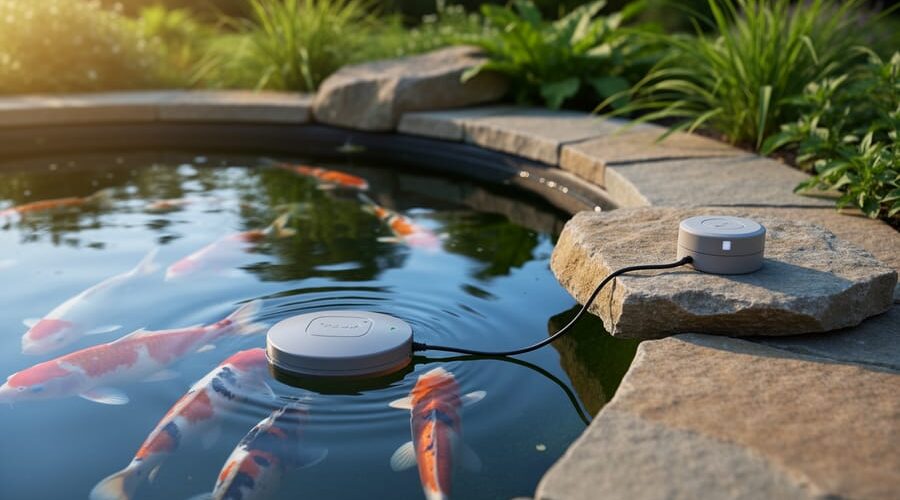
Modern leak detection technology has moved far beyond simply watching your water bill climb. Smart sensors now monitor moisture levels around pond perimeters, automated shut-off valves stop catastrophic failures before they empty your pond, and wireless alert systems notify you the moment something goes wrong—even when you’re away from home. These systems range from basic battery-powered moisture alarms costing under thirty dollars to comprehensive whole-property monitoring networks.
Whether you maintain a small decorative fountain or a multi-thousand-gallon koi habitat, understanding both high-tech detection tools and traditional troubleshooting methods protects your aquatic paradise from the most common threat every water gardener faces. The peace of mind alone makes leak detection worth exploring.
Why Pond and Water Garden Owners Need to Think About Leak Detection
If you’ve ever spent a lovely Saturday morning admiring your water garden only to notice the water level seems lower than usual, you know that sinking feeling all too well. For pond and water garden owners, leaks aren’t just inconvenient—they’re a genuine threat to the entire ecosystem you’ve worked so hard to create.
Unlike indoor plumbing leaks that might just cause cosmetic damage, pond leaks create a cascade of problems. When water levels drop unexpectedly, your fish experience stress from changing conditions and reduced oxygen levels. I learned this the hard way when a small liner puncture I ignored for just a few days led to visible distress in my koi—they were gasping at the surface, and I felt terrible about it.
Plant stability suffers too. Marginal plants suddenly find themselves high and dry, while submerged plants struggle without adequate water depth. The delicate balance you’ve established simply falls apart. Water quality also takes a hit because you’re constantly adding fresh tap water to compensate, introducing chlorine and disrupting the beneficial bacteria colonies that keep your pond healthy.
Then there’s the financial sting. Running your garden hose for hours each week to maintain water levels adds up quickly on your utility bill. Plus, you’re literally watching money drain into the ground—not exactly what you signed up for when you built your beautiful water feature.
The tricky part about pond leaks is they’re sneaky. A tiny puncture in your liner, a loose pipe fitting, or deteriorating plumbing can hide beneath rocks, plants, and murky water. By the time you notice something’s wrong, significant damage may have already occurred.
This is why fixing pond leaks should be considered essential maintenance, not an optional project you’ll get to eventually. Catching leaks early through proper detection methods protects your investment, keeps your aquatic friends happy, and saves you money in the long run.
Understanding How Water Leak Detection Systems Actually Work
Water Flow Monitoring Systems
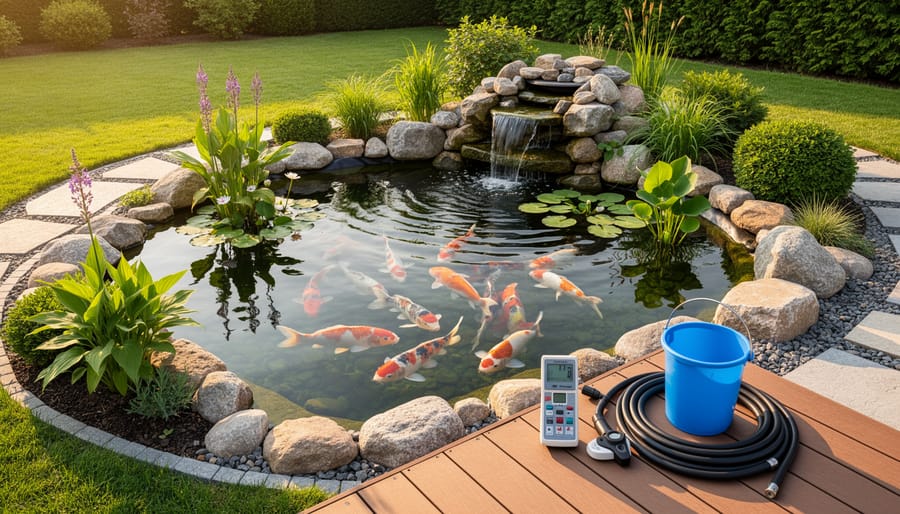
Water flow monitoring systems are like having a watchful friend keeping an eye on your pond 24/7. These clever devices attach to your main water supply line and learn your pond’s normal drinking habits over time. They track how much water flows through your system during daily operations, creating a baseline of what’s typical for your setup.
Here’s the really cool part: once the system knows your pattern, it can spot trouble fast. If your pond suddenly starts using way more water than usual, the system sends an alert straight to your phone. This could mean your pond pump has sprung a leak, your filter connections have loosened, or your waterfall feature has developed a crack you haven’t noticed yet.
I discovered this firsthand when my monitoring system alerted me to unusual flow at 3 AM. Turned out my pump had developed a small crack, slowly draining water overnight. Without that alert, I might have woken up to a disaster and stressed fish!
Most systems let you set custom thresholds based on your specific setup. During regular pond pump maintenance, you can adjust these settings to account for seasonal changes or new water features you’ve added.
Moisture and Water Level Sensors
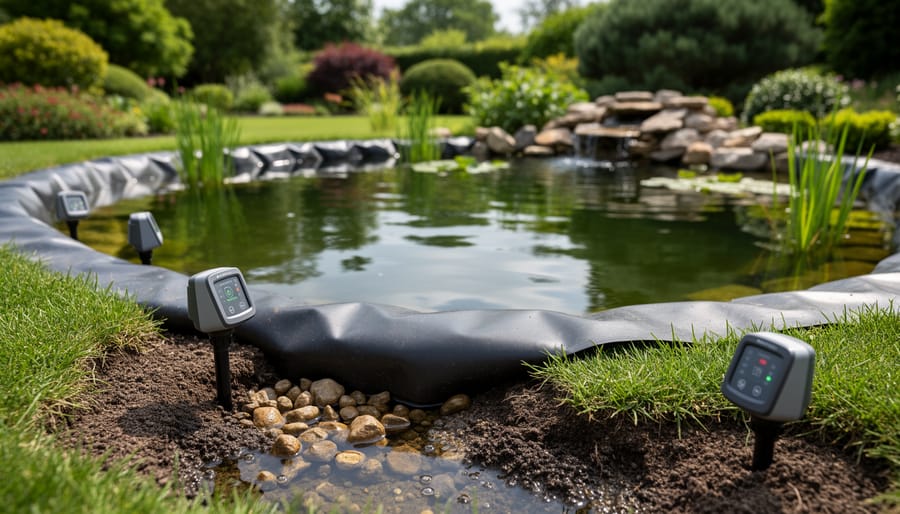
Think of moisture sensors as your pond’s safety net – they’re the early warning system that alerts you before a small problem becomes a pond disaster! These clever little devices work by detecting water in places where it shouldn’t be, like around your pond’s liner edges, near pump housings, or under filtration equipment.
I learned this lesson the hard way when a tiny crack in my skimmer box went unnoticed for weeks, slowly draining water and stressing my fish. Now I place sensors strategically around my pond’s perimeter, especially at low points where water would naturally flow if there’s a breach.
Water level sensors are equally important – they monitor your pond’s actual water depth and alert you to sudden drops that might indicate a leak. A normal pond loses water to evaporation gradually, but a sudden two-inch drop overnight? That’s your cue to investigate! Most modern sensors connect to your smartphone, sending instant notifications so you can catch problems even when you’re away from home.
For best results, position sensors every few feet around your pond’s edge, near all equipment connections, and in areas where ground settling might stress your liner. This comprehensive coverage gives you peace of mind and protects your aquatic investment.
Smart Shut-Off Valves
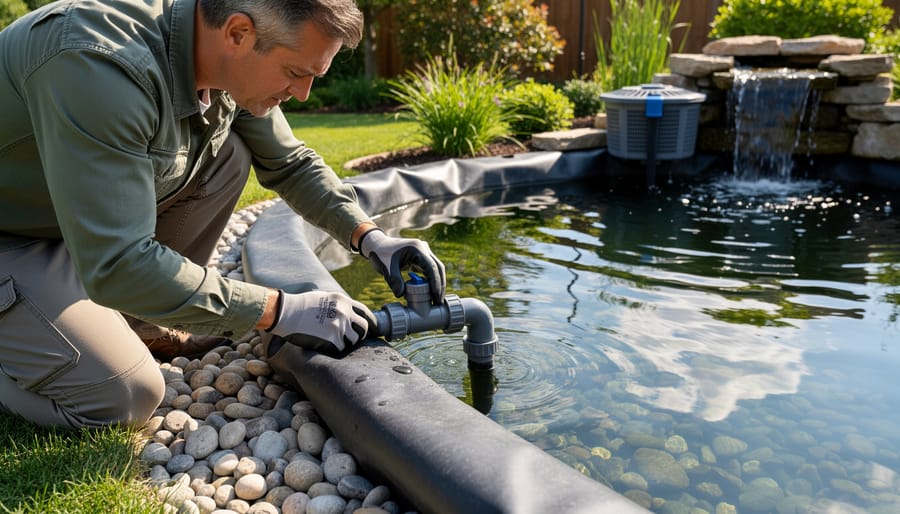
Here’s where technology really shines for pond owners. Smart shut-off valves are like having a vigilant guardian watching over your water system 24/7. These devices automatically stop water flow the moment they detect a problem, which is absolutely crucial if you have an auto-fill system for your pond.
I learned this lesson the hard way when my auto-fill valve malfunctioned while I was away for a weekend. By the time I returned, hundreds of gallons had been wasted, and my water bill was through the roof. A smart shut-off valve would have prevented that entire disaster.
These valves install directly on your main water line or on specific circuits feeding your pond equipment. When paired with leak sensors, they create a foolproof safety net. The moment a leak is detected, the valve closes automatically, stopping water flow within seconds. Many models connect to your smartphone, sending alerts so you know what’s happening even when you’re miles away.
For pond owners, this peace of mind is invaluable. Your fish stay safe, your ecosystem remains stable, and you’re not losing precious water or facing expensive repairs. It’s a small investment that protects everything you’ve worked hard to build.
Choosing the Right Detection System for Your Water Garden Setup
For Simple Garden Ponds
For those of you with basic preformed or liner ponds without fancy filtration systems, you really don’t need to break the bank on leak detection. I learned this the hard way after spending way too much on gadgets for my first simple pond!
Your best friend here is the simple water level marker. Grab a permanent marker and make a line on your pond liner or edge stone at the normal water level. Check it every few days, and if you notice the water dropping faster than normal evaporation (usually about an inch per week in summer), you’ve got a leak to investigate.
Another budget-friendly option is the bucket test. Fill a bucket with pond water, mark the level inside, place it on your pond step so it’s partially submerged, and mark the pond’s water level too. After 24 hours, compare both water levels. If your pond dropped more than the bucket, congratulations, you found a leak without spending a dime! These methods work beautifully for straightforward garden ponds where you just want peace of mind without complicated equipment.
For Koi Ponds and Advanced Water Features
When you’ve invested thousands in beautiful koi and elaborate filtration systems, basic leak detection just won’t cut it. For high-value installations, consider dedicated pond monitoring systems that track multiple parameters simultaneously.
Advanced systems monitor water levels, flow rates, and can even alert you to pump failures before they become catastrophic. I learned this lesson the hard way when a pinhole leak in my show pond went undetected for three days, dropping the water level just enough to stress my prize butterfly koi. The financial and emotional cost taught me that maintaining healthy koi requires vigilant monitoring.
Look for systems offering smartphone connectivity, allowing you to check your pond’s status from anywhere. Some advanced units integrate with automatic top-up systems, maintaining water levels within millimeters. While these systems represent a larger investment (typically $300-$800), they’re invaluable insurance for protecting expensive livestock and complex ecosystems. Many also track temperature and dissolved oxygen, giving you comprehensive pond health monitoring in one package.
For Ponds with Auto-Fill Systems
Auto-fill systems are wonderful for maintaining pond levels, but they can mask serious leaks by constantly adding water. I learned this the hard way when my water bill doubled before I realized my liner had developed a tear. The auto-fill just kept running!
The biggest risk with these systems is runaway water loss. A small leak that would normally drop your water level noticeably gets hidden because the auto-fill compensates. Meanwhile, you’re wasting hundreds of gallons without realizing it.
Here’s how to protect yourself: install a flow meter on your auto-fill line to track exactly how much water you’re adding daily. A sudden increase is your first warning sign. You can also add a timer that limits fill sessions to specific intervals rather than allowing continuous operation.
Consider installing a water leak detector with an automatic shut-off valve on the fill line itself. These devices will stop water flow if they detect unusually high usage patterns. Some smart systems even send alerts to your phone when fill rates exceed normal parameters, giving you immediate notice of potential problems.
Installing Your Leak Detection System: A Step-by-Step Approach
Planning Your Sensor Placement
Think of your pond like a house with multiple entry points – you wouldn’t just lock the front door and ignore the back! The same logic applies to sensor placement. Start by walking around your pond during different times of day, looking for natural vulnerability zones.
The most common trouble spots are around filtration equipment, where connections can loosen over time, and near pump housings where vibrations might cause tiny cracks. Don’t forget the pond edges where liners meet the ground – these areas are prone to settling and shift, especially after heavy rain or winter freezing.
Place sensors near any plumbing junctions or valves, as these are high-risk areas for leaks. If you’ve got a waterfall feature, position a sensor at its base where splashing might mask a genuine leak. Underground pipe runs are tricky, so consider placing sensors at access points or where pipes emerge from the ground.
Here’s a tip from my own experience: put sensors near areas you’ve had issues with before, like spots you’ve spent time repairing liner punctures. Your pond has already shown you its weak points – listen to that history!
Installation Tips for Outdoor Conditions
Installing leak detection equipment outdoors requires some extra care, but don’t worry—it’s totally manageable! First things first: choose sensors rated for outdoor use with proper IP ratings (that’s just a fancy way of saying they’re waterproof enough to handle rain and splashes). I learned this the hard way when my first pond sensor gave up after one heavy rainstorm.
Position your sensors where they’ll detect leaks but won’t sit in standing water permanently. Mounting them slightly elevated on rocks or brackets works wonderfully. For wireless systems, test the signal strength before permanently installing—pond features and thick vegetation can sometimes interfere with transmission.
Weatherproofing is essential. Use silicone sealant around any exposed connections, and consider housing control boxes in weatherproof enclosures. During winter, you’ll want to either remove sensitive electronics or ensure they’re rated for freezing temperatures. Some of my gardening friends simply bring their detectors indoors during harsh months and rely on visual inspections instead.
Battery-powered sensors need regular checking, especially before and after winter. Cold weather drains batteries faster than you’d expect. Set a reminder on your phone every few months to test everything and replace batteries as needed. This simple habit has saved my pond system more times than I can count!
Connecting to Your Smartphone and Setting Alerts
Getting your leak detection system connected to your phone is easier than you might think, and trust me, it’s a game-changer. I learned this firsthand when my system alerted me to a pond liner issue while I was grocery shopping, saving me from losing precious koi fish!
Most modern systems come with their own smartphone app. Start by downloading it from your app store and creating an account. Next, follow the in-app instructions to connect your sensors to your home Wi-Fi network. You’ll typically need to hold down a button on the sensor until it blinks, then select it from the app’s device list. It usually takes less than five minutes per sensor.
Once connected, customize your alert settings. I recommend enabling push notifications, text messages, and email alerts for maximum coverage. Set the sensitivity level based on your needs – higher sensitivity for critical areas like near your pond equipment or basement. Some systems let you designate emergency contacts who’ll also receive alerts, which is perfect if you travel frequently.
Test everything by triggering a sensor with a damp cloth. You should receive notifications within seconds, giving you that wonderful peace of mind that your water garden is protected around the clock.
Beyond Technology: Simple Leak Detection Habits Every Water Gardener Should Practice
Sometimes the best leak detection doesn’t require fancy gadgets at all. I learned this the hard way when I spent weeks troubleshooting my pond with expensive equipment, only to discover a leak I could have found much earlier with simple observation. Let me share some straightforward habits that’ll help you catch problems before your pond starts looking more like a puddle.
Start your day with a quick visual tour. I call this my “morning pond walk,” and it takes just five minutes. Look for wet spots around your pond’s perimeter, soggy grass where it shouldn’t be, or areas where the soil seems unusually damp. These telltale signs often appear before water levels drop noticeably.
The marker test is brilliantly simple. Place a piece of tape or draw a line on your pond liner or container at the current water level. Check it daily for a week. Normal evaporation might lower levels by a quarter-inch in hot weather, but anything more suggests a leak. I keep a small notebook by my pond to track these measurements, it’s saved me countless times.
Pay attention to your pump’s behavior during regular pond maintenance. Is it running more frequently? Making different sounds? These changes often signal that water levels are dropping and the pump is working overtime to compensate.
Check flexible liner edges monthly, especially after storms or heavy winds. Run your hand along seams and corners where different materials meet. Feel for soft spots or areas where the liner has shifted. I once found a tiny puncture simply by noticing the liner felt slightly different in one spot.
Finally, observe your fish. They’re excellent leak detectors. If they’re congregating in one area or seem stressed, investigate nearby. Sometimes they’ll avoid areas where water flow has changed due to a developing leak.
Here’s the truth: setting up leak detection for your water garden isn’t about being paranoid or obsessive. It’s simply about being a responsible steward of the ecosystem you’ve created. Think of it like this—you wouldn’t plant a vegetable garden and never check on it, right? The same goes for your pond or water feature.
The beauty of leak detection is that you don’t need to dive into expensive, complicated systems right away. Start simple. Make it a habit to check your water level weekly with a ruler or piece of tape on the liner. Notice where your waterline sits naturally. Take a quick walk around your pond perimeter every few days, looking for soggy spots or unusually green grass. These small actions take less than five minutes but can save you thousands of dollars and countless hours of heartache.
As you get comfortable with monitoring, you can gradually add tools that make sense for your specific setup—maybe a float sensor for your pond, or a simple moisture alarm near your pump. Build your detection system at your own pace and budget.
Remember, protecting your water garden investment doesn’t require fancy technology or a huge budget. It just requires intention. A little awareness goes a long way. Your fish, your plants, and your peace of mind will thank you for taking these simple steps to keep your aquatic paradise thriving for years to come.