
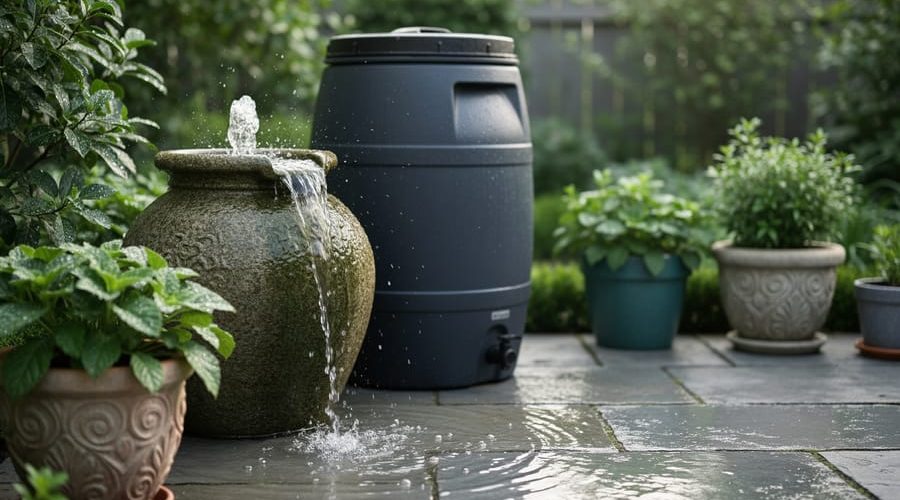
How to Create a Mosquito Control Plan for Container & Small-Space Waterscapes
A mosquito control plan for small waterscapes protects your patio ponds and container gardens through a three-stage approach: eliminate breeding sites, introduce biological controls, and maintain a weekly inspection routine. Most DIY water gardeners can implement this system in under an hour with materials you likely already own or can pick up at your local garden center for less than thirty dollars.
The secret to success isn’t a single product or quick fix. It’s understanding that mosquitoes need only seven to ten days to complete their lifecycle from egg to biting adult. Your decorative fountain or rain barrel becomes a mosquito nursery the moment you stop paying attention. I learned this the hard way three summers ago when my beautiful container pond turned into a cloud of irritation every evening, forcing me to choose between enjoying my patio and hiding indoors.
The good news? Mosquitoes are predictable. They lay eggs in still water, their larvae need oxygen from the surface to survive, and they avoid water with movement or predators. This predictability gives you the upper hand.
Your control plan works because it addresses mosquitoes at every vulnerable stage. You’ll prevent eggs from being laid in the first place, kill larvae before they mature, and verify your results so you’re never caught off guard. Whether you maintain a single birdbath or multiple water features, this systematic framework adapts to your specific setup and keeps your outdoor space comfortable all season long.
Why Small Waterscapes Need a Dedicated Mosquito Strategy
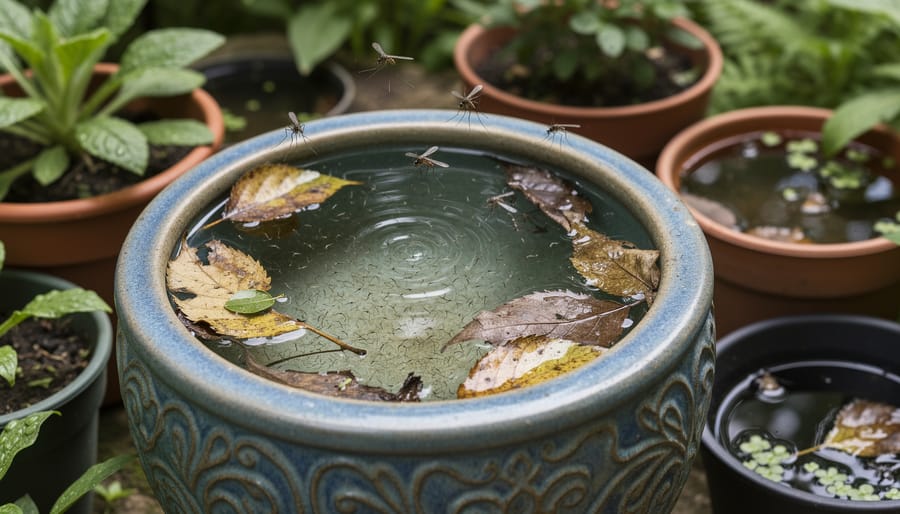
Small water features create the perfect mosquito nursery, and that’s the problem. Unlike larger ponds with established ecosystems, your container gardens and patio water features lack the natural checks and balances that keep mosquito populations under control. There are no fish patrolling for larvae, no dragonfly nymphs hunting in the shallows, no frogs snapping up adults at dusk.
The water in small containers heats up quickly in summer sun, which accelerates the mosquito lifecycle dramatically. What takes ten days in cooler conditions can happen in just five to seven days when your decorative urn is sitting on a sunny deck. Female mosquitoes can detect these warm, still pools from remarkable distances and will seek them out as ideal nurseries.
I learned this lesson the hard way with a beautiful glazed bowl I’d set up as a simple water garden. Just three days after adding water and a single lotus plant, I noticed the surface alive with tiny comma-shaped larvae doing their characteristic jerky swimming. What I’d created as a peaceful focal point had become a mosquito factory practically overnight.
The limited water volume in containers means there’s nowhere for mosquito larvae to hide from their own success. They concentrate in these small spaces, and without predators or water movement to disrupt them, survival rates skyrocket. Even that decorative birdbath you refresh weekly can complete an entire generation between cleanings. This is why small waterscapes need their own targeted strategy rather than relying on methods designed for larger ponds.
What You’ll Need for Your Mosquito Control Plan
Before diving into your mosquito control strategy, gather your supplies. Having everything on hand makes implementation smoother and helps you stay consistent with your plan. The good news? Most items are inexpensive and reusable season after season.
- Prevention Tools: Fine mesh covers or mosquito netting (1/16-inch or smaller openings), small fountain pumps or bubblers for container ponds, solar-powered water agitators for birdbaths, skimmer nets for removing debris
- Biological Controls: Mosquito dunks or bits containing Bti (Bacillus thuringiensis israelensis), mosquito fish for containers holding 50+ gallons
- Maintenance Supplies: White cup or ladle for checking larvae, garden journal or phone for tracking maintenance, drill with bits for adding drainage holes
- Optional Enhancers: Beneficial bacteria products for water clarity, barley straw extract to discourage algae
Let me explain what each category does. Prevention tools create physical barriers or water movement that stops mosquitoes from laying eggs in the first place. That fine mesh over your rain barrel? Mosquitoes can’t penetrate it to reach the water. A simple fountain pump keeps water circulating, and female mosquitoes will pass right by since they need still water for egg-laying.
Biological controls target mosquito larvae without harming other life in your feature. Bti products work like magic, they release bacteria that only affects mosquito and fungus gnat larvae, leaving fish, plants, beneficial insects, and pets completely safe. For larger containers, mosquito fish are natural predators that love munching on larvae all day long.
Maintenance supplies help you monitor your success. That white cup makes spotting tiny larvae easy when you dip it into the water, and keeping notes helps you remember when you last applied treatments.
The optional items support overall water health, which indirectly helps mosquito control by maintaining balanced conditions. Beneficial bacteria break down organic matter that could cloud water or create stagnant pockets, while barley straw keeps algae in check without chemicals.
Safety Warnings and What to Avoid
Before diving into mosquito control, understand what not to do, some common solutions can harm your waterscape more than the mosquitoes themselves.
Skip the oils and surfactants too. While you might read that a film of vegetable oil or dish soap on the water surface suffocates larvae, these methods are deadly to fish, tadpoles, and aquatic insects. They also coat plant leaves and clog fish gills. If your container has any living creatures, oils are off the table.
Biological controls like Bti (the active ingredient in mosquito dunks and bits) are safe when used correctly, but store them in a cool, dry place away from direct sunlight. They won’t harm you, your pets, or wildlife, but keeping them fresh ensures they work when you need them.
Resist the urge to overstock mosquito fish. A five-gallon pot can’t support even one fish long-term, and cramming too many into a small container stresses them to the point where they stop eating larvae anyway. Stick to 2-3 fish per 50 gallons minimum, and provide adequate filtration.
Check your local regulations before releasing any fish into natural waterways or even moving them between your own outdoor features. Many areas restrict mosquito fish movement to prevent ecological disruption. When in doubt, contact your county extension office or fish and wildlife department. Your backyard pond shouldn’t become an accidental invasive species problem.
Step-by-Step: Building Your Mosquito Control Plan
Step 1: Assess Your Waterscape Inventory
Grab a notebook or open a notes app and take a walk around your outdoor spaces. Your mission is to find every single spot where water can collect, and I mean every spot.
Start with the obvious: your container ponds, patio water bowls, birdbaths, and rain barrels. For each one, jot down its approximate size (a 10-gallon planter, a 5-foot pond liner, etc.), whether it contains fish or plants, and if you’ve spotted any mosquito larvae wiggling at the surface.
Now hunt for the sneaky spots. Check saucers under potted plants, these fill with drainage water and often get overlooked. Peek at decorative items like urns, wheelbarrows used as planters, or that old watering can leaning against the shed. Walk your roofline and look for clogged gutters or areas where downspouts create puddles. Even a bottle cap can hold enough water for mosquitoes to breed.
The goal is a complete picture of your water landscape. I once found mosquito larvae thriving in a forgotten ceramic pot saucer tucked behind my hostas, it had been sitting unnoticed for weeks. Your inventory doesn’t need to be fancy, just thorough. This list becomes your action plan for the next steps.
Step 2: Eliminate or Cover Standing Water Sources
Prevention beats treatment every time, so start by eliminating the easy breeding sites lurking around your property. Walk your outdoor space and dump any standing water from unnecessary containers, plant saucers, old buckets, kids’ toys, or that forgotten tarp collecting rainwater. Make this a weekly habit during mosquito season.
For decorative pots you want to keep, drill three or four small drainage holes in the bottom. This simple fix stops water from pooling after rain while keeping your container displays intact. Rain barrels present a trickier challenge since you’re intentionally collecting water. Cover them with fine mesh screening (16 mesh or finer) secured tightly with bungee cords or hose clamps. Check the seal regularly, mosquitoes only need a quarter-inch gap to sneak through.
Don’t overlook your gutters. Clogged downspouts create perfect mosquito nurseries. Clean them twice yearly and ensure water flows freely away from your foundation.
For water features you’re keeping active, your container pond or decorative fountain, you won’t cover them completely, but consider partial mesh covers for sections with slow circulation or floating plant mats where mosquitoes might still find calm pockets to lay eggs.
Step 3: Add Movement and Circulation
Moving water disrupts mosquito breeding because female mosquitoes prefer still, calm surfaces for laying their rafts of eggs. Even gentle circulation makes it difficult for larvae to access the surface to breathe, and adult mosquitoes avoid turbulent areas when scouting egg-laying sites.
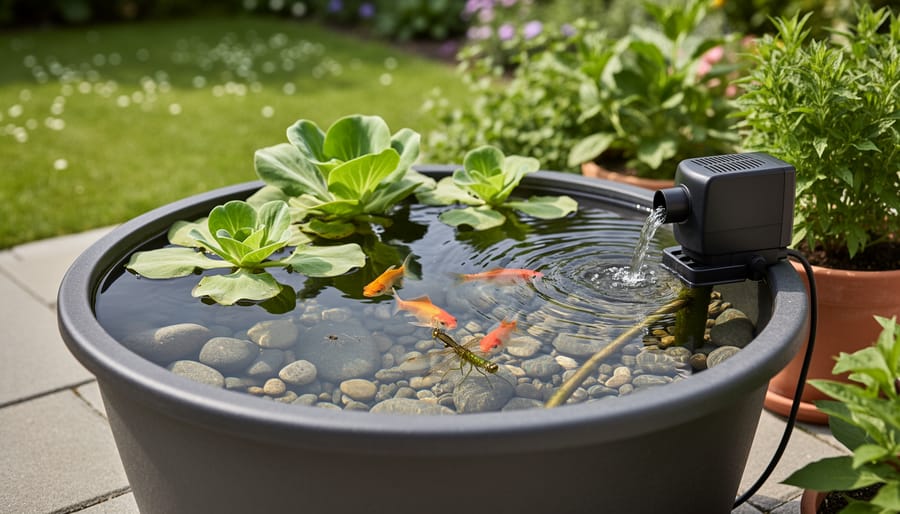
For container ponds and larger decorative features, a small fountain pump or bubbler creates enough movement to deter mosquitoes. Choose pumps rated for your container’s volume, look for compact models designed for tabletop fountains if you’re working with patio ponds. Position the pump outlet to create gentle surface ripples rather than a dramatic spray, which helps prevent splashing and evaporation in shallow features.
Solar-powered agitators work beautifully for birdbaths and mid-sized containers where electrical outlets aren’t convenient. These float on the surface and create ripples whenever the sun hits the panel, making them maintenance-free and surprisingly effective.
For very small containers under two gallons where pumps aren’t practical, try this simple trick: place the container under a dripping outdoor faucet or create a slow trickle from a nearby feature. Even intermittent drips break the still surface enough to discourage egg-laying. Alternatively, consider if that tiny container really needs standing water, or if converting it to a moisture-loving plant setup might work better.
Step 4: Deploy Biological Controls
Biological controls are your chemical-free frontline defense. For most container ponds and larger features, start with mosquito dunks, those small, donut-shaped tablets you float on the surface. One dunk treats up to 100 square feet of water for 30 days. Just drop it in and let it slowly release. The active ingredient, Bti targets mosquito larvae specifically, which means your fish, frogs, plants, and beneficial insects stay completely safe.
For smaller containers, birdbaths, decorative urns, or that 2-gallon planter saucer, use mosquito bits instead. Sprinkle a teaspoon across the water surface every two weeks. They work faster than dunks but don’t last quite as long.
If your container holds at least 50 gallons and already has a balanced ecosystem, consider adding 2-3 mosquito fish. They devour larvae constantly and thrive in outdoor conditions. Anything smaller and the fish will struggle. Never overstock, crowded fish stop hunting larvae effectively and create water quality problems.
Mark your calendar for monthly Bti renewal during mosquito season. I keep a jar of bits by my back door for quick weekly sprinkles in high-risk spots, and it’s become as automatic as watering my tomatoes.
Step 5: Create Your Maintenance Schedule
The best mosquito control plans succeed because they’re simple enough to actually follow. Start with weekly larvae checks, just a quick glance at the water surface during your regular watering routine. Set a monthly phone reminder for the first of each month to replace mosquito dunks or reapply Bti bits, since most products last 30 days. During peak mosquito season (typically late spring through early fall), add a quick daily walk-around while enjoying your morning coffee to spot any new water accumulation after rain or irrigation.
Keep a basic garden journal or notes app entry with three columns: date, what you checked, and what you did. This takes under a minute but helps you catch patterns, like realizing your birdbath needs attention every Thursday, or that one pot always collects water. Schedule seasonal deep-cleanings quarterly to remove organic debris where mosquito eggs might overwinter. The rhythm becomes automatic within a few weeks, much like deadheading flowers or checking soil moisture.
How to Verify Your Plan Is Working
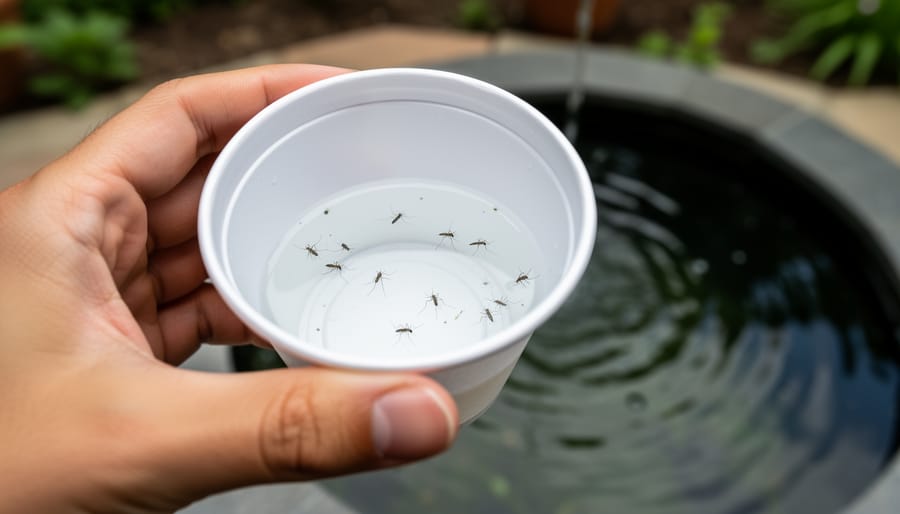
You’ll know your mosquito control plan is working when you can scoop a cup of water and see nothing wiggling back at you. The simplest verification method is the white cup dip test: use a light-colored cup or jar to collect a sample from just below the water surface, then hold it against natural light. Mosquito larvae appear as tiny comma-shaped forms that jerk and wiggle when disturbed. If the water’s clear of these telltale wrigglers, your prevention and control measures are doing their job.
Beyond the dip test, watch for reduced adult mosquito activity near your waterscape. You should notice fewer mosquitoes hovering around the feature at dusk, and your evenings outside should feel more comfortable. If you’ve stocked mosquito fish, healthy, active fish that dart around freely indicate a balanced system. Your aquatic plants should look vibrant too, with no signs of stress from treatments.
When things aren’t working as expected, start troubleshooting. If you’re seeing larvae despite using Bti products, check how long it’s been since your last application. In temperatures above 85°F, Bti reapply in heat may need to happen every three weeks instead of monthly, as the bacteria work faster and die off sooner in warm conditions. When mosquito fish aren’t eating larvae, they’re usually overfed with commercial food. Cut back on feeding and let them hunt naturally. If you’re still finding larvae after addressing these issues, double-check for hidden breeding sites you might’ve missed during your initial inventory, like that saucer under the potted plant two feet away.
Adjusting Your Plan Through the Seasons
Mosquito pressure shifts dramatically throughout the year, so your control plan needs to flex with the calendar. In spring, focus on intensive setup, clean out winter debris, install pumps and covers, and apply your first round of Bti before temperatures consistently hit 10°C. This is also the perfect time to refresh containers and eliminate any stagnant overwintering spots where early-season mosquitoes might already be breeding.
Summer demands your most vigilant monitoring. Check weekly for larvae, renew Bti every 30 days (or every 20 days during intense heat), and ensure pumps keep running. Follow solid heat-proof pond care practices, since stressed fish won’t actively hunt larvae. Top up evaporated water promptly, concentrated containers breed mosquitoes faster.
Autumn offers some relief as temperatures drop, but don’t skip checks entirely. Indian summer warm spells can trigger unexpected breeding surges. You can often extend intervals between Bti applications to 45 days once nighttime temperatures stay below 15°C.
Winter requires different thinking depending on your climate. In mild regions, mosquitoes may breed year-round in any thawed water, so maintain monthly Bti treatments. Colder areas should winter-proof water features completely and watch for temporary melt puddles during warm snaps, these surprise breeding sites catch many gardeners off guard.
Common Questions About Mosquito Control Plans
How often should I check my water features for mosquito larvae?
During mosquito season (typically spring through fall), check every container weekly. In hot weather or after heavy rain, increase to twice weekly since mosquitoes can complete their lifecycle in just seven days under ideal conditions.
Can I use mosquito fish in a small 5-gallon container?
No, five gallons is too small for mosquito fish. They need at least 15-20 gallons per fish to thrive and effectively hunt larvae. For tiny containers, stick with Bti products or add a small fountain pump instead.
Will mosquito dunks harm my water lilies or other aquatic plants?
No, Bti-based products like mosquito dunks are completely safe for all aquatic plants, including water lilies, lotus, and marginal plants. The bacteria specifically targets only mosquito and fungus gnat larvae.
What should I do if I already have a mosquito problem?
Start with immediate larvae control by applying Bti products to kill existing larvae within 24 hours. Then implement prevention measures like adding movement and covering containers. Address both the current infestation and future breeding simultaneously.
Is Bti organic and safe if my pets drink from my water features?
Yes, Bti (Bacillus thuringiensis israelensis) is EPA-approved for organic gardening and completely safe for mammals, birds, and fish. Pets, wildlife, and beneficial insects can safely drink treated water without any harm.
Why do I still see mosquitoes even after treating my containers?
Adult mosquitoes can fly in from neighboring properties or untreated breeding sites you might have missed. Survey your entire yard for hidden water sources like plant saucers, gutters, or toys, and consider integrating seasonal pest solutions that address mosquitoes at multiple life stages throughout the year.
Remember that mosquito control takes patience and consistency. You might not see immediate results because adult mosquitoes already flying around your yard won’t be affected by larvae treatments. However, within two weeks of maintaining your plan, you should notice a significant drop in mosquito activity as you break the breeding cycle. If problems persist despite following your plan, expand your search radius to look for breeding sites beyond your immediate waterscape, check with neighbors about shared issues, and verify your Bti products are fresh and properly applied according to package directions.
Creating a mosquito control plan for your container waterscape isn’t about achieving perfection on day one, it’s about building a sustainable routine that becomes as natural as deadheading flowers or checking soil moisture. Once you’ve worked through the assessment, prevention, and control steps, you’ll find that maintaining a mosquito-free environment takes just minutes each week. A quick visual check here, a mosquito dunk replacement there, and you’re done.
The beauty of this approach is how it fits seamlessly into your existing garden care. When you’re watering plants, you’re already noticing if that decorative bowl has standing water. When you’re admiring your water lilies, you’re naturally observing whether mosquito fish are active and healthy. These small observations add up to powerful prevention without feeling like extra work.
Remember that even a modest container pond or simple fountain can be both stunning and pest-free. You don’t need to choose between aesthetic appeal and mosquito control, the two work together beautifully when you’ve got a plan in place. Your waterscape should be a source of joy and relaxation, not an itchy reminder of what’s breeding in the corner of your patio.
Trust the process you’ve created. Stay consistent with your monitoring schedule, especially during those peak summer months, and adjust as you learn your specific microclimate’s patterns. Before long, you’ll barely think about mosquitoes at all, you’ll just enjoy the peaceful sound of water and the satisfaction of a thriving, balanced ecosystem you’ve carefully tended.