

When to Refresh Seasonal Containers for Your Water Garden
Switch out your seasonal container plants in early spring (March, April), early summer (June), early fall (September), and late fall (November) to keep your water garden looking fresh and vibrant through every season. Those four windows give you the natural rhythm most water gardeners follow, but your local climate, frost dates, and the specific plants you choose will shift those windows by two to four weeks in either direction.
I’ve learned the hard way that rushing a spring swap before the last frost can wipe out tender aquatics overnight, and waiting too long in fall means you’re scrambling to save plants when ice is already forming. Reading your own backyard conditions matters more than any calendar date. A sunny, south-facing patio in zone 8 warms up weeks ahead of a shaded courtyard in zone 5, so the same container recipe won’t work on the same schedule.
Seasonal containers bring year-round color to small water features, patios, and decks where you might not have room for a full pond. They let you experiment with tropical water lilies, floating lettuce, and bold foliage combinations without committing to a permanent planting. The trick is knowing when to make the change, what signals to watch for, and how to protect plants during the handoff so nothing suffers from the transition.
Quick Answer: The Best Times to Change Your Seasonal Containers
Change your seasonal containers four times a year, timing each refresh to match nature’s rhythm and your water garden’s needs.
Spring containers go in after your last frost date, typically March through April, when water temperatures climb above 50°F and plants break dormancy. This window captures the energy of awakening aquatic life and gives cool-season bloomers their moment before summer heat arrives.
Summer transitions happen in late May through early June, once nighttime temperatures stay consistently above 60°F. Swap in heat-loving tropicals and floating plants that thrive in warm water, replacing spring varieties that fade as temperatures rise.
Fall changeovers work best in September through October, before the first hard freeze hits your area. Cool nights and stable water temperatures let autumn foliage and cold-tolerant plants shine, often lasting well into November if you choose hardy varieties.
Winter preparation or displays start in November through December, depending on your climate. In cold zones, winterize containers to protect fish and hardy plants. In milder regions, create cold-season displays with evergreen grasses, winter-blooming selections, and structural elements that look beautiful through shorter days.
These windows aren’t rigid deadlines. Your specific timing flexes based on local weather patterns, container size, and what you’re growing, but these four periods give you a reliable framework for planning transitions throughout the year.
Understanding Seasonal Container Windows
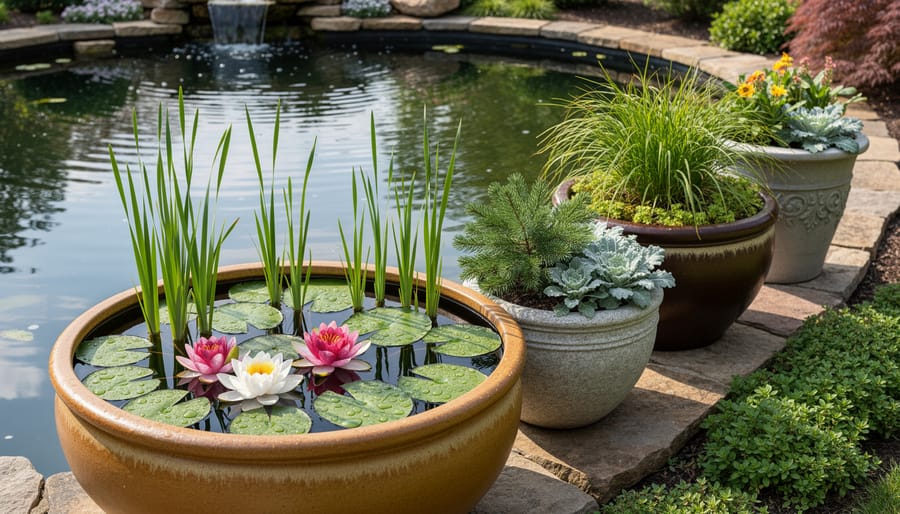
Spring Awakening (March, April)
Spring arrives when soil and water temperatures consistently stay above 10°C (50°F), typically through March and April in temperate zones. Your signal to start spring containers is your local last average frost date, check with your county extension office or gardening neighbors rather than guessing. Most hardy aquatic plants break dormancy as water warms, and spring is their most vigorous growth window. This is when roots establish quickly and foliage emerges with real energy.
Set up new spring containers after the last frost but before daytime highs push past 25°C (77°F). You want cool, bright weather, not winter cold, not summer heat. Fill containers with fresh water, position them in morning sun (four to six hours), and plant a mix of marginals that thrive in cooler conditions: marsh marigold (Caltha palustris), water forget-me-not (Myosotis scorpioides), and young iris divisions. Add a water garden plant schedule to your notes so you track what goes in when and how each variety performs through the season.
Expect rapid top growth in spring containers, new leaves every few days, buds forming within three weeks. Water levels drop faster as temperatures rise, so top off weekly. Spring plantings often look sparse at first but fill out by late May, giving you lush, established containers before summer heat arrives.
Summer Transition (Late May, Early June)
By late May into early June, your water garden containers are ready for their warmest, most exuberant phase. The shift to summer isn’t about a calendar date, it’s about temperature stability. Wait until nighttime air temperatures stay reliably above 55°F and water in your containers feels tepid to the touch, usually around 65-70°F. Cool-season plants start looking tired now, their blooms fading and foliage stretching thin.
This window gives you a clean break between spring’s gentle growth and summer’s bold displays. Tropical water lilies, papyrus, taro, cannas, and warm-season marginals thrive once water warms up, but they sulk or rot if you rush them into cold conditions. A week of consistent warm nights is your signal, not just one balmy evening.
Check your container’s water temperature in the morning. If it holds around 65°F or higher for several days running, you’re safe to transition. In warmer zones (8 and above), this happens in mid-to-late May. Cooler zones (5-6) often wait until early June. Urban containers on sunny patios warm faster than shaded courtyard setups, so read your specific spot rather than following a neighbor’s schedule.
Pull spent spring plants before they decline completely. Swap in heat-lovers that will bloom and grow vigorously through August. Summer containers reward patience, plants installed into warm water establish quickly and perform beautifully all season long.
Fall Changeover (September, October)
September and October offer a surprisingly generous window for fall container changes, often longer than spring’s narrow slot. The goal is to switch before the first hard freeze (typically when overnight lows dip to 28°F or below), but you don’t need to rush the moment leaves start turning.
Fall containers can thrive well into November or even December in many climates because autumn’s cool, stable temperatures favor hardy plants and reduce evaporation stress. Unlike summer’s heat or spring’s unpredictable swings, fall gives you consistent conditions that let displays settle in without shock. Watch your local frost forecasts and aim to refresh containers two to three weeks before your average first freeze date, that gives roots time to establish before cold arrives.
Choose ornamental grasses, evergreen sedges, winter-hardy pansies, and structural foliage that tolerate frost. Many aquatic marginals like dwarf papyrus and variegated sweet flag stay attractive through light frosts, extending your display’s beauty. The key is selecting plants rated for your zone’s winter lows, not just fall temperatures.
Your autumn prep checklist should include cleaning out summer debris, checking container drainage, and adding a layer of gravel mulch to insulate roots. If you’re in Zone 6 or colder, consider bringing tender tropicals indoors by late September; warmer zones can push that into October. Fall’s forgiving nature means a week early or late won’t ruin your display, you’ve got flexibility most other seasons don’t offer.
Winter Protection or Display (November, December)
November and December mark your final container decision of the year: will you empty and winterize, or create a cold-season display that carries through to spring? The answer depends entirely on where you garden.
In mild climates, Zones 8 and warmer, winter containers can be genuinely beautiful. Hardy grasses, evergreen sedges, and ornamental cabbage hold their shape through light frosts. Your container becomes a focal point when the rest of the garden quiets down. Keep water circulating if temperatures stay above freezing most nights, and you’ll maintain visual interest without extra work.
Colder regions face a harder choice. If you winter garden in Zone 6 or below, freezing water will crack ceramic and concrete containers. Your options narrow to hardy materials like resin or fiberglass, emptied and stored, or purpose-built winter displays using evergreen boughs and berries in drained pots. Some gardeners embrace the seasonal pause, draining containers in November and using the downtime to plan spring rotations.
The practical middle path: drain tender containers by late November, overwinter hardy aquatics in a garage or basement bucket, and save one tough container for a simple evergreen arrangement that doesn’t require water. You’ll protect your investment and still have something to look at when snow falls.
What Shifts Your Timing
Your Hardiness Zone and Local Climate
Your USDA hardiness zone tells you when to expect your last spring frost and first fall freeze, the bookends of your container growing season. In zone 5, spring containers might not go out until early May, while zone 9 gardeners can start in February. These aren’t rigid rules, but they give you a baseline.
Regional patterns matter just as much as the zone number. Coastal climates stay milder longer than inland areas in the same zone. Desert regions swing from scorching days to cold nights faster than humid climates. Mountain gardeners deal with microclimates that shift dramatically within a few miles.
Check your zone’s average frost dates, then watch what’s actually happening. If your neighbours’ daffodils are up two weeks early, your spring window has shifted. If autumn stays warm deep into October, you can delay your fall changeover.
Northern zones (3-5) work with shorter seasons and sharper transitions. Southern zones (8-10) often skip true winter displays entirely or enjoy year-round growing. Middle zones (6-7) get the full seasonal rotation with comfortable overlap periods.
Container Size and Thermal Mass

Larger containers act like thermal batteries for your water garden. A 20-gallon tub holds temperature far more steadily than a 5-gallon bowl, which means plants experience less shock when nights turn cool or mornings warm up. That buffering effect can buy you an extra two to three weeks of display time in both spring and fall, your summer tropicals hang on longer into October, and your spring bloomers launch earlier in March without the stress of wild temperature swings.
In small-space settings, you’re often working with compact containers by necessity. That doesn’t doom your seasonal displays, but it does mean you’ll want to transition a bit more conservatively. A small container on a sunny balcony can freeze solid overnight or heat up dangerously fast on a summer afternoon. Watch water temperature closely and plan your changeovers when weather patterns stabilize rather than pushing the edges of the season.
If you’re limited to smaller vessels, group them together. Clustering three or four small containers creates a shared microclimate where each pot moderates the others, giving you some of that thermal mass benefit without needing a massive single tub.
Fish and Living Inhabitants
If you keep goldfish, koi, or other living creatures in your seasonal containers, their comfort and survival become your primary timing guide, often more important than aesthetics alone. Water temperature directly affects metabolism, oxygen levels, and stress thresholds for aquatic life.
Most goldfish and koi tolerate a wide range, but rapid swings cause problems. When spring water warms consistently above 50°F, fish become active and hungry, signaling it’s safe to add plants and refresh your display. In fall, as temperatures drop toward 50°F, their metabolism slows and you’ll want to simplify the container before winter, removing excess debris and reducing feeding. The heat impact on fish matters most in summer transitions: if your container will experience sustained temperatures above 80°F, prioritize shade plants, adequate oxygenation, and cooler water sources before adding warm-season displays.
Small containers warm and cool faster than large ponds, so monitor your thermometer closely during seasonal changeovers and delay any big plant swaps if temperatures are fluctuating wildly. Your fish will show you when timing is off, gasping at the surface, hiding, or refusing food all signal stress from environmental change.
Microclimate and Exposure

Your container’s immediate surroundings create its own weather story, often quite different from the zone on a map. A south-facing patio that bakes in afternoon sun will warm faster in spring and stay hot later in fall than a shaded north corner, sometimes shifting your timing by two weeks or more. Wind exposure matters too. Containers on exposed balconies or rooftops lose heat quickly and dry out faster, pushing you toward earlier fall transitions and later spring planting.
Urban settings bring their own advantages. Heat from buildings and pavement creates microclimates several degrees warmer than surrounding areas, letting city gardeners start spring containers earlier and stretch fall displays well into November. Even something as simple as a nearby wall changes everything, it blocks wind, radiates stored heat at night, and can turn a marginal spot into a protected pocket.
Watch your container for a few days. Notice when sun hits it, how wind affects the water surface, whether surrounding structures provide shelter. These observations tell you more about timing than any general calendar. A protected corner might let you plant two weeks ahead of schedule, while an exposed site asks for patience and hardier choices.
Reading the Signs: When Your Container Is Ready for Change
Your containers talk to you, and learning their language beats any calendar. Watch for these signals, and you’ll know exactly when to make the switch.
Plant Stress and Decline
Healthy plants look vibrant and grow steadily. When leaves yellow despite proper feeding, stems stretch thin and weak, or flowering stops altogether, your current plants are telling you the season has shifted beyond their comfort zone. Spring bulbs fading in late May, tropical lilies browning at the edges in October, or cool-season grasses going dormant in July, these are clear invitations to refresh.
Water Temperature Changes
Stick your hand in the container water weekly. When it feels uncomfortably cold to you (below 50°F), tender plants are struggling. When it feels bathwater-warm (above 75°F), cool-season varieties are cooked. A simple floating thermometer removes the guesswork and gives you precise timing for temperature-sensitive transitions.
Weather Forecast Warnings
Check your 10-day forecast regularly as transition seasons approach. A hard freeze warning (28°F or lower) means autumn containers need immediate protection or replacement. A string of 80-degree days in May signals summer plants can safely go in. Don’t wait for damage, act on the forecast.
Aesthetic Fatigue
Sometimes the container just looks tired. The display that thrilled you six weeks ago now feels stale, colors clash with the current garden palette, or visitors stop commenting. That’s a legitimate signal. Seasonal containers exist for beauty and seasonal joy, if yours no longer sparks either, refresh it regardless of the calendar. Before harsh weather arrives, take proactive steps to winter-proof water features and containers to avoid damage.
Trust what you see and feel. Your containers will tell you when they’re ready for change.
Seasonal Container Terms Every Water Gardener Should Know

Working with seasonal containers means you’ll encounter a few specialized terms. Understanding these concepts helps you make better timing decisions and communicate clearly with other water gardeners or at your local nursery.
- Hardening Off
- The gradual process of acclimating indoor-grown plants to outdoor conditions over 7-10 days by increasing their exposure to sun, wind, and temperature fluctuations. This prevents shock when you move tender plants to your container in spring.
- Overwintering
- Protecting tender or tropical plants through winter by moving them indoors, storing dormant tubers, or providing insulated shelter. For container water gardens, this often means bringing certain plants inside before the first hard freeze.
- Thermal Mass
- The capacity of water and container materials to absorb and retain heat, buffering against rapid temperature swings. Larger containers with more water volume have greater thermal mass and stay warmer longer in fall.
- Last Frost Date
- The average date in spring when your area experiences its final freeze, marking the safe time to plant tender species. Your local extension office provides this date, though actual conditions vary year to year.
- First Frost Date
- The average date in fall when freezing temperatures first arrive, signaling the end of the growing season for frost-sensitive plants. This date guides your fall transition timing for seasonal displays.
- Dormancy
- A natural resting period when plants stop active growth and conserve energy, typically triggered by shorter days and cooler temperatures. Hardy water plants enter dormancy in late fall and resume growth when conditions warm in spring.
- Microclimate
- The specific environmental conditions in your immediate location that may differ from the broader regional climate. A south-facing patio wall might create a warm pocket that extends your growing season by two weeks.
These terms pop up constantly in seasonal container guides and nursery conversations. When you understand what they mean, you can interpret advice more accurately and adjust recommendations to fit your specific situation instead of following rigid calendar dates.
Aftercare: What to Do with Plants Between Seasons
Removing plants from a seasonal container doesn’t mean throwing everything away. What you do next depends on the plant type and your goals for future displays. A few smart decisions now save money and effort later.
Start by sorting your removed plants into three categories: tender tropicals you want to save, hardy perennials that can return next year, and spent annuals. This quick triage tells you exactly what needs immediate attention and what can wait.
Overwintering Tender Plants
Tropical water plants like taro, canna, and water lettuce won’t survive freezing temperatures outdoors. If you want to keep them, bring them inside before the first hard frost. Trim back foliage to reduce stress, rinse the roots clean, and pot them in moist soil or place them in containers of water in a bright window. They’ll go semi-dormant indoors but stay alive for spring replanting. Some gardeners prefer storing tender bulbs and tubers dry in barely-damp peat moss in a cool basement, checking monthly for rot or shriveling.
Hardy Perennials: Divide and Replant
Water iris, hardy rushes, and other perennials that survived multiple seasons often benefit from division when you remove them. Shake off excess soil, inspect the roots, and cut away any mushy or dead sections. Divide overgrown clumps into smaller pieces, each with healthy roots and growth points. Replant these in pond margins, other containers, or temporary holding pots until spring. Hardy plants can also overwinter in an unheated garage in moist soil, protected from extreme temperature swings.
The Transition Process
- Empty the container and sort plants by type and condition as you remove them.
- Rinse roots thoroughly to inspect for disease or pests before storage or replanting.
- Trim dead foliage and damaged roots with clean pruners to prevent rot during storage.
- Label plants clearly with variety names and the date removed so you remember what worked well.
- Store tender varieties indoors in water or moist soil; place hardy plants in protected outdoor areas or cold frames.
- Compost truly spent annuals and any diseased material separately from your main pile.
Between seasons, clean your empty container with a diluted vinegar solution to remove algae and mineral deposits. This simple step prevents disease carryover and gives you a fresh start when the next planting window arrives. Keep notes on which plants thrived and which struggled, that knowledge shapes better choices for your next seasonal rotation.
Common Questions About Seasonal Container Timing
Common Questions About Seasonal Container Timing
Changing seasonal containers isn’t an exact science, and water gardeners often wonder about the flexibility and rules around timing. Here are answers to the questions that come up most often when planning your container transitions.
Can I skip a season entirely?
Yes, especially summer or winter depending on your climate and lifestyle. Many gardeners maintain spring-to-fall containers and simply winterize when cold arrives, or keep year-round evergreen displays that require minimal changes.
What if I’m late changing my containers?
Late is better than never, plants are remarkably forgiving. You might miss a few weeks of peak display, but transitioning mid-season still gives you months of enjoyment and keeps your container healthy.
Can I mix plants from different seasons in one container?
You can, though it’s trickier with containers than garden beds. The challenge is matching water temperature needs, cool-season pansies struggle once water hits 75°F, while tropical water lettuce sulks below 65°F.
How often should I completely refresh my container?
Most water gardeners do full changes three to four times yearly, aligned with the main seasonal windows. More frequent swaps work fine if you enjoy the process, but constantly disturbing a container can stress fish and beneficial bacteria.
Do small containers follow different timing rules?
Small containers need more attention to temperature extremes because they heat and cool faster than larger ones. You might transition earlier in spring and fall to protect plants from sudden temperature swings that bigger containers would buffer.
Should I wait for perfect weather to make changes?
No, waiting for ideal conditions often means missing your window entirely. Avoid extreme heat or freezing days, but otherwise work with the weather you have and give new plants a few days to settle in.
The most common timing mistake isn’t being a week or two off, it’s overthinking the decision until the season has passed. Your container won’t suffer if you’re a bit early or late. What matters more is reading your specific conditions and acting when you notice signs of stress or declining performance.
Small-space gardeners sometimes worry their tiny containers demand more frequent changes, but the opposite is often true. A well-chosen mix of hardy plants in a modest container can look good for months with simple grooming rather than complete overhauls. The compact size actually makes seasonal swaps faster and easier when you do decide to refresh.
If you’re juggling multiple containers, you don’t need to change them all at once. Stagger your transitions over a few weekends, starting with the containers in the most visible spots or those showing the most wear. This spreads the work and lets you learn what timing works best for each location in your space.
Seasonal Timing at a Glance
Here’s a quick reference to help you plan your seasonal container transitions throughout the year. Use this table as a starting point, then adjust based on your specific climate signals and container conditions.
| Season | Timing Window | Zone Adjustments | What to Plant |
|---|---|---|---|
| Spring | March, April | Zones 3-5: mid-April; Zones 6-7: early April; Zones 8-10: mid-March | Pansies, primrose, dwarf iris, early water lettuce |
| Summer | Late May, Early June | Zones 3-5: early June; Zones 6-7: late May; Zones 8-10: mid-May | Water hyacinth, lotus, tropical water lilies, papyrus |
| Fall | September, October | Zones 3-5: early Sept; Zones 6-7: late Sept; Zones 8-10: mid-Oct | Ornamental kale, fountain grass, hardy mums, colorful foliage |
| Winter | November, December | Zones 3-5: protect or empty; Zones 6-7: hardy evergreens; Zones 8-10: winter annuals possible | Evergreen boughs, winterberry stems, empty display, or pansies in mild zones |
Remember that these windows overlap at their edges. If you’re between zones or dealing with an unusual microclimate, watch your actual water temperature and plant health rather than sticking rigidly to calendar dates. The table gives you the framework, but your container and its specific location will tell you the precise moment to make each change.
The beauty of seasonal container timing lies in its flexibility. While the guidelines in this article provide a solid framework, your best teacher will always be your own water garden. Watch how your plants respond to temperature shifts, notice when they look tired or stressed, and pay attention to the weather patterns in your specific location. There’s no penalty for being a week early or late, and you’ll develop an intuition for your containers’ rhythms over time.
Refreshing your seasonal displays isn’t just about following a calendar. It’s about keeping your waterscape vibrant, healthy, and interesting throughout the year. Each transition gives you a chance to experiment with new combinations, respond to what worked or didn’t in the previous season, and maintain the kind of dynamic beauty that makes container water gardening so rewarding.
Start with the basic seasonal windows, adjust for your climate and container size, and don’t be afraid to learn as you go. Your containers will tell you what they need if you take a moment to observe them. The result is a water garden that evolves with the seasons and brings joy every time you step outside.