
What Is Climate Change Resilience and Adaptation for Ponds (and How Does It Work)?
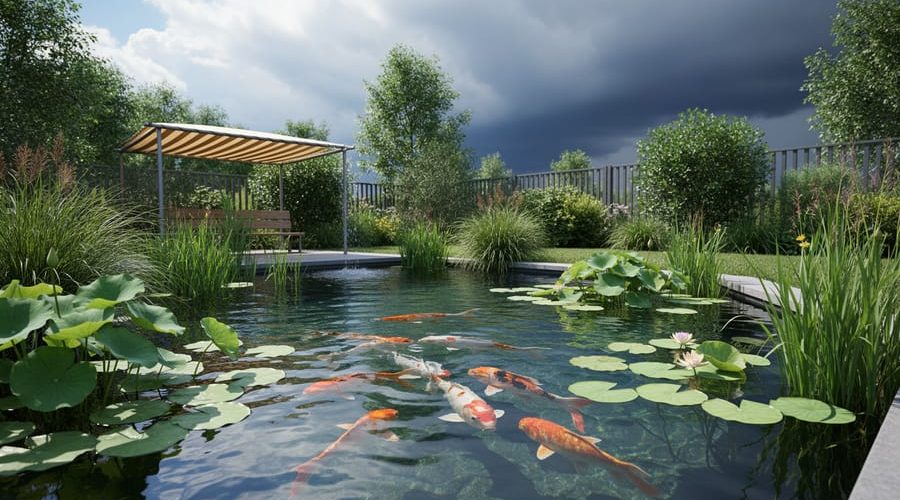
Climate change resilience and adaptation in your pond means designing and managing your water feature to withstand extreme weather, temperature swings, and shifting seasonal patterns while protecting the plants, fish, and ecosystem that depend on it.
If you’ve noticed your pond behaving differently over the past few summers, you’re not imagining it. Heatwaves last longer. Storms hit harder. Spring arrives earlier, or later, or barely at all. Your backyard pond sits at the intersection of all these changes, and whether you’re nursing stressed koi through a record-breaking July or watching your favorite water lilies struggle with unpredictable frost dates, the effects are real and immediate.
This isn’t about complex climate science or policy debates. It’s about the practical reality that your pond faces different conditions than it did even five years ago, and you need strategies that work right now in your own backyard.
Resilience means your pond can bounce back from shocks like sudden temperature drops, heavy rainfall that threatens to overflow your liner, or drought that drops water levels faster than you can refill. Adaptation means you’re actively adjusting how you build, stock, and maintain your feature to handle what’s coming next, not what worked in the past.
The good news? Small, deliberate changes make a genuine difference. Choosing native plants that tolerate wider temperature ranges. Adding shade structures before the next heatwave, not after. Understanding which fish breeds handle stress better. Installing overflow systems that actually work when you need them.
You don’t need to rebuild your entire pond or spend a fortune. You need to know which vulnerabilities matter most for your specific setup and which adaptations deliver the biggest protection. That’s exactly what we’ll cover, with clear steps you can start implementing this season.
What Climate Change Resilience and Adaptation Mean for Your Pond
Climate change resilience and adaptation might sound like abstract environmental concepts, but for your backyard pond, they translate into very practical realities. Resilience means your pond can bounce back after a stressful event, like when fish survive an unexpected heat wave or beneficial bacteria populations recover after heavy rainfall dilutes the water. Adaptation is about adjusting to new normal conditions: perhaps choosing plants that tolerate both drought and deluge, or redesigning your filtration to handle more intense seasonal swings.
- Resilience
- The ability of your pond ecosystem to withstand environmental stress and return to healthy functioning after disturbances like temperature extremes or storms.
- Adaptation
- The process of adjusting pond management, design, and species selection to accommodate changing climate conditions over time.
- Pond Biodiversity
- The variety of living organisms in your water feature, plants, fish, insects, bacteria, amphibians, that collectively create stability and help the system cope with change.
- Climate Stressors
- Environmental pressures that challenge pond health, including prolonged heat, drought, excessive rainfall, temperature fluctuations, and shifted seasonal patterns.
- Ecosystem Buffer
- Natural protective mechanisms within your pond, such as plant cover, substrate layers, and depth zones, that moderate the impact of climate extremes.
Think of resilience as your pond’s shock absorber. When summer temperatures spike and stay elevated for weeks, a resilient pond maintains oxygen levels because it has enough depth, shade from marginal plants, and diverse bacteria populations working together. The water might warm up, but the ecosystem doesn’t crash.
Adaptation happens over a longer timeline. If your area now experiences three-week dry spells that never occurred a decade ago, adaptation might mean installing a rainwater collection system, choosing drought-tolerant bog plants for shallower zones, or accepting that you’ll need to top off water more frequently. It’s not fighting the new conditions but working intelligently within them.
Both concepts matter because pond ecosystems operate on narrow margins. A two-degree temperature rise sustained over weeks can stress fish. A single intense rainstorm can overflow banks and wash away beneficial organisms. Understanding resilience and adaptation gives you a framework for protecting what you’ve built while preparing for what’s coming.
How Climate Adaptation Works in Pond Ecosystems
Natural Climate Buffers in Ponds
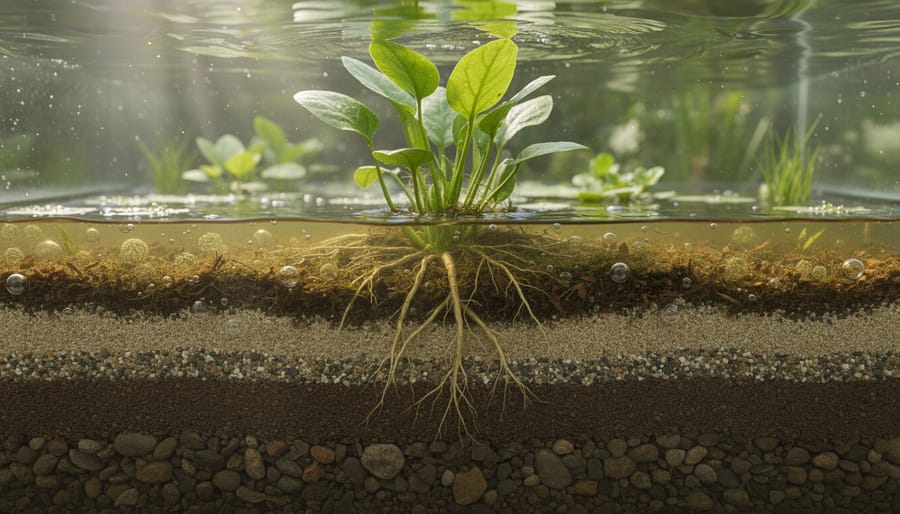
Ponds come equipped with built-in climate controls that work quietly in the background. Deeper water zones act as thermal reservoirs, storing coolness during hot spells and releasing it slowly as air temperatures swing. A pond with varied depth, say, a shallow shelf dropping to a three-foot center, creates temperature gradients that fish and amphibians move between as conditions change. The substrate plays a similar stabilizing role: thick layers of organic material on the pond floor buffer pH shifts and absorb excess nutrients that warm water accelerates.
Plants are your pond’s most versatile climate moderators. Emergent vegetation along the margins shades the water surface, cutting direct sun exposure that drives evaporation and overheating, a principle similar to riparian buffering of temperature in natural streams. Submerged plants oxygenate the water column even as warming reduces dissolved oxygen, while floating species like water lilies create a living canopy that blocks sunlight and slows algae blooms triggered by heat.
Wildlife contributes too. Beneficial bacteria colonies regulate nutrient cycles that climate stress disrupts. Dragonfly larvae, snails, and tadpoles process organic matter before it fouls the water during temperature spikes. This biological diversity creates redundancy, if one species struggles in changed conditions, others pick up the slack, maintaining the pond’s equilibrium without your intervention.
When Natural Systems Need Help
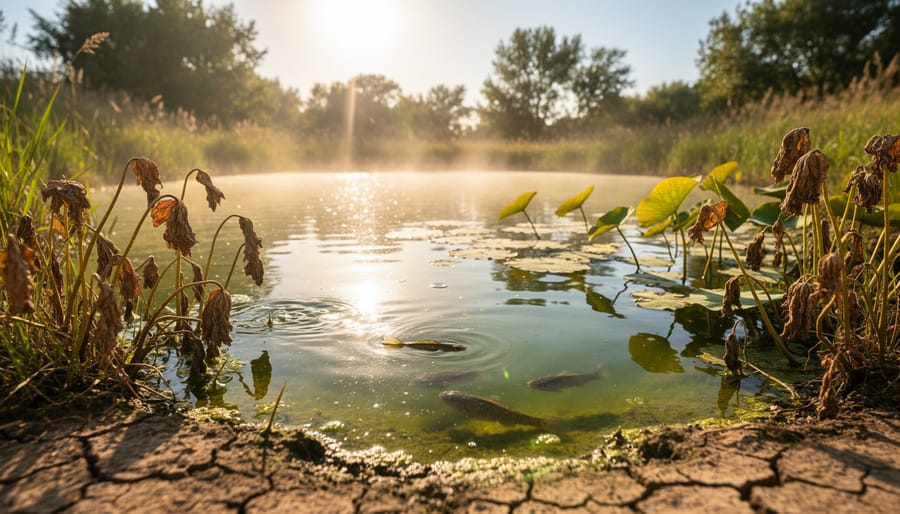
Your pond’s natural resilience has limits, and knowing when it’s overwhelmed helps you step in before problems cascade. Watch for persistent cloudiness that doesn’t clear after a few days, it signals disrupted biological filtration. String algae that returns immediately after removal means your plant balance can’t compete with nutrient loads anymore. Fish gasping at the surface during warm afternoons, even with aeration running, shows oxygen production has fallen behind demand.
Temperature swings matter more than absolute readings. If your pond heats rapidly in morning sun then crashes overnight, shallow zones and lack of thermal mass leave it vulnerable. Check whether beneficial plants like lilies and marginals are declining instead of spreading, stressed vegetation can’t buffer chemistry or provide shade when heat intensifies.
Wildlife changes tell the story clearly. Fewer frogs calling each spring, dragonfly nymphs disappearing from shallow edges, or native insects giving way to pest species all indicate ecosystem stress. You can measure pond biodiversity with simple observation logs tracking what you see weekly, declining counts over months reveal resilience problems before they become crises.
Seasonal extremes expose weaknesses fast. After heavy rain, does your pond overflow destructively or handle runoff? During dry spells, does water level drop so quickly that shallow zones fail? Winter freezes that kill surface plants or summer heat that crashes oxygen levels both signal adaptation gaps.
These aren’t failures, they’re information. A pond showing two or three stress signs consistently needs targeted help, whether that’s adding depth, increasing plant cover, or adjusting circulation. Catching stress early means small interventions work; ignoring it forces bigger fixes later.
Types of Climate Resilience Strategies for Ponds
Physical and Structural Adaptations
Physical changes to your pond’s structure create the foundation for climate resilience. These modifications work with water’s natural properties to buffer temperature swings, manage extreme rainfall, and protect wildlife during stress events.
Depth zones are your first line of defense. A pond with varied depths, ideally including areas 3-4 feet deep, gives fish and other creatures refuge during heat waves and cold snaps. Deep water maintains stable temperatures when surface conditions fluctuate wildly. If your pond is currently shallow, excavating even one deeper zone provides critical thermal refuge.
Shade structures dramatically reduce heat stress. Pergolas, strategically placed trees, or shade sails can lower surface water temperatures by 10-15 degrees on scorching days. Position shade to cover at least 40% of your pond’s surface during peak afternoon sun. Floating plants like water lilies also create living shade while adding oxygen.
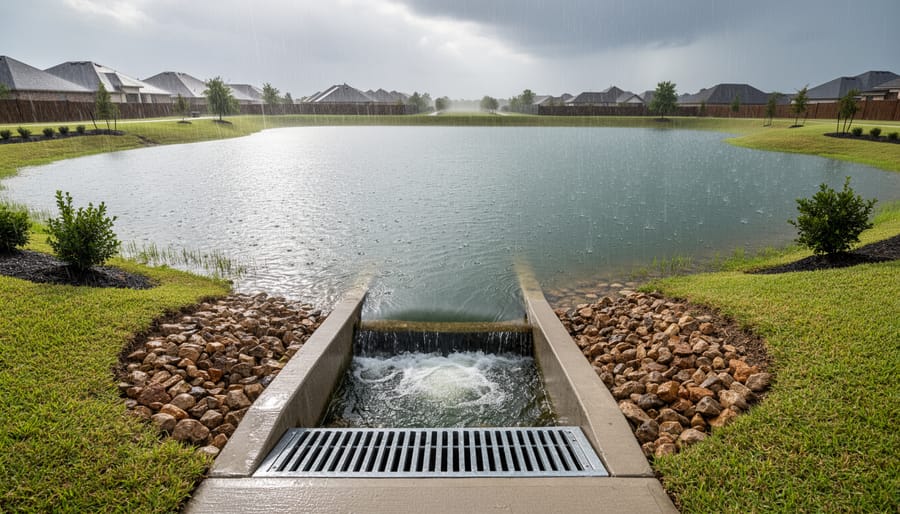
Overflow systems prevent disaster during extreme rainfall. A simple overflow pipe or vegetated spillway directs excess water away from your pond liner and prevents flooding damage. Design your overflow to activate before water reaches critical levels, typically 2-3 inches below the pond rim.
Sloped edges with shallow planting shelves create flexibility as water levels change. Gradual slopes prevent erosion during heavy rain and provide access points for wildlife during drought. These graduated edges also support diverse plant communities that stabilize banks and filter runoff before it enters your pond.
Biological Diversity Solutions
Building a diverse plant and animal community is one of the strongest climate buffers you can give your pond. When you layer different species, from deep-water oxygenators to marginal sedges to floating shade plants, you create redundancy. If heat stress weakens one group, others step in to keep oxygen levels stable and algae in check. Choose pond plants that tolerate a range of conditions: species that handle both drought-exposed roots and occasional flooding, or varieties proven to survive temperature swings in your region.
Native plants typically adapt faster than exotics because they’ve evolved with local climate variability. Prioritize species already present in nearby wetlands, they’re pre-tested for your soil, rainfall patterns, and seasonal extremes. Introduce at least three different plant types (submerged, emergent, floating) to cover all depth zones. This creates habitat layers: dragonfly nymphs shelter among submerged stems, frogs use marginal cover, and beneficial insects patrol lily pads.
Wildlife diversity follows plant diversity. More plant structure means more hiding spots, breeding zones, and food sources for everything from beetles to small fish. That biological complexity acts as insurance: if one species struggles during a heatwave or cold snap, others maintain the pond’s functions until conditions stabilize.
Water Management Approaches
Water doesn’t just evaporate from your pond during droughts or overflow during storms, it’s your primary tool for managing climate stress. Smart water management means planning for both extremes before they arrive.
Start with collection systems. Directing roof runoff into your pond during heavy rain serves two purposes: it maintains water levels through dry spells and reduces flooding pressure during downpours. A simple rainwater pond design with gutters, downspouts, and filtration prevents you from constantly topping up with chlorinated tap water while providing a buffer against summer evaporation.
For drought resilience, maintain water levels at least six inches below your pond’s rim during wet seasons. This gives you a reserve when evaporation accelerates. Consider a backup water source, a rain barrel, bore water system, or dedicated emergency supply, so you’re not scrambling when restrictions hit.
Circulation needs shift with seasons and weather patterns. During heat waves, run pumps at night when temperatures drop to maximize oxygenation. In heavy rain events, increase circulation to prevent stratification and keep newly diluted water mixed. If your region faces more frequent temperature swings, install a pump with variable flow rates rather than fixed settings.
Track your pond’s water level weekly with a simple dipstick or marked stake. Patterns emerge quickly: you’ll notice if evaporation is accelerating, if summer top-ups are needed earlier each year, or if overflow events are intensifying. That data guides your adaptation decisions better than guesswork.
How Pond Owners Use Climate Adaptation Strategies
Quick Wins for Immediate Resilience
You don’t need a complete pond redesign to boost climate resilience. Start with floating plants like water lettuce or duckweed, which shade the surface, cool the water by a few degrees, and reduce evaporation during hot spells. They establish quickly and cost almost nothing.
Next, add shade where it counts. A strategically placed umbrella, shade sail, or even a potted tree near the pond’s south side (or north in the southern hemisphere) can prevent afternoon temperature spikes. If you’re planting around the pond anyway, cluster native marginals on the sunniest edge, they’ll stabilize banks, filter runoff, and create cooler microclimates.
Consider simple overflow management. A shallow basin or rain gardens positioned downslope from your pond catches excess water during heavy rainfall, preventing erosion and nutrient overload. This doubles as habitat and looks intentional.
Finally, mulch exposed soil around the pond perimeter with wood chips or leaf litter. It holds moisture during dry periods, keeps sediment out during storms, and supports beneficial insects. These changes take an afternoon, work with your pond’s existing setup, and deliver measurable results within weeks.
Long-Term Planning and Upgrades
Beyond the immediate fixes, building true climate resilience often means rethinking your pond’s fundamental design elements. These upgrades require more effort and investment upfront, but they create lasting structural advantages that help your pond weather extremes year after year.
Deepening Critical Zones
Adding depth is one of the most effective long-term adaptations. A deeper pond maintains stable temperatures through heat waves and provides cold-water refuge during hot spells. If your pond is currently 18 inches deep, excavating a zone to 30 or 36 inches creates a thermal refuge where fish can escape surface heat and beneficial bacteria colonies can survive temperature swings. This doesn’t mean excavating the entire pond. Creating one or two deeper pockets preserves the shallow zones plants and wildlife need while adding climate insurance.
Installing Backup and Overflow Systems
Climate extremes cut both ways. A backup water source becomes critical during extended droughts when evaporation accelerates and rainfall disappears. Installing a rainwater harvesting system with storage tanks gives you chemical-free top-up water when you need it most. On the flip side, designing proper overflow channels prevents flooding damage during intense rainfall events that are becoming more common. A well-planned overflow route directs excess water away from foundations and sensitive plantings while preventing erosion around your pond edges.
Redesigning for Future Conditions
Sometimes the most resilient choice is reimagining your pond’s layout entirely. Moving a pond from full sun to partial shade, adding bog filtration zones that handle both excess nutrients and variable water levels, or creating interconnected pools at different depths all position your ecosystem to adapt as conditions shift. These projects often coincide naturally with pond renovations or liner replacements, making them less disruptive than they might seem.
The key is planning these upgrades strategically rather than reacting to each crisis as it hits.
Protecting Pond Biodiversity Through Climate Challenges
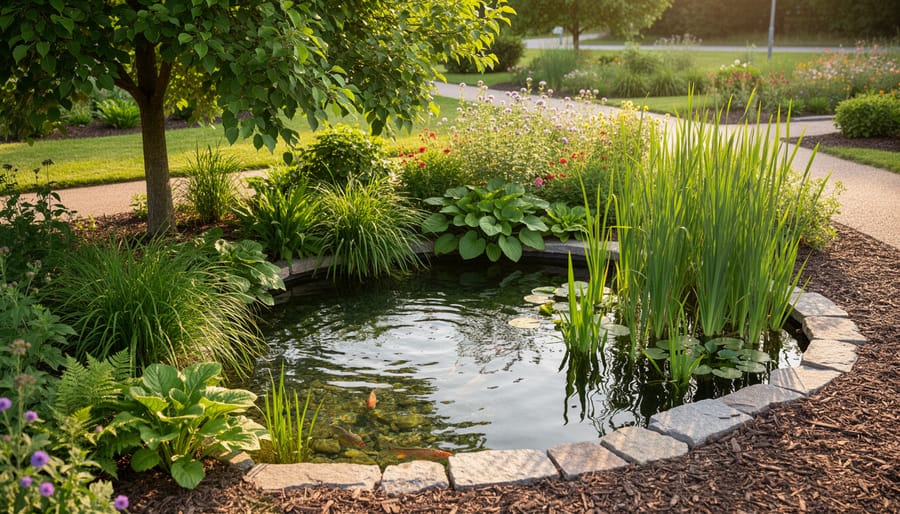
Climate change doesn’t just alter water temperature and weather patterns; it fundamentally reshapes which species can survive in your pond. The good news is that biodiversity itself acts as insurance: a pond supporting multiple species at different levels of the thriving food web weathers disruption better than one dominated by just a few organisms.
Start with plants that tolerate a range of conditions. Instead of relying solely on water lilies that struggle in prolonged heat, mix in hardy natives like sedges, rushes, and water ribbons that handle both drought and flooding. Floating plants such as duckweed and azolla provide crucial summer shade while improving water quality, and they bounce back quickly after winter die-offs or storm wash-outs.
Fish selection matters more now than ever. Goldfish and native species like rainbow fish generally adapt better to temperature swings than delicate tropical varieties. Avoid overstocking; fewer fish means your pond can buffer oxygen drops during heat waves without catastrophic losses. If you keep koi, ensure depth zones below one metre where they can retreat when surface water overheats.
Beneficial bacteria populations crash during extreme cold or sudden pH shifts from heavy rain. Maintain biofilm surfaces by keeping established rocks, gravel, and plant roots undisturbed. Adding bacterial supplements after weather extremes helps communities rebuild faster, preventing the toxic ammonia spikes that kill fish.
Create physical refuge zones: deep pockets for fish during summer heat, shallow marshy edges where frogs can breed even when water levels drop, submerged logs and rock piles for insects and tadpoles. These microhabitats let different species find their ideal conditions as the pond’s overall environment fluctuates.
Don’t remove leaf litter and algae too aggressively. These organic layers shelter invertebrates that feed birds, frogs, and dragonflies. A sterile pond lacks the redundancy to recover when climate stress removes one piece of the ecosystem.
Accept that your species mix will shift. Some plants will die back; others will thrive unexpectedly. The goal isn’t preserving every original inhabitant but maintaining enough diversity that your pond keeps functioning through whatever comes next.
Common Questions About Pond Climate Resilience
Most pond owners hesitate to tackle climate adaptation because they’re not sure where to begin or whether their efforts will actually make a difference. The good news is that climate resilience for ponds is more accessible and affordable than many people assume, and you don’t need a complete renovation to see meaningful results.
Do small ponds really need climate adaptation?
Yes, and often more urgently than larger ponds. Small water features have less thermal mass and water volume, which means they heat up faster during heatwaves, experience more dramatic water level drops during droughts, and can’t dilute pollutants or chemical swings as effectively as bigger ponds. A 100-gallon preformed pond might see a 15-degree temperature spike on a single hot afternoon, while a 2,000-gallon pond shifts just a few degrees. That said, small ponds are also easier and cheaper to adapt. Adding a few floating plants or a shade sail can stabilize conditions immediately without major investment.
How much does climate adaptation actually cost?
Many effective resilience measures cost little to nothing. Planting native marginals from divisions of existing plants, arranging patio furniture to create afternoon shade, or adjusting pump timers for seasonal needs requires time but minimal money. Physical upgrades like adding a deeper zone or installing overflow pipes might run a few hundred dollars depending on pond size and whether you DIY or hire help. The smartest approach is layering inexpensive changes first, then investing in larger projects only if monitoring shows your pond still struggles.
Can I retrofit an existing pond, or do I need to start over?
Almost every pond can be adapted without rebuilding. You can add depth by excavating a small refuge zone in one corner, introduce varied plantings around the edges, install shade structures overhead, or upgrade your filtration to handle warmer water. Even older concrete or preformed ponds benefit from strategic plant additions and water management adjustments. Complete reconstruction is rarely necessary unless your pond has fundamental structural failures unrelated to climate.
What’s the most important first step for climate resilience?
Start by observing your pond through different weather conditions and seasons to identify its specific vulnerabilities. Some ponds overheat in summer, others flood during heavy rain, and many face both challenges at different times of year.
How do I know if my adaptation efforts are working?
Track simple indicators like fish behavior during temperature extremes, algae bloom frequency, plant health through seasonal changes, and water level stability. If fish aren’t gasping during heatwaves and plants recover quickly after storms, your resilience measures are succeeding.
Should I focus on heat or drought first?
Address whichever extreme your pond faces most often based on your local climate patterns. Many solutions like adding depth and increasing plant diversity help with both challenges simultaneously.
Will climate adaptation help with algae problems?
Yes, indirectly. Resilient ponds with stable temperatures, good plant coverage, and healthy biodiversity naturally resist algae blooms because competing plants consume excess nutrients and shade limits light penetration.
The timeline for seeing results varies by strategy. Shade interventions cool water within hours. Plant coverage develops over weeks to months. Biological diversity and soil-based filtration improvements might take a full season to establish. This staggered timeline actually works in your favor because you can implement quick fixes while longer-term solutions mature.
Remember that climate adaptation isn’t a one-time project but an ongoing relationship with your pond’s changing needs. What works perfectly this year might need adjustment as weather patterns shift or as your pond’s ecosystem matures. The key is building observation into your regular pond maintenance routine so you catch stress signals early and respond before small problems become pond-wide failures.
Climate adaptation for your pond doesn’t require a complete rebuild or expensive overhaul. The most effective approach combines small, thoughtful changes that work with your pond’s natural systems rather than against them. Adding a few floating plants this month, creating a shade zone next season, or introducing native marginals gradually builds resilience without overwhelming your budget or disrupting your ecosystem.
Start with one simple change and observe how your pond responds. Notice how temperature fluctuates after adding shade, watch how plants establish in different zones, track how fish behavior shifts with new shelter areas. These observations teach you what your specific pond needs and guide your next steps. Climate resilience isn’t a checklist to complete but an ongoing process of learning and adjusting.
Every pond benefits from adaptation strategies, whether it’s a 100-gallon container water garden or a half-acre natural pond. A small tub pond gains just as much from strategic plant placement as a large feature gains from complex overflow systems. The scale changes, but the principles remain the same: diversity creates stability, natural processes need support during extremes, and incremental improvements compound over time.
Your pond already has resilience built in through its depth, substrate, plants, and wildlife. Climate adaptation simply strengthens these existing defenses. The work you do today, however modest, helps your pond ecosystem weather tomorrow’s challenges while supporting the biodiversity that makes it thrive.