
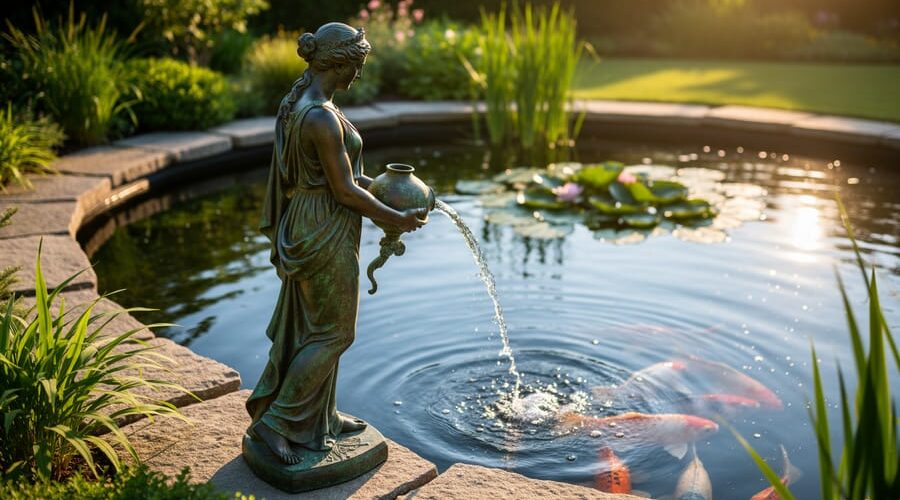
Figurative Garden Sculpture: Bringing Your Water Garden to Life
Transform your water garden into a living gallery by adding figurative sculptures that bring personality and storytelling to your pond’s edge. These human, animal, or mythological forms create instant focal points and emotional connections that abstract pieces simply can’t match. Whether you’re drawn to a classical goddess pouring water into your koi pond, a playful bronze frog perched on a lily pad, or a serene Buddha reflecting in still waters, figurative sculptures anchor your design and give visitors something memorable to discover.
The magic happens when you choose pieces that speak to your garden’s character while considering practical realities. A whimsical garden gnome works beautifully in a cottage-style setting, while sleek modern figures complement contemporary landscapes. Material selection matters tremendously for longevity—bronze develops a gorgeous patina, resin withstands freeze-thaw cycles, and natural stone weathers gracefully beside water. Success comes from balancing artistic vision with durability, ensuring your sculptural investment enhances your water feature for years to come. The right figurative piece doesn’t just decorate your pond; it completes the story you’re telling in your outdoor space.
What Makes Figurative Sculpture Different from Other Water Garden Ornaments
When you’re browsing through water garden ornaments, you’ll notice two distinct categories: figurative pieces and abstract or geometric designs. Understanding this difference can really transform how you approach decorating your pond.
Figurative sculptures are exactly what they sound like – they represent recognizable forms. Think graceful herons standing at attention, playful frogs perched on lily pads, serene Buddha statues, or classical Greek goddesses pouring water from urns. These pieces depict humans, animals, or mythological creatures in ways we can immediately identify and connect with emotionally.
Abstract or geometric ornaments, on the other hand, focus on shapes, lines, and forms that don’t necessarily represent anything specific. They might be beautiful spheres, spiraling towers, or interesting angular designs that add visual interest without telling a particular story.
So why choose figurative pieces? Here’s what I’ve discovered through my own water gardening journey: figurative sculptures create instant focal points with personality. When I added a heron statue to my pond, visitors immediately started commenting on it. It became a conversation starter and gave my water garden a narrative – suddenly it felt like a natural wetland habitat rather than just a backyard pond.
Figurative pieces also guide the overall theme of your space. A Buddha statue transforms your pond into a meditation garden, while playful otter sculptures create a whimsical, family-friendly atmosphere. They help establish mood and meaning in ways that geometric pieces simply can’t achieve.
Most importantly, figurative sculptures invite emotional connection. We naturally respond to faces, animals, and familiar forms. They make your water garden feel alive and inhabited, even when you’re not there to enjoy it yourself.
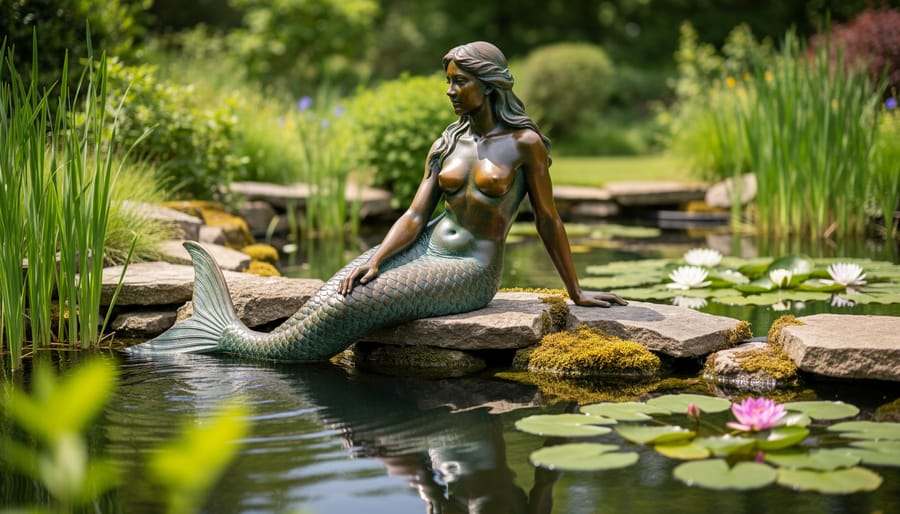
Popular Figurative Sculpture Themes for Water Gardens
Classical and Mythological Figures
There’s something magical about adding Greek and Roman inspired pieces to your water garden. These classical sculptures bring an air of timeless elegance that never goes out of style. I’ve found that a graceful nymph positioned beside a fountain or a majestic Neptune rising from the pond center instantly transforms an ordinary water feature into something extraordinary.
Cherubs make wonderful additions too, especially for smaller ponds. Their playful expressions add charm without overwhelming the space. For formal pond designs with geometric shapes and clean lines, goddesses like Diana or Venus create stunning focal points that draw the eye and anchor the entire composition.
What I love most about these classical figures is their versatility. They complement structured landscapes beautifully, working alongside symmetrical plantings and architectural features like columns or urns. The key is choosing pieces that match your pond’s scale. A grand Neptune statue needs a substantial pond to shine, while delicate cherubs suit intimate courtyard settings perfectly. These mythological characters tell stories, adding depth and personality to your water garden while celebrating centuries of artistic tradition.
Wildlife and Natural Forms
There’s something magical about spotting a bronze heron standing guard at your pond’s edge or discovering a playful frog sculpture peeking from beneath lily pads. Wildlife sculptures are absolute favorites among water gardeners because they feel like they truly belong there. These pieces celebrate the creatures we’re already hoping to attract to our ponds, creating a harmonious blend of art and nature.
Popular choices include elegant herons and cranes that appear to be fishing, turtles sunbathing on rocks, colorful koi rising to the surface, and whimsical frogs perched on lotus leaves. I remember adding a small turtle sculpture to my pond three years ago, and visitors constantly mistake it for the real thing until they get closer. That delightful moment of discovery brings smiles every time.
These sculptures work beautifully because they’re inspired by actual pond inhabitants, so they naturally complement the ecosystem you’re building. Position a heron near shallow water where real birds might hunt, or nestle a frog among marginal plants where they’d naturally hide. Nature lovers appreciate how these pieces enhance rather than dominate the landscape, creating peaceful focal points that celebrate the wildlife we cherish while adding year-round visual interest to your water garden.
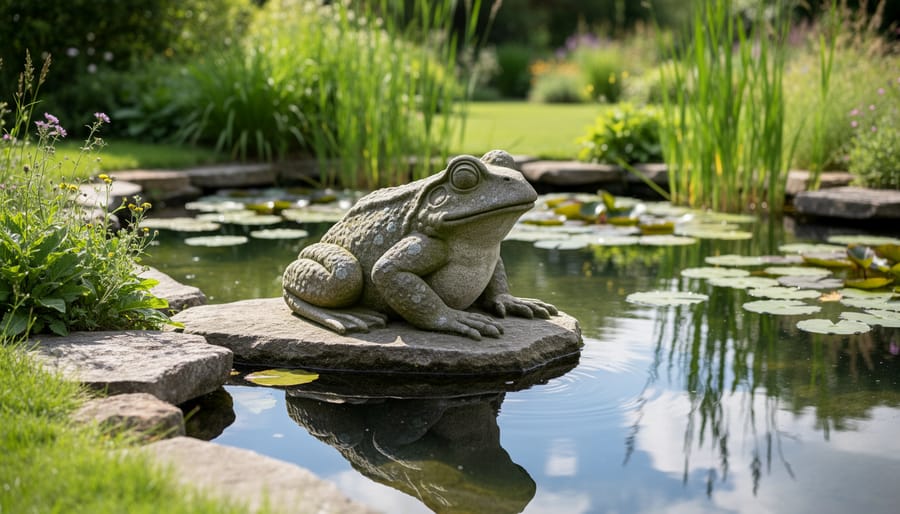
Asian-Inspired Figurative Art
Asian-inspired figurative sculptures bring a sense of peace and mindfulness to your pond area. Buddha statues are wonderfully calming additions—I placed a seated Buddha near my koi pond years ago, and it instantly became my favorite meditation spot. These figures work beautifully with Japanese water gardens, complementing the natural stone, bamboo, and minimalist plantings.
Dragons add movement and mythology, often positioned as if emerging from the water itself. Monk statues in contemplative poses create focal points along pathways or tucked beside trickling waterfalls. The key is restraint—these sculptures shine when given space to breathe rather than crowding your garden.
Stone or resin finishes in grey, bronze, or weathered green blend naturally with pond surroundings. Position them where they’ll catch morning light or reflect in still water for maximum impact. Even in contemporary settings, these Eastern figures create that coveted zen atmosphere we all crave in our outdoor spaces.
Whimsical and Playful Characters
Garden gnomes peeking from behind hostas, delicate fairies perched on lily pads, and cheerful children figures dangling their feet over pond edges bring instant smiles and enchantment to water gardens. These whimsical characters inject personality and storytelling into your outdoor space, creating delightful discovery moments for visitors of all ages.
I’ve found that playful figurines work beautifully in family-friendly gardens where grandchildren love searching for hidden gnomes during visits. Position them strategically near pathways or partially concealed among plants to create that sense of wonder and surprise. A fishing gnome seated beside your pond or a fairy watching over water lilies adds narrative charm that transforms your garden from merely beautiful to genuinely magical.
These characters typically come in weather-resistant resin or stone, making them durable enough for year-round display. Choose pieces that complement rather than overwhelm your garden’s scale. A single well-placed character often creates more impact than a crowded collection, letting each figure tell its own story within your aquatic landscape.
Choosing the Right Material for Your Water Garden Sculpture
Stone and Concrete: Built to Last
Stone and concrete sculptures bring a sense of permanence to your water garden that truly lives up to their reputation. These heavyweight champions can withstand decades of weather exposure, developing a beautiful patina over time that adds character rather than detracting from their appearance. I’ve watched my concrete heron weather through fifteen winters, and it honestly looks better now with its moss-touched finish than it did brand new!
The substantial weight of these materials is actually a blessing around ponds. Unlike lighter sculptures that might topple in strong winds, stone and concrete pieces stay exactly where you place them. However, this same weight means you’ll need to plan carefully before installation. Position them on stable, level surfaces like paving stones or compacted gravel to prevent settling or tilting over time.
Maintenance couldn’t be simpler. An occasional brush to remove debris and perhaps a gentle rinse with the hose is usually all they need. Some gardeners love the aged, weathered look these materials develop naturally, while others prefer periodic cleaning to maintain that fresh appearance. Either approach works beautifully.
Bronze and Metal: Elegant Patina
There’s something magical about watching bronze and metal sculptures transform over time near your pond. When I first placed a bronze heron beside my water feature, I worried about rust and corrosion. Instead, I discovered the stunning world of patinas—those gorgeous green-blue films that develop naturally as metal interacts with moisture and air.
Bronze truly shines in water gardens because it develops a protective verdigris patina that actually shields the metal underneath. Copper sculptures follow the same beautiful aging process, transitioning from bright penny-orange to rich brown, then eventually to that sought-after turquoise-green. Cast iron and steel sculptures need weatherproof coatings, but many artists intentionally encourage controlled rusting for that earthy, organic appearance.
Price-wise, expect bronze pieces to start around several hundred dollars for small figurines, climbing into thousands for life-sized statues. Cast aluminum offers a budget-friendly alternative with similar aesthetics at half the cost.
For placement, position metal sculptures where water spray occasionally reaches them to encourage even patina development. Morning sun helps showcase those evolving surface colors beautifully. Just ensure proper drainage underneath to prevent water pooling at the base.
Resin and Fiberglass: Affordable Versatility
Resin and fiberglass sculptures offer an excellent entry point if you’re working with a tighter budget but still want that wow factor around your pond. I’ve personally added several resin pieces to my water garden over the years, and guests often can’t tell the difference between them and my stone sculptures until they get up close!
These materials are wonderfully lightweight, making them easy to move around as you experiment with placement. You can reposition a resin heron without throwing out your back, which is definitely a plus. Many manufacturers create incredibly realistic finishes that mimic bronze, stone, or wood at a fraction of the cost.
The downside? They don’t always hold up as well in extreme weather. I learned this the hard way when a particularly harsh winter left my cherub’s finish looking a bit weathered. If you live in an area with dramatic temperature swings or intense sun exposure, you’ll want to bring smaller pieces indoors during winter or apply a protective UV-resistant sealant annually. Despite this limitation, resin and fiberglass remain fantastic options for adding character without breaking the bank.
Ceramic and Terra Cotta: Artistic Charm
Ceramic and terra cotta figurative sculptures bring incredible artistic flair to your water garden with their gorgeous glazed finishes and earthy tones. I absolutely love the hand-painted details you can find on these pieces – think vibrant blues, sunset oranges, and stunning metallic finishes that catch the light beautifully near your pond.
Here’s the thing though: these materials are like the delicate china of the garden sculpture world. They’re porous and can crack when water freezes inside them during winter months. I learned this the hard way when my favorite blue heron statue developed cracks after one brutal winter!
Your best strategy is placing ceramic pieces in protected spots – under covered patios, near house walls, or beneath overhanging plants that shield them from harsh weather. They’re also perfect for seasonal displays. Bring them out during spring and summer when you’re entertaining, then tuck them safely into your garage or shed before the first freeze.
If you live in a mild climate, you’re in luck and can enjoy these beauties year-round. Just make sure to seal them properly with outdoor-grade sealant to give them extra protection against moisture.
Strategic Placement: Where Your Sculpture Makes the Biggest Impact
Finding the perfect spot for your figurative sculpture can transform it from a nice addition into a stunning focal point. I learned this the hard way when I first placed a lovely heron statue behind some cattails – nobody could see it! After relocating it to a more strategic position, it became the star of my pond.
Start by considering your primary viewing angles. Where do you spend most of your time enjoying your water garden? Your patio, a favorite bench, or perhaps looking out from your kitchen window? Position your sculpture so it’s visible from these spots. I always walk through my yard and actually sit in different locations before committing to a placement.
Scale is absolutely crucial and something many beginners underestimate. A small twelve-inch statue can disappear in a large pond setting, while an oversized piece might overwhelm a cozy water feature. As a general rule, your sculpture should be proportional to the water feature itself – think one-third to one-half the height of surrounding plants for a balanced look.
Create natural sight lines by placing your sculpture where the eye naturally travels. Pond edges, the end of a curved pathway, or nestled at the bend of a stream are ideal locations. These spots feel intentional without appearing forced. I’ve found that slightly off-center placements often look more organic than perfectly centered ones.
Take advantage of reflections if you have still water. A statue positioned near the water’s edge can double its visual impact when mirrored on the surface. Test this during different times of day – morning light creates completely different effects than evening golden hour.
Consider the background too. A light-colored sculpture pops against dark foliage, while bronze or dark pieces shine when backed by lighter elements or open sky. Avoid placing sculptures directly against busy backgrounds where they’ll get visually lost.
Finally, think about the approach. Your sculpture should reveal itself gradually as visitors explore your garden, creating delightful discovery moments. Position pieces around gentle curves rather than in direct sightlines from the entrance – this builds anticipation and makes your garden feel larger and more mysterious.
Creating Harmony Between Sculpture and Water Features
The magic really happens when you integrate sculptures with fountains, waterfalls, and streams in ways that feel natural rather than forced. I’ve found through my own water gardening journey that the key is thinking about how sculpture and water can complement each other rather than compete for attention.
There are two main approaches to consider. Active sculptures actually interact with water, like spouting cherubs, water-pouring urns, or figures that channel the flow. These create movement and sound, adding another sensory dimension to your pond. I installed a simple urn fountain last spring, and the gentle trickle became an instant focal point that draws visitors like a magnet. The trick is ensuring the water flow looks intentional, not like an afterthought. Position spouts so water arcs gracefully into the pond rather than splashing awkwardly.
Static sculptures positioned near water features take a quieter approach. A contemplative figure beside a waterfall or a heron standing among reeds at the stream’s edge can feel incredibly peaceful. The sculpture provides visual interest while the water supplies movement and sound. This combination works beautifully when you’re aiming for a more meditative space.
Balance is everything here. Too much happening at once, whether it’s an elaborate sculpture plus a dramatic waterfall plus colorful koi, can overwhelm the eye. I learned this the hard way when I first started. Now I follow a simple rule: let one element be the star while others play supporting roles.
Consider scale carefully too. A massive Neptune statue might dominate a small bubbler fountain, while a tiny fairy could get lost beside a rushing waterfall. Walk around your pond at different times of day, imagining how the sculpture and water will work together. Sometimes the best placements reveal themselves when you simply spend time observing your space and listening to what it needs.
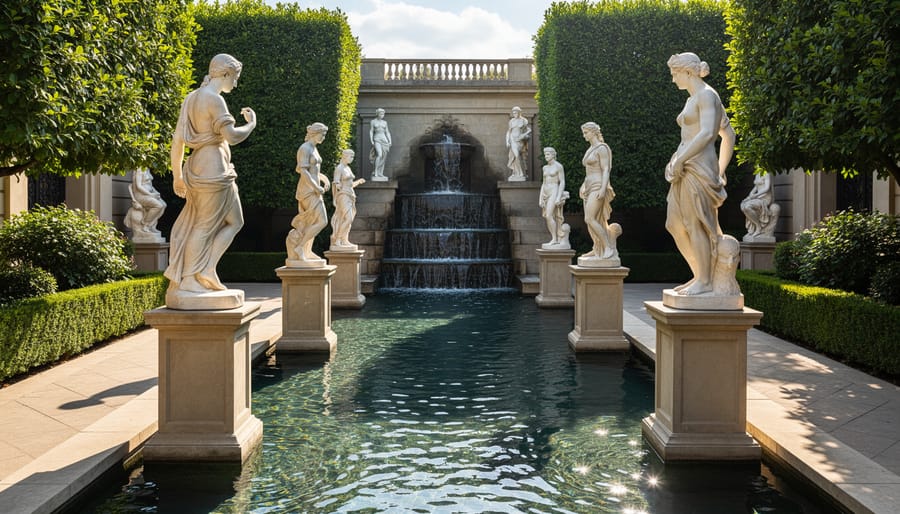
Installation Tips for Different Sculpture Types
Securing Sculptures on Pond Edges and Dry Land
A beautiful sculpture isn’t much use if it tips over into your pond or gets blown across the lawn during the first windstorm! Let me share what I’ve learned about keeping these artistic treasures securely in place.
For pond edges, you’ll want a solid foundation. I always recommend creating a level base using concrete pavers or flat stones that extend beyond your sculpture’s footprint. This distributes weight evenly and prevents sinking into soft soil. If your sculpture is particularly tall or top-heavy, consider setting it on a concrete pad that goes at least six inches into the ground.
Different materials need different anchoring approaches. Heavy stone or concrete pieces often stay put with their own weight, but adding construction adhesive between the base and foundation gives extra security. For lighter resin or metal sculptures, I’ve had great success using ground anchors or rebar driven through pre-drilled holes in the base. You can also bolt sculptures directly to concrete pads using masonry anchors.
Wind-exposed locations need special attention. Position sculptures where surrounding plants or structures provide natural windbreaks, and always anchor pieces taller than two feet, regardless of material.
Partially Submerged and In-Water Installations
Adding figurative sculptures to your pond creates stunning focal points, but water installations need special care. Let me share what I’ve learned from years of placing statues in and around my water features.
For partially submerged pieces, invest in a sturdy platform or pedestal rated for underwater use. Concrete blocks or flat stones work wonderfully as bases, ensuring your sculpture sits level and stable. I always recommend using marine-grade adhesive or stainless steel anchors to secure pieces to their platforms, especially in areas with moving water or curious wildlife.
Waterproofing is essential. Even materials marketed as water-safe benefit from an extra protective sealant designed for submersion. Apply at least two coats, paying special attention to crevices where water can seep in and cause damage during freeze-thaw cycles.
Test stability before leaving your sculpture unattended. Give it a gentle push from different angles. If it wobbles, add more support. For deeper placements, consider using weighted bases or partially burying the platform in pond substrate. Remember, what feels stable on land might shift underwater, so always double-check after installation.
Caring for Your Figurative Sculptures Through the Seasons
Your beautiful figurative sculpture deserves care that keeps it looking stunning year-round while staying safe for your pond ecosystem. Let me share maintenance routines that have kept my own garden statuary in top shape through countless seasons.
For bronze and metal sculptures, a gentle washing with plain water and a soft cloth works wonders during spring and fall. I’ve learned the hard way that harsh chemicals can leach into your pond and harm fish, so stick with natural cleaning methods. If you notice a green patina developing on bronze, that’s actually protective, but if you prefer the original finish, a paste of lemon juice and baking soda applied gently will restore the shine without toxic runoff.
Stone and concrete pieces need different attention. These porous materials love collecting algae, especially near water features. My secret weapon? A solution of one part white vinegar to three parts water, applied with a soft brush. This eco-friendly mixture won’t disturb your aquatic plants or fish while effectively preventing that slippery green coating. For stubborn algae, let the solution sit for ten minutes before scrubbing gently.
Resin sculptures are wonderfully low-maintenance. A monthly rinse with your garden hose keeps them looking fresh. If dirt accumulates in detailed areas, use a soft toothbrush with mild dish soap, then rinse thoroughly. These lightweight pieces sometimes need their bases checked to ensure they haven’t shifted during storms.
Winterizing depends on your climate and material. While bronze and quality resin can brave freezing temperatures, I always bring terracotta and ceramic pieces indoors before the first hard freeze. Stone sculptures should be elevated slightly off the ground to prevent freeze-thaw cracking. Applying a breathable sealer before winter helps protect porous materials from moisture damage.
Remember, regular attention beats intensive restoration. A quick inspection during your weekly pond maintenance catches small issues before they become big problems.
Budget-Friendly Options and DIY Alternatives
You don’t need to spend a fortune to add beautiful figurative sculptures to your water garden. I’ve discovered some fantastic budget-friendly options over the years that look just as stunning as their pricier counterparts.
Start your search at local garden centers during end-of-season sales, when sculptures can be marked down 50% or more. Big-box home improvement stores often carry affordable resin figurines that work perfectly for water features. Online marketplaces and estate sales are goldmines for secondhand pieces. I once found a gorgeous concrete heron at a yard sale for just $15!
When shopping secondhand, inspect pieces carefully for cracks or damage. A little weathering adds character, but structural issues can worsen outdoors. Don’t overlook pieces that need minor repairs or fresh paint – these are easy weekend projects that can save you serious money.
For DIY enthusiasts, creating your own sculptures is incredibly rewarding. Hypertufa is my go-to material because it’s inexpensive and perfect for beginners. Mix Portland cement, peat moss, and perlite to create forms that look like natural stone. You can mold simple shapes like turtles or frogs using plastic molds or hand-sculpting techniques.
Another creative option is mosaic sculptures. Purchase plain concrete forms and embellish them with broken tiles, glass pieces, or river stones. This personalization makes your sculpture truly one-of-a-kind.
Remember, smaller figurines grouped together often create more visual impact than one large piece, stretching your budget further while adding personality to your pond.
Your water garden is a reflection of you, and figurative sculpture brings that personal touch to life in ways that plants and water alone simply can’t. When you add a character or form that speaks to your heart, whether it’s a contemplative Buddha, a playful frog, or a graceful heron, you’re creating something uniquely yours. Don’t feel pressured to choose what’s trending or what everyone else has in their pond. The best pieces are the ones that make you smile each time you walk past, that give your visitors something unexpected to discover, and that complement your vision for your outdoor space.
The real magic happens when you combine artistic expression with natural beauty. Your figurative sculptures become storytellers, adding depth and meaning to the peaceful setting you’ve created. Trust your instincts, take your time selecting pieces that genuinely resonate with you, and don’t be afraid to move things around until they feel just right. After all, this is your sanctuary, and every element should bring you joy.