
These Pond Safety Signs Could Save a Life (Here’s What You Need)
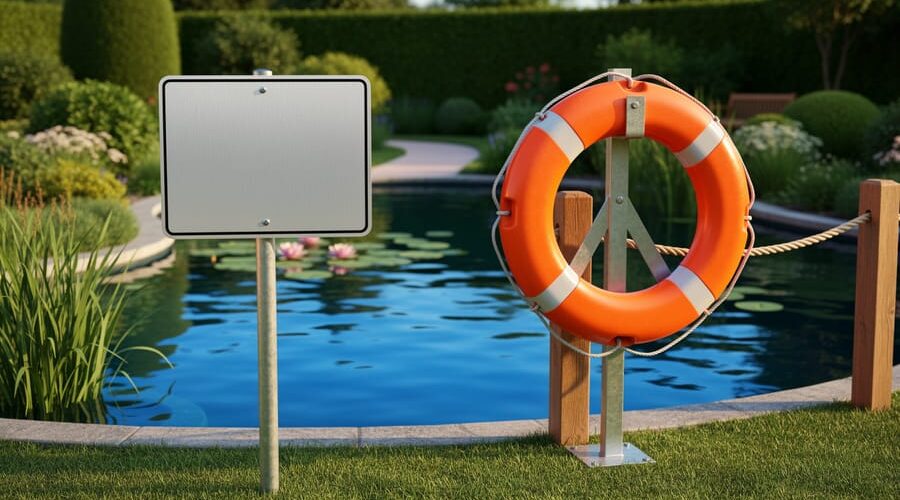
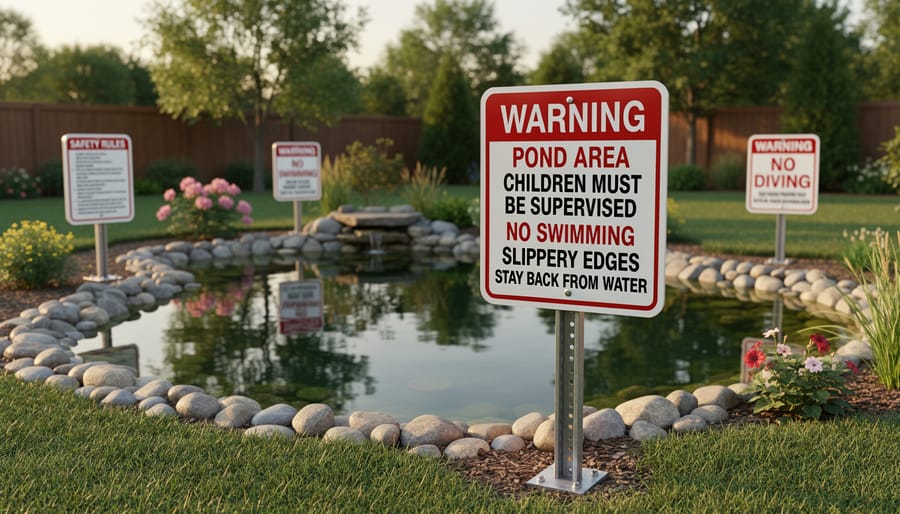
Position clear warning signs at every access point to your pond—including gates, pathways, and viewing areas—to alert visitors about water depth, no-diving zones, and supervision requirements for children. Your pond may be a beautiful centerpiece, but without proper safety signage, it can quickly become a liability, especially if neighbors’ kids or delivery workers wander into your yard.
Choose weatherproof materials like aluminum or UV-resistant plastic that can withstand constant sun exposure, rain, and temperature fluctuations for years without fading. Cheap vinyl signs might save you money upfront, but they’ll crack and peel within a season, forcing you to replace them when you least expect it. Install signs at eye level—roughly 4 to 5 feet high—where they’re immediately visible, not hidden behind plants or decorative elements you added during backyard pond planning.
Include multiple sign types to cover different safety aspects: depth markers to show how deep the water gets, life ring location indicators, emergency contact information with your address clearly displayed, and rules-based signs about swimming, fishing, or pet access. Remember that safety signage isn’t just about avoiding accidents—it’s also about protecting yourself legally if someone does get injured on your property.
Pair your signs with physical barriers like fencing or rope boundaries to create a comprehensive safety system that works together, because signs alone won’t stop a curious toddler or an excited dog from jumping in.
Why Your Pond Needs Safety Signs (Even If It Seems Obvious)
You might think your pond is obviously dangerous and that everyone will use common sense around it. I thought the same thing when I first built my backyard pond fifteen years ago. But here’s what I learned: what’s obvious to you isn’t obvious to everyone who visits your property.
Here’s a sobering fact: drowning is the leading cause of unintentional death for children ages 1-4, and backyard water features play a role in these statistics. Even shallow decorative ponds can be hazardous to young children, who can drown in as little as two inches of water. Signs don’t replace supervision, but they serve as crucial reminders to parents and caregivers who might not immediately recognize the danger.
From a liability standpoint, safety signs demonstrate that you’ve taken reasonable precautions to warn visitors about potential hazards. If someone gets injured on your property, having visible safety signage shows you made a good-faith effort to communicate risks. This isn’t about living in fear of lawsuits, it’s simply smart property management, just like posting a “Beware of Dog” sign or marking uneven steps.
Many pond owners fall into the “everyone knows” trap. Your regular visitors might understand your pond’s depth and slippery edges, but what about the delivery person cutting through your yard, or your neighbor’s curious grandkids visiting for the first time? Signs communicate instantly to anyone who might wander near your water feature.
There’s also the simple reality that people get distracted. Even responsible adults can lose track of a child for thirty seconds while chatting with friends at your garden party. A strategically placed sign catches their eye and brings their attention back to pond safety.
Think of safety signs as an extension of your hospitality. They’re not about fear-mongering or assuming the worst about your guests. They’re about clear communication that helps everyone enjoy your beautiful water garden safely and responsibly.
The Essential Safety Signs Every Pond Should Have
Depth Markers and Water Depth Warnings
If your pond reaches depths of three feet or more, depth markers become essential safety features. I learned this the hard way when a neighbor’s child stepped into my pond thinking it was uniformly shallow. Now I make sure everyone knows exactly what they’re dealing with.
Place depth markers at multiple points around larger ponds, especially where the depth changes dramatically. Use clear numerical indicators like “3 FT DEEP” or “SHALLOW AREA” so visitors can make informed decisions before wading in. These signs work best when positioned at eye level near entry points or along the perimeter where people naturally approach the water.
For backyard ponds, consider placing a prominent “DEEP WATER” warning near the deepest section, even if it’s just four or five feet. Children and pets don’t need ocean-like depths to get into trouble. I’ve mounted mine on sturdy posts about two feet from the water’s edge, ensuring they’re visible from multiple angles.
If your pond has a gradual slope, mark the transition points. A simple “WATER DEEPENS BEYOND THIS POINT” sign gives people fair warning. Reflective markers also help during evening hours when visibility drops but your pond remains a tempting feature for curious visitors.
No Swimming or Diving Signs
Even if your pond is purely decorative and seemingly shallow, never assume visitors will understand it’s off-limits for swimming or diving. I learned this the hard way when neighborhood kids mistook my koi pond for a wading pool one hot summer afternoon! Clear signage prevents dangerous assumptions, especially since ponds often have uneven depths, slippery algae-covered surfaces, and hidden pumps or equipment.
Your signs should be direct and easy to read from a distance. Simple wording like “No Swimming,” “No Diving,” or “Danger: Deep Water” works best. For family-friendly yards, consider gentler language such as “Pond Wildlife Area – Please Stay Out” or “Look But Don’t Touch.” Place these signs at every accessible entry point around your pond, ensuring they’re visible even when landscaping grows in.
Remember that decorative ponds pose unique risks beyond traditional swimming pools. The water may look inviting but contains equipment, rocks, and delicate ecosystems that make them unsuitable for human contact. Installing multiple signs around your pond’s perimeter creates layers of protection, especially important if you host gatherings or have young visitors who might not grasp the dangers at first glance.
Slippery Surface Warnings
Slippery surfaces around your pond can catch anyone off guard, even on sunny days. I learned this the hard way when I nearly took a tumble on algae-covered rocks while feeding my koi one morning! Wet stones, wooden decking, and muddy pond edges become surprisingly treacherous, especially for children running around or elderly visitors taking a stroll.
A simple “Caution: Slippery When Wet” sign positioned near high-traffic areas can make all the difference. Place these warnings where people naturally approach the water, like near stepping stones or viewing platforms. Consider adding non-slip surfaces to complement your signage—it’s part of maintaining pond edges safely and beautifully.
These signs are particularly important after rain or early morning dew, when surfaces look deceptively safe. Using bright yellow signs with clear pictograms ensures visibility regardless of lighting conditions, giving everyone that crucial heads-up before they step too close.
Emergency Contact Information Signs
When an emergency strikes at your pond, every second counts. That’s why having clear, visible emergency contact signs can be absolute lifesavers. Think of these signs as your pond’s 911 call button – they provide first responders and anyone on your property with critical information right when it’s needed most.
Your emergency contact sign should include your full property address (believe me, in a panic, even you might blank on your house number), local emergency services number, and the nearest cross streets. I also recommend adding your nearest hospital’s location and poison control if you keep fish or use pond treatments. Mount these signs in highly visible spots – near your pond entrance, on your shed or pump house, and by any gates leading to the water feature.
Use weather-resistant materials with large, easy-to-read text (at least 2-inch letters). Reflective or glow-in-the-dark options work wonderfully for nighttime emergencies. Update the information annually and photograph your signs so visiting family members or contractors can quickly locate them when needed.
Where to Place Your Pond Safety Signs (Location Matters)
Getting your pond safety signs in the right spot can make all the difference between someone noticing them and walking right past. I learned this the hard way when I first installed a beautiful warning sign near my koi pond—positioned it perfectly at eye level, or so I thought. Turned out, a flowering shrub blocked the view from the most common approach angle. Oops!
Start by walking around your pond from every direction visitors might approach. Your main entrance point deserves the most prominent sign placement, ideally at adult eye level, which is typically between 4 to 6 feet high. This is where people naturally look as they walk, making your message impossible to miss.
Don’t forget about the kids’ perspective, though. Children often explore at different heights and angles, so consider placing additional signs lower down, around 3 feet, near areas where little ones might be tempted to get close to the water’s edge.
Think about your typical traffic patterns too. If you have a popular seating area near the pond, position signs where guests will see them before they settle in. The same goes for pathways leading to the water—place your signs at decision points where people might choose to venture closer.
Weather exposure matters more than you might expect. While you want visibility, placing signs in direct, harsh sunlight can fade them quickly. Similarly, spots that collect snow drifts or get constantly splashed will wear down faster. Look for locations that balance visibility with some natural protection.
For larger ponds, space multiple signs around the perimeter rather than clustering them in one spot. This ensures coverage from all angles and reinforces your safety message consistently throughout the space.
Choosing the Right Signs: Materials and Durability
When I first installed pond safety signs around my backyard water feature, I learned the hard way that not all signs are created equal. After just one winter, my first set of laminated paper signs had faded and warped beyond recognition. Let me save you from making the same mistake!
For outdoor pond environments, aluminum signs are your best friend. They resist rust, won’t warp in moisture, and can handle everything from blazing summer sun to freezing winter temperatures. I’ve had aluminum signs around my pond for over five years now, and they still look nearly new. If you’re on a tighter budget, weatherproof plastic signs also work well, though they may fade slightly faster in direct sunlight.
Look for signs with UV-resistant coatings. This protective layer prevents the colors and text from fading, which is crucial since a faded warning sign defeats its purpose. Reflective signs are especially valuable if your pond is accessible at night, as they catch headlights, flashlights, or moonlight to remain visible.
Mounting methods matter too. Pre-drilled holes make installation straightforward, whether you’re attaching signs to wooden posts, metal stakes, or fencing. For temporary situations or surfaces you don’t want to puncture, heavy-duty outdoor adhesive strips can work, though they’re not as permanent. I prefer using rust-resistant screws with metal posts driven at least eighteen inches into the ground for stability.
Maintenance is refreshingly simple. Wipe your signs down a few times yearly with mild soap and water to remove dirt, pollen, and algae. Check mounting hardware annually and tighten any loose screws. This minimal upkeep ensures your safety messages remain clear and effective for years to come, protecting everyone who visits your beautiful pond.
DIY Pond Safety Signs vs. Professional Options
When deciding between making your own pond safety signs or buying ready-made options, there’s no single right answer. Both approaches have real benefits depending on your situation.
Creating DIY signs can be incredibly budget-friendly. A simple waterproof marker and some weather-resistant material from your local hardware store might cost you less than ten dollars. I’ve personally made effective signs using aluminum sheets and outdoor paint, and they’ve held up beautifully for years. The customization factor is huge too. You can match your garden’s aesthetic, use language that fits your family’s needs, and include specific details about your pond’s unique hazards.
However, professional signs offer important advantages. They’re designed to withstand harsh weather conditions and typically last longer than homemade versions. More importantly, commercially produced signs often meet established safety standards and include universally recognized symbols that anyone can understand quickly, even in an emergency. This can matter if you’re concerned about liability, especially if neighborhood children sometimes play near your pond.
The legal side deserves consideration too. While there’s generally no requirement to use professionally manufactured signs on private property, having clear, durable warnings can demonstrate you’ve taken reasonable safety precautions. This could be valuable if an unfortunate incident ever occurs.
My recommendation? Consider a blend of both. Use professional signs for primary warnings like deep water alerts, and supplement them with personalized DIY signs for specific features or rules unique to your pond. This approach gives you cost savings, customization, and peace of mind all at once.
Beyond Signs: Creating a Complete Pond Safety System
Emergency Equipment Stations
Having the right safety equipment nearby is just as important as posting clear signs. I learned this the hard way when my neighbor’s dog slipped into my pond one winter morning—thankfully, everything turned out fine, but I realized I’d been unprepared for an emergency.
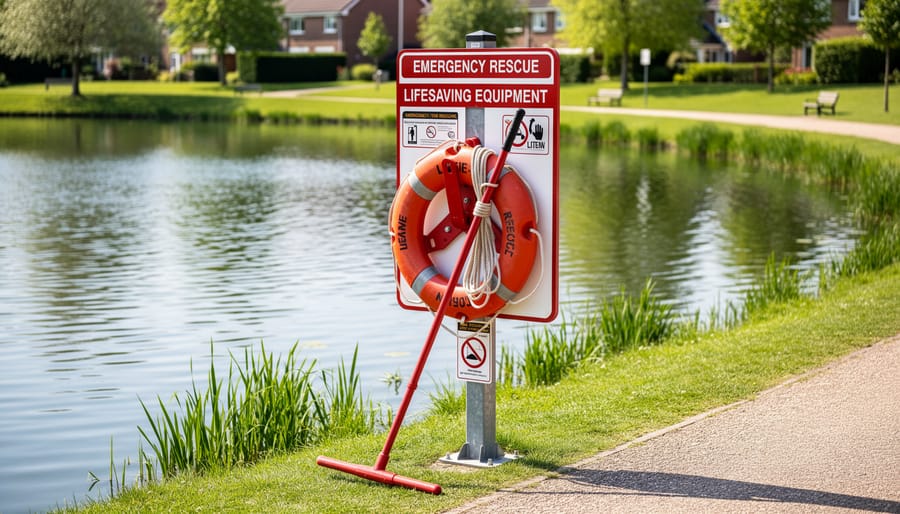
Position rescue equipment at strategic points around your pond, especially near deeper areas. A life ring attached to a rope gives you something to throw to someone in trouble without entering the water yourself. Rescue hooks or shepherd’s crooks are fantastic for reaching people from the shore—mount them on clearly visible posts so anyone can grab them quickly.
Keep a sturdy rope coiled and accessible in a weatherproof container. Make sure everyone in your household knows where this equipment is located. Consider adding a small sign pointing to your emergency station so visitors can spot it immediately. Check your equipment seasonally to ensure ropes haven’t frayed and rings remain buoyant. These simple preparations transform your beautiful water feature into a safer space for everyone who enjoys it.
Lighting and Visibility After Dark
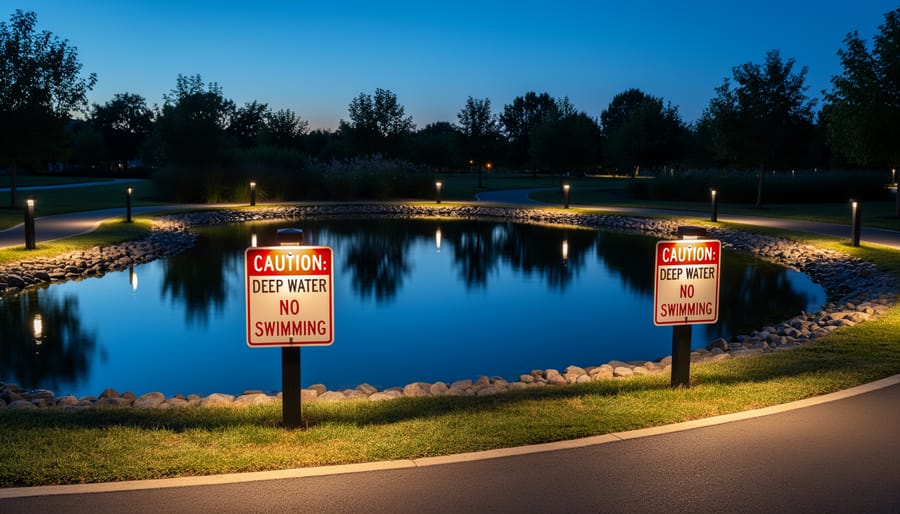
Even the best safety signs won’t do their job if no one can see them after sunset. Installing proper lighting around your pond transforms those warning signs into 24/7 protectors. I learned this the hard way when a neighbor almost wandered too close during an evening barbecue because my signs were practically invisible in the dark.
Consider solar-powered spotlights aimed directly at your signage—they’re budget-friendly and require zero wiring. Motion-activated lights work beautifully too, drawing attention exactly when someone approaches. Quality pond lighting solutions not only illuminate your signs but also create ambient lighting that deters nighttime accidents. Position lights low to avoid glare while ensuring signs remain readable from typical viewing angles, typically 10-15 feet away.
Regular Safety Check Routines
Make checking your pond safety signs part of your regular maintenance routines. I recommend inspecting all signs monthly, looking for fading, cracks, or loose mountings. Spring and autumn are perfect times for deeper checks when you’re already tidying up around your pond. Clean signs with gentle soap and water to keep messages clearly visible. Replace any damaged signs immediately, as worn signage defeats the purpose of having them. Keep spare mounting hardware handy for quick repairs. Update emergency contact numbers annually, and consider refreshing warning signs every few years to maintain their visual impact and effectiveness.
What to Include in Your Pond Emergency Plan
Even with the best safety signs in place, having a clear emergency plan gives you peace of mind and could save a life. I learned this firsthand when a neighbor’s toddler wandered toward my pond during a garden party—my quick response plan made all the difference.
Start by creating a simple one-page document that lives near your pond area. List emergency contact numbers at the top: local emergency services, poison control, and your nearest hospital. Include your exact property address with any special access instructions—trust me, in a panic, even your own address can slip your mind.
Next, identify your emergency equipment locations. Note where you keep your reaching pole, life ring, first aid kit, and phone. Take photos of these spots and include them in your plan. This helps visitors or family members respond quickly if you’re not around.
Document basic response steps for common pond emergencies. For someone in the water: call for help first, use reaching equipment rather than jumping in, and know CPR basics. For chemical exposure: have your pond treatment product labels accessible with poison control information.
Share your plan with family members, regular visitors, and neighbors. Consider laminating a copy and posting it near your pond alongside your safety signs. Review and update it seasonally, especially when adding new features or changing pond treatments. Comprehensive pond emergency planning transforms those safety signs from simple warnings into part of a robust protection system.
Taking the step to install proper pond safety signs is one of the smartest decisions you’ll make as a pond owner. I remember the relief I felt after placing my first set of signs around my backyard pond—it wasn’t just about meeting safety requirements, it was about creating genuine peace of mind for my family and visitors. These signs don’t diminish the beauty of your carefully crafted water feature; they enhance the overall experience by showing that you care about everyone who comes to admire your pond.
Now’s the perfect time to assess your current signage situation. Walk around your pond and ask yourself: Would a visitor know the depth? Are emergency instructions visible? Could someone find help quickly if needed? If you’re answering no to any of these questions, you’ve got a clear action plan ahead.
Remember, safety measures and enjoyment aren’t opposites—they’re partners. When everyone feels secure around your pond, they can truly relax and appreciate the tranquil environment you’ve created. Your pond should be a source of joy, not worry, and proper signage helps ensure it stays that way for years to come.