
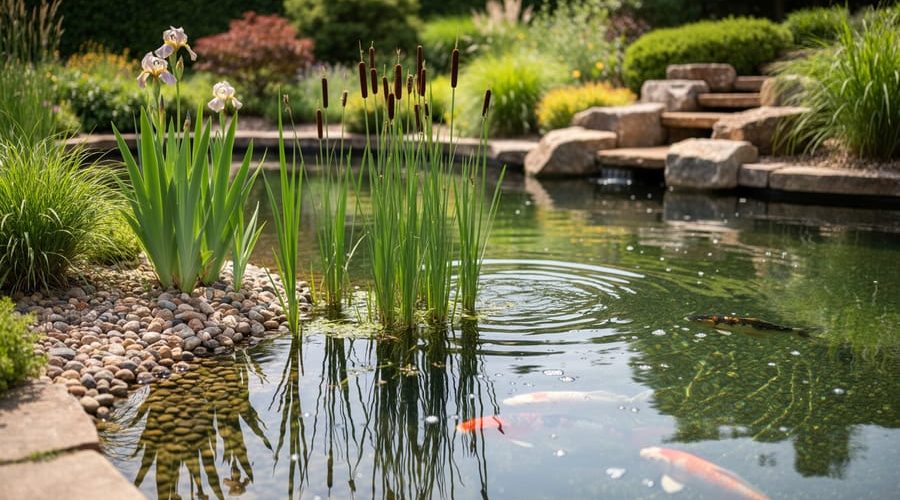
Why Your Pond Needs a Wetland Bog Filter (And How to Build One That Actually Works)
A wetland bog filter transforms your pond into a self-sustaining ecosystem by harnessing the natural purification power of plants and beneficial bacteria. Unlike mechanical filters that require constant electricity and frequent cleaning, a properly designed bog filter uses aquatic plants growing in gravel to strip nutrients, break down waste, and clarify your water with minimal intervention.
The concept is beautifully simple. Water from your pond flows through a shallow bed filled with gravel and planted with marginal species like iris, rushes, and cattails. As the water moves slowly through this planted zone, the massive surface area of the gravel provides a home for billions of beneficial bacteria. These microscopic workers break down ammonia and nitrites while the plant roots absorb nitrates and phosphates directly from the water. The result? Crystal-clear water without the hum of UV clarifiers or the hassle of filter pad replacements.
I’ve watched bog filters work magic on ponds that struggled with green water and algae blooms for years. One system I built for a friend’s koi pond cut their maintenance time in half and eliminated the need for chemical treatments entirely. The fish thrived, the water stayed clear through summer heat waves, and the flowering plants added a gorgeous natural border.
Building a bog filter requires some upfront effort and about 10-20% of your pond’s surface area dedicated to the filtration zone, but the payoff in water quality and reduced maintenance makes it worth every shovelful of gravel. Whether you’re dealing with persistent algae, high fish loads, or simply want a more natural approach to pond care, a wetland bog filter offers a proven, low-tech solution.
What Makes a Wetland Bog Filter Different from Regular Filtration
Traditional pond filters work hard to keep water clean, but they tackle the job in a fundamentally different way than a wetland bog filter. Understanding this difference helps you see why bog filters aren’t just another filtration option, they’re a completely different approach that works with nature instead of against it.
Most pond owners rely on mechanical filters, which physically trap debris in sponges or filter pads, or UV clarifiers that zap algae cells with ultraviolet light. These systems work, but they’re treating symptoms rather than addressing the root cause of cloudy water: excess nutrients. You’re constantly cleaning filter media, replacing bulbs, and watching your electricity bill climb. The water might look clearer temporarily, but the underlying nutrient problem that feeds algae growth remains.
Wetland bog filters flip this script entirely. Instead of removing algae after it forms, they starve it before it starts by eliminating the nutrients algae needs to thrive. Picture how natural wetlands purify water flowing through them, that’s exactly what you’re recreating in miniature. Water from your pond flows through a gravel bed packed with wetland plants, and the real magic happens at the microscopic level.
The gravel bed becomes home to massive colonies of beneficial bacteria that break down fish waste and organic matter. Unlike the limited surface area in a traditional filter box, every piece of gravel provides real estate for these helpful microbes. We’re talking about billions of bacteria working around the clock, converting toxic ammonia into nitrites, then into relatively harmless nitrates. The plants then absorb these nitrates through their roots, using them as fertilizer for growth. When you trim back overgrown plants, you’re literally removing nutrients from your pond system.
Here’s where bog filters really shine: they complement your existing filtration rather than replacing it. Keep your mechanical filter to catch leaves and debris, that’s what it does best. But let the bog filter handle the biological heavy lifting of nutrient removal. Together, they create a more stable, naturally balanced system that requires less intervention. Your mechanical filter stays cleaner longer because there’s less organic buildup, and the UV clarifier becomes optional when nutrients stay low enough that algae struggles to establish itself.
The result feels less like maintaining equipment and more like tending a garden that happens to clean your pond.
The Science Behind Plant Integration in Bog Filters
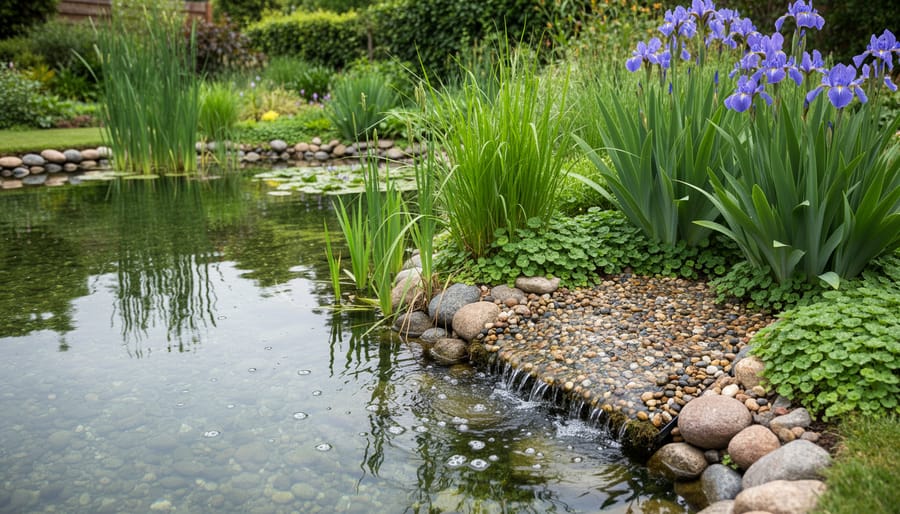
When you put a wetland plant into a bog filter, you’re not just adding decoration. You’re installing a living nutrient pump with a support system that transforms your pond’s water chemistry.
Wetland plants excel at nitrogen removal because they need it to grow. Nitrates, the end product of your pond’s nitrogen cycle, enter the plant through its roots and get converted into new leaves, stems, and flowers. Irises, rushes, and pickerel rush are particularly hungry feeders, capable of pulling significant nitrate concentrations from water that flows through their root zones. The same process works for phosphates, which fuel algae blooms in ponds. Plants lock these nutrients into their tissue instead of leaving them available for algae.
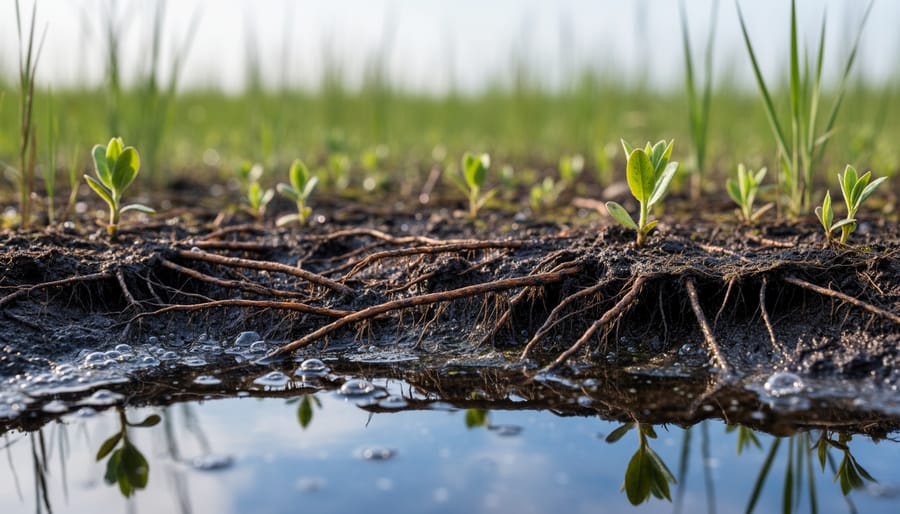
The real magic happens below the gravel surface. Wetland plant roots don’t just absorb nutrients, they actively change the environment around them. Through oxygen release from roots these plants pump oxygen into spaces that would otherwise be anaerobic. This creates thousands of tiny oxygenated zones within the gravel bed, perfect habitat for aerobic bacteria that break down fish waste and organic matter.
These beneficial bacteria colonize the root surfaces and surrounding gravel in massive numbers. They convert ammonia to nitrite, then nitrite to nitrate, completing the nitrogen cycle while the plant roots absorb the end product. It’s a partnership: bacteria get oxygen and surfaces to colonize, while plants get pre-processed nutrients in forms they can use immediately.
This symbiotic relationship explains why bog filters become more effective over time. As plants establish and roots spread through the gravel, the bacterial colonies expand with them. A mature bog filter isn’t just mechanically straining particles, it’s a dense network of biological activity, constantly processing dissolved nutrients that no mechanical filter can touch.
Choosing the Right Plants for Your Bog Filter
Top Performers for Nutrient Removal
When it comes to nutrient-stripping powerhouses, certain wetland plants consistently outperform the rest. These are the plants that thrive in bog filters while working hardest to keep your water clear.
Irises top the list for good reason. Blue flag iris and yellow flag iris absorb massive amounts of nitrates through their extensive root systems. They’re tough, reliable, and look stunning during bloom season. A single clump can process nutrients from several cubic feet of water weekly.
Rushesparticularly soft rush and hard rush, excel at phosphate removal. Their dense, fibrous roots create ideal surfaces for beneficial bacteria colonies while the plants themselves pull nutrients directly from the water. They handle full sun brilliantly and establish quickly.
Pickerel rush combines beauty with function. Those glossy leaves and purple flower spikes make it a garden favorite, but underground it’s a filtration workhorse. It thrives in varying water depths and tolerates both shade and sun, making it adaptable to different bog filter designs.
Sweet flag brings year-round performance with its evergreen foliage in milder climates. The variegated varieties add visual interest while the roots aggressively absorb excess nutrients.
Arrow arum rounds out your nutrient-removal team with broad leaves that indicate healthy growth and strong filtration. It handles deeper water sections of your bog filter and spreads steadily without becoming invasive.
Plant a mix of these performers and you’ll establish a filtration system that actually works.
Year-Round Options and Seasonal Considerations
The performance of your bog filter changes dramatically with the seasons, and understanding these shifts helps you maintain effective filtration year-round. Deciduous wetland plants like pickerel rush and irises die back completely in winter, leaving dormant root systems that continue hosting beneficial bacteria but stop actively removing nutrients. Evergreen options such as sweet flag and certain rush varieties keep some foliage above water through milder winters, extending your filtration season by weeks or even months depending on your climate zone.
In zones 7 and warmer, many bog plants remain semi-active through winter, providing modest nutrient uptake during cool months. Colder regions face a true dormancy period where biological filtration slows considerably. Your bog doesn’t stop working entirely, the bacterial colonies in the gravel bed continue processing waste at reduced rates, but you’ll notice the biggest water quality improvements from spring through fall when plants are actively growing.
Plan for seasonal reality by combining deciduous high-performers with evergreen varieties. This mixed approach gives you peak filtration during summer’s heavy fish-feeding months while maintaining some plant activity during shoulder seasons when your pond still needs support.
Plants to Avoid in Bog Filters
Not all wetland plants belong in your bog filter. Some choices can create more problems than they solve.
Invasive species top the avoid list. Cattails (Typha latifolia) spread aggressively through rhizomes and can overtake your entire bog within two seasons. Reed canary grass and purple loosestrife are equally problematic, they’ll push out beneficial plants and potentially escape into local waterways, where they’re illegal in many areas. Check your state’s invasive species list before purchasing any wetland plant.
Plants with aggressive root systems deserve caution. While all bog plants have substantial roots (that’s the point), some create impenetrable mats that restrict water flow. Common reed (Phragmites) develops roots so dense they can actually lift gravel and create channeling. Water hyacinth isn’t just invasive, its floating nature means it doesn’t anchor properly in bog gravel.
Minimal filtration value plants include most ornamental flowering species bred for looks rather than nutrient uptake. Dwarf varieties often lack the root mass needed for effective filtration. Water lilies don’t belong in bog filters either, they need standing water, not the constantly-flowing environment of a properly functioning bog bed.
Stick with proven performers. Your bog filter works too hard to waste space on plants that won’t pull their weight.
Designing Your Wetland Bog Filter System
Calculating the Right Size for Your Pond
Your bog filter needs to handle whatever your pond throws at it, and that varies wildly from one setup to another. A good starting rule is to make your bog surface area equal to 10-20% of your pond’s surface area, but that’s just a baseline. Real life demands adjustments.
Fish load matters most. If you’ve got koi packed in at one fish per 100 gallons, aim for the higher end, closer to 20% of your pond surface. Goldfish in a lightly stocked pond? You can get away with 10-12%. Think of it this way: more fish means more waste, and that waste needs somewhere to go. Your bog filter is that somewhere, so size it to match the ammonia and nitrate production.
Sun exposure changes everything too. A pond baking in full sun all day grows algae like crazy because sunlight fuels it while warming the water. That same sunlight hitting your bog filter, though, supercharges plant growth, which is exactly what you want. Full-sun ponds can sometimes get by with smaller bogs because the plants work overtime. Shaded ponds need more bog area to compensate for slower plant metabolism.
Already running a mechanical filter or UV sterilizer? Great, you can scale down a bit since your bog isn’t shouldering the entire load alone. But if you’re replacing conventional filtration entirely, build bigger than you think you need. A 500-gallon koi pond with no other filtration might need a 120-square-foot bog, while that same pond with a bead filter could work fine with 75 square feet.
Water Flow and Circulation Basics
Getting water to flow evenly through your bog filter makes the difference between a thriving ecosystem and a soggy mess with dead spots. Here’s what actually matters.
Your pump should turn over the bog bed’s water volume roughly once per hour, not dramatically faster. If you’ve got a 300-gallon bog, a 300 GPH pump works perfectly. Going bigger doesn’t help; it creates channels where water rushes through preferred paths, leaving sections untouched.
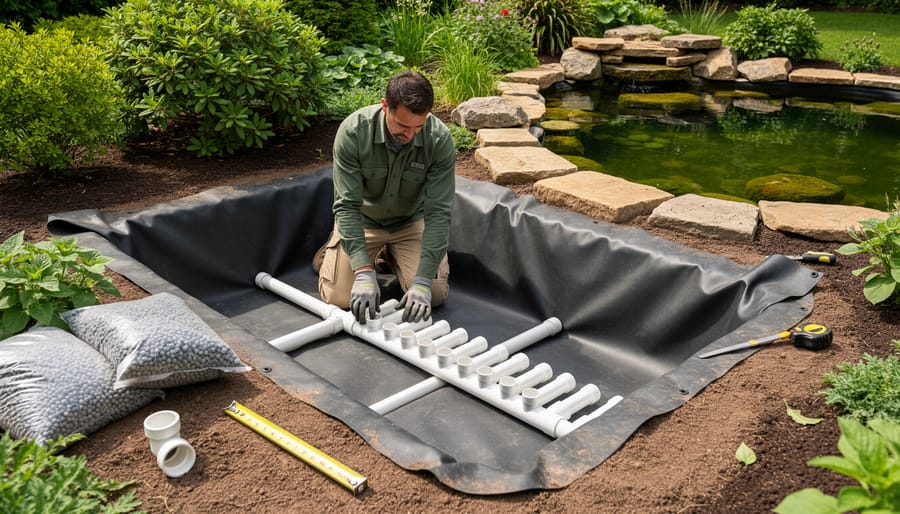
The magic happens at the distribution pipe. Drill quarter-inch holes every four to six inches along a perforated pipe buried at the bottom of your gravel bed. Space them evenly, and drill slightly more holes toward the far end to compensate for pressure drop. This creates uniform upflow through the entire bed.
Watch for telltale signs of channeling: if some plants look waterlogged while others seem dry, or you notice water surfacing in specific spots, your distribution needs tweaking. Adjusting hole sizes or adding a second distribution line usually fixes it.
The goal isn’t rushing water through, it’s giving beneficial bacteria and plant roots time to work their filtration magic while keeping everything oxygenated.
Standalone vs. Integrated Bog Filter Designs
You have three main approaches when building your wetland bog filter, each with distinct advantages depending on your space and goals.
Above-ground constructed wetlands sit in raised containers or built structures beside your pond. They’re perfect for rental properties or situations where you can’t dig, and they make maintenance straightforward since everything’s at waist height. The downside? They need more robust pumps to lift water, and they’re less forgiving in extreme temperatures.
In-ground bog filters positioned adjacent to your pond create a natural transition zone. These stay cooler in summer and warmer in winter, protecting plant roots and bacteria colonies. They blend seamlessly into landscaping, think of a bioswale water garden approach but specifically engineered for filtration. They do require excavation and careful liner work to prevent leaks.
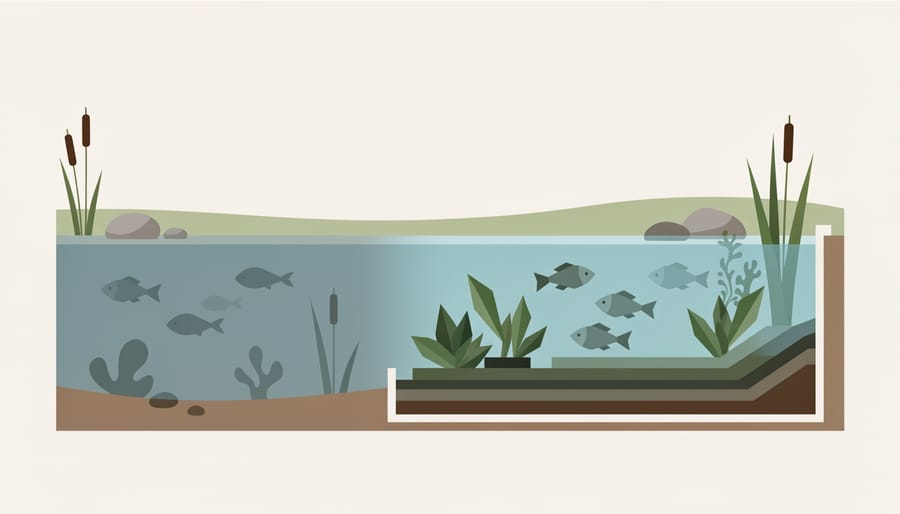
Integrated designs build the bog directly into your pond, typically as a shallow shelf zone. This maximizes space efficiency and creates the most natural aesthetic. Water flows through the gravel bed before returning to the pond, with no visible separation. The trade-off is less flexibility, you’re committing to the design, and accessing the gravel bed for eventual maintenance becomes trickier.
Building Your Bog Filter: A Step-by-Step Approach
Materials and Tools You’ll Need
Gathering your materials ahead of time makes the build process smooth and stress-free. Here’s what you’ll need.
Liner: EPDM pond liner is your best bet, it’s flexible, fish-safe, and lasts decades. Budget for enough to line your bog bed with at least 12 inches of overlap on all sides. Don’t skimp here; repairs are frustrating.
Gravel: This is where things matter. Use 3/4-inch to 1-inch river rock or pea gravel, not crushed stone with sharp edges that can puncture your liner. You’ll need enough to fill the entire bog bed about 12 inches deep. Crucially, wash it thoroughly before installation. I learned this the hard way when muddy gravel clouded my pond for weeks. Rent a concrete mixer or use a wheelbarrow with a hose until the runoff is clear.
Plumbing: You’ll need PVC pipes (1.5 to 2-inch diameter) for distribution, a submersible pump rated for your flow requirements, flexible tubing to connect everything, and PVC fittings. Include a ball valve so you can adjust flow later.
Tools: A shovel, level, utility knife for cutting liner, PVC cutter or hacksaw, and a drill. Having a helper makes positioning the liner much easier.
With these materials ready, you’re set to create a system that delivers crystal clear water naturally.
Construction Tips from Real Installations
After building several bog filters over the years, I’ve learned that some mistakes are worth avoiding from the start. The biggest lesson? Don’t skimp on washing your gravel. I once spent an entire weekend rinsing gravel in a wheelbarrow, thinking I could get away with a quick hose-down. Two days after filling the bog, my pond looked like chocolate milk. Proper washing takes time, but it saves you from draining and starting over.
Another hard-won tip: slope your bog bed slightly toward the inlet. My first installation had a perfectly level base, which created stagnant pockets where water bypassed instead of flowing through. A gentle 1-2 inch drop ensures even distribution.
Position your pump intake at the deepest point of your pond, not near the surface. This pulls nutrient-rich water from where debris settles, maximizing filtration effectiveness. And here’s something nobody tells you: leave extra liner at the edges. You can always trim it later, but you can’t add more if you cut too aggressively. Trust me on that one.
Planting Your Wetland Bog Filter
Getting your plants settled into the gravel bed is simpler than you might think, but a few smart moves during planting make all the difference between thriving greenery and struggling starts.
Before placing any plant in the bog, rinse its roots thoroughly to remove all nursery soil. That potting mix will wash into your gravel and create muck pockets that interfere with water flow. Gently tease out circled roots so they spread naturally rather than staying balled up.
Plant spacing depends on mature size, but as a starting point, place smaller plants like dwarf sweet flag 12 inches apart, medium specimens like pickerel rush 18 inches apart, and larger irises or cattails 24 inches apart. Resist the urge to pack them in. Your bog will look sparse initially, but these plants spread fast once established. Crowding forces you to divide them within a year, which defeats the purpose of thoughtful spacing.
Depth placement matters more than most people realize. The crown of each plant, where roots meet stems, should sit right at the gravel surface or just barely above it. Too deep and the crown rots. Too shallow and roots dry out during the establishment phase. For most wetland plants, nestle roots 4 to 6 inches down into the gravel, letting the crown breathe.
During the first month, keep water levels slightly higher than normal operating height to ensure roots stay consistently moist while they acclimate. Plants can sulk a bit initially, that’s normal. You’ll notice new growth within two to three weeks as roots take hold and start doing their filtration work.
Maintaining Your Bog Filter for Long-Term Success
Signs Your Bog Filter Is Working Properly
You’ll know your wetland bog filter is doing its job when you see vigorous plant growth with strong stems and rich green foliage. The roots should be bright white or cream-colored, not brown or mushy. Within 4-6 weeks of establishment, your pond water should show noticeably better clarity, even if it’s not crystal-clear yet.
Test your water weekly during the first few months. Nitrate levels should drop steadily, ideally settling below 20 ppm. Ammonia and nitrite should read zero once the beneficial bacteria colonies mature. If you had recurring string algae or green water before, you’ll see these problems diminish as the plants outcompete algae for nutrients.
Watch the flow through your bog bed. Water should move evenly across the surface without pooling in spots or rushing through channels. You might notice a slight earthy smell when working near the filter, which is normal, but any rotten egg odor signals poor oxygen levels and needs attention.
The real proof? Your fish become more active, their colors brighten, and you’re not constantly battling water quality issues anymore.
Troubleshooting Common Problems
When your bog filter isn’t performing as expected, a few common culprits are usually to blame. Slow drainage typically signals clogged gravel, often from sediment buildup or excessive plant roots. Try backflushing the system or temporarily increasing flow rate to clear debris. If that doesn’t work, you may need to divide overgrown plants or remove and rinse sections of gravel.
Plant die-off usually points to improper water depth or flow issues. Check that water levels match your plants’ preferences and that flow isn’t too strong, which can uproot shallow plantings. Yellowing leaves often indicate nutrient deficiency, ironically, consider adding a small amount of aquatic plant fertilizer directly to plant roots.
Algae growing in your bog bed isn’t necessarily bad, but excessive growth suggests too much light exposure. Adding taller plants for shade or installing shade cloth temporarily can help. During winter dormancy, your bog still filters through bacterial action in the gravel, though less efficiently. Maintain water flow and consider adding cold-hardy evergreen plants like rushes to sustain year-round nutrient uptake.
When and How to Refresh Your Bog Filter
Most bog filters run smoothly for 3-5 years before needing a major refresh, but watch for telltale signs earlier: water flowing slower than usual through the bed, plants that look stunted despite good care, or persistent algae issues even with healthy growth up top. When flow slows noticeably, the gravel’s likely clogged with accumulated organic matter and root mass.
You don’t need to tear everything apart at once. Start by dividing overgrown plants in spring, when irises or rushes crowd together so thick you can’t see gravel between them, they’re competing for nutrients rather than filtering effectively. Lift clumps, split them into thirds, replant the healthiest sections, and compost or relocate the rest.
If dividing plants doesn’t improve flow, it’s time to address the gravel bed. Pull plants out carefully (keeping roots damp), remove the top few inches of gravel, and rinse it thoroughly before replacing. For severe clogs, you might need to remove and wash all the gravel, but this is rare if you’ve kept up with plant maintenance. Completely replacing gravel is only necessary if it’s broken down or silted beyond cleaning, usually after a decade or more.
The Real-World Benefits: What to Expect from Your Wetland Bog Filter
Let’s be honest about what a wetland bog filter will deliver for your pond. In the first month, you’ll notice some improvement in water clarity, but the magic really kicks in during months two through four as your plants establish root systems and beneficial bacteria colonies reach full strength. By the end of the first growing season, most pond owners see a dramatic reduction in green water and string algae, with crystal-clear conditions becoming the norm rather than the exception.
The maintenance difference is where bog filters truly shine. Once established, you’re looking at seasonal plant trimming, occasional dividing of overgrown specimens, and that’s about it. No weekly filter pad cleaning, no expensive UV bulb replacements every spring, and no constant fiddling with equipment. Your pump runs continuously, but it’s moving water through gravel and plant roots instead of clogging media cartridges. Most pond keepers find they spend 60-70% less time on maintenance compared to conventional filtration setups.
The aesthetic benefits often surprise first-time bog filter builders. Instead of hiding mechanical boxes behind rocks, you’ve created a beautiful wetland garden that becomes a focal point. Blooming irises, swaying rushes, and visiting wildlife transform your filtration system into a living feature. Dragonflies patrol for mosquitoes, frogs take up residence, and butterflies visit flowering plants.
Cost-wise, the initial investment runs higher than a basic mechanical filter, typically $300-800 depending on size and materials. But there’s virtually no ongoing expense beyond replacing a pump every few years. Over five years, you’ll save hundreds in replacement media, UV bulbs, and electricity compared to power-hungry conventional systems. You’re building infrastructure that improves with age rather than equipment that degrades and needs constant replacement.
Building a wetland bog filter transforms your pond from a constant maintenance project into a thriving ecosystem that practically takes care of itself. You’ve seen how these systems work with nature rather than against it, using plants and beneficial bacteria to handle the heavy lifting of water filtration. The beauty is that once established, your bog filter becomes increasingly effective over time as plants mature and bacterial colonies strengthen.
Yes, there’s initial effort involved in construction and planting. But compare that to the endless cycle of cleaning mechanical filters, replacing UV bulbs, and battling algae blooms with chemicals. A well-designed bog filter reduces all that hassle while giving you a more natural-looking water feature that actually improves with age.
Start small if you’re hesitant. Even a modest bog filter sized for 20% of your pond’s surface area will make a noticeable difference in water clarity and fish health. You don’t need perfect conditions or rare plants to succeed. Stick with hardy native species suited to your climate, ensure good water circulation through the gravel bed, and give your system a full growing season to establish.
The real reward comes six months in when you notice you’re spending more time enjoying your pond than maintaining it. Your water stays clearer, your fish are healthier, and visitors actually compliment the lush wetland plantings instead of asking about your algae problem. That’s when you’ll realize this project was worth every shovelful of gravel.