
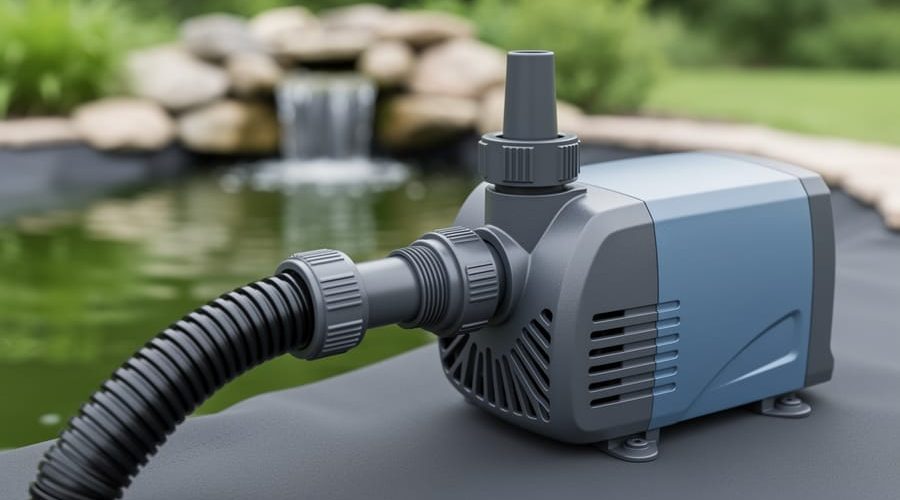
How to Choose Pond Plumbing and Fittings: A Buying Guide
Good pond plumbing comes down to three choices: a pump sized to your water volume, pipe and hose wide enough to let that water move freely, and fittings that match each other so nothing chokes the flow. Get those right and your pond stays clear with less effort. Get them wrong and even an expensive pump will struggle.
The sizing rule is simple. Pond pumps should turn over your water volume at least once an hour for ponds up to 1000 litres, once every 2 hours for ponds up to 5000 litres, and up to once every 4 hours for ponds of 15000 litres or more. Keep a lot of fish, or messy ones like koi? Aim for double those flows. Models like the EcoWave 2000 (8000 LPH) and EcoWave 5000 (20,000 LPH) show how wide the range gets once a pond grows.
I learned the hard way that the pump is only half the story. My first pond had a perfectly good pump squeezed through narrow tubing, and the waterfall trickled when it should have gushed. Skinny pipe, sharp bends, and mismatched fittings quietly steal flow.
This guide walks you through sizing, key buying factors, component types, setups for different ponds, and the mistakes worth dodging. Warranty matters too: at least 2 years is a sensible baseline, and the best pumps often carry 5.
What Pond Plumbing Actually Does (and Why It Matters)
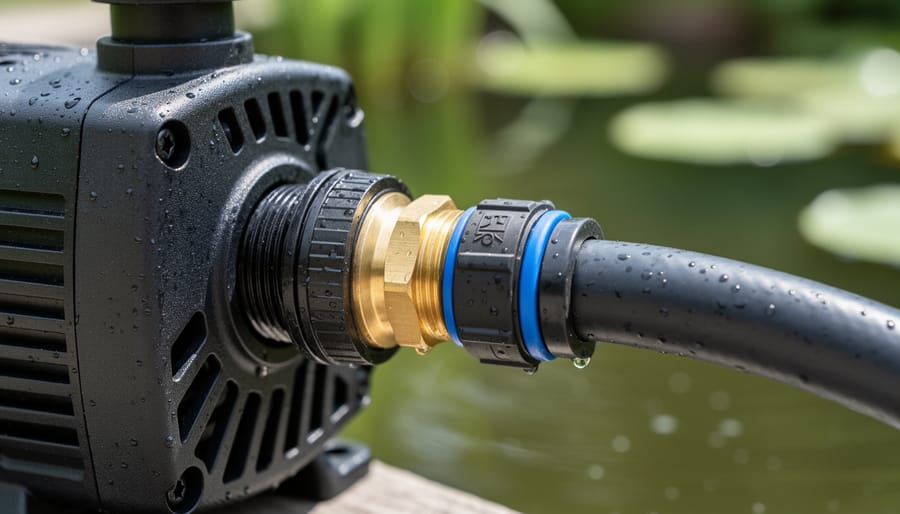
Think of your pond’s plumbing as its circulatory system. The pump is the heart, and the pipes, hoses and fittings are the veins and arteries that carry water where it needs to go. Water gets drawn from the pond, pushed through the filter, sent up to the waterfall or stream, and then tumbles back home to start the loop again.
That loop matters more than most beginners realise. Along the way, the water passes through a filter, where media filter cartridges trap debris and give helpful bacteria a place to live. Many ponds also run it past UV clarifiers to tackle green water. None of that equipment can do its job if the water can’t reach it properly.
Here’s the catch I see over and over. Someone buys a great pump, hooks it up with narrow tubing or a handful of loose connections, and then wonders why the stream is a trickle. Undersized plumbing chokes the flow, so the pump strains against the restriction instead of moving water freely. Leaky joints are just as sneaky, quietly bleeding water (and pressure) before it ever reaches the filter.
So even the best pump in the world will underperform if the plumbing around it isn’t up to scratch. Get the plumbing right, and everything else in your pond works the way it should.
Start with Your Pump: Matching Flow to Your Pond Size
Why Fish Stock Changes the Math
More fish means more waste, and more waste means your pump has to work harder to move water through the filter. Aqua Gardening notes that higher fish stocks and dirtier types of fish need faster turnover, and suggests aiming for double the listed flows as a rule of thumb. Koi are the classic example. They’re big, hungry and messy, so a koi pond behaves very differently from a quiet goldfish pond of the same size.
| Pond volume | Listed turnover | Heavy fish stock tip |
|---|---|---|
| Up to 1000 L | About once every hour | Aim for double the listed flow |
| Up to 5000 L | Once every 2 hours | Aim for double the listed flow |
| 15000 L or more | Up to once every 4 hours | Aim for double the listed flow |
Here’s what that means for your plumbing: more flow needs wider pipe. Push a big pump’s output through skinny tubing and it throttles back and strains. So when you choose a submersible pump for a stocked pond, size the pipe for the higher flow, not the minimum. Oxygen matters too. Crowded ponds often benefit from aeration pumps and solar aerators are worth a look for larger setups.
Key Buying Factors for Pond Plumbing and Fittings
Why Diameter and Compatibility Trip People Up
Here’s the thing about pond plumbing: every part has to agree with its neighbor. Your pump outlet, the tubing, and each fitting along the way all need to line up in diameter and thread type. If just one link in that chain is too narrow, it acts like a pinched garden hose. Flow drops, pressure builds, and your pump works harder than it should for less water.
I learned this the hard way. On my first pond, I grabbed a hose tail that looked like a match for my pump outlet. It slid on, felt snug, and I felt pretty smug about it. Then the water came back at a trickle, and I found the fitting was a size smaller than the tubing, held on with far too many clamp turns. Close doesn’t count in plumbing!
Before you buy anything, run through this quick checklist:
- Match the pipe or hose diameter to the pump outlet, not just roughly but exactly.
- Check that tubing and valves can carry your pump’s full flow.
- Choose UV and weather-resistant materials for anything above the waterline.
- Confirm thread types are compatible, as a fitting that almost screws on will leak.
- Pick parts you can easily reach and service later.
- Look at warranty coverage, which Aqua Gardening says runs at least 2 years on its pumps and up to 5 years on the best ones.
Take the pump’s outlet size with you when you shop. It saves a lot of second trips!
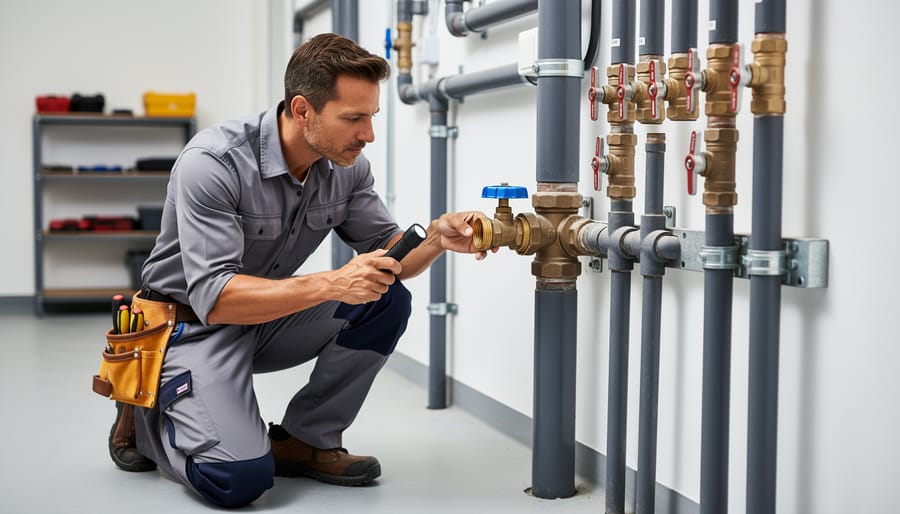
Pipe, Hose, and Fittings Compared: Which Type Suits Which Job
Hose Tails, Tank Fittings, and Clamps: The Small Parts That Prevent Big Leaks
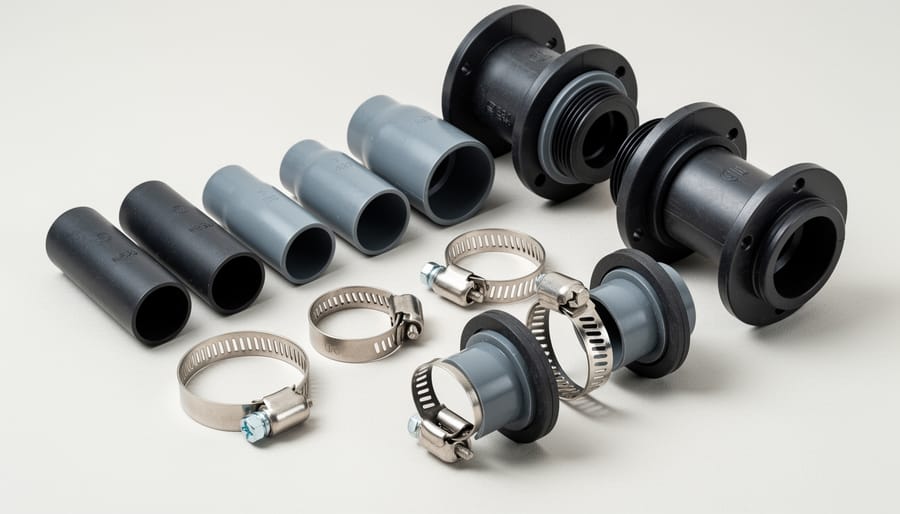
The small connectors are where most pond leaks start, so it pays to understand what each one does.
A hose tail is a ribbed or barbed stub that slides inside flexible tubing. Think of it as the handshake between rigid and flexible parts: one end threads into your pump, filter or valve, and the other grips the hose. Used alone, it can still work loose under pressure, which is where clamps come in.
A clamp squeezes the hose tightly over the ribbed tail so water can’t creep out at the join. Use one on every flexible connection, even when the fit feels snug. My first pond taught me this the hard way, after a “snug” hose popped off overnight and left me topping up the pond at breakfast.
Tank fittings (sometimes called bulkhead fittings) solve a different problem: getting water through a solid wall. When a pipe has to pass through a liner, a filter tank or a rigid container, a tank fitting clamps either side of the wall with a sealing washer, giving you a watertight threaded port. From there, you attach a hose tail and hose on the outside.
In practice, the pieces work as a team. A tank fitting makes the opening, a hose tail connects the tubing to it, and a clamp locks the tubing down. Match the threads and diameters across all three and the setup stays dry.
The good news is that these parts are typically inexpensive compared with a pump, so there’s little reason to skimp. A few quality connectors and a handful of spare clamps can save you from a soggy afternoon.
Our Picks: Pump and Plumbing Recommendations for Different Ponds
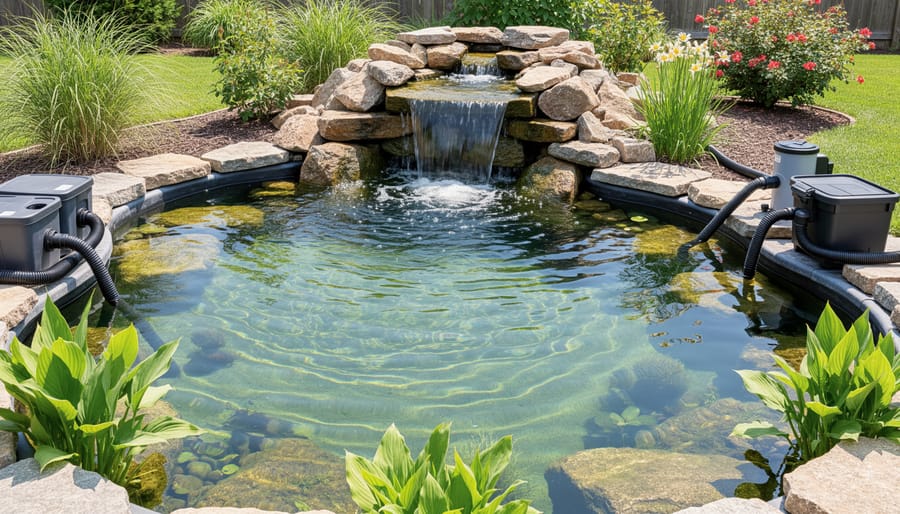
Plumbing Setup Tips for Each Pond Type
Small garden pond: keep it simple. A modest pump needs only modest tubing, but resist the urge to go skinny. Match the hose to the pump outlet, add a hose tail at each end, and secure every join with a clamp.
Mid-sized fish pond: this is where upsizing pays off. Because heavier fish stocks call for roughly double the listed flow, step up your tubing so the extra water isn’t squeezed through a narrow bottleneck. An isolation valve on the line makes cleaning day far easier.
Large koi or waterfall pond: think bigger across the board. A pump in the EcoWave 5000 bracket (20,000 LPH) moves a lot of water, so choose wide, rigid pipe for the long runs and tank fittings wherever the line passes through a liner or wall.
Whatever your pond, dry-fit everything first. I learned that after one soggy afternoon!
Common Plumbing Mistakes to Avoid
The first pond I plumbed taught me this the hard way. I bought a shiny pump, fell in love with it, and only then wandered off to find tubing. Half the connections were the wrong size, and I spent a soggy Saturday making them fit with tape and optimism. They did not hold.
Here are the mistakes I see most often, and happily, they’re all avoidable.
Buying the pump first and the plumbing last. Your pump’s outlet size and flow rate decide which tubing and fittings make sense. Pick the pump, then build the plumbing around it, not the other way round.
Undersizing the tubing. Narrow tubing squeezes the flow and makes your pump work harder than it should. If your pump is rated well above what your pond needs, that capacity is wasted when the pipe can’t carry it. Remember the turnover guidance too: ponds with heavier or messier fish stocks do better aiming for double the listed flows, so leave yourself some room in the plumbing.
Skipping clamps. A hose slipped onto a hose tail might feel snug, but water pressure is persistent. A proper clamp costs very little and saves you from slow leaks and surprise puddles.
Forgetting isolation valves. Without one, cleaning your filter or servicing the pump means draining half your line. Add a valve where you’ll want to cut the flow off, and future you will be grateful.
Ignoring the warranty fine print. Pump warranties often run from two to five years, but they can come with conditions about installation and use. Read them before you buy, not after something fails.
Over-tightening threaded fittings. Plastic threads crack surprisingly easily. Hand-tight plus a gentle nudge is usually plenty, and sealing tape does the rest.
A dry run takes ten minutes. Finding a leak after the fish arrive takes a lot longer.
Quick Answers to Common Pond Plumbing Questions
Got a question that’s been nagging at you before you spend a dime? Here are the ones I hear most, answered in plain English.
What size pipe do I need for my pond pump?
Match your pipe or tubing to the pump’s outlet and its flow rating, since a connection that’s too narrow throttles the water and strains the pump. When in doubt, go up a size rather than down, and make sure every fitting along the run lines up.
How often should pond water be turned over?
The general guide is once an hour for ponds up to 1000 litres, once every 2 hours up to 5000 litres, and up to once every 4 hours for ponds of 15000 litres or more.
Do I need a bigger pump for koi?
Yes, usually. Higher fish stocks and dirtier fish call for faster turnover, so a good rule of thumb is to aim for double the listed flows.
Can I use garden hose for pond plumbing?
I’d steer clear of it for anything permanent. Purpose-made pond tubing and fittings are built to connect cleanly to your pump and filter, which means fewer leaks and easier servicing down the road.
How long should a pond pump warranty be?
Look for at least two years, and know that the best pumps often come with five. For example, the EcoWave line carries a 3-year limited warranty.
Notice how nearly every answer circles back to the same idea: size things to your pond and your fish, then make sure the parts actually fit each other. If you keep that in mind while you shop, you’ll avoid most of the headaches I ran into on my first pond.
The Short Version: What to Remember Before You Buy
Before you spend a penny, run through four quick checks. Size your pump to your pond’s volume, then aim for roughly double the listed flows if you keep lots of fish or messy ones like koi. Match the diameter of every part, from pump outlet to tubing to fittings, so nothing throttles the water. Choose fittings you can reach and service easily. Finally, compare warranties, since Aqua Gardening notes at least 2 years on its pumps and often 5 on the best ones.
Keep that short list in your pocket and the shopping gets much less stressful.
Conclusion
Pond plumbing can feel like a puzzle at first, but it really isn’t. Size your pump to your pond and your fish, match the diameters across every part, choose fittings you can easily service, and check the warranty before you buy. Do those four things and you’ve dodged most of the headaches I ran into with my first pond.
Plan a little before you shop, and the rest tends to fall into place. A few minutes with a tape measure and a rough litre count will save you a lot of damp, frustrating afternoons.
When you’re ready to go further, take a look at the other Clear Waters guides on pumps, filters, and waterfalls. They build on everything here and make each step easier. Then step back, listen to the water moving, and enjoy it. Clear, healthy water is the reward for getting the plumbing right.