
Why Your Guppy Pond Keeps Failing (And How to Fix It for Good)
Choose a pond location that receives 4-6 hours of sunlight daily but includes afternoon shade, especially during summer months when guppies become heat-stressed above 82°F. Position your pond near a power source for filtration and heating equipment, yet far enough from trees to minimize debris cleanup and predator access from overhanging branches.
Install a minimum 100-gallon capacity pond to maintain stable water parameters, since guppies are sensitive to temperature and pH fluctuations that smaller volumes can’t buffer effectively. Line your excavated area with proper underlayment before adding EPDM rubber liner, ensuring no sharp objects puncture the material that would cause slow leaks you won’t notice until water levels mysteriously drop.
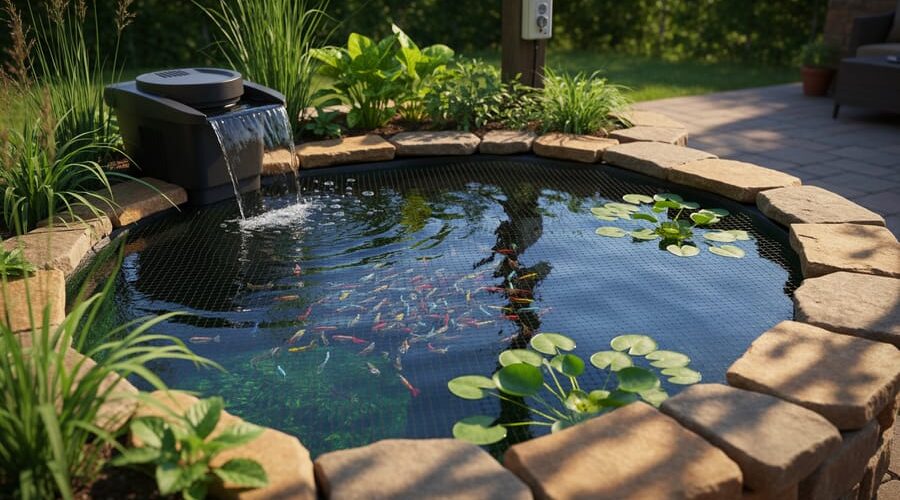
Set up a biological filtration system rated for twice your pond volume because guppies produce substantial waste and breed rapidly, overwhelming undersized filters within weeks. Pair this with a gentle fountain or waterfall feature that oxygenates without creating strong currents that exhaust these small fish, particularly the fancy-tailed varieties that struggle in turbulent water.
Plan for temperature management from day one by installing a pond heater with thermostat control for nighttime drops and early spring conditions, since guppies cannot survive below 60°F. Create shallow planted areas around pond edges where fry can hide from adult guppies and predators while warming quickly in morning sun.
Address predator protection immediately with netting or pond covers, as birds, cats, and raccoons discover unguarded guppy ponds within days. This troubleshooting-focused approach prevents the common failures that cause most outdoor guppy ponds to fail within their first season.
Understanding What Makes Guppy Ponds Different
Guppies are fascinating little fish that bring incredible color and activity to any water feature, but here’s the thing – they have some pretty specific needs that catch many pond enthusiasts off guard. I learned this the hard way when I first tried moving my indoor guppies outside, thinking a pond was just like a big aquarium. Spoiler alert: it’s not!
The biggest game-changer with guppies is temperature. These tropical fish thrive in water between 72-82°F, which means your standard goldfish or koi pond setup simply won’t work in most climates. While goldfish happily tolerate cooler temperatures and even survive mild winters, guppies will become sluggish, stressed, and vulnerable to disease once temperatures drop below 70°F. This is why many people who search for guppy pond information are actually planning seasonal outdoor setups or live in consistently warm regions.
Then there’s the breeding situation. Guppies are absolutely prolific breeders – we’re talking dozens of fry every few weeks from just a couple of females. In an outdoor pond, this creates unique challenges you won’t face with other pond fish. The fry need protection from both adult guppies and the countless predators attracted to your pond. Standard pond designs with open water and minimal plant cover leave baby guppies completely exposed.
Speaking of predators, guppies are significantly more vulnerable than larger pond fish. Their small size and bright colors make them irresistible targets for birds, cats, raccoons, and even large insects like dragonfly larvae. A basic pond net that works fine for koi just doesn’t provide adequate protection for these tiny swimmers.
This is exactly why generic pond advice often leads to disappointment with guppies. The filtration, heating, shelter, and predator protection all need to be approached differently. Understanding these unique requirements from the start will save you countless headaches and help your guppy pond thrive rather than just survive.
The Foundation: Getting Your Pond Size and Depth Right
Getting your pond dimensions right from the start will save you countless headaches later. I learned this the hard way when my first guppy pond was too shallow, and I spent an entire summer battling temperature swings that stressed my fish and threw my filtration system completely out of whack.
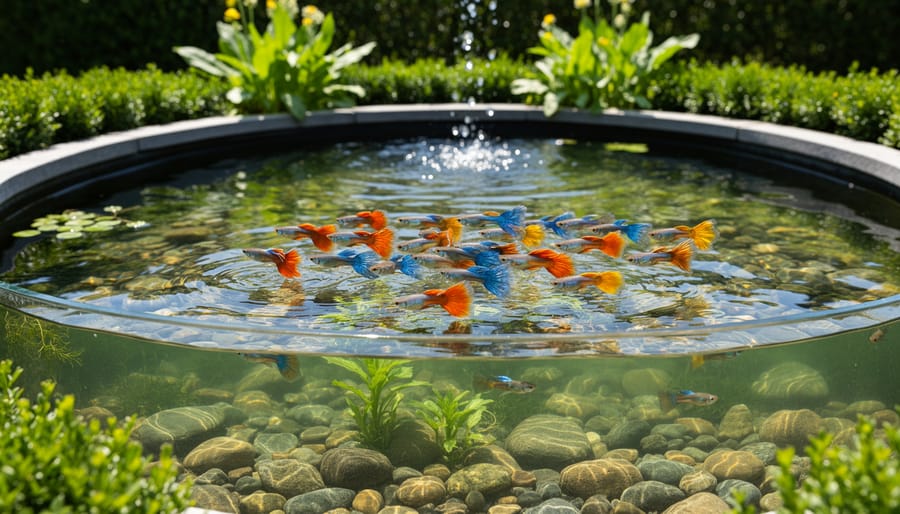
For guppies, you’ll want to aim for a minimum of 100 gallons, though 150-200 gallons gives you much better stability. Think of it this way: larger water volumes act like a buffer against rapid temperature changes, pH swings, and waste buildup. When I upgraded to a 180-gallon pond, my daily monitoring routine became so much easier.
Depth matters more than most beginners realize. Your guppy pond should be at least 18 inches deep, but 24 inches is the sweet spot. Here’s why this is crucial: shallow ponds experience dramatic temperature fluctuations between day and night, which can stress guppies and make them susceptible to disease. During my shallow pond days, I’d see temperatures swing 15 degrees in a single day, and my heater couldn’t keep up. At 24 inches, the water maintains much more consistent temperatures, especially in the lower zones where guppies can retreat during hot afternoons.
Sizing mistakes create a domino effect on equipment. An undersized pond means your filter works overtime and clogs faster, your heater runs constantly and fails prematurely, and you’ll need more frequent water changes. One friend built a gorgeous 50-gallon pond but ended up converting it to a water feature because maintaining stable conditions for guppies proved impossible. Save yourself the rebuild and start with adequate volume and depth.
Filtration Systems That Actually Work for Guppies
Selecting the Right Filter Type
Choosing the right filter for your guppy pond isn’t just about water clarity—it’s about creating a safe environment for adult fish and their precious fry. Let me walk you through the three main types and what actually works for guppies.
Mechanical filters catch debris and particles, keeping your water visually clean. They’re essential for removing leaves, uneaten food, and waste. However, used alone, they won’t handle the biological waste guppies produce. I learned this the hard way when my first pond stayed clear but developed ammonia issues!
Biological filters are where the magic happens. These house beneficial bacteria that convert harmful ammonia and nitrites into safer nitrates. For guppies with their constant breeding and resulting bio-load, biological filtration is non-negotiable. The bacteria colonies take 4-6 weeks to establish, so patience is key during setup.
Combo filters (mechanical and biological combined) are honestly your best bet for guppy ponds. They handle both particle removal and biological processing in one unit, simplifying maintenance and working beautifully with your pond pump selection.
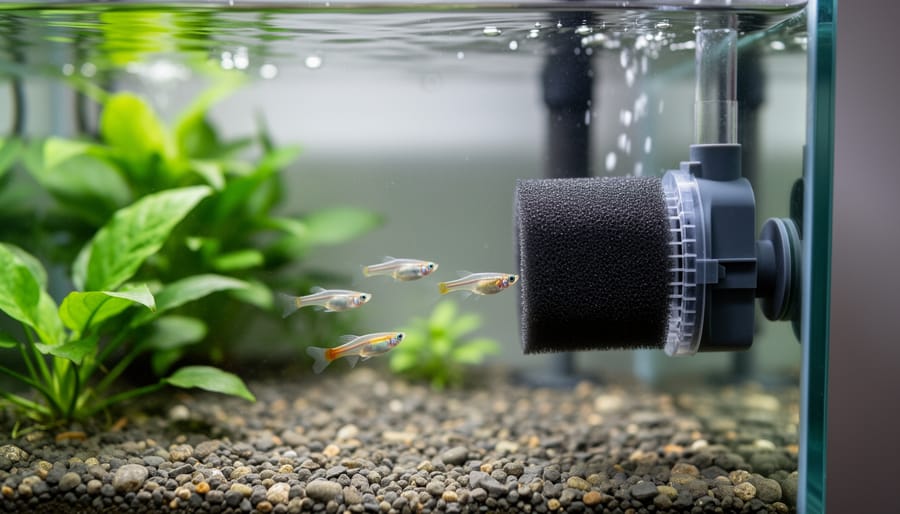
Here’s the crucial guppy-specific consideration: fry protection. Whatever filter you choose, ensure intake screens are fine enough that baby guppies can’t get sucked in. I use pre-filter sponges on all my intakes—they’ve saved countless fry and only need a quick squeeze-clean weekly. Look for filters rated for at least 1.5 times your pond volume to handle guppy breeding activity without becoming overwhelmed.
Common Filter Problems and Quick Fixes
Even the best filtration systems run into hiccups now and then, and trust me, I’ve dealt with my fair share! Let’s walk through the most common filter problems you’ll encounter with your guppy pond and how to solve them quickly.
When you notice weak water flow, your first suspect should be clogged filter media. This happens faster than you’d think, especially during spring when algae blooms and debris pile up. Start by turning off your pump and carefully removing the filter sponges or pads. Give them a good rinse in pond water, never tap water, since chlorine kills the beneficial bacteria you’ve worked hard to cultivate. If rinsing doesn’t improve flow, check your pump intake for leaves, string algae, or even curious pond snails that somehow wedge themselves in there. I once discovered a small twig completely blocking my intake valve, mystery solved!
The dreaded fry-sucking problem frustrates every guppy pond keeper at some point. Your filter might be working perfectly, but it’s working too well for those tiny babies. The simplest fix is wrapping pre-filter sponge material around your intake pipe, secured with zip ties or rubber bands. These foam sleeves slow water intake just enough to prevent fry from getting pulled in while still maintaining filtration. You can buy commercial fry guards, but honestly, a basic aquarium sponge cut to size works beautifully and costs next to nothing.
If your filter suddenly stops working altogether, don’t panic. First, check the obvious: Is it plugged in? Is the circuit breaker tripped? You’d be surprised how often it’s something simple. Next, listen carefully. If you hear humming but no water movement, your impeller might be jammed with debris or mineral buildup. Remove the impeller housing, clean everything thoroughly with white vinegar for calcium deposits, and reassemble. This five-minute fix has saved me from unnecessary pump replacements countless times.
Temperature Control: The Make-or-Break Factor
When and How to Heat Your Guppy Pond
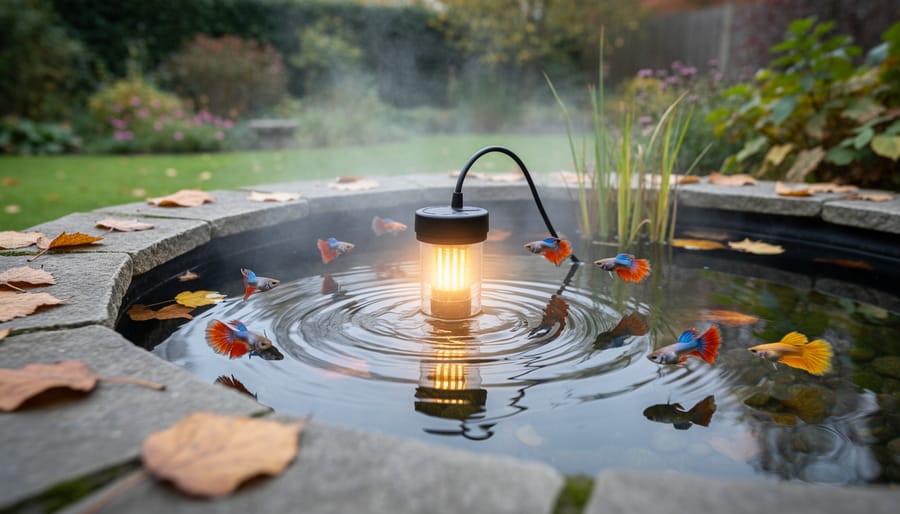
When temperatures drop below 18°C (64°F), your guppies become sluggish and vulnerable to disease. In most climates, you’ll need a pond heater from late autumn through early spring to keep your outdoor guppy pond thriving.
Choosing the right heater depends on your pond’s volume and your local climate. As a general rule, you’ll need about 10 watts of heating power per 10 litres of water in moderate climates. For a 500-litre pond, that’s a 500-watt heater. However, if you experience harsh winters, consider upgrading to a higher wattage or adding multiple heaters for redundancy.
I learned this lesson the hard way when my single heater failed during a cold snap, and I woke to find my guppies huddled at the pond’s edge. Now I always run two smaller heaters instead of one large unit.
Position your heater near the pond’s circulation system or aerator. This helps distribute warm water evenly throughout the pond. Never bury heaters in substrate as this restricts water flow and can cause dangerous hot spots. Instead, secure them vertically along the pond wall using suction cups or heater guards.
The most common complaint I hear is about uneven temperatures, where one section stays warm while another remains cold. This happens when water circulation is poor. Adding an additional pump or repositioning your existing one usually solves this problem. maintaining stable temperatures throughout your pond is essential for guppy health.
High electricity bills catch many pond keepers off guard. Consider using a timer to reduce heating during warmer daylight hours, or invest in a floating pond cover to retain heat overnight. Insulating exposed pipes and choosing energy-efficient models with built-in thermostats can cut your running costs significantly while keeping your guppies comfortable year-round.
Keeping Guppies Cool in Summer Heat
Summer heat can turn your beautiful guppy pond into a serious challenge, but I’ve learned some fantastic ways to keep those water temps comfortable without breaking the bank. When temperatures climb above 82°F (28°C), your guppies start getting stressed, and anything beyond 86°F becomes dangerous territory.
Start with the natural approach: shade is your best friend. I installed a simple shade sail over about 60-70% of my pond, leaving some sunny spots for plant growth. You can use pergolas, umbrellas, or even strategic plantings of taller marginal plants around the edges. Floating plants like water lettuce create natural cooling too, though watch they don’t completely cover the surface.
For preventing pond overheating, aeration becomes crucial. Running your fountain or waterfall during the hottest parts of the day helps with evaporative cooling and oxygen levels. I actually run mine on a timer to kick in around noon.
If your aerator stops working during a heatwave, don’t panic. First, check for clogged intake screens, which happen more often in warm weather with increased algae. Clean the impeller and ensure nothing’s blocking water flow. As an emergency backup, I keep a battery-powered air stone handy.
For extreme heat days, add cool water gradually during morning hours, replacing no more than 10-15% at a time to avoid shocking your guppies. Some folks use pond chillers, but they’re pricey and usually unnecessary with proper shade and aeration.
Aeration Equipment: Why Your Guppies Are Gasping
Choosing Between Air Pumps and Fountain Aerators
When I first started setting up guppy ponds, I thought bigger equipment meant better results. Not quite! The truth is, choosing between air pumps and fountain aerators really depends on your pond’s size and your guppies’ specific needs.
For smaller ponds (under 200 gallons), air pumps are your best friend. They’re affordable, easy to maintain, and create gentle water movement that won’t stress your guppies or their delicate fry. I love using them with air stones that produce fine bubbles – they oxygenate water beautifully without creating strong currents. The main drawback? They need weatherproof housing and can be a bit noisy if placed too close to your patio.
Fountain aerators shine in larger ponds (300+ gallons). They’re visually stunning, provide excellent surface agitation, and double as garden features. I’ve found they’re particularly effective in warmer climates where oxygen levels can drop quickly. However, they can be trickier with baby guppies, who might struggle in the stronger currents. If you choose a fountain, position it away from feeding areas.
My recommendation? Start with an air pump for your first guppy pond. They’re forgiving, budget-friendly, and you can always add a small fountain later once you understand your pond’s unique rhythm.
Fixing Low Oxygen Issues Fast
When your guppies start hovering at the surface gasping for air, you need to act quickly. Low oxygen is one of the most dangerous situations in a pond, but the good news is that most issues have simple fixes.
Start by checking your air pump. Place your hand near the air stone and feel for bubbles. Weak bubbles usually mean one of three things: a clogged air stone, kinked tubing, or a failing pump. Pull out the air stone and rinse it thoroughly under tap water, using an old toothbrush to scrub away algae buildup. I’ve saved many air stones this way that I thought were done for. Next, trace your airline tubing from pump to pond, straightening any kinks or loops that might restrict airflow.
If the pump itself has stopped working, don’t panic. Your emergency toolkit should include a battery-powered air pump (the kind used for transporting fish). These little lifesavers can keep your guppies breathing for hours while you troubleshoot or run to the store for a replacement.
For immediate oxygen boost, grab a bucket and literally pour pond water back into the pond from a height of about two feet. This splashing action adds oxygen fast. You can also direct your garden hose to spray across the water surface, creating turbulence and aeration.
During hot summer days when oxygen naturally depletes faster, increase your aeration by adding a second air stone or upgrading to a larger pump. Your guppies will thank you with active swimming and vibrant colors instead of those worrying surface gulps.
Plants and Hiding Spots: Living Equipment That Often Gets Overlooked
Here’s something I learned the hard way: plants aren’t just decoration in your guppy pond, they’re your secret weapon for keeping fry alive and water quality stable. When I first set up my pond, I treated plants as an afterthought. Big mistake. Within weeks, I noticed my water going cloudy and baby guppies disappearing faster than I could count them.
Aquatic plants work as living filters, absorbing nitrates and other waste products that build up from fish waste and uneaten food. They also produce oxygen during daylight hours, which your guppies absolutely love. But their real superpower? Creating safe hiding spots where newborn fry can escape hungry adults. Guppies are notorious for eating their own babies, so dense vegetation gives those little guys a fighting chance.
For fry protection, focus on feathery, fine-leaved plants like hornwort, water sprite, and cabomba. These create dense tangles near the surface where fry instinctively hang out. I float bunches of hornwort in my pond, and it’s become a nursery where baby guppies thrive. Submerged plants like anacharis work beautifully too and grow like crazy in warm weather.
Don’t forget floating plants like water lettuce or dwarf water lily. They provide shade, reduce algae growth, and give your pond that gorgeous natural look. Just watch out for overgrowth, especially in summer. I’ve had water lettuce completely cover my pond surface in just three weeks, blocking light and oxygen exchange. Now I remove about a third of my floating plants every two weeks during peak growing season.
Plant die-off happens when temperatures drop or light decreases in fall. Simply trim away brown sections and reduce feeding since decaying plants can spike ammonia levels. Think of plants as low-maintenance teammates that actually improve your pond while looking fantastic.
Predator Protection Setup
Your guppies’ biggest outdoor threat? Predators. I learned this the hard way when a clever heron visited my pond at dawn and had a breakfast buffet before I even had my coffee. Let me help you avoid that heartbreak.
Start with pond netting as your first line of defense. Stretch fine mesh netting (quarter-inch or smaller) across your entire pond surface, securing it with stakes or weighted edges around the perimeter. This simple barrier stops birds from diving in and deters cats from fishing. Make sure the netting sits at least 6 inches above the water surface so trapped guppies don’t become easy targets pressed against the mesh.
For a more permanent solution, consider building a frame structure using PVC pipe or wood that sits over your pond. Attach netting or wire mesh to this frame, creating a dome or flat-top cover that’s easy to remove during maintenance. This approach looks tidier and handles snow or leaf loads better than loose netting.
Troubleshooting torn or sagging barriers? Check your netting weekly for holes and repair them immediately with zip ties or replacement sections. If netting sags into the water, add central support posts or tighten the edges. UV-resistant netting lasts longer but still needs replacing every two to three years.
Combine physical barriers with hiding spots below the surface. Dense plants, rock caves, and floating vegetation give guppies refuge when predators do breach your defenses. Think of it as layered security – because determined predators are surprisingly resourceful.
Testing Equipment: Your Early Warning System
Think of testing equipment as your pond’s health monitor—catching problems before they become disasters. I learned this the hard way when I lost a beautiful batch of guppy fry because I relied on guesswork instead of actual data. Now, my testing kit is my best friend.
For guppy ponds, you’ll need a few essential tools. Start with a quality liquid test kit that measures ammonia, nitrite, nitrate, and pH. Avoid those flimsy test strips—they’re convenient but notoriously unreliable. A good digital thermometer is crucial too, since guppies are sensitive to temperature swings. I keep mine permanently mounted in the pond for constant monitoring.
Here’s how to test properly: Always rinse your test tubes with pond water first (not tap water, which contains chlorine). Fill to the marked line, add drops as directed, and wait the full time specified—rushing gives false readings. Test at the same time daily for consistency, preferably in the morning. Understanding water testing essentials will save you from guesswork and keep your guppies thriving.
Common troubleshooting: If readings seem off, check expiration dates—old reagents lose accuracy. Cloudy test samples? Your pond might have a bacterial bloom affecting clarity, not the kit itself. Getting wildly different results? Test your tap water as a control to verify the kit works properly.
Keep backup equipment on hand. When my pH tester broke during a critical spike, I had no way to monitor my corrective measures. Now I always have spare test tubes and fresh reagents stored in a cool, dark place. A small investment in reliable testing equipment prevents expensive losses later.
Seasonal Transitions: When Everything Goes Wrong
I’ll be honest with you—I’ve had more equipment failures during seasonal transitions than I care to admit! There’s something about those temperature swings between seasons that seems to reveal every weak point in your pond setup. Let me share what I’ve learned through trial and error, so you can avoid the panic I felt when my heater died on the first cold night of autumn.
Spring startup is when most equipment issues surface. After months of dormancy or reduced operation, pumps often struggle to restart. If your pump won’t kick on, check for debris buildup around the impeller—leaves and muck accumulate over winter and create blockages. I once spent an hour troubleshooting electrical issues before realizing a single oak leaf had wedged itself perfectly in the impeller shaft. Remove the pump, clean it thoroughly, and test it in a bucket before reinstalling.
Temperature fluctuations wreak havoc on heaters during fall transitions. Your heater might cycle on and off constantly as outdoor temperatures swing twenty degrees between day and night. This constant cycling can burn out thermostats prematurely. Install a backup thermometer to verify your heater’s reading—I caught a faulty thermostat that was showing 68°F while the actual water temperature had dropped to 55°F. My guppies were already showing signs of stress by the time I noticed.
Fall shutdown requires careful winter pond preparation, especially in regions with freezing temperatures. If you’re maintaining the pond year-round for guppies, you’ll need to verify all equipment is functioning before the first hard freeze. Test your heater at full capacity on a cool evening—don’t wait until it’s critical. Check airline tubing for cracks that develop from UV exposure over summer; these always split during the first freeze.
Keep spare parts handy during transition periods: an extra heater, backup air pump, and replacement tubing. When equipment fails at 10 PM during a temperature drop, hardware stores are closed, and your guppies can’t wait until morning.
Here’s the thing I’ve learned after years of tinkering with backyard ponds: all your equipment works together like a team. Your filter depends on proper water flow, your heater needs good circulation to distribute warmth evenly, and your plants rely on both. When something goes wrong, it’s rarely just one isolated problem. That might sound overwhelming at first, but it’s actually empowering once you understand it.
The best advice I can give you is to stay proactive. Check your equipment weekly, observe your guppies daily, and keep a simple notebook of water temperatures and any changes you notice. Catching a struggling pump before it fails completely saves you from emergency scrambling and stressed fish.
Don’t chase perfection though. My first guppy pond had algae blooms, temperature swings, and more than a few head-scratching moments. Each challenge taught me something valuable. You’ll develop an instinct for your pond’s rhythm, spotting potential issues before they become disasters. That expertise doesn’t happen overnight, but it does happen.
Trust yourself to learn as you go. Monitor, adjust, and remember that even experienced pond keepers still troubleshoot regularly. It’s part of the joy of keeping a living ecosystem in your backyard.