
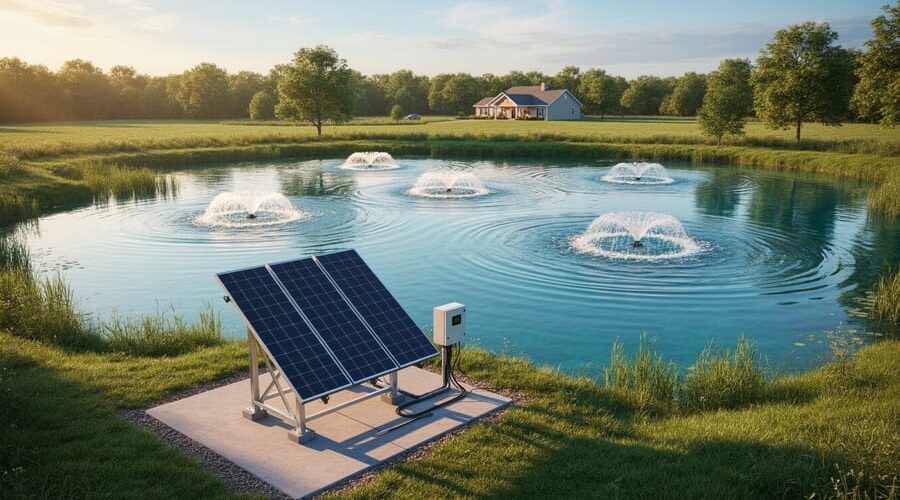
The Right Solar Aerator Can Save Your 3-Acre Pond (Here’s How to Choose)
A 3-acre pond sits right at the crossroads where homeowner aerators meet commercial-grade systems, and choosing the wrong one means wasted money and a struggling pond. Your pond needs roughly 9-12 horsepower of aeration to maintain healthy oxygen levels throughout the water column, which translates to either multiple smaller units or one powerful system working around the clock.
Size matters more than you think. Unlike smaller backyard ponds that can get by with decorative fountains, your 3-acre water body experiences stratification, where warm oxygen-poor water sits on top while cold, stagnant water lurks below. Without proper circulation, you’ll face algae blooms, fish kills, and that unpleasant swampy smell that drives away wildlife and makes your waterfront less enjoyable.
The investment pays for itself quickly. A properly sized aerator prevents costly fish losses, reduces the need for chemical treatments, and keeps your pond looking crystal clear year-round. Most pond owners notice visible improvements within two weeks, seeing clearer water, fewer mosquitoes, and more active fish.
You have three main choices: diffused aeration systems that work from the bottom up, surface aerators that create dramatic water displays, or fountain aerators that combine beauty with function. Each has distinct advantages depending on your pond’s depth, shape, and whether you prioritize aesthetics or pure performance. The right system transforms your pond from a maintenance headache into the thriving ecosystem you envisioned when you first dug it.
Why Your 3-Acre Pond Needs the Right Amount of Aeration
Think of dissolved oxygen as the invisible lifeline in your 3-acre pond. Just like we need fresh air to breathe, everything living in your pond depends on oxygen dissolved in the water. With three acres of water to manage, getting the right amount of aeration isn’t just important—it’s essential for a thriving pond ecosystem.
Here’s the thing about larger ponds: they create their own set of oxygen challenges. During summer, warm water at the surface holds less oxygen, while the cooler bottom layers can become completely depleted. At night, your pond plants actually consume oxygen instead of producing it. Add fish, beneficial bacteria breaking down organic matter, and natural decomposition into the mix, and you’ve got a lot competing for available oxygen.
When your pond doesn’t get enough aeration, the warning signs are hard to miss. You might notice fish gasping at the surface, especially during early morning hours. Algae blooms turn your water green and murky. That unpleasant rotten egg smell? That’s hydrogen sulfide gas—a telltale sign of oxygen-starved bottom layers. Your water might look cloudy, and fish could become sluggish or stressed.
But here’s something many pond owners don’t realize: you can actually over-aerate a pond, though it’s much less common than under-aerating. Excessive turbulence can stress certain fish species and disrupt the natural stratification during seasons when you actually want some layering.
For a 3-acre pond, you’re looking at roughly 130,000 square feet of water surface. Most healthy ponds need dissolved oxygen levels between 5-8 parts per million. Your aeration system needs enough power to circulate this volume effectively, reaching those stagnant bottom areas where problems typically start. Getting this balance right means choosing equipment specifically sized for your pond’s dimensions and depth—not just guessing or assuming a small fountain will do the trick.
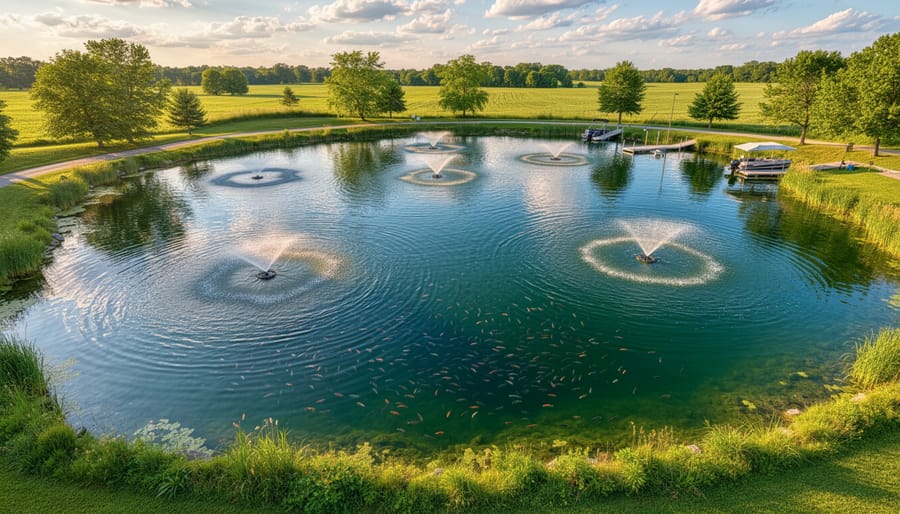
Understanding Solar Aerator Power Requirements for 3 Acres
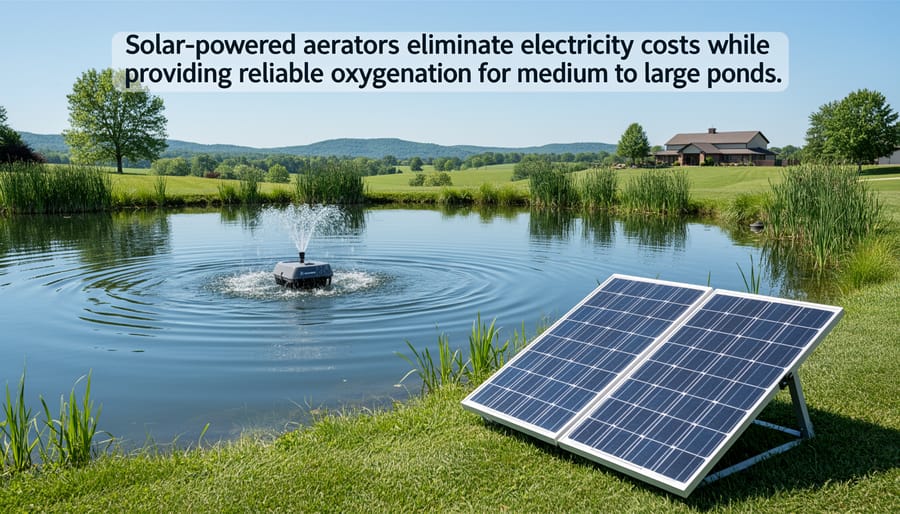
How Much Airflow Does a 3-Acre Pond Actually Need?
Here’s a simple way to figure out how much airflow your 3-acre pond needs without getting too bogged down in calculations. Understanding how aeration pumps work helps, but let’s keep this practical.
The basic rule of thumb is about 1 to 2 cubic feet per minute (CFM) per surface acre. For a 3-acre pond, that means you’re looking at roughly 3 to 6 CFM minimum. However, pond depth makes a huge difference. Shallow ponds under 6 feet deep can get by with less, while deeper ponds beyond 10 feet really benefit from higher airflow.
Fish stocking changes everything too. If you’re running a koi pond or heavy fish population, bump that number up by 50 percent or more. Those fish need oxygen, especially during feeding times. I learned this the hard way when my first pond had beautiful clear water but stressed fish until I upgraded my aerator.
Water temperature plays a sneaky role as well. Warm summer water holds less oxygen than cool water, so your aerator needs to work harder during hot months. If you live somewhere with scorching summers, consider a system on the higher end of the CFM range.
A good starting point for most 3-acre ponds is a system delivering 4 to 6 CFM with multiple diffusers spread throughout. This gives you breathing room for warmer weather and growing fish populations without breaking the bank on oversized equipment.
Solar Panel Size and Placement Considerations
For a 3-acre pond, you’ll need a solar panel system that can generate between 40 to 120 watts, depending on your aerator type and daily runtime needs. While solar aerators for smaller ponds can work with compact panels, larger systems require more substantial setups.
Panel placement makes all the difference in performance. Position your solar panel facing true south (in the Northern Hemisphere) or true north (in the Southern Hemisphere) at an angle matching your latitude for year-round efficiency. Keep panels clear of tree shadows, buildings, and overhanging branches. I’ve seen many pond owners lose 50% efficiency simply because afternoon shade crept across their panels.
Seasonal variations will affect your aerator’s performance throughout the year. Winter months with shorter days and lower sun angles mean reduced power generation, sometimes dropping to 30-40% of summer output. Plan for this by choosing a system with battery backup or selecting a slightly oversized panel that compensates for seasonal dips. Regular cleaning removes dust, pollen, and bird droppings that can reduce efficiency by 20% or more.
Top Solar Aerator Options for 3-Acre Ponds
High-Capacity Systems for Deep Ponds
When your pond stretches deep beyond 8 feet, you’ll need some serious muscle to push oxygen all the way to the bottom. Think of it like trying to blow bubbles through a really long straw – the deeper you go, the more power you need!
I learned this the hard way with my neighbor’s 3-acre catfish pond. We installed what seemed like a perfectly good aerator, only to discover fish still congregating at the surface during hot summer afternoons. The problem? Our system simply wasn’t strong enough to reach the 12-foot depths where oxygen was desperately needed.
For deep ponds, you’ll want systems that pump at least 3 to 5 CFM (cubic feet per minute) of air. These powerhouses typically feature rocking piston compressors rather than diaphragm pumps, giving them the oomph needed to push air through weighted diffuser lines sitting at the bottom.
Multiple diffuser setups work wonderfully for 3-acre ponds. Instead of one diffuser trying to do all the work, spreading 3 to 4 diffusers strategically across your pond creates circulation zones that overlap, ensuring no dead spots remain stagnant. Position them roughly 100 to 150 feet apart for optimal coverage.
Look for systems rated specifically for your pond’s depth. A system rated for 8 feet won’t magically work at 15 feet, no matter how much you wish it would! The deeper the rating, the stronger the compressor needs to be.
Battery backup becomes especially important with deep-water systems. If your aerator stops during a summer night, deep areas can turn anaerobic quickly, releasing harmful gases and stressing your fish population. Many high-capacity units include backup batteries that automatically kick in during cloudy periods or nighttime hours, keeping your pond healthy around the clock.
Budget-Friendly Options That Still Get the Job Done
Let’s be honest – not everyone needs a top-of-the-line system, and that’s perfectly okay! If you’re working with a tighter budget or have a shallower 3-acre pond, there are absolutely some wallet-friendly options worth considering.
Solar-powered fountain aerators typically sit at the lower end of the price spectrum, often between $200-$500. These units float on your pond’s surface and spray water into the air, which adds oxygen as droplets fall back down. They work best for ponds under 8 feet deep and perform wonderfully in full sunlight conditions. I’ve seen several friends successfully use these in their smaller farm ponds, and they’re thrilled with the visual appeal – it’s like getting a decorative fountain and basic aeration in one package.
The honest truth about budget solar aerators? They have limitations. They only work when the sun shines, so nighttime oxygenation stops completely. This might be fine if your pond isn’t heavily stocked with fish or if you live somewhere with long, sunny days. However, if you’re in a cloudy region or your fish population is significant, you’ll notice these gaps in operation.
Another affordable approach is a single-diffuser windmill aerator, usually priced around $600-$900. These mechanical beauties harness wind power without any electricity costs. They’re incredibly reliable in consistently breezy areas and can handle deeper zones better than surface sprayers.
The key trade-off? Coverage area. A single diffuser simply won’t aerate all three acres evenly. You’ll get excellent results in maybe half an acre surrounding the diffuser, with diminishing benefits as you move outward. For some pond owners, that’s enough – especially if problem areas are localized. Just manage your expectations accordingly, and you’ll find these budget options can absolutely serve you well.
Premium Systems with Battery Backup
If you’re dealing with a heavily stocked fish pond or facing stubborn water quality issues like persistent algae blooms, premium solar aerators with battery backup deserve serious consideration. These systems keep working around the clock, even when the sun isn’t shining, which makes all the difference for fish that depend on consistent oxygen levels.
The standout feature of these premium units is their battery storage capability. During daylight hours, solar panels charge onboard batteries while simultaneously running the aerator. Once the sun sets, those batteries kick in to maintain continuous operation. I’ve seen these systems transform problematic ponds where fish were gasping at the surface each morning into thriving ecosystems with crystal-clear water.
Most premium systems for 3-acre ponds come with larger solar panel arrays, typically 200-400 watts, paired with deep-cycle marine batteries. The Scott Aerator DA-20 Solar with battery backup is a popular choice among pond owners I know, offering reliable 24-hour operation with minimal maintenance. Another excellent option is the Keeton Industries Solar Aeration System, which includes dual batteries for extended runtime.
The investment is significant, usually ranging from $3,000 to $6,000, but the payoff comes in consistent results. You won’t wake up to fish kills after cloudy stretches, and beneficial bacteria populations remain stable with constant oxygen supply. Installation mirrors standard solar systems, though you’ll need to protect batteries from extreme temperatures in a weatherproof enclosure. For serious pond keepers managing valuable fish populations or challenging water conditions, these premium systems deliver peace of mind that basic aerators simply can’t match.
What to Look for When Shopping for Your 3-Acre Pond Aerator
Diffuser Configuration and Placement
For a 3-acre pond, you’ll typically need between 2 and 4 diffusers, depending on your pond’s shape and depth. I learned this the hard way when I first started with just one diffuser in my own large pond – it worked great in one area but left the far corners stagnant!
The golden rule is placing diffusers in the deepest parts of your pond, ideally at least 8 feet down. Space them evenly to create overlapping circulation patterns. Think of it like having multiple fans in a large room – you want the airflow to reach everywhere. For a rectangular 3-acre pond, I’d recommend placing diffusers in a diamond or square pattern. If your pond is more irregular, position them in the deepest zones while ensuring no area is more than 150 feet from a diffuser.
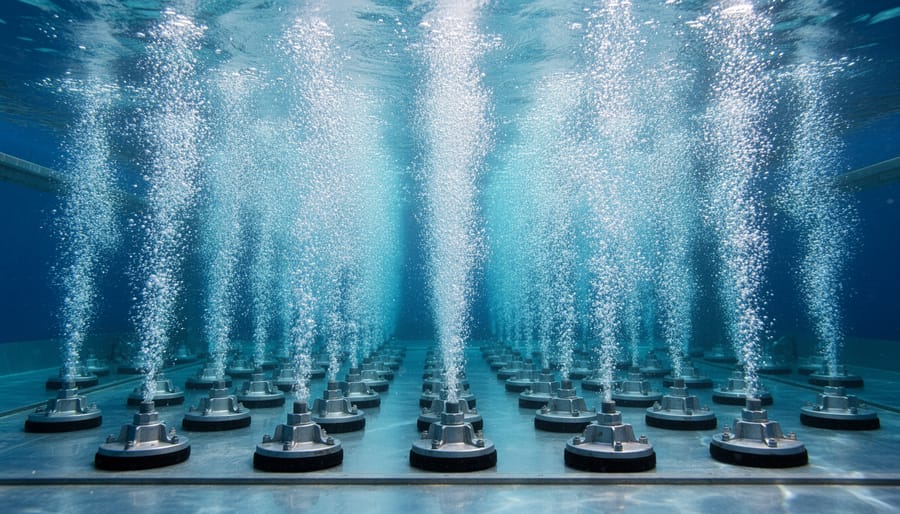
Now, let’s talk diffuser types. Disc diffusers are the workhorses – durable and producing fine bubbles that maximize oxygen transfer. They’re my go-to recommendation for most situations. Stick diffusers are longer and narrower, perfect for shallower areas or creating linear bubble curtains. Rubber membrane diffusers are the premium option, self-cleaning and incredibly efficient, though pricier upfront.
For DIY installations, disc diffusers offer the best balance of performance and affordability. Start with two diffusers and monitor your pond’s response over a few weeks. You can always add more if certain areas need extra circulation. Remember, proper placement beats having more diffusers in the wrong spots every time!
Warranty and Customer Support
When you’re investing in a 3-acre pond aerator, especially a solar-powered system, understanding warranty coverage gives you peace of mind. Most reputable manufacturers offer warranties ranging from one to five years, with premium models sometimes extending coverage even further. Typically, the solar panels carry longer warranties than the compressor units since they have fewer moving parts. Look for coverage that includes both parts and labor, not just replacement components.
Accessible customer support makes all the difference when you’re troubleshooting issues or need installation guidance. Before purchasing, test how responsive the company is by calling or emailing with a question. The best manufacturers provide multiple contact options including phone support, email, and detailed online resources. Some even offer video tutorials that walk you through common fixes, which is incredibly helpful when you’re standing by your pond wondering why the bubbles suddenly stopped.
Common issues with solar aerators include reduced airflow during cloudy periods, which is normal and expected. More concerning problems might involve air leaks in the tubing, damaged diffusers, or compressor failures. A good warranty should cover manufacturing defects, but understand that damage from wildlife, improper installation, or extreme weather might not be included.
I’ve learned that companies offering extended warranties often stand behind their products more confidently. Don’t hesitate to ask specific questions about what’s covered before making your purchase. A slightly higher upfront cost with solid warranty protection usually beats saving money on a system with limited support when problems arise down the road.
Installing Your Solar Aerator: A Practical Walkthrough
You’ve got your solar aerator, and now it’s time to get it working in your 3-acre pond. Don’t worry – this is easier than you might think, and I’ll walk you through each step. I still remember my first installation, thinking it would take all weekend, but I was actually up and running by lunchtime.
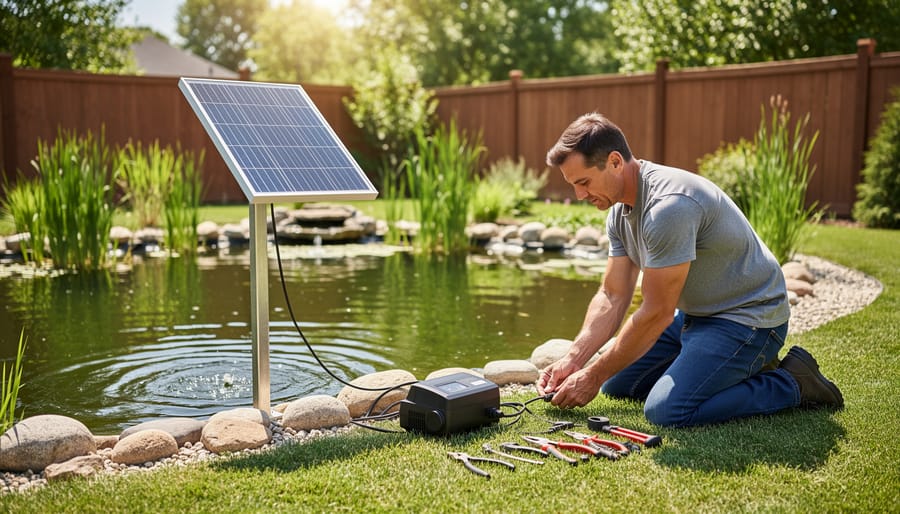
Start by choosing the right location for your solar panel. You’ll want a spot that receives full sunlight for most of the day, typically facing south if you’re in the Northern Hemisphere. The panel needs to be within reach of your compressor and pond, but don’t stress if the perfect sunny spot is a bit far – most systems come with extension cables. Mount the panel on a sturdy post or dedicated stand, angled at about 30 to 45 degrees. Make sure it’s secure enough to handle wind and weather.
Next, position your compressor unit in a dry, protected area near the pond. Many folks use a weatherproof box or shelter to protect it from rain and debris. Connect the solar panel cables to the compressor according to the manufacturer’s instructions – it’s usually just a simple plug-and-play connection.
Now for the fun part: laying out your airline tubing. For a 3-acre pond, you’ll likely run tubing from your compressor to multiple diffuser locations. Think about your pond’s shape and problem areas. I recommend placing diffusers in the deepest spots and spreading them out evenly. Bury or stake down exposed tubing along the shore to prevent tripping hazards and protect it from UV damage.
When positioning diffusers, place them at least 2 to 3 feet below the surface – deeper is usually better. The bubbles rising from the bottom create the circulation you need. For optimal coverage on your 3-acre pond, you might use 2 to 4 diffusers spread throughout different zones.
Once everything’s connected, it’s testing time. On a sunny day, watch for bubbles within minutes. You should see steady streams rising to the surface. Walk around your pond perimeter and check each diffuser location. If bubbles seem weak, check for kinked tubing or loose connections.
Give yourself a pat on the back – you’ve just installed your pond’s new lifeline!
Common Problems and How to Fix Them
Even the best aerator can hit a few bumps along the way, but don’t worry—most issues have simple fixes you can handle yourself!
If you’re noticing insufficient bubbling or weak water movement, first check your air stones or diffusers for clogging. Sediment and biofilm love to build up over time, blocking those tiny holes. Pull them up, give them a good scrub with a stiff brush, or soak them in white vinegar overnight. I learned this the hard way when my system seemed to lose its oomph after just six months—a quick cleaning brought it right back to life!
For solar-powered systems that only work in direct sunlight, the issue usually lies with your battery storage. If your unit runs great during the day but stops at night, your battery might not be holding a charge anymore. Most batteries need replacing every 2-3 years. Also, make sure your solar panel isn’t shaded by growing trees or accumulated dirt—a simple wipe-down can boost efficiency by 20%.
When algae problems persist despite running your aerator, remember that aeration alone isn’t a complete solution. While it’s crucial for maintaining water clarity, you might also need to reduce nutrient loads through proper filtration or adding beneficial bacteria.
Seasonal performance drops are completely normal. In winter, colder water holds more oxygen naturally, so reduced output isn’t necessarily a problem. However, if your compressor sounds louder or struggles in summer heat, move it to a shadier spot with better ventilation.
When should you call a pro? If your compressor motor makes grinding noises, won’t start despite having power, or if you smell burning, it’s time for expert help. Safety first—electrical equipment near water requires careful handling!
Choosing the right solar aerator for your 3-acre pond doesn’t have to feel overwhelming. By now, you’ve learned about the key factors that matter most: understanding your pond’s depth, considering how many fish call it home, evaluating your budget, and deciding between surface aerators and bottom diffusion systems. Each pond is truly unique, just like the person caring for it, so take a moment to assess what your water feature really needs.
Remember, investing in proper aeration isn’t just about buying equipment. You’re investing in the long-term health of your entire pond ecosystem. Adequate oxygen levels mean healthier fish, clearer water, reduced algae problems, and a more balanced environment that practically takes care of itself. The upfront cost and installation effort pay dividends season after season when you see your pond thriving.
Don’t let the technical aspects discourage you. Start by measuring your pond depth and calculating your approximate fish population. Set a realistic budget that includes installation accessories. Then match those specifics to the aerator options we’ve discussed. Solar-powered systems offer the added benefit of cost-free operation and environmental friendliness, making them an excellent choice for most pond owners.
You’ve got this! Thousands of pond enthusiasts just like you have successfully installed aerators and transformed their water features. With the information you’ve gathered here, you’re well-equipped to make a confident decision. Here’s to your pond’s health and your success as a dedicated pond keeper.