
Hydro-Flow Filtration Systems: What They Are and How They Keep Your Pond Sparkling
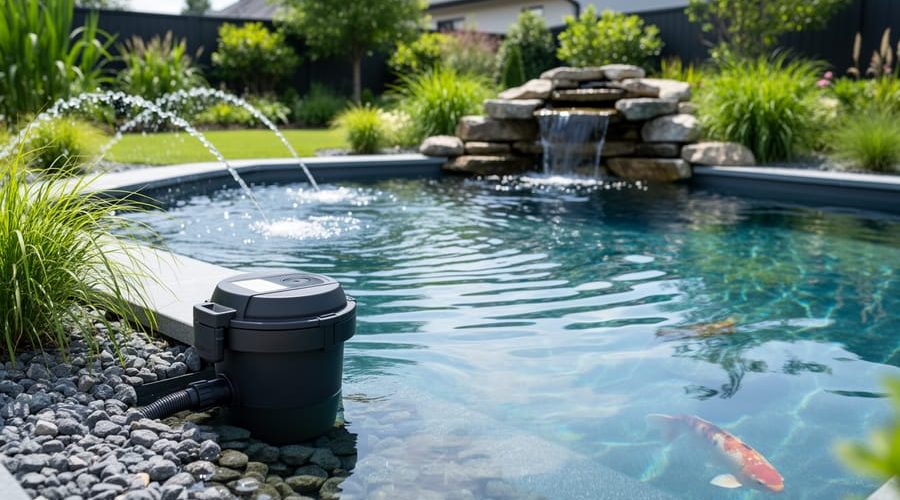
A hydro-flow filtration system uses a pressurized chamber to force pond water through layered mechanical and biological media, delivering cleaner water back to your pond through spray bars, fountains, or waterfalls. Unlike gravity-fed box filters that rely on water trickling downward, hydro-flow systems actively push water through dense filtration materials, making them especially effective for ponds with koi, goldfish, or heavy plant debris. They’re compact, versatile, and excel in hybrid setups where you need both filtration and a decorative water feature working together.
If you’ve been wrestling with cloudy water or struggling to maintain healthy fish, you’re probably weighing your options between traditional pond filters and newer technologies. Hydro-flow systems sit in a sweet spot: they’re more powerful than simple sponge filters but less complex than multi-chamber gravity systems that demand excavation and plumbing runs. You bury the canister near your pond edge, connect a pump, and let the pressurized flow handle the rest.
What makes these systems particularly appealing is their dual-purpose design. The same unit that’s scrubbing ammonia and trapping algae can also power a fountain or streambed, giving you crystal-clear water and visual interest without doubling your equipment budget. They’re modular, too. Start with a basic setup and add UV clarifiers or extra media chambers as your pond matures.
Most pond owners find hydro-flow filtration straightforward to install and maintain, especially compared to the footprint and upkeep of larger gravity filters. Whether you’re setting up your first water garden or upgrading an aging system, understanding how these units actually work will help you decide if they’re the right fit for your pond’s size, stocking levels, and aesthetic goals.
Understanding Hydro-Flow Filtration Technology
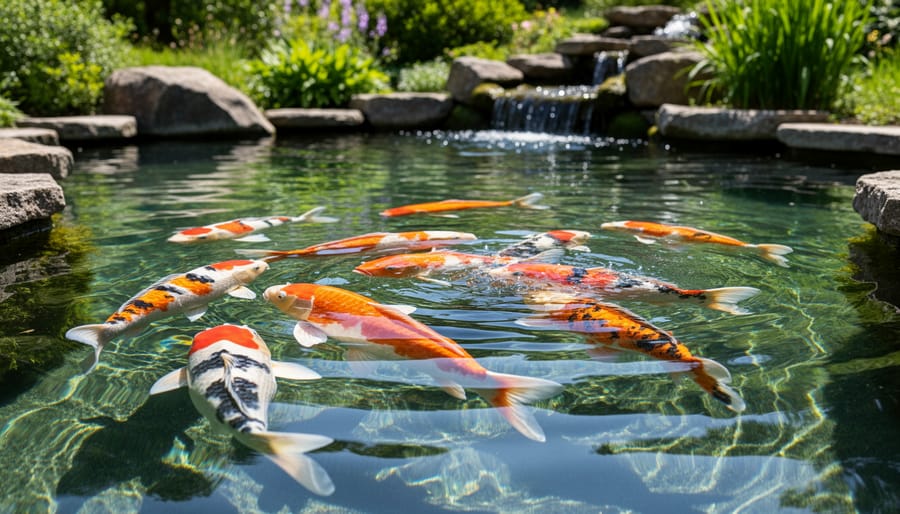
At its heart, hydro-flow filtration is elegantly simple: it keeps your pond water moving continuously through filters that clean it, then sends that freshly filtered water back into the pond. Think of it as a gentle, never-ending cycle where dirty water flows in, gets cleaned up, and returns sparkling clean, all while maintaining the natural circulation your pond ecosystem needs to thrive.
The “hydro” part refers to the constant water movement, while “flow” describes how the system maintains steady, uninterrupted circulation. Unlike older filtration setups that might work in batches or require you to manually move water around, hydro-flow systems run quietly in the background, pulling pond water through intake pipes, passing it through filtration chambers, and releasing it back into your pond through return outlets. This continuous movement does double duty: it filters out debris and harmful compounds while keeping oxygen levels healthy throughout your pond.
What makes this technology particularly clever is how it mimics nature. In streams and rivers, flowing water stays clearer and healthier than stagnant pools because movement prevents waste from accumulating and helps beneficial bacteria colonize surfaces where they break down fish waste and decaying plant matter. Hydro-flow systems recreate this natural process in your backyard pond, establishing biological colonies within the filter media that actively convert harmful ammonia into safer compounds.
The real beauty lies in what you don’t have to do. Once properly sized and installed, these systems maintain themselves through their own circulation patterns. Dead zones where waste settles become rare because water movement reaches throughout the pond. Algae struggles to gain a foothold when nutrients are being constantly filtered out. Your fish breathe easier because oxygenated water returns from the filter. It’s pond care that happens while you’re inside having coffee, not standing outside with a net.
How Hydro-Flow Systems Work in Your Pond
The Water Journey: From Pond to Filter and Back
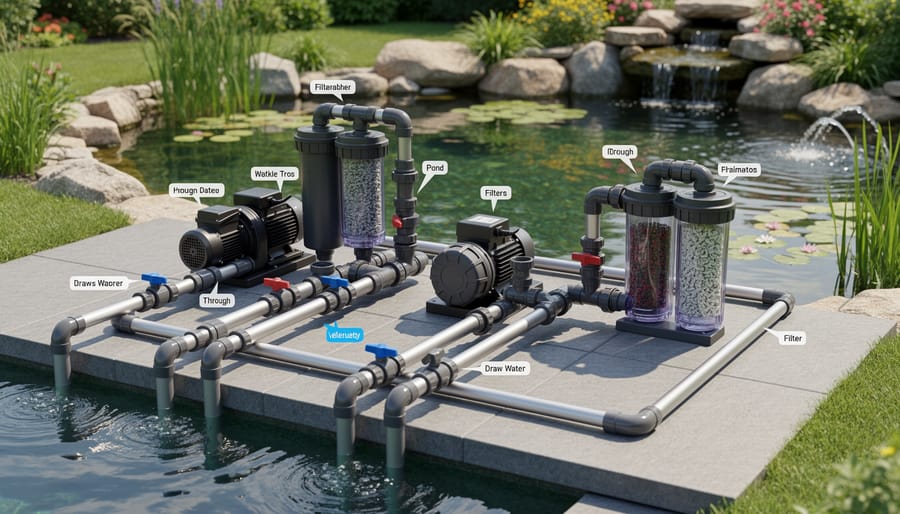
The water in your pond follows a remarkably efficient circular path through a hydro-flow system, and understanding this journey helps you appreciate how the technology keeps your water sparkling.
Here’s the complete cycle your pond water experiences:
- Intake draws water from the pond: A pump pulls water from your pond through an intake screen that blocks leaves and larger debris, protecting the pump from clogging.
- Mechanical filtration removes particles: Water flows through foam pads, filter mats, or settling chambers where suspended particles, fish waste, and organic matter get trapped and separated from the clean water.
- Biological filtration purifies the water: The filtered water then passes through media colonized by beneficial bacteria, your living filters that convert harmful ammonia and nitrites into less toxic nitrates.
- Return flow circulates treated water: The now-clean, biologically processed water flows back into your pond through a waterfall, stream, or fountain feature that adds oxygen while creating visual interest.
This continuous loop means your entire pond volume cycles through the filtration system multiple times per day. For a 1,000-gallon pond with a pump running at 1,000 gallons per hour, the complete water volume theoretically passes through filtration every hour, though actual mixing patterns mean some water recirculates more frequently than others.
The beauty of this system is that it never stops working. While you sleep, while you’re at work, during family dinners, the pump keeps drawing water through those mechanical and biological stages, steadily removing waste and replenishing oxygen. This constant movement prevents stagnant zones where algae thrive and ensures every corner of your pond benefits from filtration.
The Role of Flow Rate and Water Movement
Finding the sweet spot for your pond’s flow rate is like tuning a musical instrument, get it right, and everything harmonizes beautifully. Too slow, and your pond becomes stagnant; too fast, and you stress your fish and waste energy.
For most garden ponds, you want to turn over the entire water volume once every one to two hours. A 1,000-gallon pond needs a pump moving 500 to 1,000 gallons per hour. Double that for heavily stocked koi ponds, where waste accumulation demands more aggressive circulation.
The connection between flow rate and oxygen levels explains why this matters so much. Faster flow creates more surface agitation, which means better gas exchange and higher dissolved oxygen. Your fish breathe easier, beneficial bacteria thrive, and algae struggles to establish itself in moving water.
But faster isn’t always better. A small 500-gallon wildlife pond with gentle plants and a few goldfish might do perfectly with just 250 gallons per hour. You’ll know you’ve overdone it if your plants are constantly bent over, fish hide constantly, or you hear excessive splashing.
Watch your pond tell you what it needs. Clear water with fish actively swimming at all depths signals you’ve nailed it. A surface film or fish gasping near waterfalls means you need more movement. Torn plant leaves or fish avoiding certain areas suggest you should dial it back.
Hydro-Flow vs. Traditional Filtration: What’s the Difference?
The biggest difference you’ll notice between hydro-flow and traditional filtration comes down to how water moves through your pond. Traditional systems typically pull water to a filter box, clean it, and send it back, often creating distinct zones of clean and not-so-clean water. Hydro-flow systems take a different approach by maintaining continuous circulation patterns throughout the entire pond, which means every corner gets filtered water regularly rather than just the areas near your return jets.
| Feature | Hydro-Flow Systems | Traditional Filtration |
|---|---|---|
| Water Movement | Continuous circulation throughout entire pond | Point-to-point flow with potential dead zones |
| Maintenance Frequency | Less frequent cleaning due to even distribution | More frequent media cleaning in high-load areas |
| Energy Use | Moderate to high (constant circulation) | Variable (depends on pump cycles) |
| Ideal Pond Type | Larger ponds, high fish loads, complex shapes | Smaller ponds, moderate stocking, simple designs |
Traditional filters excel when you have a straightforward pond with modest fish populations. They’re often simpler to install, and many pond owners are already familiar with backwashing routines and when to replace filter media. If your pond sits in a shaded spot with minimal debris and you stock lightly, a well-chosen traditional filter can handle the job beautifully without the complexity of engineered flow patterns.
Hydro-flow systems shine when things get more challenging. Got a pond shaped like a kidney bean with that narrow section that never seems to clear up? That’s where continuous circulation makes a real difference. The same goes for ponds with heavy fish populations, koi enthusiasts particularly appreciate how hydro-flow systems prevent waste from settling in corners where it can break down and create water quality issues.
The energy question deserves honest consideration. Hydro-flow systems run continuously to maintain their circulation patterns, which means your pump never takes a break. Traditional systems can often operate on timers or lower duty cycles. However, many pond owners find the improved water clarity and reduced manual cleaning offset the slightly higher electricity costs. Your specific situation, pond size, local energy rates, and how much time you want to spend on maintenance, will determine which approach makes better financial sense for your water garden.
Why Choose a Hybrid Filtration and Circulation System?
Hybrid filtration systems combine the continuous circulation strength of hydro-flow technology with complementary filtration methods, giving you layered protection against water quality problems. Think of it as building a defense team rather than relying on a single player, each component handles what it does best.
The biggest advantage is redundancy. When you pair hydro-flow circulation with UV clarifiers, for example, the moving water helps deliver algae cells to the UV light more efficiently, while the UV tackles the free-floating algae that mechanical filtration alone might miss. Neither method is perfect on its own, but together they create clearer water faster and keep it that way longer.
Hybrid systems really shine in challenging conditions. If you have heavy fish loads, combining hydro-flow with both mechanical and biological filtration stages means you’re capturing solid waste before it clogs biological media, while maintaining the water movement that beneficial bacteria need to thrive. For ponds with lots of surrounding trees or plants, adding a settling chamber before your main hydro-flow filter catches leaves and debris before they overwhelm your system.
You also gain flexibility with seasonal adjustments. During summer when algae blooms are aggressive, you can run both your hydro-flow system and supplemental treatments at full capacity. In cooler months, you might dial back certain components while maintaining basic circulation, saving energy without compromising water quality.
The practical result is less hands-on intervention from you. Instead of constantly fighting one problem after another, the different filtration methods work simultaneously on multiple fronts, suspended particles, dissolved waste, harmful bacteria, and algae all get addressed in one pass through your system. Your maintenance shifts from crisis management to routine checkups, which means more time actually enjoying your pond instead of fussing over it.
Is a Hydro-Flow System Right for Your Pond?
Choosing a filtration system isn’t one-size-fits-all, and hydro-flow technology works brilliantly for some ponds while other setups might benefit from different approaches. Let’s figure out if this system matches your specific needs.
Pond size plays a huge role in this decision. Hydro-flow systems excel in medium to large ponds, roughly 1,000 gallons and up, where continuous water circulation makes a noticeable difference in maintaining consistent water quality throughout the entire volume. In smaller ponds under 500 gallons, a simpler filter might handle your needs without the additional complexity.
Your fish population is equally important. If you’re keeping koi or goldfish in any significant number, hydro-flow filtration becomes increasingly valuable. These systems handle the biological load from fish waste effectively, and the constant circulation they provide helps distribute oxygen evenly. Heavy stocking levels, especially with koi, often demand the robust filtration that hydro-flow systems deliver. Finding the perfect koi filter means matching capacity to your actual fish load, not just pond volume.
Plant density also factors in. Heavily planted ponds with thriving aquatic vegetation sometimes need less mechanical filtration since plants naturally consume nutrients. However, hydro-flow systems still benefit these setups by preventing dead zones where debris accumulates.
Consider your climate too. In regions with hot summers, the continuous movement that hydro-flow systems provide helps maintain oxygen levels when warm water holds less dissolved oxygen. Cold climates require systems that can be adjusted or winterized easily.
Finally, think about maintenance preferences. Hydro-flow systems typically need regular but straightforward upkeep, cleaning mechanical filters, checking pumps, monitoring flow rates. If you enjoy staying involved with your pond and performing routine care, you’ll appreciate how these systems reward consistent attention with exceptional water clarity.
Setting Up and Maintaining Your Hydro-Flow System
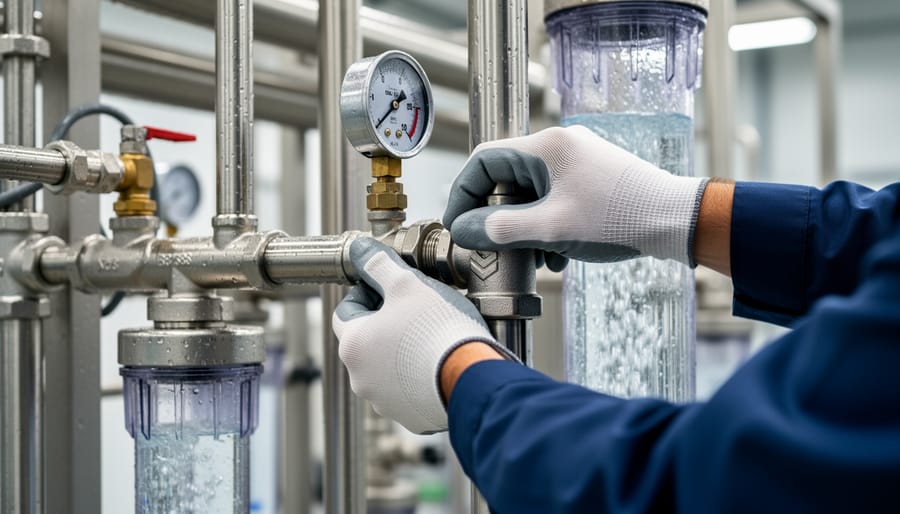
Getting your hydro-flow system up and running isn’t as intimidating as it might seem. Most pond owners successfully set up filtration system components themselves with basic tools and a Saturday afternoon.
Installation Essentials
Start by positioning your filter unit close to the pond but above water level to prevent backflow. You’ll want level ground or a sturdy platform that can support the weight of water-filled filter chambers. Plan your plumbing route before cutting pipes, measure twice, cut once really applies here. Keep runs as short and straight as possible to maintain good flow, and use flexible hose only where absolutely necessary since it creates more resistance than rigid pipe.
The pump placement matters more than you might think. Submerge it at the opposite end from where filtered water returns, creating a natural circulation pattern that prevents dead zones. Position it off the pond bottom (a brick or concrete block works perfectly) to avoid sucking up settled debris constantly.
Weekly and Monthly Tasks
Check your pre-filter or strainer basket every few days during peak debris seasons like spring and autumn. A clogged intake basket can reduce flow by half and strain your pump. Rinse mechanical filter media weekly when you notice flow decreasing, usually every seven to ten days depending on your fish load and plant debris.
Clean biological media far less often, perhaps monthly, and only rinse it gently in pond water you’ve removed during water changes. Tap water kills beneficial bacteria, which defeats the purpose.
Seasonal Adjustments
As temperatures drop in autumn, reduce flow rates gradually. Cold water holds more oxygen naturally, so you don’t need the same circulation intensity. Some pond owners run systems at half-speed through winter or switch to a simple pond heater and aeration setup in freezing climates.
Spring means ramping back up as fish become active and plants start growing. This is also prime time for a thorough filter cleaning before the busy season begins.
Most maintenance takes fifteen minutes weekly once you’ve established a routine. The hands-off periods between tasks are when you’ll appreciate how well these systems work.
Common Questions About Hydro-Flow Filtration
When you start researching hydro-flow filtration, certain questions pop up again and again in pond forums and at garden centers. Let’s tackle the ones that matter most to pond owners making real decisions about their water quality setup.
How much does it cost to run a hydro-flow system?
Most residential hydro-flow pumps use between 50-150 watts, costing roughly $5-15 per month to operate continuously. Energy-efficient models with variable speed settings can reduce costs further during low-demand periods.
Are these systems noisy?
Quality hydro-flow systems run nearly silent when properly installed, with the pump submerged and tubing secured. Any humming or vibration usually indicates an installation issue rather than a system flaw.
Can I use my hydro-flow system through winter?
In mild climates, yes, continuous operation actually prevents ice formation and maintains beneficial bacteria. In freezing regions, you’ll need to winterize the system or switch to a de-icer to prevent pump damage.
Will this work with my existing pond setup?
Most hydro-flow systems retrofit easily to established ponds, though you may need to add plumbing or adjust pump placement. The key is matching flow rate to your pond volume and checking that existing filtration can handle continuous circulation.
How long does filter media last?
Mechanical media like foam pads need cleaning every 2-4 weeks and replacement every 6-12 months. Biological media can last years once colonized, requiring only periodic rinsing in pond water to remove debris without killing bacteria.
What if my flow rate suddenly drops?
Low flow usually means clogged intake screens, dirty mechanical filters, or kinked tubing. Check and clean the intake first, then work through the system, most flow issues resolve with basic maintenance rather than equipment replacement.
Beyond these common queries, many pond owners wonder about compatibility with UV clarifiers, protein skimmers, and other add-ons. The good news is that hydro-flow systems integrate well with most supplementary equipment, often improving their effectiveness by ensuring consistent water delivery. You’re not locked into a single approach.
Another concern that surfaces frequently is whether these systems work for both koi ponds and natural wildlife ponds. They absolutely do, though you’ll adjust flow patterns and filtration intensity based on your goals. Koi keepers typically want maximum filtration and higher turnover rates, while wildlife pond enthusiasts might dial back the flow to preserve quiet zones where frogs and dragonflies thrive. The flexibility matters more than any single “correct” configuration.
Choosing the right filtration system transforms your pond from a maintenance headache into a source of genuine joy. Hydro-flow filtration systems deliver clearer water, healthier fish, and thriving aquatic plants while reducing the time you spend scrubbing filters and wrestling with algae blooms. The continuous circulation keeps oxygen levels steady, beneficial bacteria populations strong, and water conditions stable through seasonal changes.
What makes hydro-flow technology particularly appealing for pond enthusiasts is how it works quietly in the background. Once you’ve dialed in the proper flow rate and established your maintenance routine, these systems handle the heavy lifting of water quality management. You get to focus on the parts of pond keeping that sparked your interest in the first place: watching koi glide through crystal-clear water, enjoying the sound of gentle circulation, and creating that peaceful outdoor retreat you envisioned.
Take some time to assess your pond’s specific needs, your comfort level with DIY installation, and your long-term water gardening goals. Whether you opt for a standalone hydro-flow system or integrate it into a hybrid setup, you’re investing in technology that genuinely makes pond ownership more rewarding and less demanding.