
How to Create 5 Senses Art and Craft Activities for Your Pond (With Fragrance and Sensory Design)
Five senses art and craft activities turn your pond into a hands-on gallery where you and your children can create projects that touch, sound, smell, look, and even taste like water gardening. These activities take 30 minutes to two hours each, require common household materials alongside natural pond elements, and work beautifully for kids aged four and up or adults seeking a deeper creative connection to their water feature.
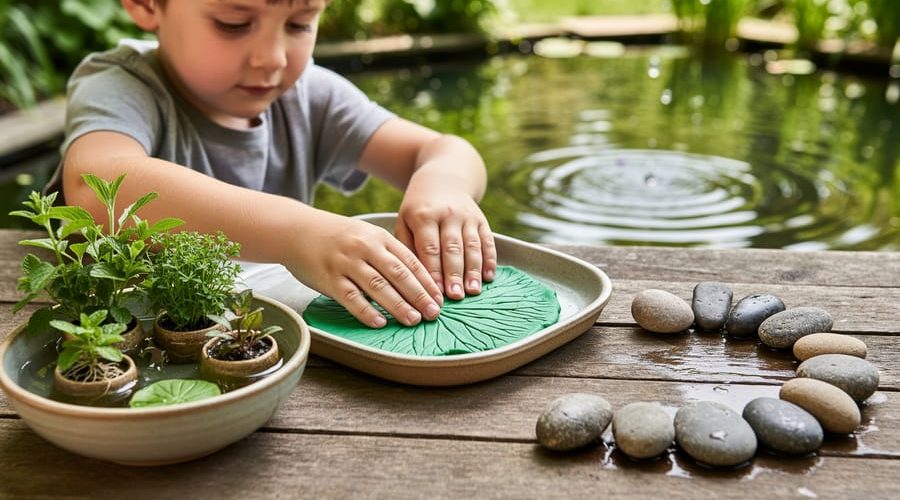
The idea here is simple but transformative. Instead of just observing your pond, you actively engage with its textures, scents, reflections, and rhythms to make art that celebrates each sense individually. A child who molds clay impressions of lily pad veins learns through touch. An adult arranging fragrant herbs in floating planters discovers olfactory design. Both experiences anchor memory and appreciation in ways passive observation never could.
I started experimenting with sensory pond crafts after watching my niece spend an entire afternoon fascinated by the sound of water trickling over stones. She wanted to “keep the sound,” so we built a miniature water chime together using smooth pebbles and an old wind chime frame. That project opened my eyes to how much richer pond time becomes when we purposefully activate each sense.
What follows are five complete activities, one per sense, that bridge art and water gardening. You’ll find step-by-step instructions, material lists, safety reminders, and troubleshooting tips for each project. Whether you’re teaching children about ecosystems or rediscovering your own pond through creative play, these crafts deliver immediate, satisfying results that deepen your relationship with the living landscape outside your door.
Why Multi-Sensory Pond Activities Matter
When you engage all five senses with your pond, you transform it from something you simply maintain into an experience that pulls you and your family outdoors. Children naturally learn through sensory exploration, touching smooth pebbles, listening to burbling water, watching dragonflies, and these moments become the foundation for understanding ecosystems, seasonal changes, and patience. Adults benefit too: focusing on the subtle scent of water mint or the texture of weathered driftwood pulls you into the present moment, turning routine pond checks into mini meditation sessions.
This shift in perspective is changing how artisanal pond creators approach their work. Rather than designing solely for visual impact, thoughtful pond builders now consider how light filters through water at different times (sight), how specific plants release fragrance when brushed against (smell), and how various water features create distinct soundscapes. When you intentionally design sensory experiences into your pond space, even weekly maintenance becomes something you look forward to rather than check off a list.
Tools and Materials You’ll Need
You won’t need an elaborate craft studio to bring these sensory activities to life, most materials are already around your pond or available at garden centers and craft stores. Organizing your supplies by sense makes it easier to dive into whichever activity catches your interest first.
- Sight materials: Sketchbook or journal, colored pencils or watercolors, camera or smartphone, small containers for collecting water samples to observe color changes, magnifying glass for close-up details
- Sound materials: Audio recorder or smartphone, bamboo poles or driftwood for DIY chimes, string or fishing line, metal objects like old keys or shells for making a water symphony notepad for mapping sound locations
- Touch materials: Collection bags or boxes, cardboard for texture boards, glue or double-sided tape, white paper for bark rubbings, crayons, safety gloves for handling rough or unknown materials
- Taste materials: Edible pond plants like watercress or water mint, small pots for planting, recipe cards or index cards, field guide for plant identification, clean harvesting scissors
- Smell materials: Fragrant marginal plants such as sweet flag, flowering rush, water mint, or dwarf lotus, small pressing book or heavy books with parchment paper, fabric sachets, ribbon for bookmarks, calendar or journal for tracking bloom times
Keep a dedicated sensory activities bin near your pond so everything stays organized and ready when inspiration strikes. Most fragrant plants are available at specialty water garden nurseries, while craft supplies come from standard stores. If you’re working with children, add a small first-aid kit and extra hand wipes to your collection, pond exploration can get messy, and that’s part of the fun.
Safety Considerations for Pond Sensory Activities
Before you and your family dive into sensory pond activities, take a few minutes to set up safe practices, these simple precautions let everyone enjoy the experience worry-free.
Supervision and Water Safety
Water is the heart of every sensory activity, but it demands constant vigilance. Never leave children unattended near your pond, even if they’re just observing from the edge. Shallow water can be deceptive, and a child leaning over to touch a flower or collect a stone can lose balance in seconds. If you plan evening activities, add strategic lighting around pond edges so everyone can see where the water starts.
Plant Identification and Toxicity
Not every plant growing around your pond is safe to handle or eat. Identify unknown plants before allowing children to touch them, and avoid tasting anything unless you’re 100% certain it’s edible. Some common pond plants cause skin irritation or are toxic if ingested. Keep a field guide handy, photograph plants you’re unsure about, and consult your local extension office if you need confirmation.
Handling Pond Water and Wildlife
Teach children to wash hands after touching pond water or materials, especially before eating. Pond water harbors bacteria that won’t harm fish but can upset human stomachs. If you’re collecting stones or leaves, wear gloves to protect cuts and scrapes. Observe wildlife from a respectful distance, frogs, dragonflies, and fish are part of the sensory experience, but handling them stresses the animals and can introduce harmful oils from human skin into the pond.
Sun and Material Safety
Outdoor activities mean sun exposure, so apply sunscreen, wear hats, and take breaks in shade. Check that craft materials, paints, adhesives, sealants, are non-toxic and won’t leach into the pond if they blow into the water. Skip anything with harsh chemicals or strong artificial fragrances that could harm fish or throw off water quality.
Activity 1: Sight, Creating a Pond Color Observation Journal
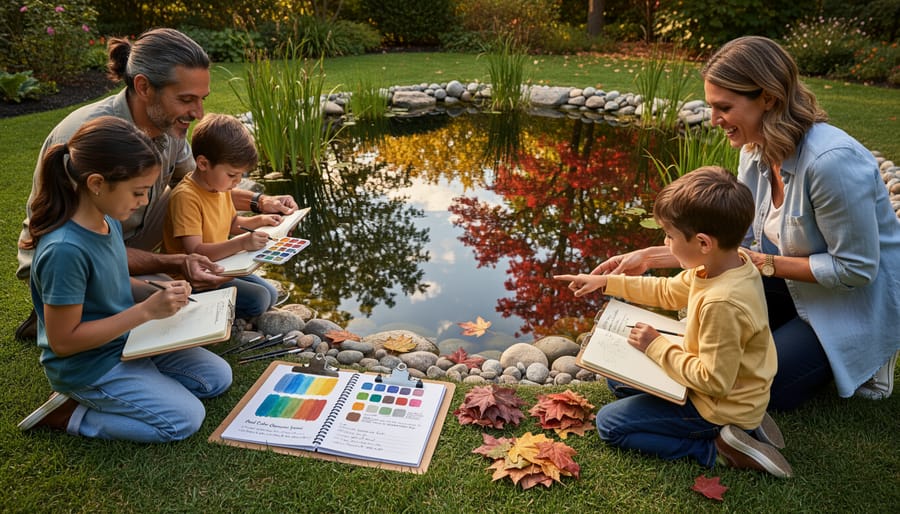
Start by choosing your journal format, a watercolor sketchbook if you enjoy painting, a blank notebook for mixed media, or even a photo album with space for notes. The beauty of a pond color observation journal is that it grows with your skills and can be as simple or elaborate as you like.
Your pond offers a constantly shifting palette that most people rush past without noticing. Early morning might reveal silvery blues and soft greens, while late afternoon could bring amber reflections and deep bronze shadows. By documenting these changes, you’ll train yourself to see what was always there.
- Pick a consistent viewing spot near your pond where you can sit comfortably and safely. Mark this location so you return to the same vantage point for accurate comparisons over time.
- Observe your pond at the same time each day for a week, noting dominant colors. Use your phone or camera to capture what you see, then write down three to five color names beside each image.
- Create simple color swatches in your journal using watercolors, colored pencils, or even printed color samples. Match them as closely as possible to your pond’s actual hues, the green of the algae, the blue of the sky reflection, the brown of submerged logs.
- Sketch the major shapes and reflections you see, even if you think you can’t draw. Basic outlines of lily pads, ripples, or the shoreline help you notice patterns you’d otherwise miss.
- Add seasonal pages every few months, documenting how your color palette shifts from spring greens to summer blues to autumn golds. Write brief notes about what changed and why.
- Experiment with layering techniques, paste in dried leaves, add watercolor washes over photographs, or create collages combining sketches with actual pond materials like pressed flowers.
As you develop this visual record, you might notice connections to other sensory experiences, like how certain colors coincide with specific sounds in your pond soundscape or how murky water after rain changes both appearance and smell.
Dedicate the final pages of each seasonal section to a summary color palette, a single page showing your pond’s signature colors for that period. This becomes a powerful visual timeline, showing how your water garden transforms throughout the year and helping you spot long-term trends in water clarity, plant growth, or algae presence.
Activity 2: Sound, Crafting a Pond Soundscape Map
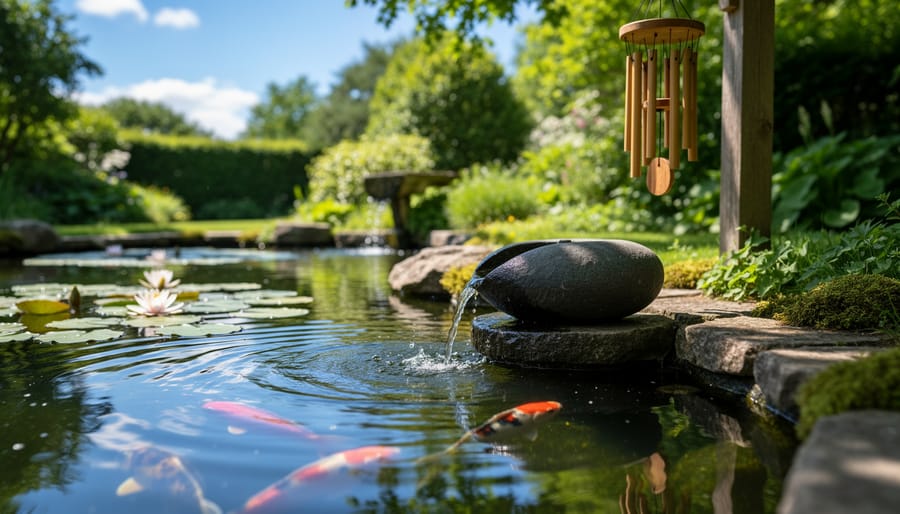
Your pond creates its own unique symphony, from the gentle trickle of water features to the chorus of frogs at dusk. Capturing these sounds through a soundscape map turns listening into an interactive art project that deepens your connection to your water garden.
Start by spending 15-20 minutes sitting quietly near your pond at different times of day. Close your eyes and notice every sound, the splash of a fish jumping, leaves rustling in the breeze, the hum of your pump, birds calling from nearby trees, even the subtle gurgle of water moving over rocks. Jot down each sound you hear and roughly where it comes from.
- Sketch a simple overhead map of your pond and surrounding area on poster board or large paper, marking major features like waterfalls, plants, rocks, and seating areas.
- Use different colored markers or symbols to plot where each sound originates on your map, blue dots for water sounds, green for plant-related noises, orange for wildlife, purple for added features like wind chimes.
- Create a legend explaining your color system and add descriptive words beside each sound marker (bubbling, chirping, tinkling, splashing).
- Enhance quiet spots by adding simple sound elements: hang bamboo wind chimes near your pond’s edge, arrange hollow reeds vertically to catch the breeze, or adjust your waterfall to create a different flow pattern.
- Record a short audio tour using your phone, narrating what you hear at different locations around your pond, creating a soundscape story you can replay in winter.
Update your map seasonally as sounds shift, spring peepers replace winter silence, summer brings buzzing insects, autumn adds the crunch of fallen leaves. This becomes a living document of your pond’s acoustic personality.
Kids love decorating their maps with drawings of the creatures making sounds, and you can laminate finished maps to use as teaching tools. The recording aspect lets you capture fleeting moments, like that one magical evening when three bullfrogs sang in harmony, preserving memories you can revisit anytime.
Activity 3: Touch, Building a Pond Texture Collection
Texture is one of the most immediate and grounding senses, and your pond offers an incredible variety of surfaces to explore. From the cool smoothness of river stones worn by water to the rough, craggy bark of surrounding trees, these tactile experiences connect you physically to your pond ecosystem. This activity transforms your pond’s natural textures into a collection you can touch, compare, and enjoy year-round, making it perfect for children who learn through hands-on exploration and adults who want to appreciate the craftsmanship elements that expert aquascaping brings to water gardens.
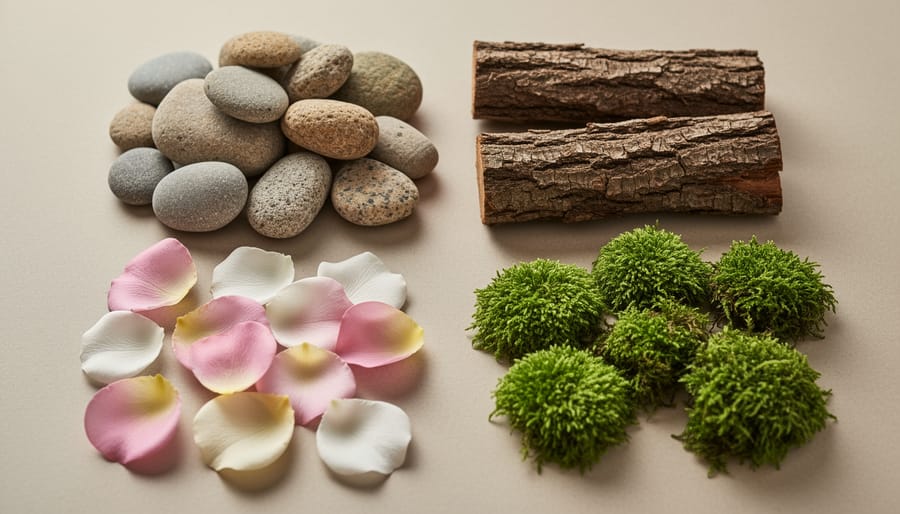
- Walk your pond perimeter and identify safe-to-collect textures: smooth pebbles from the waterline, shed tree bark (never strip from living trees), fallen leaves in various stages of drying, soft moss from shaded areas, silky flower petals, fuzzy seed heads, and rough dried grasses.
- Gently collect one or two examples of each texture, ensuring you’re not disturbing wildlife habitats or removing living plants. Use gloves if handling unfamiliar materials, and rinse items in clean water to remove dirt or insects.
- Create bark rubbings by placing paper over interesting bark patterns and rubbing with the side of a crayon. These capture texture in two dimensions and make beautiful framed art.
- Press leaves between heavy books lined with parchment paper, changing the paper every few days until leaves are completely dry (about two weeks). Pressed leaves preserve texture while preventing decay.
- Arrange your dried materials on a sturdy board or in a shallow wooden box, gluing items in sections labeled by texture type: “Smooth,” “Rough,” “Soft,” “Bumpy,” “Silky.” Leave space between items so fingers can explore each one individually.
- For children, create a tactile memory game by gluing matching textures to pairs of cardboard squares. Turn them face-down and play by finding pairs through touch alone, building sensory awareness and pond vocabulary simultaneously.
Store your texture collection in a dry place away from direct sunlight to prevent fading and deterioration. Refresh seasonal items as new textures become available throughout the year, turning your collection into a living record of your pond’s tactile landscape.
Activity 4: Taste, Growing an Edible Pond Garden
Growing an edible pond garden connects you to your water feature in the most intimate way, through taste, while adding functional beauty to your artistic pond design. This activity requires careful plant selection and identification but rewards you with fresh, pond-grown herbs and greens.
Start by selecting truly edible pond-margin plants. Watercress thrives in shallow, moving water and offers a peppery bite perfect for salads. Water mint grows vigorously along pond edges and makes excellent tea. Water celery (not to be confused with toxic water hemlock) provides crisp stems and leaves. Bog beans, water chestnuts, and certain varieties of arrowhead also produce edible parts. Purchase plants from reputable nurseries with proper labeling rather than transplanting from the wild, where misidentification can be dangerous.
Create your edible garden by following these steps:
- Dedicate a specific area of your pond margin for edibles, separate from ornamental plants, and label it clearly with waterproof markers.
- Plant your chosen edibles in containers or designated shallow zones where you can easily harvest without disturbing fish or filtration systems.
- Create laminated identification cards for each plant showing the edible parts, look-alikes to avoid, and harvest times, attaching them to stakes near each plant.
- Photograph your plants at different growth stages and compile these images into a safety guide showing what’s ready to harvest.
- Design illustrated recipe cards featuring your pond-grown ingredients, including simple preparations like watercress soup or mint-infused water.
- Document the garden-to-table journey with photos from planting through harvest to final dish, creating a visual story of your edible pond ecosystem.
Never consume plants you can’t positively identify, and avoid harvesting from ponds treated with chemicals or medications. Rinse all pond-grown edibles thoroughly under running water before use. Keep a dedicated harvest basket and cutting tools for your edible garden to prevent cross-contamination.
This activity teaches children about responsible foraging, plant identification, and where food comes from while creating practical value from your pond space.
Activity 5: Smell, Designing a Fragrant Pond Garden (Olfactory Design)
Scent is the most evocative sense, capable of triggering vivid memories and altering your mood as you approach your pond. Designing a fragrant garden isn’t about randomly adding flowers, it’s about layering blooms across seasons, positioning plants where breezes carry their perfume, and creating olfactory moments that make your water garden memorable. Artisanal pond designers increasingly treat fragrance as a core design element, not an afterthought, transforming simple water features into immersive sensory experiences.
Start by selecting marginal plants that contribute distinct fragrances. Sweet flag releases a spicy, cinnamon-like scent when its leaves are crushed. Water mint offers refreshing menthol notes that intensify in warm sun. Lotus blooms deliver rich, sweet perfume during summer mornings, while hardy water lilies provide subtle vanilla undertones. Flowering rush produces delicate honey scents in midsummer. Each plant has its own fragrance profile and blooming window, which means you can orchestrate a scent progression throughout the growing season.
- Map your pond’s wind patterns by observing which direction breezes typically blow across your water at different times of day, then position fragrant plants upwind of seating areas or pathways.
- Plant in clusters rather than scattering single specimens, three to five water mint plants together will create noticeable fragrance waves, while a lone plant might go undetected.
- Create a scent calendar by recording when each plant blooms and how strong its fragrance is, noting morning versus evening differences and how heat affects intensity.
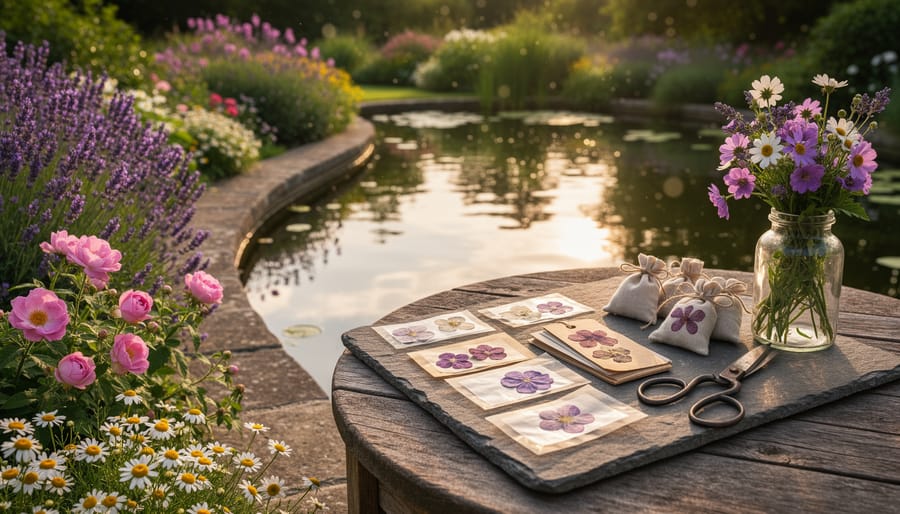
- Press fragrant flowers between heavy books lined with parchment paper, changing the paper every few days until petals are completely dry, then seal them in small fabric sachets or laminate them as scented bookmarks.
- Sketch a fragrance wheel dividing your pond into sections and labeling what grows where, using different colors for spring, summer, and fall bloomers so you can visualize your scent landscape at a glance.
The craft dimension comes when you preserve these scents. Gather lotus petals after blooming and layer them with sea salt in glass jars to make potpourri. Harvest water mint at peak fragrance, bundle stems, and hang them upside down to dry for winter sachets. Photograph each fragrant plant at its bloom peak and create a photographic scent journal, pairing images with written descriptions of how each flower smells at different stages.
Intentional fragrance design transforms your pond from a visual centerpiece into a multi-dimensional space. When you walk outside and catch the first drift of flowering rush on a June breeze, or crush sweet flag leaves while weeding and release that warm spice, you’re experiencing your pond as a living work of art that engages memory, emotion, and presence in ways sight alone never could.
Bringing It All Together: A Multi-Sensory Pond Experience Book
Now that you’ve explored each sense individually, it’s time to create something lasting, a multi-sensory pond experience book that captures your water garden’s complete sensory story. This handmade journal becomes both a creative project and a treasured record of your pond’s character throughout the seasons.
Start with a sturdy blank journal or sketchbook, at least 50 pages, with thick paper that can handle glued elements and pressed flowers. Divide the book into five main sections, one for each sense, using tabs or decorative dividers you’ve crafted from watercolor paper. Add a seasonal observation section at the end where you can track changes throughout the year.
Your book might include:
- Pressed flowers and leaves from fragrant plants in your smell section
- Sketches and color swatches from your observation journal in the sight section
- Written descriptions of sounds with small decorative wind chime elements glued in
- Texture samples mounted on pages with labels describing each material’s feel
- Pressed herbs, recipe cards, and photos from your edible garden in the taste section
- Personal reflections and family stories about memorable pond moments
- Seasonal comparison pages showing how each sense changes through the year
Preserve your materials properly before adding them to the book. Press flowers and leaves between heavy books for two weeks, completely dry any pond stones or bark pieces, and laminate photos if you’re worried about moisture. Use acid-free glue or photo corners to attach elements so they won’t yellow over time.
Consider binding loose pages together with ribbon threaded through punched holes, or use a three-ring binder system that lets you add pages as your pond evolves. Store the finished book in a cool, dry place, and bring it out when you want to relive those sensory memories or share your pond’s story with visitors.
Verification: How to Know Your Activities Are Working
You’ll know your sensory activities are working when your pond becomes a destination rather than just scenery. Watch for family members lingering by the water instead of passing through, children arriving with questions about frog eggs or which plant smells like peppermint, and your own calendar filling with notes about blossom timing or first frost observations. Successful edible gardens yield enough watercress or mint for a meal, while your fragrance wheel accurately predicts when sweet flag will perfume the air.
The clearest sign is emotional: you feel a pull toward your pond during quiet moments, noticing details you once overlooked. If an activity feels forced or produces eye-rolls, scale back, switch texture collecting to a five-minute scavenger hunt for small ponds, or simplify the sensory journal to monthly snapshots instead of daily entries. The goal is sustained curiosity, not exhaustive documentation. When someone spontaneously mentions a pond observation at dinner or asks to plant more fragrant flowers next spring, your activities have taken root.
Common Questions About Pond Sensory Activities
Are these activities safe for young children?
Yes, with proper supervision. Always stay within arm’s reach of children near water, teach them never to taste any plant without adult permission, and choose age-appropriate tasks like collecting textures or sketching rather than handling pond water directly for very young kids.
What if my pond is small?
Small ponds work perfectly for sensory activities. You’ll just scale down, one fragrant plant instead of five, a compact texture collection, or a mini soundscape focused on a single water feature. The sensory experience is about noticing, not pond size.
How much time do these activities take?
Each activity can be done in 20-30 minutes, or stretched into longer projects over weeks. The color journal might be an ongoing seasonal record, while making wind chimes could be a single afternoon. You control the pace.
Can I do these in winter?
Absolutely. Winter offers unique sensory observations, ice patterns for sight, frozen textures, the silence of a dormant pond, or the scent of evergreen marginals. Adapt activities to document seasonal changes rather than growth.
What if I don’t consider myself crafty?
These activities require curiosity, not artistic skill. Simple documentation, taking photos, jotting notes, pressing a leaf, counts as a sensory craft. There’s no wrong way to notice and record what your pond offers.
Which plants are best for fragrance?
Water mint and sweet flag offer strong, pleasant scents and thrive in shallow margins. Lotus blossoms provide subtle sweetness, while flowering rush adds a honey-like fragrance. Choose based on your climate zone and pond depth.
How do I store collected materials?
Press leaves and flowers between heavy books with parchment paper, store stones and bark in labeled boxes or jars, and keep texture samples in a shallow tray or binder with plastic sleeves. Make sure everything is fully dried before storing to prevent mold.
Beyond these common questions, remember that your pond’s unique character will shape which activities resonate most. Some families gravitate toward the hands-on texture collecting, while others prefer quiet observation and sketching. You might discover that fragrance becomes your signature focus, leading you to research regional aquatic plants with interesting scents, or that sound activities spark an interest in attracting specific wildlife. Trust what draws you in. The goal is engagement, not completion of every activity exactly as described. If winter proves more inspiring than summer for your color journal, lean into that. If your toddler wants to spend three weeks just collecting smooth stones, that single tactile focus is a win. These activities exist to deepen your relationship with your pond, and that happens through attention and repetition, not perfection.
You don’t need to tackle all five senses at once. Start with whichever activity speaks to you most, maybe a simple texture collection this weekend or planting a few fragrant irises next month. These projects aren’t about perfection. They’re about slowing down, noticing what’s already happening in your pond, and inviting others to experience it with you.
What surprised me most when I started doing sensory activities around my own pond was how much I’d been missing. I’d walk past the same water garden every day, but until I sat down to really listen, or pressed my nose into a sweet flag bloom, I hadn’t truly experienced it. These crafts turn casual observation into genuine connection, and they create memories that stick, especially for kids who get to touch, smell, and taste things they helped grow.
Fragrance, in particular, transforms a pond from something you look at into something you feel surrounded by. It’s the dimension most pond owners overlook, yet it’s one of the most powerful.
Whatever activity you choose first, take a photo or jot down what you notice. I’d love to hear how your pond surprises you when you engage all your senses. Your water garden has stories to tell, these activities just help you listen.