
Your Pond is Already Fighting Climate Change (Here’s How Carbon Sequestration Works)
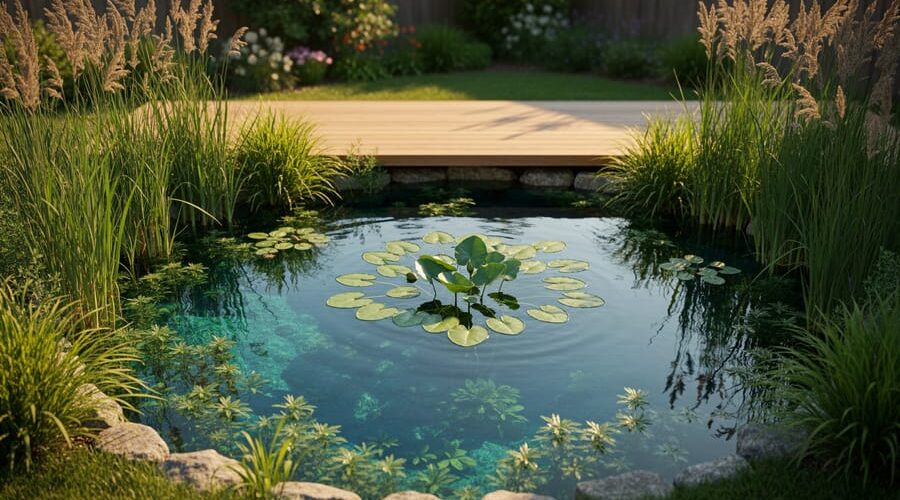
Your backyard pond is quietly pulling carbon dioxide from the atmosphere and storing it in plant matter, sediment, and algae right now. This natural process, called carbon sequestration, absolutely qualifies as an ecosystem service, and understanding it changes how you manage your water feature.
Ecosystem services are the benefits nature provides that support life and human wellbeing. Scientists categorize them into four types: provisioning services like food and water, regulating services like climate control, supporting services like nutrient cycling, and cultural services like recreation. Carbon sequestration falls squarely into the regulating category because it helps control atmospheric carbon levels, making it a legitimate and measurable ecosystem service your pond provides.
Here’s what makes this exciting for pond owners: you’re not just creating a beautiful outdoor space. Every time your water lilies photosynthesize, every bit of organic matter that settles into your pond bottom, and every strand of submerged vegetation growing beneath the surface contributes to carbon storage. Your pond becomes a small but meaningful carbon sink, joining wetlands, forests, and oceans in this global climate-regulating function.
The question isn’t whether carbon sequestration counts as an ecosystem service. It does, officially recognized by environmental scientists worldwide. The real question is how you can maximize this benefit while maintaining the healthy, thriving pond you want. The answer lies in strategic plant selection, proper sediment management, and understanding the delicate balance between productivity and maintenance in your unique aquatic ecosystem.
What Ecosystem Services Really Mean (In Plain English)
Think of nature as your most generous neighbor—the one who’s constantly doing favors for you without ever sending a bill. That’s essentially what ecosystem services are: the free benefits we receive from the natural world every single day.
Let me paint you a picture. Every time you take a breath of fresh air, you’re enjoying an ecosystem service. Trees and plants work tirelessly as natural air purifiers, filtering out pollutants and pumping out oxygen. When rainwater soaks through soil and emerges crystal clear in a stream, that’s nature’s water filtration system at work—another ecosystem service saving you from drinking contaminated water.
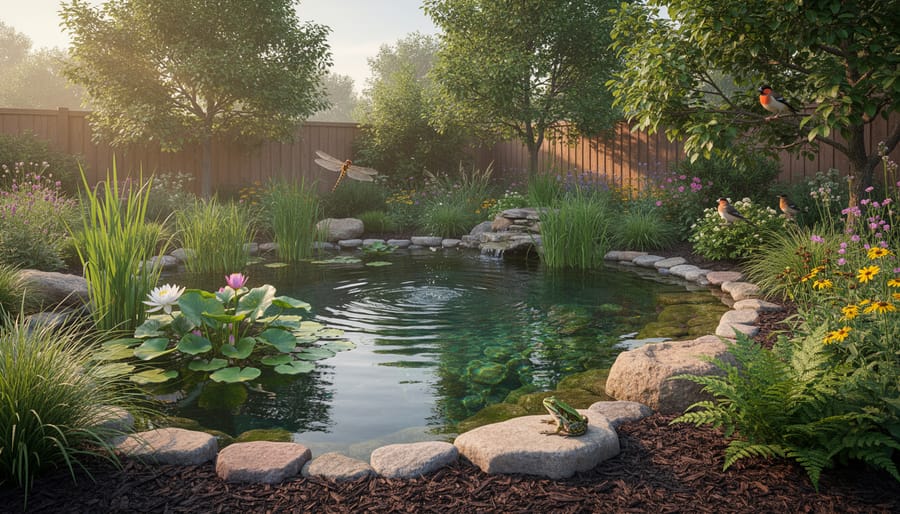
Your backyard pond is actually a tiny powerhouse of these services. It provides habitat for frogs and dragonflies (supporting biodiversity), helps cool the surrounding area on hot days (temperature regulation), and creates a peaceful spot for you to unwind (recreational and mental health benefits). Pretty amazing for something that started as a hole in your yard, right?
Now here’s where carbon sequestration enters the chat. Just like air purification and water filtration, carbon sequestration is nature doing heavy lifting for free. When your pond plants grow, they’re pulling carbon dioxide from the atmosphere and storing it in their leaves, stems, and roots. That’s carbon sequestration in action.
But why does it matter whether we officially call this an ecosystem service? For pond owners like you, understanding this classification changes everything. It means your pond isn’t just decorative—it’s performing genuine environmental work. This knowledge influences how you manage your pond, what plants you choose, and how you maintain the ecosystem. When you realize your water garden is actively fighting climate change, you’ll approach pond care with fresh purpose and appreciation for every lily pad and strand of underwater vegetation.
How Your Pond Captures and Stores Carbon
The Plant Powerhouses
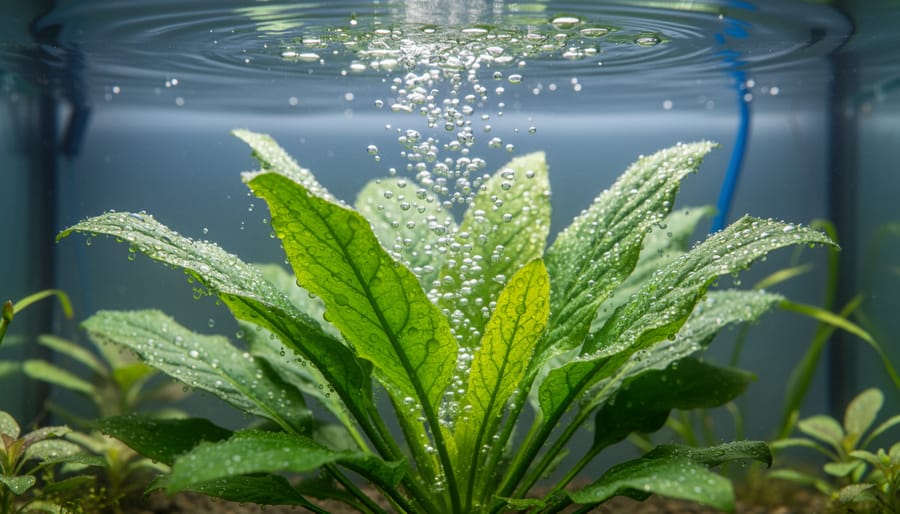
Your pond plants are working overtime as natural carbon-absorbing machines! During photosynthesis, aquatic plants pull carbon dioxide directly from the water and air, converting it into oxygen and plant tissue. But here’s where it gets really exciting—unlike terrestrial plants that eventually drop leaves that decompose quickly, many aquatic plants store carbon in their dense root systems and underwater tissues for extended periods. This means your water garden isn’t just pretty; it’s actively pulling carbon from the atmosphere and locking it away.
Some plants are absolute champions at this carbon-storing work. Submerged plants like hornwort and anacharis are fantastic performers, growing rapidly while their entire structure remains underwater, maximizing their carbon capture potential. Water lilies combine surface leaves with extensive rhizome systems that store carbon deep in pond sediment. Hardy varieties like cattails and rushes develop massive underground root networks that can sequester carbon for years.
Floating plants like water lettuce and duckweed might seem delicate, but they multiply incredibly fast, creating substantial biomass that absorbs significant amounts of CO2. Even marginal plants like iris and pickerel rush contribute through their robust root systems that penetrate deep into pond substrate.
The best approach? Create a diverse plant community with representatives from each category. This layered strategy maximizes your pond’s carbon sequestration while creating a thriving, balanced ecosystem that supports wildlife and looks beautiful year-round.
The Bottom Layer Story
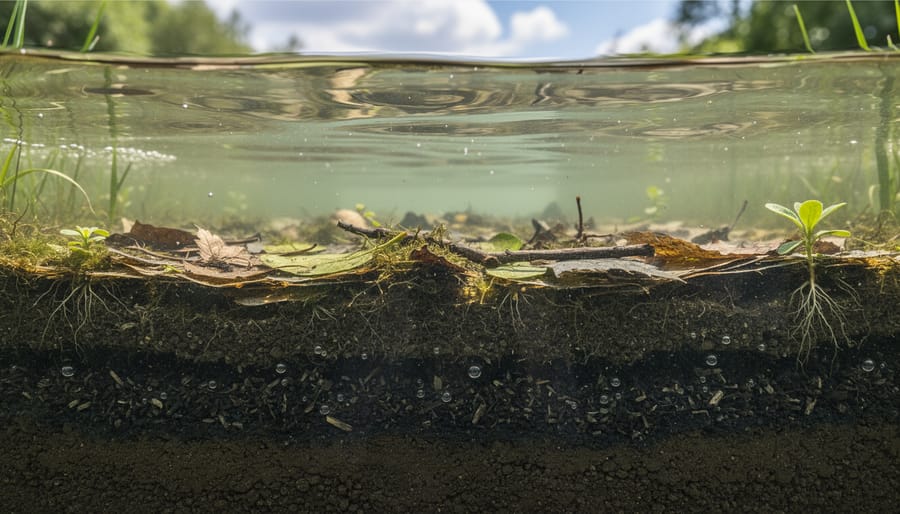
Here’s where things get really fascinating! When leaves, dead algae, and other organic matter drift to your pond bottom, they don’t just disappear. Instead, they settle into the sediment layer, beginning a remarkable transformation that locks carbon away for years or even decades.
Think of your pond bottom as a natural filing cabinet for carbon. As organic material accumulates, it gets buried under newer layers of sediment. The deeper it goes, the less oxygen is available, which dramatically slows down decomposition. This is actually a good thing for carbon storage!
Beneficial bacteria play the starring role here. These tiny workers break down organic matter, but in low-oxygen conditions, they work much more slowly than their surface-dwelling cousins. This sluggish decomposition means carbon stays trapped in the sediment rather than being released back into the atmosphere as carbon dioxide.
The magic happens because your pond creates what scientists call “anoxic conditions” at the bottom. Without much oxygen, complete decomposition becomes nearly impossible. Instead of breaking down completely within months, that fallen leaf might take years to fully decompose, keeping its carbon locked away the entire time. Some pond sediments preserve organic carbon for centuries, making your backyard water feature a surprisingly effective long-term carbon vault!
The Algae Advantage
Here’s something I’ve learned from managing my own pond: algae can be your secret carbon-capturing ally when you keep it in check. Those green strands you sometimes see aren’t just pond decorations—they’re actually photosynthesis powerhouses that pull carbon dioxide from the atmosphere remarkably efficiently.
The trick is finding the sweet spot. Too little algae, and you’re missing out on natural carbon sequestration. Too much, and you’ve got that pea-soup situation nobody wants. I like to think of controlled algae growth as having just enough houseplants in your living room—beneficial without taking over.
In my experience, maintaining moderate algae levels through proper filtration and occasional skimming gives you the best of both worlds. You get continuous carbon capture without the overgrowth that blocks sunlight for other pond plants or depletes oxygen levels. It’s like having a hardworking garden helper who just needs a little supervision to stay productive.
Yes, Carbon Sequestration IS an Ecosystem Service
Let me give you the straightforward answer: Yes, carbon sequestration absolutely is an ecosystem service. And I’m excited to explain why this matters for your pond.
Think of ecosystem services as nature’s gifts to us. They’re the beneficial things that happen naturally in our environment that make our lives better. Your pond, that beautiful water feature you’ve worked so hard on, is providing one of these gifts every single day.
Carbon sequestration ticks every box that defines an ecosystem service. First, it’s a natural process. The plants in and around your pond, from those water lilies floating on the surface to the submerged vegetation you might not even see, are naturally pulling carbon dioxide from the air. Second, it provides a clear benefit to society. By capturing and storing carbon, your pond helps combat climate change on a small but meaningful scale. Third, it supports overall environmental health by regulating atmospheric conditions.
Here’s what makes this concept so practical for pond enthusiasts like us: when we build and maintain our ponds thoughtfully, we’re not just creating beautiful spaces. We’re actively participating in the climate conversation. That’s pretty remarkable when you think about it.
I remember when I first learned about this connection in my own backyard pond. I’d always appreciated the aesthetic value and the joy of watching wildlife, but understanding that my pond was actually capturing carbon made me view it differently. It transformed from simply a hobby into something with genuine environmental significance.
The science behind this is actually quite simple. Aquatic plants photosynthesize just like terrestrial plants, absorbing carbon dioxide and releasing oxygen. But here’s the bonus: when organic matter settles into pond sediments, that carbon gets locked away for potentially very long periods. Your pond becomes a carbon bank account, storing atmospheric carbon that would otherwise contribute to warming.
This isn’t just academic theory. It’s a real, measurable benefit happening in your backyard right now. Understanding carbon sequestration as an ecosystem service helps us appreciate the full value our ponds provide beyond their beauty.
The Nutrient Connection: Why What You Feed Your Pond Matters
Too Little Nutrients: Stunted Growth
I learned this lesson the hard way when my first pond plants looked pale and spindly despite plenty of sunlight. Here’s the thing: just like you need good nutrition to thrive, your pond plants need essential nutrients to grow vigorously and sequester carbon effectively. When nutrients run too low, plant growth slows to a crawl, and so does your pond’s ability to capture carbon from the atmosphere.
Watch for these telltale signs of nutrient deficiency in your pond. Yellow or pale leaves on plants that should be deep green signal nitrogen shortage. Stunted growth where new leaves stay small or stems look thin indicates phosphorus deficiency. If your water lilies produce more leaves than flowers, or your submerged plants grow slowly despite good conditions, nutrients might be your problem.
The carbon connection is straightforward: plants build their tissues from carbon dioxide they pull from the air and water. Less plant growth means less carbon storage. A nutrient-starved pond might capture only a fraction of what a well-balanced system could achieve. The good news? Adding appropriate fertilizers to your pond plants or introducing nutrient-rich substrate can turn things around quickly, boosting both plant health and carbon sequestration.
Too Many Nutrients: The Algae Explosion
Here’s the thing about pond nutrients – you can definitely have too much of a good thing! When excess nitrogen and phosphorus enter your pond (maybe from fertilizer runoff or too much fish food), you might think all those nutrients would create more plants to sequester carbon. Instead, you get algae blooms that throw everything out of balance.
These explosive algae populations create a weird paradox. During the day, they photosynthesize like crazy, pulling in carbon dioxide. Sounds great, right? But here’s where it gets tricky. When these algae die off – which happens quickly – they sink to the bottom and decompose. This decomposition process actually releases the carbon back into the water and atmosphere, completely undoing that sequestration work. Even worse, the bacteria breaking down all that dead algae consume massive amounts of oxygen, sometimes creating “dead zones” where fish and beneficial plants can’t survive.
I’ve seen ponds go from crystal clear to pea soup green in just days when nutrient levels spike. Instead of being carbon-sequestering heroes, these algae-choked ponds become carbon-releasing problems that disrupt the entire ecosystem service you’re trying to maintain.
The Goldilocks Zone
So what’s the sweet spot for nutrients in your pond? Think of it like making the perfect cup of coffee—not too weak, not too strong, just right.
For most backyard ponds, you’re aiming for moderate nutrient levels that keep your plants thriving without feeding algae blooms. A good rule of thumb: if your pond plants look healthy and vibrant, but you’re not constantly battling green water or thick algae mats, you’re probably in the Goldilocks zone.
Here’s what this looks like in practice. Your aquatic plants should show steady growth during the growing season with nice green foliage. You might see some algae, which is totally normal and actually helpful in small amounts, but it shouldn’t dominate. Fish waste and decomposing plant matter naturally provide nutrients, so resist the urge to add fertilizers unless your plants genuinely need them.
I’ve found that letting nature do most of the heavy lifting works best. Instead of adding nutrients, focus on maintaining diverse plant communities and keeping your pond balanced. This creates optimal conditions for carbon storage while avoiding the nutrient overload that defeats the purpose.
Practical Ways to Boost Your Pond’s Carbon-Capturing Power
Choose the Right Plants
Ready to turn your pond into a carbon-capturing powerhouse? The secret is choosing plants that love to gobble up CO2. I’ve found that a mix of plant types creates the best results, plus it makes your pond look absolutely stunning.
For marginal plants along your pond edges, try cattails, pickerelweed, and arrowhead. These workhorses pump carbon into their roots and stems while filtering water beautifully. Plant them in shallow water, about 6 inches deep, and watch them thrive.
Floating plants like water lettuce and water hyacinth are carbon-eating machines. They grow quickly, which means they’re constantly pulling CO2 from the air. Just remember to thin them regularly so they don’t completely cover your pond’s surface and block sunlight.
Don’t forget submerged plants like hornwort and anacharis. These underwater champions sequester carbon while oxygenating your water. They’re incredibly low-maintenance and support beneficial bacteria that keep your pond ecosystem balanced.
The key to maximizing carbon uptake is maintaining good plant health across all three zones. Healthy, actively growing plants capture more carbon, so provide adequate nutrients and monitor their growth regularly.
Smart Fish Feeding Practices
Here’s a feeding secret I learned the hard way: overfeeding your fish doesn’t just waste money, it actually disrupts your pond’s carbon sequestration abilities. When excess food breaks down, it releases stored carbon back into the water and atmosphere, undoing all that wonderful ecosystem work.
Feed your fish only what they can consume in about five minutes, twice daily during warm months. As water temperatures drop below 50°F, reduce feeding frequency since fish metabolism slows down considerably. I like to observe my fish during feeding time – if food is still floating around after five minutes, I’ve given them too much.
Timing matters too. Feed during the warmest part of the day when fish are most active and digestive systems work efficiently. Early afternoon typically works best. During spring and fall transitions, switch to easily digestible wheat-germ-based foods that won’t burden your pond’s nutrient cycle.
Remember, a hungry fish is a healthy fish. Slight underfeeding actually supports better water quality and allows your pond plants and beneficial bacteria to maintain their carbon-capturing balance without competing against excess nutrients.
Manage Organic Matter Wisely
Finding the right balance with organic matter is like Goldilocks – not too much, not too little, but just right! I learned this the hard way when my pond turned into a mucky mess one fall because I let everything settle.
Here’s my practical approach: remove excess leaves and thick debris that would create anaerobic conditions and release carbon back into the atmosphere. But – and this is important – leave a thin layer of fine organic sediment on the bottom. This settled material is where carbon actually gets stored long-term.
Think of it this way: skim the surface regularly during fall, fish out big clumps of decaying plants, but don’t obsessively vacuum every speck from the bottom. That bottom layer is your carbon bank! I do a gentle cleanout in spring, removing about half the settled material while leaving the rest to continue storing carbon. This keeps your pond healthy while maximizing its role as a tiny carbon sink in your backyard ecosystem.
Test and Adjust Your Water
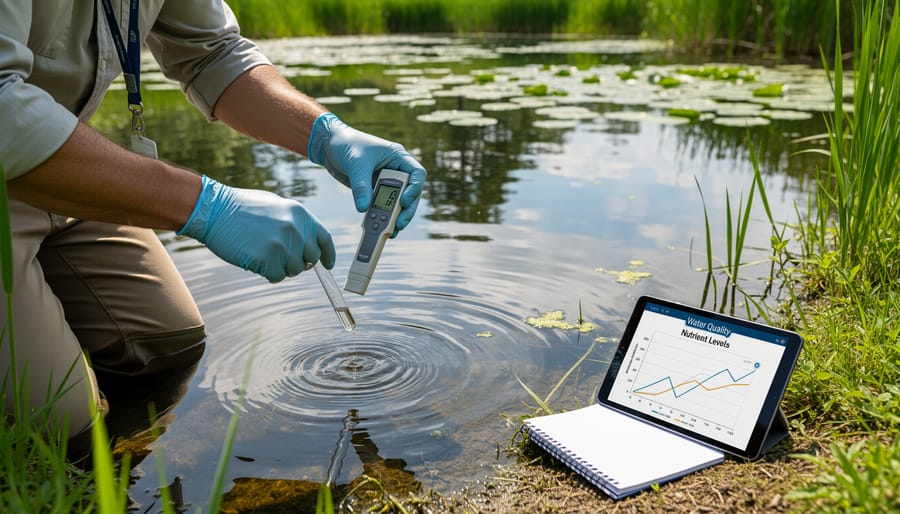
Regular water testing helps you understand how well your pond is performing as a carbon sink. I recommend checking your water every two to four weeks during the growing season. The key parameters to monitor are pH (aim for 6.5-8.5), dissolved oxygen (above 5 mg/L supports healthy plants), and nitrate levels (10-40 mg/L indicates good plant growth). You can grab affordable test strips from garden centers for quick checks. I keep a simple notebook by my pond to track these numbers over time, which helps me spot patterns. If your plants are thriving and water stays clear, you’re likely supporting good carbon sequestration. When levels drift, small adjustments like adding more oxygenating plants or reducing fish food usually bring things back into balance naturally.
So there you have it. Your backyard pond isn’t just a pretty feature where frogs croak and dragonflies dance. It’s quietly doing climate work, capturing carbon from the atmosphere and storing it in plants, algae, and sediment. That’s a genuine ecosystem service, and you’re the steward making it happen.
Every time you add aquatic plants, manage your pond’s health, or resist the urge to over-clean that beneficial muck at the bottom, you’re enhancing your pond’s ability to sequester carbon. Think of yourself not just as a pond owner, but as a backyard climate hero. It’s a small contribution, sure, but when thousands of ponds across neighborhoods are doing the same thing, it adds up to something meaningful.
The beauty is that optimizing for carbon sequestration usually means doing what’s already good for your pond: keeping those plants thriving, maintaining balanced water chemistry, and letting natural processes do their thing. You don’t need expensive equipment or complicated procedures. Just thoughtful, consistent care.
Take a moment today to really look at your pond. Appreciate that beneath the surface, microscopic algae are photosynthesizing, rooted plants are growing, and sediments are slowly accumulating organic matter. That’s carbon being pulled from the air and tucked away, right there in your own backyard.
Ready to do even more? Start by evaluating your plant coverage. Could you add another water lily or some submerged vegetation? Small steps make real differences. Your pond hobby just became an environmental contribution worth celebrating.