
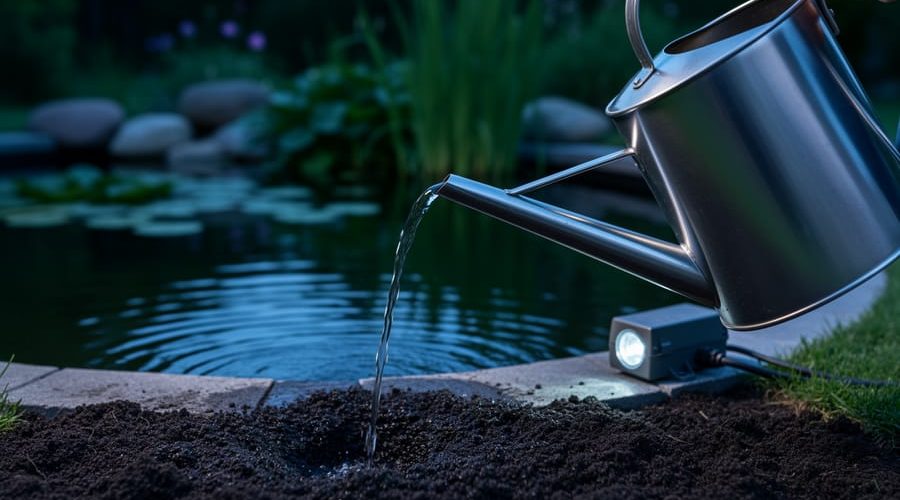
When to Use Dynamic Design Watering Cans for Seasonal Lighting in Your Water Garden
The best time to use a dynamic design watering can around water garden lighting is during spring setup (March through May) and fall maintenance (September through November), when you’re installing, adjusting, or winterizing your lighting systems and need precision watering that won’t disturb electrical components or create hazardous conditions. Your exact timing shifts based on when you schedule lighting installations, how often algae builds up around fixtures, and whether you’re managing seasonal plantings near illuminated features.
Dynamic design watering cans, those with angled spouts, narrow pour patterns, and controlled flow rates, become essential tools the moment you combine water features with electrical lighting. Standard watering cans send water splashing everywhere, which is fine for a vegetable garden but risky when you’re working inches away from low-voltage transformers, junction boxes, or submerged LED housings. The precision matters most during transitional seasons when you’re actively working on your lighting setup rather than just enjoying it.
Spring brings the highest demand for careful watering because you’re likely planting new marginals, adjusting lights after winter, and dealing with soil disturbed by installation work. You need to water transplants without soaking nearby electrical connections or washing mulch onto light lenses. Fall runs a close second, especially if you’re relocating fixtures, cutting back perennials around lit pathways, or preparing systems for winter shutdown. Both seasons require you to water around active or recently active electrical systems, where even small amounts of misdirected water create safety concerns or maintenance headaches down the line.
Quick Answer: Best Timing for Dynamic Design Watering Can Use
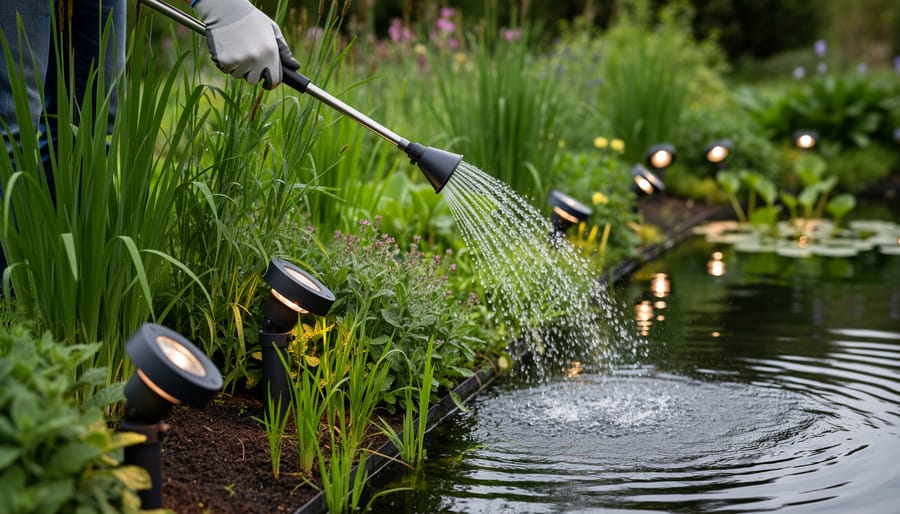
Dynamic design watering cans become essential tools during two critical periods: fall lighting installation (September through November) and the active winter display season (December through February). These specialized cans let you water precisely around cables, transformers, and fixtures when your seasonal lighting is most elaborate and vulnerable to accidental contact.
Spring setup (March through May) represents a secondary peak window when you’re reinstalling perennial lighting alongside emerging plants. Summer months require less specialized equipment since many water gardeners run minimal or no lighting during peak heat, though the can remains valuable for maintaining plants around permanent fixtures and buried cables.
The pattern is straightforward: your need for dynamic design features directly mirrors your lighting activity. When lights are installed and powered, precision watering tools prevent costly accidents and make maintenance safer. During lighting downtime, standard watering methods often suffice unless you maintain year-round underwater or architectural lighting that remains in place regardless of season.
Seasonal Windows for Watering Can Use
Spring Setup and Early Growth (March-May)
Spring marks the dual challenge of installing your first seasonal accent lights while supporting emerging aquatic growth. This is when a dynamic design watering can earns its keep by letting you nourish new shoots without disturbing fresh cable runs or disrupting fixture placement you’re still fine-tuning.
Most water gardeners tackle spring lighting setup between late March and early May, depending on your last frost date. You’re positioning solar path lights along pond edges, running low-voltage wires to marginal plantings, and testing spotlight angles on early bloomers. At the same time, iris shoots are breaking through, water lily pads are surfacing, and marginals need consistent moisture as root systems wake up.
The precision matters here because your cable paths aren’t yet settled into place. A traditional watering can’s wide arc sends water everywhere, potentially flooding junction boxes or shifting cables you just positioned. A dynamic design can with a narrow, controlled spout lets you target the root zones of emerging plants without spraying across fresh installations. Focus morning watering sessions directly on plant crowns while your lighting layout is still flexible, before the heat of summer locks everything into place.
Summer Maintenance Mode (June-August)
During summer’s peak growing season, most seasonal lighting comes down, but your watering precision needs actually increase. Even with lights off, permanent fixtures, buried cable runs, and waterproof connections remain in place, and they’re vulnerable to damage from careless watering.
This is when your dynamic design can proves its value outside the display season. You’re watering more frequently as temperatures climb and plants hit their growth stride, but you need to avoid saturating areas where cables are buried or splashing transformer housings and junction boxes. A can with a narrow spout and controlled flow prevents water from pooling around electrical components that are dormant but not waterproof when opened.
June through August also becomes your opportunity for maintenance you can’t easily do when lights are active. You can move fixtures if needed, check connection points for corrosion, and clean lenses, all tasks that require you to water around equipment after handling it. The precision pour that helped you navigate lit displays now helps you maintain the infrastructure without creating moisture problems that’ll surface when you reinstall lights in fall.
Fall Lighting Preparation (September-November)
Fall ushers in the busiest period for dynamic design watering can use. As you string lights for upcoming holiday displays and prepare winter illumination, you’re simultaneously maintaining marginals that are still actively growing and managing seasonal plantings like ornamental grasses and late-blooming perennials.
September through early October presents the trickiest choreography. You’re routing new cable runs while plants remain full and lush, creating narrow channels where a precision spout becomes essential. A dynamic design can with an angled neck lets you water container plantings tucked behind transformer boxes or reach lily pads growing around newly positioned uplights.
By late October and November, your lighting is largely in place but requires frequent adjustments as you test timers and reposition fixtures. This constant tinkering means you’re repeatedly stepping around cords and stakes while watering plants preparing for dormancy. Plants still need consistent moisture during this transition period, even as temperatures drop and growth slows.
The removable rose attachment proves especially valuable now. Switch between a gentle shower for delicate fall asters near cable clips and a concentrated stream for reaching between closely spaced pathway lights without disturbing your carefully arranged display.
Winter Display Season (December-February)
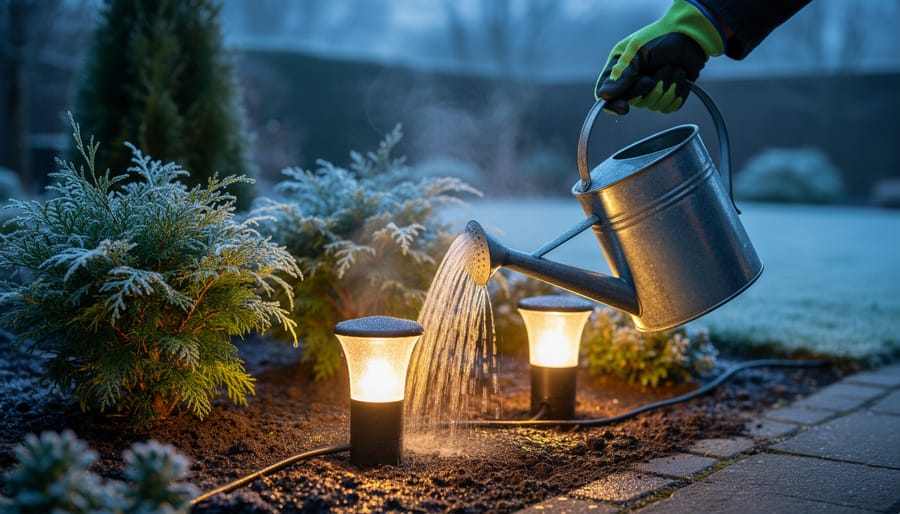
Winter is when your dynamic design watering can earns its place. With lighting systems running nightly through the darkest months, you’re navigating live electrical setups every time you water cold-hardy marginals like winterberry or manage algae blooms that thrive under constant illumination.
The narrow spout becomes essential here. You’ll need to reach between clustered light fixtures, deliver precise amounts to semi-dormant plants that require less water but can’t dry out completely, and avoid splashing onto transformers or connections. Most gardeners water mid-morning when ice has melted but before evening lighting activates, reducing electrical concerns.
Algae control becomes a weekly task rather than occasional. String lights reflecting off water surfaces accelerate growth, and your watering can doubles as a spot-treatment tool for adding beneficial bacteria or targeting problem areas without disturbing the lighting display.
The frequency drops to every 10-14 days for most plants, but the precision requirements increase dramatically. One careless pour across an underwater fixture cable could mean troubleshooting in freezing temperatures.
What Shifts Your Timing and Approach
Your Lighting System Complexity
Your watering can needs shift dramatically with your lighting setup’s scope. A simple pond with two or three solar spotlights rarely requires specialized precision, you can work around them easily with any can. Once you’re installing seasonal lighting with multiple cable runs, transformers, and a mix of fixture types, a dynamic design can becomes essential nearly year-round.
The real timing change comes from underwater lights. If your system includes submersible fixtures, you’ll need precise pouring control whenever those lights are active, winter or summer. Cable paths matter too: the more wiring snakes through your marginal shelves and planting zones, the more often you’ll reach for a can with a long, angled spout. Gardens with ten or more fixtures typically need specialized watering tools from installation day through teardown, not just during peak display months.
Plant Selection and Watering Schedule
Evergreen marginals like rush and sedge demand weekly winter watering even when lights are active, making precise nozzle control essential. Winter-active plants such as hardy calla lilies need bi-weekly attention during your busiest lighting display period, December through February, when cable routes and fixture positions complicate access. You’ll need a can that reaches over or around lighting installations without bumping transformer boxes or dragging across waterproofed connections.
Dormant species shift your timing entirely. From late November onward, these plants need only monthly moisture checks, freeing you to focus watering efforts on active zones where how pond lighting affects wildlife overlaps with living foliage. Coordinate your can’s design features with this rhythm: prioritize extended reach and narrow spouts during high-activity lighting seasons, accept broader applications during dormant periods when fewer obstacles exist and precision matters less.
Climate and Regional Variations
Your regional climate fundamentally reshapes both when you need specialized watering tools and which lighting periods demand the most care. In zones with hard freezes and true dormancy, your dynamic design can sees peak use during fall lighting installation (September, November) and again briefly in late winter when you’re caring for hardy evergreens around display lights. Gardeners in mild-winter regions face the opposite pattern: year-round watering around permanent lighting fixtures, with intensity peaking during dry winter months when displays run continuously and plants remain actively growing. Understanding frost dates and microclimates helps you predict exactly when cables will be installed, when plants need attention, and when the two overlap most intensely. If you maintain systems that combine seasonal displays with functional UV light and wildlife considerations, your watering timing shifts again to accommodate equipment that runs on different seasonal schedules than decorative lighting alone.
Pond Size and Access Points
Your pond’s physical setup determines when a dynamic design watering can becomes necessary rather than merely convenient. Small ponds (under 100 gallons) with edge access rarely demand specialized tools until you add multiple lighting zones that create navigation obstacles. Mid-sized gardens (100-500 gallons) typically reach the tipping point when three or more marginal shelves need individual attention around cable runs.
Large installations present timing challenges year-round. If you maintain plants beyond arm’s reach from the edge, you’ll need extended spout control starting with spring setup and continuing through every watering session. Ponds with center islands or multiple depth zones require precision tools from the moment lights go in, since you’re working at awkward angles over water.
Access limitations accelerate the need dramatically. Lighting installed along back edges where you can’t walk behind plantings makes a dynamic spout essential by early fall, before you’d otherwise invest in one. Count your separate planting areas and cable crossings, three or more signals immediate need regardless of season.
Choosing the Right Dynamic Design Features
When you’re working around underwater lights, cable runs, and fixture housings, not every watering can is up to the task. The features that look clever in a garden center become genuinely essential when you’re trying to water marginals without dislodging a spotlight or reaching between lily pads to hydrate a lotus without disturbing your transformer connections.
Start with the spout. A long, angled spout gives you reach and precision simultaneously, you can water plants positioned behind or beside lighting fixtures without leaning over cables or stepping into shallow areas where lights are mounted. Look for spouts in the 10- to 14-inch range with a downward curve at the end; this design lets you direct water exactly where you need it while keeping your hands and the can’s body clear of electrical components. Spring and fall, when you’re setting up or adjusting lights frequently, this reach prevents the constant repositioning that damages both plants and equipment.
- Angled Spout
- A curved or bent delivery tube that allows precise water placement around obstacles and into tight spaces without tilting the entire can body. Most useful when navigating complex lighting layouts with multiple fixture positions.
- Extension Wand
- A detachable tube that adds 12-24 inches of reach to your existing spout, typically with its own valve control. Critical for winter watering when ice shelves or frozen edges prevent close approach to active lighting zones.
- Flow Control Valve
- An adjustable mechanism, usually a thumb trigger or dial, that regulates water delivery from a trickle to a stream. Essential during delicate watering around submerged fixtures where splashing could affect connections or disturb sediment near lights.
- Narrow Profile Body
- A slimmer can design (typically 6-8 inches wide versus standard 10-12 inches) that fits between plantings and lighting stands without knocking fixtures. Most valuable in densely planted seasonal displays where every inch of clearance matters.
- Translucent Construction
- Semi-transparent material that lets you see remaining water volume without opening or tilting the can. Prevents overfilling and reduces the need to check capacity mid-task when working around live electrical systems.
Capacity matters differently depending on your season. A two-gallon can works beautifully in winter when you’re watering sporadically and precision is everything, it’s light enough to maneuver carefully around active light displays without fatigue. Come spring and fall, when you’re watering more frequently during setup periods, a larger four-gallon model reduces trips but demands a stable, wide base so it won’t tip when you set it down near equipment.
Adjustable spray heads sound appealing but often create problems around lighting. The mist settings can coat fixture lenses and create mineral deposits that dim your display, while the shower patterns lack the control you need when watering around cables. A simple open spout with a removable rose (for gentle watering when lights aren’t a factor) gives you the most versatility across seasons without the complications.
Finally, consider weight when empty. Lightweight resin or aluminum cans are easier to control with one hand while you steady a plant or move a cable with the other, a common reality during fall installation when you’re multitasking constantly. Winter watering around established lights benefits from this maneuverability even more, since you’re often working in awkward positions to avoid ice or reach evergreen marginals positioned behind fixtures.
Step-by-Step: Watering Around Seasonal Lights
Safety starts before the first drop of water hits the soil. With seasonal lights powered on and possibly underwater, you need a methodical approach that protects both your electrical system and your plants.
Begin by checking your GFCI status at the outlet or controller. If you haven’t already, this is the time to confirm it’s functioning, press the test button to verify it trips and resets properly. Never assume your protection is working without testing it, especially in damp outdoor conditions.
Next, scan your lighting layout and identify where cables run, where fixtures sit, and which plants need water. Look for any exposed connections, damaged insulation, or water pooling around electrical components. If you spot problems, shut down the system and address them before watering. Your dynamic design watering can gives you precision, but it can’t compensate for compromised wiring.
- Survey and plan your route: Walk the perimeter and note which plantings need water, where cables cross your path, and where you’ll position yourself for the best reach without stepping on fixtures or lines.
- Position yourself for control: Stand or kneel where you have stable footing and can clearly see the target planting area. Keep your body and the can away from submerged lights and any above-water fixtures you might bump.
- Deliver water with precision: Use your can’s narrow spout or rotating head to direct flow exactly where plants need it, typically the root zone or container soil surface, while avoiding splashing onto light fixtures, exposed connections, or cable runs.
- Verify and move deliberately: After each plant or zone, pause to confirm water went where intended without pooling near electrical components. Move slowly to your next target rather than rushing and risking a misstep or spill.
After finishing your watering round, make a final visual sweep of the garden. Check that no water is pooling around transformers, junction boxes, or low-lying fixtures. If you see standing water near electrical gear, use towels or a sponge to wick it away rather than waiting for evaporation.
Clean your watering can immediately, even if you plan to use it again tomorrow. Algae and mineral deposits build faster than you’d expect, and a clean tool is ready when you need it without last-minute scrubbing. Store it where the spout won’t get damaged and where you can grab it quickly when the next watering window opens.
Aftercare and Off-Season Storage
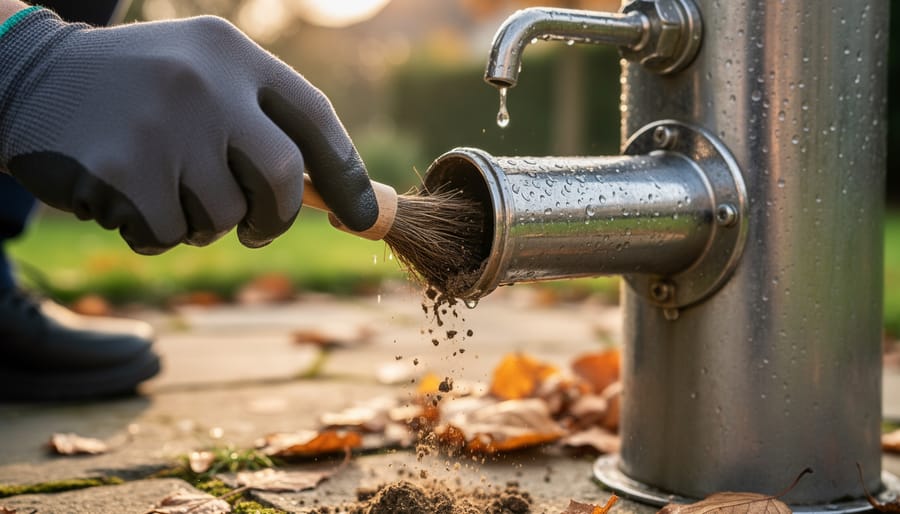
Once your seasonal lighting display wraps up and the fixtures come down for the year, your dynamic design watering can deserves the same careful attention you gave your lights. Proper aftercare extends the tool’s lifespan and ensures it’s ready when you set up next year’s display.
Start with a thorough cleaning as soon as the lighting season ends. Rinse the entire can with clean water, paying special attention to the spout and any narrow channels that directed water around cables. If you’ve been working near lights, there’s a good chance mineral buildup or algae has accumulated in places you couldn’t easily see during the busy season.
Check all seals, joints, and connection points for wear. The same precision design that helped you avoid lighting fixtures also means more components that can degrade. Replace any cracked washers or damaged spout attachments now rather than discovering problems next spring when you’re rushing to get lights installed.
Dry the can completely before storage, especially if it has metal components or non-plastic fittings. Water left inside can freeze in unheated storage areas, cracking chambers and damaging precise spout mechanisms. Store it somewhere protected from temperature extremes, the same shed or garage where you keep your lighting equipment works well.
Consider storing it near your lighting gear rather than with general garden tools. This keeps everything you need for safe navigation together and reminds you to grab the right watering tool when installation season returns. If you maintain year-round glare control or measure murky pond lights periodically during the off-season, keep the can accessible for those maintenance visits.
Common Questions About Timing and Use
When you’re balancing water garden care with seasonal lighting displays, practical questions naturally arise about equipment investment, safety, and timing flexibility. Here are the most common concerns from water gardeners working with both plants and lights.
Can I just use my regular watering can around seasonal lights?
You can, but a regular can’s wide spout and less controlled pour make it harder to avoid splashing fixtures, soaking connections, or knocking into cable runs. The precision of a dynamic design becomes noticeably valuable once lights are installed and active.
When’s the best time to invest in a specialized watering can?
Late summer or early fall, before you install holiday and winter lighting. This gives you the tool in hand when precision matters most, and you can test it during your fall setup when stakes are lower than mid-winter with a full display running.
What safety precautions should I take when watering near active lights?
Always use GFCI-protected circuits for pond lighting, water plants during daylight hours when you can clearly see fixtures and cables, and target water at soil level rather than spraying broadly. If you must water after dark, turn lights off first.
Does timing change if I run lights year-round versus seasonally?
Year-round systems need consistent precision watering throughout all seasons, making a dynamic design essential rather than optional. Seasonal displays concentrate your need into specific windows (typically fall through early spring), so a regular can might suffice during the off months.
Beyond these common questions, consider your learning curve. The first season with specialized equipment feels awkward as you adjust your muscle memory and watering rhythm. Most water gardeners report that by their second lighting season, the precision movements become automatic. If you’re installing lights for the first time this year, you might start with what you have and upgrade to a dynamic design can before next season once you understand your specific challenges and access points.
Your budget also plays a role in timing. Quality watering cans with dynamic design features typically cost more than basic models. If funds are tight, prioritize getting your lighting system right first, then add the specialized watering tool when you’ve seen firsthand how often you’re working around fixtures. However, if you’re planning an elaborate winter display with multiple zones and frequent watering needs, the specialized can becomes part of your essential setup costs rather than an optional upgrade. The time you save and the reduced anxiety about damaging expensive lighting quickly justify the investment.
Timing your watering can investment to match your lighting schedule transforms two separate tasks into a coordinated seasonal strategy. When you plan ahead, purchasing your dynamic design can before spring setup or fall installation means you’re ready to water precisely from day one, protecting both your investment in lighting and the plants that frame it.
The connection between proper watering timing and lighting quality isn’t always obvious until you’ve struggled with a standard can near live fixtures or watched plants decline because you avoided watering too close to cables. A specialized can eliminates that compromise. You maintain healthy growth throughout the display season without risking equipment or creating safety hazards.
Your water garden lighting deserves the same attention to detail you give the lights themselves. Whether you’re working through winter’s cold-hardy maintenance, navigating spring’s cable chaos, or preparing fall’s peak display period, the right tool at the right time makes the difference between a thriving, illuminated garden and one where you’re constantly choosing between plant health and electrical safety.
Start planning your next lighting season now. Match your watering tool to your installation calendar, and you’ll spend less time worrying and more time enjoying the garden you’ve created.