
UV Light Isn’t Just for Algae: How It Protects Your Pond’s Wildlife
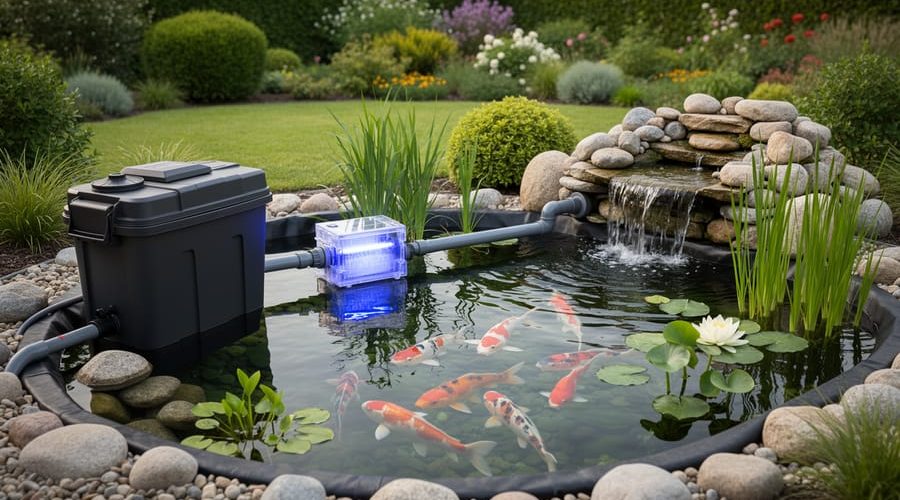
Position your UV clarifier after your mechanical filter and before the pond return, ensuring water flows through it on the way back to your pond. This placement lets the UV sterilize already-filtered water, preventing algae spores from multiplying and turning your water green. Most units come with clear inlet and outlet markings, so installation is straightforward even for first-timers.
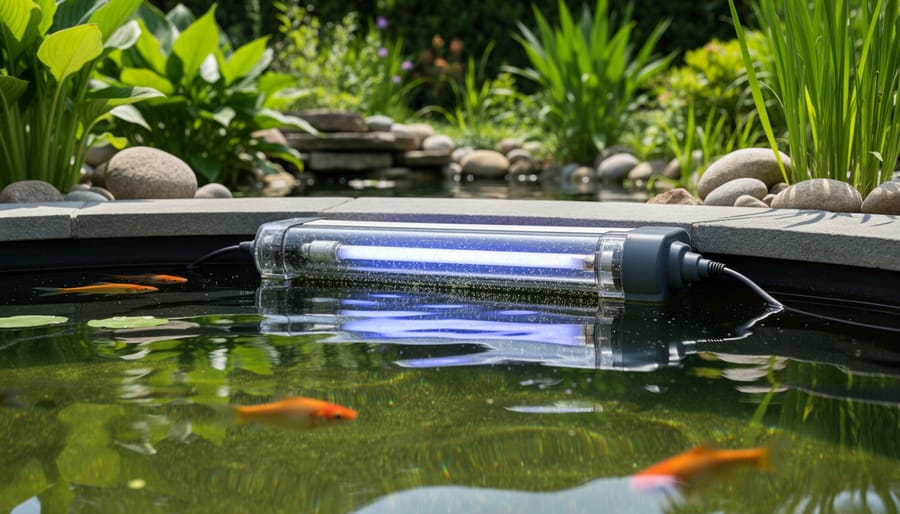
Size your UV unit to match your pond volume and sun exposure. A good rule is 10 watts per 1,000 liters for shaded ponds, but bump that up to 15-20 watts if your pond sits in full sun. Undersized units won’t clear green water effectively, while oversized ones waste electricity without adding benefit.
Run your UV clarifier 24/7 during spring and summer when algae blooms peak. You can reduce runtime or switch it off completely in winter when algae growth slows. Don’t worry about leaving it on constantly affecting your pond ecosystem. Beneficial bacteria in your filter and on surfaces remain unharmed because UV only sterilizes water passing through the unit, and UV light and wildlife can coexist safely since fish and plants never enter the sterilization chamber.
Replace your UV bulb annually, even if it still glows. The germicidal wavelength weakens over time, typically losing effectiveness after 8-12 months of use. Mark your calendar when you install a new bulb so you don’t forget.
Clean the quartz sleeve every 4-6 weeks during peak season. Mineral deposits and biofilm build up on the glass, blocking UV rays from reaching the water. A soft cloth and white vinegar usually do the trick.
What UV Light Actually Does in Your Pond
When you flip on a UV light in your pond, it’s not just glowing for show. That blue light inside the unit is doing some serious microscopic work.
Here’s what happens: pond water flows through a chamber containing a UV-C bulb. As single-celled algae (the stuff that makes your water look like pea soup) passes by, the ultraviolet rays scramble their DNA. They can’t reproduce anymore, and they start to clump together into larger particles. Your filter catches these clumps, and boom, clearer water.
The same UV exposure zaps harmful pathogens like bacteria, viruses, and parasites that might be floating around. It damages their genetic material so they can’t multiply or cause trouble for your fish. Think of it as a bodyguard stationed in your plumbing, checking everything that flows past.
Now, here’s the relief: UV light only affects what passes directly through the chamber. The beneficial bacteria living in your filter media and on pond surfaces? They’re safe. They’re attached to surfaces, not floating through the UV unit. Your biological filtration keeps chugging along just fine.
You’ll also hear about UV clarifiers versus UV sterilizers. Clarifiers handle green water and operate at lower intensity, they’re what most pond owners need. Sterilizers run at higher wattage and flow rates slow enough to kill pretty much everything, including beneficial organisms. Unless you’re running a quarantine system or dealing with a serious disease outbreak, stick with a clarifier.
One thing UV won’t do is remove string algae clinging to your rocks or clear up cloudy water caused by stirred-up sediment. It’s laser-focused on free-floating problems. But for that frustrating green haze that blocks your view of the fish? UV light is your best friend.
The technology is straightforward, effective, and won’t disrupt the natural balance you’ve worked hard to establish.
Choosing the Right UV Light for a Biodiverse Pond
Sizing for Success
Getting the right UV unit size makes all the difference between sparkling water and wasted electricity. Here’s a practical rule: you need roughly 10 watts of UV power for every 1,000 liters of pond volume as a baseline. If you’ve got lots of fish or your pond sits in full sun all day, bump that up to 15-20 watts per 1,000 liters.
Don’t just guess your pond’s volume. Measure it properly, length times width times average depth, then convert to liters. A 3,000-liter pond with moderate fish stocking works beautifully with a 30-40 watt UV clarifier. Heavily stocked koi ponds? You’ll want 50-60 watts for the same volume.
Flow rate matters too. Your pump should cycle the entire pond volume through the UV unit every two hours for best results. Too fast and the water doesn’t get adequate exposure; too slow and you’re not processing enough volume. While supporting pond biodiversity means considering your ecosystem as a whole, proper UV sizing keeps your filtration balanced and effective without over-treating.
Flow Rate Matters More Than You Think
I’ve watched too many pond owners throw money at a UV light that never worked properly, and nine times out of ten, the culprit was flow rate. Your pump is pushing water through that UV chamber at a specific speed, and if it’s rushing through too fast, the algae and pathogens don’t get enough exposure to the light. Too slow? You’re wasting energy and potentially creating dead zones in your pond.
Here’s what actually matters: every UV unit has a maximum flow rate printed right on the box or in the manual. A 25-watt UV might handle 1,000 gallons per hour effectively for sterilization, but if your pump is cranking out 2,000 GPH, that water is spending half the time it needs inside the chamber. The UV light is on, burning electricity, but the green water keeps coming back.
I learned this the hard way with my first koi pond. Bought a perfectly sized UV for my pond volume, hooked it up to my existing pump, and wondered why I still had pea soup after two weeks. Turned out my pump was way too powerful for that unit.
The fix is simple: either throttle down your pump with a valve, split the flow so only part goes through the UV, or upgrade to a more powerful unit. Check your pump’s GPH rating and match it to your UV’s maximum flow specification. When those numbers align, you’ll see results in days, not weeks.
Installing Your UV Light the Right Way
Where to Position It in Your Filtration Chain
Getting the position right makes all the difference in how well your UV clarifier works. The golden rule? Always place it *after* your mechanical and biological filtration, not before.
Here’s why this matters. Your mechanical filter removes the big stuff, leaves, debris, fish waste, that would otherwise cloud the water flowing past the UV bulb. If you run murky, particle-filled water through the UV first, those floating bits block the ultraviolet rays from reaching the algae cells you’re trying to zap. It’s like trying to shine a flashlight through muddy water.
Your biological filter comes next in line, handling the beneficial bacteria colonies that break down ammonia and nitrites. Since UV light can harm these good bacteria if they’re floating freely, you want them safely established in your bio-media before the water reaches the UV chamber.
The ideal setup looks like this: pump → mechanical filter → biological filter → UV clarifier → back to pond. This sequence gives you crystal-clear water hitting the UV bulb at maximum effectiveness, while protecting the beneficial bacteria that keep your pond chemistry balanced.
Safety First: Electrical Considerations
Working with electricity near water demands respect and the right precautions. Before you even think about plugging in your UV clarifier, make sure you’re using a Ground Fault Circuit Interrupter (GFCI) outlet. This device cuts power instantly if it detects any electrical leakage, potentially saving your life if something goes wrong.
Your outdoor electrical connections need proper weatherproofing. I’ve seen too many setups where someone just ran an extension cord outside and called it done. That’s asking for trouble. Use outdoor-rated cables designed for wet locations, and invest in a weatherproof cover for your outlet. These covers aren’t expensive, but they’ll protect your connections from rain, snow, and moisture.
Keep all electrical components elevated above potential flood levels. During heavy rains, water levels can rise unexpectedly, and you don’t want your power supply submerged. Mount your GFCI outlet and any junction boxes at least a foot above your pond’s maximum water line.
If you’re not confident working with outdoor electrical installations, hire a licensed electrician. It’s a small investment compared to the risks of improper wiring around water features.
Getting Everything Connected
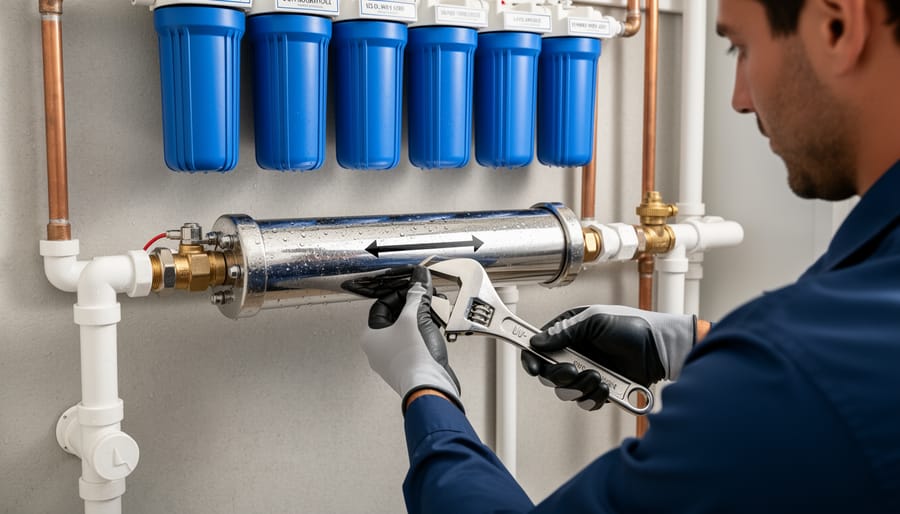
Connecting your UV clarifier is simpler than you might think. Most units slip right into your existing pump line using the included hose barbs or threaded fittings. Measure twice, cut once, that’s my motto when trimming hose to size.
I always install a bypass valve setup. It sounds fancy, but it’s just three ball valves and a T-fitting that lets you redirect water around the UV for maintenance without shutting down your entire system. You’ll thank yourself later when you’re changing bulbs on a hot July afternoon while your fish stay happily filtered.
Check that all connections are snug but not overtightened. UV housings can crack if you muscle them too hard with a wrench. Hand-tight plus a quarter turn usually does the trick.
Using UV Light to Support, Not Harm, Biodiversity
Seasonal Adjustments for Wildlife
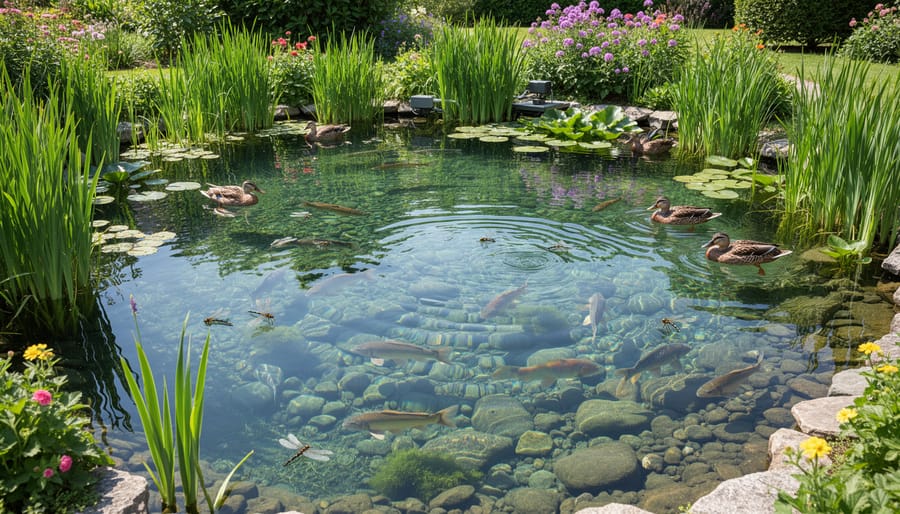
Timing your UV light usage around your pond’s natural cycles can make a real difference for the creatures that call it home. During spring spawning season, consider reducing your UV runtime or switching it off entirely for a few weeks. Fish like goldfish and koi release eggs that need time to develop, and the protective biofilm that forms on spawning surfaces actually benefits from a bit of that green water cloudiness. I learned this the hard way one year when I kept my UV running full blast through April, hardly any fry survived.
When you’re introducing new plants in early spring or fall, give them two to three weeks with minimal UV exposure. Young root systems and beneficial bacteria need time to establish themselves in that initial murky phase. The same goes if you’re adding beneficial bacteria treatments to your pond. Switch off the UV for at least 48 hours after application so the microorganisms can colonize your filter media and surfaces without getting zapped immediately.
Late fall is another good time to scale back. As water temperatures drop below 50°F, algae growth naturally slows down anyway. Running your UV continuously during this period wastes energy and potentially disrupts the delicate microbial balance your pond needs to overwinter successfully. Many pond keepers run their UV only during peak sunlight hours in autumn, or shut it down completely once leaves start falling.
Balancing Clarity with Natural Processes
Crystal-clear water sounds ideal, but a thriving pond needs some balance. Your UV light will eliminate green water algae, giving you that beautiful visibility, but you don’t want to strip away every bit of natural life. Plants need nutrients to grow, and beneficial algae on rocks and surfaces actually feed tadpoles, snails, and other creatures in your pond’s food chain.
The trick is running your UV strategically. During spring algae blooms, keep it on continuously until clarity returns. Once you’ve got control, consider cycling it, maybe eight hours daily instead of around the clock. This maintains water clarity while allowing some nutrient cycling that supports plant growth and microscopic organisms.
Watch your plants as indicators. If they’re thriving and you’re seeing healthy fish activity, you’ve found the sweet spot. A balanced ecosystem approach means clear water that still supports life, not sterile perfection. You can always increase UV runtime if algae creeps back, but starting conservatively lets beneficial processes continue alongside your clarity goals.
Complementing Other Biodiversity Lighting
Your UV clarifier operates independently from your pond’s visual lighting, which means you can create a complete lighting ecosystem. While the UV unit works invisibly inside its housing to clear water, pond lighting techniques for biodiversity operate on the surface and perimeter. Soft decorative pond lightssolar pathway markers, and gentle moonlighting attract moths, beetles, and other beneficial insects during evening hours without interfering with UV clarification. This layered approach gives you crystal-clear water during the day while supporting nocturnal pollinators and wildlife at night. Position your decorative lights away from the UV unit’s electrical components, and consider warm-spectrum bulbs that draw insects but don’t create excessive algae-promoting light penetration into the water itself.
Maintenance That Keeps Everything Running Smoothly
When to Replace Your Bulb
Your UV bulb might still be glowing after a year, but here’s the catch, it’s probably not doing its job anymore. UV-C output degrades over time, even when the light appears perfectly normal to your eye. Most manufacturers recommend replacing bulbs annually, and there’s good reason for that timeline.
After about 9-12 months of continuous operation, UV intensity drops significantly. You’ll notice the water isn’t as clear as it used to be, or green water makes a comeback despite the unit running. The bulb produces visible light, sure, but the critical UV-C wavelength that zaps algae and pathogens has weakened beyond effectiveness.
I learned this the hard way one spring when my pond turned pea-green despite my “working” UV light. A new bulb cleared it within days.
Mark your calendar when you install a fresh bulb. Some pond keepers replace theirs at the start of each season, which makes it easy to remember. If you run your UV year-round, pick a consistent date, maybe your pond’s anniversary or the first day of spring. Don’t wait for problems to appear. Prevention beats problem-solving every time.
Keeping the Quartz Sleeve Crystal Clear
The quartz sleeve protecting your UV bulb can cloud up surprisingly fast. Algae, minerals, and organic film coat the glass, blocking UV rays before they reach the water. Even a thin film cuts effectiveness by half, so checking it monthly during peak season makes a real difference.
Turn off the unit and disconnect power before removing the sleeve. Let it cool completely, hot quartz cracks easily in cold water. Slide it out gently and inspect for buildup or cracks.
For light film, warm water and a soft cloth work perfectly. Stubborn mineral deposits need white vinegar, soak the sleeve for 20 minutes, then wipe clean. Avoid abrasive scrubbers or harsh chemicals that scratch the surface. Those tiny scratches scatter UV light and reduce efficiency over time.
Rinse thoroughly before reinstalling. A single water spot doesn’t matter, but soap residue definitely does.
Check the rubber O-rings while you’re at it. Dried-out seals let water bypass the UV chamber entirely. Replace them if they’ve lost flexibility or show cracks.
Clean sleeves restore full UV output instantly. You’ll notice clearer water within days, proving the maintenance effort pays off.
Common Problems and Quick Fixes
Green water creeping back? Check your bulb, most need replacing annually, even if they still glow. If the unit won’t power on, inspect the GFCI outlet and ensure all connections are dry and secure. Reduced flow usually means it’s time to clean the quartz sleeve or check your pump’s pre-filter for debris buildup.
Using a UV light in your pond doesn’t mean choosing between crystal-clear water and a thriving ecosystem. When you size it correctly, run it strategically, and pair it with natural filtration methods, you get the best of both worlds.
I’ve watched countless pond owners transform murky green water into sparkling clarity while still supporting frogs, dragonflies, and beneficial bacteria. The secret isn’t running your UV unit 24/7 or maxing out the wattage. It’s understanding that UV light works best as part of a balanced approach, not a standalone solution.
Your pond is a living system, and every choice you make ripples through it. By combining UV sterilization with plants, mechanical filtration, and thoughtful maintenance, you’re creating an environment where clarity and biodiversity coexist beautifully.
So go ahead and install that UV light. Watch the green water clear. Then sit back and enjoy the sight of clear water revealing the fish below, while dragonflies skim the surface and frogs call from the edges. That’s the magic of a well-balanced pond, and you’ve got all the tools to make it happen.