
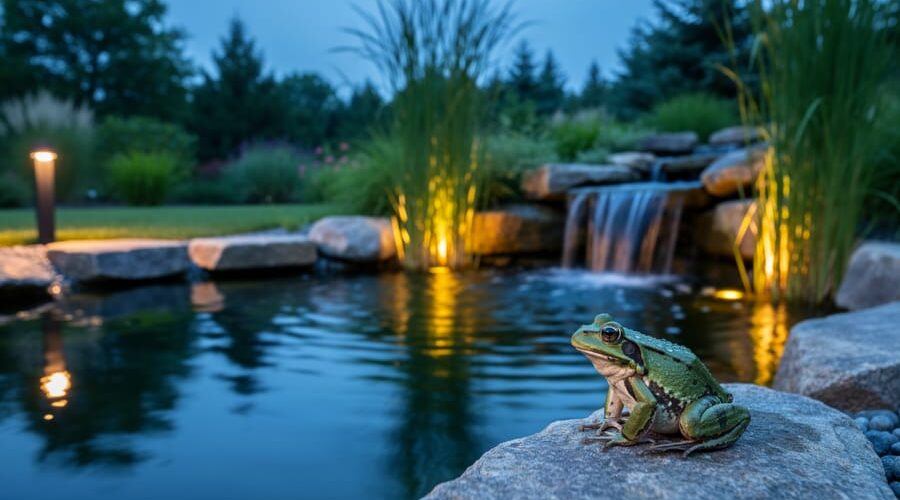
How Strategic Pond Lighting Transforms Your Nature Pond Into a Biodiversity Haven
Position your pond lights below the waterline or at ground level to minimize sky glow that disorients nocturnal insects and disrupts amphibian breeding cycles. Choose warm-spectrum LEDs under 3000 Kelvin, which produce less blue light than traditional bulbs and cause significantly less interference with wildlife circadian rhythms. Install motion sensors or timers that limit illumination to specific hours when you’re actually enjoying your pond, giving creatures the darkness they need for feeding, mating, and navigation during peak activity times.
Your lighting choices directly impact which wildlife thrives around your water feature. Bright, constant illumination attracts excessive insects that disrupt local food chains, while poorly placed fixtures create light pollution that confuses frogs, toads, and beneficial night-flying insects. The good news? You don’t have to choose between a beautifully lit pond and a thriving ecosystem.
Strategic lighting enhances your pond’s beauty while supporting the dragonflies, newts, and birds you built it for in the first place. This approach means carefully selecting fixtures that highlight specific features like waterfalls or plantings rather than flooding the entire area with light. It means understanding that darkness isn’t your enemy but rather a critical habitat component for roughly 30 percent of vertebrates and 60 percent of invertebrates that are nocturnal.
Whether you’re breaking ground on your first pond or retrofitting an existing water garden, the lighting decisions you make now will shape your pond’s ecological value for years to come. Let’s explore how to illuminate your creation responsibly.
Why Lighting Matters for Your Nature Pond’s Ecosystem
The Day-Night Balance Your Pond Needs
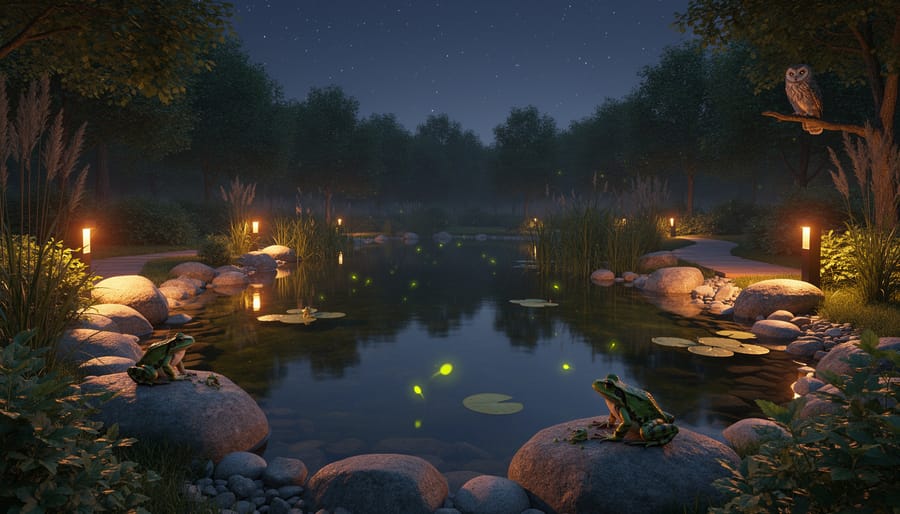
Your pond is like a theater with two acts—day and night—and each performance attracts a completely different cast of characters. Getting this balance right is one of the secrets to creating a thriving wildlife habitat.
During daylight hours, your pond becomes a busy hub. Dragonflies patrol the water’s surface, hunting mosquitoes in mid-air. Bees and butterflies visit marginal plants for nectar. Birds stop by for a drink or a quick bath. These daytime visitors rely on natural sunlight to navigate, feed, and find your pond in the first place.
When darkness falls, a whole new crew emerges. Frogs begin their evening chorus, calling for mates without fear of predators they can’t see approaching. Bats swoop across the water’s surface, using echolocation to catch insects. Nocturnal moths visit night-blooming flowers, and many beneficial insects complete their life cycles under the cover of darkness.
Here’s the tricky bit: artificial lighting can throw this natural rhythm completely off balance. Too much light at night confuses wildlife, disrupting feeding patterns, breeding behaviors, and migration routes. Understanding how lighting affects pond life helps you make informed choices about when and where to add illumination.
The goal isn’t to eliminate pond lighting entirely—it’s about being thoughtful. Your pond needs periods of genuine darkness to support the full spectrum of wildlife. When you do add lights, use them sparingly and strategically, keeping those nighttime creatures in mind.
When Bad Lighting Drives Wildlife Away
I’ve made this mistake myself—installing bright floodlights around my first pond, thinking I was creating a beautiful nighttime feature. Instead, I noticed frogs stopped calling, and my nightly heron visitor disappeared completely. Light pollution is a real problem for pond wildlife, and it’s surprisingly easy to get wrong.
Here’s what happens when lighting goes bad: overly bright fixtures disrupt nocturnal animals’ natural rhythms. Frogs need darkness to feel safe enough to come out and hunt insects. Birds that visit at dusk become disoriented by harsh lights. Even beneficial insects like moths and beetles, which form an important food source for your pond ecosystem, get confused and exhausted by bright lights they circle endlessly.
The worst offenders? Bright white LED spotlights aimed directly at the water, lights left on all night long, and poorly positioned fixtures that create harsh shadows or glare across the pond surface. Motion-sensor lights near your pond can startle wildlife repeatedly, making them abandon the area entirely.
Remember, your goal is to support biodiversity, not create a stadium effect. Sometimes the best lighting plan means using less light than you initially imagine, letting natural darkness work its magic for your pond’s nighttime visitors.
Choosing Biodiversity-Friendly Lighting for Your Build
Warm vs. Cool Light: What Wildlife Prefers
Here’s what I’ve learned from years of watching wildlife around my pond: light color matters more than you might think! The color temperature of your lighting can either invite beneficial creatures or send them packing.
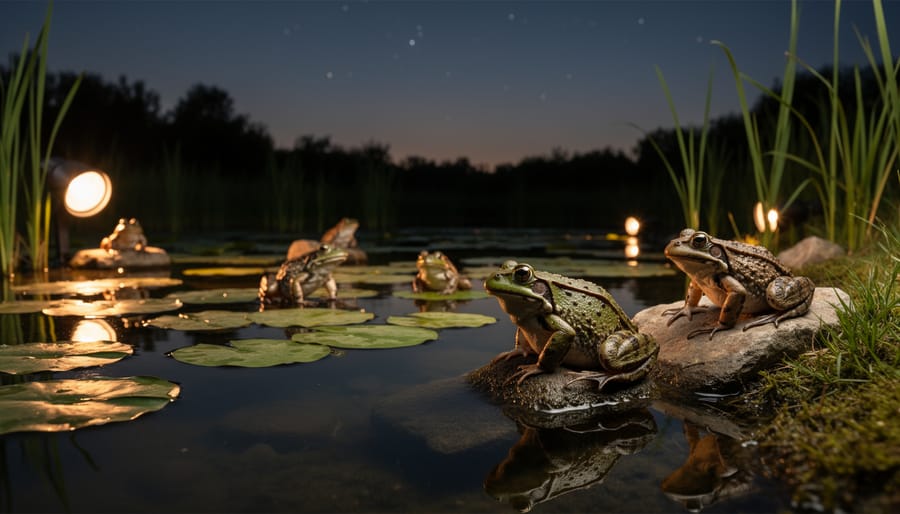
Warm white lights (2700-3000K) are generally your best choice for a nature pond. These amber-toned lights mimic natural moonlight and firelight, which wildlife has adapted to over millennia. Insects are less attracted to warm light, meaning fewer bugs swarming your pond area and less disruption to the local food chain. I’ve noticed frogs and toads are more comfortable hunting near warm-toned lights, as they don’t experience the same disorientation that bright white lights can cause.
Cool white or blue lights (5000K and above), while beautiful to our eyes, can be problematic. These wavelengths attract massive numbers of insects, which sounds great for fish and amphibians but actually disrupts natural feeding patterns. Moths and beneficial pollinators can become trapped in cycles around cool lights, exhausting themselves. Fish may also become hyperactive under cool lighting, affecting their rest cycles.
For the healthiest pond ecosystem, stick with warm amber lights around 2700K. If you want underwater lighting, use it sparingly and opt for amber or red tones, which penetrate water differently and cause less behavioral disruption to fish. Consider motion-activated warm lights for pathways, giving wildlife dark periods to thrive naturally.
Solar, LED, and Low-Voltage Options That Work
When choosing lighting for your nature pond, you’ll quickly discover that not all options are created equal—especially when wildlife is involved. Let me walk you through the main technologies and what they mean for both your pond’s ecosystem and your weekend project.
Solar lights are the easiest entry point for most pond builders. They require zero wiring, which means no digging trenches or hiring an electrician. Simply stake them around your pond’s perimeter and let the sun do the rest. The downside? Their light output can be inconsistent, especially during cloudy stretches, and they typically don’t last as long through the night. For biodiversity, this is actually a bonus—shorter lighting periods mean less disruption to nocturnal wildlife.
LED systems have become my go-to recommendation after years of experimenting with different top pond lights. They’re incredibly energy-efficient, lasting up to 50,000 hours, and produce minimal heat that won’t stress aquatic life. Modern LEDs also offer warm color temperatures (2700-3000K) that are far less disruptive to insects and amphibians than the harsh blue-white lights of older technologies.
Low-voltage lighting (12V systems) strikes a nice middle ground. Installation is straightforward enough for DIYers—you’ll run a transformer from your house and route weatherproof cables to your lighting points. The reduced voltage means safer installation around water, and you’ll have consistent, controllable illumination. From a wildlife perspective, the key is choosing fixtures with shields or directional capabilities to minimize light spill into surrounding habitat areas.
Motion-Activated and Timer Systems
Motion-activated lights are game-changers for wildlife-friendly pond lighting! These clever systems only switch on when you’re actually near the pond, keeping things naturally dark the rest of the time. I’ve found that positioning motion sensors about 15-20 feet from your pond works beautifully—close enough to light your path but far enough that passing wildlife won’t constantly trigger them.
Timer systems offer another smart option. Set your lights to activate only during early evening hours when you’re most likely to enjoy your pond, then automatically shut off by 9 or 10 PM. This gives nocturnal creatures their darkness back while you still get those magical twilight moments. Many modern systems let you adjust sensitivity and duration, so you can fine-tune settings based on seasonal wildlife activity. I recommend starting with shorter light durations—maybe 2-3 minutes per activation—and adjusting as needed. Your frogs and visiting hedgehogs will thank you for the consideration!
Strategic Placement Techniques During Your Pond Build
Lighting Your Pond Margins and Plant Zones
Shallow margins and plant zones are absolute havens for frogs, dragonflies, and the little creatures that keep your pond ecosystem buzzing with life. The trick here is lighting them gently without turning their nighttime habitat into a wildlife disco.
I’ve found that positioning lights behind or beneath marginal plants creates a magical glow while keeping direct light off the water surface. This works beautifully because the plants act as natural diffusers, softening the illumination. Think of tucking small LED fixtures at the base of iris clumps or behind cattails, where they’ll highlight the plant structure without flooding the entire area.
Aim for amber or warm white LEDs in these zones, as cooler blue tones can disorient amphibians and emerging aquatic insects. Keep the brightness minimal, just 50-100 lumens per fixture. You’re creating subtle accents, not security lighting.
Here’s something I learned the hard way: avoid lighting boggy areas where frogs congregate during breeding season. That splashing you hear in spring? Those little guys prefer darkness for their romantic endeavors. Instead, focus your lighting on one or two specimen plants nearby, creating visual interest without disturbing the action.
Battery-powered solar stakes work wonderfully in these zones since you won’t need to run wiring through delicate root systems.
Underwater Lighting: When and Where It Helps
Strategic lighting can transform your pond into an evening spectacle, but balance is everything. When choosing underwater lighting techniques, remember that wildlife needs darkness too. I’ve learned this the hard way after watching frogs retreat when I first over-lit my pond.
Focus your submersible lights in specific zones rather than illuminating the entire pond. Position lights to showcase standout features like a beautiful koi gliding past or that gorgeous water lily you’ve nurtured. Angle lights upward from the pond floor to create dramatic effects without disturbing fish resting near the surface.
Here’s the golden rule: light no more than one-third of your pond. Leave deeper areas and marginal zones dark so fish can retreat from the brightness, and nocturnal creatures like frogs and beneficial insects can continue their nighttime activities. Think of it as creating rooms in your pond, some illuminated for viewing pleasure, others as peaceful sanctuaries.
Use warm-colored LEDs rather than harsh white lights. They’re gentler on wildlife and create a more natural ambiance that won’t disrupt breeding behaviors or feeding patterns.
Creating Dark Zones and Wildlife Corridors
Here’s a secret many pond enthusiasts overlook: some of the most fascinating wildlife activity happens in the shadows! While well-lit areas showcase your pond beautifully, creating dark zones is equally important for a thriving ecosystem.
Think of darkness as a wildlife sanctuary. Nocturnal creatures like hedgehogs, bats, and certain frog species feel most comfortable foraging in unlit areas. When I stopped lighting my entire pond perimeter, I noticed a remarkable increase in evening wildlife visits. Those shy species that previously avoided my pond suddenly felt safe exploring.
Aim to leave at least 40-50% of your pond area completely dark. Focus your lighting on one or two key viewing spots while keeping the opposite side and at least one full bank in natural darkness. This creates what I call “safe corridors” where animals can approach, drink, and hunt without feeling exposed.
Consider the journey to your pond too. If possible, maintain a dark pathway from surrounding vegetation to the water’s edge. This lets creatures travel safely under cover of darkness, especially important for amphibians during breeding season. Remember, balance is everything – your pond can be both beautiful and wildlife-friendly when you embrace the darkness alongside the light.
Installing Your Lighting System: A DIY Approach
Planning Your Electrical Layout Before Breaking Ground
Before you dig that first shovelful of earth, grab a notepad and sketch out where your electrical components will live. Trust me, I learned this the hard way when I had to jackhammer through hardened concrete to add a forgotten outlet!
Start by mapping where your pump, filters, and lighting fixtures will be positioned. Then trace the most direct path from your power source to each location. Remember, electrical conduit should be buried at least 18 inches deep for safety, so plan these trenches while your pond excavation is still underway. This saves you from digging twice and potentially damaging your beautiful finished pond.
Consider running extra conduit runs even if you don’t need them immediately. Adding another lighting zone or water feature later becomes infinitely easier when the pathway already exists. Mark these conduit locations with stakes and bright flags so nobody accidentally steps on or moves them during construction.
Place junction boxes at strategic points where you might want future connections. Keep them accessible but disguised near rocks or plantings. And here’s a pro tip: photograph your electrical layout before backfilling anything. You’ll thank yourself years later when you need to troubleshoot or expand your system.
Weatherproofing and Safety Essentials
Water and electricity don’t mix, so weatherproofing your pond lighting is absolutely essential for both safety and longevity. Trust me, I learned this the hard way when my first pond light stopped working after just one rainy season!
Start by always using GFCI (Ground Fault Circuit Interrupter) outlets for any electrical connections near your pond. These special outlets detect electrical imbalances and shut off power immediately, preventing dangerous shocks. Install them at least six feet from the water’s edge and elevate them above potential flood levels.
For all wire connections, use waterproof wire nuts and wrap them with self-fusing silicone tape. Regular electrical tape just won’t cut it in damp environments. Consider housing connections in weatherproof junction boxes rated for outdoor use. Apply a thin layer of dielectric grease to all connections before sealing to prevent corrosion.
Route cables carefully, burying them at least six inches deep in conduit to protect from digging tools and critters. Use marine-grade or direct-burial rated cable specifically designed for underground wet locations. Leave a slight slack in the lines to accommodate ground movement.
Finally, test your GFCI monthly by pressing the test button, and inspect all connections seasonally. A little preventive maintenance now saves you from bigger headaches later.
Testing and Adjusting After Installation
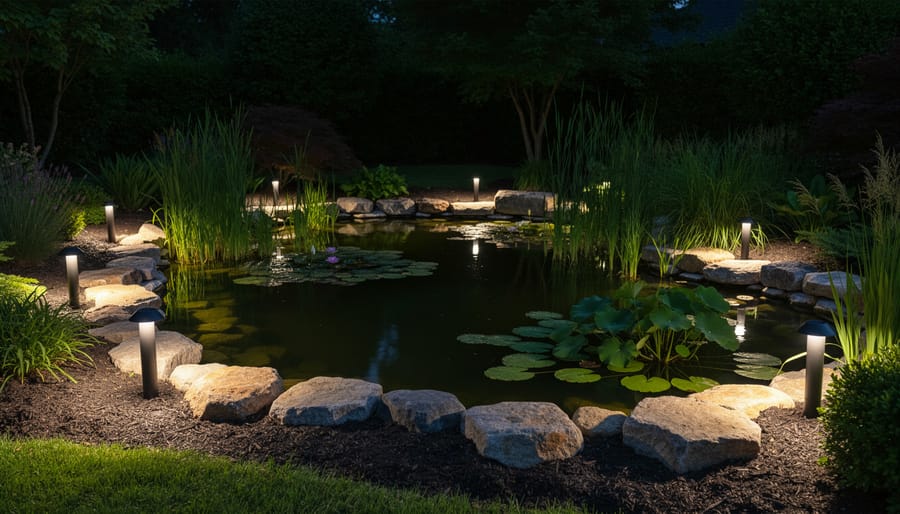
Once your lights are installed, spend a few evenings observing how wildlife responds to your new setup. Grab a comfortable chair and settle in at dusk to watch the action unfold. You might notice frogs avoiding certain bright spots or bats swooping more frequently around dimmer areas. These observations are golden opportunities to fine-tune your lighting.
If you see animals seeming skittish or avoiding the pond, try dimming the lights or adjusting their angles away from key wildlife zones. Many timer systems allow you to shift on-times by 15 to 30 minutes, which can make a surprising difference. I’ve found that even small tweaks like redirecting a spotlight from the water’s surface to nearby plants can completely change how creatures interact with the space.
Keep notes during your first week or two. Notice which areas attract the most activity and which stay empty. Don’t be discouraged if it takes wildlife a little time to adjust to changes in their environment. Be patient and willing to experiment until you find that sweet spot where your pond looks beautiful and your nocturnal visitors feel right at home.
Seasonal Adjustments That Support Year-Round Biodiversity
Your pond’s residents follow nature’s calendar, and your lighting should too! Just like you wouldn’t wear a winter coat in July, your pond lighting needs seasonal tweaks to keep wildlife thriving year-round.
During spring breeding season (March through May), this is when things get exciting! Frogs, toads, and newts are looking for love, and they need darkness to feel secure. I learned this the hard way when my overly-bright setup sent my frog population packing one April. Dial back your lighting intensity by at least 50 percent during these crucial months. If you’re using timers, reduce operating hours to just 2-3 hours after dusk. This gives amphibians the darkness they need for successful breeding while still letting you enjoy some evening ambiance.
Summer months call for balance. Your pond is buzzing with activity, and beneficial insects are at their peak. Keep lights on low settings and consider warm amber tones that attract fewer flying insects to the water surface. This protects your dragonfly and damselfly populations, which are busy controlling mosquitoes for you!
As autumn approaches (September through November), wildlife begins preparing for winter. Gradually reduce lighting duration week by week, mimicking natural daylight changes. This helps trigger proper hibernation responses in frogs, toads, and turtles.
Winter is all about minimal intervention. Many pond keepers, myself included, switch off decorative lighting entirely from December through February. If you need some winter viewing time, use lighting sparingly and only occasionally. Remember, your hibernating friends beneath the surface need complete rest and darkness to conserve energy until spring returns.
Real-World Success: What I’ve Learned From My Own Pond
I’ll be honest with you—my first attempt at pond lighting was a disaster. I installed two bright solar spotlights thinking they’d showcase my beautiful water lilies at night. Within a week, I noticed something alarming: the frogs that had been calling every evening went completely silent. My pond felt lifeless after dark.
That’s when I started my lighting experiment, and what I learned changed everything.
I removed those spotlights and switched to a single warm amber LED path light positioned about fifteen feet back from the water’s edge. The transformation was remarkable. Within three nights, the frogs returned. I counted five different individuals calling from various spots around my pond. But here’s what really surprised me: the number of beneficial insects increased dramatically. My outdoor thermometer light had been attracting moths and beetles that were crashing into the water, creating a buffet for my resident toads.
Through trial and error, I discovered that less truly is more. I now use only red LEDs near my seating area, which lets me enjoy the pond without disturbing the wildlife. Last summer, I watched dragonflies laying eggs on my water plants—something I’d never seen in my first two years with bright lighting.
The biggest lesson? Patience pays off. It took about two weeks after each lighting change to see how wildlife responded. I kept a simple journal noting frog calls, insect activity, and bird visits. This helped me understand that my pond wasn’t just a pretty feature—it was becoming a genuine ecosystem that thrived in darkness more than light.
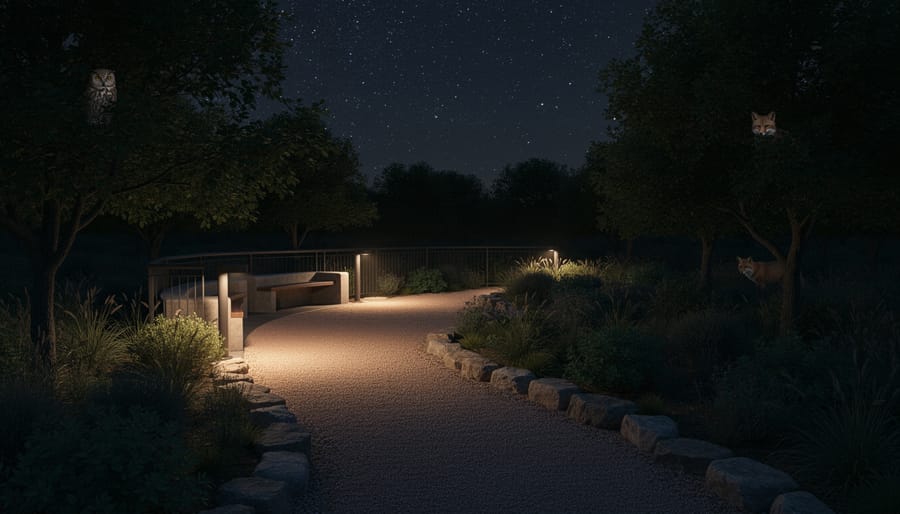
Choosing the right lighting for your nature pond isn’t just about creating a beautiful evening display—it’s an investment in the health and vitality of the ecosystem you’re building. When you light your pond thoughtfully, you’re supporting the natural rhythms that wildlife depends on, from frogs that need darkness to hunt, to beneficial insects that pollinate your garden by day and rest at night.
The wonderful thing about pond lighting is that you don’t need to do everything at once. Start simple: maybe add one or two warm-colored solar lights along a pathway, or try a single low-wattage underwater fixture to highlight a special plant. Then watch what happens. I remember placing my first amber pathway light near my pond and within a week, I noticed more toads gathering in the darker areas—a clear sign they appreciated having unlit zones for hunting.
Small adjustments really do make a big difference. Even switching from bright white to warm amber bulbs can reduce light pollution while maintaining visibility. As you observe how wildlife responds to your lighting choices, you’ll develop an intuition for what works in your unique space. Your pond will guide you, revealing through increased frog calls, more dragonfly activity, or visiting birds whether your lighting balance is supporting the biodiversity you’re working to create.