
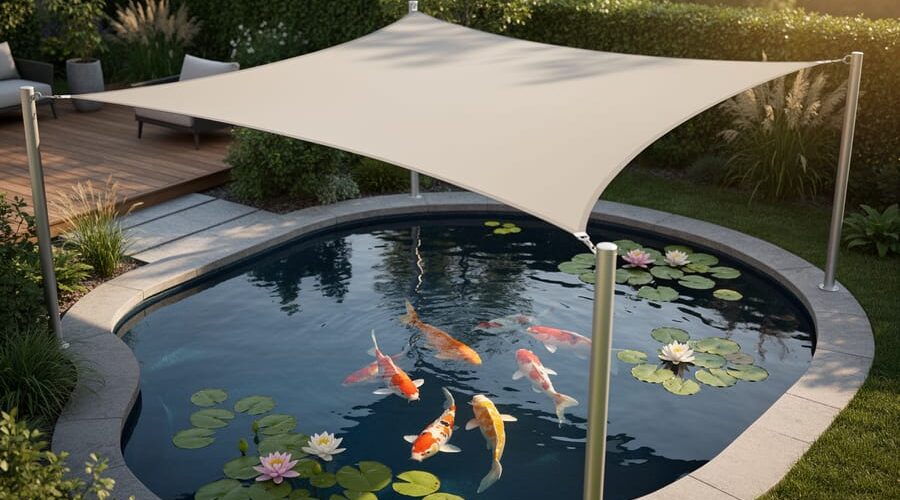
Custom Pond Shade Awnings That Actually Protect Your Water Garden
Picture your pond on a scorching summer afternoon: the water temperature climbs toward dangerous levels, algae blooms explode in the intense sunlight, and your prized koi retreat to the deepest corners, stressed and struggling. Sound familiar? Custom pond shade awnings offer a targeted solution that goes beyond traditional installations, similar to how security doors Newcastle residents install provide specialized protection, because your pond has unique needs that off-the-shelf shade solutions simply can’t address.
Unlike generic shade cloth or umbrellas that create spotty coverage and blow away in wind, custom-designed pond awnings deliver precise shading where your aquatic ecosystem needs it most. They control water temperature swings that stress fish, reduce the sunlight that fuels algae growth, and protect delicate plants from scorching while still allowing essential light penetration for photosynthesis.
The right awning transforms your pond from a maintenance headache into a thriving, balanced water garden. Whether you’re battling string algae taking over your waterfall, watching your goldfish gasp at the surface during heat waves, or planning a new pond installation in a sun-drenched yard, understanding how custom shade awnings work will help you make smart decisions about materials, sizing, placement, and installation methods.
This guide walks you through everything you need to evaluate whether custom pond awnings suit your situation and how to implement them successfully for years of clearer water and healthier fish.
Why Your Pond Needs Protection from the Sun
The Temperature Problem
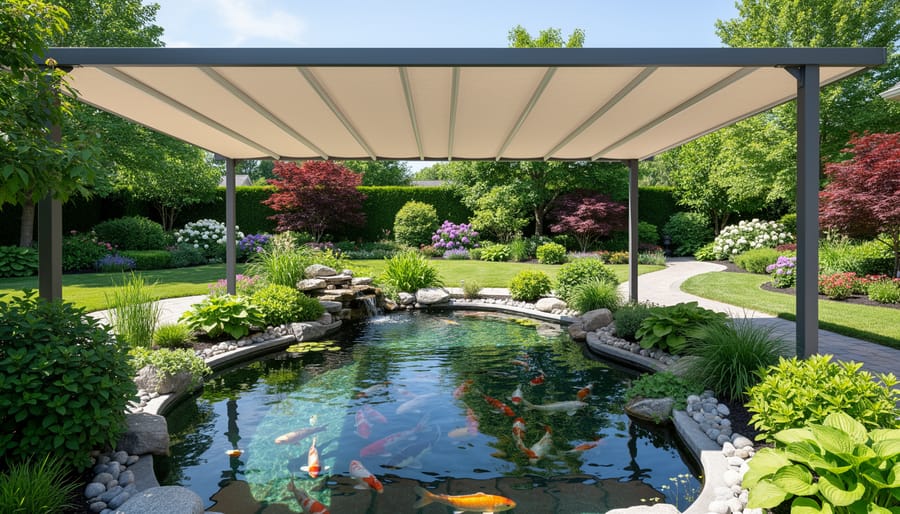
Here’s the thing about direct sunlight – it can turn your beautiful backyard pond into a troublesome hot tub for your fish. When the sun beats down on exposed water all day, the temperature can climb rapidly, especially during those scorching summer months. I learned this the hard way when I noticed my koi hanging listlessly at the surface one particularly hot January afternoon.
Warmer water holds less dissolved oxygen, which is a serious problem for your aquatic friends. Fish become stressed, breathing becomes labored, and they’re more vulnerable to disease. But it doesn’t stop there. The beneficial bacteria that keep your pond ecosystem balanced also struggle in overheated conditions. These tiny helpers work best within specific temperature ranges, and when things get too toasty, their efficiency drops dramatically.
This creates a domino effect: stressed fish produce more waste, beneficial bacteria can’t process it effectively, and your water quality deteriorates. Without proper temperature management, you’ll find yourself fighting an uphill battle against algae blooms and murky water. That’s where thoughtful shade solutions make all the difference, helping you maintain a healthy, stable environment your pond inhabitants will thrive in.
Algae Blooms and Green Water
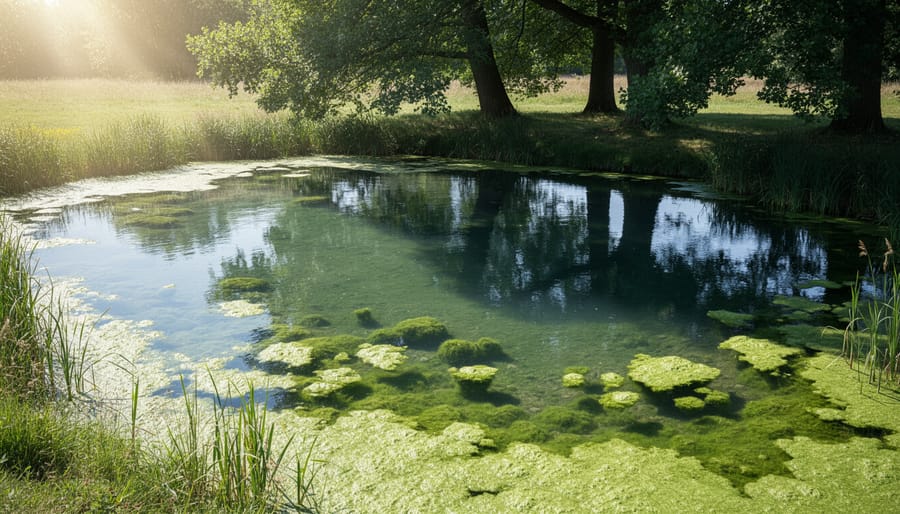
If you’ve ever watched your beautiful pond transform into pea soup seemingly overnight, you’re witnessing the power of sunlight. Algae absolutely love sunshine, and just six hours of direct sunlight daily can trigger explosive blooms that cloud your water and choke out other aquatic life. I learned this the hard way with my first pond, constantly battling green water despite using chemical treatments every week.
Here’s the thing about chemicals: they’re like constantly bailing water from a leaking boat instead of fixing the hole. You treat the symptoms but not the cause. Algae needs three things to thrive: nutrients, warm water, and sunlight. Remove just one of these elements, and you dramatically slow their growth. While you can’t easily control nutrients or temperature, you can control sunlight exposure.
A custom shade awning blocks 50-70% of direct sunlight, disrupting algae’s photosynthesis process without harming your beneficial plants or fish. It’s a preventative approach rather than a reactive one. You’ll still need occasional algae control solutions, but far less frequently, saving you time, money, and frustration while creating a healthier ecosystem overall.
Why Choose Custom Made-to-Measure Awnings Over Other Shade Solutions
Precision Coverage for Your Unique Pond Shape
Here’s the thing about ponds—no two are exactly alike! Whether you’ve got a kidney-shaped koi haven, a long narrow water feature, or a freeform natural pond, getting the right amount of shade makes all the difference. This is where custom measurements really shine.
The sweet spot for pond shading typically falls between 40-60% coverage. Why not full shade? Well, your beneficial bacteria need some sunlight to thrive, and many aquatic plants actually perform best with partial sun exposure. Too much shade can slow plant growth and reduce oxygen production, while too little leaves you fighting algae blooms and temperature spikes.
When you measure for a custom awning, you’re essentially creating a tailored solution that prevents those frustrating hot spots where algae loves to party. I learned this the hard way with my first pond—I installed a generic rectangular shade over my curved design, leaving corners exposed where the water consistently hit 85 degrees by afternoon. My goldfish would huddle in the shaded area like teenagers at a beach umbrella!
Custom sizing lets you target problem areas while maintaining healthy light penetration. You can position coverage over the deepest sections where fish congregate during hot days, or create dappled patterns that mimic natural tree shade. The result? Balanced water temperatures, happier fish, and significantly less maintenance time spent scrubbing green slime.
Design Freedom and Aesthetic Appeal
Here’s the wonderful news: custom pond shade awnings don’t have to look like industrial tarps stretched over your beautiful water feature! When I first started exploring shade solutions for my koi pond, I worried about turning my peaceful garden retreat into something resembling a construction site. Thankfully, today’s custom awnings offer incredible design flexibility that can enhance your outdoor space.
Color selection makes a huge difference in how your awning blends with your landscape. Neutral earth tones like sand, terracotta, and olive green naturally complement most garden settings, while deep blues and grays can echo the water below. Some pond owners even choose colors that coordinate with their home’s exterior or patio furniture. Remember that lighter colors reflect more heat while darker shades absorb it, so your color choice affects both aesthetics and functionality.
Material options have expanded far beyond basic canvas. Modern shade fabrics come in various textures and finishes, from sleek marine-grade materials that look contemporary and clean to woven fabrics that add organic warmth. The weave density you choose affects both the appearance and shade level, typically measured as a percentage of sun blockage.
Style variations let you match your property’s character. Sail-style awnings create a breezy, nautical feel perfect for modern landscapes. Pergola-attached awnings integrate seamlessly with existing structures. Freestanding options with decorative posts can become architectural focal points themselves. The key is thinking of your awning as an intentional design element from the start, not an afterthought addition.
What Makes a Good Pond Shade Awning
Material Matters: Fabric and Frame Selection
Choosing the right materials for your custom pond shade awning is like picking the perfect outfit for a long outdoor adventure. You want something that’ll stand up to the elements while looking great and doing its job effectively.
Let’s talk fabric first. Acrylic canvas is the premium choice for pond environments, offering exceptional UV protection (usually 98% or higher) while allowing air to circulate freely. This breathability prevents that greenhouse effect over your pond, keeping temperatures stable. I’ve seen quality acrylic awnings last 10-12 years, even with constant sun exposure. Polyester fabrics are your budget-friendly middle ground, providing solid UV protection and decent durability at a lower price point. They typically last 5-8 years depending on your climate. Vinyl-coated fabrics offer complete waterproofing, but they trap heat more readily, which can work against your cooling goals. For most pond applications, breathable fabrics win hands-down.
Now for frames. Aluminum is the rock star of pond awnings because it never rusts, requires zero maintenance, and handles moisture beautifully. It’s lightweight yet surprisingly strong. Powder-coated steel frames offer more budget flexibility but need careful attention to coating integrity near water splashes. Wood frames create stunning aesthetic appeal, particularly for Japanese-style gardens, but they require regular sealing and aren’t ideal if you’re running small water garden filters that create mist or humidity.
Consider your local climate, maintenance commitment, and budget when selecting materials. Your pond deserves protection that lasts.
Support Structures and Installation Options
Choosing the right support structure for your pond shade awning makes all the difference between a wobbly frustration and a solid, long-lasting solution. Let me walk you through your main options so you can pick what works best for your setup.
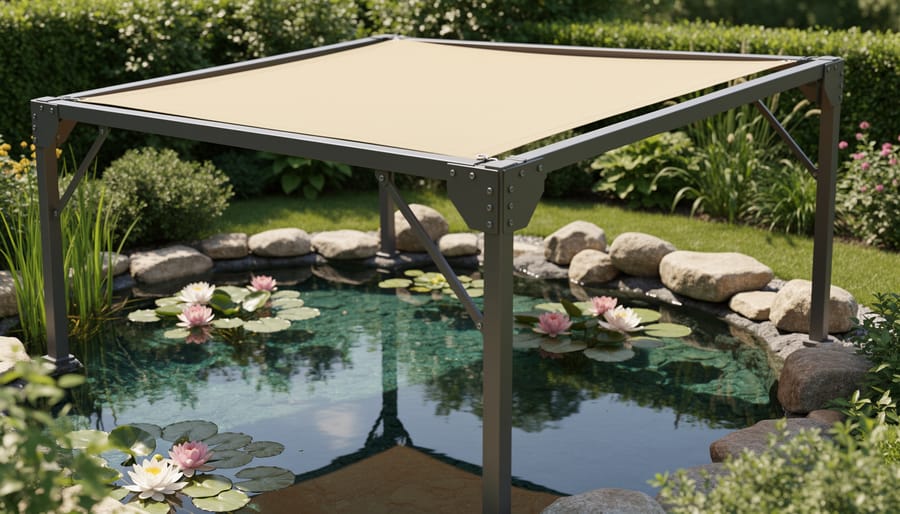
Freestanding posts are my personal favorite for larger ponds because they give you complete flexibility in positioning your shade exactly where you need it. You’ll typically need two to four posts depending on your awning size, and these anchor into the ground with concrete footings or heavy-duty bases. I learned the hard way that skimping on foundation depth isn’t worth it—aim for at least 2 feet deep in areas with moderate wind.
Wall-mounted brackets work beautifully if your pond sits close to your house or garage. These L-shaped supports attach directly to exterior walls and require less ground space, which is perfect for smaller yards. Just make sure your wall can handle the load, especially when fabric gets wet or catches wind.
Deck attachments are fantastic if your pond connects to an existing deck structure. These clamp or bolt onto deck posts and railings, creating a seamless integrated look. One water gardener in my community created a stunning setup this way, and it’s held strong through three summers.
Regarding stability in windy conditions, this is crucial. Look for awnings with tensioning systems that keep fabric taut, and consider retractable options that you can lower during storms. For permanent installations in windy areas, go with heavier gauge metal posts and cross-bracing between supports.
Planning Your Custom Pond Awning Project
Measuring Your Pond and Determining Shade Coverage
Before you start shopping for your custom awning, let’s figure out exactly how much shade your pond actually needs. Don’t worry – this isn’t complicated math, and getting it right will save you both money and headaches down the road!
Start by measuring your pond’s surface area. For rectangular ponds, simply multiply length times width. If you’ve got a kidney-shaped or irregular pond like I do, grab some graph paper and sketch it out, counting squares to estimate the area. Close enough works perfectly fine here.
As a general rule, most ponds thrive with 40-60% shade coverage. However, your specific sweet spot depends on a few factors. If you live in scorching southern climates where summer temperatures regularly hit the 90s, aim for the higher end – around 60%. Northern gardeners can often get away with 40-50%. Your fish population matters too. Heavily stocked ponds generate more waste, which means more nutrients for algae, so you’ll benefit from additional shade coverage.
Here’s something many pond owners overlook: think seasonally! The sun sits higher in summer and lower in winter, changing how shade falls across your water. In my experience, positioning your awning to provide maximum coverage during peak afternoon hours (roughly 1-4 PM) works beautifully year-round.
Consider starting with partial coverage and expanding later if needed. It’s easier to add more shade than remove a too-large awning. Observe your pond through different seasons, noting where algae appears and when fish seem stressed, then adjust your shade strategy accordingly.
Positioning for Maximum Benefit
Getting the most from your pond shade awning is all about smart placement, and trust me, a little planning goes a long way! Start by observing your pond throughout the day—I like to check mine at 10 AM, noon, and 3 PM to see where the sun hits hardest. You’ll quickly notice which areas get absolutely baked during peak afternoon hours, typically between 1 and 4 PM when the sun is most intense.
Pay special attention to shallower sections of your pond, as these heat up fastest and become algae magnets. If you have fish, watch where they tend to cluster during hot days—they’re telling you exactly which spots need relief! The south and west sides of most ponds receive the most brutal sun exposure, making them prime candidates for shade coverage.
Consider seasonal sun angles too. Summer sun sits higher in the sky, while spring and fall sun comes in at lower angles. Position your awning to cover the areas that consistently get hammered, rather than trying to shade the entire pond. Even covering 40-50% of your pond’s surface can dramatically reduce water temperature and algae growth.
A handy trick: use your smartphone’s compass app to identify south and west exposures, then prioritize shading those sections during afternoon hours when your pond needs protection most.
Working with Manufacturers and Suppliers
When reaching out to awning manufacturers, provide clear details about your pond dimensions, the coverage area you need, and any specific challenges like afternoon sun exposure or wind patterns. Share photos of your space from multiple angles—this helps manufacturers understand your setup and suggest the best solution. If you’re working from a professional pond design, include those plans too.
Ask important questions upfront: What materials work best for pond environments? How does the warranty cover sun damage or weathering? What’s the expected lifespan? Can the structure be adjusted seasonally? Don’t hesitate to request fabric samples—seeing and touching materials helps you make confident decisions.
The custom design process typically involves an initial consultation, followed by measurements and site assessment. Most manufacturers will provide digital mockups showing how the awning will look over your pond. Expect some back-and-forth communication to refine details like height, angle, and mounting points. Quality suppliers will also discuss maintenance requirements and provide installation support. Remember, investing time in this planning phase ensures you’ll get exactly what your pond needs.
Real-World Considerations and Maintenance
Seasonal Adjustments and Retractable Options
Choosing between fixed and retractable awnings really depends on where you live and how your pond behaves throughout the year. I’ve found that retractable options shine in climates with distinct seasons. During spring and fall, when sunlight is gentler, you can retract the awning to let beneficial rays warm your water and support plant growth. Come summer’s intense heat, simply extend it for maximum protection.
Fixed awnings work wonderfully in consistently sunny climates where year-round shade is beneficial. They’re also more budget-friendly and require less maintenance since there are no moving parts to worry about.
For seasonal flexibility, consider installing your awning with adjustable mounting brackets. This lets you change the angle as the sun’s position shifts throughout the year. In my own pond, I angle the awning lower in summer for maximum coverage and raise it slightly in winter to capture warming sunlight.
If you’re in a region with unpredictable weather, retractable awnings protect your investment during storms and high winds while giving you complete control over shade coverage as conditions change.
Keeping Your Awning Clean and Functional
A little care goes a long way toward keeping your custom pond shade awning looking great and working perfectly for years. Simple maintenance routines make all the difference.
Give your awning a gentle rinse with a garden hose every few weeks to wash away pollen, bird droppings, and dust. For stubborn spots, use a soft brush with mild soap and water. I’ve learned that catching dirt early prevents buildup and keeps the fabric breathable.
Watch for mildew, especially after rainy periods. If you spot any, clean it promptly with a solution designed for outdoor fabrics. Proper airflow helps too, so occasionally adjust your awning to let both sides dry completely.
Remove leaves and debris regularly, particularly if branches hang overhead. Trapped organic matter holds moisture against the fabric, which can lead to staining or deterioration.
During extreme weather, retract adjustable awnings or add extra support to fixed installations when heavy snow or violent storms are forecast. Taking these simple precautions protects your investment and ensures your pond stays beautifully shaded season after season.
Cost Expectations and Value
Let’s talk honestly about what you can expect to invest in a custom pond shade awning. Prices typically range from $500 to $3,000 depending on size, materials, and complexity. That might seem like a significant upfront cost, but here’s where the value really shows itself.
Consider what you’re already spending on algae treatments throughout the season. Most pond owners invest $50 to $150 monthly in chemicals, clarifiers, and beneficial bacteria to combat excess algae. Over just two summers, that’s $1,200 to $3,600 spent on temporary fixes that never address the root cause. A custom awning tackles the problem at its source by blocking the excessive sunlight that fuels algae blooms.
Then there’s the fish health factor. I’ve seen too many water gardeners lose valuable koi to heat stress or oxygen depletion during summer heat waves. Replacing prized fish can cost hundreds or even thousands of dollars, not to mention the heartbreak involved.
Several factors affect your final investment. Larger ponds naturally require bigger structures with more materials. Frame materials matter too, with powder-coated aluminum costing more than basic steel but lasting decades without rust. Fabric choice impacts price, though marine-grade options provide superior UV resistance and longevity.
Think of a custom pond awning as a one-time investment that solves multiple ongoing problems simultaneously. You’re gaining algae control, temperature regulation, fish protection, and reduced maintenance time. Many pond owners find their awning pays for itself within two to three years through eliminated treatment costs alone.
Adding a custom pond shade awning to your water garden is one of those improvements that keeps giving back. You’ll notice clearer water as algae growth slows down, healthier and more active fish, and you’ll spend less time fighting Mother Nature with constant maintenance. Instead of scrubbing and treating, you can actually enjoy your pond the way you imagined when you first dreamed it up.
The beauty of custom awnings is that they work with your unique situation. Whether you have a small koi pond tucked into a corner or a sprawling water feature that’s the centerpiece of your yard, there’s a shade solution that fits. Start by really observing your pond throughout the day. Grab a measuring tape and jot down some dimensions. Notice where the sun hits hardest and when your fish seem most stressed. These observations will guide you toward the perfect setup.
Remember, creating the ideal pond environment is a journey, not a race. Every adjustment you make brings you closer to that crystal-clear, thriving ecosystem you’ve been working toward. Your fish will thank you, your plants will flourish, and you’ll have more time to simply sit back and enjoy the peaceful beauty of your water garden.