
Why Is My Pond Struggling? Before and After Pond Aeration—Causes and How to Fix It
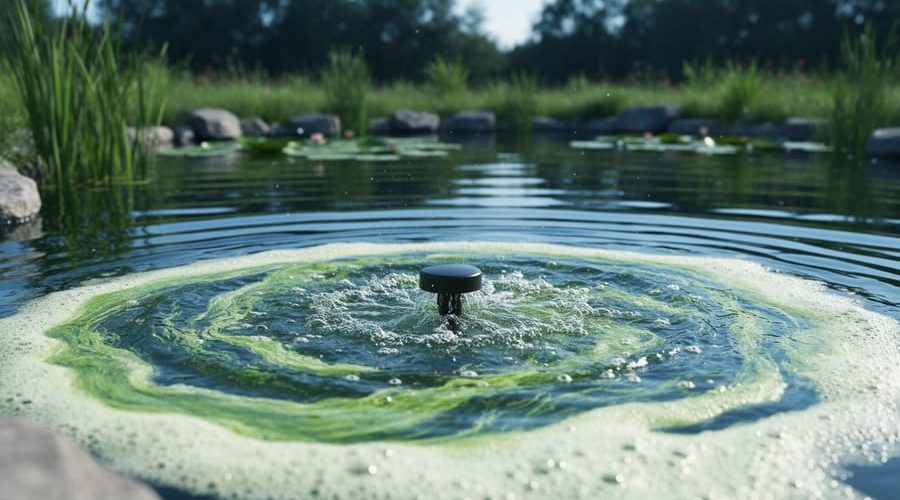
If your pond looks more like pea soup than a sparkling retreat, the most likely fix is installing an aeration system. Oxygen-starved water creates the perfect environment for algae blooms, foul odors, and fish gasping at the surface.
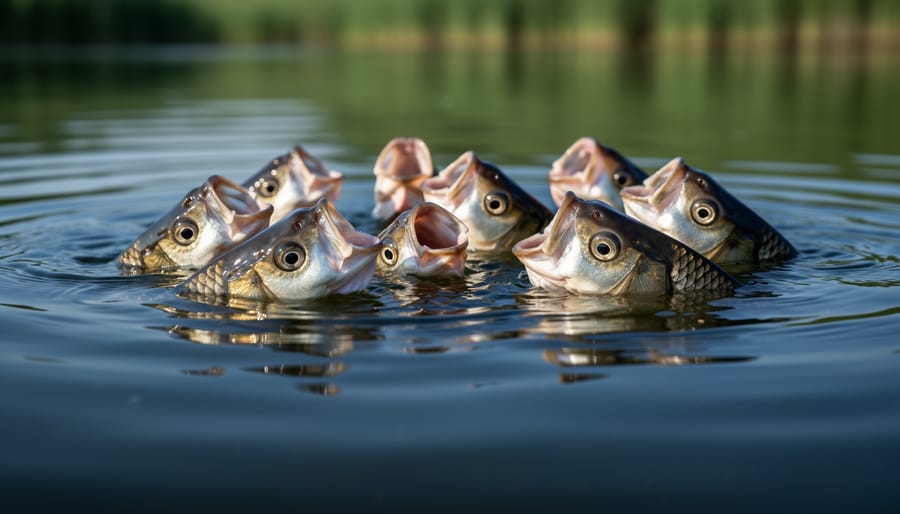
The quickest diagnostic check? Walk out to your pond early in the morning. If fish are crowded near the surface or you notice a swamp-like smell, your dissolved oxygen levels have dropped dangerously low. This happens because organic matter at the bottom decomposes and consumes oxygen faster than natural processes can replace it, especially during warm weather or overnight when plants stop producing oxygen through photosynthesis.
Aeration flips this cycle. By pumping air through diffusers or creating surface agitation, you’re forcing oxygen back into every layer of water. Within hours, fish behavior improves. Within days, beneficial bacteria wake up and start breaking down muck. Within weeks, you’ll see clearer water, reduced algae, and a healthier ecosystem overall.
This guide walks you through the entire transformation, from identifying your pond’s specific symptoms to choosing the right aerator, installing it properly, and understanding the realistic timeline for improvement. You’ll learn what changes happen immediately (like fish swimming freely again) versus what takes patience (like the gradual clearing of stubborn algae). We’ll also cover maintenance habits that keep your pond thriving year-round, so you never have to watch it decline again.
One safety note: if your pond supports koi or other valuable fish and they’re already in distress, don’t wait. Temporary emergency aeration with even a basic air pump can buy you time while you plan a permanent solution.
Signs Your Pond Needs Aeration
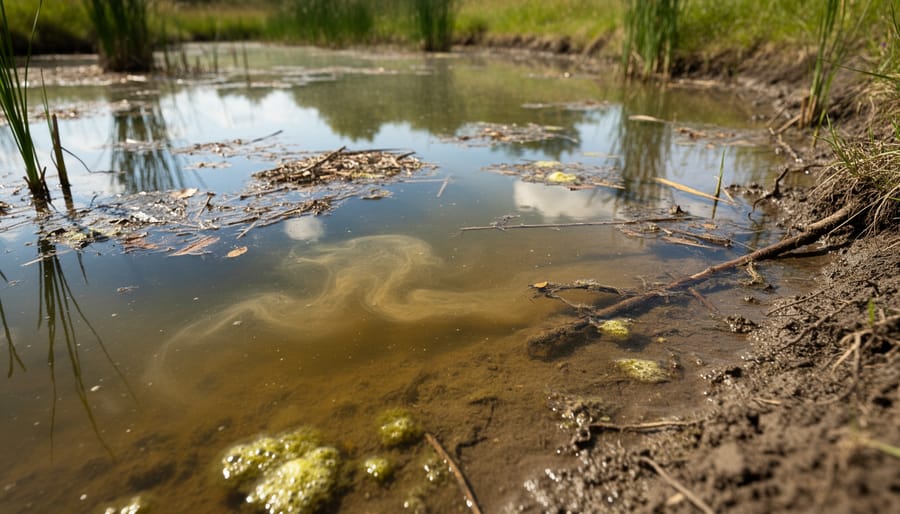
Your pond’s behavior tells a clear story. When oxygen levels drop, the symptoms appear quickly and worsen over time. Recognizing these low-oxygen warning signs helps you act before serious damage occurs.
- Fish congregate at the surface, gulping air, especially during early morning hours
- Water appears cloudy, murky, or develops a greenish tint that persists despite filtration
- Thick algae blooms spread across the surface, forming dense mats or pea-soup consistency
- Foul, sulfurous odors rise from the water, particularly near the bottom or in still corners
- Dead or lethargic fish, with unexplained deaths occurring more frequently
- Stagnant zones where debris accumulates and water barely moves
- Foam or scum collects along the edges, refusing to dissipate
These symptoms rarely appear alone. You’ll typically notice fish gasping first, then the water clarity deteriorates. Algae follows when excess nutrients combine with stagnant conditions. The smell hits last, signaling that anaerobic bacteria have taken hold in oxygen-starved depths.
Morning checks reveal the worst symptoms because oxygen naturally drops overnight when plants stop photosynthesizing. If your fish cluster desperately at the surface at dawn, they’re struggling to survive until daylight. That’s your clearest red flag.
Pay attention to where problems concentrate. Shallow ponds heat faster and hold less oxygen. Deep ponds develop stratified layers where the bottom becomes a dead zone. Overstocked ponds show symptoms earlier because more fish consume available oxygen faster. Even a well-designed pond needs help when algae blooms or summer heat push oxygen levels past the tipping point, which is where proven algae solutions and aeration work together.
If you’re seeing three or more of these symptoms, your pond needs oxygen now. The good news? Aeration reverses this decline predictably and permanently.
What Causes Low Oxygen Levels in Ponds
Understanding what’s depleting oxygen in your pond is the first step toward fixing it. Several factors work together to create low-oxygen conditions, and identifying which ones affect your pond helps you address the problem effectively.
Overstocking Fish
Too many fish create a serious oxygen shortage. Each fish consumes oxygen through respiration and produces waste that decomposing bacteria then break down, using even more oxygen in the process. If you’ve added fish over time without considering your pond’s capacity, you’ve likely tipped the balance. A general rule suggests one inch of fish per square foot of surface area, but heavily stocked koi ponds need significantly more aeration.
Excessive Organic Debris
Fallen leaves, dead plants, uneaten fish food, and fish waste accumulate on the pond bottom. As bacteria decompose this organic matter, they consume massive amounts of dissolved oxygen. A thick layer of muck on your pond floor acts like an oxygen sponge, steadily drawing down levels throughout the water column.
Hot Weather and Temperature
Warm water holds less dissolved oxygen than cold water, simple physics working against you. During summer, water temperatures above 75°F drastically reduce oxygen capacity. Fish become more active in warm water and breathe faster, creating a double problem: less available oxygen and higher demand.
- Dissolved Oxygen (DO)
- The amount of oxygen gas dissolved in water, measured in parts per million (ppm) or milligrams per liter (mg/L). Healthy ponds maintain 5-8 ppm for most fish species.
- Thermal Stratification
- The layering of pond water by temperature, with warm oxygen-poor water on top and cold oxygen-depleted water below. This prevents mixing and creates dead zones in deeper ponds.
- Biological Oxygen Demand (BOD)
- The amount of oxygen required by bacteria and microorganisms to decompose organic matter in water. High BOD from excess waste rapidly depletes available oxygen.
Inadequate Surface Agitation
Oxygen enters your pond primarily at the water surface where air and water meet. Still, stagnant water has minimal surface area for gas exchange. Without movement from wind, fountains, or mechanical devices, oxygen transfer remains painfully slow, especially in sheltered ponds surrounded by fencing or landscaping.
Dense Plant Coverage
While aquatic plants produce oxygen during daylight, they consume it at night through respiration. Ponds with 70% or more surface coverage from lilies, duckweed, or algae mats block light penetration and reduce oxygen exchange at the surface. The overnight oxygen drain from extensive plant mass can suffocate fish by morning.
Depth and Shape Problems
Deep ponds with small surface areas struggle with oxygen distribution. The bottom layers receive no sunlight for photosynthesis and stay isolated from surface oxygen. Narrow, deep ponds face worse problems than shallow, broad ones with similar volumes.
Understanding Pond Aeration Techniques
Different aeration techniques work in distinct ways, and choosing the right one makes the difference between a struggling pond and a thriving ecosystem. Each method circulates water and increases oxygen levels, but they approach the job from different angles.
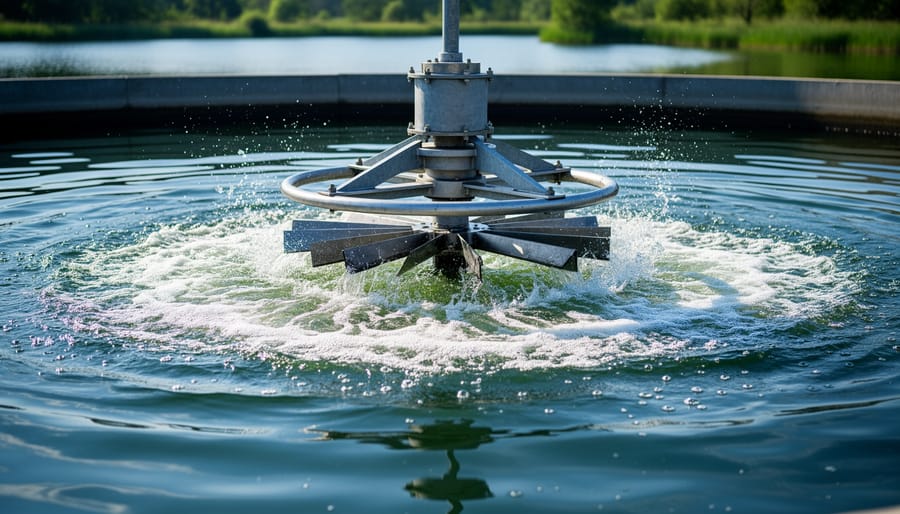
Surface aerators sit at or near the water’s surface and create dramatic splashing action. They pull water up through a motor-driven propeller and spray it back down, creating contact between water and air. This method works quickly because it agitates a large surface area, but it only oxygenates the top few feet. Surface aerators handle ponds up to two acres effectively and suit shallow ponds (under six feet deep) where you don’t need deep-water oxygen. They also double as visual features since the spray pattern creates movement and sound.
Bottom diffusers take the opposite approach. An air compressor on shore pumps air through weighted tubing to diffuser stones resting on the pond floor. Tiny bubbles rise slowly through the entire water column, bringing bottom water to the surface where it absorbs oxygen. This technique excels in deep ponds (over six feet) because it prevents thermal stratification and dead zones near the bottom. Diffusers run quietly and work year-round, even under ice. They handle any pond size when you add multiple diffusers, making them the most versatile option for serious fish-keeping or larger properties.
Fountains spray water into the air in decorative patterns, oxygenating through droplet contact with air. While they look beautiful and provide some aeration benefit, fountains primarily treat the upper water layer. They suit small ornamental ponds (under quarter-acre) where aesthetics matter as much as oxygen. The splashing sound also helps mask neighborhood noise.
Waterfalls move water over rocks or ledges, creating turbulence and air contact. They work well for smaller backyard ponds paired with a recirculating pump. Waterfalls provide decent surface aeration but struggle in hot weather when oxygen demand peaks, and they can’t address deep-water problems. They’re best as supplemental aeration combined with another method, or as the primary system only in very small ponds with light fish loads.
| Aeration Method | How It Works | Best Pond Size | Typical Cost Range |
|---|---|---|---|
| Surface Aerator | Propeller sprays water into air at surface | Up to 2 acres, shallow ponds | $400, $1,500 |
| Bottom Diffuser | Air compressor sends bubbles from pond floor | Any size, ideal for deep ponds | $300, $2,000+ |
| Fountain | Decorative spray patterns oxygenate surface | Under 0.25 acres | $200, $1,200 |
| Waterfall | Water tumbles over rocks creating turbulence | Small backyard ponds | $150, $800 (pump only) |
Your pond’s depth matters most when choosing a technique. Shallow ponds respond well to surface methods, while deep ponds need bottom-up circulation. Consider your budget, noise tolerance, and whether you want a visible feature or quiet operation. Many pond owners combine methods, running a diffuser for consistent deep oxygenation while adding a small fountain for visual appeal.
How to Install Pond Aeration: Step-by-Step
Choosing Your Aeration System
Picking the right aerator means matching the system to your pond’s specific needs, not just grabbing the cheapest option.
Start with pond size. A small 500-gallon pond needs a modest air pump and single diffuser, while a 5,000-gallon pond requires multiple diffusers or a more powerful surface aerator. Measure your pond’s gallons (length × width × average depth × 7.5) to determine capacity.
Depth matters too. Shallow ponds under 3 feet deep work fine with fountains or surface aerators. Deeper ponds benefit from bottom diffusers because they circulate oxygen throughout the entire water column, preventing stratification.
Fish load is critical. A heavily stocked koi pond needs significantly more oxygen than a lightly populated goldfish pond. Count your fish and their approximate adult sizes, koi especially demand robust aeration.
Budget varies widely. Basic fountain kits start around $100-$200 and suit small decorative ponds. Quality air pump systems with diffusers run $150-$400 for medium ponds, while large pond setups with commercial-grade equipment can exceed $500. Don’t skimp on undersized equipment, it won’t solve your oxygen problems and you’ll waste money replacing it.
Installation Process
Start by positioning your compressor or pump on stable, level ground near an outdoor electrical outlet. Keep it at least 10 feet from the pond edge to prevent accidental water damage, and choose a spot protected from rain, under an eave, in a weatherproof box, or inside a shed with ventilation.
Run the airline tubing from the compressor to your pond, burying it 2-3 inches underground if it crosses a lawn or pathway. This protects the tubing from sun damage and tripping hazards. Attach the tubing firmly to the compressor’s outlet port and secure all connections with hose clamps.
Place your diffuser or air stone at the pond’s deepest point for maximum circulation. Weighted diffusers sink naturally, but if yours tends to float, anchor it with a brick or attach it to a PVC frame. For large ponds, position multiple diffusers evenly across the bottom to eliminate dead zones. Avoid placing diffusers directly under fish feeding areas, as excessive bubbling can disrupt feeding.
Connect the system to a GFCI-protected outdoor outlet. Never use an indoor extension cord outdoors. If you’re installing easy DIY aeration without existing outdoor power, hire an electrician to install a weatherproof outlet with proper grounding.
Turn on the compressor and watch for steady bubbles rising to the surface. You should see vigorous bubbling within seconds. Check that water circulates visibly near the surface, you’ll notice gentle ripples spreading outward from the bubble column.
Run the system continuously for the first 48 hours while monitoring fish behavior. Healthy fish should move away from the surface and distribute throughout the pond as oxygen levels rise.
Troubleshooting Common Installation Issues
If your new aerator produces only weak bubbles, check for kinked airline tubing, even a slight bend can choke airflow. Inspect all connection points for leaks by brushing soapy water around fittings; bubbles will form wherever air escapes. Position diffusers deeper in the pond; shallow placement creates smaller bubbles with less oxygen transfer.
Excessive noise usually means the air pump sits on a hard surface that amplifies vibration. Place a thick rubber mat or foam pad under the compressor, or hang it with bungee cords. If the pump itself rattles, tighten any loose screws and verify it’s level. Some units develop louder operation when intake filters clog, so clean the filter screen.
When your system doesn’t oxygenate the entire pond, you’ve likely underestimated the number of diffusers needed. Add another air stone or disc in dead zones, large ponds often require multiple diffusers spaced evenly. If one section still looks stagnant, reposition that diffuser toward the problem area rather than buying more equipment.
Before and After: What to Expect from Pond Aeration
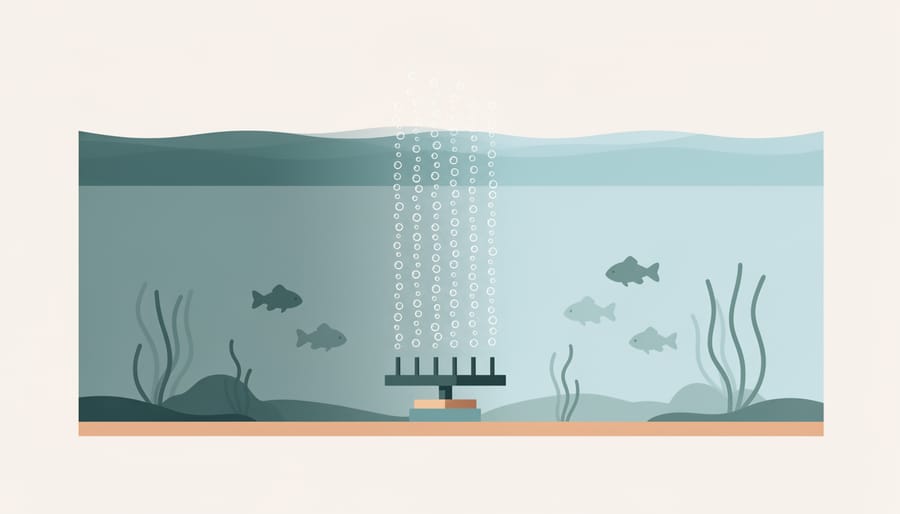
Once you flip the switch on your pond aerator, changes begin immediately, but the full transformation unfolds in stages. Here’s what you’ll see as oxygen levels rise and your pond ecosystem recovers.
First 24-48 Hours: Immediate Relief
Within a day, fish behavior improves noticeably. You’ll see them swimming at various depths instead of gasping at the surface. The water starts to circulate, breaking up stagnant pockets, and you might notice a slight increase in surface activity. If your pond had a foul smell, it often begins to fade within the first 48 hours as anaerobic bacteria lose their foothold. Don’t expect crystal-clear water yet, sediment disturbance from the new circulation can make things look temporarily cloudier.
1-2 Weeks: Visible Improvements
Water clarity starts to improve as beneficial aerobic bacteria multiply and begin breaking down organic waste more efficiently. The murky, greenish tint fades gradually. Fish become more active and their colors brighten as stress decreases. Any remaining foul odors should disappear completely. You’ll notice algae blooms slow their spread, though existing algae won’t vanish overnight. Expect the water to look fresher and feel cleaner to the touch.
1-3 Months: Long-Term Transformation
This is where the real magic happens. Water clarity reaches its best state as the biological balance stabilizes. Algae problems diminish significantly or disappear entirely, especially filamentous types that thrive in low-oxygen conditions. Fish health peaks, they grow faster, show vibrant colors, and survive stressful conditions better. Beneficial plants thrive while nuisance species struggle. The pond aeration benefits compound over time as the entire ecosystem shifts from survival mode to thriving balance.
Muck and sludge on the pond bottom start breaking down naturally, reducing the need for manual cleaning. The water maintains its clarity longer between maintenance sessions, and seasonal swings cause less disruption. Your pond essentially becomes self-regulating, requiring less intervention to stay healthy.
Preventing Future Oxygen Problems
Once your pond is thriving again, consistent maintenance prevents oxygen levels from crashing. The key is treating aeration as a permanent system, not a temporary fix.
Run Your Aerator Year-Round
Continuous operation delivers the best results. Many pond owners make the mistake of switching off their aerator once the water clears, but oxygen demand continues regardless of appearance. Running 24/7 maintains stable dissolved oxygen levels and prevents the buildup of harmful gases at the pond bottom. If energy costs concern you, understand that most pond aerators use less electricity than a standard light bulb, the long-term benefits far outweigh the minimal expense. Consistent aeration also keeps beneficial bacteria populations active, which naturally process fish waste and organic debris.
Seasonal Adjustments and Cleaning
Your maintenance routine should shift with the seasons to match changing oxygen demands:
- Spring: Check diffusers for winter debris, increase aeration as fish become more active and water temperatures rise
- Summer: Run aerator continuously during heat waves when warm water holds less oxygen; consider adding supplemental circulation in shallow areas
- Fall: Clean diffusers before leaf drop; install netting to reduce organic matter entering the pond
- Winter: Keep at least one aerator running to prevent complete ice coverage and maintain a gas exchange hole
Clean your diffusers every 3-4 months by removing them and rinsing away accumulated sediment and biofilm. This simple task maintains aerators effectiveness and prevents weak bubbles or reduced circulation.
Control Inputs
Manage what enters your pond. Avoid overfeeding fish, which creates excess waste requiring more oxygen to decompose. Stock fish appropriately for your pond volume, roughly one inch of fish per 10 gallons as a starting guideline. Regularly remove fallen leaves, grass clippings, and dead plant material before they sink and decay. Test water quality monthly during warm months to catch developing problems early, watching for rising ammonia or dropping oxygen levels that signal your system needs adjustment.
How to Fix It Step by Step
Start by measuring oxygen levels with a dissolved oxygen meter, readings below 5 mg/L indicate poor aeration and explain fish stress or gasping. Next, remove excess debris and dead plants from the pond bottom; decaying organic matter consumes oxygen rapidly, worsening the problem. If you’ve identified stagnant zones, position your aerator or diffuser in these areas to create circulation throughout the entire pond.
Run your aeration system continuously for 48 hours while observing fish behavior. Gasping should decrease within the first day as oxygen levels rise. If murky water persists after three days, combine aeration with water quality testing to check ammonia and nitrite levels, high readings indicate biological filtration issues beyond just aeration.
Adjust your aerator placement if you notice dead spots with no surface ripples. For deep ponds over four feet, bottom diffusers work better than surface fountains. Monitor pond water balance weekly during the first month, keeping pH between 6.5 and 8.5 while the ecosystem stabilizes.
Finally, reassess fish stocking levels. Overstocked ponds need more powerful aeration or fewer fish to maintain adequate oxygen.
Common Questions About Pond Aeration Results
How long before I see results from pond aeration?
You’ll notice fish behaving more normally within 24 to 48 hours as oxygen levels rise. Water clarity and algae reduction take one to three weeks, while complete transformation of a badly neglected pond can take two to three months of consistent aeration.
How much does it cost to run a pond aerator?
Most residential pond aerators use 50 to 150 watts and cost $5 to $15 per month to run continuously. The exact amount depends on your local electricity rates and the size of your system, but it’s comparable to running a couple of light bulbs.
Do I need to run my aerator all the time?
Yes, running your aerator 24/7 gives the best results. Oxygen levels drop quickly when aeration stops, especially overnight when plants consume oxygen instead of producing it. Continuous operation prevents the feast-or-famine cycle that stresses fish.
Should I keep my aerator running in winter?
Absolutely. Winter aeration prevents ice from sealing your pond completely, which would trap toxic gases and suffocate fish. Just switch to a de-icer mode or reduce the bubble intensity to avoid super-cooling the water.
Another question people ask: do all ponds really need aeration? Small, shallow ponds with few fish and plenty of plants might manage without it, especially if you have a waterfall or stream adding natural agitation. But once your pond exceeds 1,000 gallons, holds more than a handful of fish, or sits in full sun, aeration shifts from optional to essential. The deeper your pond and the more life it supports, the harder it becomes for oxygen to reach the lower levels naturally.
Some pond owners worry that aeration will disturb their carefully arranged plants or muddy the water. A properly sized and positioned system won’t create a whirlpool. Bottom diffusers release gentle columns of bubbles that lift water without blasting the substrate. If you’re seeing excessive turbulence, you’ve either placed the diffuser too shallow or chosen an oversized unit for your pond volume.
What about noise? Quality aerators run quietly. If yours sounds like a jackhammer, check for loose fittings, a kinked air line, or a compressor sitting on a surface that amplifies vibration. Mounting the pump on a rubber mat and keeping air lines free of sharp bends solves most noise complaints.
Transforming a struggling pond doesn’t require expensive renovations or endless chemicals. If your water’s murky, your fish are gasping, or algae keeps taking over, aeration addresses the root cause: low oxygen. The before-and-after difference is real and measurable. Within days, you’ll notice clearer water and more active fish. Within weeks, algae retreats and odors disappear. Within months, you’ve got a balanced, self-sustaining ecosystem that stays healthy year-round.
The best part? You’ve already done the hard work by diagnosing your pond’s symptoms and understanding what went wrong. Now it’s time to act. Choose an aeration system that matches your pond’s size and depth, follow the installation steps, and commit to running it consistently.
Your pond can recover. Those mornings when you worried about finding dead fish or dealing with green soup water can become memories. With proper aeration, you’re not just fixing today’s problems, you’re preventing tomorrow’s. The healthier pond you’re imagining is absolutely within reach, starting with the simple decision to add oxygen where it’s needed most.