
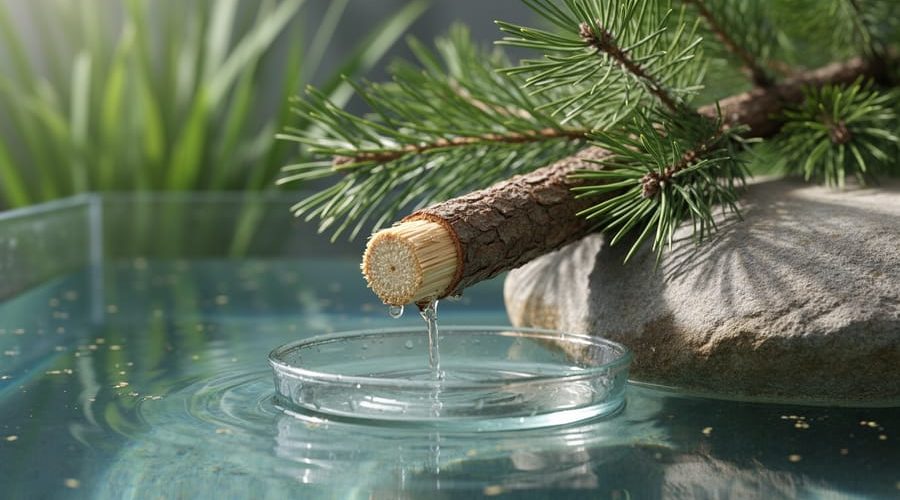
Xylem Filters: Natural, Low-Tech Filtration for Ponds and Aquariums
A xylem filter is a simple, DIY filtration device made from a fresh branch that uses the tree’s natural plumbing system to remove bacteria, particles, and contaminants from water. The branch’s xylem tissue acts as a biological membrane, with microscopic pores that trap impurities while allowing clean water to pass through. You can build one in under an hour using materials you likely already have at home.
This natural filtration method has been gaining attention among pond and aquarium hobbyists looking for low-tech, eco-friendly ways to supplement their water quality efforts. While xylem filters won’t replace your existing mechanical or biological filtration setup, they offer a fascinating glimpse into nature’s own engineering and can serve as an emergency backup or small-scale polishing filter for crystal-clear water.
The concept is beautifully straightforward: the same vascular system that pulls water from roots to leaves in living trees can filter out particles as small as bacteria when you cut a section and apply gentle pressure. Pine and other coniferous branches work particularly well because their xylem structure creates an effective natural sieve. The beauty of this approach lies in its accessibility. There’s no expensive equipment to buy, no complex assembly instructions to decode, and the satisfaction of using a completely natural material to improve your water quality is genuinely rewarding for anyone who loves hands-on pond or aquarium care.
What Are Xylem Filters and How Do They Work?
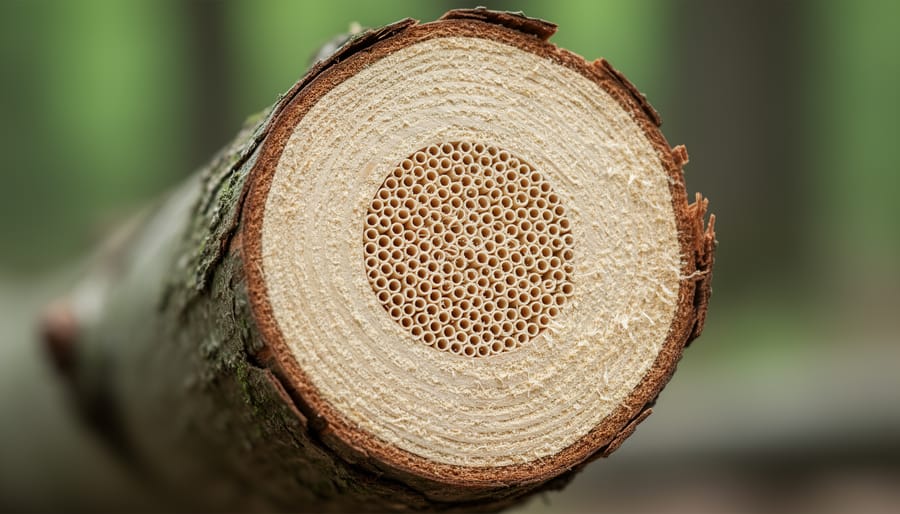
Xylem is the living pipeline inside branches and stems that transports water from roots to leaves. In sapwood (the younger, outer layers of wood), this tissue forms a network of tiny tubes and pores that naturally filter out particles as water moves through. When you cut a fresh branch and push water through it, you’re essentially using the tree’s own plumbing system as a microscale strainer.
The magic happens at the cellular level. Xylem vessels contain microscopic pits and membranes with pore sizes ranging from 70 to 220 nanometers. That’s small enough to trap bacteria (typically 500 to 5,000 nanometers), many pathogens, and suspended sediment particles. Water molecules pass through easily, but larger contaminants get caught in the labyrinth of interconnected channels. Think of it like forcing dirty water through thousands of tiny, overlapping screens stacked in series.
For water gardeners, this means xylem filters excel at clarifying cloudy water and reducing bacterial loads without chemicals. They won’t tackle green water caused by algae, remove ammonia or nitrites, or eliminate dissolved organics. Those jobs still belong to the filter media you need in your main biological and mechanical filters.
What makes xylem fascinating is its effectiveness despite being completely passive. No electricity, no media to buy, no bacteria colonies to establish. You’re borrowing a filtration system that evolved over millions of years to keep trees healthy. The same properties that prevent air bubbles and debris from blocking water flow in living trees work just as well for your pond water, at least temporarily.
Making Your Own Xylem Filter: A Step-by-Step Guide
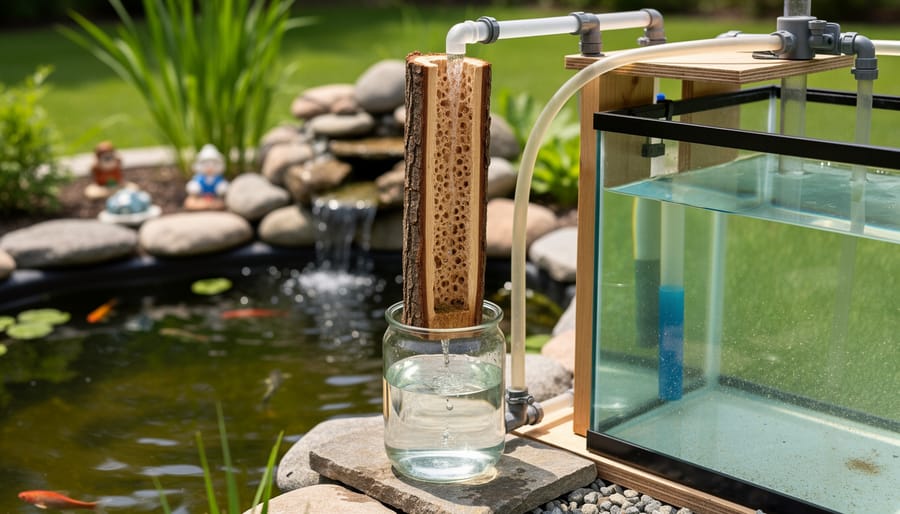
Creating your own xylem filter is straightforward and takes about 15 minutes. I’ll walk you through the process I used for my first one, which I set up as a pre-filter before my main pond filtration system.
Selecting Your Branches
Start with fresh branches from pine, birch, or maple trees. The key word here is fresh, you need live sapwood with intact xylem tissue. Look for branches roughly one to two inches in diameter. I cut mine from a white pine in my yard, choosing a section with smooth bark and no obvious damage or rot. Avoid dried, dead, or treated wood entirely; they won’t filter effectively.
Preparing the Branch
Cut a section about four to six inches long using clean pruning shears or a small saw. Remove the bark completely with a knife, exposing the pale sapwood underneath. This step matters because bark can harbor debris and reduce flow. My first attempt, I left some bark on and quickly learned it created flow blockages.
Trim both ends cleanly and square. You want flat, even surfaces where water will enter and exit. Some people sand the ends lightly for a smoother seal, though I’ve found it’s not essential if your cuts are clean.
Housing the Filter
You’ll need a way to hold the branch and direct water through it. I used a simple PVC coupling slightly larger than my branch diameter, sealing gaps with aquarium-safe silicone. The branch sits snugly inside with water flowing through its length.
For pond applications, you can attach standard tubing to both ends of the housing. Connect the inlet side to your pump output and the outlet to your main filter or directly back to the pond. This creates a budget-friendly filtration stage that works alongside your existing setup.
Getting It Running
Prime the filter by soaking the entire assembly in pond water for 30 minutes. This saturates the xylem tissue and helps prevent air pockets. Start with low flow, around 50 to 100 gallons per hour works well. Higher flow rates can overwhelm the natural filtration capacity.
Test for leaks, check that water flows steadily through the branch rather than around it, and you’re done. The whole setup cost me less than five dollars in materials.
Using Xylem Filters in Hybrid Filtration Systems
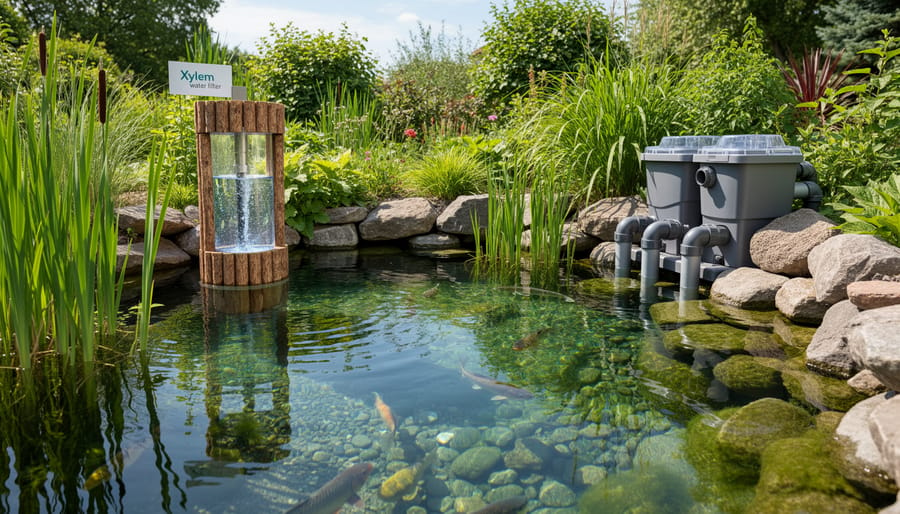
Pond Applications
In pond systems, xylem filters shine as versatile add-ons that tackle specific challenges without overhauling your existing setup. Position a branch filter in a small housing just after your pump intake to catch coarse debris and bacteria before they reach your main biological filter. This pre-filtering extends the life of your bio-media and reduces cleaning frequency, I’ve seen my mechanical filter pads stay cleaner an extra week when using this approach.
Another smart placement is between your main filtration and UV clarifier. The xylem removes bacteria that UV light would otherwise need to handle, making your UV filter setup more effective at controlling algae specifically. Think of it as a polishing stage that presents cleaner water to the UV unit.
Keep a prepared xylem filter as emergency backup during routine maintenance. When you shut down your main filter for cleaning, the branch filter can maintain basic circulation and bacteria control for a few hours, preventing water quality crashes in heavily stocked ponds. It won’t replace your primary system, but it bridges the gap nicely.
Aquarium and Water Feature Uses
For aquarium enthusiasts, xylem filters shine in specialty situations where you want gentle, chemical-free filtration. Quarantine tanks are perfect candidates, when you’re isolating new fish or treating sick ones, a fresh branch filter provides bacterial reduction without medications clinging to activated carbon or resins. I’ve used pine branch sections in my 10-gallon quarantine setup, and they work beautifully for the short durations these tanks typically run.
Low-flow naturalistic aquariums benefit too. If you’re maintaining a biotope tank with minimal current, a small xylem filter tucked behind driftwood or plants offers subtle water polishing without the mechanical hum of traditional filters. The natural aesthetic fits right in.
Tabletop fountains and ornamental water features present another ideal application. These decorative systems often suffer from biofilm buildup but can’t accommodate bulky filter cartridges. A trimmed branch section fitted into the fountain’s intake reduces bacteria before they cloud the water, and replacement takes seconds. The key is matching branch diameter to your feature’s pump capacity, too thick and flow drops to a trickle. Start with pencil-thin sections and adjust from there.
Advantages and Limitations You Should Know
Xylem filters bring some real strengths to the table, but they’re not miracle workers. Understanding both sides helps you decide where they fit in your setup.
The biggest advantage is chemical-free bacteria removal. Xylem tissue physically traps bacteria and some other microorganisms as water passes through those microscopic capillaries, giving you biological filtration without additives or power-hungry equipment. For water gardeners who prefer natural methods, this is huge. Cost is another win: you’re using renewable materials you can often find in your own yard. A pine branch costs nothing compared to replacement filter cartridges. Sustainability matters too. When your xylem filter is spent, it goes straight into the compost bin rather than a landfill. There’s something satisfying about that closed loop.
| Contaminant Type | Xylem Filter Effectiveness | Better Alternative If Not Effective |
|---|---|---|
| Bacteria and E. coli | High (up to 99% removal) | N/A |
| Fine sediment and particles | Moderate | Mechanical filter pads |
| Algae and green water | None | UV clarifiers, flocculants |
| Dissolved chemicals and medications | None | Activated carbon, water changes |
| Ammonia and nitrites | None | Biological filter media |
Now for the limitations. Xylem filters have a short working life, typically just a few days to maybe two weeks before the capillaries clog or the wood dries out. You’ll need a steady supply of fresh branches, which can be inconvenient. Flow rates stay low compared to commercial filters. Push too much water through and effectiveness drops sharply, so they work best in gentle-flow situations. They won’t touch algae, dissolved nutrients, or chemicals like chlorine or fish medications. If green water is your problem, xylem filters won’t solve it.
Think of xylem filters as a supporting player, not the star of your filtration lineup. They shine when paired with conventional equipment in a hybrid system, handling bacterial reduction while your main filter tackles everything else.
Maintenance and Replacement Tips
Keeping your xylem filter working well is straightforward, but these natural filters have a much shorter lifespan than conventional equipment. Check your filter every couple of days by observing the flow rate, if water slows noticeably or trickles instead of flowing, the xylem tissue has likely clogged with trapped particles. This is actually a sign it’s doing its job, but it means replacement time is near.
Look for visual cues too. Fresh xylem should appear pale and moist inside the bark. When you notice the exposed end turning dark brown or grey, developing a slimy film, or looking dried and brittle, swap it out. Most branches work effectively for three to seven days depending on water quality and flow rate. Heavily contaminated water will clog the tissue faster, while cleaner systems might stretch to two weeks.
I keep a rotation going, I cut fresh branches every weekend and store them in a bucket of clean water, so I’ve always got replacements ready. When I pull a spent filter, I toss it straight into my garden compost bin. Since it’s just untreated wood that’s done its filtering work, it breaks down beautifully and returns nutrients to the soil.
Unlike natural filtration systems that clean themselves biologically, xylem filters are purely disposable. Don’t try to clean and reuse them, once the microscopic pores clog, they’re finished. The upside? Replacement costs nothing if you’ve got access to the right trees, and the quick turnover means you’re always working with fresh, effective filtration media.
Common Questions About Xylem Filters
After you’ve built and installed your first xylem filter, questions naturally pop up. I remember texting my neighbor at 10 PM after my initial setup, asking if I’d picked the wrong tree (I hadn’t, but the uncertainty was real). Here are the answers to what readers ask most often.
Which tree species make the best xylem filters?
Pine, birch, maple, and aspen work exceptionally well because their sapwood has a dense, consistent pore structure. Avoid hardwoods like oak or walnut, which can leach excessive tannins and create darker water.
Can I use dried or stored branches?
No, branches must be fresh and living when harvested. Once the xylem dries out, the tiny capillaries collapse and lose their filtering ability completely.
Are xylem filters safe for fish and plants?
Yes, when you choose the right species. Pine and birch release minimal compounds into the water, making them fish-safe. Just avoid resinous or aromatic woods that might alter water chemistry significantly.
Is this worth trying for a large pond?
For ponds over 500 gallons, xylem filters work best as a supplement rather than your main filtration. They shine in smaller systems (under 200 gallons) or as a secondary polishing stage in any size setup.
The species question matters more than you’d think. I tried cherry once and ended up with faintly amber water for three days. Stick with the tested options until you’re comfortable experimenting. As for effort versus reward, that depends on your goals. If you enjoy hands-on projects and want a chemical-free bacteria reduction method, the ten minutes of prep every week feels worthwhile. If you’re managing a large koi pond and already running a robust mechanical system, xylem filters become more of a curiosity than a necessity. They’re honestly most satisfying in small naturalistic setups where you can see the difference and appreciate the simplicity of using something that grew in your backyard.
Xylem filters won’t replace your main filtration system, but they’re an excellent way to dip your toes into natural, low-tech water management. They cost almost nothing, teach you about how plants naturally purify water, and can genuinely improve water quality in smaller setups or as backup filtration during maintenance periods.
I’d encourage you to give them a try, even just as an experiment. Cut a few fresh branches, set up a simple flow-through system, and see what happens. You might be surprised at how well this ancient technology works in your modern pond or aquarium. Best of all, if it doesn’t pan out, you’re only out a few branches and an afternoon of tinkering.
Combine them with your existing mechanical and biological filters, keep realistic expectations, and enjoy the process. Water gardening is all about learning what works for your unique setup.