
Transform Your Water Garden Into a Living Art Gallery
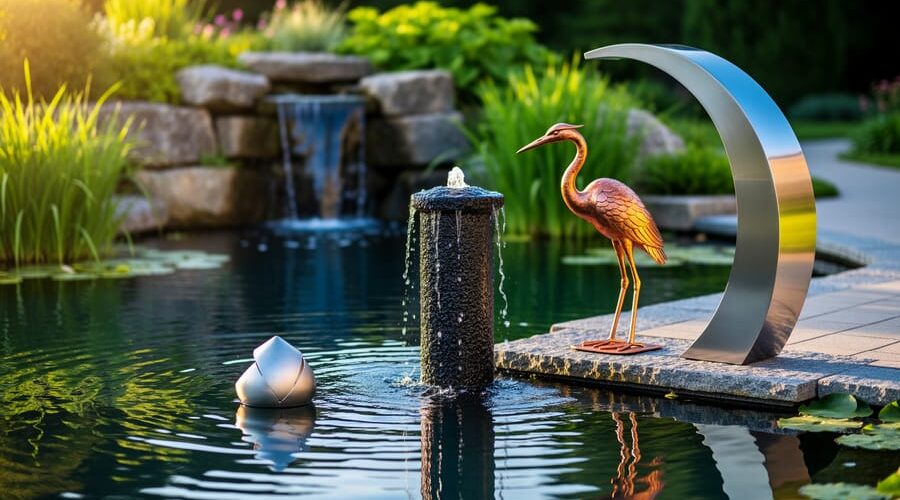
Transform your ordinary pond into something extraordinary by positioning sculptural elements at water’s edge where reflections double their visual impact. Choose pieces that complement your pond’s scale—oversized art overwhelms small water features, while tiny ornaments disappear around large ponds. Place statement pieces at focal points where sight lines naturally draw the eye, like near waterfalls or at the end of pathways.
Layer your art at varying heights to create depth and visual interest throughout your water gardens as living art. Install taller sculptures behind lower plantings, add floating ornamentation on the water surface, and nestle smaller art pieces among rocks and marginal plants. This three-dimensional approach ensures your garden captivates viewers from every angle.
Select materials that withstand constant moisture exposure—copper develops beautiful patina over time, stainless steel resists corrosion, and treated stone weathers gracefully. Test unknown materials in hidden spots first to avoid disappointing rust stains or deterioration that mars your pond’s appearance.
Mix purchased statement pieces with personal DIY projects to create a garden that tells your unique story. A handcrafted mosaic stepping stone holds more meaning than mass-produced decor, while professional sculptures provide polished focal points. This balance between professional artistry and personal touches creates water gardens that reflect your individual style rather than catalog perfection, making your outdoor space genuinely one-of-a-kind.
Why Art Belongs in Your Water Garden
There’s something magical that happens when you place a piece of art near water. I still remember the first time I positioned a simple ceramic heron beside my pond—the way it caught the morning light reflecting off the water’s surface completely transformed that corner of my garden. Suddenly, what was just a nice pond became a destination, a spot where visitors would stop and really look.
Water gardens are naturally beautiful, but they can sometimes feel incomplete without that human touch. Art gives your water feature a focal point, a visual anchor that draws the eye and creates a sense of intention. Think about it: when you look at a pond, your gaze tends to wander across the surface. A well-placed sculpture or colorful ornament gives people something to focus on, turning a pleasant view into a memorable scene.
The interplay between water and art creates effects you simply can’t achieve in other garden areas. Metallic sculptures catch and throw light in constantly changing patterns as the water ripples. Colorful glass pieces seem to glow more intensely with water’s reflection nearby. Even stone statues take on different moods depending on whether the water is calm or moving.
Beyond the visual appeal, adding art to your water garden is deeply personal. It’s your chance to express yourself and share what brings you joy. Maybe you choose whimsical frogs because they make you smile, or elegant abstract pieces that create a zen atmosphere. Whatever you select tells visitors something about who you are.
The combination of nature’s living beauty and human creativity touches something emotional in us. Water represents flow and change, while art captures a moment of human imagination. Together, they create spaces that feel both peaceful and inspiring.
Sculptural Elements That Make a Splash
Metal Sculptures and Abstract Forms
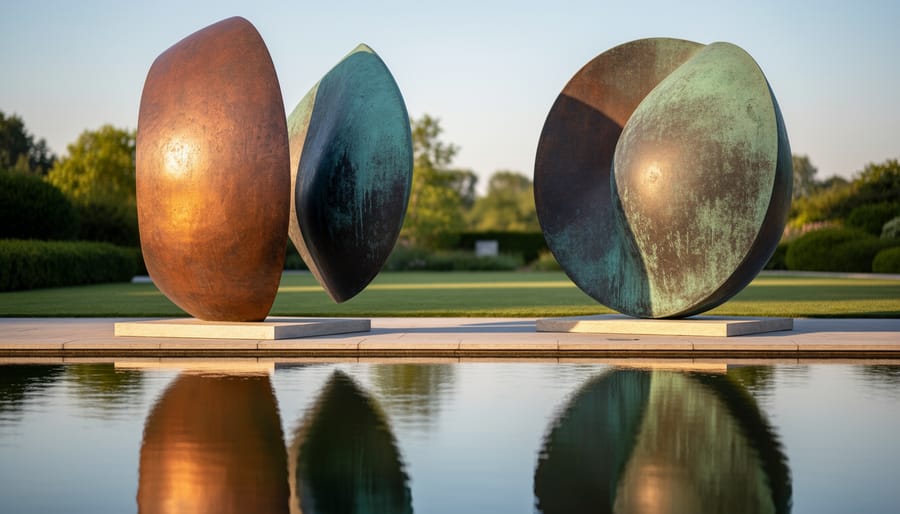
Metal sculptures bring a dramatic, contemporary edge to water gardens that just keeps getting better with time. I’ve watched copper pieces transition from bright orange to gorgeous blue-green verdigris near my pond, and it’s like having art that evolves with the seasons.
Weather-resistant metals like stainless steel, copper, and rusted iron (often called Corten steel) are perfect choices because they’re designed to withstand moisture. Stainless steel maintains its shine and creates stunning reflections on the water’s surface, while copper develops that beautiful patina over months of exposure to pond spray. Rusted iron pieces offer an earthy, industrial look that contrasts beautifully with soft water plants.
When placing metal sculptures, think about how they’ll interact with light and water. Position reflective pieces where morning or evening sun will bounce off both the metal and the water below, creating double the visual impact. Abstract forms work wonderfully as focal points at pond edges or nestled among rocks where water splashes can enhance that natural aging process.
Consider the scale too. A tall, slender sculpture draws the eye upward, while broader pieces anchor a space. The magic happens when metal meets water, creating movement through reflection and shadow play that changes throughout the day.
Stone and Ceramic Creations
Stone and ceramic pieces bring timeless elegance to your water garden, creating focal points that blend beautifully with natural surroundings. Handcrafted pottery like decorative urns or glazed water bowls add artistic flair while providing functional elements for smaller water features. I’ve found that positioning ceramic pieces near pond edges creates wonderful reflections in the water, doubling their visual impact.
When selecting stone carvings or sculptures, always check for frost-resistant materials if you live in colder climates. Look for dense stones like granite or slate that won’t crack during freeze-thaw cycles. Porous materials like terracotta need proper sealing or should be brought indoors during winter months.
Mosaic elements offer fantastic DIY opportunities. You can create stepping stones, decorative borders, or even embellish existing planters using broken tiles, glass, or pottery shards. This technique works wonderfully with Japanese-inspired pond designs, adding color without overwhelming the serene aesthetic.
For visual harmony, echo the colors and textures already present in your natural rock features. If your pond has rough boulders, consider rugged stone pieces rather than highly polished ceramics. This creates cohesion while still adding that unique artistic touch you’re after.
Whimsical Characters and Wildlife Figures
Whimsical animal figures can bring delightful personality to your water garden, but the key is choosing pieces that spark joy without tipping into overwhelming kitsch. I learned this lesson when I first added a bright pink flamingo near my koi pond—it clashed terribly! Now I look for sculptures with natural colors and charming details rather than garish paint jobs.
Frogs and turtles work beautifully as ornamental elements because they belong in aquatic settings. Choose bronze or stone finishes for timeless appeal, or select hand-painted pieces with subtle, realistic coloring. Herons positioned at the water’s edge create natural focal points and can actually deter real birds from fishing in your pond.
For something more playful, consider a single statement piece like a leaping frog on a lily pad or a family of duckling sculptures. The trick is restraint—one well-placed whimsical figure becomes a conversation starter, while too many create visual chaos. Scale matters too. Match your sculpture size to your pond dimensions, keeping smaller figures for intimate gardens and larger pieces for expansive landscapes. Position them where they’ll catch morning or evening light for added magic.
Floating and Water-Level Art Installations
Glass Floats and Reflective Spheres
There’s something magical about watching sunlight dance across colorful glass orbs floating on your pond’s surface. Glass floats and reflective spheres add an unexpected pop of color and shimmer that transforms ordinary water features into something truly special.
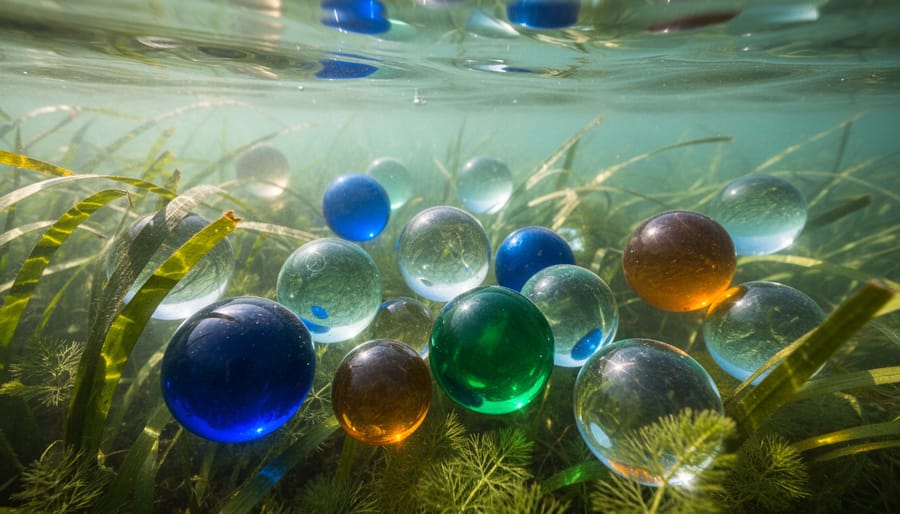
Vintage glass fishing floats are my personal favorite. These hand-blown beauties come in jewel tones like cobalt blue, amber, and sea green. They bob gently on the water, creating mesmerizing reflections and movement. You can find authentic vintage floats at antique shops or purchase modern replicas designed specifically for water gardens. Look for pieces with proper flotation capabilities and thick glass that can withstand temperature changes.
Mirrored gazing balls offer a different appeal. Placed on pedestals near your pond’s edge or nestled among marginal plants, they reflect the surrounding garden and sky, creating fascinating visual depth. Choose stainless steel or glass versions with weather-resistant coatings to prevent tarnishing.
For installation, anchor floating pieces with clear fishing line tied to pond weights if you experience strong winds. This prevents them from clustering in corners while still allowing natural movement. Position gazing balls where they’ll catch morning or evening light for maximum impact.
Safety note: Glass can break, so avoid placing spheres where they might fall onto hard surfaces. Keep them away from high-traffic areas where children or pets might knock them over. Regularly inspect pieces for cracks, especially after winter, and remove any damaged items promptly to prevent sharp edges from posing hazards.
Kinetic Water Art and Moving Sculptures
There’s something magical about watching art come alive with movement, and kinetic sculptures bring that enchantment to your water garden. These pieces harness the natural forces around them—flowing water, gentle breezes, or cascading streams—to create ever-changing displays that captivate visitors and keep your garden feeling dynamic.
Water wheels are classic kinetic additions that never get old. Position one where your waterfall meets the pond, and you’ll be amazed how the constant rotation adds a soothing, rhythmic element to your space. I installed a small copper water wheel near my pump outlet years ago, and it’s become my favorite spot to sit with morning coffee.
Spinning wind sculptures work beautifully near water features, their reflections doubling the visual impact. Look for designs with metallic finishes that catch sunlight and create dancing patterns across your pond’s surface. Stainless steel and copper weather gracefully and develop beautiful patinas over time.
For DIY enthusiasts, consider creating floating kinetic pieces using lightweight materials like painted wood or sealed cork with small propellers or sails. These drift across your pond while spinning, creating unexpected moments of delight.
The key is choosing pieces scaled appropriately for your space—a modest backyard pond needs subtle movement, while larger water gardens can accommodate grander, more dramatic kinetic installations.
Fountain Art: Where Function Meets Beauty
Artistic Fountain Designs Beyond the Basic
Fountains add movement, sound, and visual drama to your water garden, and artistic fountain designs can truly elevate your space from pleasant to unforgettable. When I installed my first spouting frog sculpture, the cheerful gurgle completely transformed my backyard into a peaceful retreat.
Spouting sculptures bring personality and whimsy to ponds. Think playful dolphins, elegant herons, or classic lion heads that send arcing streams into the water. These work beautifully in small to medium ponds where they become focal points without overwhelming the space.
Urn fountains offer timeless elegance, perfect for formal or cottage-style gardens. Water cascades gently over the lip, creating soothing sounds. Position these near seating areas where you can fully appreciate the gentle music they create.
Modern geometric designs featuring stacked stones, copper spheres, or sleek metal cubes suit contemporary landscapes. These minimalist pieces make bold statements in larger ponds and complement clean-lined hardscaping.
When choosing your fountain, consider proportion first. A towering fountain in a tiny pond looks awkward, while a small bubbler disappears in expansive water. Match the fountain style to your garden theme and ensure your pump provides adequate flow for your chosen design. Start with one statement piece and build from there.
DIY Fountain Art Projects
Creating your own fountain art is easier than you might think, and it’s incredibly rewarding! Start with a simple stacked stone fountain by drilling holes through flat river rocks and threading them onto a submersible pump’s tube. The water bubbles up through the center, creating a peaceful, natural look that blends beautifully with pond surroundings.
Repurposed containers make fantastic fountain bases. I’ve transformed old ceramic pots, vintage watering cans, and even teapots into charming water features. Just ensure your container is waterproof or line it appropriately, add a small pump, and watch the magic happen.
For an Asian-inspired touch, bamboo spouts are surprisingly simple to construct. Cut bamboo sections at angles to create natural channels, secure them to a frame near your pond edge, and let water trickle gently into the water below. The soft sound is absolutely enchanting on summer evenings. These projects require minimal investment but deliver maximum personality to your water garden space.
Lighting as Artistic Expression
When the sun sets, your water garden doesn’t have to disappear into darkness. Strategic lighting can turn your daytime art pieces into stunning nighttime focal points that completely change the mood of your outdoor space. I’ll never forget the first time I installed a simple underwater light in my pond – suddenly my floating sculpture went from nice to absolutely magical!
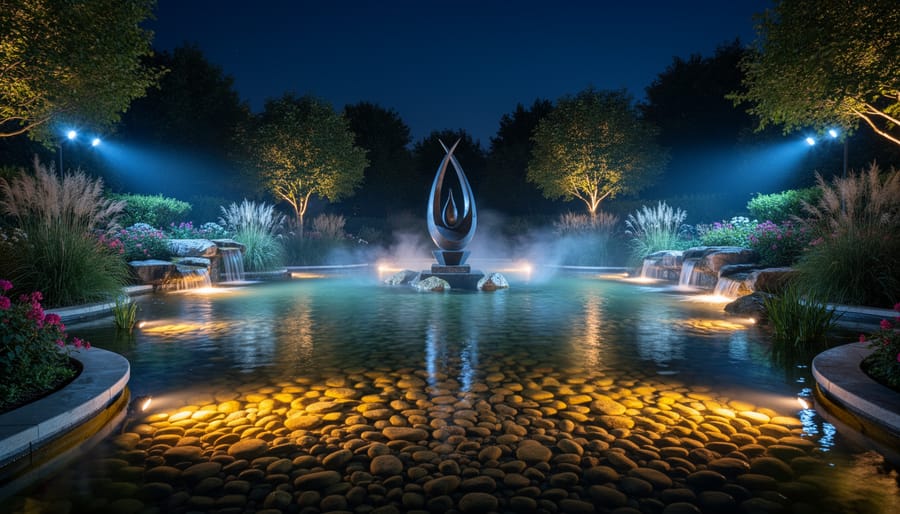
Underwater lights are probably my favorite lighting option because they create this gorgeous glow from below. You can tuck LED lights beneath sculptures or near waterfalls to illuminate the water itself. The way light plays through moving water creates constantly shifting patterns that are mesmerizing to watch. These lights come in waterproof housings and are surprisingly easy to install, even if you’re new to pond lighting.
Spotlights positioned around your garden art give you control over what catches the eye after dark. Aim a small spotlight at a ceramic sculpture or metal art piece, and you’ll create dramatic shadows and highlights that might not be visible during the day. I like placing them at ground level pointing upward for that theatrical effect.
Color-changing LED options have become incredibly affordable and fun to experiment with. With a simple remote control, you can shift from cool blues that create a tranquil atmosphere to warm ambers for a cozy evening vibe. Some systems even cycle through colors automatically or sync with music if you’re entertaining.
Start with one or two lights to see what you like. You can always add more later. Solar-powered options eliminate the need for electrical work, making them perfect for testing different lighting positions before committing to a permanent setup.
Placement Strategies That Maximize Impact
Creating Visual Balance and Flow
Arranging your garden art thoughtfully makes all the difference between a curated collection and a chaotic jumble. Start by considering sightlines from key viewing areas like your patio, kitchen window, or favorite garden bench. What catches your eye first? That’s your anchor piece.
The rule of odd numbers really works wonders. Three sculptures create more visual interest than two or four. When I grouped three different-height pieces near my pond, the asymmetry felt natural and dynamic rather than forced.
Create depth by placing art at varying distances from viewing points. Position a tall piece in the background, a medium sculpture in the middle ground, and a smaller accent near the front. This layering draws the eye through your space and makes even compact gardens feel expansive.
Avoid clustering everything together. Give each piece breathing room so visitors can appreciate it individually. Think of negative space as important as the art itself. A sculpture surrounded by open lawn or low groundcover becomes a focal point, while crowding diminishes impact.
Balance doesn’t mean symmetry. Mix heights, textures, and styles while maintaining a cohesive color palette or theme. Your garden should guide visitors naturally from one discovery to the next, creating a flowing journey rather than visual overload.
Practical Considerations for Pond Health
When adding art to your pond, your fish and water quality should always come first! I learned this lesson early on when a beautiful metal sculpture I installed started blocking my skimmer’s intake—not ideal when you’re trying to keep the water crystal clear.
Before placing any art piece, check that it won’t obstruct your filtration system, pump intakes, or aerators. These components are crucial for maintaining pond ecosystem health, so give them plenty of clearance. Your fish also need swimming space, so avoid overcrowding with too many decorations, especially in smaller ponds.
Material safety is paramount. Steer clear of anything that might leach harmful chemicals—certain paints, treated woods, or reactive metals can be toxic to fish and plants. When in doubt, look for items specifically labeled as pond-safe or aquarium-safe.
Finally, think about maintenance access. You’ll need to reach your pond for cleaning, plant care, and equipment checks. Position your art so it enhances rather than complicates these routine tasks. Removable pieces work wonderfully if you’re tight on space or need flexibility for seasonal maintenance.
Think of your water garden as your personal art gallery – an ever-evolving outdoor space that reflects who you are and what brings you happiness. There’s no right or wrong way to decorate your pond, and that’s the beauty of it. Your unique garden art is all about self-expression, whether that means filling your space with colorful sculptures, keeping things natural and zen-like, or mixing styles that speak to you.
If you’re just getting started, remember that you don’t need to transform your entire water garden overnight. I began with just one stone lantern beside my pond, and over the years, my collection grew organically as I discovered pieces that made me smile. Start with one or two items that genuinely excite you, then build from there. Sometimes the best collections develop slowly, giving you time to see what works and what doesn’t.
Don’t be afraid to experiment, move things around, and try new ideas. That driftwood sculpture might look better on the other side of the pond, or those stepping stones could create a completely different feel if you rearrange them. Your water garden is a living canvas that changes with the seasons and your creativity.
We’d love to see what you create! Your water garden art journey might inspire someone else who’s just beginning theirs. Share your creations, swap ideas with fellow water gardeners, and most importantly, enjoy the process of making your outdoor space uniquely yours.