
Utility Connection Fees Just Got Real: What Your Water Garden Actually Costs to Hook Up
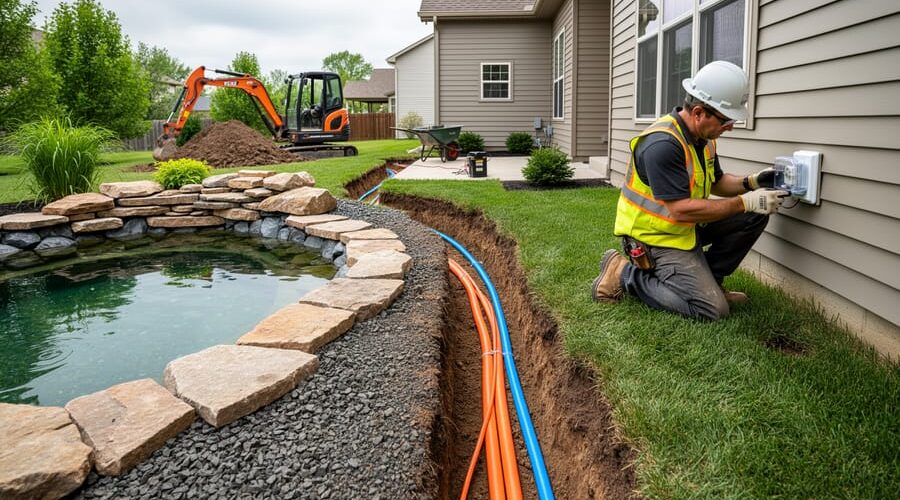
Planning your dream pond involves more than calculating materials and labor—utility connection fees can add hundreds to thousands of dollars to your project budget, catching many water gardeners completely off guard. These fees cover the cost of connecting your pond’s electrical system, water supply, or drainage to existing utility infrastructure, and they vary wildly depending on your location, property setup, and pond complexity.
Think of utility connection fees as the “handshake” cost between your water feature and your home’s existing systems. When you install a pond pump, filter, or lighting system, you’re typically drawing electricity from your home. If your nearest outdoor outlet sits 150 feet from your planned pond location, you’ll need professional electrical work to bridge that gap safely. Similarly, if you’re planning a large water garden that requires a dedicated fill line or drainage system, you might need to tap into municipal water lines or septic systems—each connection triggering its own set of fees.
These costs catch people by surprise because they’re separate from both pond permit costs and contractor quotes. Your pond installer might give you a perfect estimate for excavation, liner, and equipment, but those utility hookups? That’s often a separate contractor, separate inspection, and separate bill.
The good news is that understanding these fees upfront transforms them from budget-busters into manageable line items. Most water gardeners pay between $500 and $3,000 for utility connections, though costs can climb higher for remote installations or properties requiring trenching through difficult terrain. By knowing what triggers these fees, how municipalities calculate them, and what alternatives exist, you can plan strategically and avoid the sticker shock that derails so many pond projects right before completion.
What Are Utility Connection Fees (And Why Should Water Gardeners Care)?
When you’re dreaming about adding a beautiful pond to your backyard, it’s easy to focus on the exciting stuff – the pump, the waterfall, those gorgeous koi swimming around. But here’s something that catches many water gardeners off guard: utility connection fees. Think of these as the “welcome to the grid” charges your local utility companies charge when you need to tap into their infrastructure for the first time.
In simple terms, a utility connection fee is what you pay to physically connect your property (or in this case, your pond) to existing water, electrical, or gas services. For water garden enthusiasts, we’re mainly talking about electrical connections here. That pump keeping your pond healthy? It needs power. Those underwater lights creating nighttime magic? They need electricity too. If your pond location doesn’t have nearby electrical access, you might need to pay a connection fee to extend service to that area.
Now, why should you care? Because these fees can significantly impact your project budget. I learned this the hard way with my first pond when I assumed the existing outdoor outlet would handle everything. It couldn’t, and I ended up needing a dedicated circuit run to the pond area – hello, unexpected connection fee!
The key difference to understand is this: connection fees get you hooked up to the service initially, while ongoing utility costs are what you’ll pay monthly for actually using that electricity or water. For pond projects, you’ll typically encounter connection fees if you’re installing new electrical service, upgrading your electrical panel to handle the additional load, or in some cases, connecting to municipal water supplies for automatic pond filling systems.
Understanding these fees early in your planning phase prevents those budget-busting surprises that can put your dream pond project on hold.
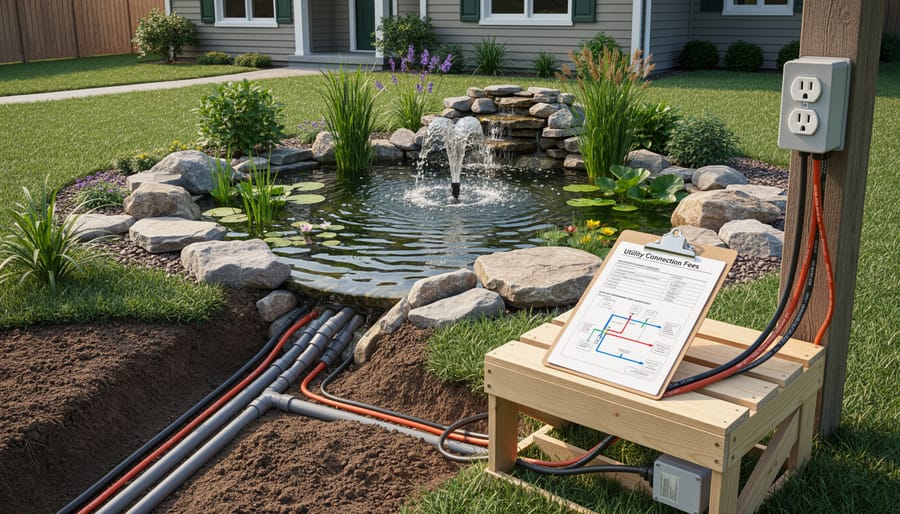
Types of Utility Connections Your Water Garden Might Need
Water Line Connections
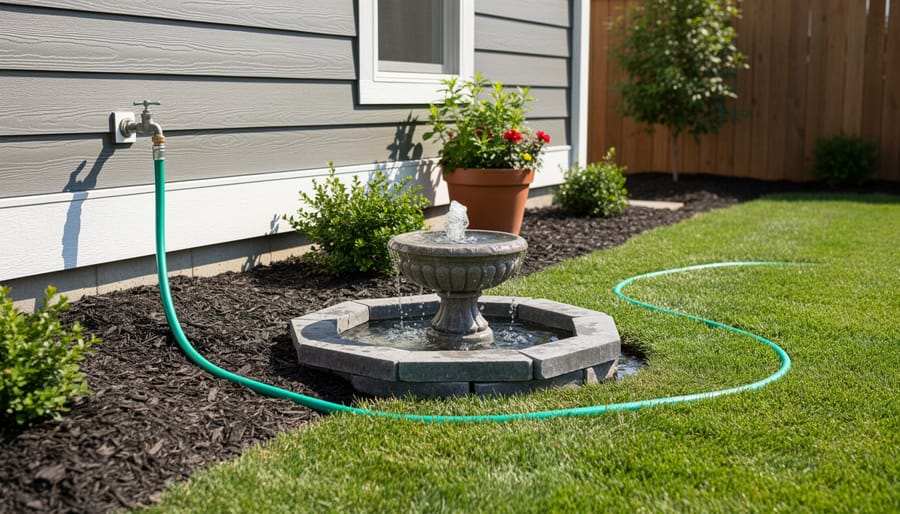
For most backyard pond enthusiasts, filling your water feature starts with a simple garden hose dragged from your outdoor spigot. This works beautifully for smaller ponds and occasional top-offs, and the good news is that you won’t face any special connection fees for this approach. You’re already paying for municipal water through your regular utility bill, so filling a 500-gallon pond over a weekend is just like watering your garden, only more fun to watch!
The situation changes when you’re planning something more substantial. If you’re installing a large pond that holds several thousand gallons, or if you want an automatic top-off system that constantly maintains your water level, you might need a dedicated water line. This is when connection fees come into play.
A dedicated water line means running a separate pipe directly from the main water supply to your pond area. Think of it as giving your pond its own personal water highway. You’ll typically need this for ponds over 2,000 gallons that require frequent filling, or if you’re installing automated systems that monitor and adjust water levels throughout the day.
Water utility companies charge connection fees to cover the cost of installing new meters, inspecting the work, and updating their records. These fees vary widely depending on your location, but expect anywhere from $500 to $2,500 for residential installations. Some municipalities charge based on the pipe size you need, while others have flat fees.
Here’s a helpful tip from my own experience: before committing to a dedicated line, calculate how often you’ll actually need significant water additions. Many pond keepers find that occasional hose fills, even for larger ponds, save considerably compared to the upfront connection costs.
Electrical Connections for Pumps and Filters
Getting electricity to your pond equipment might seem straightforward, but there are some important considerations that affect both your wallet and your safety. Most pond pumps and filters run on standard 120-volt household current, which is great news for smaller setups. However, larger water features with multiple pumps, UV clarifiers, and waterfall equipment often need more power than a simple outdoor outlet can handle.
Here’s where things get interesting. If you’re running equipment that draws significant amperage, or if you’re placing your pond far from your house, you’ll likely need a dedicated electrical circuit. Think of a dedicated circuit as a private highway just for your pond equipment – nothing else shares the power. This typically requires hiring a licensed electrician, and you can expect to pay anywhere from $300 to $800 for a basic installation, depending on the distance from your electrical panel and local labor rates.
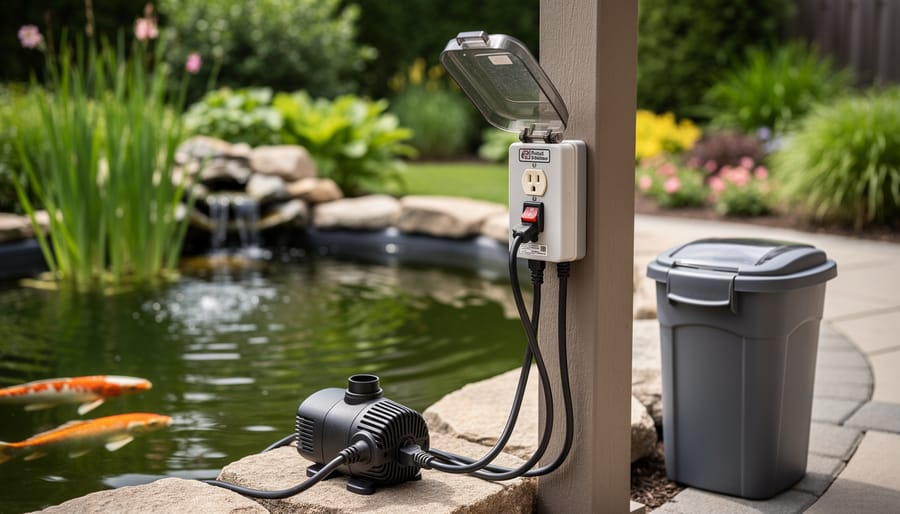
The outdoor outlet itself needs special attention. Standard indoor outlets won’t cut it near water, and this is where safety becomes paramount. Your electrician will install weatherproof boxes and covers, but the most critical component is the GFCI (Ground Fault Circuit Interrupter) protection. This life-saving device cuts power instantly if it detects any electrical problems.
Many homeowners discover they need permits for outdoor electrical work, which adds another layer of fees. Electrical permits typically run between $50 and $150, depending on your municipality. While it might be tempting to skip the permit process, remember that unpermitted work can create issues when selling your home and may void your homeowner’s insurance if something goes wrong.
Some utility companies also charge connection or inspection fees when new outdoor circuits are added, particularly if you’re upgrading your electrical service to handle the additional load. These fees usually range from $75 to $200. Always check with your local utility provider during the planning phase to avoid surprises.
Drainage and Overflow Considerations
Here’s something I learned after my first pond project flooded my neighbor’s yard during a heavy spring rain – overflow planning isn’t optional! When your pond fills beyond capacity during storms, that water needs somewhere to go, and that’s where drainage connections come into play.
Most backyard ponds can handle overflow naturally through grading and landscaping, directing excess water away from structures into your yard. However, if your property slopes toward your home or you’re dealing with a larger water feature, you might need to connect to your municipal stormwater system. This is where fees can surprise you.
Stormwater connection fees vary widely, typically ranging from $500 to $3,000 depending on your location and the complexity of the tie-in. Some municipalities require permits even if you’re just directing overflow to existing storm drains on your property. I’ve seen homeowners pay anywhere from $150 for a simple permit to over $2,000 for professional installation and inspection fees.
Before digging, call your local planning department. Ask specifically about stormwater management requirements for ponds. Many areas have maximum water surface area thresholds – often around 500 square feet – before formal drainage connections become mandatory. You might discover your project falls below these requirements, saving you considerable money and hassle while keeping your neighbors dry and happy!
Impact Fees: The Hidden Cost Nobody Warns You About
Here’s something that catches many pond builders completely off guard: impact fees. I learned about these the hard way when my neighbor started his ambitious koi pond project. He’d budgeted for everything—the liner, the pump, the gorgeous Japanese maples—but then the city hit him with a $3,200 impact fee he never saw coming.
So what exactly are impact fees? Think of them as the municipality’s way of saying, “Hey, your new water feature is going to use our infrastructure, so chip in for future upgrades.” Unlike connection fees that cover the immediate cost of hooking you up to existing services, impact fees fund long-term infrastructure improvements like expanding water treatment plants or upgrading drainage systems.
Here’s where it gets tricky: not every pond triggers these fees. A small decorative pond that recirculates water and only needs occasional top-ups from your garden hose? Usually fine. But if you’re filling a large pond from municipal water or creating something that affects stormwater drainage patterns, you might be on the hook.
The confusion comes from how inconsistently these fees are applied. My neighbor’s 5,000-gallon koi pond required an initial fill-up that the city classified as “significant water usage,” triggering the fee. Meanwhile, another friend built a similar-sized pond two towns over and paid nothing beyond standard connection costs.
Municipalities typically charge impact fees based on your project’s “impact” on infrastructure. This might be calculated by water volume, property use changes, or even whether your pond affects local watershed management. Some areas exempt residential decorative ponds entirely, while others charge based on estimated annual water consumption.
The fees themselves vary wildly—anywhere from $500 to $5,000 or more, depending on your location and project scope. What makes this particularly frustrating is that many homeowners only discover these charges during the permit approval process, when they’re already committed to their project.
The lesson? Always ask your local planning department specifically about impact fees when you’re budgeting beyond the build costs. Get it in writing. Some jurisdictions waive these fees for water features under certain sizes or those using rainwater harvesting systems. Knowing these details upfront can save you from sticker shock—or help you design your pond to avoid fees altogether.
Real-World Cost Ranges: What to Actually Budget
Let me be straight with you about what you’ll actually spend on utility connections for your pond project. These costs can catch you off guard if you’re not prepared, so let’s break down the real numbers based on pond size and what you’re planning to add.
For a simple backyard pond without pumps or fancy features, you might not face any utility fees at all. But once you start dreaming bigger with waterfalls, lighting, or filtration systems, the costs start adding up. Here’s what typical pond projects look like in terms of utility connection expenses:
| Pond Size | Water Connection Fees | Electrical Connection Fees |
|---|---|---|
| Small (under 500 gallons) | $0-$150 | $300-$800 |
| Medium (500-2000 gallons) | $100-$400 | $500-$1,500 |
| Large (over 2000 gallons) | $250-$800 | $1,000-$3,500 |
These ranges vary quite a bit depending on where you live. In urban areas with established infrastructure, you’ll typically pay on the lower end. Rural properties or newer developments often mean higher costs because you’re covering the expense of running utilities to your specific location.
The distance from your pond to existing utility access points makes a huge difference. If you’re installing a pond right next to your house where outlets already exist, you’re golden. But if your dream koi pond sits at the far corner of your property, expect to pay more for trenching and running electrical lines.
Regional differences matter too. A pond project in the Southwest might face higher water connection fees due to scarcity, while areas with abundant water sources keep these costs minimal. Climate also plays a role since some regions require freeze-protection measures for outdoor electrical connections, adding to your bottom line.
Permitting fees often bundle with utility connections. Some municipalities charge flat rates around $50-$200 for pond permits, while others calculate fees based on project scope. Electrical permits typically run $75-$300 depending on complexity.
Here’s my advice: always plan for the unexpected by adding 20-30 percent to your initial utility budget. I’ve learned this the hard way when my own pond project revealed outdated wiring that needed upgrading before any new connections could happen.
Don’t forget ongoing costs either. Water top-off during summer can add $10-$50 monthly to bills, while pump operation might increase electricity costs by $15-$60 monthly depending on your setup.
How to Plan and Budget for These Fees (Before You Dig)
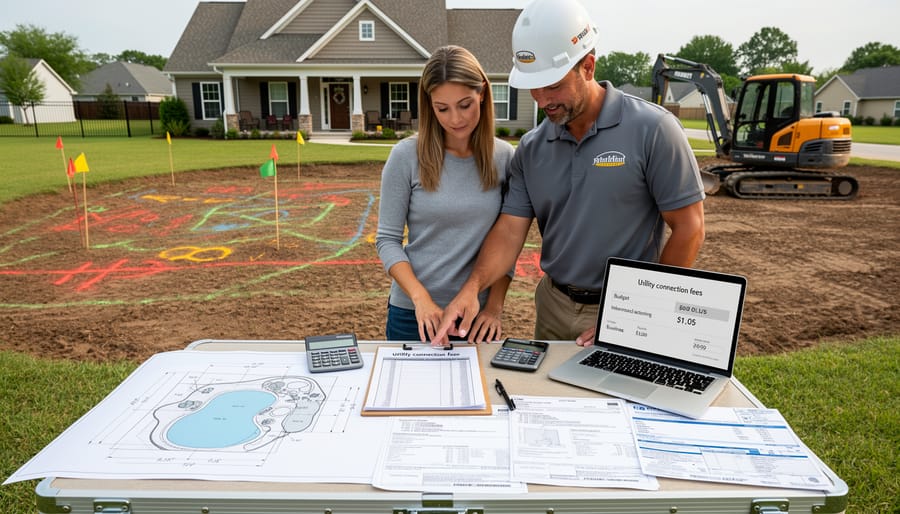
Planning ahead for utility connection fees can save you from nasty budget surprises halfway through your pond project. Let me walk you through the detective work you’ll need to do before breaking ground.
Start your research at least three to six months before you plan to dig. Your first stop should be your local council’s website or planning office. Many councils have fee schedules posted online, though they’re often buried in development documents. If you can’t find them, pick up the phone. A quick call to the planning department can point you in the right direction and might even get you ballpark figures over the phone.
Next, contact each utility provider directly. Don’t rely on estimates from neighbors or online forums—fees vary wildly based on your exact location and project scope. When you call, explain specifically what you’re building: a backyard pond, approximate size, and whether it’ll have features like waterfalls or extensive lighting. Ask about both connection fees and ongoing service charges. Request written quotes whenever possible so you can budget smartly without guessing.
Create a simple spreadsheet listing every potential utility cost: water connection, electricity for pumps and lights, sewer if you’ll have a washout area, and gas if you’re considering heating. Include inspection fees, permit application costs, and any meter installation charges. Add a 15-20 percent contingency buffer because utility companies occasionally discover unexpected complications during installation.
Here’s a money-saving tip from my own experience: consider timing your pond project to coincide with other home improvements. If you’re already bringing an electrician out for other work, adding pond power at the same time often reduces call-out fees. Similarly, some councils offer reduced inspection fees if multiple permits are processed together.
Ask utilities about payment plans if the upfront costs feel overwhelming. Many providers allow you to spread connection fees over several billing cycles. Also inquire about any rebates or incentives for water-efficient features like rainwater collection systems that can supplement your pond.
Finally, get everything in writing before committing. Utility fee quotes can expire after 30-90 days, so confirm validity periods and lock in prices when possible. This preparation might feel tedious, but it prevents the heartbreak of running out of money before your pond is complete.
When You Can Skip the Fees (And When You Absolutely Can’t)
Here’s the good news: not every pond project requires expensive new utility hookups. Many water gardeners successfully run their features using existing outdoor outlets and garden hoses, keeping their setup simple and budget-friendly.
If you’re planning a small to medium pond with a basic pump and perhaps some low-voltage lighting, you can likely tap into your existing electrical system. Most homes have at least one outdoor GFCI outlet that’s perfect for running a pond pump. Mary, a water gardener from Brisbane, shared with me how she’s operated her 2000-liter koi pond for five years using nothing more than a heavy-duty extension cord from her patio outlet. “I was terrified I’d need thousands in electrical work,” she laughed, “but my electrician confirmed the existing circuit could handle it perfectly.”
Similarly, standard garden hoses work wonderfully for topping off evaporation in most backyard ponds. Unless you’re planning an elaborate water change system or commercial-sized feature, that spigot near your back door will serve you just fine.
- No upfront connection fees or permit costs to navigate
- Installation happens immediately without waiting for utility company scheduling
- Complete flexibility to relocate or modify your pond setup later
- Simpler troubleshooting when issues arise
- Extension cords and hoses create trip hazards and visual clutter
- Limited capacity may restrict pond size and feature options
- Temporary connections lack weatherproofing and durability of permanent installations
- Cannot support high-demand features like large waterfalls or UV clarifiers
However, you absolutely cannot skip proper connections in certain situations. Planning a pond larger than 10,000 liters? Multiple pumps, heaters, or high-wattage UV systems? An elaborate lighting scheme? These scenarios demand dedicated electrical circuits. Similarly, automatic top-up systems or sophisticated filtration requiring constant water supply need permanent plumbing connections.
The trigger point usually comes down to load requirements and safety. When hiring the right contractor, they’ll calculate your total electrical draw and water needs to determine what your existing utilities can safely handle versus when dedicated connections become non-negotiable.
Planning for utility connection and impact fees might feel like an unexpected hurdle in your water garden journey, but here’s the good news: once you understand what they are and how they work, they become just another manageable line item in your budget. The key is starting your research early, before you fall in love with that perfect spot or order your pump system.
Think of these fees as the bridge between your creative vision and reality. Yes, they add to your overall costs, but knowing about them upfront means no nasty surprises when you’re halfway through your project. Take the time to call your local utility companies and municipality during your planning phase. Ask questions, get everything in writing, and build those numbers into your budget with a little cushion for peace of mind.
Remember, thousands of water gardeners before you have navigated these same fees and gone on to create absolutely stunning ponds and water features. The paperwork and planning might not be as exciting as choosing fish or arranging rocks, but they’re what turn dreams into reality. With realistic expectations and proper preparation, you’ll soon be sitting beside your beautiful water garden, grateful you took the time to do things right from the start.