How Riparian Buffers Transform Your Pond Into a Thriving Ecosystem

Picture the edges of your pond transformed into a living shield—a ribbon of carefully chosen plants that filters runoff before it reaches your water, anchors soil during heavy rains, and creates a haven for dragonflies, frogs, and songbirds. This is what a riparian vegetation buffer does, and it’s one of the smartest investments you can make for your pond’s long-term health.
If you’ve struggled with murky water, algae blooms that seem to appear overnight, or crumbling banks that lose more soil each season, you’re experiencing what happens when ponds lack this natural defense system. Riparian buffers work …
Read more How Riparian Buffers Transform Your Pond Into a Thriving Ecosystem

Why Ducks Ignore Most Nesting Boxes (And How to Build One They’ll Actually Use)

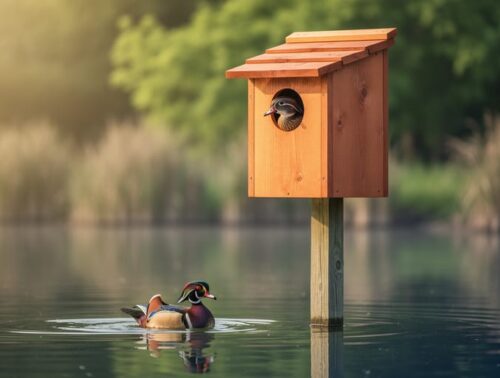
Position nesting boxes 3-6 feet above water level on sturdy posts or platforms, ensuring the entrance faces away from prevailing winds and receives morning sun. This height protects ducklings from ground predators while giving mother ducks clear visibility of approaching threats. Install boxes by late winter—January through February—so ducks can claim territories before breeding season peaks in March.
Build boxes measuring 12×12 inches floor space with 18-inch height for most duck species, using untreated cedar or cypress that withstands moisture without harmful chemicals. Drill four quarter-inch drainage holes in the floor…

Read more Why Ducks Ignore Most Nesting Boxes (And How to Build One They’ll Actually Use)

Why Your Pond Needs Trees (The Buffer Zone Secret)

Your pond’s biggest allies might already be growing in your yard—or waiting to be planted just a few feet from the water’s edge. Forested buffers are strategic zones of trees, shrubs, and native plants that encircle your pond, creating a living shield that transforms water quality while slashing your maintenance time in half.
Think of these buffers as nature’s filtration system. As rainwater travels across your lawn toward the pond, it picks up fertilizers, grass clippings, pet waste, and soil particles. Without intervention, these pollutants dump directly into your water, triggering algae blooms, cloudy …

Read more Why Your Pond Needs Trees (The Buffer Zone Secret)

How Pond Birds Transform Your Water Garden Into a Living Sanctuary

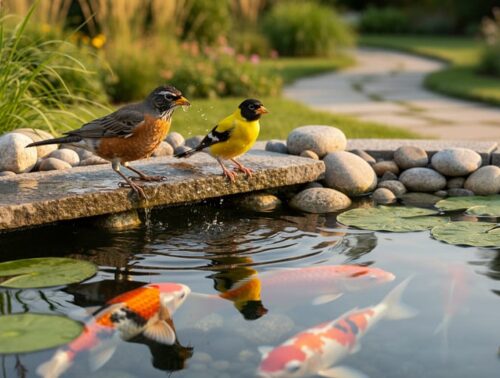
Your pond is already attracting feathered visitors, and with a few thoughtful adjustments, you can transform it into a thriving bird sanctuary that benefits both wildlife and your water garden. The secret lies in understanding what birds need and how to provide it without compromising your pond’s health or your fish population.
Birds visit ponds for three essential reasons: drinking water, bathing, and finding food. Some species will even nest nearby if conditions are right. The shallow edges of your pond serve as natural gathering spots where robins, finches, and sparrows can safely wade in for a quick drink or splash. Deeper…

Read more How Pond Birds Transform Your Water Garden Into a Living Sanctuary

Why Your Wildlife Pond Needs an Ecosystem Pool (And How to Build One)

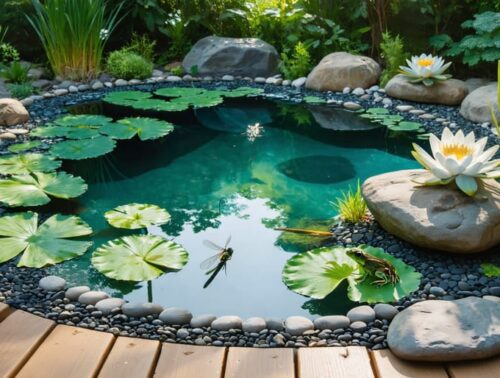
Imagine a pond that cleans itself, attracts colorful dragonflies and frogs, and requires less work than mowing your lawn. That’s the magic of an ecosystem pool—a beautifully balanced water feature that mimics nature’s own design principles to create a thriving, self-sustaining habitat right in your backyard.
Unlike traditional ponds that rely heavily on mechanical filters, chemicals, and constant intervention, an ecosystem pool harnesses natural processes to maintain crystal-clear water. Plants, beneficial bacteria, rocks, and gravel work together like a well-choreographed team, each playing a vital role in filtering …

Read more Why Your Wildlife Pond Needs an Ecosystem Pool (And How to Build One)

Transform Your Pond into a Thriving Wildlife Highway (Your Complete Habitat Corridor Guide)

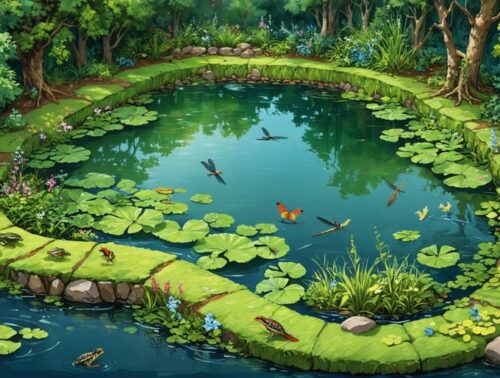
Transform your backyard pond into a thriving ecosystem hub by connecting it to the wider environment. Create natural corridors using native plants that extend from your pond’s edges into the surrounding landscape, forming living bridges for wildlife movement. Position logs, rocks, and dense vegetation in strategic paths between your pond and nearby natural areas, establishing safe travel routes for amphibians, insects, and small mammals. Plant diverse, multi-layered vegetation around your pond’s …

Read more Transform Your Pond into a Thriving Wildlife Highway (Your Complete Habitat Corridor Guide)

How a Riparian Ecologist Can Transform Your Pond’s Health

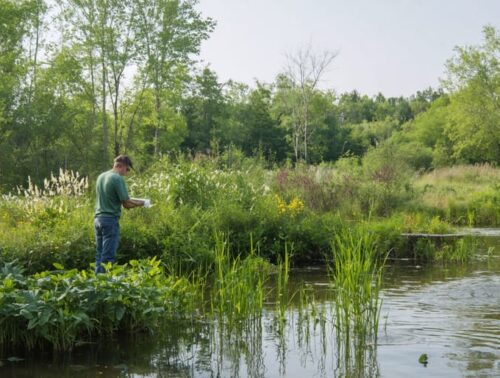
Riparian ecologists stand as vital guardians of our waterways, wielding scientific expertise to protect and restore the delicate zones where land and water meet. These specialized environmental scientists study the complex relationships between water bodies, soil conditions, and the diverse plant and animal communities that thrive along stream banks, riverbanks, and pond edges. Their work extends far beyond mere observation – they design restoration projects, monitor ecosystem health, and develop sustainable management strategies that benefit both wildlife and human communities.
In an era of increasing environmental challenges…

Read more How a Riparian Ecologist Can Transform Your Pond’s Health

Create a Thriving Underwater World: Simple Ways to Support Pond Invertebrates

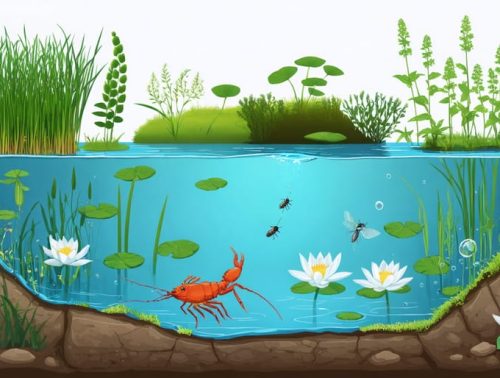
Create thriving diverse aquatic microhabitats by layering different substrate materials – starting with coarse gravel at the bottom, followed by smaller pebbles, and topped with aquatic soil. This natural gradient supports various invertebrate species, from bottom-dwelling crayfish to surface-skimming water beetles.
Position partially submerged logs and native water plants strategically around your pond’s edges, establishing essential shelter zones where aquatic insects can lay …

Read more Create a Thriving Underwater World: Simple Ways to Support Pond Invertebrates

Smart Watershed Design: Creating Thriving Wildlife Ponds That Last

Transform your local watershed into a thriving ecosystem by integrating wildlife pond design principles with smart water management practices. Create vegetated buffer zones along water edges using native plants to filter runoff and provide essential wildlife habitat. Install rain gardens strategically throughout your property to capture stormwater, reducing erosion while naturally recharging groundwater supplies. Monitor water quality monthly through simple testing kits to maintain optimal conditions for aquatic life …

Read more Smart Watershed Design: Creating Thriving Wildlife Ponds That Last

These Tiny Pond Creatures Make Your Water Garden Thrive

Dive into the fascinating world of pond life, where every living organism plays a crucial role in creating a balanced pond ecosystem. From the smallest microorganisms to the largest fish, these biotic factors work together in an intricate dance of survival and growth. Understanding these living components isn’t just about maintaining a pretty water feature—it’s about fostering a thriving miniature ecosystem right in your backyard. Whether you’re planning your first pond or looking …

Read more These Tiny Pond Creatures Make Your Water Garden Thrive