Hide Your Pond Pumps and Filters Without Ruining the View

Disguise your pump by nestling it behind strategically placed flat rocks that lean naturally against the pond’s edge, creating a cave-like shelter that looks intentional while maintaining easy access for maintenance. Position taller marginal plants like cattails or iris in groups of three directly in front of filter boxes, ensuring the foliage cascade reaches at least 6 inches beyond the equipment’s edges for year-round coverage.
Build a simple hollow rock cover using hypertufa—a lightweight concrete mixture you can mold at home—that lifts off in seconds when you need to check your system but blends seamlessly with …

Read more Hide Your Pond Pumps and Filters Without Ruining the View

Water Hyacinth: Beautiful Blooms or Pond Nightmare?

Check your local regulations before acquiring water hyacinth—this beautiful floating plant with lavender blooms is banned in many regions because it can quickly overtake natural waterways. If it’s legal in your area, you’re in for a treat: water hyacinth is one of the easiest pond plants to establish, requiring no soil, no planting tools, and minimal effort.
Simply place the plants directly on your pond’s surface between late spring and early summer when water temperatures reach 70°F or above. The dangling roots will naturally filter your water while the glossy green leaves create shade that helps control algae…

Read more Water Hyacinth: Beautiful Blooms or Pond Nightmare?

Why Your Soil Type Makes or Breaks Your Pond (Before You Start Digging)

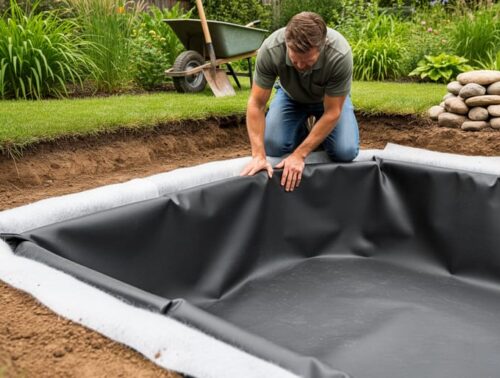
Before you break ground on your dream pond, check your soil’s drainage capability – it’s the single factor that determines whether your pond will hold water naturally or require expensive liners. Hydrologic soil groups classify how quickly water moves through soil, ranging from sandy Group A soils that drain rapidly (making pond-building challenging) to clay-rich Group D soils that hold water beautifully. Understanding your property’s classification saves thousands of dollars in corrections and prevents the heartbreak of a pond that won’t stay full.
Grab a shovel and dig a test hole about two feet deep in …

Read more Why Your Soil Type Makes or Breaks Your Pond (Before You Start Digging)

Why Your Pond Lights Look Murky (And How to Measure What’s Really Happening)

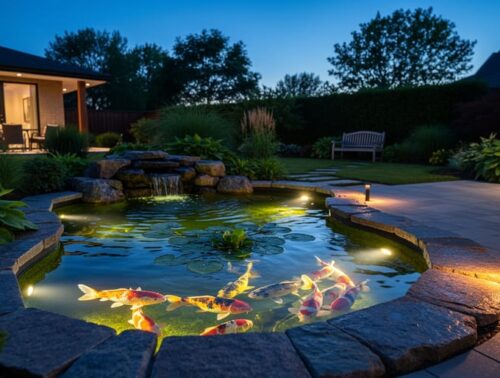
You’ve invested in beautiful pond lights, but peer into the water at night and see only a murky glow instead of the magical underwater display you imagined. The problem isn’t your lights—it’s likely your water clarity, and an underwater light meter can tell you exactly what you’re dealing with.
Think of an underwater light meter as a detective tool that measures how far light penetrates through your pond water. While professional aquatic scientists use expensive meters costing hundreds of dollars, you don’t need fancy equipment to diagnose your pond lighting issues. A simple Secchi disk (a white and …

Read more Why Your Pond Lights Look Murky (And How to Measure What’s Really Happening)

Why Your Pond Water Won’t Clear (And What Suspended Sediments Really Mean)

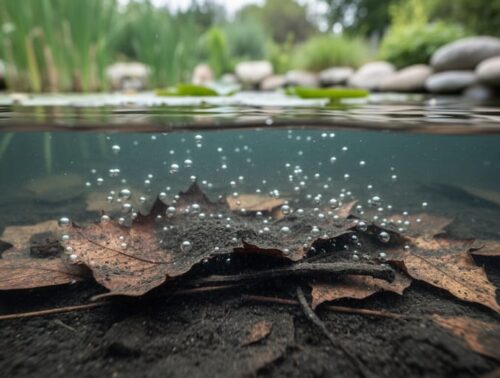
You’ve just added new fish or plants to your pond, and within hours the crystal-clear water you worked so hard to achieve has turned into murky soup. Or maybe you’ve noticed your pond looks like chocolate milk after every rainstorm. What you’re seeing is suspended sediments—tiny particles of clay, silt, organic matter, and debris floating throughout the water column, refusing to settle.
Unlike algae blooms that turn water green, suspended sediments create a brown, gray, or tan cloudiness that filters can’t seem to catch. These microscopic particles are so light they stay suspended in the water for days or …

Read more Why Your Pond Water Won’t Clear (And What Suspended Sediments Really Mean)

Why Potassium Turns Your Pond Into a Chemical Experiment (And How to Keep It Balanced)

Understanding why potassium behaves differently than other nutrients in your pond starts with a simple chemical equation: 2K + 2H₂O → 2KOH + H₂. This balanced equation reveals what happens when potassium metal contacts water, producing potassium hydroxide and hydrogen gas in a vigorous, sometimes explosive reaction.
Before you panic about adding potassium to your pond, know that the potassium in fertilizers and pond treatments exists as stable compounds, not pure metal. When potassium sulfate or potassium carbonate dissolves in your water garden, it simply breaks into harmless ions that plants absorb. The dramatic reaction …

Read more Why Potassium Turns Your Pond Into a Chemical Experiment (And How to Keep It Balanced)

Transform Your Water Garden Into a Living Art Gallery

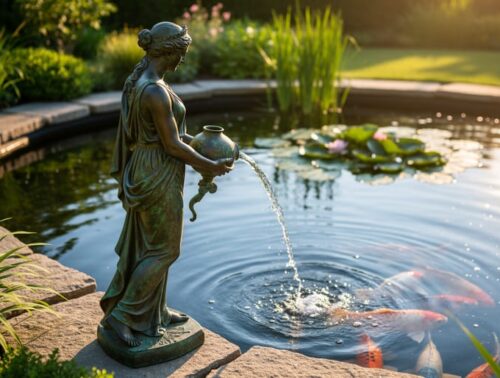
Transform your ordinary pond into something extraordinary by positioning sculptural elements at water’s edge where reflections double their visual impact. Choose pieces that complement your pond’s scale—oversized art overwhelms small water features, while tiny ornaments disappear around large ponds. Place statement pieces at focal points where sight lines naturally draw the eye, like near waterfalls or at the end of pathways.
Layer your art at varying heights to create depth and visual interest throughout your …

Read more Transform Your Water Garden Into a Living Art Gallery

Why Your Smart Pond Needs Protection From Tomorrow’s Hackers

Your smart pond controller, the one you access from your phone to adjust fountain timers and monitor water quality, could become vulnerable to a type of hacking that doesn’t even exist yet—but it’s coming. Quantum computers, machines that work fundamentally differently from the laptop on your desk, are advancing rapidly, and they’ll eventually crack the encryption protecting your pond system’s wireless connections, login credentials, and data.
Before you panic and disconnect everything, understand this: quantum threats to home pond systems won’t materialize overnight. Experts predict another 5-10 …

Read more Why Your Smart Pond Needs Protection From Tomorrow’s Hackers

Transform Your Water Garden Into a Living Classroom

Transform your backyard pond into a dynamic learning laboratory by anchoring activities in Creative Curriculum water study principles. Set up observation stations around your water feature where children can record daily changes in water clarity, wildlife visitors, and plant growth—this hands-on documentation builds scientific thinking while connecting learners directly to living ecosystems. Create a “pond investigation kit” with magnifying glasses, nets, pH testing strips, and journal notebooks that children can grab whenever curiosity strikes, making spontaneous exploration as easy as stepping outside.
Design …

Read more Transform Your Water Garden Into a Living Classroom

Build a Water Feature That Actually Cleans Itself (No Chemicals Required)

Transform your backyard pond or fountain into a thriving, crystal-clear ecosystem by letting nature do the heavy lifting. Chemical-free filtration isn’t just possible—it’s actually more effective and sustainable than traditional methods, and you can build these systems yourself this weekend.
Skip the expensive canister filters and chlorine tablets. Natural filtration harnesses beneficial bacteria, aquatic plants, and strategic water movement to create balanced, self-maintaining water features that stay clear year-round. I’ve watched my own pond transform from a murky disappointment into a vibrant habitat simply …

Read more Build a Water Feature That Actually Cleans Itself (No Chemicals Required)