
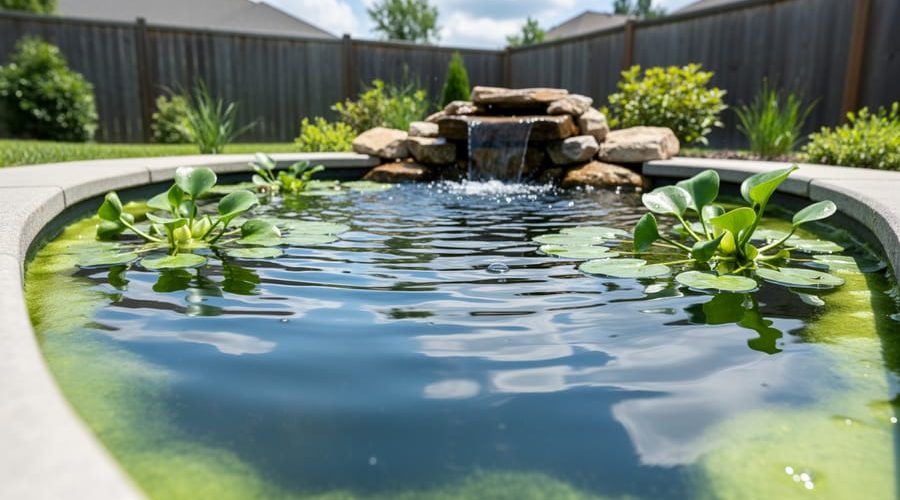
How to Prevent Algal Bloom in Your Pond: A Step-by-Step Guide
Preventing algal blooms comes down to controlling three factors: excess nutrients, sunlight exposure, and water circulation. When you limit the nitrogen and phosphorus entering your pond, reduce direct sunlight on the water surface, and keep the water moving, you create conditions where algae struggles to take hold. Most pond owners can implement these steps over a weekend using basic equipment and see results within two to three weeks.
I’ve watched countless ponds turn pea-soup green overnight, and the frustration is real. You’ve invested time and money into creating a beautiful water feature, only to have it hijacked by algae that blocks your view of fish, smells unpleasant, and makes the whole space feel neglected. The good news? Algal blooms are preventable once you understand what triggers them.
Algae thrives when conditions are perfect: warm water loaded with nutrients (usually from overfeeding fish, decomposing leaves, or runoff), plenty of sunlight, and still water. Break even one of those conditions, and you tip the scales back in your favor. Prevention is far easier than trying to clear an existing bloom, which can take weeks and often requires chemical treatments or expensive UV clarifiers.
This guide walks you through the complete prevention strategy, from testing your water and choosing the right plants to installing aeration systems and maintaining a cleaning schedule. You’ll learn which mistakes allow algae to flourish, how to verify your methods are working, and what to do when seasons change. The approach is straightforward, works with ponds of any size, and focuses on creating a balanced ecosystem rather than fighting nature.
Understanding Why Algal Blooms Happen
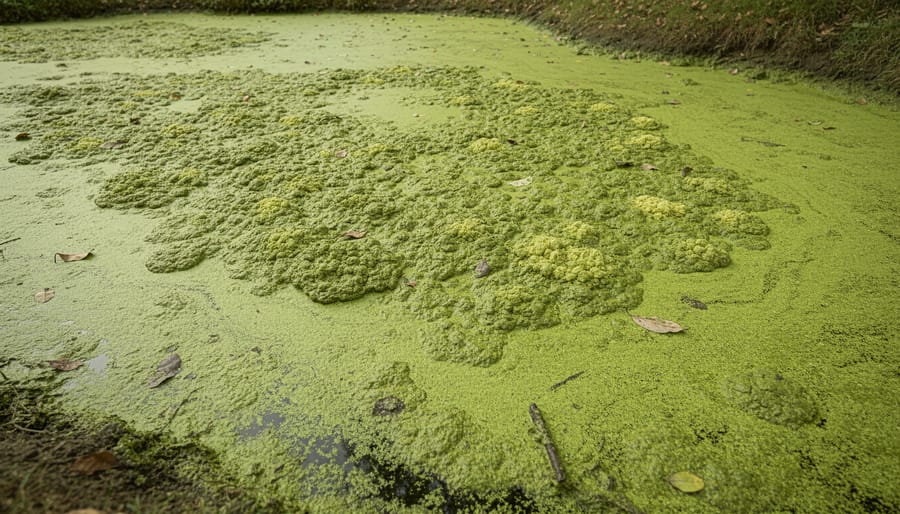
Algae exist in every pond, but an algal bloom happens when conditions shift so dramatically in their favor that they reproduce out of control. Think of it as a population explosion triggered by a perfect storm of factors. Once you understand what feeds these blooms, you can take targeted action to prevent them.
The biggest culprit is excess nutrients, specifically nitrogen and phosphorus. These are algae’s favorite food. They enter your pond through fish waste, uneaten food, decaying leaves, lawn fertilizer runoff, and even tap water used for top-ups. When nutrient levels spike, algae cells multiply rapidly, turning clear water murky green within days. If you notice your pond choking on nutrients you’re seeing this process in action.
Sunlight drives the second critical factor. Algae are photosynthetic organisms, meaning they convert sunlight into energy. A pond in full sun all day provides ideal conditions for rapid algae growth, especially during spring and summer when daylight hours stretch longer. Shallow ponds and those with no shade are particularly vulnerable.
Water temperature accelerates the entire process. Warm water speeds up algae metabolism, nutrient absorption, and reproduction rates. Most problematic blooms occur when temperatures climb above 18°C and stay there for weeks. Combine warm water with bright sun and high nutrients, and you’ve created an algae factory.
Poor water circulation creates the final piece of the puzzle. Stagnant zones allow nutrients to concentrate rather than disperse. Without movement, oxygen levels drop in certain areas, beneficial bacteria populations struggle, and algae face less competition for resources. Dead spots near the bottom or in corners become algae incubators, spreading outward as the bloom intensifies.
What You’ll Need to Prevent Algal Bloom
You don’t need a garage full of equipment to keep algal blooms at bay. Most pond owners already have some of these items, and the rest are easy to find at garden centers, aquarium shops, or online retailers. Here’s what you’ll want to have on hand:
- Pond test kitMeasures nitrate and phosphate levels so you know what you’re working with. Look for kits that test both nutrients, not just pH.
- Beneficial bacteriaLive microorganisms that consume excess nutrients before algae can use them. Available in liquid or powder form at pond supply stores.
- Aquatic plantsWater lilies, submerged oxygenators like hornwort, and floating plants like water lettuce. They compete directly with algae for nutrients and sunlight.
- Pond netting or shade clothBlocks a portion of direct sunlight. Garden centers carry various densities; 30-50% shade works well for most ponds.
- Filtration equipmentA mechanical filter to remove debris and a biological filter to house beneficial bacteria. Many pond pumps come with built-in filtration.
- Skimmer netFor removing leaves, dead plant matter, and floating debris before they decompose and release nutrients.
- UV clarifier (optional)Uses ultraviolet light to clump algae particles together, making them easier to filter out. Helpful for stubborn green water, but not essential for prevention.
You don’t need every item right away. Start with the test kit and beneficial bacteria, then add plants and improve your filtration as you go. The skimmer net is cheap and pays for itself immediately in maintenance time saved. Save the UV clarifier for later if basic prevention methods aren’t giving you the results you want. Most beginners find that test kit, bacteria, and a few well-chosen plants handle the majority of prevention work without breaking the bank.
Important Precautions Before You Start
Before you dive into prevention, a few smart precautions will protect your pond and save you from setbacks that trip up even experienced water gardeners.
Test your water first. Don’t guess what’s happening in your pond. Use a simple test kit to measure nitrate and phosphate levels before you change anything. This baseline tells you whether rising nutrient levels are truly your problem or if something else is off. You can’t fix what you haven’t measured.
Rethink chemical algaecides. Many beginners reach for algae-killing chemicals, but these products can stress or kill fish, especially in smaller ponds where concentrations spike quickly. Koi and goldfish are sensitive to copper-based formulas. Chemical fixes also ignore the root cause, so algae bounces back fast. Prevention beats poison every time.
Never remove all algae at once. This is critical. When large amounts of algae die suddenly, whether from chemicals or aggressive manual removal, they decompose and consume oxygen. The resulting crash in dissolved oxygen can suffocate fish overnight.
Don’t overfeed your fish. Excess food breaks down into nutrients that fuel algae. Feed only what fish consume in two to three minutes, once daily. Less is more.
Go easy with UV clarifiers in new ponds. UV units kill free-floating algae effectively, but they also zap beneficial bacteria you’re trying to establish. If you’ve just added bacteria treatments, wait a week before running UV full-time or use it intermittently until your ecosystem stabilizes.
Step-by-Step: Preventing Algal Bloom in Your Pond
Step 1: Test Your Water and Establish a Baseline
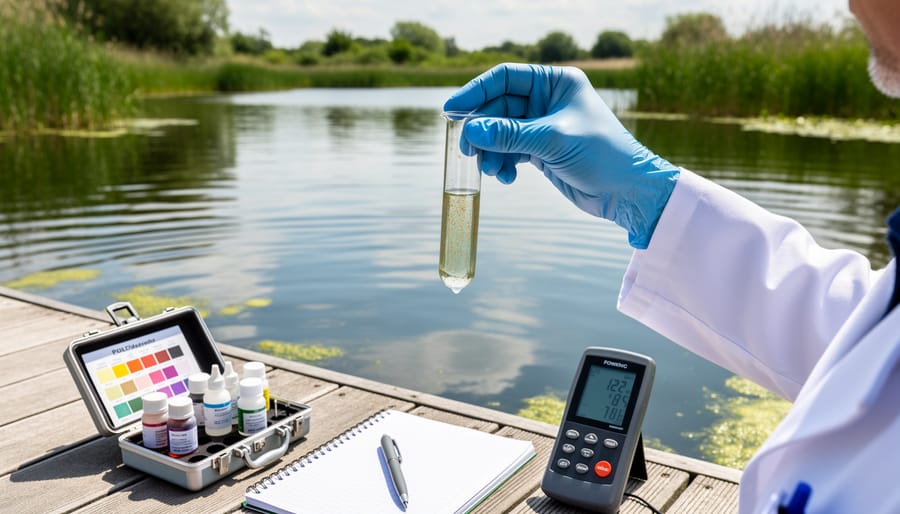
Start with a simple water test kit, you’ll find these at any pond supply store or online for around $15-20. You’re looking for two key numbers: nitrate and phosphate. Nitrates should ideally stay below 20 ppm (parts per million), and phosphates below 0.05 ppm. These nutrients are algae’s favorite food, so higher numbers mean you’re feeding a bloom.
Dip the test strips into your pond water or fill a small vial following the kit instructions. Compare the color change to the chart provided. Write down your results in a notebook with the date. This becomes your baseline, the starting point you’ll measure against in a few weeks.
Test in three different spots if your pond is larger than 100 gallons, especially near where water enters and in any dead zones. Algae don’t distribute evenly, and neither do nutrients. Morning is the best time to test, before the sun warms the water and affects readings.
Don’t panic if your numbers are high right now. You’re gathering information, not failing a test. These measurements show you exactly what needs fixing and give you a way to track whether your prevention efforts are actually working.
Step 2: Reduce Nutrient Input
Nutrients are algae’s favorite food, so the fastest way to prevent blooms is cutting off their supply. Start with fish feeding. Overfeeding is the single biggest mistake pond owners make. Give fish only what they’ll consume in two to three minutes, once or twice daily during warm months. Uneaten food sinks and decays into nitrates and phosphates, exactly what algae thrive on. In spring and fall when water cools below 50°F, reduce feeding to every other day or stop entirely.
Next, remove organic debris weekly. Fallen leaves, dead plant material, and floating twigs break down into nutrients. Skim the surface with a net and pull out any sludge from shallow edges. If your pond sits near trees, stretch fine netting across the surface in autumn to catch leaves before they sink.
Watch for lawn fertilizer runoff too. Spring rains wash nitrogen straight from treated grass into your pond. Create a small barrier of rocks or redirect downspouts away from the water’s edge.
Finally, clean your mechanical filter every two weeks during summer. A clogged filter traps decomposing matter, turning it into a slow-release nutrient bomb. Rinse filter media in pond water, never tap water, to preserve beneficial bacteria colonies.
Step 3: Add Nutrient-Competing Aquatic Plants
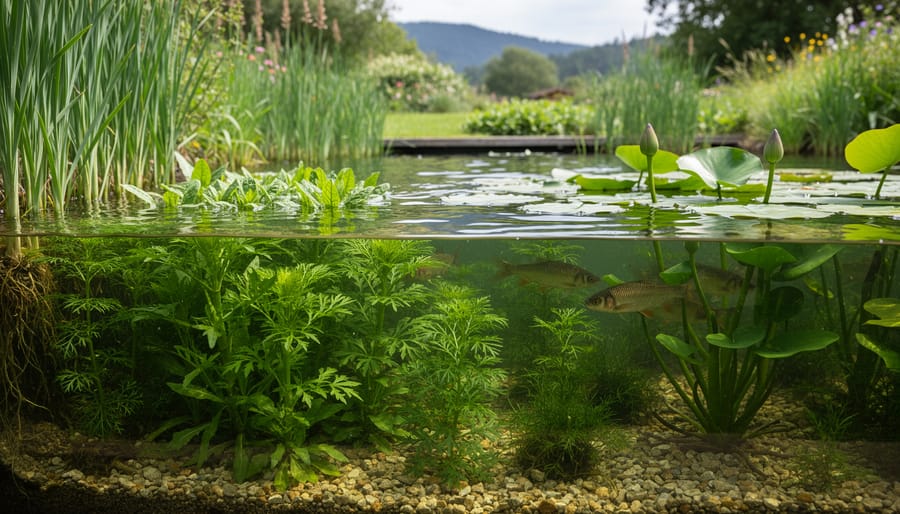
Aquatic plants are your most powerful natural allies against algae because they compete directly for the same nutrients, nitrogen and phosphorus, that fuel blooms. The more plants you have actively growing, the less food is available for algae to explode.
Start with submerged oxygenators like hornwort, anacharis, or Canadian pondweed. These workhorses grow fast and absorb nutrients through every leaf surface. Aim for one bunch (about five stems) per square meter of pond surface. Drop them in weighted bunches around the pond, focusing on sunny shallow areas where algae typically thrives first.
Add floating plants such as water lettuce or frogbit to cover 40-60% of your pond’s surface. They block sunlight while their trailing roots soak up nutrients directly from the water column. Thin them regularly so they don’t take over completely.
Water lilies and marginal plants (like pickerelweed or arrowhead) contribute too, but they’re slower nutrient absorbers. Place them in large pots with heavy clay soil, never potting compost, which leaches nutrients back into the water.
For a typical 1,000-gallon pond, you’d want six to eight bunches of oxygenators, a few handfuls of floaters, and two to three potted lilies or marginals. More plants mean faster nutrient competition and clearer water.
Step 4: Improve Water Circulation and Aeration
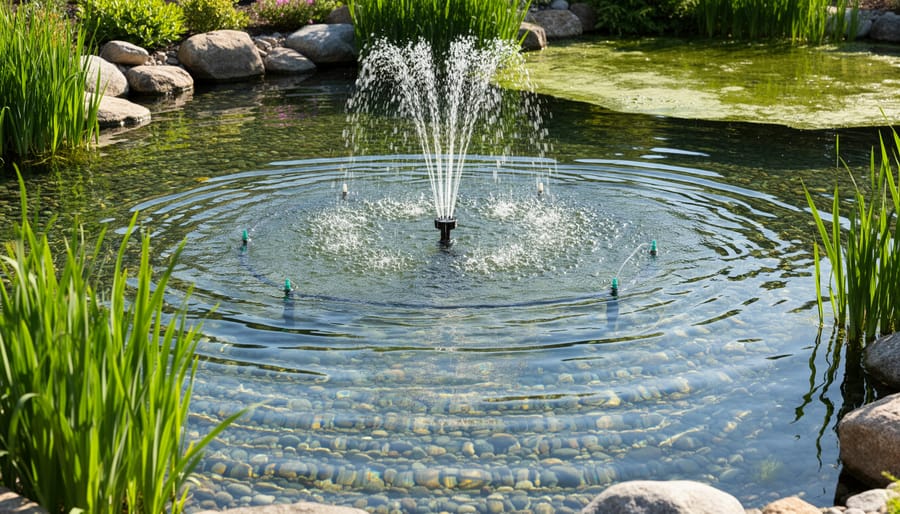
Moving water is algae’s enemy. Stagnant pockets in your pond create perfect conditions for blooms because nutrients settle, oxygen drops, and algae multiplies unchecked.
Start by checking your pump placement. Position it so the outflow pushes water across the pond’s surface, creating a gentle current that reaches all corners. If you have dead zones, areas where debris accumulates or the surface looks still, angle your fountain or add a second, smaller pump to target those spots. You don’t need aggressive flow; just enough movement to prevent layering.
Aeration matters as much as circulation. Algae thrives in low-oxygen water, especially during warm weather. A simple fountain, waterfall, or air stone introduces oxygen while breaking up the surface film where algae often starts. If you’re on a budget, even repositioning your existing pump’s return slightly higher so it splashes can make a difference.
For DIY improvements, try angling flat rocks under your waterfall to spread the flow wider, or add a spray bar to your pump outlet to distribute water more evenly. Walk around your pond during operation, you should see subtle movement everywhere, not just near the pump. That constant, gentle mixing keeps nutrients suspended where beneficial bacteria and plants can grab them before algae does.
Step 5: Manage Sunlight Exposure
Algae thrive in sunlight, so controlling how much direct light hits your pond is a powerful prevention tool. You don’t need to eliminate sun completely, just enough to tip the balance away from explosive algae growth.
Floating plants are your best natural option. Water lettuce, water hyacinth, and duckweed spread across the surface and block sunlight from penetrating deep into the water. Aim to cover about 50-60% of your pond’s surface during peak summer months. They’re easy to add, affordable, and they absorb excess nutrients while they shade.
If your pond gets intense afternoon sun, consider installing shade cloth or netting stretched over part of the water. Use a 30-50% shade rating to reduce light without making the pond too dark for fish or beneficial plants. Anchor it securely so it doesn’t sag into the water.
Positioning matters too. If you’re planning a new pond, placing it near deciduous trees can provide natural afternoon shade. Just be ready to skim falling leaves regularly, decomposing foliage adds nutrients that fuel blooms.
Pond dyes are another option. These non-toxic, blue or black tints limit light penetration below the surface, slowing algae without harming fish or plants. Follow dosing instructions carefully and reapply as the color fades.
Step 6: Introduce Beneficial Bacteria
Beneficial bacteria are microscopic organisms that feed on the same excess nutrients, particularly nitrogen and phosphorus, that fuel algae. By consuming these nutrients, they starve algae before it can bloom. Think of them as your pond’s cleanup crew working 24/7.
You’ll find beneficial bacteria products at pond supply stores, usually in liquid or powder form. Follow the dosage instructions on the package based on your pond’s gallon capacity. Most products recommend an initial higher dose to establish the colony, then weekly or bi-weekly maintenance doses. Pour the liquid directly into the water near your filter or pump intake for best distribution. Powder forms typically dissolve quickly when sprinkled across the surface.
Apply bacteria during calm weather when temperatures are above 50°F, as cold water slows their activity. Don’t use them immediately after chemical treatments, which can kill the beneficial strains you’re trying to establish.
Set realistic expectations: beneficial bacteria work gradually, not overnight. You might notice subtle clearing within two weeks, but significant algal bloom prevention results typically take four to six weeks as the bacterial colony grows and stabilizes. Consistency matters more than quantity, regular small doses outperform sporadic large ones. Keep dosing through the growing season to maintain nutrient control.
How to Tell If Your Prevention Plan Is Working
After putting your prevention plan into action, you’ll naturally want to know whether it’s making a difference. The good news is that your pond will give you clear feedback, but you need to know what to look for and when to check. Prevention works gradually, so patience and consistent monitoring are key.
The most obvious sign of success is clearer water. You should notice the green tint fading over two to four weeks, with visibility improving until you can see several inches deeper into the pond. The water won’t turn crystal clear overnight, but week by week, you’ll see less murky soup and more defined features. Healthy fish behavior is another telltale indicator: if your fish are actively swimming at various depths, responding eagerly at feeding time, and showing bright colors, the water quality is improving. Sluggish, gasping, or surface-hugging fish suggest ongoing problems.
Test your water every seven to ten days during the first month of prevention. Compare your nitrate and phosphate readings to your baseline numbers. You’re looking for a steady downward trend, not perfection. If levels drop by 20 to 30 percent within three weeks, your plan is working. Stable pH readings (usually between 7.0 and 8.5 for most ponds) also confirm a balanced ecosystem.
- Water clarity improves noticeably within two to four weeks
- Green tint fades gradually, not overnight
- Fish exhibit active, healthy swimming behavior
- Nutrient levels decrease by 20 to 30 percent in three weeks
- pH remains stable in the 7.0 to 8.5 range
If you’re not seeing progress after a month, troubleshoot methodically. Recheck your nutrient sources: are you still overfeeding fish or missing debris removal? Verify that your plants are thriving and your beneficial bacteria doses are correct. Sometimes the issue is circulation. Walk around your pond and look for stagnant corners where water barely moves. Redirecting a pump outlet or adding a small fountain can break up these dead zones. If one approach isn’t delivering results, don’t abandon the entire plan. Adjust the weak link, give it another two weeks, and retest. Prevention is about persistence and fine-tuning, not instant transformation.
Maintaining Balance for Long-Term Prevention
Once you’ve stopped a bloom from forming, the real work begins: keeping it from coming back. Algal bloom prevention isn’t a weekend project you tick off and forget. It’s an ongoing rhythm, a seasonal partnership with your pond’s ecosystem. The good news? Once you’ve established perfect pond balance maintenance becomes second nature.
Start by building a simple seasonal routine. In spring, trim back dead plant growth and restart beneficial bacteria treatments as water temperatures rise. Summer calls for more vigilance: top up evaporated water, increase aeration during heatwaves, and check that floating plants haven’t spread too aggressively (thin them if they cover more than half the surface). Autumn means removing fallen leaves before they sink and decay, while winter is quieter but still requires occasional debris removal and checking that pumps stay functional.
As your aquatic plants mature, they’ll need adjustments. Water lilies spread, oxygenators thicken, and floaters multiply. Divide or prune them annually so they continue absorbing nutrients without choking the pond. Keep dosing beneficial bacteria monthly, even when water looks clear; they work quietly behind the scenes, breaking down waste before it feeds algae.
Monitor your fish population honestly. Overstocking is a slow killer of pond balance. If you’re adding new fish, test nitrate levels a week later to catch any spike early.
Finally, keep a basic log: test dates, water readings, plant changes, fish counts. A simple notebook or phone note works. Over time, patterns emerge. You’ll spot trouble before it blooms, literally. Prevention isn’t about perfection; it’s about paying attention and making small, consistent adjustments that keep your pond stable year after year.
Common Questions About Algal Bloom Prevention
Can I use algaecides to prevent algal blooms?
Algaecides can kill existing algae quickly, but they don’t address the nutrient imbalance causing the bloom in the first place. They also pose risks to fish and beneficial bacteria, and dead algae decomposing all at once can crash oxygen levels. Focus on prevention methods instead.
How long before I see results from algal bloom prevention?
Expect to wait two to four weeks for noticeable improvement. Prevention is a gradual process of rebalancing your pond’s ecosystem, not an overnight fix. Water clarity improves slowly as plants establish, bacteria colonize, and nutrient levels drop.
What if I already have a full-blown algal bloom?
Start with the prevention steps anyway. Add beneficial bacteria and aquatic plants immediately, improve circulation, and reduce nutrient input. You can also perform partial water changes (no more than 20% at a time) to dilute algae, but avoid removing all the algae at once to prevent oxygen crashes.
Do I need expensive equipment to prevent algal blooms?
No. While UV clarifiers and advanced filtration help, the fundamentals, test kits, beneficial bacteria, aquatic plants, and proper feeding habits, are affordable and effective. Most successful prevention comes from maintaining balance, not buying gear.
These questions come up constantly because pond owners worry they’re doing something wrong or that prevention requires specialized knowledge. The truth is simpler than most people think.
Is some algae actually okay? Yes, absolutely. A thin film of algae on rocks or liner is normal and even beneficial. It provides food for tadpoles and invertebrates, contributes to pond biodiversity and indicates a living ecosystem. The problem is excessive algae that clouds water, covers the surface, or chokes out plants. You’re aiming for balance, not sterility.
Can I just drain and refill my pond to get rid of algae? This actually makes things worse. Fresh tap water often contains phosphates and chlorine, which stress fish and reset your beneficial bacteria population to zero. You’ll lose the established biological balance that helps prevent blooms. Partial water changes are fine, but a complete drain disrupts everything you’ve worked to build.
Will shade cloth block too much light for my plants? Not if you choose the right density. Aim for 30 to 50 percent shade cloth, which reduces direct sunlight enough to slow algae but still allows aquatic plants to photosynthesize. Position it to shade the pond during peak afternoon sun while leaving morning light available.
How often should I add beneficial bacteria? Follow the product instructions, but most require weekly doses during the growing season and reduced frequency in cooler months. Think of it as ongoing maintenance rather than a one-time treatment. Consistency matters more than heavy dosing.
Preventing algal blooms doesn’t have to be complicated or overwhelming. You’ve just walked through a clear roadmap that works: test your water, cut down on nutrients, add competing plants, improve circulation, manage sunlight, and support beneficial bacteria. Each of these steps is straightforward, and together they create a pond ecosystem that naturally resists algae takeover. The beauty of prevention is that it’s far easier than fighting a full-blown bloom after it’s already turned your water green.
You’ll find real satisfaction in watching your pond transform. Clear water, thriving fish, balanced plant growth, it’s all within reach when you give your pond the conditions it needs to stay healthy. You don’t need expensive gadgets or perfect timing. Start with one or two steps this week. Test your water. Add a few plants. Adjust how much you’re feeding your fish. Small actions compound into lasting results.
Your pond is a living system, and you’re learning to work with it rather than against it. Trust the process, be patient with the timeline, and celebrate the progress you see along the way. You’ve got this, and your pond will thank you for it.