
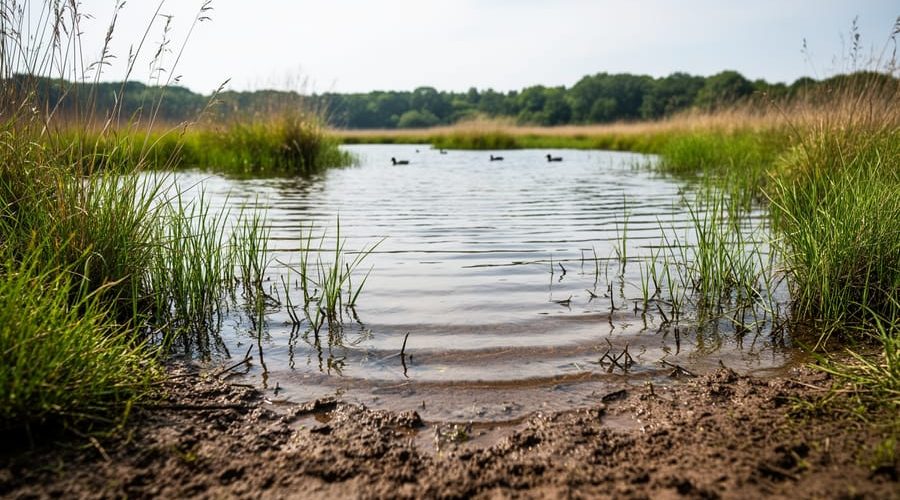
Muddy Pond Wildlife Management Area: What Pond Keepers Can Learn From Natural Wetland Ecosystems
Muddy Pond Wildlife Management Area demonstrates exactly what happens when you let nature take the lead: shallow wetlands thick with native plants, migrating waterfowl by the hundreds, and a self-sustaining ecosystem that requires minimal human intervention. For backyard pond owners, this approach translates into a remarkably practical strategy. Instead of fighting algae with chemicals or constantly adjusting water chemistry, you can borrow proven wildlife management principles to create a pond that balances itself while attracting dragonflies, frogs, and beneficial insects.
The secret lies in understanding why your pond needs wildlife in the first place. Natural wetlands thrive because every organism plays a role: aquatic plants oxygenate water and filter nutrients, amphibians control mosquito populations, and beneficial bacteria break down organic matter. When you replicate these relationships on a smaller scale, your pond becomes less work, not more.
Professional wildlife areas like Muddy Pond prioritize native vegetation, varied water depths, and minimal chemical use. These same principles work beautifully in residential settings. A few strategically placed marginal plants, a muddy shallow zone for amphibians, and patience to let natural processes unfold can transform a high-maintenance water feature into a thriving habitat. You’re not creating a pristine swimming pool. You’re building a miniature ecosystem that looks after itself, supports local wildlife, and gives you more time to actually enjoy your outdoor space rather than endlessly maintaining it.
Understanding Muddy Pond as a Living Classroom
The Natural Balance Approach
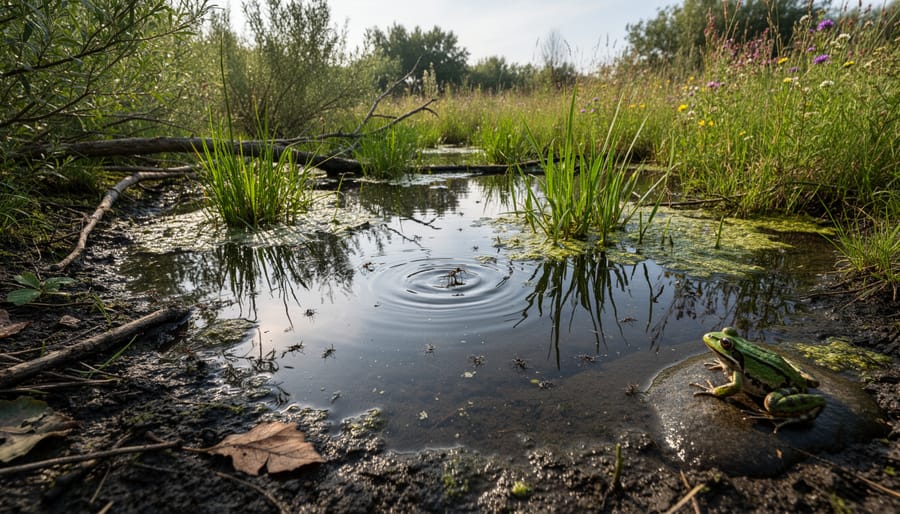
Wildlife management areas like Muddy Pond succeed by working with natural processes rather than fighting them. Instead of dumping chemicals to control algae or constantly pruning every plant, managers let ecosystems regulate themselves through built-in checks and balances.
Here’s how it works: aquatic plants absorb excess nutrients that would otherwise fuel algae blooms. Fish and insects consume algae and decaying matter. Beneficial bacteria break down waste, converting it into forms plants can use. Predators keep prey populations from exploding. When one element grows too abundant, another naturally responds to restore equilibrium.
This hands-off approach doesn’t mean neglect, it means strategic restraint. Managers monitor conditions and intervene only when genuine problems emerge, not at every minor fluctuation.
For home pond owners, this translates to patience and observation. Your pond will find its balance if you give it the right starting conditions: varied depths, appropriate plants, and sufficient beneficial bacteria. Most new pond keepers panic at the first sign of cloudiness or algae, reaching for treatments that disrupt the very processes needed for long-term stability. Natural systems need time to establish their rhythm.
Why ‘Muddy’ Matters
Most pond owners spend years fighting murky water, but sediment and turbidity actually fuel wildlife abundance in natural systems. The organic matter settling at your pond bottom isn’t debris, it’s the foundation of a thriving food web that feeds invertebrates, which feed amphibians, which feed larger fish and birds.
Muddy water holds more than suspended particles. Those tannins from decaying leaves create slightly acidic conditions many native fish prefer. The cloudiness itself provides cover for prey species, reducing stress and creating refuge from predators. Meanwhile, the sediment layer becomes home to burrowing insects, snails, and beneficial bacteria that process waste naturally.
Compare this to crystal-clear ponds requiring constant filtration and chemical intervention. They often support fewer species because they lack the nutrient cycling and hiding places wildlife needs. Your pond doesn’t need to look like chocolate milk, but accepting some natural turbidity, especially after rain or during spring turnover, means accepting the conditions that make diverse wildlife possible. That slightly tea-colored water isn’t a problem to solve; it’s a sign your ecosystem is working.
Core Wildlife Coexistence Strategies You Can Adapt
Creating Habitat Zones
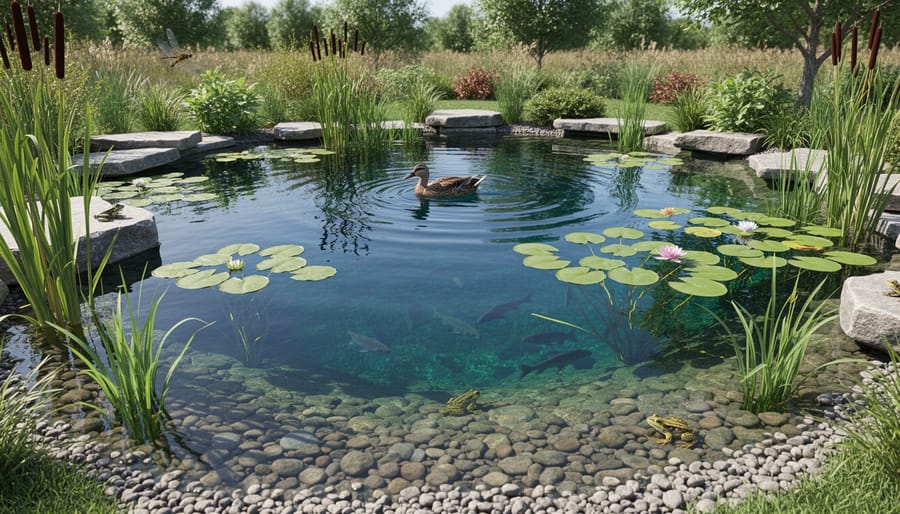
Natural wetlands succeed because they offer diversity, not just in species, but in physical space. Your backyard pond needs the same layered approach. Instead of a uniform bowl, think about creating distinct depth zones that serve different wildlife needs throughout the year.
Start by mapping at least three depth levels. Shallow margins of 0-6 inches provide safe foraging for frogs, nesting spots for dragonflies, and roosting areas for beneficial insects. A middle shelf at 6-18 inches accommodates submerged plants and gives fish refuge from predators while staying accessible to sunlight. The deep zone, 18 inches or more, offers fish a winter retreat and cooler summer refuge when surface temperatures climb.
Here’s how different zones support specific wildlife:
- Shallow margins (0-6 inches): frogs, toads, emerging aquatic insects, wading birds
- Middle shelf (6-18 inches): submerged plants, juvenile fish, diving beetles, damselfly nymphs
- Deep zone (18+ inches): overwintering fish, larger predatory insects, thermal refuge
- Bog/wetland edge: marginal plants, amphibian egg masses, ground beetles, pollinating insects
- Open water area: dragonfly hunting grounds, fish spawning, surface-feeding insects
Don’t forget transition zones, the gradual slopes between depths. Abrupt drop-offs limit which species can navigate your pond. Gentle grades with planted shelves create highways for creatures moving between zones. These habitat hacks mirror what makes Muddy Pond effective: varied structure that prevents any single species from monopolizing resources while offering something for everyone in your mini-ecosystem.
Embracing Beneficial Algae and Microorganisms
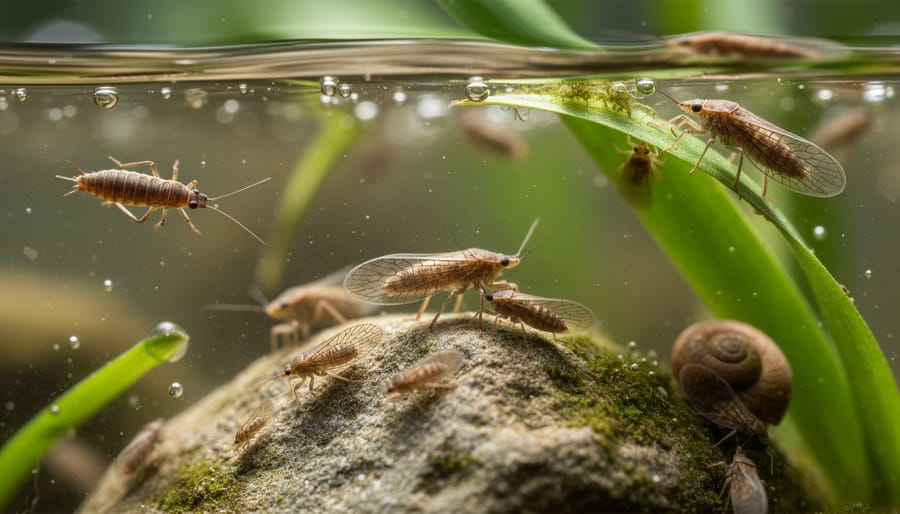
Not all pond growth is your enemy. In natural wetlands like Muddy Pond, a thin film of periphyton (the technical term for that slimy coating on rocks and plants) actually feeds tadpoles, snails, and juvenile fish. This biofilm harbors bacteria that break down fish waste and converts harmful ammonia into less toxic compounds. Your pond needs this microbial workforce.
Single-celled algae floating in the water column provide the base of the food web. Zooplankton eat these microscopic algae, small fish eat the zooplankton, and larger fish eat the small fish. When you treat every hint of green water as a crisis and blast it with chemicals, you collapse this entire system.
The distinction matters: hair algae that forms thick mats can choke out plants and create dead zones, but a light green tint to your water signals a functioning ecosystem. Diatoms (brown algae on surfaces) indicate good water quality and feed beneficial invertebrates.
Instead of fighting all algae, focus on preventing the problematic types through balance. Shade 40-60% of your pond surface with plants, avoid overfeeding fish, and let beneficial algae establish. A healthy pond isn’t sterile, it’s teeming with microscopic life you can’t see but your wildlife depends on.
Native Plant Selection
Choosing the right vegetation transforms your pond from a sterile water container into a living ecosystem. Native pond plants adapted to your region establish quickly, require less maintenance, and support the specific insects, amphibians, and birds that have evolved alongside them. Start with submerged plants like hornwort or milfoil that oxygenate water and provide spawning sites for fish. Add emergent species such as rushes, sedges, or native iris at varying depths to create vertical structure where dragonflies can emerge and birds can perch.
Floating plants like duckweed or water lilies shade the surface, reducing algae growth while offering cover for small fish escaping predators. Marginal plants with different bloom times ensure continuous food sources throughout the growing season, since wetlands provide food and habitat precisely because of this plant diversity. Avoid invasive species like water hyacinth or parrot feather, no matter how attractive, as they can escape into local waterways and disrupt natural systems. Visit your nearest wildlife management area or native plant nursery to identify what thrives in your climate zone without becoming problematic.
Managing Predators and Prey Naturally
Nature achieves coexistence by offering countless hiding places, dense plant clusters, submerged logs, rock crevices, that let prey survive alongside predators. Layer vegetation at different heights: floating plants like water lilies give tadpoles overhead cover, while submerged elodea shelters minnows from hunting dragonfly nymphs. Position stacked rocks or hollow logs near pond edges where frogs can retreat from fish. This structural complexity maintains a healthy predator-prey balance without one species wiping out another. Avoid overcrowding fish, which tips the scales toward predation pressure, stock lightly and let populations self-regulate through available food and territory. Shallow marginal zones let amphibians breed successfully even when larger fish patrol deeper water.
Adapting Wild Pond Principles to Your Backyard
Balancing Aesthetics with Ecology
The secret to a wildlife-friendly pond that still impresses your guests is thoughtful design that frames natural elements as features, not flaws. Start by establishing clear visual boundaries, a defined stone edge, a small patio area, or a viewing point, that signal “this is intentional.” Within those boundaries, let controlled wildness thrive.
Place your most ornamental plants where you’ll see them daily, then transition to native grasses and wildflowers along less visible edges. This layered approach gives you both the lily pads and koi you love and the dense cover that frogs need. Use driftwood or strategically placed rocks as focal points that double as wildlife habitat. A fallen log draped with moss looks artistic while providing shelter for salamanders and basking spots for turtles.
Accept that leaves, twigs, and occasional algae blooms are part of the package. Rather than fighting them constantly, schedule seasonal cleanouts when debris accumulates enough to affect pond health, typically spring and fall. Between those times, let organic matter settle into substrate where it feeds beneficial bacteria and microorganisms. Your pond won’t look sterile, but it’ll look alive, which is its own kind of beauty.
Seasonal Management Inspired by Natural Cycles
Natural wetlands follow predictable seasonal rhythms, and your backyard pond thrives when you work with these cycles rather than against them. In spring, resist the urge to clean everything immediately. Let winter debris decompose gradually, it feeds beneficial microorganisms and provides shelter for emerging insects and amphibians. Fall leaf drop looks messy, but those leaves create food webs and hiding spots for overwintering wildlife.
| Season | Natural Processes | Recommended Actions | What to Avoid |
|---|---|---|---|
| Spring | Algae blooms, amphibian breeding, plant emergence | Add new plants, observe wildlife activity, partial water changes if needed | Complete cleanouts, chemical algae treatments during spawning |
| Summer | Peak growth, increased oxygen demand, evaporation | Top off water levels, thin excessive plant growth selectively | Over-filtering, removing all algae, daily chemical adjustments |
| Fall | Leaf drop, wildlife preparing for winter, plant dieback | Let some leaves settle, trim dead foliage gradually | Removing all organic matter, shutting down systems abruptly |
| Winter | Dormancy, ice formation, reduced biological activity | Maintain small ice-free area, observe from indoors | Breaking ice aggressively, draining the pond completely |
The key is recognizing that seasonal changes signal health, not problems. That spring algae bloom? It feeds tadpoles and tiny aquatic insects. Summer evaporation concentrates minerals that plants need. Trust the cycles and intervene only when something disrupts the pattern, not when nature follows her script.
Monitoring Without Over-Managing
The hardest lesson from natural wetlands like Muddy Pond isn’t what to do, it’s learning when to do nothing. Most pond problems fix themselves if you give the ecosystem time to respond.
Healthy coexistence shows up in activity, not perfection. You’ll see dragonflies patrolling the surface, frogs calling at dusk, and fish appearing relaxed rather than gasping or hiding constantly. Water clarity might shift with seasons, slightly murky after spring rains, clearer in fall, and that’s normal. Algae should come and go in cycles, not dominate year-round. If you measure biodiversity and find multiple species thriving across different habitat zones, your hands-off approach is working.
Red flags requiring action are different: fish gasping at the surface daily, foul odours that persist beyond a few days, complete absence of visible wildlife, or algae blooms that block all light for weeks. One dead fish isn’t a crisis. Five in two days signals trouble.
The test: observe for three days before intervening. Natural systems fluctuate, and what looks alarming Monday often resolves by Thursday. Keep a simple log, water temperature, weather, what you observed, so patterns become visible over weeks rather than reacting to daily changes.
Wildlife management areas succeed because rangers intervene strategically, not constantly. Your pond deserves the same restraint. Check weekly, not daily. Let small imbalances correct themselves. Save your energy for genuine problems, not cosmetic preferences.
Common Challenges and Nature-Based Solutions
Mosquito Management Through Biodiversity
The best defense against mosquito breeding isn’t a chemical spray, it’s a thriving food web. When you establish diverse wildlife populations in your pond, mosquito larvae become a reliable food source for dozens of species. Dragonfly and damselfly nymphs are voracious predators, consuming hundreds of larvae daily while developing underwater. Fish like goldfish and mosquitofish actively hunt the water’s surface for wrigglers. Tadpoles and adult frogs join the feast, while backswimmers and diving beetles patrol constantly. This layered approach to natural mosquito predators means larvae rarely survive long enough to pupate into biting adults. The key is maintaining multiple predator species, if one population dips seasonally, others compensate. A pond with moving water, varied depths, and robust plant growth creates ideal hunting grounds while discouraging mosquitoes from laying eggs in the first place.
When Crystal-Clear Isn’t Best
That perpetually cloudy water you’ve been fighting? It might be exactly what your pond needs. Natural wetlands rarely achieve crystal clarity, and that’s by design, not dysfunction.
Tannins from decomposing leaves create tea-colored water that protects fish from UV stress and discourages aggressive algae blooms. This amber tint signals a system processing organic matter effectively, just like Muddy Pond’s seasonal variations. Moderate turbidity from suspended particles also indicates active microbial communities breaking down waste.
The real concern isn’t cloudiness itself, but sudden changes. Gradual seasonal shifts to slightly murky water often mean your ecosystem is working. Save intervention for abrupt green blooms or foul odors. A pond that stays moderately tinted year-round typically harbors more diverse wildlife than an artificially sanitized one that looks photogenic but functions poorly as habitat.
Wildlife Visitors: Welcome or Worry?
When you create a wildlife-friendly pond, you’re sending out invitations, and not everyone RSVPs the way you’d hope. Herons might drop by for an all-you-can-eat fish buffet, raccoons will test your pond edges like curious toddlers, and turtles may take up permanent residence on your favorite basking rock.
Here’s the reality: these visitors confirm you’ve built something ecologically valuable. At natural areas like Muddy Pond, predation is part of the system’s health, not a design flaw. The question isn’t whether wildlife will visit, but how you’ll respond.
For fish protection, add deeper refuge zones (36+ inches) and overhanging plants where koi can hide during heron hunting hours, typically dawn and dusk. Fishing line strung six inches above the water deters wading birds without harming them. Turtles rarely damage healthy ponds, they’re eating dead fish, not hunting live ones, so their presence often signals you’re already dealing with other issues.
Raccoons? Ensure your pond edges slope gradually or use stacked rocks they can’t easily manipulate. Most “damage” is them drinking or washing food, not malicious destruction.
The coexistence approach means accepting occasional losses while creating conditions where populations stay balanced naturally.
Wildlife management areas like Muddy Pond prove that nature already knows how to create thriving, balanced water ecosystems. You don’t need a chemistry degree or weekly pond treatments when you work with natural processes instead of against them. The frogs, dragonflies, native plants, and even that layer of bottom muck you used to worry about are all doing their jobs, creating a system that largely maintains itself.
Your backyard pond can be a mini-ecosystem where coexistence brings genuine rewards. Less time scrubbing algae. Fewer chemical purchases. Morning coffee watching damselflies hunt above the water lilies. That’s the practical payoff of applying wild pond principles at home, beyond the satisfaction of supporting local biodiversity.
Start with just one or two strategies from this natural playbook. Add a shallow plant shelf with native sedges. Let some beneficial algae establish on the rocks. Create one hiding spot for small fish. Then step back and watch what happens over a season.
Nature’s blueprint for wildlife coexistence isn’t about perfection. It’s about balance, patience, and trusting that diverse life finds its own equilibrium when you give it the right conditions. Your pond becomes more beautiful and less demanding when you stop fighting what comes naturally.