
How School Water Gardens Teach Students to Save Every Drop
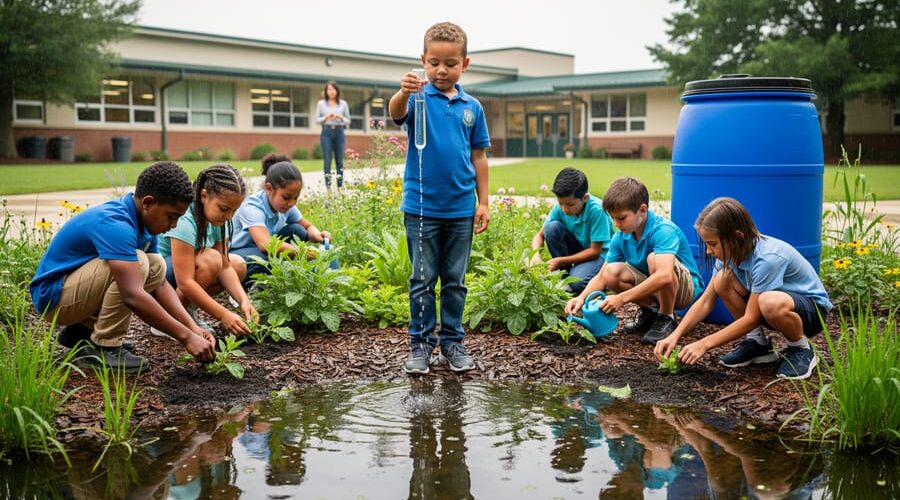
Transform your school into a living laboratory where students don’t just learn about water conservation—they practice it daily through hands-on experiences that stick with them for life. Water conservation schools integrate environmental stewardship directly into the curriculum, using campus water features, rain gardens, and monitoring projects to turn abstract concepts into tangible understanding.
Schools across the country are discovering that when children measure, observe, and care for water ecosystems firsthand, they develop a genuine connection to conservation that lectures alone never achieve. A simple school pond becomes a outdoor classroom where students track evaporation rates, test water quality, observe wildlife dependencies, and calculate water usage—all while developing critical thinking skills and scientific literacy.
The beauty of this approach lies in its accessibility. You don’t need expensive equipment or extensive facilities to start. A small rain barrel collection system, a modest container water garden, or even a designated monitoring station at existing school fountains can launch meaningful citizen science projects. Students become researchers, collecting data on water consumption patterns, rainfall amounts, and seasonal changes that contribute to real environmental databases.
These programs work because they tap into children’s natural curiosity while addressing a pressing global issue. When a third-grader checks the water level in their class rain garden after a storm, or a middle schooler graphs monthly water usage to identify conservation opportunities, they’re not just completing assignments—they’re becoming environmental stewards. The lessons learned extend beyond school walls, influencing household habits and creating ripple effects throughout entire communities.
Starting a water conservation program at your school requires vision, but the framework is surprisingly straightforward, and the educational returns are immeasurable.
Why Water Gardens Make Perfect Outdoor Classrooms
The Living Laboratory Advantage
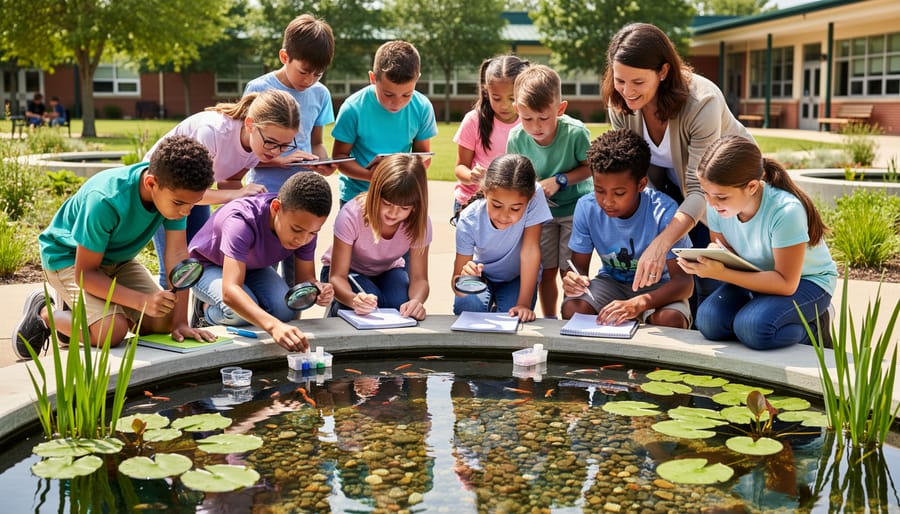
Here’s what makes water gardens such powerful teaching tools: they’re complete, self-contained worlds where every action creates a visible reaction. Unlike abstract textbook lessons, a water garden living classroom lets students witness real-time changes based on their conservation choices.
Think about it this way. When kids reduce water flow to a garden pond by 20 percent, they don’t just record numbers on a chart. They observe how plants respond, whether algae levels shift, and if wildlife behavior changes. This immediate feedback loop transforms abstract concepts into concrete understanding.
I’ve watched students design simple experiments testing which native plants filter water most efficiently or how shade affects evaporation rates. The beauty is that mistakes become learning opportunities rather than failures. Add too many fish? The water clarity tells the story within days. Forget to top up during a hot week? Students see firsthand how water levels drop and can calculate actual evaporation rates.
These gardens create natural laboratories where hypothesis testing feels like exploration rather than schoolwork. Students might predict that adding more surface plants will reduce water loss, then measure the results over two weeks. They’re practicing scientific method without realizing they’re checking all the boxes educators need.
The cause-and-effect relationships are wonderfully transparent. Conservation efforts produce measurable outcomes, building both environmental awareness and critical thinking skills through direct observation and hands-on problem solving.
Connecting Classroom Theory to Real-World Practice
There’s something magical that happens when a student dips their hand into a water garden and feels the cool liquid slip through their fingers. Suddenly, evaporation isn’t just a word in a textbook—it’s the reason the water level dropped two inches since last week. Filtration becomes real when they watch beneficial bacteria break down fish waste into nutrients for plants. These hands-on experiences transform abstract concepts into memorable moments.
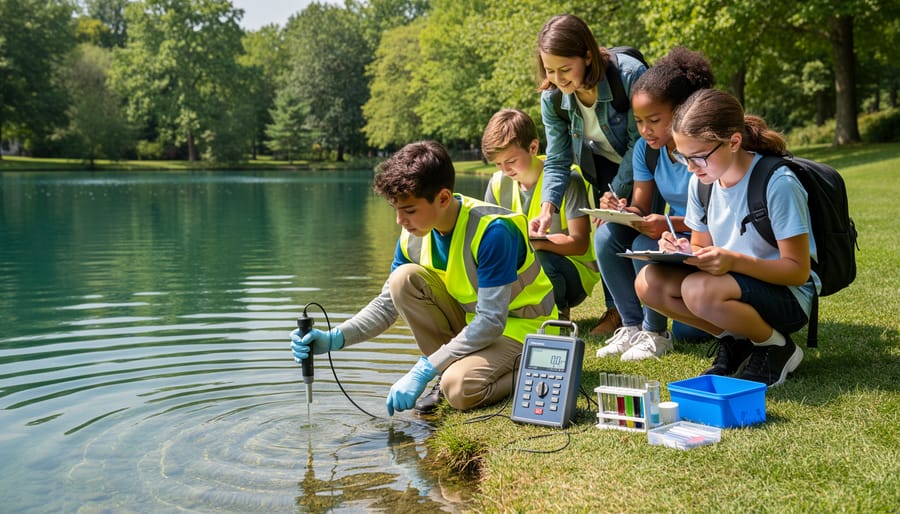
I’ve seen students completely light up when they measure water temperature, pH levels, and dissolved oxygen with simple testing kits. They’re not just collecting data; they’re becoming water detectives, solving the mystery of what makes their ecosystem thrive. When a child discovers that aquatic plants produce oxygen bubbles on sunny days, photosynthesis shifts from a difficult vocabulary word to an observable phenomenon they witnessed themselves.
The school garden benefits multiply when water features are involved because students can track evaporation rates, observe the water cycle in action, and understand how different organisms depend on each other. They see firsthand how dragonfly larvae control mosquito populations and how snails keep algae in check—ecosystem balance becomes something they can touch and nurture rather than memorize.
This tactile learning creates lasting understanding. Students remember what they’ve experienced far longer than what they’ve read, building environmental stewards who genuinely care about water conservation because they’ve connected with it personally.
Setting Up Your School’s Citizen Science Workshop Program
Essential Equipment and Materials
Getting started with water conservation citizen science doesn’t require breaking the bank. I’ve found that some of the best educational tools are either budget-friendly or things you can make yourself with students, which adds an extra layer of learning.
For measuring water levels, simple wooden rulers or yardsticks work perfectly. You can attach them to stakes near your school pond or water garden, creating permanent monitoring stations. I’ve also had great success with clear plastic rain gauges, which students love checking daily. They’re available at most hardware stores for just a few dollars.
Water quality testing is easier than you might think. Basic pH test strips are affordable in bulk and give students instant visual feedback. For temperature monitoring, inexpensive aquarium thermometers do the job beautifully. If your budget allows, digital thermometers with probes let students track seasonal changes more precisely. A simple homemade Secchi disk, created from a white plastic lid attached to a string with measured markings, helps students measure water clarity without spending a cent.
Recording data becomes an adventure with basic field notebooks or waterproof journals. Students can sketch observations, paste photos, and track measurements over time. Clipboards paired with plastic sheet protectors keep regular paper dry during outdoor sessions.
For documentation, smartphones or tablets work wonderfully for photography. Magnifying glasses or hand lenses, often available in classroom science kits, help students examine aquatic insects and plant details up close. Collection jars, ice cube trays for sorting small specimens, and turkey basters for gentle water sampling round out your toolkit.
Remember, the goal is observation and engagement, not laboratory precision. Students learn just as much using homemade equipment, and they’ll feel proud knowing they’re real scientists making a difference.
Creating a Workshop Schedule That Works
The beauty of water conservation workshops is their flexibility—you can adapt them to fit almost any schedule! Let me share some approaches that have worked wonderfully in different settings.
For elementary students, weekly 45-minute sessions work best. I’ve found that splitting the year into themed months keeps things fresh: September focuses on pond setup, October on water testing, November on seasonal changes, and so on. This rhythm allows kids to observe genuine transformations in their water garden over time, which is incredibly powerful for learning.
Middle schoolers thrive with bi-weekly 90-minute workshops. Their longer attention spans mean you can dive deeper into topics like water quality analysis or aquatic food webs. One teacher I know runs “Water Wednesdays” where students spend the first half collecting data and the second half analyzing their findings.
If you’re working with time constraints, intensive three-day workshops can be surprisingly effective. Day one covers pond ecosystem basics, day two focuses on hands-on monitoring, and day three wraps up with data analysis and presentations. While not ideal for observing long-term changes, these condensed programs pack tremendous learning into a short window.
For maintaining continuity throughout the school year, assign rotating “pond monitors” who check water levels and note observations weekly, even between formal sessions. Create a simple observation journal that stays with the pond, allowing any class member to jot down discoveries. This keeps engagement alive and builds genuine ownership of the project, turning sporadic lessons into an ongoing adventure in water stewardship.
Water Conservation Lessons Students Learn by Doing
Measuring and Tracking Water Usage
Getting students excited about water conservation starts with showing them the numbers! Think of your students as water detectives, equipped with simple tools to uncover how water behaves in your school garden.
Start with evaporation tracking using the pan method. Place identical shallow containers filled with equal amounts of water in different spots around your school garden—one in full sun, another in shade, and one near your pond or water feature. Students measure water levels daily using a ruler marked in millimeters, recording changes on simple charts. Within a week, you’ll see fascinating patterns emerge. I remember doing this with my own backyard containers and being amazed at how a sunny spot lost nearly twice as much water as my shaded garden corner!
For seasonal monitoring, designate student teams to track water usage throughout the school year. A basic rain gauge captures natural precipitation, while meter readings (taken with adult supervision) show actual water consumption. Students can create colorful graphs comparing wet versus dry seasons, making abstract concepts tangible.
Here’s where it gets really fun: implement a conservation technique like mulching around plants or adding floating plants to your pond, then measure the difference. Students calculate percentage reductions in water loss, connecting their actions to real results. Use plastic graduated cylinders or measuring cups for smaller-scale experiments—no fancy equipment needed!
Keep data collection sheets simple with columns for date, measurements, weather conditions, and observations. This hands-on approach transforms students into confident water stewards who understand their environmental impact through personal discovery.
Understanding Natural Filtration and Water Quality
Here’s something I’ve learned from years of tending my backyard pond: nature is the best teacher when it comes to keeping water clean. When students observe a thriving pond ecosystem, they’re witnessing a masterclass in natural filtration that can change how they think about water conservation forever.
Let me explain how this works in simple terms. Aquatic plants are like living water filters. Their roots absorb excess nutrients like nitrogen and phosphorus that would otherwise cause algae blooms and murky water. Water lilies, irises, and rushes don’t just look beautiful—they’re working around the clock to purify the water. I’ve seen ponds transform from cloudy green soup to crystal clear within weeks simply by adding the right plant balance.
But plants aren’t the only heroes in this story. Beneficial bacteria colonize every surface in a healthy pond—rocks, gravel, plant roots. These microscopic workers break down fish waste and decaying organic matter, converting harmful compounds into harmless ones. It’s like having an invisible maintenance crew that never takes a day off.
When students understand these natural processes in aquatic ecosystems, they start making connections to conservation at home. They realize that reducing fertilizer runoff protects waterways, that choosing native plants supports local ecosystems, and that working with nature—rather than against it—creates sustainable solutions. These hands-on lessons stick with them far longer than any textbook ever could.
Rainwater Harvesting and Pond Replenishment
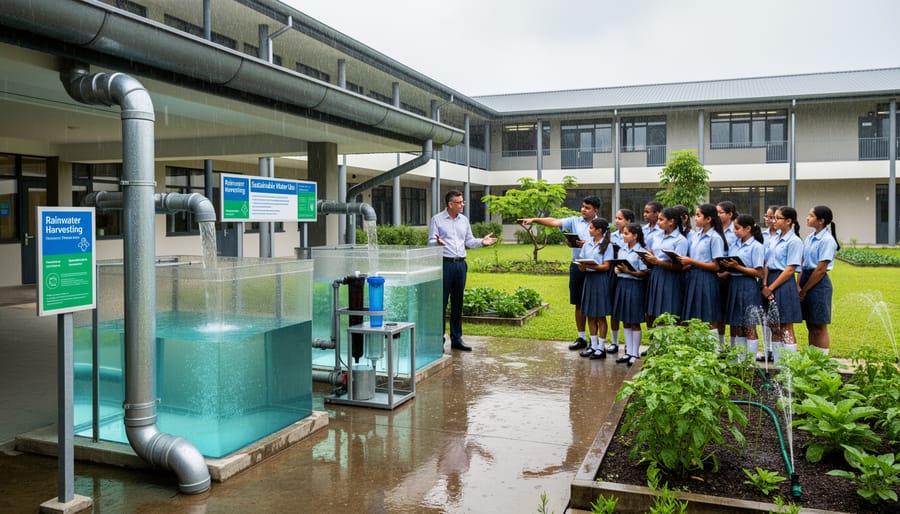
One of the most exciting hands-on projects you can introduce students to is setting up their own rainwater collection system for the school pond. This activity transforms abstract water conservation concepts into something students can see, touch, and measure every day.
Start simple with the basics. Show students how rain falls on rooftops and can be redirected through downspouts instead of running off into drains. A basic collection system might include a clean barrel placed under a downspout with a mesh screen on top to filter out leaves and debris. Students can paint and decorate these barrels, making the project both functional and creative.
Here’s where the learning gets really fun. Have students calculate how much rainfall their collection area receives and estimate how many gallons they can harvest. They’ll use real math skills while watching their pond levels rise naturally after each rain event. I’ve seen kids get genuinely excited about checking rain gauges and recording data in their water journals.
Rainwater harvesting systems connect perfectly to lessons about the water cycle, watershed protection, and reducing municipal water use. Students learn that every drop counts and that they’re actively participating in conservation rather than just reading about it.
Consider creating student roles like Water Monitors who check collection barrels weekly and Pond Keepers who measure water levels and decide when supplemental rainwater is needed. This responsibility builds ownership and reinforces that conservation requires ongoing attention and care.
Making Science Fun: Engaging Workshop Activities
Water Quality Testing Challenges
Transform your students into water quality detectives with fun testing challenges that feel more like games than science class! Start by creating team-based competitions where groups test different water sources around your school garden—comparing pond water to tap water, or morning samples to afternoon readings.
The pH challenge works beautifully as a color-matching contest. Kids use simple test strips and compete to identify which areas of the garden pond have the most balanced pH levels. I’ve watched students get genuinely excited about finding that sweet spot between 6.5 and 8.5, especially when they realize their fish and plants depend on it.
For dissolved oxygen measurements, set up a relay-style challenge where teams race against time to test multiple locations. Students learn that moving water near fountains typically has higher oxygen levels than still corners—a discovery that feels like solving a mystery!
The clarity assessment becomes a treasure hunt using a simple Secchi disk or white plate. Lower it into the water and measure visibility depth. Teams earn points for accurate measurements and thoughtful observations about what might be affecting water clarity, like algae growth or recent rain.
Keep a classroom leaderboard tracking weekly results. This friendly competition builds genuine scientific skills while students barely notice they’re collecting valuable data that helps maintain your school’s water garden ecosystem.
Plant and Fish Population Studies
Here’s where your school pond transforms into an outdoor research station! Getting students involved in citizen science projects turns everyday observations into meaningful data that contributes to real scientific understanding. I’ve seen kids go from splashing around to becoming genuinely invested junior researchers once they realize their work matters beyond the classroom.
Start simple with monthly fish counts. Students can work in teams to observe and tally different species, noting sizes and behaviors. Create waterproof data sheets with pictures of common pond fish to help younger learners identify what they’re seeing. Over time, these counts reveal population trends and breeding success.
Plant censuses work beautifully across seasons. Students document which aquatic plants emerge first in spring, when they flower, and how populations shift through fall. Photography paired with written observations creates powerful longitudinal records. Older students can measure plant coverage percentages or track the spread of particular species.
The magic happens when you connect your findings to platforms like iNaturalist or local university databases. Suddenly, your students’ careful observations about dragonfly species or algae blooms contribute to regional ecological studies. They’re not just learning about conservation—they’re actively participating in it. This real-world application builds confidence and demonstrates that even small actions create ripples of positive change in our environment.
Creative Documentation Projects
Let me tell you something exciting—when students document their water conservation journey, the learning becomes ten times more meaningful! I’ve seen kids who initially rolled their eyes at science suddenly become passionate environmental reporters.
Photography journals are perfect starting points. Give students simple cameras or tablets to capture weekly images of their water garden’s transformation. They might photograph a rain barrel overflowing after storms, track water levels during dry spells, or document which plants thrive with minimal irrigation. These visual records become powerful before-and-after stories that speak louder than any textbook.
Video diaries take things up a notch. Students can create short clips explaining their water-saving techniques to other classrooms. One fifth-grader I know created a hilarious “Water Detective” series where she investigated leaky faucets around campus—it got the whole school talking about conservation!
For artistic learners, encourage creative interpretations through painted rain gauge charts, sculpted water cycle models using recycled materials, or poetry about their observations. These projects honor different learning styles while reinforcing scientific concepts.
Digital presentations bring everything together beautifully. Students can compile their photos, videos, and artwork into slideshows for parent nights or school assemblies. When the wider community sees children’s genuine enthusiasm and knowledge, it creates ripple effects—families start implementing conservation practices at home, transforming individual projects into community-wide movements.
Building Water-Smart Habits Beyond the Garden
Take-Home Conservation Challenges
The real magic happens when students take their newfound water wisdom home! I’ve found that when kids become water conservation champions at school, they often transform into enthusiastic household auditors, much like how my nephew couldn’t stop talking about pond evaporation after visiting my water garden.
Start with a simple household water audit challenge. Give students a fun worksheet to track water use at home for one week. They can time showers, count toilet flushes, and observe outdoor watering habits. Make it a game by having them estimate gallons used, then research actual numbers. Parents love this activity because it opens conversations about utility bills and environmental responsibility.
The greywater bucket experiment is another winner. Challenge families to collect sink water while waiting for it to warm up, then use it to water houseplants or outdoor gardens. Students can measure how much water they save daily and calculate monthly totals. One parent told me their daughter collected over 50 gallons in a month just from this simple practice.
Create conservation goal-setting contracts that students design with their families. Maybe it’s reducing shower time by two minutes, fixing that dripping faucet, or installing a rain barrel together. The key is making goals specific and measurable.
Consider a monthly photo challenge where families submit pictures of their conservation efforts. Celebrating these wins in newsletters or assemblies reinforces positive habits and inspires other families to participate. Remember, you’re not just teaching students; you’re creating ripples of change that extend throughout entire households and communities.
Seasonal Workshop Themes That Keep Students Engaged Year-Round
Keeping students excited about your water garden throughout the school year becomes effortless when you align your workshops with nature’s calendar. I’ve found that following the pond’s natural rhythm prevents those “we’ve done this before” groans and builds genuine anticipation for what’s coming next.
Start your fall semester in September with “Pond Prep Month,” where students help winterize the garden while observing migrating waterfowl and declining insect activity. October shifts to “Decomposition Detective,” examining how fallen leaves affect water chemistry—perfect timing as autumn transforms your schoolyard. November naturally transitions to “Winter Wildlife Watchers,” tracking which creatures stick around as temperatures drop.
January kicks off with “Ice Science Exploration” if you’re in colder climates. Students measure ice thickness, discover how aquatic life survives beneath frozen surfaces, and test whether their summer predictions about winter conditions came true. February focuses on “Indoor Water Testing Labs,” bringing samples inside for detailed analysis when outdoor conditions are harsh.
As spring arrives, March becomes “Awakening Pond” month. Students document the first signs of life returning, measure temperature changes, and predict emergence dates for plants and animals. April explodes with “Amphibian Adventure,” monitoring tadpole development and frog calls—always a student favorite. May wraps the year with “Planting and Planning,” where students install new native plants and design next year’s experiments.
Summer programs can tackle “Algae Investigation” during June’s heat, “Beneficial Insects” in July when pollinators are abundant, and “Water Conservation Challenge” in August, measuring evaporation rates during the driest period.
This rotation ensures that even students participating for multiple years encounter fresh content. A third-grader studying fall decomposition returns as a fifth-grader to lead younger students, deepening their understanding while maintaining enthusiasm. The natural world provides endless variety—you’re simply organizing it into digestible, seasonally appropriate chunks that make every month feel like a new discovery rather than a repeat performance.
Troubleshooting Common Workshop Challenges
Weather Disruptions and Alternative Plans
Weather shouldn’t stop your water conservation lessons! I’ve learned from my own water gardening adventures that having backup plans keeps the learning flowing, rain or shine.
When outdoor conditions aren’t cooperating, bring the pond indoors! Set up observation stations using clear containers with pond water samples collected earlier. Students can examine microscopic life under magnifying glasses, sketch aquatic organisms, and continue tracking water quality data from their classroom. It’s fascinating how much they’ll discover in just a few drops.
Create interactive indoor activities like water cycle demonstrations using simple household items. Students can build miniature watershed models in plastic bins, experimenting with how water flows and collects. I’ve found that hands-on building projects keep enthusiasm high even when you’re stuck inside.
During winter months or extended rainy periods, focus on data analysis and reflection. Have students graph their collected measurements, compare seasonal patterns, and prepare presentations about their findings. They can also design improvements for the water garden’s next phase or research native plants to add in spring.
Digital tools offer another great alternative. Virtual pond tours, water conservation documentaries, and online citizen science platforms let students contribute to broader research projects while building their understanding. The key is maintaining that sense of discovery and purpose, regardless of weather conditions.
Managing Different Skill Levels and Learning Styles
Just like in my own water garden where I’ve learned that some plants thrive in full sun while others prefer shade, students in your conservation program will have varying comfort levels with scientific concepts and hands-on activities. The beauty of water garden citizen science is its natural flexibility.
For beginners, start with simple observation tasks like counting visible tadpoles or measuring water temperature. These foundational activities build confidence without overwhelming. Meanwhile, advanced students can tackle complex challenges like calculating water loss through evaporation or designing irrigation systems that capture and reuse water from the school garden.
Visual learners flourish when documenting their findings through sketches, photographs, or diagrams of water flow patterns. Kinesthetic learners love the hands-on aspects of testing water samples, installing rain barrels, or maintaining pond plants. Auditory learners benefit from group discussions where they can verbalize their observations and theories about the ecosystem.
Consider creating tiered activity stations around your water feature. One station might focus on basic plant identification while another explores water chemistry testing. This approach, combined with thoughtful water safety considerations, ensures every student finds their entry point into conservation learning. Pair students strategically so experienced water gardeners can mentor newcomers, creating a supportive learning community.
Creating a school water garden program doesn’t require a massive budget or acres of space. I’ve seen incredible transformations happen with something as simple as a whiskey barrel pond or a small recirculating fountain surrounded by native plants. The magic isn’t in the size of your water feature—it’s in the hands-on experiences students gain from caring for it.
When students become citizen scientists through water garden workshops, they develop a genuine connection to conservation that no textbook can replicate. They’re not just learning about water cycles and ecosystems; they’re observing them firsthand, collecting real data, and making actual contributions to environmental understanding. This direct experience transforms abstract concepts into personal knowledge that sticks with them long after they’ve left your classroom.
If you’re an educator feeling overwhelmed by where to begin, start with one container water garden and a simple water quality testing kit. Build your program gradually as you and your students gain confidence. Even the most modest water garden can spark profound questions and generate meaningful learning outcomes. I’ve watched students who initially showed little interest in science become passionate advocates for water conservation after just a few weeks of monitoring their school’s water garden.
These young water stewards don’t keep their knowledge to themselves—they become conservation ambassadors in their families and neighborhoods, spreading awareness about protecting our precious water resources. By empowering students through citizen science today, you’re cultivating the environmental leaders of tomorrow.