
These Riparian Animals Are Fighting Your Pond’s Invasive Species (Here’s How to Help Them Win)
Look beyond chemical treatments and filtration systems—your riparian zone’s natural residents are your most effective allies against invasive species. That strip of land where water meets shore hosts an entire ecosystem of hungry, hardworking animals that view your invasive plant and animal problems as their next meal.
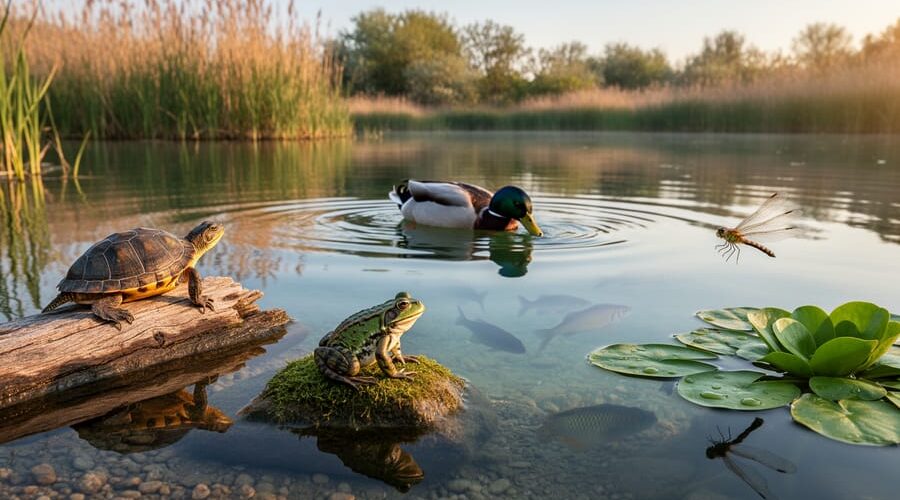
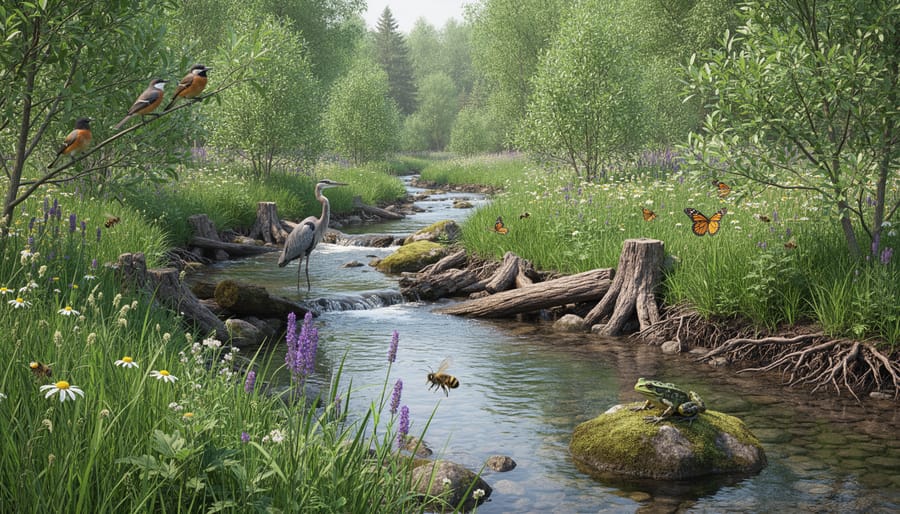
The animals thriving along pond edges aren’t just wildlife to admire during your morning coffee. Turtles devour excess vegetation that chokes waterways. Dragonfly nymphs hunt mosquito larvae with relentless efficiency. Native fish species control populations of invasive insects and their eggs. Frogs and toads consume thousands of pests weekly. Even waterfowl like ducks contribute by feeding on aquatic weeds and unwanted snails.
Here’s what makes this approach transformative: these creatures work 24/7 without requiring your intervention, chemicals, or expensive equipment. They’re self-sustaining pest control that actually improves your pond’s ecological balance rather than disrupting it.
The challenge most pond owners face isn’t attracting these beneficial animals—it’s creating conditions where they’ll stay. Riparian zones degraded by invasive plants like purple loosestrife or choked with non-native water lettuce won’t support the diverse animal populations you need. The invasives have already pushed out the natives.
This is where understanding riparian zone animals becomes practical knowledge rather than abstract ecology. When you know which species control specific invasives and what habitat features they require, you can strategically design your pond’s edges to recruit nature’s cleanup crew. You’re not just managing a water feature—you’re orchestrating a living system where beneficial animals outcompete and consume the invasive species threatening your pond’s health.
What Makes Your Pond’s Edge So Important (And So Vulnerable)
Think of your pond’s edge as nature’s lobby – it’s that beautiful meeting place where water and land shake hands. This transition zone has a fancy name (riparian zone, if you want to impress your gardening friends), but really it’s just the strip of land that hugs your pond’s perimeter. It might be a few feet wide or stretch several yards, depending on your property.
Here’s what makes this area so special: it’s incredibly productive. The soil stays moist, plants get plenty of water, and animals find everything they need – food, water, and shelter – all within easy reach. I’ve watched my own pond’s edge transform from a simple grass border into a bustling wildlife corridor, and the difference is remarkable.
But here’s the catch. That same richness that attracts dragonflies and frogs also rolls out the welcome mat for troublemakers. Invasive plants like purple loosestrife and phragmites love these moist conditions and can quickly crowd out your native vegetation. Invasive animals aren’t far behind – think bullfrogs gobbling up beneficial insects or aggressive fish species disrupting your pond’s balance.
Why does this matter so much? Your riparian zone acts as your pond’s natural filter and bodyguard. Those plant roots stabilize the soil, preventing erosion that would cloud your water. The vegetation filters runoff before it reaches your pond, catching nutrients and pollutants. Plus, it provides critical habitat for the good guys – the native animals that naturally control pests and keep invasive species in check.
When invasives take over this zone, you lose these benefits. Your water quality suffers, beneficial wildlife disappears, and you’re stuck fighting an uphill battle. The good news? Understanding this connection is your first step toward creating a healthier, more balanced pond ecosystem that practically takes care of itself.
Meet Your Natural Allies: Animals That Control Invasive Species
Turtles: Your Underwater Weed-Eating Crew
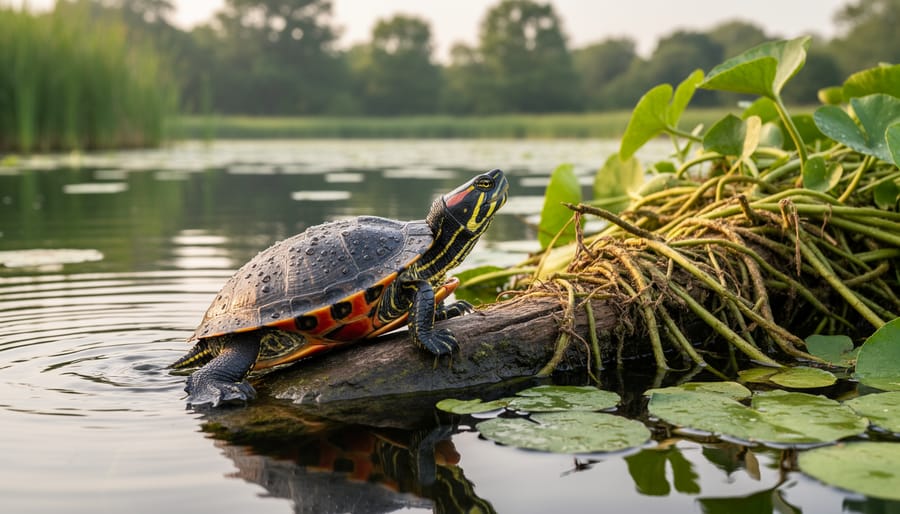
If you’ve ever battled invasive duckweed, water lettuce, or algae in your pond, you’ll be thrilled to know that native turtles can be your hardworking cleanup crew. These shelled helpers are natural grazers that munch on problematic aquatic plants while adding delightful wildlife activity to your water feature.
The painted turtle stands out as one of the best plant-controlling species for most North American ponds. These beauties with their red and yellow markings are voracious eaters of soft aquatic vegetation, including many invasive plants that can overtake your pond. Red-eared sliders, if they’re native to your region, also consume plenty of vegetation, though they can become quite large. Snapping turtles, while less appealing aesthetically, are incredible at controlling excessive plant growth and eating decaying matter that would otherwise cloud your water.
Here’s the crucial point: only encourage turtles that are native to your specific area. Introducing non-native species, even well-meaning releases of pet store turtles, can devastate local ecosystems. These outsiders often outcompete native wildlife and spread diseases.
To attract beneficial native turtles, create inviting basking spots using flat rocks or floating logs positioned where they’ll get morning sun. Turtles need to regulate their body temperature, so these sunny perches are essential. Add shallow areas with native plants where turtles can forage safely, and leave a muddy bank section for nesting if you have females visiting.
I’ve watched painted turtles in my own pond methodically work through patches of invasive plants I thought I’d be battling forever. Their steady grazing keeps growth manageable without chemicals or constant manual removal. The key is patience. A healthy turtle population establishes itself gradually, but once they’re comfortable in your pond, they’ll reward you with natural, ongoing vegetation control.
Frogs and Toads: The Insect Patrol
Let me tell you about some of the hardest-working pest controllers you’ll ever meet! Frogs and toads are absolute champions when it comes to keeping invasive insects in check around your pond. I’ve watched a single green tree frog devour dozens of mosquitoes in one evening session, and that’s just the beginning of what these little amphibians can do for your water feature.
These amphibious allies target invasive insects at every life stage. Adult frogs snap up mosquitoes, flies, and beetles that hover above the water, while tadpoles graze on algae and decomposing matter that would otherwise fuel mosquito larvae populations. Some toad species are particularly fond of invasive ants and beetles that can disrupt the balance of your riparian zone. It’s like having a 24-hour security team patrolling your pond perimeter!
The secret to attracting these beneficial amphibians is creating frog-friendly habitats along your pond edges. Start by leaving a shallow, gently sloping section where frogs can easily enter and exit the water. Add some flat rocks partially submerged at the water’s edge for basking spots, and incorporate native grasses and low-growing plants within a meter of the waterline for daytime hiding places.
Avoid using any chemicals or pesticides near your pond, as amphibians absorb substances directly through their permeable skin. Leave some leaf litter and create small log piles in shaded areas nearby, these become perfect refuges for toads during hot days. If you hear that first evening chorus of frog calls, celebrate! You’ve successfully recruited nature’s most enthusiastic insect patrol team.
Native Fish: Below-Surface Defenders
Beneath the water’s surface, native fish work quietly as your pond’s cleanup crew and pest control team. I learned this firsthand when I added native fathead minnows to my backyard pond—within weeks, they’d made a noticeable dent in the mosquito larvae population, and I watched them nibble on algae strands clinging to my rocks.
Native fish species offer multiple benefits for riparian zone management. Many consume invasive plant fragments before they can establish, feed heavily on insect larvae including mosquitoes, and naturally compete with invasive fish species for food and territory. This competition is crucial—native fish that are well-adapted to your local conditions will often outperform invasives when given the right environment.
When selecting native fish for your pond, start by checking with your state’s fish and wildlife department to identify species native to your region. Popular beneficial natives include mosquitofish in warmer climates, which devour insect larvae with impressive efficiency. Fathead minnows work wonderfully in cooler regions and reproduce readily, maintaining their population naturally. Sunfish species like bluegill not only control insects but also consume small aquatic plants and compete effectively with goldfish and koi that may become problematic.
Before introducing any fish, ensure your pond has adequate depth (at least 18-24 inches in the deepest area), proper oxygenation, and some aquatic vegetation for shelter. Avoid overstocking—a good rule is one inch of fish per square foot of surface area. Never release fish from one water body into another without proper guidance, as this can spread diseases or create new invasive problems. Start small with a few individuals and let them establish naturally. Your native fish will reward you with a healthier, more balanced pond ecosystem that practically manages itself.
Birds: Aerial Seed and Pest Controllers
If you’ve ever watched birds flitting around your pond, you’ve witnessed some of nature’s most effective pest controllers in action! Birds that frequent riparian zones are doing far more than just adding beauty and song to your water garden—they’re actively managing invasive species for you.
Red-winged blackbirds are among my favorite riparian helpers. These striking birds with their scarlet shoulder patches feed heavily on weed seeds, including those from invasive plants like purple loosestrife and reed canary grass. By consuming these seeds before they spread, they help prevent invasive takeovers along your pond edges. I’ve noticed fewer unwanted seedlings in areas where these blackbirds regularly forage.
Swallows are absolute champions when it comes to insect control. Barn swallows, tree swallows, and violet-green swallows patrol the air above water, catching mosquitoes, midges, and other flying insects. A single swallow can consume hundreds of insects daily, which means fewer pests bothering you during evening pond visits and better control of populations that can harm your water plants.
These birds also spread native plant seeds through their droppings, helping restore natural riparian vegetation. To attract them, leave some dead standing trees or snags nearby for perching, and maintain natural vegetation along your pond’s edge rather than manicured grass right to the water. Consider installing nesting boxes for swallows—they’ll reward you with summer-long pest patrol. Creating muddy areas also helps swallows gather nesting material, making your pond their preferred habitat.
Beneficial Insects: Tiny but Mighty Helpers
Don’t overlook the incredible power of your smallest riparian allies! I’ll never forget watching a dragonfly patrol my pond one summer afternoon, snatching mosquito after mosquito right out of the air. These aerial acrobats aren’t just beautiful—they’re your front-line defense against invasive insects and their larvae.
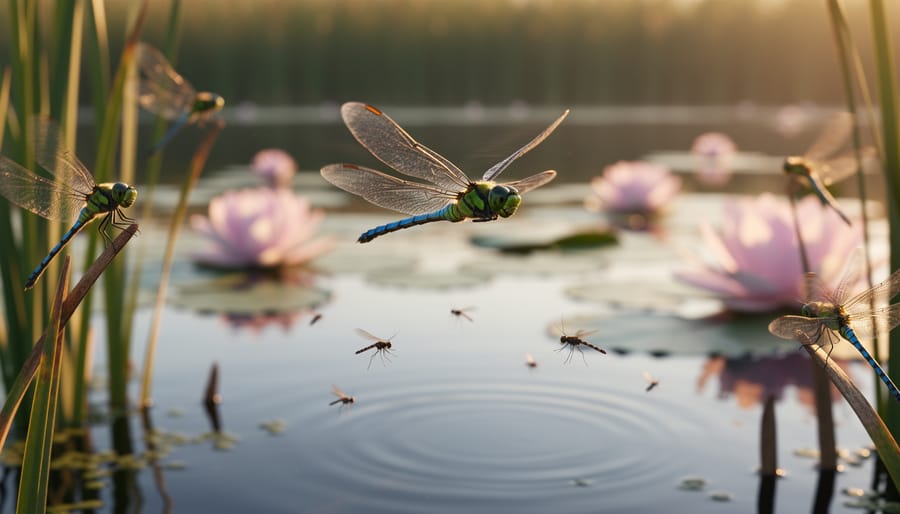
Dragonflies and damselflies are absolute champions at controlling mosquitoes, aphids, and the larvae of many invasive aquatic insects. A single dragonfly can consume hundreds of mosquitoes in a day! Their nymphs live underwater for months or even years, feasting on mosquito larvae, invasive midge larvae, and other small aquatic pests before emerging as adults.
Other beneficial insects like lacewings, ground beetles, and native wasps also target invasive species throughout their life cycles. These tiny hunters work around the clock, patrolling your riparian zone for problems you might not even notice yet.
Encouraging these helpful bugs is wonderfully simple. First, avoid pesticides—they kill beneficial insects along with the pests. Create diverse habitats by planting a variety of native flowering plants around your water feature. Leave some areas a bit wild with fallen logs, leaf litter, and tall grasses where beneficial insects can shelter and overwinter.
Add shallow water areas and muddy spots where dragonflies and damselflies can lay eggs. Even a small dish of water tucked among plants helps. By welcoming these miniature guardians, you’re building a natural pest control system that works tirelessly, completely free of charge!
Creating a Wildlife-Friendly Riparian Zone Around Your Pond
Planting the Right Native Vegetation
Choosing the right native plants for your riparian zone is like setting out a welcome mat for beneficial wildlife while naturally crowding out troublesome invasives. I’ve seen firsthand how a thoughtfully planted pond edge can transform from a weedy mess into a thriving habitat in just one growing season.
Start by identifying native species that naturally grow along waterways in your local area. Visit nearby natural wetlands or contact your regional native plant society for recommendations. Look for plants that serve multiple purposes: deep-rooted sedges and rushes stabilize banks while providing nesting material for waterbirds, native grasses offer shelter for frogs and lizards, and flowering shrubs feed insects that in turn feed insect-eating animals.
When selecting plants, choose a variety of heights and densities. Tall canopy plants like paperbarks or tea trees create shade and perching spots for birds. Mid-level shrubs provide protected corridors for small mammals. Low groundcovers and tufting plants offer hiding places for frogs and invertebrates that control algae and mosquito larvae.
Here’s my planting approach: prepare the soil by removing existing weeds, but don’t disturb the bank structure too much. Plant in autumn or early spring when rainfall helps establishment. Space plants according to their mature size, but closer than you might think—this creates faster coverage that naturally blocks invasive species from taking hold. Native plants adapted to riparian conditions typically have extensive root systems that outcompete shallow-rooted invasives for water and nutrients.
Water new plantings regularly for the first season, then let nature take over. As your native vegetation matures, you’ll attract native animals that become your partners in maintaining a balanced, healthy riparian ecosystem.
Building Habitat Features That Work
Creating inviting habitat features for riparian zone animals is easier than you might think, and you can complete most projects in a single weekend with materials from your local home improvement or landscape supply store.
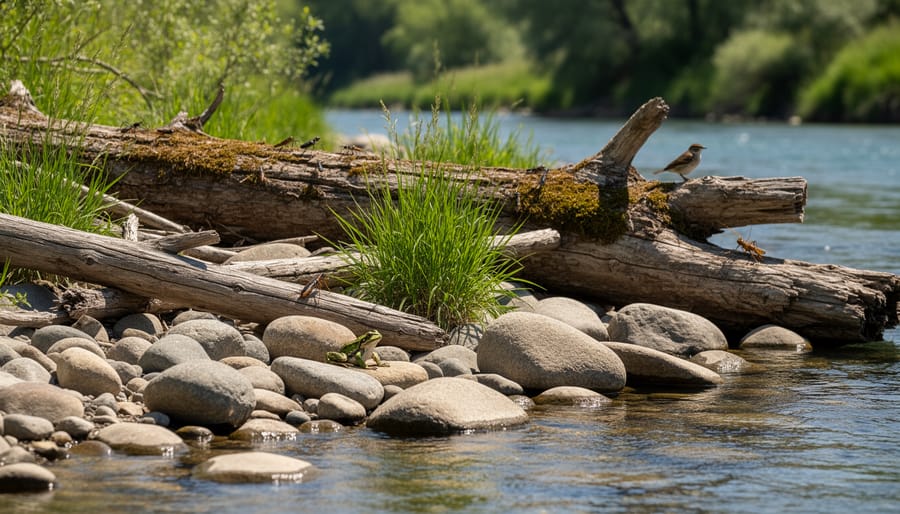
Start with a rock pile refuge near your pond’s edge. I’ve found that stacking flat stones of varying sizes creates the perfect hideaway for beneficial amphibians and small mammals. Purchase limestone or sandstone slabs in different dimensions, then arrange them with gaps and crevices between layers. Think of it like building a stone apartment complex with multiple entrances. These spaces give frogs, toads, and salamanders safe spots to escape predators while staying close to the water where they hunt invasive insects.
Next, consider adding a log feature partially submerged in shallow water. Choose untreated hardwood logs about 12 to 18 inches in diameter from a lumber yard or fallen timber from your property. Position one end on the bank and the other in water no deeper than six inches. This creates a basking spot for turtles and a hunting platform for birds, while the submerged portion develops algae that attracts snails and insects that feed on invasive plant matter.
Creating shallow graduated edges transforms your pond into a riparian paradise. If you’re working with a liner pond, simply extend your shelf areas with flat stones to create zones ranging from one inch to six inches deep. For existing ponds, add a gravel beach area using pea gravel or river rock. These gradual transitions let birds wade safely while drinking and bathing, and they provide crucial breeding habitat for dragonflies and damselflies.
Don’t forget about brush piles placed ten to fifteen feet back from the water’s edge. Stack branches, twigs, and pruned limbs in a loose pile about three feet high. This simple feature attracts ground-dwelling birds and small mammals that help control invasive plant seeds and pest insects around your entire riparian area.
Water Quality: The Foundation Everything Depends On
Here’s something I learned after years of tending my own backyard pond: healthy water is your secret weapon against invasives. When your water quality hits that sweet spot, native riparian animals thrive while many invasive species struggle to gain a foothold. It’s like creating a club where only the good guys feel welcome!
Start by testing your water regularly. You don’t need a chemistry degree. Simple test strips from any pond supply store will measure pH, ammonia, nitrites, and nitrates. Native frogs, salamanders, and beneficial insects prefer slightly acidic to neutral pH levels (6.5-7.5), which coincidentally makes life harder for many invasive plants like water hyacinth that prefer more alkaline conditions.
Keep your dissolved oxygen levels high by adding a small fountain or waterfall. I installed a simple bubbler in my pond, and within weeks, I noticed dragonfly nymphs everywhere, happily munching away at mosquito larvae. Good oxygen levels support native fish and invertebrates while discouraging stagnant-water-loving invasives.
Avoid over-fertilizing nearby landscaping. Excess nutrients running into your water create algae blooms that invasive species exploit. Native animals prefer clearer, balanced water. Test monthly during active seasons and keep a simple log. You’ll start recognizing patterns and catch problems before they become invasions.
Clean water isn’t just maintenance, it’s your first line of defense in building a naturally balanced riparian ecosystem.
When to Step In: Combining Animal Allies with Active Management
While nature’s cleanup crew is incredibly effective, there are times when you’ll need to roll up your sleeves and work alongside your animal allies. Think of it as being a supportive teammate rather than taking over the game entirely.
The key is recognizing when natural controls have reached their limits. If your pond’s invasive plant coverage exceeds about 30% of the surface area, your waterfowl and turtles simply can’t keep up with the growth rate. I learned this lesson the hard way when I relied entirely on my resident ducks to manage water hyacinth. They made a dent, but the plants were doubling faster than the birds could eat!
Watch for these signs that it’s time to supplement natural control with hands-on invasive species control: rapid plant spread despite animal presence, declining water quality, or invasive species choking out native vegetation. When you spot these red flags, don’t wait.
The best approach combines both strategies. Manually remove the bulk of invasive growth, especially dense mats or seed heads, then let your animal helpers maintain what remains. For example, I hand-pull about 70% of my cattail overgrowth in spring, leaving manageable patches for muskrats and geese to graze throughout the season. This prevents total takeover while keeping wildlife well-fed.
Timing matters tremendously. Schedule your manual removal during seasons when wildlife are less active or have alternative food sources. Early spring works beautifully before nesting season begins. Always leave some vegetation standing to provide ongoing habitat and food.
Remember to use wildlife-safe methods during intervention. Avoid chemical treatments near animal habitats, use hand tools instead of machinery when possible, and work in sections rather than clearing everything at once. This preserves refuge areas for beneficial creatures while you work. The goal isn’t choosing between nature and management, it’s creating a partnership where both work together for a healthier riparian zone.
Common Mistakes That Drive Away Your Helpers
I’ve learned the hard way that sometimes our best intentions can actually work against the very creatures we’re trying to help. Let me share some common missteps that many pond owners make, so you can avoid them.
First up is the chemical trap. Using algaecides, herbicides, or broad-spectrum pesticides near your pond might seem like a quick fix for invasive plants, but these chemicals don’t discriminate. They harm beneficial insects, amphibians, and the tiny aquatic creatures that form the foundation of your riparian food web. I once watched a thriving frog population disappear after a neighbor treated their lawn too close to our shared water feature. The lesson? Always choose manual removal or targeted biological controls over chemical solutions.
Another mistake is going overboard with cleanup. I get it, we all want neat, tidy spaces. But removing all fallen logs, leaf litter, and native vegetation strips away critical habitat. Those “messy” areas are actually nurseries, hunting grounds, and shelter for countless helpful animals. Instead of clearing everything, create strategic wild zones where nature can do its thing.
Here’s a surprising one: introducing non-native species that are marketed as “beneficial.” I’ve seen people add goldfish or koi to control mosquitoes, only to discover these fish also devour native amphibian eggs and beneficial insects. They become part of the invasive problem rather than the solution.
Finally, overfeeding pond fish disrupts the natural balance. Excess food fuels algae blooms and reduces fish interest in eating mosquito larvae and other pests. Feed sparingly, if at all, and let your fish work for their dinner by hunting natural prey. Your ecosystem will thank you.
Working with native riparian animals to manage invasive species isn’t just effective—it’s one of the most rewarding approaches you can take as a pond owner. By partnering with nature rather than fighting against it, you’re creating a sustainable pond ecosystem that practically maintains itself. The best part? Once these natural helpers establish themselves around your water feature, they’ll continue working year after year with minimal input from you.
If you’re feeling overwhelmed by all the possibilities, remember that you don’t need to implement everything at once. Start with just one or two changes—maybe add some native plants along your pond edge or install a simple rock pile for frogs. Watch what happens over the next few months. You’ll likely be amazed at how quickly wildlife responds to even small improvements in habitat.
The journey toward a balanced pond ecosystem takes patience, but the results are genuinely special. There’s something deeply satisfying about watching dragonflies patrol your pond or hearing frogs calling on summer evenings, knowing that these creatures are actively helping maintain your water’s health. You’re not just creating a beautiful backyard feature—you’re building a thriving little ecosystem that supports local wildlife while solving your invasive species challenges naturally. That’s a win worth celebrating.