
How Minnesota’s Nutrient Strategy Can Transform Your Backyard Pond
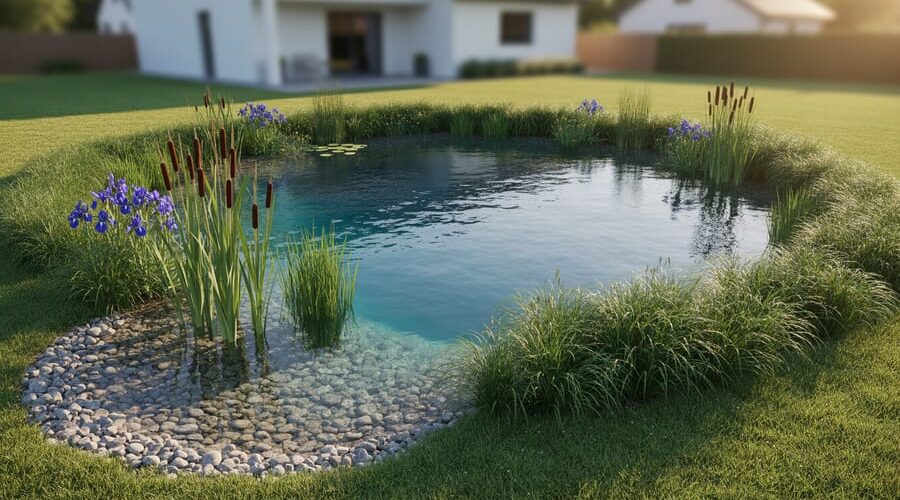
Reduce phosphorus runoff from your pond by establishing a 15-foot vegetated buffer zone around all edges, planting native grasses and sedges that intercept nutrients before they reach the water. This single strategy, borrowed directly from Minnesota’s statewide water quality framework, can cut nutrient loading by up to 70% while creating natural habitat for beneficial insects and amphibians.
Test your pond water monthly during growing season using an inexpensive kit from any garden center, tracking nitrogen and phosphorus levels to establish your baseline. Minnesota’s strategy targets specific reduction percentages, and you’ll need your own numbers to measure success. Most backyard ponds show elevated phosphorus from fish waste, decomposing leaves, and lawn fertilizer runoff, all manageable with targeted interventions.
Install a subsurface flow wetland in a shallow section of your pond by creating a gravel bed planted with cattails, rushes, and water iris. These plants actively pull excess nutrients from water as it filters through their root zones, mimicking the natural filtration systems that Minnesota’s larger watershed projects rely on. Position this wetland where runoff enters your pond for maximum impact.
Remove bottom sediment annually during fall maintenance, since accumulated muck releases stored nutrients back into your water column. Use a pond vacuum or careful manual removal to extract the top two inches of decomposed material, composting it away from water features. This practice prevents the internal nutrient cycling that plagues many older ponds, keeping water clear and reducing algae blooms that typically spike each spring.
Minnesota’s nutrient reduction strategy works at watershed scale, but every principle translates perfectly to your backyard ecosystem with immediate, visible improvements.
What Minnesota Got Right About Nutrients (And Why Your Pond Needs the Same Approach)
The Two Troublemakers: Nitrogen and Phosphorus
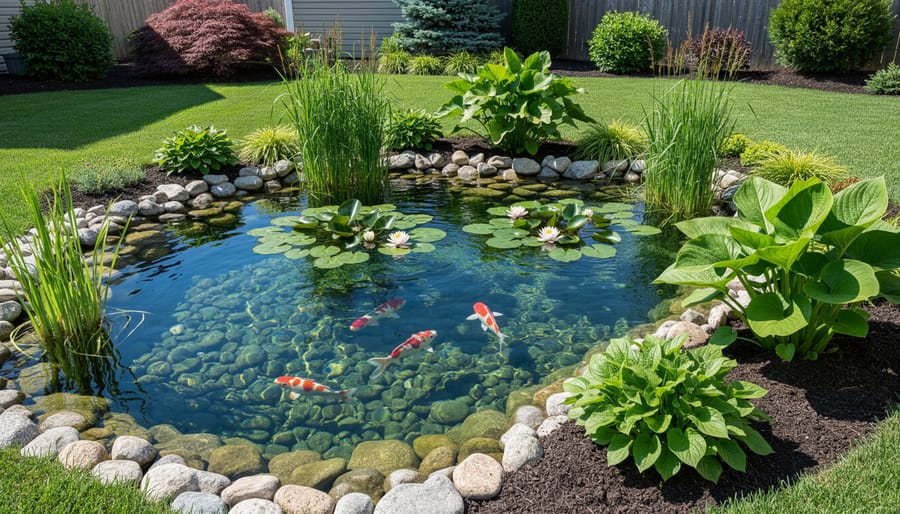
Think of nitrogen and phosphorus as the food that feeds everything in your pond—both the good and the bad. These nutrients are completely natural and actually essential for healthy plant growth and vibrant aquatic life. The challenge isn’t getting rid of them entirely; it’s keeping them at levels where your pond thrives instead of turning into a green soup.
So where do these troublemakers come from? If you have fish, their waste is a major contributor—every time your koi or goldfish eat, they’re creating nitrogen compounds. Decaying leaves, dead plant material, and uneaten fish food all break down and release nutrients into the water. But here’s something many pond owners don’t realize: a lot of extra nutrients wash in from outside the pond. Lawn fertilizers, grass clippings, and even rainwater runoff from your roof can carry surprising amounts of nitrogen and phosphorus right into your water.
I learned this lesson the hard way when I couldn’t figure out why my crystal-clear pond suddenly developed algae blooms every spring. Turns out, my neighbor’s lawn service was fertilizing right up to the pond edge, and all those nutrients were washing straight in during rainstorms.
The key is balance, not elimination. Your pond needs some nutrients to support beneficial bacteria, feed your plants, and keep the ecosystem functioning. Minnesota’s water quality experts understand this principle—they’re not trying to create nutrient-free lakes, just balanced ones. The same philosophy applies to your backyard oasis.
Why Too Much of a Good Thing Ruins Biodiversity
You know how adding fertilizer to your garden helps plants thrive? Well, your pond can definitely have too much of that good thing! When excessive nutrients like nitrogen and phosphorus accumulate in your water, it’s like throwing a never-ending buffet for algae. I’ve watched this happen in my own pond before I understood the balance needed.
Here’s what typically unfolds: those excess nutrients trigger massive algae blooms that turn your once-clear water into pea soup. As these algae eventually die off, bacteria work overtime decomposing them, gobbling up oxygen in the process. This oxygen depletion, called hypoxia, creates “dead zones” where fish gasp at the surface and beneficial organisms like dragonfly larvae simply can’t survive.
Think of it like overcrowding a party in a small room. Initially, everyone’s excited, but soon the air gets stuffy, people get uncomfortable, and guests start leaving. In your pond, the “guests” are the diverse creatures that make your ecosystem healthy—frogs, water beetles, native plants, and fish. When nutrients spike, these beneficial species disappear, replaced by algae mats and murky water. That’s why enhanced nutrient removal becomes essential for restoring balance and bringing back the vibrant ecosystem you’re after.
Reading Your Pond’s Nutrient Story
Warning Signs You Can See
Your pond talks to you every day—you just need to know what to look for! I learned this the hard way when my first pond turned into what I affectionately called “pea soup central.” Here are the telltale signs that nutrients are throwing a party in your water.
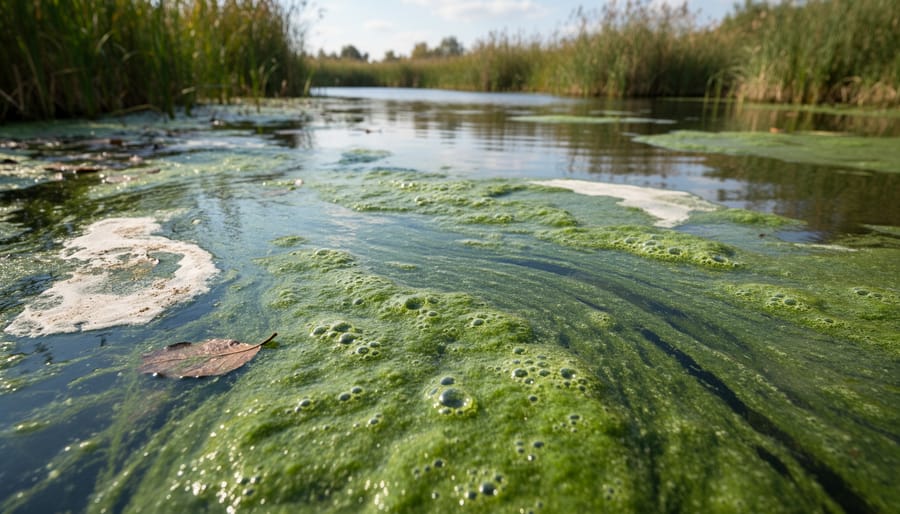
Green, murky water is your first clue. When your pond looks like someone dumped green paint in it, you’re dealing with an algae bloom fueled by excess nitrogen and phosphorus. You shouldn’t be able to lose sight of your hand just a few inches below the surface.
String algae—those slimy, hair-like strands clinging to rocks and waterfalls—appear when phosphorus levels spike. A little bit is normal, but when it starts taking over like a bad science fiction movie, nutrients are out of balance.
Watch your fish behavior closely. If they’re hanging at the surface gasping for air, especially in the morning, algae is consuming oxygen faster than your pond can replenish it. This oxygen depletion happens because nutrient-fed algae dies off and decomposing bacteria steal available oxygen.
That swampy, rotten egg smell? It’s hydrogen sulfide gas from decomposing organic matter in nutrient-rich environments. Your pond should smell fresh and earthy, not like a stagnant marsh.
Finally, notice your plant diversity. When aggressive algae dominates, desirable aquatic plants struggle to compete for resources. If your water lilies look stunted or your submerged plants are disappearing, excess nutrients are likely feeding the wrong things.
Simple Testing Tools That Actually Help
You don’t need a professional laboratory to keep tabs on your pond’s nutrient levels. I’ve been testing my own ponds for years with simple kits you can grab online or at garden centers, and they’ve completely changed how I manage water quality.
Start with a basic combo test kit that measures nitrogen (as nitrate), phosphorus, and pH. These are your big three. I test my ponds every two weeks during the growing season when nutrients fluctuate most, and monthly during cooler months. It takes about ten minutes, and you’ll quickly spot patterns before problems develop.
Here’s what matters most: nitrate levels above 20 ppm suggest you’re feeding your algae too generously. Phosphorus readings over 0.05 ppm often mean you’ve got decomposing plant material or runoff issues to address. Don’t obsess over exact numbers, though. You’re looking for trends, not laboratory precision.
I keep a simple notebook with dates and readings. When numbers creep upward, I know it’s time to thin plants, check my fish population, or improve filtration. When you measure pond biodiversity alongside these nutrient tests, you’ll see direct connections between water chemistry and wildlife health.
Test after heavy rains too, since runoff can spike nutrient levels overnight. The investment is minimal, usually under thirty dollars for a kit that lasts months, and the insights you gain make pond management so much easier than guessing.
The Minnesota-Inspired Approach to Balancing Your Pond
Stop Nutrients at the Source
The best way to tackle nutrient problems? Stop them before they start! Think of it like keeping your kitchen clean while you cook rather than facing a massive cleanup later. I learned this lesson the hard way after my pond turned into a murky green mess one summer because I’d been way too generous with fish food.
Let’s start with feeding, which is often the biggest culprit. Overfeeding fish is incredibly easy to do because we love watching them swarm to the surface. But here’s the thing: uneaten food sinks to the bottom and breaks down into nutrients that feed algae. Following smart feeding practices means only giving your fish what they can consume in about five minutes. During cooler months, reduce feeding even more since fish metabolism slows down significantly.
Your lawn can also be a sneaky nutrient source. When it rains, fertilizer washes off your grass and straight into your pond. Create a buffer zone around your pond with rocks, gravel, or native plants that can absorb runoff before it reaches the water. I planted a lovely border of iris and cardinal flowers that not only catch nutrients but attract butterflies too.
Stocking the right number of fish matters more than you might think. Overcrowding means more waste, which equals more nutrients. A good rule of thumb is one inch of fish per square foot of surface area, though that varies with filtration.
Finally, stay on top of debris removal. Fallen leaves, dead plants, and grass clippings all decompose and release nutrients. A quick weekly skim with a net takes just minutes but prevents major headaches down the road.
Let Plants Do the Heavy Lifting
Here’s where nature becomes your best partner! Aquatic plants are absolute workhorses when it comes to soaking up excess nutrients, and the best part? They make your pond look amazing while doing it.
Think of plants as living nutrient sponges. They pull nitrogen and phosphorus directly from the water, using these nutrients to grow healthy leaves and roots. The more plants you have actively growing, the less food there is for algae to feast on.
Let’s start with submerged plants, which work beneath the surface like underwater vacuum cleaners. Hornwort and anacharis are my go-to recommendations because they’re incredibly efficient nutrient absorbers and nearly impossible to kill. Just drop weighted bunches around your pond, spacing them about two feet apart for maximum coverage.
Floating plants like water lettuce and water hyacinth are equally impressive. Their dangling roots filter nutrients directly from the water column. I remember adding just three water lettuce plants to my pond one spring, and by midsummer, they’d multiplied and created a beautiful floating mat that drastically reduced my algae problems.
Don’t forget marginal plants around your pond edges. Cattails, pickerel rush, and sweet flag establish extensive root systems that intercept nutrient-rich runoff before it even reaches open water. Plant these in shallow zones or bog areas where runoff naturally flows.
For best results, combine all three plant types to create layers of nutrient absorption. Choose aquatic plants for biodiversity that suit your climate zone and pond depth, aiming to cover roughly 40-60% of your water surface with vegetation.
Build a Cleanup Crew
Nature provides its own housekeeping team, and you just need to recruit them! Think of your cleanup crew as the unsung heroes working behind the scenes to keep nutrients in check.
Start with beneficial bacteria products designed for ponds. These microscopic helpers break down organic waste before it releases excess nutrients. I scatter beneficial bacteria pellets around my pond’s edges monthly during warm weather, and it’s made a noticeable difference in water clarity.
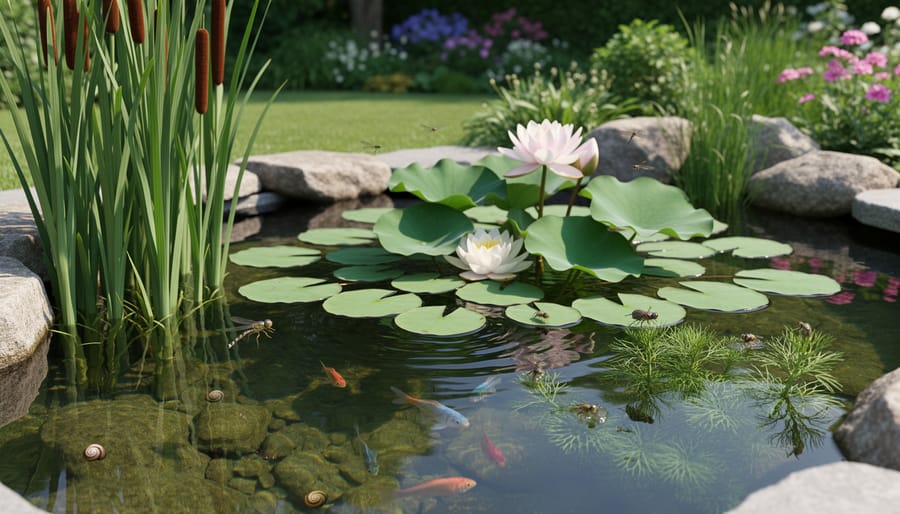
Bottom-feeders like pond snails and certain fish species act as your ground patrol. They consume algae, uneaten food, and decaying plant matter. Freshwater mussels are particularly impressive—a single mussel can filter several gallons of water daily, pulling out microscopic particles and excess nutrients.
Create hideaways for your crew using rock piles, submerged logs, or terracotta pots on their sides. These shelters become bustling hubs for beneficial organisms. I’ve noticed daphnia populations thriving in my planted shallows, where they feast on algae and reproduce quickly.
Consider adding a small population of tadpoles or native scavengers seasonally. They’ll consume organic debris while adding life to your ecosystem. The key is balance—you’re not overstocking with workers, just providing opportunities for nature’s cleanup specialists to establish themselves naturally.
Creating Zones of Life Through Nutrient Management
Building Microhabitats
When nutrients are balanced in your pond, something magical happens—different zones become homes for different creatures, just like neighborhoods in a thriving city. Think of your pond as having multiple apartments, each one perfect for specific residents.
Shallow shelves, typically 6-12 inches deep, are your pond’s nursery and buffet combined. When nutrient levels are just right, these areas grow the perfect amount of algae and beneficial plants without becoming overgrown messes. Dragonfly nymphs hunt here, frogs lay eggs in the vegetation, and beneficial bacteria colonize every surface. I’ve watched my shallow shelf transform from a murky problem zone to a bustling activity center once I got the nutrient balance dialed in.
Deep zones, around 2-3 feet or more, offer cool refuge during hot summers and winter havens when surfaces freeze. With controlled nutrients, these areas stay oxygenated and clear rather than becoming stagnant low-oxygen zones. Fish retreat here, and diving beetles explore the depths.
Vegetated edges are where the real magic of creating microhabitats shines. Native marginal plants like cardinal flower or pickerelweed thrive when nutrients support growth without triggering algae blooms. These edges become highways for beneficial insects and shelter for amphibians.
Here’s my design tip: create at least three distinct depth zones and dedicate 30-40% of your pond perimeter to planted edges. Add a few submerged logs or rock piles in different zones—these become condos for aquatic invertebrates. The key is maintaining that nutrient sweet spot where plants flourish but don’t choke out open water. When everything balances, you’ll be amazed at the diversity that shows up uninvited to your backyard oasis.
The Seasonal Nutrient Cycle
Your pond is a living calendar, with nutrient needs and wildlife activity shifting dramatically with each season. Learning to work with these natural rhythms rather than against them makes all the difference in maintaining a healthy, balanced ecosystem.
Spring brings the exciting wake-up call as temperatures rise above 50°F. This is prime algae bloom season because nutrients stored in your pond sediment get released into warming water. You’ll want to add beneficial bacteria now to help break down organic matter before it fuels those green blooms. I’ve learned to view spring as my chance to get ahead of problems rather than chasing them all summer.
Summer heat intensifies everything. Warm water holds less oxygen while plants and fish are most active, creating the highest nutrient demand of the year. This is when regular partial water changes become your best friend, typically replacing 10-15% weekly during hot spells. Keep feeding moderate since uneaten fish food quickly becomes excess nutrients.
Fall cleanup is absolutely critical, even though it’s tempting to skip it. Those beautiful falling leaves decompose into a nutrient bomb if left in your pond over winter. I spend a few weekends in October skimming leaves and trimming back dying plant material, which saves me from major headaches come spring.
Winter dormancy offers a welcome break for both you and your pond. Beneficial bacteria slow down in cold water, so focus shifts to simply maintaining a small opening in ice for gas exchange if you keep fish.
Your Year-Round Nutrient Management Plan
Spring and Summer Actions
Spring is when your pond wakes up, and it’s the perfect time to set the foundation for a healthy, nutrient-balanced season ahead. As water temperatures climb above 50°F, biological activity kicks into high gear, which means nutrients start cycling faster through your ecosystem.
Start with a thorough spring cleaning. Remove any accumulated debris, dead plant material, and sludge from the bottom—these are nutrient time bombs waiting to release phosphorus and nitrogen into your water. I like to use a pond net and vacuum for this job, working carefully to avoid disturbing fish that are still sluggish from winter.
Once you’ve cleaned up, introduce new aquatic plants or divide existing ones. Spring is prime planting time when roots establish quickly. Focus on submerged oxygenators and floating plants that actively pull nutrients from the water column. Aim to cover about 60-70% of your pond’s surface with plants by summer.
As temperatures warm, beneficial bacteria populations explode. This is when you’ll want to add or boost bacterial treatments, especially if you’re using them as part of your nutrient management plan. Follow product instructions, but generally, weekly applications work well during this growth phase.
Increase your monitoring frequency to weekly. Test for ammonia, nitrites, and nitrates to catch any imbalances early. Watch for string algae or green water—these are telltale signs that nutrients are outpacing your pond’s natural processing capacity. Begin feeding fish sparingly when water reaches 55°F, gradually increasing portions as their metabolism ramps up through summer.
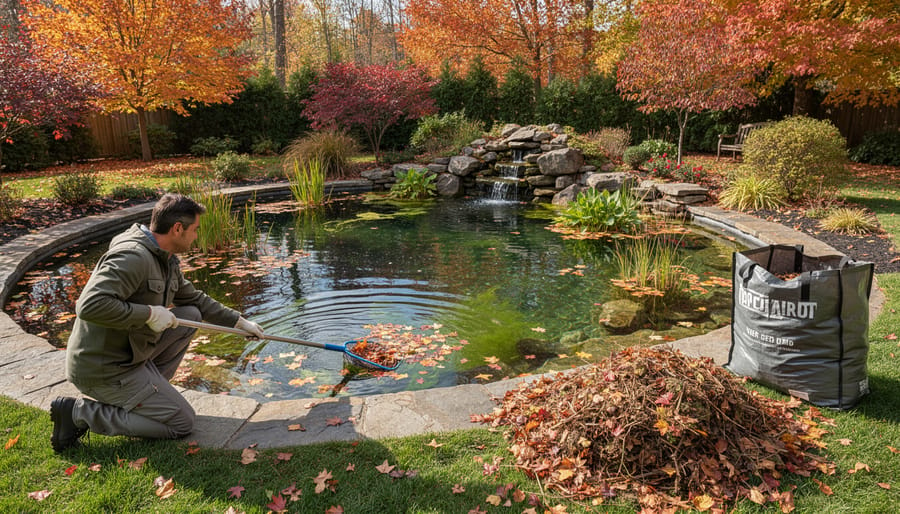
Fall and Winter Prep
As temperatures drop and your pond prepares for winter’s rest, your fall routine becomes crucial for nutrient reduction. Think of this season as your pond’s chance to detox before the long sleep ahead.
Start with leaf management, which might be my favorite fall task because the results are so immediate. Fallen leaves are sneaky nutrient contributors. As they decompose in your pond, they release phosphorus and nitrogen, exactly what we’re trying to reduce. Use netting over your pond starting in early October, or make it part of your morning routine to skim leaves with a net. I’ve found that just five minutes each morning prevents hours of spring cleanup and keeps those nutrients out of your water.
Next, trim back dying aquatic plants before they turn to mush. Cut hardy water lilies down to about six inches above their crowns, and remove any yellowing or brown foliage from marginal plants. This plant matter contains stored nutrients that will otherwise leach back into your water. It feels counterintuitive to cut back these beauties, but you’re setting them up for healthier spring growth.
Gradually reduce fish feeding as water temperatures dip below 50 degrees Fahrenheit. Cold-blooded fish have slower metabolisms in chilly water, meaning less food consumed and more waste produced. By mid-fall, they’ll naturally eat less, and that’s perfectly fine.
This preparation work pays dividends come spring when you’ll notice clearer water and healthier plants right from the start.
When to Step In (And When to Step Back)
Quick Fixes for Nutrient Spikes
Sometimes despite our best efforts, nutrient levels spike unexpectedly, maybe after heavy rainfall or when fish populations grow faster than anticipated. Don’t panic! There are several safe, immediate interventions you can deploy.
Start with a partial water change, replacing about 20-25% of your pond volume with fresh water. This simple action dilutes excess nutrients quickly without shocking your aquatic ecosystem. I’ve found this particularly effective after summer storms wash lawn fertilizer into my pond.
Boost aeration immediately by adding extra air stones or adjusting your fountain to create more surface agitation. Increased oxygen helps beneficial bacteria work faster at breaking down organic matter and prevents dangerous oxygen depletion that often accompanies nutrient spikes.
Consider temporary filtration upgrades like adding extra filter media or installing a UV clarifier if algae blooms have already started. These tackle the symptoms while you address the root cause.
Barley straw products offer a natural solution, but timing matters. Add barley straw pellets or liquid extract at the first signs of green water, as they work preventatively rather than reactively, releasing compounds that inhibit algae growth over several weeks.
Beneficial bacteria products can jumpstart your pond’s natural nutrient processing, especially useful after medication use or during spring startup when bacterial colonies need rebuilding. Choose products specifically formulated for pond use and follow dosing instructions carefully to avoid wasting money on ineffective application.
Trusting the Process
Here’s something I learned after years of fussing over my pond: sometimes the best thing you can do is step back and let nature do its thing. If you notice a bit of cloudiness after adding plants or a slight green tinge during warm spells, don’t panic and reach for chemicals right away. These are often signs that your pond ecosystem is actively processing nutrients, which is exactly what you want.
Think of it like composting in your garden. The process isn’t always pretty in the middle stages, but it’s working toward balance. Beneficial bacteria are breaking down organic matter, plants are absorbing excess nutrients, and microorganisms are establishing their communities. When you over-manage by constantly changing water, adding unnecessary treatments, or removing every bit of algae, you’re actually interrupting these helpful cycles.
Give your pond at least two to three weeks to self-correct before intervening. Monitor the situation, take notes, but resist the urge to fix everything immediately. You’ll often find that patience rewards you with clearer, healthier water than any quick fix could provide.
Here’s the beautiful truth about managing nutrients in your pond: you’re not trying to create a lifeless, crystal-clear swimming pool. You’re becoming the caretaker of a thriving miniature ecosystem, right in your own backyard. When you balance nutrients properly, you’re giving all those wonderful pond inhabitants—from dragonfly nymphs to beneficial bacteria, from your colorful koi to the native plants along your edges—exactly what they need to flourish together.
Think of yourself as a conductor orchestrating a symphony. Too much of any one nutrient, and the algae section drowns out everything else. Too little, and your aquatic plants can’t perform their vital role. But when you get that balance right? Magic happens. You’ll notice damselflies perching on your water lily pads, frogs calling from the shallows, and that gorgeous clarity that lets you actually see your fish gliding beneath the surface.
I’ve watched my own pond transform from a murky green soup into a biodiversity hotspot, simply by applying these nutrient management principles. Every season brings new discoveries—a visiting heron, tadpoles clustering in the shallows, or native plants I didn’t even know I had, finally getting their chance to shine.
The Minnesota nutrient reduction strategy teaches us something profound: healthy water isn’t about elimination, it’s about equilibrium. Your pond is a living, breathing community, and you’re its steward. With patience, observation, and these practical strategies, you’re not just maintaining a water feature. You’re creating a refuge for life, a pocket of thriving biodiversity that enriches your world every single day. That’s the real reward of thoughtful pond care.