
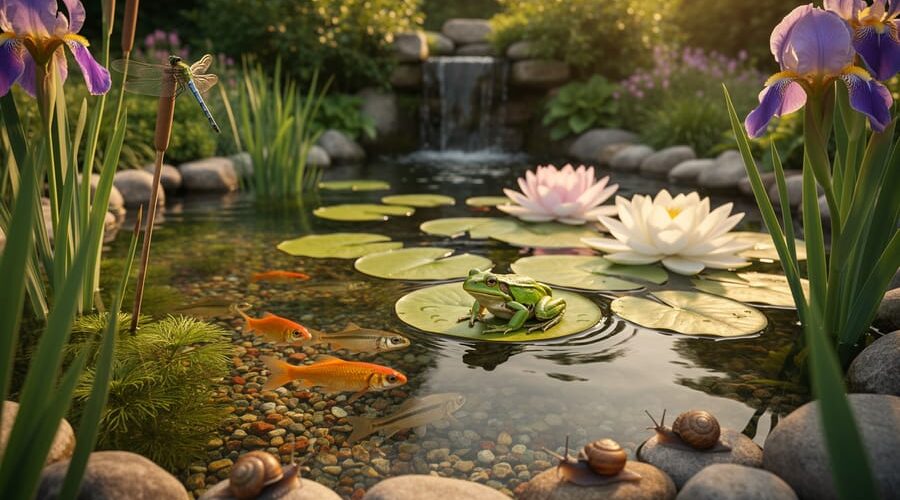
Why Your Water Garden Needs More Than Just Fish (The Biodiversity Secret)
Your pond becomes exponentially healthier when you stop thinking of it as just a water feature and start viewing it as a complete ecosystem. The difference between a struggling pond that needs constant intervention and one that practically takes care of itself lies in biodiversity – the variety of life forms working together to create natural balance.
Think of biodiversity as your pond’s immune system. In nature, no single species dominates because dozens of organisms keep each other in check. Algae feeds zooplankton, which feeds small fish, which feeds larger predators. Snails clean up debris while beneficial bacteria break down waste. Plants oxygenate water while their roots shelter tiny invertebrates. When you establish this web of interconnected life, problems like green water, muck buildup, and pest outbreaks often resolve themselves without chemicals or expensive equipment.
The exciting part? Creating a biodiverse pond doesn’t require complicated knowledge or significant investment. You’re essentially stacking compatible species that each fill a specific role, then letting them do what they naturally do best. Add submerged oxygenators for water clarity, floating plants for shade and nutrient absorption, marginal plants for filtration and wildlife shelter, and suddenly you’ve created dozens of micro-habitats. Introduce varied creatures – not just koi or goldfish, but also minnows, snails, freshwater mussels, dragonfly larvae, and frogs – and watch them establish their own sustainable community.
This approach transforms maintenance from a never-ending battle into simple observation and occasional adjustments. You’ll spend less time scrubbing and treating, more time enjoying the thriving ecosystem you’ve created.
What Biodiversity Actually Means for Your Water Garden
When I first started my water garden, I thought biodiversity just meant “having lots of different stuff.” Turns out, it’s much more exciting than that! Biodiversity in your water garden refers to the wonderful variety of life that calls your pond home—and I’m talking about everything from the tiniest bacteria you can’t even see to the dragonflies zipping across the surface.
Think of your water garden as a bustling neighborhood. You’ve got the residents living underwater: various aquatic plants like water lilies, submerged oxygenators, and floating duckweed. Then there are the insects—pond skaters dancing on the surface, diving beetles exploring the depths, and dragonfly nymphs hunting in the vegetation. Amphibians like frogs and newts might move in, birds will stop by for a drink or bath, and beneath it all, millions of beneficial microorganisms are working away in the substrate and water column.
Here’s where it gets really practical. This diversity isn’t just pretty to look at—it actually does serious work for you. When you have different types of plants competing for nutrients, algae struggles to take over because there’s less food available for it. Dragonfly nymphs and small fish gobble up mosquito larvae before they become the biting nuisances in your backyard. Beneficial bacteria break down fish waste and decaying matter, keeping your water chemistry balanced naturally.
I learned this the hard way when my first pond had only goldfish and one water lily. The water turned green, mosquitoes bred like crazy, and I spent every weekend fighting problems. Once I added variety—more plant species, welcomed insects, and stopped obsessing over total control—the pond found its rhythm. If you’re curious about tracking these improvements, you can measure biodiversity to see how your ecosystem develops over time.
The magic happens when all these different life forms interact, creating a resilient system that largely takes care of itself.
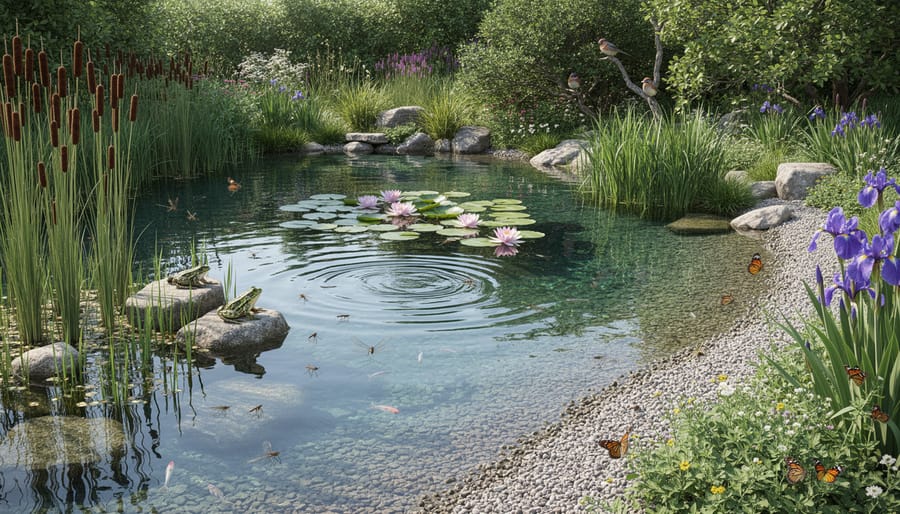
The Living Layers: Understanding Your Pond’s Natural Neighborhoods
Surface Dwellers and Skimmers
The surface of your pond is like a busy highway for fascinating creatures! Water striders are the acrobats you’ll spot skating across the water, using surface tension as their personal dance floor. These beneficial insects feed on mosquito larvae and other pests, making them natural allies in keeping your pond balanced.
Dragonflies and damselflies are the jewels of any water garden. They spend their early life underwater as nymphs, then emerge as stunning aerial hunters. I love watching them patrol my pond on summer afternoons, catching midges and mosquitoes mid-flight. To encourage them, leave some tall grasses or reeds around your pond edges where they can rest and hunt.
Don’t overlook the pollinators that visit your water garden! Bees, butterflies, and hoverflies need water sources too, especially during hot weather. They’ll appreciate shallow areas or floating plants where they can safely land and drink.
Speaking of floating plants, water lettuce and duckweed provide perfect landing pads for these surface dwellers while offering shade and cover. These plants also help filter excess nutrients, supporting the whole ecosystem. Just keep an eye on their growth so they don’t completely cover your pond’s surface, as fish and underwater plants need sunlight too!
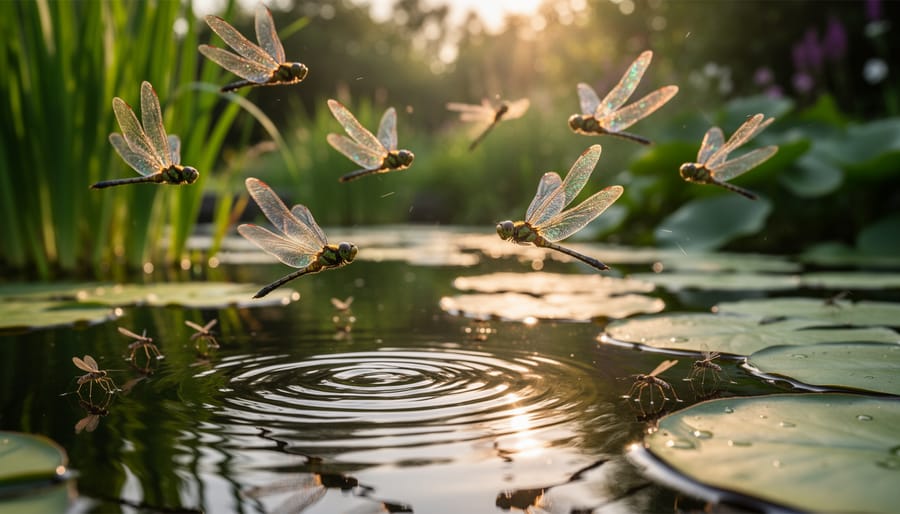
Mid-Water Swimmers and Hunters
The middle layer of your pond is where most of the action happens! This is the bustling neighborhood where fish cruise around hunting for food, aquatic beetles dart through the water like tiny submarines, and damselfly nymphs stalk their prey with remarkable patience.
Fish are the stars here, naturally. Whether you have goldfish, koi, or native species like minnows, they’re constantly patrolling for insects, larvae, and bits of plant matter. I’ve spent hours watching how my goldfish hover near the surface waiting for mosquito larvae, then quickly dart deeper when they spot a beetle scuttling below.
Speaking of beetles, diving beetles and water boatmen are fascinating hunters in their own right. They create their own air bubbles to breathe underwater, which looks like they’re carrying tiny silver backpacks! These predators help control mosquito populations and keep things balanced.
The beauty of this mid-water zone is how everything connects. Your fish stir up nutrients as they swim, which feeds algae, which feeds tiny crustaceans, which feeds larger predators. It’s a complete food web happening right in your backyard. Creating different depths and adding submerged plants gives these creatures more territory to explore and more hiding spots from each other, making your pond ecosystem richer and more resilient.
Bottom Feeders and Substrate Life
Let me tell you about some of my favorite unsung heroes in my pond—the crew that works the graveyard shift at the bottom! These bottom feeders and substrate dwellers are absolutely essential for keeping your water garden healthy, and honestly, they’re fascinating to watch once you know what to look for.
Snails are nature’s cleanup crew, and I always get excited when I spot them gliding along rocks and plant stems. They munch on algae, decomposing plant matter, and leftover fish food that sinks to the bottom. While you might worry about them eating your prized water lilies, most pond snails prefer dead or decaying material over healthy plants. Japanese trapdoor snails and ramshorn snails are particularly helpful additions.
Tadpoles do double duty in your pond ecosystem. Beyond their obvious role in becoming frogs, they’re voracious algae eaters during their aquatic phase. They’ll graze on string algae and help keep surfaces clean while they’re developing.
Now here’s where it gets really interesting—beneficial bacteria living in your substrate and on surfaces throughout your pond. These microscopic workers break down fish waste, decaying leaves, and other organic matter, converting harmful ammonia into less toxic compounds. This is why having a good layer of gravel or rocks on your pond bottom isn’t just decorative—it’s prime real estate for these bacterial colonies to establish themselves and do their essential work keeping your water parameters stable and healthy.
Simple Techniques to Welcome More Wildlife to Your Pond
Create Shallow Zones and Beach Edges
Think of shallow zones as nature’s welcome mat for pond visitors. While deep water serves fish beautifully, many creatures need gentle, graduated slopes to safely access your pond. I learned this the hard way when I found a hedgehog struggling in my steep-sided pond, unable to climb out. That experience transformed how I design water features.
Creating shallow zones means building areas where water depth gradually transitions from land to deeper sections. Aim for slopes no steeper than 20 degrees, ideally even gentler. These beaches allow frogs to hop in easily, birds to wade and bathe, and insects to drink without falling in. Plus, beneficial marginal plants thrive in these areas, providing shelter and food.
For new ponds, shape one side as a gradual beach during excavation. For existing ponds, retrofitting is surprisingly straightforward. Start by stacking flat rocks or stones along one edge, creating underwater steps that lead from shallow to deep. Alternatively, use gravel-filled mesh bags or pond-safe bricks to build a ramp inside the pond liner.
Position larger rocks at intervals to create little pools at different depths. These pockets become microhabitats where dragonfly larvae develop and tadpoles shelter. Add a few logs partially submerged at the water’s edge for added texture and climbing options.
Don’t forget an emergency exit. Place a rough-textured board or piece of wood angled from deep water to the pond edge. This simple addition has saved countless creatures in my garden, including that memorable hedgehog visitor who now stops by regularly.
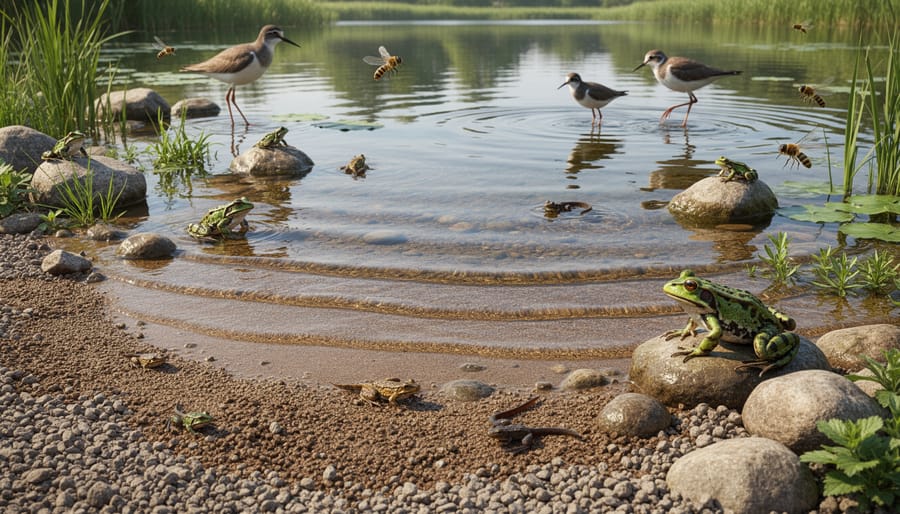
Plant with Purpose: The Three-Tier Approach
Think of your pond plants in three distinct layers, each serving as a specialized neighborhood for different wildlife visitors. This three-tier approach creates maximum habitat diversity while keeping your water healthy and balanced.
Start with marginal plants around your pond’s edges. These are the welcoming committee for frogs, dragonflies, and birds. Hardy options like water irises provide perching spots for damselflies, while cattails create sheltered nurseries for tadpoles. I’ve watched baby frogs climb these stems countless times, using them as bridges between water and land. Plant these in shallow zones, about 5-15cm deep.
Next, introduce submerged oxygenators beneath the surface. These underwater heroes do double duty, producing oxygen while providing shelter for fish fry and invertebrates. Hornwort and Canadian pondweed are forgiving choices that establish quickly. Simply drop weighted bunches into deeper areas, and they’ll spread naturally. These plants become hunting grounds for aquatic beetles and hiding spots for newts.
Finally, add floating species to the mix. Water lilies offer shade that reduces algae while creating landing pads for frogs. Their undersides host beneficial bacteria and tiny creatures that feed larger wildlife. Frogbit works beautifully in smaller ponds, multiplying to provide quick coverage without overwhelming the space.
Smart plant selection across all three tiers transforms your pond from simple water feature into thriving ecosystem. Aim for variety within each layer rather than monocultures, giving different species their perfect niche.
Add Hiding Spots and Overwintering Areas
Think of your pond as a neighborhood where every creature needs a safe place to call home. Creating hiding spots and overwintering areas is one of the most rewarding steps you can take to boost biodiversity.
Start with rocks of varying sizes arranged in clusters around your pond’s edge. Stack them to create little caves and crevices where frogs can escape predators and find cool spots on hot days. I’ve noticed that frogs particularly love gaps just wide enough for them to squeeze into but too small for hungry herons.
Submerged logs work beautifully for beneficial insects and small fish. Position a few partially rotted logs at different depths, as they provide surfaces for algae growth that feeds invertebrates while offering shelter. Make sure any wood you use is untreated and free from chemicals.
For overwintering areas, create deeper pockets in your pond where frogs and fish can retreat when temperatures drop. A depth of at least 18 to 24 inches prevents complete freezing. Add clay pipes or terra cotta pots laid on their sides at the pond bottom as cozy winter refuges.
Don’t forget marginal plantings with dense root systems. These natural hideaways attract dragonfly nymphs and provide nursery spaces for young fish, completing your wildlife-friendly sanctuary.
Leave the Leaves (Sometimes)
Here’s my confession: I used to obsessively rake every fallen leaf from around my pond each autumn, worried they’d turn my water into a murky mess. Then I noticed something interesting. The areas where a few leaves naturally settled became wildlife hotspots, while my pristine zones stayed quiet.
The trick is strategic messiness. Allow leaf litter and plant debris to accumulate in shallow edges and planted margins, but keep open water areas clear. These debris pockets become bustling insect nurseries and foraging zones for amphibians. Think of them as nature’s pantries, stocked with tasty invertebrates.
I now leave about thirty percent of fallen material around my pond’s perimeter, focusing on areas with emergent plants that help anchor the debris. These zones rarely affect water quality because they’re shallow and well-vegetated. The decomposition happens slowly, feeding beneficial bacteria rather than overwhelming them.
The key is monitoring. If you notice excessive buildup creating anaerobic pockets with that telltale rotten-egg smell, simply remove some material. You’re aiming for a light, scattered layer, not a suffocating blanket. This balanced approach gives wildlife shelter and food while keeping your pond healthy and attractive.
The Fish and Friends Balance: Making Everyone Get Along
Let me be honest with you—when I first added frogs to my koi pond, I worried I was basically creating an expensive buffet for my fish. Turns out, with a bit of planning, most pond creatures can happily coexist. The key is understanding who gets along with whom and setting up your pond to give everyone their own space.
The good news? Most fish aren’t the wildlife-destroying monsters we fear. Goldfish and smaller koi generally ignore adult frogs, newts, and dragonfly nymphs. The challenges come with vulnerable life stages—those tiny tadpoles and freshly hatched insects look awfully snack-sized to a hungry fish. However, you can absolutely have both thriving in the same water.
Start by creating hiding zones. Dense plantings of submerged vegetation like hornwort or water milfoil give tadpoles somewhere to disappear when fish cruise by. Floating plants create overhead cover, and stacked rocks or hollow logs provide escape routes. I’ve found that when tadpoles have good cover, survival rates jump dramatically, even with fish present.
Stocking density matters enormously here. An overstocked pond with hungry, competing fish means everything else becomes fair game. Aim for roughly one inch of fish per square foot of surface area—less if you want to support diverse wildlife. Underfed fish also become more predatory, so maintain regular feeding schedules during growing season.
Some species naturally play better together. Native fish like rainbow fish or gudgeons tend to be less aggressive toward pond invertebrates than introduced species. Smaller goldfish varieties work better than large, hungry koi if amphibian breeding is your priority. And understanding predator-prey relationships helps you appreciate that some predation is actually natural and healthy.
Timing your wildlife additions helps too. Introduce frog spawn or tadpoles when they’re slightly more developed, giving them a size advantage. Position spawn in heavily planted shallow areas away from main fish feeding zones.
The reality? You’ll lose some tadpoles. But you don’t need 100% survival for a successful ecosystem. Even with fish present, you’ll likely see plenty of frogs, dragonflies, and other creatures thriving. The diversity creates balance, making your pond healthier for everyone—fish included.
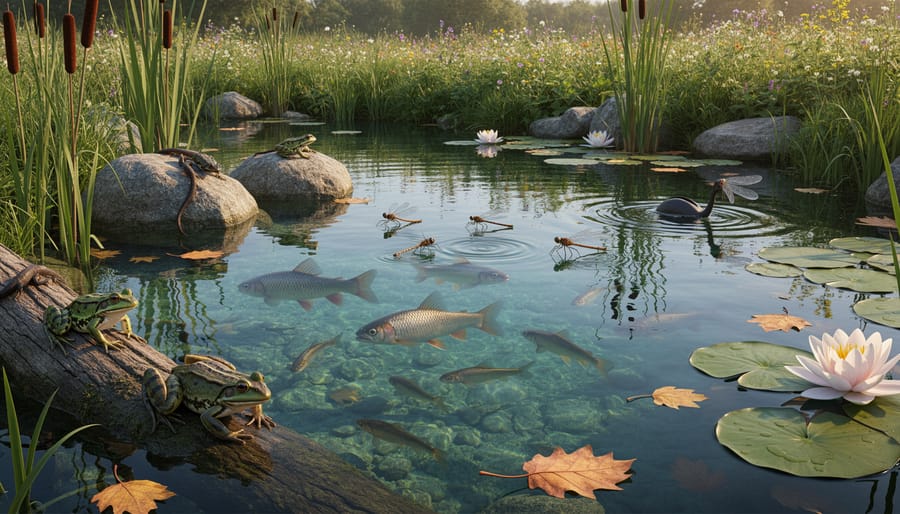
Seasonal Wildlife Interactions You’ll Start Noticing
Your water garden becomes a wildlife theater that puts on different shows throughout the year. I’ve learned to watch for these seasonal changes, and honestly, they’ve become some of my favorite moments in the garden.
In spring, everything wakes up at once. The first frogs appear in late March for me, and their chorus is almost deafening on warm evenings. I remember my first spring with my pond—I ran outside thinking something was wrong because of all the noise! It turned out to be dozens of tiny tree frogs declaring their territory. You’ll also see dragonfly nymphs climbing plant stems, ready to transform into adults. Keep an eye on your marginal plants in the morning—the empty exoskeletons they leave behind are fascinating.
Summer brings the aerial acrobats. Dragonflies and damselflies patrol constantly, snatching mosquitoes mid-flight. I’ve counted seven different dragonfly species around my pond during peak summer. Birds become regular visitors too, especially during hot spells. I positioned a flat rock at the water’s edge specifically for bathing birds, and it’s become the neighborhood hotspot. Robins, sparrows, and even the occasional cardinal stop by daily.
Fall is when you’ll notice wildlife preparing for winter. Frogs burrow into the mud at the pond bottom, and you might see snails clustering on rocks. I always get a little sad watching the activity slow down, but it’s nature’s way.
Winter might seem quiet, but life continues beneath the ice. If you maintain an opening in the ice, you’ll occasionally see movement below. I’ve spotted fish swimming lazily and even noticed pond snails moving along the bottom on sunny winter days. It reminds me that your pond is supporting life year-round, even when you can’t see all the action happening beneath the surface.
Troubleshooting: When Wildlife Interaction Goes Wrong
Even the healthiest ecosystems sometimes need a helping hand. Let’s tackle those tricky situations with gentle, pond-friendly solutions.
If you’re dealing with algae blooms, resist the urge to reach for chemicals. These green takeovers often signal an imbalance rather than a wildlife problem. Start by checking if you’ve got too many fish producing excess waste, or perhaps too few plants competing for nutrients. Add more submerged oxygenators like hornwort or introduce daphnia, tiny water fleas that munch on algae naturally. I once cleared a stubborn bloom simply by adding three buckets of water hyacinths, which acted like nature’s own filtration system.
Raccoon raids can be heartbreaking, especially after you’ve nurtured your pond community. Create physical barriers like netting over shallow areas at night, or install motion-activated sprinklers. Providing deeper zones where fish can retreat gives them sanctuary. Strategic rock placements around edges make fishing difficult for these clever visitors while maintaining your pond’s natural look. For comprehensive strategies on protecting fish from predators, consider multiple defense layers.
Herons are magnificent but persistent hunters. Fishing line strung 15 centimeters above water level disrupts their landing approach without harming them. Alternatively, a decoy heron works surprisingly well since these birds are territorial.
For invasive species like mosquito fish or aggressive plants, manual removal is best. Check new plants thoroughly before adding them, and quarantine any pond water you’ve sourced elsewhere. Sometimes prevention truly is simpler than cure. Remember, these challenges are normal parts of creating dynamic, living ecosystems. Each solution you implement teaches you more about maintaining that delicate balance.
The beauty of a biodiverse water garden is that it requires less work, not more. Once your ecosystem finds its balance, you’ll spend less time cleaning filters and fighting algae, and more time simply enjoying the hummingbirds, dragonflies, and frogs that call your pond home. I promise you, watching nature do its thing is far more rewarding than scrubbing pond walls every weekend.
If you’re feeling overwhelmed, start small. Add just one or two native plants this season. Pile some rocks in a sunny corner for basking turtles. Toss in a bundle of submerged vegetation. These tiny changes create ripples that spread throughout your pond’s health.
Remember that nature works on her own timeline. Your water garden won’t transform overnight. Give it a full season, maybe two, to really establish itself. The wait is worth it when you realize you’ve created something that sustains itself.
You’re not just a pond owner anymore. You’re becoming a steward of a living, breathing ecosystem. Every creature that visits your water garden is there because you made space for it. That’s something to feel genuinely proud of.