
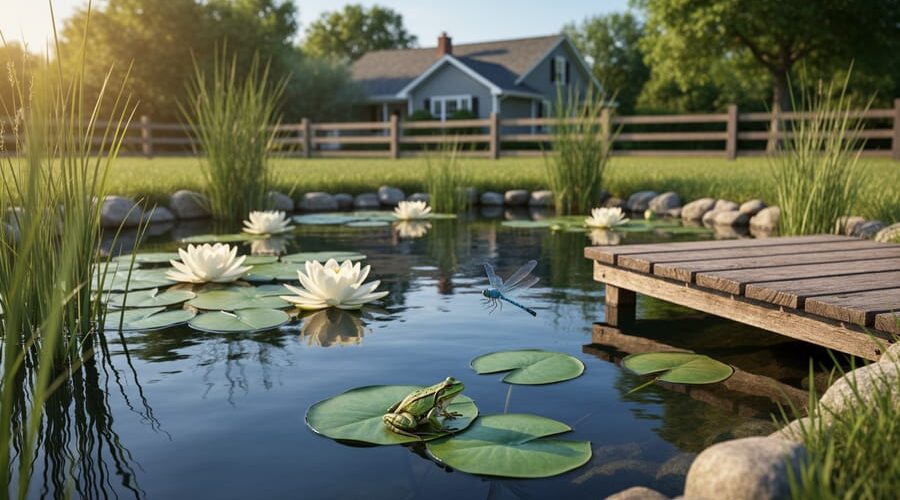
Why Your Backyard Pond Needs a Conservation Easement (And How to Make Wildlife Thrive)
Consider protecting your pond’s wildlife habitat permanently by granting a conservation easement—a legal agreement that restricts future development while keeping you as the owner. This voluntary tool lets you maintain ownership and enjoy your water feature daily while ensuring it remains a sanctuary for frogs, dragonflies, birds, and aquatic plants for generations to come.
A conservation easement works like a protective promise attached to your property deed. You continue living there, swimming in your pond, and tending your water lilies, but you agree not to drain the pond, pave over wetlands, or build structures that would destroy wildlife habitat. In exchange, you might receive tax benefits and the satisfaction of knowing your carefully created ecosystem won’t disappear when life circumstances change.
Think of it as insurance for all the work you’ve invested in creating a thriving aquatic environment. If you’ve spent years perfecting your wildlife pond basics, establishing native plants, and watching migratory birds return each season, an easement ensures future owners can’t undo your conservation efforts on a whim.
The beauty of conservation easements lies in their flexibility. You customize the restrictions based on your goals—maybe you want to allow fishing but prohibit motorized boats, or perhaps you’ll permit a small dock but protect nesting areas. Land trusts and conservation organizations work directly with you to craft agreements that honor both your lifestyle and wildlife needs.
Not every pond qualifies, and easements aren’t reversible, so understanding the commitment matters before you proceed. This guide walks you through whether your pond is a candidate, what wildlife benefits most, and exactly how to navigate the process without getting lost in legal complexity.
What Exactly Is a Long Pond Conservation Easement?
Breaking Down the Legal Stuff (Without the Headache)
Let me break down what a conservation easement actually means for you as a pond owner, without making your eyes glaze over with legal mumbo-jumbo!
Think of a conservation easement as a friendly agreement between you and a land trust or conservation organization. You’re essentially saying, “I promise to keep my pond and surrounding area wildlife-friendly forever,” and this promise legally travels with your property even if you sell it someday.
Here’s the good news: you still own your pond! You’re not handing over the keys or inviting strangers to your backyard barbecues. What you’re doing is voluntarily limiting certain future uses. For example, you might agree not to drain the pond, build a shopping mall on it, or fill it with concrete. Makes sense, right?
What you keep are all the fun parts of pond ownership. You can still enjoy your morning coffee watching the dragonflies, add native plants, maintain your fish population, and even make improvements that benefit wildlife. You’re the pond boss, just with conservation guardrails in place.
The daily management stays pretty much the same. You’ll still handle routine maintenance, control invasive species, and keep your water quality in check. The easement typically just requires you to maintain the habitat value and avoid activities that would significantly harm the ecosystem.
Most easements include occasional check-ins where a representative visits to ensure everything’s thriving as promised. Think of it as a friendly progress report rather than an inspection. You’re all on the same team here, working toward keeping your pond a wildlife haven for generations to come.
How Long Is ‘Long’ When We Talk About These Easements?
When conservation organizations talk about “long,” they usually mean really long—as in, forever! Most conservation easements are perpetual, meaning they stay with your property even if you sell it. Think of it like a promise that travels with the land itself, protecting your pond habitat for generations to come.
That might sound intimidating at first. I remember when I first heard “perpetual,” I thought, “Wow, that’s a serious commitment!” And it is, but here’s the thing: if you’re already passionate about your pond and its wildlife residents, you’re probably already managing it with care. A perpetual easement simply formalizes what you’re already doing in your heart.
Some organizations do offer term easements, typically ranging from 10 to 30 years. These shorter commitments can be perfect if you want to support conservation but aren’t ready for a forever decision. However, they’re less common because conservation groups prefer the long-term certainty that perpetual easements provide.
The beautiful part? You still own your pond. You can still enjoy it, maintain it, and share it with family. The easement just ensures future owners will respect the conservation values you’ve established.
The Wildlife Benefits That Make It All Worthwhile
Creating a Permanent Sanctuary for Frogs, Birds, and Beneficial Insects
One of the most rewarding aspects of establishing a conservation easement around your pond is knowing you’re creating a safe haven where wildlife can thrive for generations to come. When you protect the land surrounding your water feature, you’re essentially setting up permanent housing and dining facilities for some of nature’s most beneficial creatures.
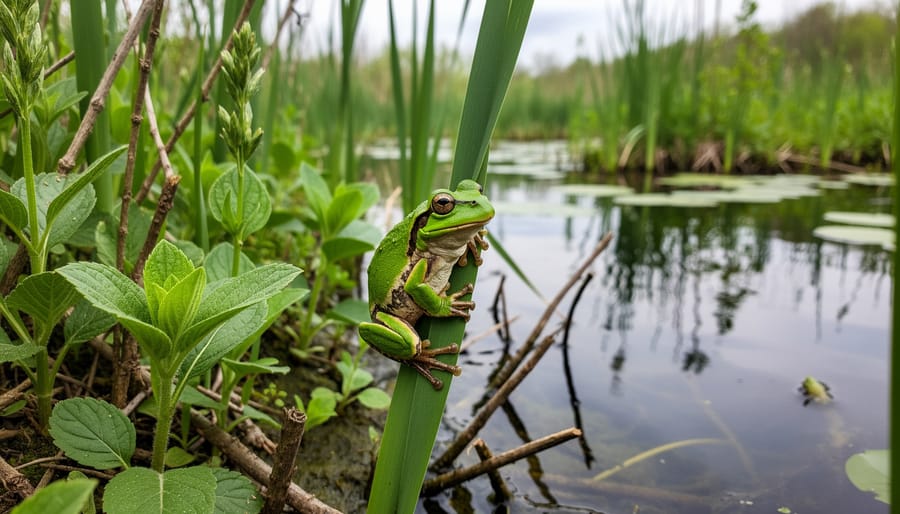
Frogs are among the first beneficiaries you’ll notice. They need both aquatic environments for breeding and moist terrestrial areas for feeding and shelter. By preserving the natural buffer zones around your pond through an easement, you’re protecting their entire lifecycle. Green tree frogs, leopard frogs, and American toads particularly appreciate ponds with undisturbed shallow edges where they can lay eggs and where tadpoles can safely develop.
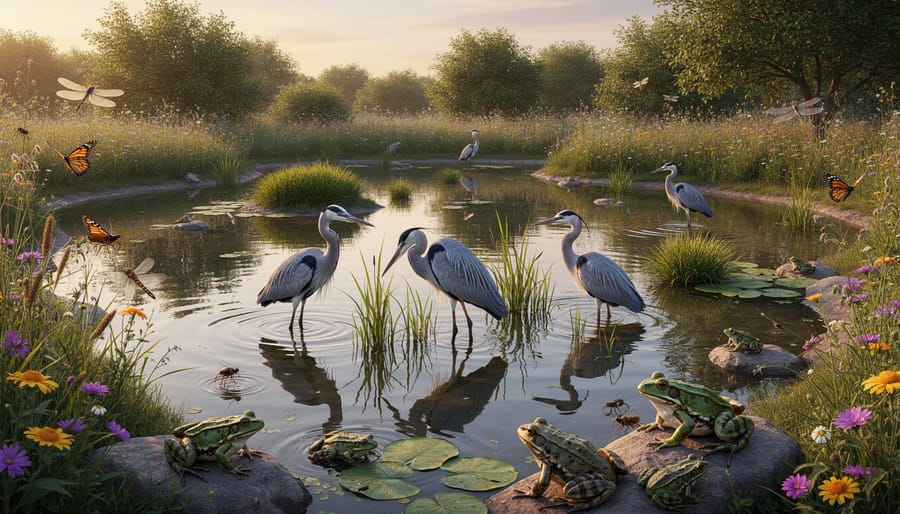
Birds benefit tremendously too. Waterfowl like wood ducks and mallards use protected pond margins for nesting, while wading birds such as herons hunt in the shallows. Songbirds rely on the preserved vegetation surrounding your pond for insects and nesting materials. I’ve watched my own protected pond become a morning chorus venue, with everything from wrens to warblers making it their home base.
Beneficial insects, including dragonflies, damselflies, and native bees, need clean water and diverse plant life to complete their lifecycles. These creatures are natural pest controllers, eating mosquitoes and other nuisance insects. You can measure pond biodiversity to track how your conservation efforts are supporting these valuable species over time.
How Your Protected Pond Becomes Part of a Bigger Wildlife Network
Think of your pond as a welcoming rest stop along nature’s highway. When you protect your pond through a conservation easement, you’re not just helping the wildlife that calls it home—you’re creating a vital link in a much larger chain.
Here’s what I love about this concept: individual ponds might seem small in the grand scheme of things, but they’re absolutely crucial to the bigger picture. Birds, frogs, turtles, and countless insects don’t just stay in one place. They travel between wetlands, searching for food, mates, and safe breeding grounds. Your pond becomes one of many stepping stones they rely on during these journeys.
This is where wildlife corridors come into play. These are connected habitats that allow animals to move safely across landscapes. When multiple pond owners in a region protect their water features, they create an interconnected network that supports far more wildlife than any single pond could alone.
I’ve seen this firsthand in my own neighborhood. After I established my conservation easement, I noticed species I’d never seen before—like certain migratory waterfowl that clearly knew this was a safe spot to stop. Turns out, other nearby pond owners had done the same thing, and together we’d created a miniature migration route.
The regional benefits are impressive too. Protected ponds help filter runoff before it reaches larger waterways, maintain groundwater levels during drought, and preserve genetic diversity by allowing populations to mix. Your individual action ripples outward, supporting ecosystem health across your entire watershed. That’s the beauty of conservation easements—your backyard decision contributes to something much bigger than yourself.
Practical Wildlife Coexistence Strategies for Your Protected Pond
Native Plants That Satisfy Both Easement Requirements and Your Eyes
Here’s the wonderful news: conservation easements don’t mean sacrificing beauty for bureaucracy! You can create a stunning waterside landscape that makes both the wildlife officials and your neighbors swoon.
Start with native pond plants that naturally thrive in your region. In spring, consider marsh marigolds with their cheerful yellow blooms that pop up right when you’re itching to get back outside. Purple loosestrife’s native cousins, like blue vervain, offer similar vertical drama without the invasive headaches. For summer color, cardinal flowers bring hummingbirds right to your doorstep while ticking every conservation box.
Don’t overlook grasses! Native sedges and rushes might sound boring, but they create that relaxed, natural movement around water that’s absolutely mesmerizing. I’ve watched my own patch of fox sedge sway in the breeze for longer than I’d like to admit.
Plant in clusters rather than single specimens. Three to five plants of the same species create visual impact and provide better wildlife value. Spring and fall are your best planting windows when plants aren’t stressed by heat.
The secret? Choose plants with overlapping bloom times. You’ll enjoy continuous color from April through October while providing nectar sources throughout the growing season. It’s like planning a relay race where every runner is gorgeous and the wildlife always wins.
Balancing Fish Populations with Amphibian and Insect Life
Here’s the beautiful truth about pond conservation: you can absolutely enjoy fish while protecting frogs, dragonflies, and the entire aquatic community! The key is thoughtful planning and balancing fish populations with the needs of other creatures.
Start by choosing fish species wisely. Native fish typically coexist better with local amphibians and insects than aggressive non-natives. Small species like white cloud mountain minnows or native rainbowfish are excellent choices because they’re less likely to prey heavily on tadpoles and aquatic insect larvae. Avoid introducing large goldfish or koi in conservation ponds, as they can devastate amphibian eggs and smaller wildlife.
Population control is equally important. Overstocked ponds create hungry fish that will eat anything they can find, including beneficial insects and baby frogs. A good rule is maintaining no more than one inch of fish per ten gallons of water. This keeps fish well-fed on natural food sources without forcing them to hunt every tadpole in sight.
Create refuge zones by adding dense aquatic plants, submerged logs, and shallow shelf areas where amphibians can breed safely away from fish. Think of it as neighborhood planning: everyone gets their own space! I’ve seen ponds where frogs successfully raise tadpoles just inches from fish because the vegetation creates natural barriers.
Consider seasonal stocking adjustments, removing some fish before peak amphibian breeding season if needed.
Maintaining Water Quality While Supporting Diverse Wildlife
Healthy water quality naturally supports both conservation goals and wildlife diversity in your pond. The good news? Many of the best maintenance practices benefit everyone living in and around your water feature.
Start by embracing natural filtration through aquatic plants. Submerged plants like hornwort and water celery absorb excess nutrients that would otherwise feed algae blooms, while their roots create oxygen-rich zones for beneficial bacteria. These microscopic helpers are your pond’s unsung heroes, breaking down fish waste and organic debris into harmless compounds.
Maintain a balanced ecosystem by avoiding chemical treatments whenever possible. Conservation easements often include water quality standards, and natural methods align perfectly with these requirements. Add beneficial bacteria supplements during spring and after heavy rinfalls to boost your pond’s biological filter. Think of these as probiotics for your water.
Regular but gentle maintenance keeps things in harmony. Remove fallen leaves before they decompose, but leave some natural debris in designated areas where frogs and salamanders can overwinter. Test your water monthly during active seasons, watching for pH swings or ammonia spikes that might stress wildlife.
Creating shallow planted margins acts as a living filter while providing critical habitat for dragonfly nymphs, tadpoles, and beneficial insects. This buffer zone naturally polishes water while supporting the diverse wildlife community your easement protects.
Is a Conservation Easement Right for Your Pond?
The Financial Side: Tax Benefits and Potential Costs
Let’s talk money, because I know that’s on your mind! Conservation easements come with some real financial perks that might surprise you.
The biggest benefit? Tax deductions. When you donate a conservation easement, you’re essentially giving away certain development rights to your property. The IRS considers this a charitable donation, which means you can claim it on your taxes. The deduction is based on the difference between your property’s value before and after the easement. For many pond owners, this can translate into significant savings, sometimes spread over several years. You’ll want to work with a qualified appraiser and tax professional to maximize these benefits.
Now, here’s the honest truth about property values. Some folks worry that restricting development will tank their property’s worth. In reality, it’s more nuanced. While you can’t subdivide or build that mega-mansion, many buyers actually value protected land with guaranteed open space and wildlife habitat. I’ve seen properties with easements hold their value beautifully, especially as more people seek natural retreats.
On the cost side, don’t forget about maintenance responsibilities. Most easements require you to actively manage the land according to your conservation plan. This might mean controlling invasive plants around your pond, maintaining water quality, or monitoring wildlife habitat. These aren’t necessarily expensive tasks, but they do require your time and commitment.
The bottom line? Conservation easements aren’t get-rich-quick schemes, but they offer meaningful tax benefits while protecting what you love about your pond.
Questions to Ask Before You Commit
Before you sign on the dotted line, let’s talk through some important questions that’ll help you make the right choice for your property and your family. I learned this the hard way when I almost committed to an easement before really thinking through what it meant for my weekend projects!
Start by asking yourself about your future plans. Do you envision building a workshop near your pond someday? Maybe a larger deck or guest cottage? Conservation easements typically restrict development, so you’ll want to map out any construction dreams now, not after the easement is in place.
Consider your family’s evolving needs too. Will your kids want to build on the property eventually? Are you planning to subdivide land for future generations? These decisions become much more complicated once an easement is established, so have those conversations around the dinner table before talking to conservation organizations.
Think about maintenance flexibility as well. Will you still be able to make pond improvements, install new filtration systems, or add aeration equipment? Most easements allow routine maintenance, but it’s worth confirming what qualifies.
Don’t forget the financial angle. How will the easement affect your property value? Will tax benefits offset any restrictions? And here’s a big one: are you comfortable with periodic monitoring visits from the easement holder?
Finally, ask yourself the most important question: does this align with your long-term vision for your pond? If protecting wildlife habitat and water quality matches your passion for pond stewardship, an easement might be your perfect partnership with nature.
Getting Started: Your Path to Pond Protection
Finding the Right Land Trust or Conservation Organization
Finding the right conservation partner for your pond is like choosing a gardening buddy—you want someone who shares your passion and understands your goals! Start by researching local land trusts in your area, as they often have the most knowledge about your region’s unique ecosystems and wildlife needs. Your state or county conservation district is another great resource and can point you in the right direction.
When evaluating potential organizations, look for groups with experience in wetland or pond conservation specifically. Ask about their track record—how many easements have they managed? What ongoing support do they provide to property owners? A good partner will take time to understand what makes your pond special to you, not just push paperwork.
Check if they offer flexibility in easement terms. Some organizations are wonderful about customizing agreements to allow continued water gardening activities, fishing, or other pond enjoyment while protecting wildlife habitat. Read reviews from other landowners who’ve worked with them, and don’t hesitate to schedule site visits with multiple organizations before deciding.
The best matches will feel like true collaborators in your conservation journey, offering educational resources, periodic check-ins, and genuine enthusiasm for protecting your little slice of aquatic paradise for generations to come.
What to Expect During the Application and Assessment Process
Applying for a conservation easement is a journey, not a race! The process typically takes anywhere from six months to over a year, depending on your property and the organization you’re working with. Think of it as getting to know a new pond plant—patience pays off beautifully.
You’ll start with an initial consultation where a land trust representative visits your property to assess its conservation value. They’ll look at habitat quality, water features, and wildlife presence. Bring your enthusiasm and any photos or observations you’ve collected about wildlife activity around your pond!
Next comes the documentation phase. You’ll need property surveys, title documentation, and a baseline assessment that captures your pond’s current condition through photos and detailed descriptions. This becomes the permanent record of your property’s natural features. Some organizations also require an appraisal to determine the easement’s value for potential tax benefits.
The approval process involves legal review, board consideration by the land trust, and finalizing the easement terms. You’ll work closely with the organization to customize restrictions that protect your pond while respecting your needs as a property owner.
Throughout this journey, keep detailed records of your pond’s seasonal changes and wildlife visitors—this information enriches your application and shows your commitment to stewardship. Most applicants find the process rewarding, knowing they’re creating lasting protection for the waters and wildlife they love.
Your backyard pond is more than just a beautiful water feature—it’s a living ecosystem that provides shelter, food, and breeding grounds for countless creatures. By considering a conservation easement for your pond, you’re making a powerful statement about your commitment to protecting this vibrant habitat for years to come.
Think of yourself as a steward rather than just an owner. Conservation easements give you the tools to ensure that the pond you’ve lovingly maintained continues to support dragonflies, frogs, turtles, and visiting birds long after you’re gone. You’re essentially creating a lasting gift, not just for wildlife, but for future generations who will appreciate the natural beauty and ecological function your pond provides.
The dual benefits are clear: wildlife gets protected habitat, and your pond retains its natural character and purpose indefinitely. You maintain ownership and enjoy your pond daily, while knowing it’s legally safeguarded against development or degradation.
If you’ve ever watched a family of ducks glide across your pond at dawn or spotted a heron fishing along the shore, you already understand the magic these spaces create. Now you can take the next step in protecting that magic. Start by researching local land trusts, connecting with conservation organizations, and exploring what easement options make sense for your property. Your pond—and the wildlife that depends on it—will thank you for generations to come.