
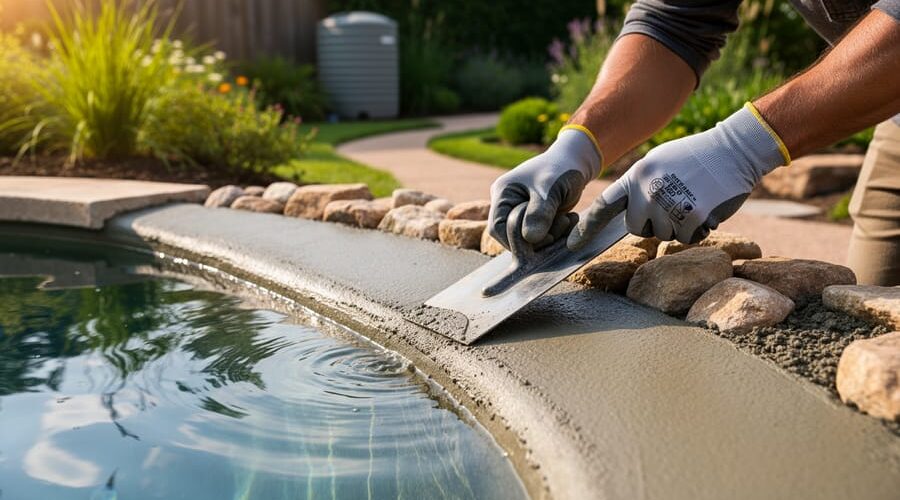
Why Eco-Friendly Concrete Could Save Your Pond (And the Planet)
Building a pond shouldn’t mean compromising the environment you’re trying to celebrate. Traditional concrete production generates massive carbon emissions—about 8% of global CO2 output—and choosing eco-friendly alternatives for your water feature lets you create beauty without the environmental guilt.
Eco-friendly concrete replaces some or all of the standard Portland cement with recycled materials like fly ash, slag cement, or even carbon-capturing additives. Think of it as giving industrial waste a second life while reducing the carbon footprint of your project by up to 80%. For pond builders, this matters because you’re not just constructing a hole that holds water—you’re creating a mini-ecosystem that should reflect your values from the ground up.
The good news? Using eco-friendly concrete doesn’t require special skills or complicated techniques. It mixes, pours, and cures similarly to traditional concrete, costs roughly the same (sometimes less), and often performs better in wet conditions—perfect for pond applications. You’ll find it increasingly available at standard building suppliers, and many ready-mix companies now offer green concrete options specifically.
Whether you’re lining a koi pond, building a waterfall structure, or creating decorative edging, eco-friendly concrete delivers the durability and water-resistance you need while aligning with the environmental consciousness that probably drew you to water gardening in the first place. Let’s explore how to choose, source, and work with this sustainable material for your next pond project.
What Makes Traditional Concrete a Problem for Ponds
The pH Problem That Kills Fish
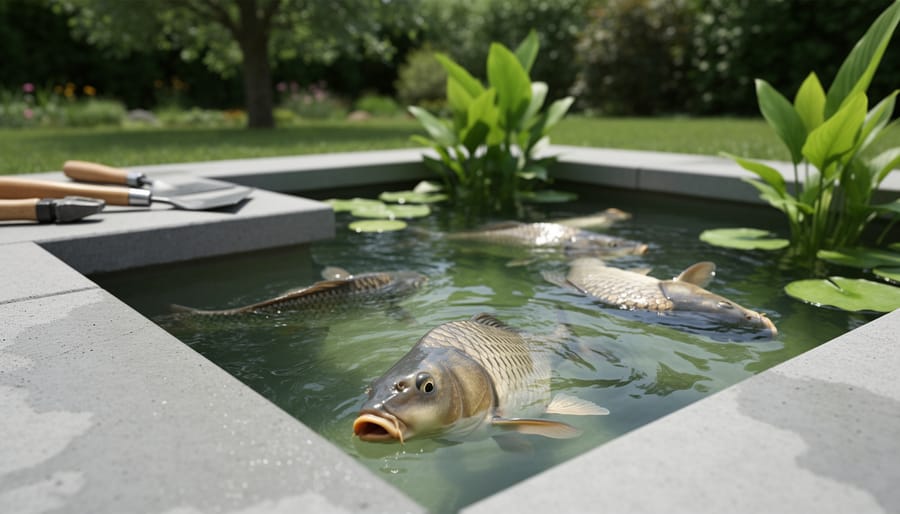
Here’s the hard truth that many pond builders discover too late: traditional concrete can turn your beautiful water feature into a fish graveyard. When regular concrete comes into contact with water, the lime content (calcium hydroxide) starts leaching out, and this is where things get dangerous for your aquatic friends.
The lime raises the water’s pH level dramatically, often shooting it up to 10 or even 11 on the pH scale. To put that in perspective, most fish thrive in water with a pH between 6.5 and 8.5. Anything above 9 becomes increasingly toxic. I’ve heard heartbreaking stories from pond owners who filled their newly constructed concrete ponds, added their prized koi or goldfish, and within days watched their fish become lethargic, stop eating, and ultimately die.
The problem isn’t just about new ponds either. In koi pond construction, even small concrete repairs or additions can trigger pH spikes that stress your entire ecosystem. The leaching can continue for months, sometimes even years, making it nearly impossible to maintain stable water chemistry. Plants struggle, beneficial bacteria colonies collapse, and your dream pond becomes a constant battle against chemistry.
Hidden Chemicals That Leach Into Your Water
Standard concrete might look inert once it’s cured, but it’s actually packed with chemicals that can slowly leach into your pond water over time. The biggest culprit? Lime, or calcium hydroxide, which forms when water mixes with cement. This raises your water’s pH to levels that can stress or even kill fish and beneficial bacteria. I learned this the hard way when I couldn’t figure out why my koi seemed sluggish after adding a beautiful concrete fountain—turns out the pH had spiked to nearly 11!
Beyond lime, many commercial concrete mixes contain plasticizers, accelerators, and water-reducing agents that make the concrete easier to work with. These additives often include sulfates, chlorides, and synthetic polymers that weren’t designed with aquatic life in mind. Some mixes even contain fly ash or slag, which can release heavy metals like aluminum and manganese into your water.
The real concern is that this leaching doesn’t happen all at once—it’s a slow, ongoing process that can continue for months or even years, constantly requiring you to adjust your water chemistry and potentially harming your pond ecosystem.
What Eco-Friendly Concrete Actually Is
The Types That Work Best for Ponds
When I first explored greener options for my backyard pond renovation, I was surprised to discover several eco-friendly concrete varieties that work beautifully for water features. Let me walk you through the best choices so you can pick what fits your project.
Permeable concrete stands out as a fantastic option for pond edges and surrounding areas. This porous material allows water to filter through naturally, reducing runoff and helping maintain your pond’s ecosystem. The downside? It’s not ideal for the pond basin itself since you actually want that to hold water! I learned this the hard way during my first attempt.
Recycled aggregate concrete is my personal favorite for pond construction. Made from crushed recycled materials like old concrete and brick, it performs just as well as traditional concrete but with a much smaller environmental footprint. It works wonderfully for pond walls and bottoms, plus it’s often more affordable. The texture can be slightly rougher, which actually benefits fish by providing natural surfaces.
Fly ash concrete incorporates industrial byproducts, reducing cement content by up to 30 percent. It’s incredibly durable and water-resistant, making it perfect for pond linings. The trade-off is a slightly longer curing time, so plan your project timeline accordingly.
Geopolymer concrete represents the newest innovation, using zero traditional cement. While it’s harder to source and typically more expensive, it offers excellent chemical resistance for ponds with varying pH levels. This matters especially if you’re keeping sensitive fish species or aquatic plants.
How It’s Different From Regular Concrete
Let me break this down in simple terms so you can see exactly what sets eco-friendly concrete apart from the regular stuff you might find at your local hardware store.
Traditional concrete relies on Portland cement, which requires heating limestone to extremely high temperatures—around 2,700 degrees Fahrenheit! This process releases tons of carbon dioxide into the atmosphere. The ingredients are pretty straightforward: Portland cement, water, sand, and gravel. That’s it.
Eco-friendly concrete takes a different approach. Instead of relying solely on Portland cement, it incorporates recycled materials like fly ash (a byproduct from coal plants), slag cement (from steel manufacturing), or even crushed recycled concrete. Some versions use special additives that allow the concrete to actually absorb carbon dioxide as it cures—imagine that!
The production process for eco-friendly concrete happens at lower temperatures and often uses waste materials that would otherwise end up in landfills. For your pond project, this means you’re giving new life to industrial byproducts while creating something beautiful in your backyard.
The environmental impact difference is significant. Traditional concrete production accounts for about 8% of global carbon emissions. Eco-friendly alternatives can reduce that carbon footprint by 30-80%, depending on the specific mix. Plus, they often perform just as well—sometimes even better—when it comes to durability and water resistance, which matters when you’re building something that’ll hold water day in and day out.
Real Benefits You’ll See in Your Pond
Safer Water Chemistry From Day One
Here’s one of my favorite benefits of eco-friendly concrete: you can welcome fish to their new home much sooner! Traditional concrete is highly alkaline, which means it has a very high pH level that can be harmful to aquatic life. When you use regular concrete in pond construction, you typically need to wait weeks, sometimes even months, filling and draining the pond multiple times to leach out those alkaline compounds. Trust me, I learned this the hard way with my first pond project when I was too eager and nearly lost some beautiful koi.
Eco-friendly concrete changes the game completely. Because it’s formulated with different binders and additives, it maintains a much more neutral pH from the start. Most eco-friendly concrete products are designed to be fish-safe within just days rather than weeks. Some formulations are even safe within 24-48 hours after the final cure, though I always recommend testing your water with a simple pH kit first.
This shorter curing period means less water waste, less waiting around anxiously, and most importantly, a safer environment for your fish right from the beginning. You’ll spend less time worrying about chemistry and more time enjoying your beautiful water feature.
Better for Your Plants and Fish
Here’s the thing about eco-friendly concrete that really excites me as a pond enthusiast: it genuinely creates a healthier home for your aquatic friends! Traditional concrete can leach lime and other alkaline compounds into your water, which throws off your pH balance and stresses fish and plants. Eco-friendly alternatives, however, are formulated to be much less reactive, meaning they won’t dramatically alter your water chemistry.
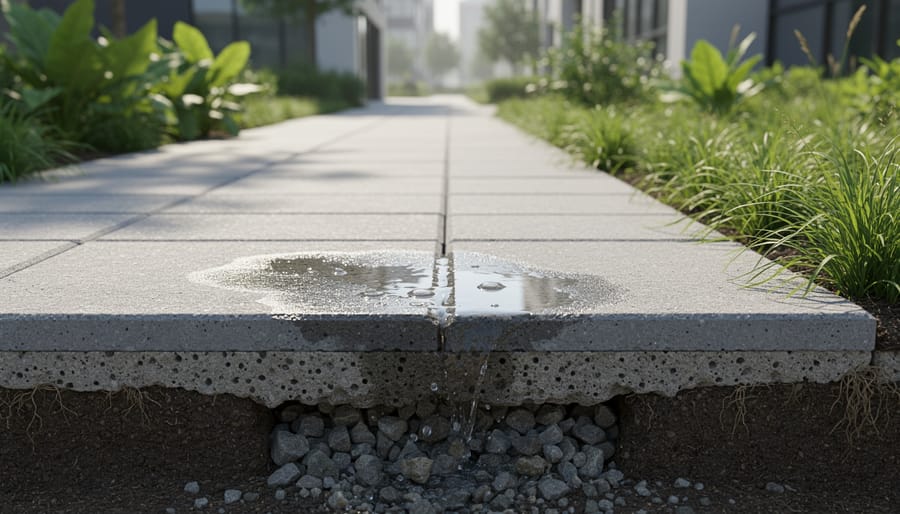
If you choose permeable eco-friendly concrete, you’re giving your pond an extra bonus. These options allow better oxygen exchange between the water and surrounding soil, which beneficial bacteria absolutely love. More oxygen means healthier biological filtration, and that translates to clearer water with less effort on your part during water feature maintenance.
I’ve noticed my aquatic plants thrive better around eco-friendly concrete edges too. The reduced toxicity means delicate root systems aren’t constantly battling harsh chemicals. Your water lilies, marginal plants, and oxygenators can focus their energy on growing lush and beautiful rather than just surviving. It’s like giving your entire pond ecosystem a fresh start with a foundation that works with nature instead of against it.
How to Use Eco-Friendly Concrete in Your Pond Project
Best Applications: Edges, Shelves, and Features
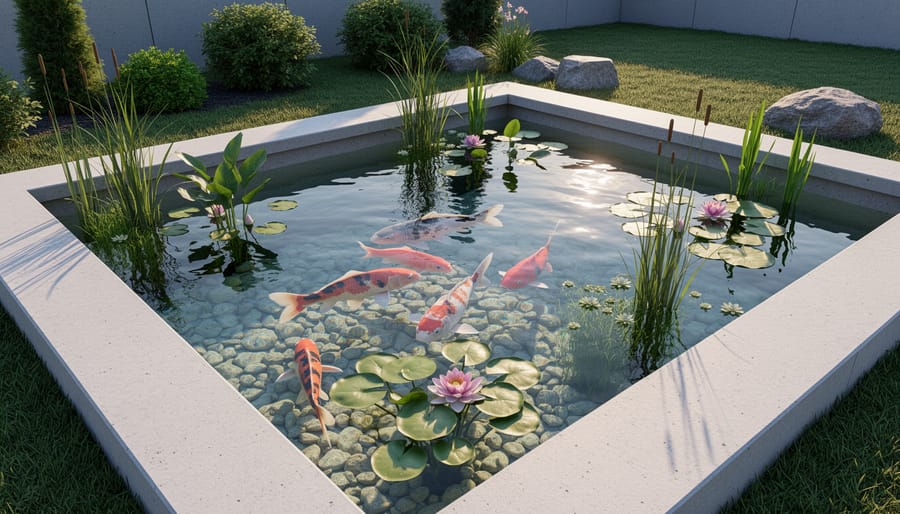
Eco-friendly concrete shines in specific pond applications where you need strength and stability without compromising your environmental values. The edges of your pond are perfect candidates—this is where traditional concrete often cracks or crumbles, but eco-friendly versions offer superior durability while keeping harmful chemicals away from your water. I’ve found it particularly brilliant for creating plant shelves, those submerged ledges that let you position aquatic plants at just the right depth. The material bonds well and creates stable platforms that won’t leach toxins into the root zones.
Waterfalls and streams are another fantastic use. The material handles constant water flow beautifully and won’t deteriorate like some alternatives. You can shape it around rocks and existing features to create natural-looking cascades. For decorative pond features like accent boulders, stepping stones, or custom sculptures, eco-friendly concrete molds easily and accepts natural pigments well. Just remember it works best for structural elements rather than full pond liners—you’ll still want a proper liner underneath, with the concrete providing aesthetic and functional finishing touches that bring your vision to life.
Working With Eco-Friendly Concrete (It’s Easier Than You Think)
Here’s the good news: working with eco-friendly concrete isn’t any trickier than using traditional concrete. In fact, you probably won’t even notice a difference! The mixing process is essentially the same—just combine your eco-friendly mix with water according to package directions. I remember feeling nervous about my first batch, worried it wouldn’t set properly, but it performed beautifully.
You don’t need special tools or equipment. Your regular concrete mixing tools, wheelbarrows, and trowels work perfectly fine. The pouring technique is identical to conventional concrete—just work it into your forms slowly and eliminate air bubbles by tapping the sides or using a vibrating tool if you have one.
Curing is where eco-friendly concrete actually shines. Many green mixes are designed to cure with less water, which means less maintenance for you. Keep the surface moist for the first few days by misting it lightly or covering it with damp burlap. The concrete will gain strength steadily, just like the traditional stuff.
One tip: some recycled concrete mixes may have slightly different color variations due to their reclaimed content. This actually adds character to pond edges and looks wonderfully natural once it’s weathered.
When to Mix Traditional and Eco-Friendly Options
Let’s be real—sometimes going 100% eco-friendly isn’t practical, and that’s okay! I’ve learned from my own pond projects that the best approach often combines traditional and green options.
Consider mixing both when you’re working on load-bearing structures like pond walls or large waterfalls. Use traditional concrete for the foundation where strength is non-negotiable, then switch to eco-friendly mixes for decorative elements, capping stones, or smaller features. This gives you the structural integrity you need while still reducing your environmental footprint significantly.
Budget-conscious? Start with conventional concrete for critical areas, then incorporate recycled aggregates or fly ash alternatives in non-structural sections. I did this on my backyard pond—traditional base, eco-friendly finish coat. It saved money and felt good knowing I’d made a difference where I could.
For repairs or small pond features like streams and bog gardens, that’s your perfect opportunity to go fully eco-friendly without compromising anything. Think of hybrid approaches as meeting yourself where you are—doing better without demanding perfection. Your pond project doesn’t have to be all-or-nothing to make a positive impact.
Where to Find and How Much It Costs
Making Your Own Eco-Friendly Mix
Ready to get your hands dirty and create your own earth-friendly concrete mix? It’s easier than you might think! Start with a simple base recipe: mix one part Portland cement with two parts sand and three parts recycled aggregate. For the recycled aggregate, crushed bricks from demolition sites, broken pottery pieces, or even thoroughly cleaned crushed glass work wonderfully. I’ve used old terracotta pots that cracked over winter, and they made a beautiful, functional mix with a lovely russet tint.
To boost sustainability further, replace up to 30% of your Portland cement with fly ash, which you can often source from local coal power plants or industrial suppliers. Some DIYers even use rice husk ash if it’s available in your region. Add a natural pozzolan like ground volcanic rock to improve durability while reducing your cement footprint.
For binding smaller projects like pond edging stones or decorative features, try a lime-based mix combining hydrated lime, sand, and crushed stone. It sets slower but creates a breathable, flexible finish that’s perfect for water features. Always cure your homemade mix slowly by keeping it damp under plastic sheeting for at least seven days to maximize strength and minimize cracking.
Common Mistakes to Avoid
Let me share some pitfalls I’ve watched fellow pond builders stumble into over the years, so you can skip the headaches and get straight to creating your beautiful water feature.
The biggest mistake? Rushing the curing process. I know you’re excited to fill that pond, but eco-friendly concrete needs time to properly cure and leach out any alkaline compounds. Skipping or shortening the curing period can spike your water’s pH levels, stressing or even harming fish and plants. Give it at least two weeks of proper curing, then test the water pH before introducing any aquatic life. If the pH is too high, drain and refill the pond, testing again until you’re in the safe zone.
Another common error is choosing the wrong product for your specific project. Not all eco-friendly concrete works the same way. Some formulas are perfect for pond liners but terrible for decorative edging. Before purchasing, read the product specifications carefully and match them to your project needs. When in doubt, contact the manufacturer directly—they’re usually happy to guide you.
Improper mixing ratios trip up many DIYers too. Adding too much or too little water weakens the final product, leading to cracks and leaks down the road. Always follow the manufacturer’s instructions precisely, and measure your water carefully. I keep a dedicated measuring cup just for concrete projects to avoid guesswork.
Finally, don’t overlook surface preparation. Applying eco-friendly concrete over dirty, oily, or loose surfaces creates poor bonding. Take time to thoroughly clean and prepare your surface first. A wire brush and pressure washer become your best friends here. Remember, proper preparation prevents problems and saves you from costly do-overs later.
Choosing eco-friendly concrete for your pond project isn’t just about following a trend—it’s about making a real difference for our planet while creating something beautiful in your backyard. Every small decision adds up, and by opting for sustainable materials, you’re reducing carbon emissions, conserving natural resources, and showing that stunning outdoor spaces don’t have to come at the environment’s expense.
I’ve seen firsthand how satisfying it feels to stand beside a finished pond, knowing it was built with care for both aesthetics and ecology. The fish don’t know the difference, but you will. Your conscience stays clear, and your pond performs just as well, if not better, than one made with traditional concrete.
So as you plan your next pond project, consider giving eco-friendly concrete a try. Talk to local suppliers, ask questions, and don’t be intimidated by trying something new. Whether you’re building your first small water feature or expanding an existing pond, this is your chance to be part of the solution. Create something that brings joy to your family, provides habitat for wildlife, and respects the natural world we all share. Your pond can be both a personal sanctuary and a small victory for the planet.