
What Is Small Pond Design (and How Does It Work)?
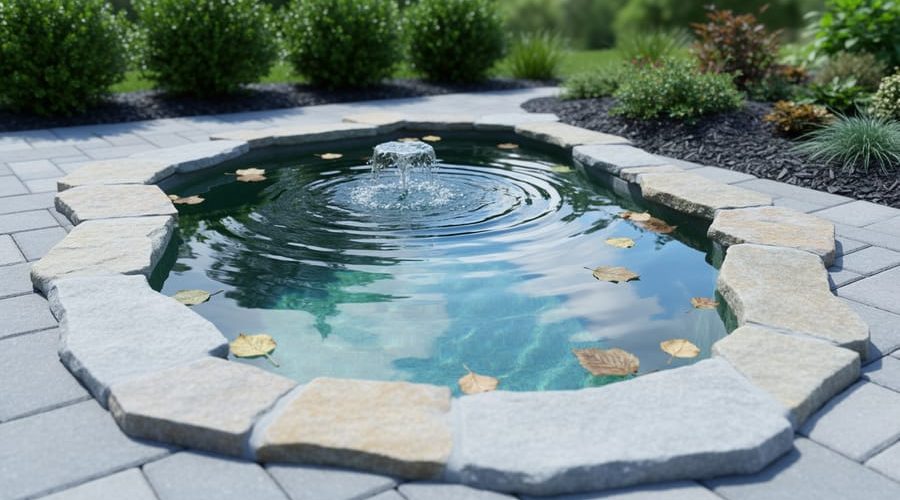
A small pond is any water feature under 500 square feet, typically ranging from 50 to 300 square feet, designed to fit comfortably in a compact yard, patio, or garden corner while still supporting fish, plants, and wildlife. These scaled-down ecosystems prove you don’t need acres of land to enjoy the sight and sound of moving water or the satisfaction of cultivating a living aquatic habitat.
Small pond design matters because it makes water gardening accessible to nearly anyone with a patch of outdoor space. I’ve watched friends transform forgotten side yards and narrow garden strips into thriving water features that host goldfish, water lilies, and visiting dragonflies. The process isn’t about compromise or settling for less; it’s about thoughtful planning that maximizes every square foot you have available.
Designing a small pond requires understanding how depth, filtration, and plant placement work together in tight quarters. You’ll need to balance aesthetic goals with practical realities like pump capacity, liner materials, and sun exposure. Get these elements right, and a 100-square-foot pond can deliver the same visual impact and ecological benefits as something three times its size.
This guide walks you through what defines a small pond, how the core systems function in limited space, the main design approaches you can choose from, and real-world applications for different yard situations. You’ll also find sustainable innovations gaining traction in 2026 that reduce water waste and energy use. By the end, you’ll know whether a small pond fits your space and how to move from concept to construction with confidence.
What Small Pond Design Really Means
Small pond design refers to creating complete, functional water features within spaces measuring roughly 150-200 square feet or less, think a 6×8-foot kidney shape or a 4×4-foot square tucked into a corner. These aren’t just scaled-down versions of large ponds; they’re intentional designs where every inch matters and every element serves a purpose. The appeal lies in making water gardening accessible to people with compact yards, urban gardens, patios, or even balconies who want the sound, movement, and life that water brings without dedicating half their property to it.
What sets small pond design apart is the philosophy of maximizing impact while working within constraints. You’re not just fitting a pond into a tight spot, you’re designing a self-contained ecosystem that balances beauty, function, and maintenance reality. A small pond must deliver visual interest, support healthy water conditions, and remain manageable for one person to care for without turning into a weekend project every time.
To understand small pond design, a few core terms help clarify what you’re actually planning:
- Small Pond
- A water feature typically holding 50-500 gallons and occupying under 150-200 square feet of ground space, designed as a complete ecosystem or aesthetic element.
- Footprint
- The total surface area your pond occupies on the ground, including edges, borders, and immediate surroundings, not just the water surface.
- Liner vs. Preformed
- Flexible rubber or PVC sheeting (liner) that molds to any shape you dig, versus rigid plastic shells (preformed) with fixed dimensions and contours.
- Water Volume
- The actual gallons your pond holds, which determines equipment sizing, fish capacity, and how quickly conditions can shift.
- Recirculation
- The process of continuously moving and filtering water through a pump system, essential for maintaining oxygen levels and preventing stagnation in small volumes.
The distinction between small and large ponds isn’t arbitrary. Small water volumes react faster to temperature swings, chemical changes, and organic buildup. What might take days to affect a 2,000-gallon pond can happen in hours with 200 gallons. That responsiveness shapes everything from equipment choices to plant selection, making small pond design its own discipline rather than just “pond design, but smaller.”
How Small Pond Design Works
The Balance Challenge in Small Spaces
Small water volumes behave like temperamental houseplants, they shift dramatically with each change in conditions. A 100-gallon pond warms up or cools down in hours rather than days, and ammonia from fish waste or decaying leaves concentrates quickly without the dilution effect of larger systems. This rapid-response nature means small ponds need proportionally more robust filtration and careful stocking decisions.
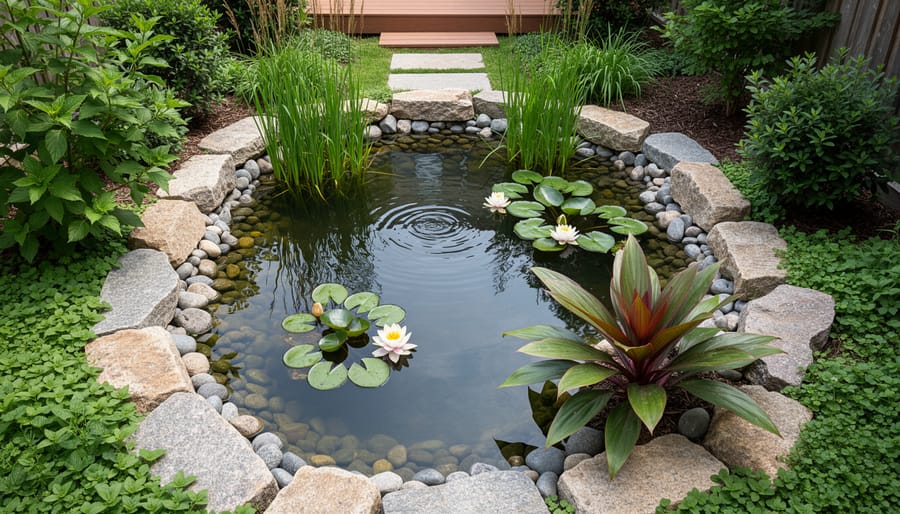
The key lies in establishing multiple pond zones that work together: a deeper section for temperature stability, planted shallows for nutrient uptake, and adequate circulation to prevent stagnant pockets. Think of it as compressing a full ecosystem into a teacup, everything must earn its place. One overfed fish or a week of neglected debris removal creates problems that would barely register in a 1,000-gallon pond.
Biological balance in small spaces demands consistency. Regular partial water changes, modest fish loads, and plants that actively compete with algae for nutrients become non-negotiable rather than optional. The upside? Once dialed in, a well-planned small pond stabilizes surprisingly well, rewarding attentive care with crystal-clear water and thriving life.
Making Every Element Count
In a small pond, every rock, plant, and piece of equipment needs to pull double duty. A waterfall isn’t just visual drama, it aerates the water and masks neighborhood noise. The rocks around your pond edge become both decoration and cover for beneficial bacteria. A carefully placed piece of driftwood creates vertical interest while giving dragonfly larvae somewhere to climb when they emerge.
Think vertically when space is tight. Marginal plants in stacked pockets or a small bog shelf add layers without eating up precious surface area. A single tall iris or pickerel rush draws the eye upward and makes the pond feel larger than its footprint. Submerged plants like hornwort oxygenate while competing with algae for nutrients, they’re working even when you can’t see them.
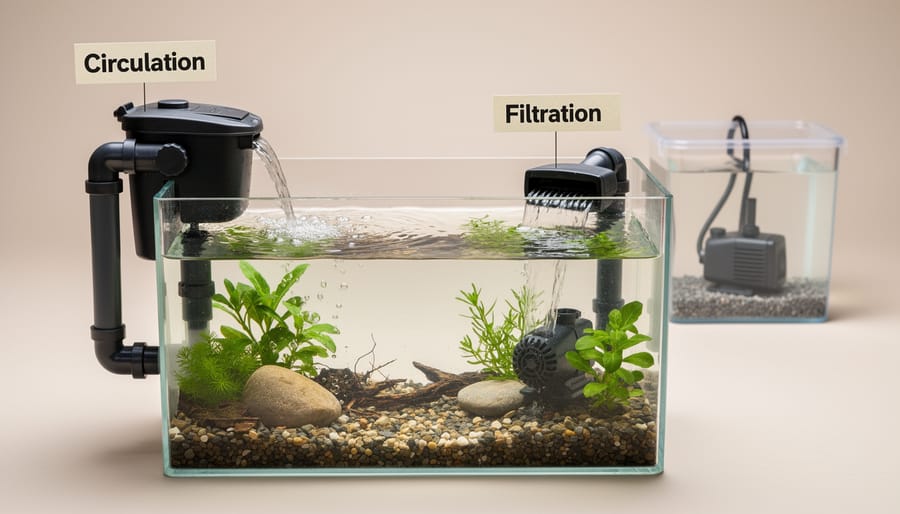
Your pump and filter placement matters enormously. Position the pump return to create a gentle current that sweeps debris toward your skimmer intake. This circulation doubles as surface agitation for gas exchange and gives you movement across the water without needing a separate fountain.
Choose plants that earn their keep. Water lilies shade the surface to cool the water and discourage algae. Floating plants like water lettuce filter nutrients while their roots become hiding spots for small fish. Even your edging plants can cascade over the rim, softening hard lines and creating reflection points that add perceived depth.
Every design choice should answer at least two needs. That’s how small ponds punch above their weight.
Types of Small Pond Designs
In-Ground Small Ponds
In-ground small ponds are the classic approach, just miniaturized, you excavate a hole, install a liner, and create a permanent water feature that blends into your landscape. Kidney-shaped naturalistic designs work beautifully in tight spaces because their curved edges soften boundaries and create visual flow, making a 50-square-foot pond feel more expansive than a same-sized rectangle. They allow for varied depth zones: a deeper center (18-24 inches) for fish or water quality stability, and shallow ledges around the perimeter for marginal plants and wildlife access. Geometric formal ponds, circles, rectangles, or squares, suit contemporary gardens and structured layouts, offering clean lines and easier integration with patios or decking. Both styles need proper planning for overflow structures to handle rain and prevent flooding, plus consideration for how you’ll run plumbing to a small excavation without disrupting surrounding plants or hardscaping.
Container and Raised Ponds
Container and raised ponds solve two persistent challenges: heavy excavation and commitment. A half whiskey barrel, galvanized stock tank, or purpose-built wooden frame creates a complete pond ecosystem above ground, requiring nothing more than a level surface and access to electricity for a small pump.
Stock tanks, originally designed for livestock watering, have become go-to solutions for budget-conscious pond builders. The 100-gallon round models are easiest to work with, providing enough volume for three to four aquatic plants and adequate water stability. Preformed rigid liners dropped into custom-built frames offer more design freedom, though you’ll pay extra for curves and integrated shelving.
Rental properties present the strongest case for raised designs. When you move, the entire pond moves with you, liner, pump, plants, and structure. Just drain it, load it, and reassemble. Patios and decks benefit similarly, avoiding the structural concerns that come with cutting through surfaces or adding hundreds of pounds of saturated soil above living spaces.
Wildlife and Bog Garden Hybrids
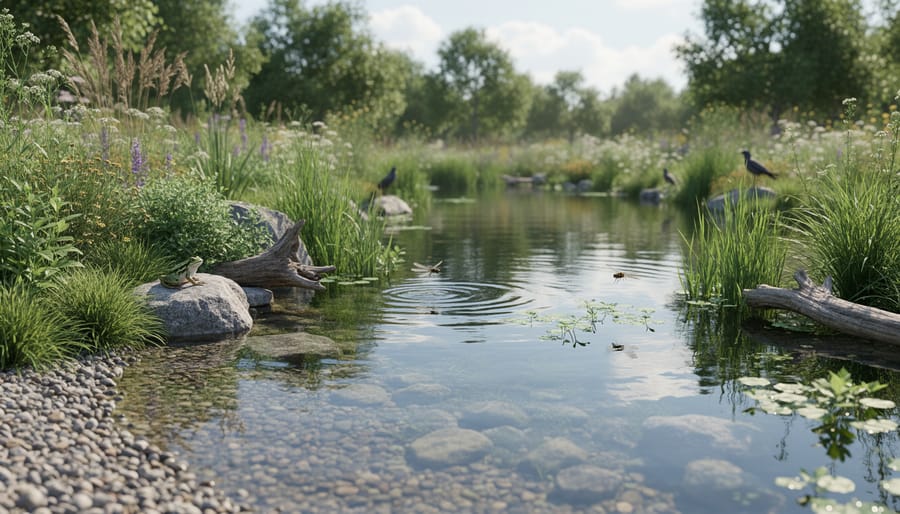
Wildlife-friendly small ponds blur the line between aquatic and terrestrial habitat by incorporating shallow marginal zones and bog areas where moisture-loving plants thrive. These designs typically feature gently sloping edges or dedicated shallow shelves (1-3 inches deep) that allow amphibians, birds, and beneficial insects safe access to water. A bog garden section, created with gravel substrate and constant shallow water flow, extends the pond’s footprint while supporting carnivorous plants, irises, and native sedges that provide cover and food sources. This hybrid approach maximizes biodiversity in compact spaces: even a 50-square-foot pond with a quarter of its area as bog or beach can support frogs, dragonflies, and visiting birds. The trade-off is sacrificing some open water depth, but the ecological return often outweighs the aesthetic compromise for nature-focused gardeners.
Pondless Water Features with Small Reservoirs
Pondless water features solve one of the biggest concerns homeowners have about small ponds: open water and safety. These designs pump water over rocks, through urns, or down carved stone channels before it disappears into a concealed underground reservoir filled with gravel. The water recirculates constantly, creating the sound and visual appeal of moving water without a pool that children or pets could fall into.
For truly tight spaces, this approach delivers maximum impact with minimal footprint. A 20-gallon reservoir can support a small fountain or bubbling rock feature, while 50-100 gallon systems handle more elaborate cascades or multiple spill points. The hidden reservoir means zero open water to maintain, far less evaporation than traditional ponds, and easier winterization, just drain and store the pump.
These systems work especially well on decks, patios, or narrow side yards where excavation isn’t practical. You get the tranquility of water without the maintenance burden of balancing an ecosystem. The trade-off is obvious: no fish, no water lilies, no aquatic life. But if sound and movement are your primary goals, pondless designs deliver them efficiently in spaces where a traditional small pond wouldn’t fit or feel appropriate.
Where and How Small Ponds Are Used
Small ponds thrive in places where you’d never think you could fit water. Urban courtyards squeeze surprising beauty from a six-by-eight-foot corner, turning underused concrete into a cooling focal point that changes how the whole space feels. Balconies accommodate container ponds in half-barrels or custom-built raised planters, bringing the sound of trickling water to apartments and condos where digging isn’t possible. These elevated designs work brilliantly on decks too, creating a water feature without touching the ground beneath.
Suburban side yards, often narrow afterthoughts for trash cans and AC units, become destination gardens with a well-placed small pond tucked against the fence. Front gardens use small ponds as stopping-power focal points near the entrance, where guests pause before reaching the door. The key is choosing a spot that pulls people in rather than hiding the feature where nobody looks.
Small ponds serve multiple purposes beyond decoration:
- Corner gardens in L-shaped yards, turning dead space into a relaxation zone
- Entryway features that establish a welcoming, tranquil first impression
- Meditation spaces in private garden nooks, where water sounds aid contemplation
- Wildlife stations that attract birds, frogs, and beneficial insects to small properties
- Patio accents positioned for viewing from indoor windows or outdoor seating
- Vertical garden complements, where pond edges transition into living walls or trellises
Therapeutic gardens in healthcare settings and memory care facilities increasingly incorporate small ponds for their calming effect and sensory engagement. A modest three-by-four-foot pond with a simple fountain provides the movement and sound that patients find grounding without the maintenance burden of larger installations.
Placement matters as much as size. Position your pond where you’ll actually see it daily, from the kitchen window, the breakfast table, or your favourite outdoor chair. If you’re building a permaculture pond ecosystem choose a spot that captures runoff naturally or sits within view of vegetable beds where you’re already working. Avoid low spots that collect rainwater unless you’re designing for overflow, and keep the pond visible enough that you’ll notice problems early rather than discovering them weeks later.
Sustainable Design Innovations for Small Ponds
Small ponds align beautifully with sustainable practices because their compact scale makes eco-friendly solutions more accessible and affordable. In 2026, you don’t need a massive installation to make environmentally responsible choices, many of the best innovations work even better at smaller scales.
Solar-powered pumps have become genuinely practical for small ponds. A 10-20 watt solar panel can run a submersible pump that circulates 150-200 gallons per hour, plenty for a modest pond. These systems eliminate electrical trenching, reduce operating costs to zero, and work reliably in most climates. Battery backup units store daytime energy for nighttime operation, keeping your pond oxygenated around the clock without fossil fuels.
Rainwater harvesting pairs naturally with small pond design. You can direct downspouts into your pond during dry periods, reducing municipal water use and giving fish and plants naturally soft, chlorine-free water. A simple overflow system prevents flooding during heavy rain, channeling excess into garden beds or rain gardens. This integration turns your pond into part of your property’s water management system rather than just a water consumer.
Native plant ecosystems offer multiple benefits in compact spaces. Regional aquatic plants require no fertilizers, resist local pests without chemicals, and support native pollinators and beneficial insects. A small pond planted with native sedges, rushes, and flowering marginals becomes a biodiversity hub that functions as its own balanced ecosystem. These plantings also reduce algae naturally by competing for nutrients.
Natural filtration through biological processes eliminates the need for energy-intensive mechanical filters. A gravel bog filter tucked alongside your pond uses beneficial bacteria in porous media to break down waste. Submerged plants oxygenate water while absorbing excess nutrients. This approach, common in sustainable koi pond design scales down beautifully for smaller features.
Material choices matter too. Recycled EPDM liner, reclaimed stone edging, locally sourced rocks, and FSC-certified timber for raised structures all reduce environmental impact. Avoid concrete when possible (high embodied carbon) and skip copper-based algaecides that accumulate in soil and harm beneficial organisms.
These sustainable choices often simplify maintenance while reducing costs. Your small pond becomes a genuinely responsible addition to your landscape, not just a decorative water feature.
Common Questions About Small Pond Design
Look, after years of building small ponds, I can predict the questions that pop up before someone even emails me. Let’s tackle the ones I hear most often, and give you straight answers based on real projects, not theory.
How small is too small for a functional pond?
You can create a working pond in as little as 15-20 gallons (about the size of a large planter), though 50+ gallons gives you more biological stability. Below 15 gallons, you’re essentially building a decorative water bowl rather than a true pond ecosystem.
Can I keep fish in a small pond?
Yes, but choose carefully: a 100-gallon pond can support 2-3 small goldfish or a few white cloud minnows, while koi need at least 250 gallons per fish. Overstocking is the fastest way to create water quality problems in small volumes.
How much maintenance does a small pond require?
Expect 15-30 minutes weekly for basic tasks like checking the pump, removing debris, and monitoring water levels. Small ponds actually need more consistent attention than large ones because water chemistry shifts faster, but the tasks themselves are quick.
Do I need a permit for a small pond?
Most municipalities don’t require permits for ponds under 200 square feet that aren’t connected to natural waterways, but rules vary widely. A quick call to your local building department before you dig will save potential headaches.
The winterization question deserves more space because it stumps people. If you live where temperatures drop below freezing, you’ve got three options: run a small heater or de-icer to keep a breathing hole open (crucial if you have fish), bring container ponds indoors, or shut everything down and restart in spring. I’ve done all three depending on the pond. For in-ground ponds with fish, keeping that hole open matters more than keeping the whole pond warm, gas exchange is what keeps fish alive under ice, not temperature.
Mosquitoes come up constantly, and here’s the truth: a stagnant pond becomes a mosquito nursery within days, but a pond with circulation doesn’t. Moving water prevents egg-laying, and if you add a few fish, they’ll devour any larvae that do appear. I’ve never had mosquito problems in properly functioning ponds, even tiny ones.
The algae question is trickier because small volumes heat up fast, and warm water plus sunlight equals algae opportunity. Your best defense combines partial shade (30-50% coverage), adequate filtration, and enough plants to compete for nutrients. Don’t panic at the first green tinge, some algae is normal and even beneficial. It’s the thick pea-soup blooms or string algae taking over that signal a balance problem, usually too many nutrients from overfeeding or insufficient biological filtration.
Small pond design proves that water gardening isn’t reserved for sprawling estates or massive backyards. Whether you’re working with a tiny courtyard, a narrow side yard, or even a balcony, you can create a functioning, beautiful water feature that brings life and movement to your space. The key isn’t size, it’s thoughtful planning that balances aesthetics, function, and ecosystem health.
Throughout this guide, we’ve seen how small ponds operate on the same fundamental principles as larger ones, just with tighter margins for error and more creative problem-solving. From choosing the right circulation system to incorporating sustainable innovations like solar pumps and native plant ecosystems, every decision shapes your pond’s long-term success and environmental footprint.
Start where you are. Measure your available space, consider your goals, wildlife habitat, visual focal point, or meditative retreat, and sketch a basic plan. Small doesn’t mean simple or boring. It means intentional. Every plant, every stone, every design choice carries more weight when space is limited, which makes the creative process all the more rewarding.
Your small pond journey begins with a single step. Dive into our related resources for plant selection guides, filtration options, and seasonal maintenance tips that’ll help transform your vision into reality.