
What Is Pond Ecology (and How Does It Work)?
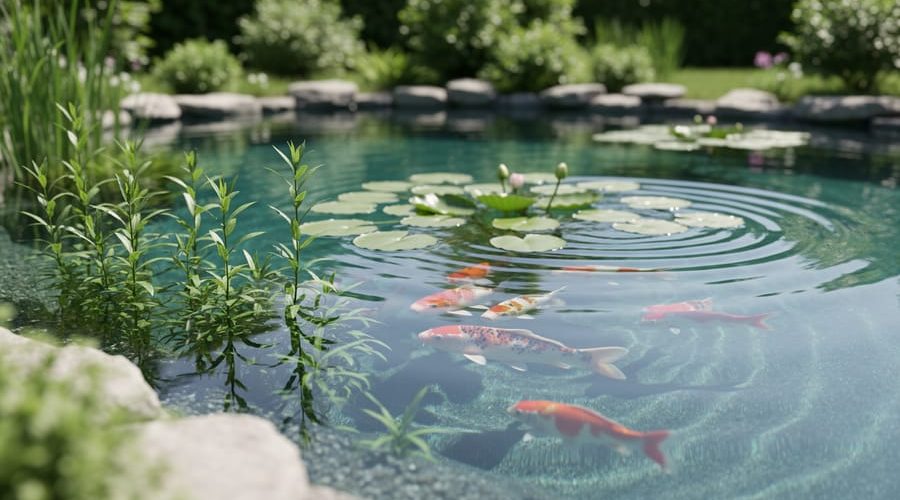
Pond ecology is the study of how living organisms interact with each other and their water environment within a pond ecosystem. It’s the invisible web of relationships that determines whether your pond stays crystal clear or turns into a murky mess, whether fish thrive or struggle, and whether algae blooms take over every summer.
Understanding these relationships changes everything about how you manage your water garden. When you know which creatures eat mosquito larvae, how plants compete with algae for nutrients, or why beneficial bacteria matter more than any chemical you can buy, you stop fighting your pond and start working with it. The difference shows up quickly: balanced water, healthier fish, less maintenance, and a living system that mostly takes care of itself.
Most pond owners focus on what they can see above the waterline, the showy lilies and colorful koi, but the real action happens in the layers you don’t notice. Microscopic bacteria break down waste. Tiny zooplankton graze on algae. Dragonfly nymphs hunt for prey in the mud. Plants pump oxygen into the water during the day and compete for the same nutrients that fuel algae growth. Every player has a role, and when one population explodes or crashes, the ripple effects touch everything else.
This article walks you through exactly how pond ecology works, from the basic food chain to the specific interactions between your plants and wildlife, so you can make smarter decisions about stocking, planting, and maintenance that actually fit how your pond naturally wants to function.
What Pond Ecology Really Means
Pond ecology is simply the study of how living things in and around your pond relate to each other and their watery home. It’s not complicated science, it’s about understanding that your pond operates as a complete, self-contained world where plants, fish, insects, frogs, and even invisible bacteria all depend on one another to survive and thrive.
Think of your pond as a bustling neighborhood. The water lilies aren’t just pretty decorations, they’re oxygen factories and fish shelters. The dragonfly nymphs hunting in the shallows control mosquito populations. The string algae you’re tempted to curse actually feeds snails and produces oxygen. The muck at the bottom? That’s bacteria breaking down leaves and fish waste into nutrients that feed your plants. Every resident has a job, and when they all do their part, the whole community stays healthy.
To grasp pond ecosystem basics it helps to understand a few key terms:
- Ecosystem
- All the living organisms in your pond plus the water, rocks, mud, and sunlight they interact with, functioning as one interconnected unit.
- Habitat
- The specific place where a creature lives, like the shallow margins for tadpoles or the deep water for bottom-feeding fish.
- Niche
- The role an organism plays in the pond, such as water snails cleaning algae off rocks or bacteria converting waste into plant food.
- Food Web
- The interconnected pattern of who eats what, from algae being eaten by snails, which are eaten by fish, which produce waste that feeds bacteria and plants.
- Nutrient Cycling
- The continuous movement of essential elements like nitrogen and phosphorus through the pond as organisms eat, excrete, die, and decompose.
Understanding these relationships transforms how you approach pond care. You stop fighting nature and start working alongside it.
How a Pond Ecosystem Actually Works
The Food Web: Who Eats What
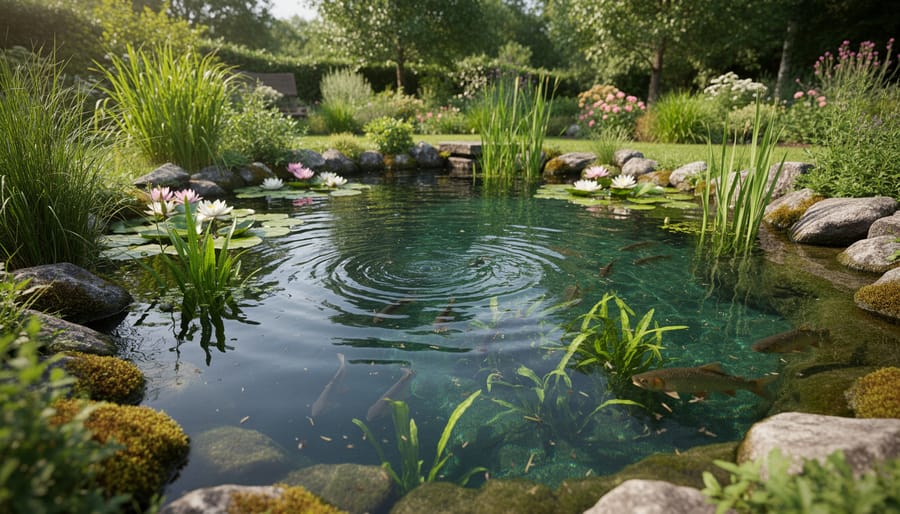
Every pond runs on a simple principle: energy flows from the sun through a chain of living things, each feeding the next. At the bottom of this chain sit the producers, aquatic plants and algae that capture sunlight and turn it into plant matter. Water lilies, hornwort, and even that green film on your rocks all perform this job.
Primary consumers eat these producers. Snails graze on algae coating plant stems and pond surfaces. Tadpoles nibble soft vegetation and algae clumps. Water fleas and other tiny crustaceans filter microscopic algae from the water column. These creatures convert plant energy into animal protein, making it available to the next level.
Secondary consumers are the hunters. Fish cruise through the water eating snails, insect larvae, and smaller fish. Frogs snap up flies and beetles. Dragonfly nymphs ambush tadpoles from underwater hiding spots. Each predator transfers energy up one more rung while keeping populations of smaller creatures in check.
At every level, waste and death occur. This is where decomposers come in. Bacteria and fungi break down fish droppings, dead leaves, and animal remains, releasing nutrients back into the water. Those nutrients feed algae and plants, completing the loop and restarting the cycle. In a balanced pond, nothing goes to waste, every organism’s output becomes another’s input.
The Oxygen-Carbon Dioxide Dance
Your pond is constantly breathing, though you can’t see it happening. During sunny days, submerged plants and algae absorb carbon dioxide and release oxygen through photosynthesis, that’s the plants produce daytime oxygen phase that keeps fish alive and active. But the moment the sun sets, photosynthesis stops completely. Plants switch to consuming oxygen just like your fish do, all night long.
Fish, frogs, snails, and beneficial bacteria never stop using oxygen, day or night. In a balanced pond, daytime oxygen production outpaces nighttime consumption, maintaining healthy levels around the clock. The trouble starts when something tips the scale. Overfeeding creates excess waste. Too many fish drain oxygen faster than plants can replenish it. Overstocked plants can actually deplete oxygen overnight in smaller ponds.
The most dangerous scenario? Dense algae growth. When a massive algae bloom suddenly dies off, decomposing algae consumes enormous amounts of oxygen while releasing toxins. This double hit is why algae blooms can cause fish kills within hours, typically just before dawn when oxygen levels hit their lowest point.
The Main Players in Your Pond
Aquatic Plants: The Foundation
Aquatic plants do far more than beautify your pond, they’re the foundation that keeps the entire ecosystem functioning. Without them, you’d essentially have a fish tank outdoors, constantly fighting algae and poor water quality.
Submerged Plants (Oxygenators)
These underwater workhorses like hornwort, anacharis, and cabomba pump oxygen directly into the water while absorbing excess nutrients that would otherwise fuel algae. They also provide spawning sites for fish and hiding spots for fry.
Floating Plants
Water lilies, duckweed, and water lettuce shade the pond surface, blocking sunlight that algae needs to thrive. Their roots dangle in the water, filtering nutrients and offering shelter for small fish. Aim to cover about one-third of your pond’s surface.
Marginal Plants
Cattails, iris, and pickerel rush grow in shallow edges, serving as filtration zones where their roots trap sediment and absorb pollutants. They’re also crucial wildlife magnets, dragonflies perch on stems, frogs hide among leaves, and birds nest nearby.
The right mix of pond plants creates a self-regulating system where water stays clearer, oxygen levels remain stable, and wildlife flourishes without constant intervention from you.
Fish and Amphibians
Fish bring movement and life to your pond, but they’re also hard workers in the ecosystem. Koi and goldfish eat mosquito larvae, aphids, and small insects before they become problems. They nibble on string algae too, though they won’t solve a major algae bloom on their own. Native species like minnows and sunfish often do an even better job controlling insect populations since they’re adapted to local conditions.
Frogs and newts are your pond’s pest patrol. They devour slugs, flies, and mosquitoes both as adults and tadpoles. A healthy frog population tells you your water quality is good, they’re sensitive to pollutants and won’t stick around if something’s off.
Here’s the hidden benefit: fish and amphibian waste isn’t just muck. It’s nitrogen-rich fertilizer that feeds your aquatic plants. As plants absorb these nutrients, they clean the water and produce oxygen. It’s a perfect cycle when everything’s balanced. Too many fish means excess waste the plants can’t handle, leading to murky water. The right number creates a productive loop that keeps your pond thriving without constant intervention.
Invertebrates and Insects
Snails are your pond’s quiet cleaning crew. They glide across rocks, plant stems, and liner surfaces, scraping away algae and breaking down soft plant debris. A healthy snail population keeps surfaces clear and helps process waste before it becomes a water quality problem.
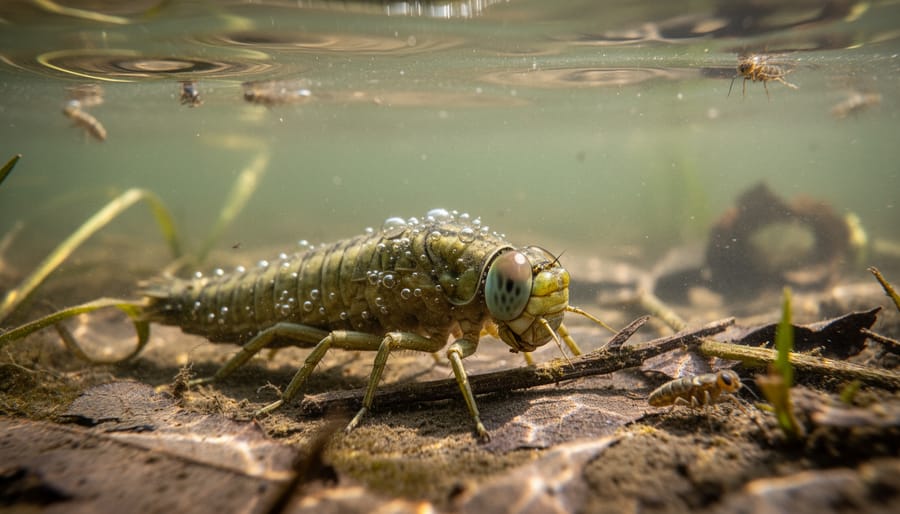
Dragonfly larvae live underwater for months or even years before emerging as adults, and during that time they’re voracious predators. They hunt mosquito larvae relentlessly, along with other small aquatic insects. A single dragonfly nymph can consume dozens of mosquito larvae daily, making them natural pest control you don’t have to pay for.
Water beetles and backswimmers patrol the water column, feeding on smaller insects and algae. Caddisfly larvae build protective cases from plant bits and gravel, then graze on algae and decaying matter. These invertebrates form the middle tier of your pond’s food web, they control pest populations while providing protein-rich meals for fish and frogs. Their presence signals good water quality, and their constant activity keeps nutrients cycling through the system rather than settling into muck.
The Invisible Workers: Bacteria and Microorganisms
You can’t see them, but bacteria and microorganisms are the hardest workers in your pond. They’re constantly breaking down fish waste, decaying leaves, and uneaten food that would otherwise pollute the water and poison your fish.
Here’s what they do: beneficial bacteria convert toxic ammonia (from fish waste) into less harmful nitrites, then into relatively safe nitrates that plants absorb as fertilizer. This is called the nitrogen cycle, and it’s happening 24/7 in your pond’s filter, gravel, and plant roots.
Without these microscopic helpers, ammonia would build up quickly and kill your fish. That’s why new ponds need four to six weeks to “cycle”, you’re waiting for bacterial colonies to establish themselves in sufficient numbers.
You can speed this up by adding beneficial bacteria products, but patience works too. Once established, these colonies maintain themselves, as long as you don’t kill them with harsh chemicals or by cleaning your filter too aggressively. Rinse filter media in pond water, never tap water, chlorine wipes out beneficial bacteria instantly.
Think of them as your pond’s invisible maintenance crew, working around the clock to keep the water livable.
How Wildlife and Aquatic Plants Interact
Plants as Wildlife Habitat and Nurseries
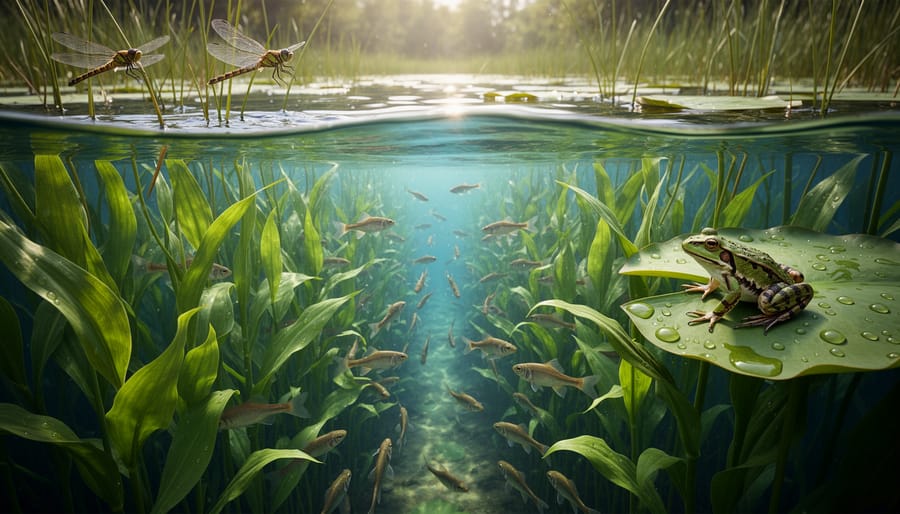
Your aquatic plants do far more than look pretty, they’re multi-purpose real estate for pond wildlife. Submerged plants like hornwort and cabomba become spawning mops where fish scatter sticky eggs that cling to fine foliage, safe from being eaten. The feathery leaves also shelter newly hatched fry while they develop. Floating plants such as water lilies offer double duty: their broad pads become platforms where frogs and newts rest, while the undersides host dragonfly nymphs and provide shade for fish below.
Marginal plants like iris and rushes serve as insect nurseries. Damselflies and dragonflies climb emergent stems to lay eggs directly into water or plant tissue, then their larvae spend months hiding among root tangles, hunting mosquito larvae. Even the stems themselves become perches for visiting birds, herons scan for fish, kingfishers dive from cattail stalks.
This layered habitat structure turns your pond into a thriving ecosystem where every plant creates opportunity for wildlife to breed, feed, and shelter. Without vegetation, you simply have a water-filled hole; with it, you’ve built a neighborhood where nature can flourish.
The Nutrient Exchange Loop
Fish waste isn’t a problem in a healthy pond, it’s fertilizer. When your koi or goldfish excrete ammonia, beneficial bacteria in the water and gravel convert it first to nitrites, then to nitrates. Aquatic plants absorb those nitrates as food, pulling them from the water before they can accumulate to harmful levels. As the plants grow, they release oxygen through photosynthesis, which the fish need to breathe and the bacteria need to continue breaking down waste.
This creates a self-sustaining loop: animals produce nutrients, bacteria transform them, plants consume them and release oxygen, which supports the animals and bacteria. The cycle repeats continuously. When this exchange works properly, your pond essentially filters itself. You’ll see clear water, vigorous plant growth, and active fish without needing aggressive mechanical filtration.
The key word is balance. Too many fish for the available plants means waste accumulates faster than plants can absorb it. Not enough plants, and you’re relying entirely on filters to do the work nature designed plants to handle. Get the ratio right, and the ecosystem maintains itself.
Putting Pond Ecology to Work in Your Water Garden
Building Balance from the Start
The best time to get pond ecology right is before the water even settles. Start with plants first, aim for the rule of thirds, where roughly one-third of your pond surface stays covered with foliage. This typically means a mix of submerged oxygenators like hornwort, floating plants such as water lilies, and marginal species around the edges. Plant them two to three weeks before adding any fish. This head start lets roots establish, oxygen production begin, and the first beneficial bacteria start colonizing plant surfaces and substrate.
When you do introduce fish, go slow. Add just a few at a time over several weeks, not a full stock in one go. This gradual approach lets beneficial bacteria populations grow to match the waste load, preventing ammonia spikes that kill fish and crash the system. Think of it as building your pond’s cleaning crew alongside its inhabitants, maintaining the predator-prey balance from the ground up.
Resist the urge to intervene too quickly in the first six to eight weeks. Cloudy water, a bit of string algae, and fluctuating clarity are normal as the ecosystem finds its footing. Your pond is essentially cycling, establishing the nitrogen-processing bacteria and settling into its natural rhythms. Patience here pays off with years of stable, low-maintenance balance.
When Things Go Wrong: Ecological Troubleshooting
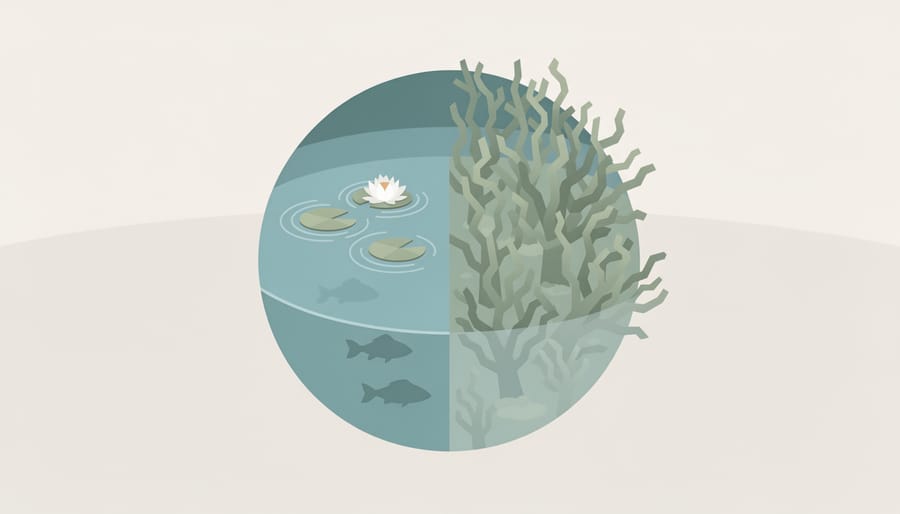
When your pond water turns pea-green overnight, fish gasp at the surface, or the water stays stubbornly cloudy, you’re seeing ecology out of balance. The good news? Each problem points to a specific ecological breakdown you can fix.
Algae blooms happen when nutrients overwhelm your plant capacity. Too many fish, overfeeding, or insufficient plants create excess nitrogen and phosphorus with nothing to absorb them. Algae fills that gap instantly. The solution isn’t chemicals, it’s restoring balance. Add more submerged plants to compete for nutrients, reduce fish food by half, and remove decaying leaves promptly. Within two weeks, you’ll see clearer water as plants regain control.
Fish gasping at dawn signals oxygen depletion, usually from overcrowding or thick algae dying overnight. Plants produce oxygen during daylight but consume it after dark, just like fish. If your pond feels overstocked or choked with algae, it probably is. Thin the fish population, add a fountain or waterfall for aeration, and plant more oxygenators. The ecosystem needs breathing room.
Persistently murky water often means your biological filtration hasn’t established. Beneficial bacteria colonies take four to six weeks to mature. Resist the urge to drain and scrub, you’ll reset the clock. Instead, add bacterial starter, ensure water circulation reaches all areas, and wait. Cloudy water during spring is normal as bacteria wake up; it clears naturally once the nitrogen cycle restarts.
Common Questions About Pond Ecology
How long does it take for a pond to establish ecological balance?
A new pond typically needs six to eight weeks for beneficial bacteria to colonize and begin processing waste effectively, though full ecological maturity can take a full growing season. You’ll know things are settling when the water clears, plants start growing vigorously, and you see insects and wildlife arriving naturally.
Can I have too many plants in my pond?
Yes, overcrowding plants can cause problems, they’ll compete for nutrients, block light from reaching deeper water, and when they decompose in autumn, they can deplete oxygen levels. Aim for about two-thirds of the water surface to remain open, allowing gas exchange and giving fish room to swim.
Do I need fish for a healthy pond ecosystem?
Not at all. A fishless pond can be just as balanced and often supports greater insect diversity and clearer water since there’s no fish waste adding nutrients. Invertebrates, amphibians, and bacteria will still cycle nutrients and keep the system functioning beautifully.
How do I know if my pond is ecologically balanced?
Clear water (you can see the bottom or at least a foot down), steady plant growth without one species dominating, active wildlife visiting regularly, and stable water chemistry are all good signs. If you want specifics, you can measure pond biodiversity by tracking the different species you observe over time.
What happens to pond ecology in winter?
Everything slows down dramatically. Fish become dormant and stop eating, plants die back, and bacterial activity drops off as water temperatures fall. The system essentially goes into standby mode until spring warmth kickstarts growth and activity again, which is why you shouldn’t feed fish or add new plants during cold months.
The beauty of understanding these ecological basics is that you stop worrying about every little change in your pond. You’ll recognize that some algae growth in spring is normal as the system wakes up, that cloudy water after heavy rain settles naturally once bacteria catch up with the new organic matter, and that a visiting heron is a sign your pond is doing its job as habitat. Most pond problems sort themselves out if you give the ecosystem time to respond rather than jumping in with chemicals or drastic changes. Watch, wait, and trust the process, your pond knows what it’s doing.
Pond ecology sounds scientific, but it’s really just watching how your pond lives. Water, plants, fish, insects, and invisible microbes form connections every day. They feed each other, clean up after each other, and adjust to whatever you throw at them. Your job isn’t to control everything, it’s to notice what’s happening and nudge things back when they drift.
Spend a few minutes at your pond each week. Watch how the plants grow, where fish gather, which insects show up. That’s your ecosystem talking. Algae creeping in? Maybe you need more plants or fewer fish. Water looking cloudy? Your bacteria might need time to catch up. Every pond tells you what it needs if you pay attention.
Even a half-barrel water garden creates a functioning ecosystem. Size doesn’t matter as much as balance does. You don’t need a biology degree to grow a healthy pond. You just need to work with the natural cycles already humming along in there. Let the pond do most of the work. It knows what it’s doing. You’re just the helpful neighbor who keeps things tidy and makes sure nobody starves.