
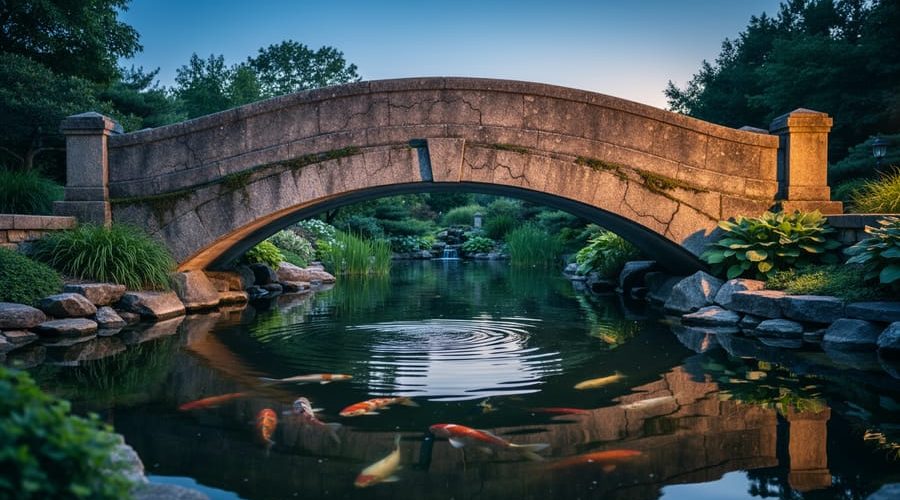
What Is Metaphor in Art (and How Does It Transform Your Pond)?
Metaphor in art is the practice of representing one idea, emotion, or concept through imagery that symbolizes something else, creating layers of meaning beyond the literal subject. A painting of a storm might represent inner turmoil. A sculpture of intertwined roots could speak to human connection. This symbolic language transforms visual elements into storytelling tools that resonate on a deeper level than direct representation alone.
For pond enthusiasts, understanding metaphor opens up a whole new dimension of design thinking. Your backyard water feature isn’t just a functional ecosystem. It can embody tranquility, reflect the passage of time, or mirror the natural cycles you find most meaningful. When you place a weathered stone beside fresh plantings, you’re creating a visual conversation between age and renewal. When you design water flow to cascade over multiple levels, you might be expressing life’s journey through different stages.
This article breaks down how metaphor functions in pond aesthetics, the different types you can employ in your own space, and practical ways to weave symbolic meaning into your water garden. You don’t need an art history degree to create a pond that speaks beyond its physical elements. The goal is to help you see your design choices through a fresh lens, one where every plant, rock, and ripple can carry intention and tell a story that matters to you. Whether you’re planning your first pond or refining an established one, metaphorical thinking adds richness that transforms simple beauty into something personally significant.
What Metaphor in Art Means for Water Gardens
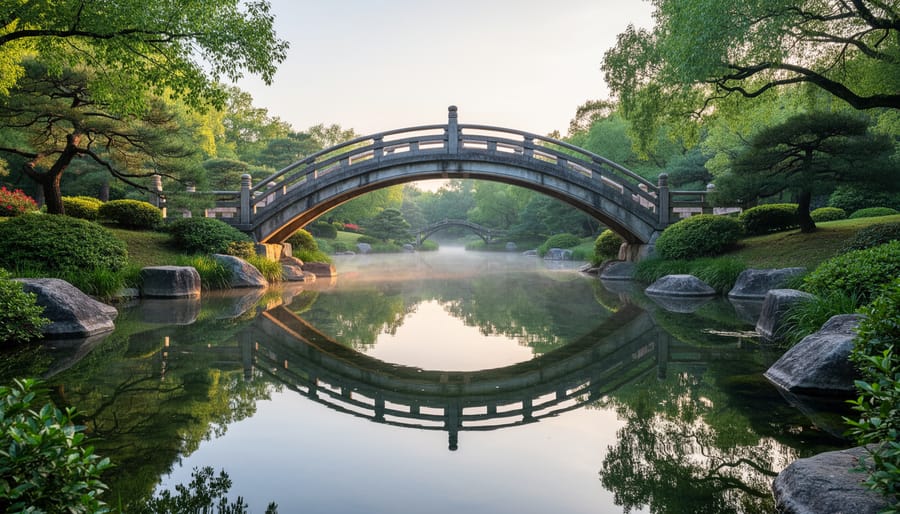
At its core, metaphor in art is the practice of representing one thing through another to create layers of meaning beyond the literal. In water gardens, this translates to choosing pond features not just for their practical function or visual appeal, but for what they communicate on a deeper level. When you place a weathered stone bridge over your pond, you’re doing more than creating a crossing point, you’re inviting viewers to see it as a passage between stages of life, a connection between separate worlds, or a moment of transition suspended over moving water.
- Metaphor
- A design element that represents an abstract idea through a concrete physical form, such as using flowing water to symbolize the passage of time or change.
- Symbolism
- The practice of assigning specific meanings to plants, stones, or water features based on cultural associations, personal significance, or visual qualities.
- Visual Storytelling
- The arrangement of pond elements to create a narrative or emotional journey that viewers experience as they observe and interact with the space.
- Layered Meaning
- When a single pond feature serves multiple purposes, functional, aesthetic, and symbolic, creating depth that reveals itself gradually to attentive observers.
The beauty of metaphorical thinking in pond design is that it builds on features you likely already have or are considering. That waterfall isn’t just aerating your pond and creating pleasant sound, it can represent the relentless flow of time, the energy of constant renewal, or the journey from source to destination. The cluster of water lilies floating on the surface isn’t simply adding color and shade; their daily cycle of opening with sunrise and closing at dusk becomes a living metaphor for receptivity, rest, and natural rhythms.
You don’t need formal art training to work with metaphor. Start by asking what you want your pond to express. Peace? Energy? A connection to your heritage? Growth and change? Once you identify that intent, the physical choices become clearer. Your pond transforms from a water feature into a living canvas that tells a story only you can author.
How Metaphor Works in Pond Design
The Language of Water Features
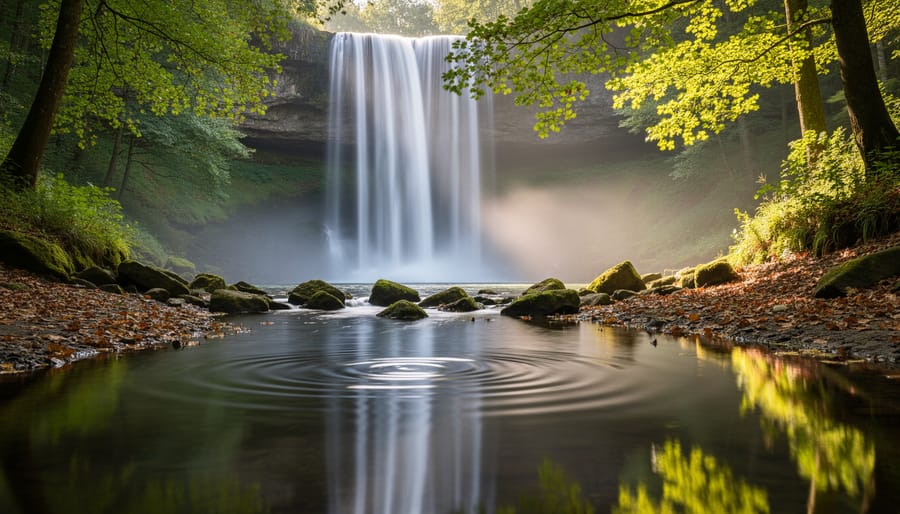
Still water creates a mirror for contemplation. When a pond surface lies undisturbed, it invites quiet reflection and introspection, literally reflecting the sky while metaphorically reflecting our inner states. This stillness represents peace, stability, and meditation, making it ideal for Zen-inspired designs or memorial gardens where you want visitors to pause and think deeply.
Gentle flowing water tells a different story. Streams, spillways, and gradual movement suggest continuity, progress, and life’s steady forward motion. The connection between water flow and emotion explains why babbling brooks feel hopeful while stagnant pools can feel oppressive, our brains interpret movement as vitality and possibility. A gentle flow works beautifully when you want your pond to express ongoing growth or the passage of time without drama.
Cascading water brings energy and transformation. Waterfalls, dramatic drops, and rushing streams represent change, power, and release. They’re the exclamation points in your water symphony creating focal points that express breakthrough moments, cleansing, or the dramatic beauty of nature’s force. The sound alone shifts the emotional atmosphere from meditative to invigorating.
Symbolic Plant Selection
Plants speak a visual language that transforms practical pond choices into rich symbolic statements. When you select a lotus rather than a water lily, you’re not just picking a flower, you’re embedding centuries of spiritual meaning into your pond’s narrative. The lotus rising from muddy water to bloom in pure sunlight has carried enlightenment symbolism across Asian cultures for millennia, making it a powerful metaphor for personal growth and transformation.
Color choices amplify these meanings. White blooms suggest purity and new beginnings. Deep purple conveys mystery or royalty. Yellow radiates optimism. Japanese irises, with their sword-like leaves pointing skyward, traditionally symbolize hope and courage, their vertical growth pattern creating visual momentum that lifts the eye and spirit upward.
Texture adds another layer. Soft, feathery grasses whisper movement and flexibility. Bold, architectural leaves like elephant ears command attention and suggest strength. Even growth patterns carry weight: spreading plants that colonize open water can represent abundance or community, while solitary specimens express individuality.
You don’t need encyclopedic plant knowledge to harness these associations. Start with what resonates personally. A plant your grandmother grew becomes a living memorial. Native species connect your pond to local ecology and place. The key is choosing deliberately, letting each plant contribute to your pond’s deeper story rather than simply filling space with greenery.
Forms of Artistic Metaphor in Pond Aesthetics
Natural Cycle Metaphors
Your pond’s ecosystem mirrors life itself. Spring bulrushes push through winter debris, summer lilies burst into bloom, autumn leaves drift across the surface, and winter brings stillness. This natural progression becomes metaphor when you design with intention, selecting plants that perform seasonal stories rather than just provide year-round coverage.
The Japanese concept of shakkei borrowed scenery applies beautifully here. Place deciduous marginals where their bare winter branches create stark silhouettes against dark water, symbolizing dormancy and reflection. Position early bloomers near entry points to represent beginnings. Through thoughtful artistic design your pond becomes a living calendar that connects viewers to nature’s cycles.
This works in small spaces too. A single water lily embodies the entire concept, roots anchored in mud (origins), leaves floating on surface (growth), flowers emerging skyward (achievement), then dying back to nourish next year’s bloom (renewal).
Journey and Path Symbolism
Stepping stones that cross still water become physical expressions of life’s progression, each deliberate step a choice, each gap a moment of risk or faith. When you place irregular stones in a wandering line rather than a straight path, you mirror life’s non-linear journey with its detours and discoveries.
Bridges carry even richer metaphorical weight. A simple arched bridge doesn’t just connect two pond banks; it represents transition between states, before and after, one life chapter to the next. The act of crossing becomes meaningful. Japanese garden designers understood this deeply, often positioning bridges so visitors must pause at the peak and look down into reflective water, creating a literal moment of reflection during symbolic passage.
Water paths, the routes koi swim or where current flows, work more subtly. They suggest destiny and flow, the idea that some movements follow natural courses while others require intention to redirect.
Balance and Harmony Themes
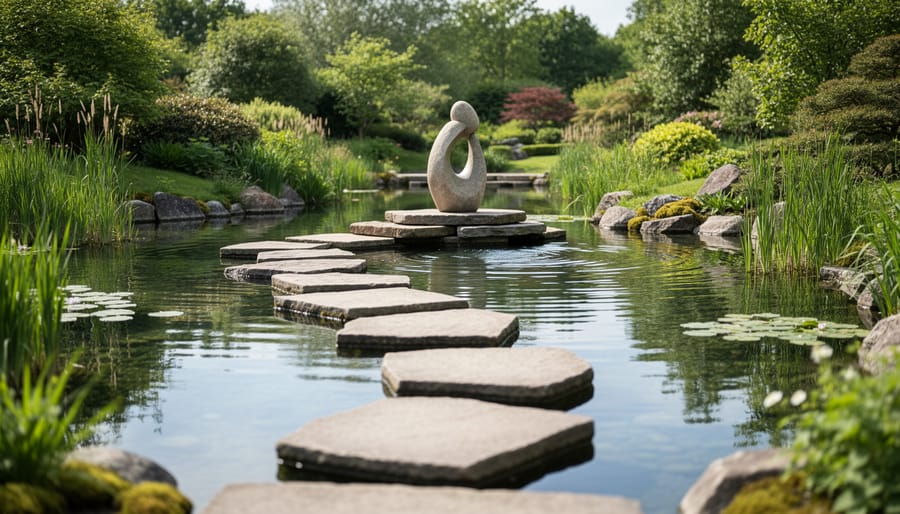
Balance-driven pond designs express philosophical ideas through carefully chosen contrasts. Yin-yang thinking pairs dark stones with light gravel, still pools with moving streams, or sun-loving plants with shade dwellers, not just for visual variety, but to show that opposing forces complete each other. A rough boulder beside smooth pebbles, or a weathered timber edging crisp water, creates that same wholeness.
Japanese wabi-sabi aesthetics celebrate imperfection and impermanence. Moss-covered stones, asymmetrical rock arrangements, and deliberately aged wood tell viewers that beauty lives in natural wear and organic change, not pristine geometry. Your pond becomes a statement that life’s character comes from its weathering, and that harmony doesn’t mean symmetry. These complementary elements work together to express deeper truths about acceptance and natural order.
Personal Story Landscapes
A pond can become a chapter of your life written in water and stone. The koi you named after your grandmother, swimming past river rocks collected on family camping trips. A waterfall positioned where morning light hits just as your late father’s always did through the kitchen window. These aren’t decorative choices, they’re narrative threads.
Memorial features work most powerfully when they’re woven naturally into the design rather than announced. A bench facing the spot where you scattered ashes. Native plants from a childhood home taking root beside new hybrid lilies, past and present growing together. The Japanese maple you planted the year your daughter was born, now reflecting in still water.
Your pond becomes a living scrapbook where every element carries personal weight only you fully understand.
Where Metaphorical Thinking Enhances Your Pond
Starting with Intent
Before you select a single stone or plant, pause and ask yourself what feeling or idea you want your pond to express. Do you seek a space for peaceful reflection? A celebration of growth and renewal? A tribute to a loved one or meaningful life event?
This initial clarity transforms random feature selection into purposeful design. Instead of browsing catalogs wondering what looks nice, you’ll know exactly which elements serve your vision. A pond symbolizing new beginnings might feature sunrise-facing placement and spring-blooming marginals. One honoring resilience could incorporate weathered driftwood and hardy native plants that thrive despite challenges.
Write down three words that capture your desired essence. Keep this short list visible during planning. When you’re tempted by an attractive feature that doesn’t align with your intent, these words ground your decisions. Your pond becomes a coherent statement rather than a collection of pretty things, and that coherence is what creates genuine emotional resonance for everyone who experiences your water garden.
Choosing Materials That Speak
Every rock, piece of wood, and sculptural element you place in your pond carries visual weight that goes beyond pure decoration. Rough, weathered boulders suggest permanence and resilience, while smooth river stones speak to journeys and transformation. Dark basalt creates gravity and anchoring points, whereas pale limestone lifts the eye and brings lightness.
Wood selection matters equally. Driftwood with twisted grain tells stories of endurance, making it ideal for themes about overcoming challenges. Straight timber beams create structure and order, perfect for formal balance concepts.
Using local materials strengthens your metaphor by grounding it in place and authenticity. Rocks native to your region carry inherent connection to the landscape, while imported stone can represent distant influences or aspirations.
Consider texture as language. Jagged edges express energy and change, smooth surfaces convey calm and completion. Vertical elements reach toward growth and aspiration, horizontal placements suggest rest and reflection.
Don’t overlook how strategic lighting transforms material meaning after dark, revealing hidden textures and creating entirely new symbolic readings of the same elements you chose for daylight viewing.
Layering Meaning Without Overwhelming
The strongest metaphorical ponds whisper rather than shout. When you’re building symbolic meaning into your water garden, restraint matters more than abundance. Think of each element as a carefully chosen word in a poem, if you cram in too many, the message gets lost in noise.
Start with one or two central symbolic threads and let them breathe. If your pond represents life’s journey through winding paths and stepping stones, you don’t also need water lilies for purity, bamboo for resilience, and a Buddha statue for enlightenment. That’s not depth; it’s a metaphorical traffic jam. Instead, develop your primary theme through subtle variations, perhaps different stone types along the path to mark distinct life stages, or varying water depths to suggest challenges overcome.
The power of contrast helps here. A single red maple reflected in still water carries more symbolic weight than a dozen competing focal points. Empty space isn’t wasted, it gives your metaphors room to register with viewers and lets the mind complete the story you’ve begun.
Creating Emotional Connection Through Symbolic Design
I’ll never forget the day Sarah stood by her newly completed pond, tears streaming down her face. She’d chosen to place seven smooth river stones in a spiral pattern around a central lotus, one stone for each year since her daughter’s passing. What looked like simple hardscaping to passersby held profound meaning for her. Every morning, she’d sit on the bench and watch the lotus bloom, reminded that beauty emerges from muddy depths.
That’s the power of metaphor in pond design. When your water garden tells a personal story, it becomes more than landscaping, it becomes a daily ritual, a meditation space, a physical manifestation of what matters most.
I’ve seen a retired teacher create a pond with three distinct sections connected by flowing water, representing the past, present, and future of his family’s journey from Vietnam to America. Native bamboo from his childhood mixed with American water lilies his grandchildren planted. The water flowing between sections symbolized continuity across generations. He told me he visits that pond every evening, not just to check the filter.
Another client incorporated stones from her childhood farm into a memorial waterfall for her parents. The sound of water cascading over those familiar rocks brought back memories of summer rain on the barn roof. The metaphor was private, invisible to guests, but deeply meaningful to her.
These aren’t elaborate koi ponds with massive budgets. Sarah’s seven stones cost maybe twenty dollars. The teacher’s sectioned pond started as a basic preformed liner. What transforms them isn’t money, it’s intention.
When you layer personal meaning into your design choices, maintenance becomes mindfulness. Trimming the memorial iris isn’t a chore; it’s remembrance. Watching your “new beginnings” water lilies spread connects you to your own growth. The pond mirrors your inner landscape, and tending it tends something deeper.
Common Questions About Artistic Metaphor in Ponds
You don’t need an art degree to weave meaning into your pond. Most questions about symbolic design circle around confidence, whether your ideas matter, if they’ll work in your space, and how to keep them honest rather than gimmicky.
Can I create meaningful metaphor without formal art training?
Absolutely. Your personal connection to symbols matters more than academic knowledge. If a curved path reminds you of life’s unexpected turns, that meaning is valid and will resonate when you share your pond with visitors.
Does metaphor work in small ponds, or does it need grand scale?
Small ponds often create more powerful metaphors because every element carries weight. A single lotus in a whiskey barrel can symbolize enlightenment just as effectively as an elaborate koi pond.
How do I avoid clichéd or obvious symbols?
Look past the first association. Instead of a generic bridge representing “crossing over,” think about what specific journey matters to you, maybe reuniting with family, or the shift from career to retirement. The more personal, the less clichéd.
What happens to my metaphor when seasons change everything?
Embrace it. Seasonal transformation itself becomes part of your pond’s story, dormant plants representing rest, spring growth showing renewal. The metaphor deepens rather than disappears.
The biggest concern I hear from pond owners is whether their symbolic choices will seem pretentious or forced. Here’s the truth: if it means something to you, it works. I’ve watched someone tear up explaining why they chose three specific rocks to represent their children. That emotion, that connection, no art critic can invalidate it.
Start simple. Pick one element that speaks to you and build from there. Maybe you’re drawn to the way water spills over a particular stone, or how certain ornamental grasses bend in the wind. Ask yourself what that movement or texture reminds you of. The metaphor grows from genuine observation, not from trying to impress anyone with deep meaning.
When you design your pond with metaphor in mind, you’re doing more than arranging rocks and plants, you’re building a space that speaks. A simple stepping stone becomes a marker of progress. A weeping willow transforms into a symbol of resilience. These choices shift your water garden from decoration to conversation, from background feature to personal sanctuary.
You don’t need art school credentials to create meaningful symbolism. Start with one element that resonates with you: a waterfall representing constant change, a circular pond embodying life’s cycles, or native plants honoring your regional heritage. That single intentional choice already sets your pond apart.
The beauty of metaphor in custom pond aesthetics is how it grows with you. As seasons shift and plants mature, your symbolic landscape evolves, deepening its story rather than losing relevance. Your pond becomes a living reflection of what matters to you, a place where water, stone, and green life work together to express something words can’t quite capture.
What story will your pond tell? The answer is already within you, waiting to take shape in your backyard.