
What Is a Collection of Interacting Populations? (And How It Shapes Your Water Garden)
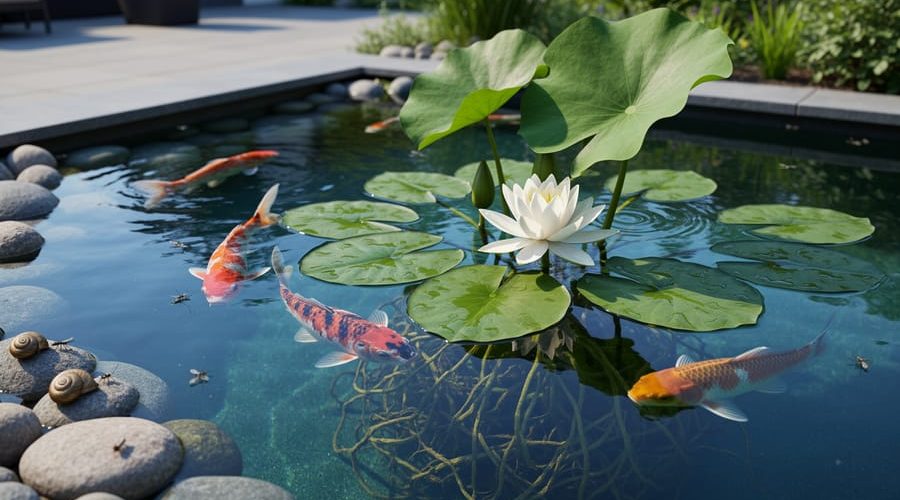
A collection of interacting populations is a community, the web of different species living together in a shared space and influencing each other’s survival and growth. In your water garden, this means the fish, plants, snails, insects, and microorganisms aren’t just coexisting by accident. They’re actively shaping each other’s lives through competition, cooperation, and everything in between.
Understanding this concept transforms how you approach pond design. When you drop a water lily into your pond, you’re not just adding decoration. You’re introducing a new player that will compete for nutrients, provide shade that cools the water for fish, offer hiding spots for tadpoles, and create surfaces where beneficial bacteria can colonize. That single plant sets off a chain reaction throughout your entire ecosystem.
Most water gardeners focus on individual species, asking “Will this plant survive?” or “How many fish can I add?” But the smarter question is “How will these populations interact?” A pond that thrives long-term isn’t built on isolated choices. It’s built on understanding how your koi affect your submerged plants, how your snails control your algae, and how your marginal plants support your dragonfly larvae.
This article breaks down the types of interactions happening in your pond right now, explains which populations you should encourage and which to limit, and shows you how to select plants and animals that work together instead of against each other. Once you see your water garden as a community rather than a collection, maintenance becomes easier and results become more predictable.
What ‘A Collection of Interacting Populations’ Really Means
Let’s start with the basics. A population is simply a group of the same species living in the same area. In your water garden, all the water lilies growing together are one population, all the hornwort stems are another population, and all your goldfish make up yet another population. Each group consists of individuals that can potentially interbreed and share the same space.
When multiple populations live together and affect each other’s survival, growth, or reproduction, you’ve got an ecological community. Your water garden is actually a collection of these interacting populations, the lilies, hornwort, fish, snails, and dozens of other species all living together. They’re not just neighbors. They actively influence each other through competition, cooperation, or consumption.
Here’s how ecologists distinguish the key concepts:
- Population
- A group of individuals from the same species living together, like all the water hyacinths in your pond or all the koi you’ve stocked.
- Community
- Multiple populations of different species interacting in the same area, your mix of plants, fish, snails, and microbes working together (or competing) in your water garden.
- Ecosystem
- The community plus all the non-living components like water, sunlight, nutrients, and substrate that support life in your pond.
- Interaction
- How populations affect each other, whether your fish graze on algae, your floating plants shade submerged species, or your oxygenators compete for dissolved nutrients.
- Niche
- The specific role a population plays in the community, water lilies occupy the surface layer and provide shade, while hornwort lives submerged and oxygenates water.
The distinction matters for practical planning. When you select plants collaboratively, you’re intentionally building a community where populations complement rather than clash with each other. You’re thinking about how your water lilies will shade the water (affecting light-sensitive populations), how your oxygenators will release oxygen (benefiting fish populations), and how your snails will graze algae (controlling nuisance populations). Understanding that these aren’t isolated plantings but interacting groups helps you make smarter choices about what goes where and with what.
How These Populations Interact in Your Water Garden
Competition: When Plants Vie for the Same Resources
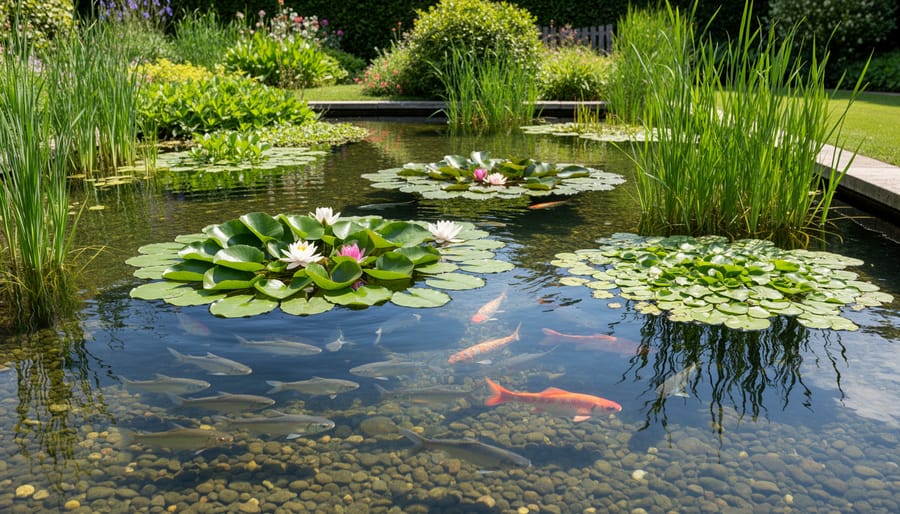
When different plant species share the same pond space, they’re competing for three main resources: nutrients, light, and physical room to grow. Understanding this competition helps you avoid lopsided plant communities where one species dominates everything else.
Nutrient competition happens beneath the surface. Heavy feeders like water lilies pull substantial nitrogen and phosphorus from the water and substrate, potentially starving lighter feeders nearby. Fast-growing floaters such as duckweed can strip nutrients so efficiently that slower marginals struggle to establish.
Light competition is equally fierce. Aggressive surface plants like water hyacinth create dense shade canopies that block sunlight from submerged oxygenators below. This forces shade-intolerant species to stretch toward the surface or simply fail.
Space competition determines who gets root room and territory. Cattails and certain iris varieties spread through vigorous rhizomes, crowding out less aggressive neighbors within a single season. Parrot’s feather can mat across the entire surface, leaving no room for anything else.
Compatible pairings respect these competitive dynamics. Combine deep-rooted water lilies with shallow-rooted marginals. Pair moderate-growth floaters with robust oxygenators. Avoid planting multiple aggressive spreaders together unless you’re prepared for constant thinning battles.
Cooperation: Plants That Help Each Other Thrive
While competition creates tension, cooperation keeps your water garden functioning. These helping relationships happen constantly, even if you don’t notice them.
Submerged plants like hornwort and anacharis pump out dissolved oxygen all day long. That oxygen released by plants doesn’t just benefit them, it supports fish, beneficial bacteria, and every other living thing in your pond. In return, those organisms produce carbon dioxide the plants need for photosynthesis. It’s a perfect exchange.
Floating plants like water lettuce and frogbit provide shade below, which cool-water species such as certain irises and marsh marigolds desperately need during summer. Without that shade, these sensitive marginals would struggle in full sun. Meanwhile, the marginals’ roots create sheltered areas where floating plants can anchor temporarily when wind picks up.
Tall marginals also act as windbreaks for delicate surface floaters and smaller bog plants. A row of cattails or rushes along the prevailing wind direction can create a calm microclimate that protects fragile water lilies from constant buffeting.
These cooperative relationships build resilience into your garden naturally, with less intervention needed from you.
The Food Web: Who Eats What
Your water garden’s food web is nature’s pest control system in action. Fish feed on mosquito larvae and aphids, snails graze on algae and decaying plant matter, and dragonfly nymphs hunt smaller invertebrates. Beneficial bacteria break down fish waste and dead leaves, releasing nutrients that plants absorb. This circular flow keeps populations in check, a healthy fish population prevents mosquito explosions, while snails and tadpoles clean up organic debris before it fouls the water. When one population crashes or booms, the ripple effects cascade through the web. That algae bloom? Often a sign that your grazing invertebrates can’t keep pace, or excess nutrients from fish waste are overwhelming the plant population’s ability to absorb them.
The Different Population Types in Water Gardens
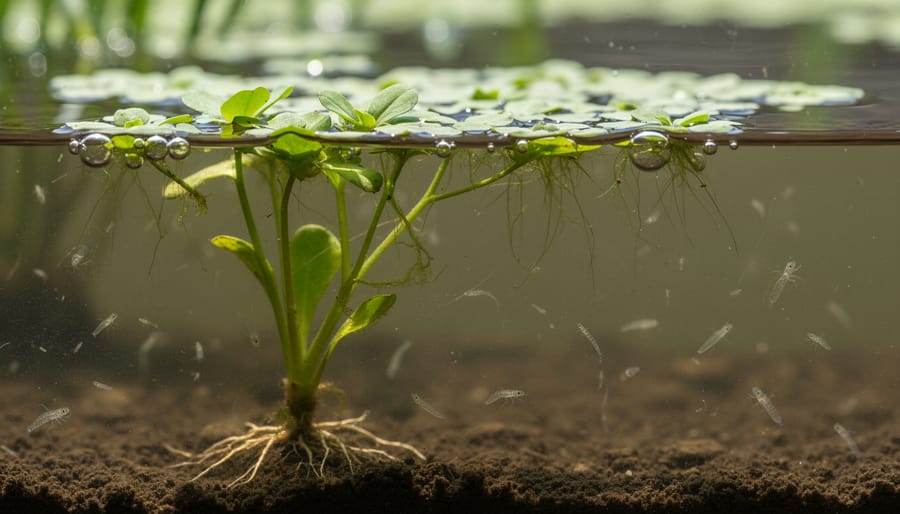
Your water garden hosts several distinct population types, each filling a specific niche in the community. Understanding these groups helps you see why a thriving pond needs diversity, not just your favorite plants thrown together.
Submerged oxygenating plants live entirely underwater, pumping oxygen into the water column while absorbing excess nutrients. Hornwort, anacharis, and cabomba represent this group. They’re the unsung heroes that keep water clear and fish happy, though you’ll barely see them from above. These plants also provide spawning grounds for fish and shelter for tiny invertebrates.
Floating plants drift on the surface without rooting in soil. Water lettuce, duckweed, and frogbit shade the water below, cooling it and suppressing algae by blocking sunlight. Some floaters (like water hyacinth) are aggressive colonizers that can blanket an entire pond in weeks. They’re nutrient sponges, pulling dissolved waste from the water faster than almost any other plant type.
Marginal and bog plants root in shallow water or saturated soil around your pond’s edges. Cattails, iris, pickerel rush, and sweet flag create the transition zone between water and land. These populations stabilize banks, filter runoff before it enters the pond, and provide perches for dragonflies. They’re also the most visible from your patio, giving your water garden its landscape structure.
Deep-water plants root in pond soil but send leaves to the surface. Water lilies are the classic example, though lotus and water hawthorn fit here too. Their floating pads create those picturesque reflections while shading deeper water and giving fish a place to hide from predators (including herons).
Fish populations add movement and color, but they’re also workers. Goldfish and koi graze on mosquito larvae and algae, controlling pests naturally. They produce waste that fertilizes your plants, closing the nutrient loop. Just remember they’ll also nibble tender plant shoots if given the chance.
Invertebrate populations include snails, freshwater clams, dragonfly larvae, water beetles, and countless other tiny creatures. Snails scrape algae from surfaces. Dragonfly nymphs hunt mosquito larvae. These populations often arrive uninvited on new plants, gradually building a cleanup crew that works alongside pond filters for balance.
Microbial populations are invisible but crucial. Beneficial bacteria colonize every surface, breaking down fish waste and decaying plant matter into forms your plants can absorb. Without this microbial community, ammonia would spike and your fish would suffer. These populations take weeks to establish in new ponds, which is why patience matters after initial setup.
Each population type supports the others, creating interdependence that makes your water garden resilient.
Applying This Concept: Collaborative Plant Selection in Practice
Building Beneficial Plant Communities
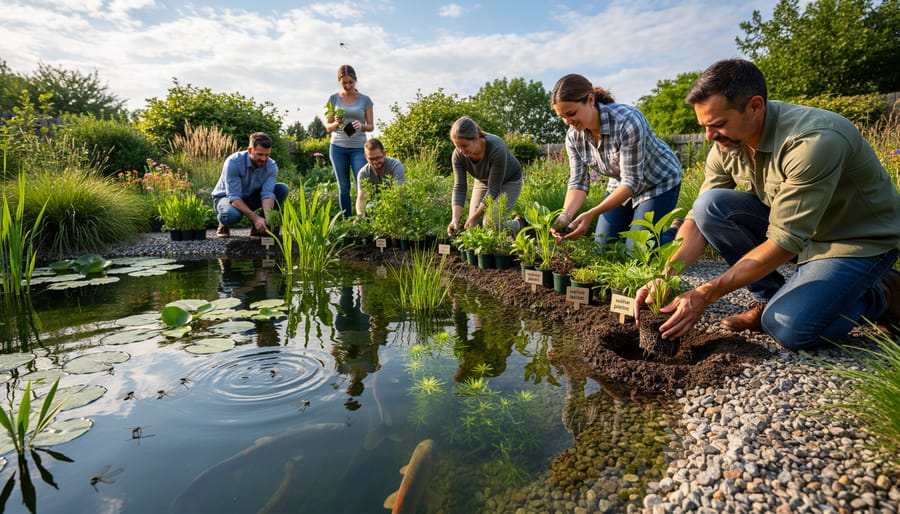
Start with proven partnerships that practically guarantee success. Pair hornwort or anacharis with water lilies. The oxygenators thrive in deeper water and work overtime producing oxygen, while the lilies are heavy feeders that consume nutrients the oxygenators release. Both win, and you get clear water as a bonus.
For shaded pond margins, combine creeping jenny or cardinal flower beneath established water lily pads. These shade-tolerant marginals actually benefit from the dappled light, avoiding sun scorch while the lilies provide natural canopy. I’ve watched cardinal flower bloom spectacularly in 60% shade from lily coverage where it would struggle in full sun.
When fish share your pond, skip delicate or expensive specimens they’ll shred. Instead, choose tough marginals like pickerel rush or arrowhead, paired with fast-growing submerged plants like cabomba. Fish nibble the oxygenators but can’t keep pace with their growth, creating sustainable grazing without destroying your planting investment.
Consider plant combinations by zone when planning these partnerships. Surface floaters like water lettuce pair beautifully with deep-rooted lotus because they occupy completely different niches. You can also explore multicolor plant pairings that complement each other ecologically while creating visual interest across bloom seasons.
Red Flags: Combinations to Avoid
Avoid pairing duckweed with water hyacinth, both are aggressive surface spreaders that will race for dominance, leaving you with either a solid green carpet or endless scooping. Don’t let floating plants cover more than 60% of your pond’s surface; fish need oxygen exchange, and submerged plants need light to survive. Mixing acid-loving plants with species that prefer alkaline conditions rarely works, one group will always struggle unless you fix hard water issues or adjust pH carefully. If you keep koi or goldfish, skip delicate soft-leaved plants like cabomba, they’ll become expensive fish snacks within days. Finally, don’t cram too many vigorous marginals into a small bog area; cattails and irises together will compete viciously for root space, and one will eventually choke out the other.
Common Questions About Population Interactions in Water Gardens
How many different plant species should I include in my water garden?
Start with 5-8 species across different zones (submerged, floating, marginal) to establish a functional community without overwhelming yourself. You can add diversity gradually as you learn how your initial populations interact and what gaps need filling.
Can I add fish to a newly planted pond?
Wait 4-6 weeks after planting to let your plant populations establish roots and begin producing oxygen. Adding fish too early stresses both the plants (from grazing and disturbance) and the fish (from unstable water chemistry).
What happens if one population takes over?
Aggressive spreaders like duckweed or water hyacinth will outcompete slower plants for light and nutrients, eventually creating a monoculture that reduces oxygen and clogs the surface. You’ll need to thin them weekly during growing season to prevent dominance.
How do I know if my populations are balanced?
Clear water (not green or murky), visible fish activity, steady plant growth without any single species overwhelming others, and minimal string algae are all signs of balance. If you’re constantly battling what causes greenwater or algae blooms, your populations are likely out of sync.
Do I need all population types in my pond?
You don’t strictly need every category, but missing key players creates gaps. A pond without submerged oxygenators will struggle with oxygen levels, while one without floating plants may overheat in summer. The more population types you include, the more self-regulating your ecosystem becomes.
What’s the biggest mistake when selecting interacting populations?
Choosing all fast-growing, aggressive species because you want quick results. This creates constant competition and maintenance headaches rather than the cooperative balance that makes water gardening enjoyable.
These questions come up repeatedly because managing multiple populations feels complex at first. The truth is, nature handles most of the heavy lifting once you’ve set up compatible communities. Your main job becomes observation and occasional intervention rather than constant micromanagement.
Your water garden isn’t just a collection of pretty plants arranged for visual appeal. It’s a living, breathing community where populations of plants, fish, invertebrates, and microorganisms constantly interact, compete, cooperate, and balance each other. When you understand this fundamental ecological concept, your approach to plant selection shifts dramatically. You start thinking like an ecosystem designer rather than a decorator, choosing species not just for color or height but for how they’ll contribute to the whole community’s health.
This mindset transforms water gardening from guesswork into intentional creation. You’ll notice which plants are thriving together, spot early signs of imbalance, and make smarter choices about what to add next.
The real joy? Watching these interactions unfold over seasons. You’ll see dragonfly larvae hunting among your hornwort, notice how your water lilies create perfect shade for smaller marginals, and observe the subtle dance of competition and cooperation that makes a healthy pond hum.
Start simple if you’re new to this. Choose a few compatible species from different population types, observe how they interact, then gradually build complexity. Your water garden will teach you what it needs.