
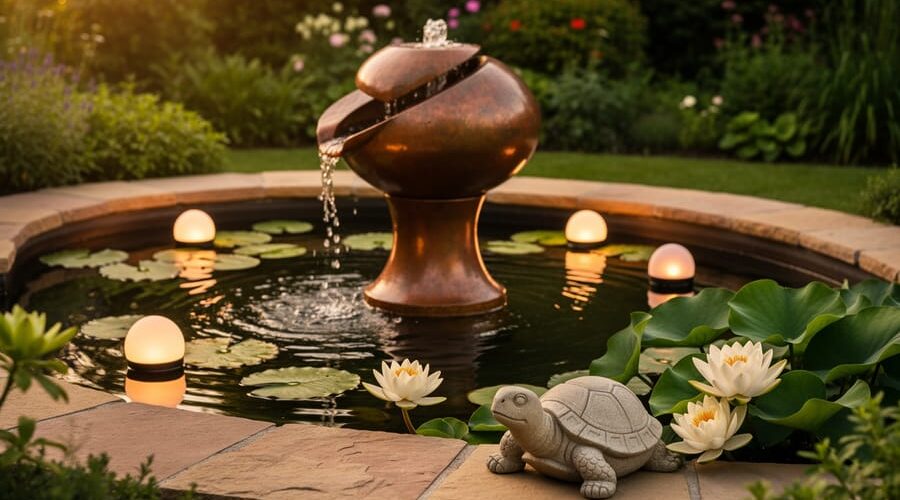
Transform Your Water Garden Into a Living Gallery With These Ornament Ideas
Transform your water garden into a captivating outdoor retreat by selecting ornaments that complement your pond’s natural beauty while serving a purpose. Place sculptural fountains at focal points to create soothing water sounds and improve oxygenation—choose designs that reflect your personality, from classical tiered basins to modern geometric shapes. Position floating ornaments like decorative lily pads or solar-powered lights strategically across the water surface to add dimension without overwhelming your aquatic plants. Anchor ornamental features near the pond’s edge where they’ll frame the view without interfering with filtration equipment or fish habitats.
The key to successful yard ornamentation lies in balancing visual appeal with your pond’s ecosystem needs. Every ornament you select should enhance your water garden as art while maintaining water quality and supporting aquatic life. Consider weatherproof materials that withstand constant moisture exposure—stone, copper, and marine-grade resin age beautifully and require minimal maintenance. Start with one or two statement pieces rather than cluttering your space, then gradually add complementary accents as you discover what works best for your garden’s unique character and your enjoyment of the space.
Why Water Garden Ornaments Matter More Than You Think
I used to think water garden ornaments were just decorative extras—nice to have but not essential. Then I added my first simple stone turtle near my pond’s edge, and everything changed. That little ornament transformed my water feature from a pleasant backyard element into a true focal point that drew everyone’s attention.
Water garden ornaments matter far more than most people realize because they serve multiple important purposes beyond mere decoration. First and foremost, they create visual anchors that guide the eye and give your water feature intention and personality. Without ornaments, even the most beautifully maintained pond can feel incomplete, like a room missing that perfect piece of artwork.
These ornaments also enhance the natural beauty already present in your aquatic environment. A well-placed heron statue complements the reflections on the water’s surface, while a bubbling fountain ornament adds movement and sound that amplifies the sensory experience. They work with nature, not against it, drawing attention to the shimmer of water, the gentle movement of plants, and the play of light throughout the day.
Perhaps most importantly, ornaments let you express your personal style in ways that plants and water alone cannot. Whether you lean toward whimsical garden gnomes, elegant classical statuary, or modern abstract pieces, your choices tell visitors who you are and what brings you joy.
The key is complementing your aquatic ecosystem rather than overwhelming it. Choose ornaments that enhance rather than dominate, creating harmony between the natural and artistic elements of your water garden.
Classical Elegance: Statues and Sculptures for Your Pond
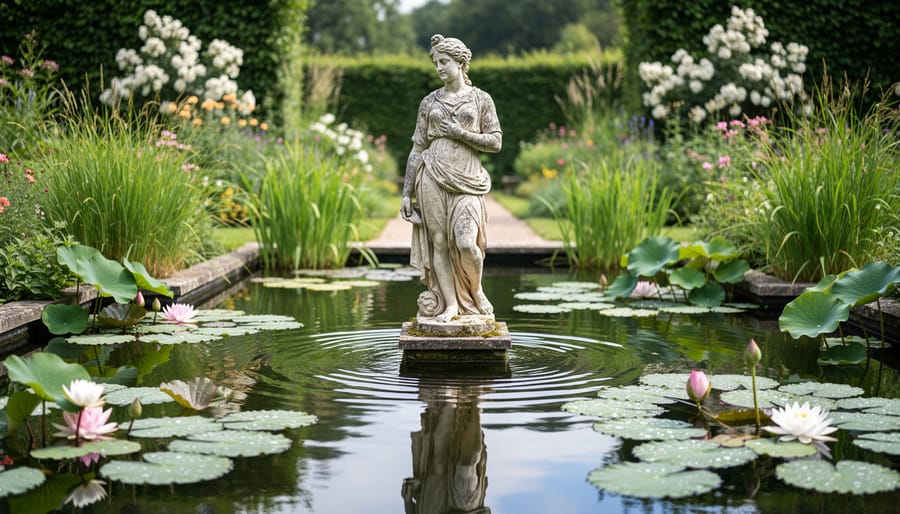
Stone and Concrete Statuary
Stone and concrete statuary brings timeless elegance to your water garden while standing up to whatever Mother Nature throws its way. I’ve had a lovely Buddha figure sitting beside my pond for over eight years now, and it looks just as beautiful as the day I placed it there—moss-covered patina and all!
These durable materials are perfect for water gardens because they actually improve with age. While resin fades and metal rusts, quality stone and concrete develop character through weathering. Buddha figures are incredibly popular around ponds, offering a sense of tranquility that complements flowing water perfectly. Wildlife sculptures like herons, frogs, and turtles add playful naturalism, while mythological characters connect your garden to classical water garden symbolism.
When choosing statuary, consider the weight—these pieces are heavy, which means they stay put during storms but require careful placement planning. Position larger pieces on level, compacted ground or concrete pavers to prevent sinking. I learned this the hard way when my concrete heron slowly tilted into the pond over one rainy season!
Material quality matters tremendously for longevity. Look for cast stone or concrete with proper sealant applied. Cheaper pieces often contain air pockets that crack during freeze-thaw cycles. Natural stone like granite or limestone lasts generations but costs considerably more.
For placement, create focal points at pond edges or garden intersections where statuary draws the eye naturally. Group smaller pieces in odd numbers, and ensure taller sculptures don’t overshadow your water features. Remember, these ornaments work beautifully year-round, providing structure even when plants die back in winter.
Metal Sculptures That Develop Character
There’s something magical about watching a metal sculpture transform over the seasons, developing its own unique character as nature works its artistic touch. When I first placed a copper heron near my pond, I worried about the weathering. Now, five years later, that gorgeous blue-green patina tells the story of countless rainstorms and morning dews, and I wouldn’t change it for anything.
Copper sculptures are particularly stunning near water features. They start with a warm, penny-bright glow and gradually develop that sought-after verdigris patina. Think of the Statue of Liberty, that beautiful blue-green color is copper doing what it does best. Near your pond, copper cranes, fish, or abstract art pieces will develop similar character, usually within 6-18 months depending on your climate and humidity levels.
Bronze offers a similar aging process but with deeper, richer tones. Bronze frogs, turtles, or koi sculptures placed near splashing fountains will darken first, then develop subtle green highlights. The transformation is slower than copper but equally rewarding, and bronze is incredibly durable for outdoor placement.
Now, let’s talk about iron and steel. I know rust sounds like the enemy, but hear me out. Intentional rusting, called weathering steel or Corten steel, creates a protective rust layer that actually prevents further corrosion. Those gorgeous burnt orange and deep brown tones look absolutely stunning against green foliage and blue water. Modern garden artists create dragonflies, cattails, and abstract pieces specifically designed to rust beautifully.
The key is choosing pieces made for outdoor weathering, not cheap metal that will deteriorate into flaky mess. Quality weathering steel develops a stable patina that protects the metal underneath while looking like living art.
Moving Water Features as Living Art
Decorative Fountains and Spitters
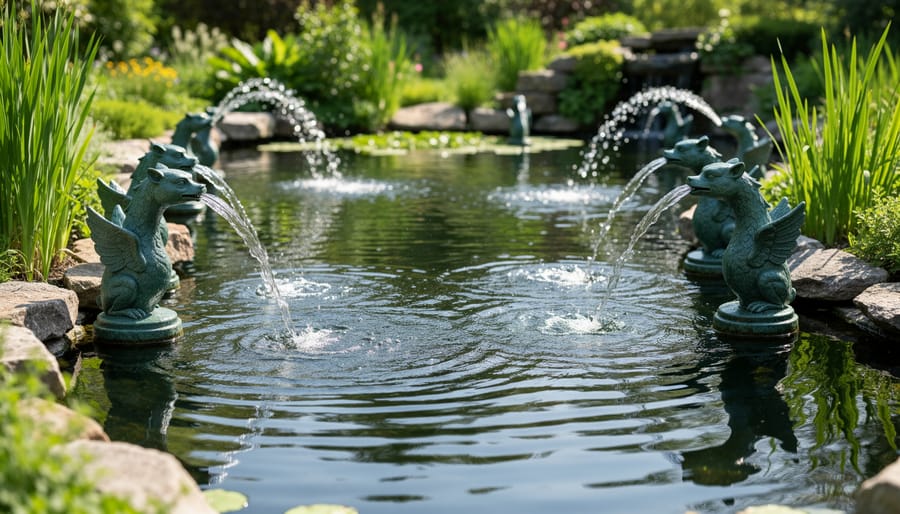
Fountains bring movement, sound, and visual interest to your water garden, creating focal points that naturally draw the eye. Whether you’re drawn to whimsical animal-shaped spitters or elegant artistic fountain designs, there’s a style to complement every garden aesthetic.
Animal spitters are enduringly popular, with frogs, fish, turtles, and herons being classic choices. These charming pieces typically sit at pond edges or on rocks, gently arcing water back into your pond. I’ve found that smaller spitters work wonderfully for intimate garden spaces, while larger installations suit expansive ponds beautifully.
For something more contemporary, consider abstract or geometric fountain designs. These modern pieces create stunning water effects through multiple tiers, bubbling urns, or sleek columns. They work particularly well in formal garden settings or alongside architectural features.
When selecting fountains, pump requirements are crucial. Match your pump’s flow rate to the fountain’s specifications to ensure proper water circulation. Most small to medium fountains operate efficiently with pumps between 200-800 gallons per hour. Remember that taller fountains and those with multiple water streams require stronger pumps.
Integration with your pond ecosystem matters too. Position fountains where water movement benefits oxygenation without disturbing fish spawning areas or delicate plants. The splashing action naturally aerates water, supporting beneficial bacteria and keeping your pond healthy while creating that soothing water music we all love.
Waterfalls and Rock Arrangements
There’s something magical about watching water tumble over carefully placed stones, and the best part is that those rocks themselves become beautiful focal points in your yard. I discovered this myself when I arranged my first waterfall—the stones I agonized over positioning turned out to be just as stunning as the flowing water itself.
The beauty of rock arrangements lies in their dual purpose. They’re functional, directing water flow and creating those delightful splashing sounds we love, but they’re also sculptural elements that add visual interest even when the pump isn’t running. Think of each stone as a brushstroke in a larger landscape painting.
Start by selecting rocks of varying sizes and textures. Flat, shelf-like stones create dramatic ledges for water to cascade over, while rounded river rocks add a softer, more natural appearance at the base. I always recommend gathering more stones than you think you’ll need—having options during placement makes all the difference.
Position your largest anchor stones first, slightly tilting them backward so water flows over the front edge rather than underneath. This creates that sheet-like curtain effect that catches sunlight beautifully. Layer smaller rocks around these anchors, tucking them in naturally as you’d find them in a mountain stream.
Don’t aim for perfect symmetry. Nature rarely creates identical patterns, and your waterfall will look more authentic with intentional irregularity. Nestle moss between stones, tuck small plants into crevices, and let some rocks jut out unexpectedly. These artistic imperfections transform a simple water feature into a captivating ornamental centerpiece.
Nature-Inspired Ornamental Elements
Driftwood and Natural Wood Accents
There’s something wonderfully organic about incorporating driftwood and natural wood into your water garden. I discovered this years ago when a storm knocked down a branch near my pond, and instead of hauling it away, I positioned it along the edge. It instantly gave the space a wild, natural look that blended beautifully with the water.
The key to using wood safely around your pond is proper preparation. Fresh wood can leach tannins and other compounds that discolor water and affect pH levels. Always choose hardwoods like oak or cedar that naturally resist decay, and let them weather outdoors for several months before placing them near water. If you’re eager to get started, you can speed up the process by soaking wood pieces in a separate container, changing the water daily until it runs clear.
When positioning driftwood, think about creating natural-looking focal points. A piece arching over the water’s edge makes a perfect perch for frogs and dragonflies while adding vertical interest. Partially submerged logs create cozy hideaways for fish and beneficial bacteria colonies. Just ensure any submerged wood is thoroughly waterlogged first so it doesn’t float unexpectedly.
Avoid treated lumber, painted wood, or anything with hardware attached, as these materials can release harmful chemicals. Stick with genuine driftwood from beaches or rivers, or create your own by weathering untreated pieces. Your pond will thank you with crystal-clear water and a gorgeous rustic aesthetic.
Decorative Stones, Pebbles, and River Rocks
One of my favorite transformations came from simply rearranging the stones around my pond’s edge. I’d been looking at the same gray rocks for months when I discovered that mixing in some warm river pebbles and creating deliberate patterns completely changed the whole feel of my water garden.
Decorative stones offer incredible versatility for your pond landscape. Start by considering color combinations that complement your surroundings. White marble chips create stunning contrast against dark pond liners, while earthy browns and tans blend naturally with garden beds. I love usingpolished black stones near waterfalls because they glisten beautifully when wet, creating that “just after the rain” sparkle all day long.
Size variation adds dimension and visual interest. Try grouping larger river rocks as anchor points at corners or near fountain bases, then fill surrounding areas with medium-sized stones. Finish edges with smaller pebbles to create smooth transitions between your pond and garden beds. This layered approach looks intentional and professional without requiring any special skills.
Creating patterns is easier than you might think. Simple spirals using contrasting stone colors work wonderfully around plant pots or statuary bases. Alternating bands of light and dark pebbles along borders adds rhythm to longer stretches. I once made a simple wave pattern using three colors of stones along my pond’s edge, and guests always ask about it.
For practical borders, stones serve double duty as decorative elements and functional edging. They help define your pond’s perimeter, prevent soil erosion, and provide stable footing for maintenance work. Layer them two or three stones deep for better stability and a more substantial appearance that holds up through seasons.
Whimsical and Personalized Touches
Garden Gnomes, Fairies, and Fantasy Creatures
Garden gnomes have been delighting homeowners for generations, and they’re perfect for creating a whimsical atmosphere around your pond or water garden. These charming characters bring instant personality to any outdoor space, and kids absolutely love discovering them tucked among the plants or perched near water features.
I’ve found that placing a small gnome family near my pond’s edge creates wonderful conversation starters with visitors. You might position a fishing gnome on a rock by the water, or nestle a sleeping gnome beneath a hosta plant. The key is making these placements look natural and intentional, not randomly scattered.
Fairies offer even more delicate magic to your water garden. Fairy figurines work beautifully when grouped to tell a story—perhaps a fairy tea party on a flat stone, or a lone fairy reading by a miniature pond. You can build entire fairy gardens around your water feature using tiny furniture, miniature bridges, and small accessories. This creates layers of discovery that keep drawing the eye.
Dragons, frogs with crowns, and whimsical turtles are also fantastic choices that tie directly into water themes. These fantasy creatures appeal to children while maintaining enough artistry to please adults. The secret is choosing quality pieces with weather-resistant finishes, as these ornaments near water need extra durability against moisture and splashing.
DIY and Upcycled Ornaments
There’s something incredibly satisfying about transforming forgotten treasures into beautiful pond decorations. I’ve turned old teapots into charming planters around my water garden, and they’ve become conversation starters every time visitors stop by.
Start by raiding your garage or local thrift stores for items with character. Vintage watering cans make wonderful planters when positioned near pond edges, while cracked ceramic bowls can be stacked to create whimsical toad houses. Old metal colanders work beautifully as hanging baskets for trailing plants that complement your water feature.
For a project that never fails to delight, try creating mosaic stepping stones using broken tiles or dishes. Mix concrete, press your colorful pieces into the surface, and you’ll have custom pathway markers within a weekend. These look especially magical when they catch sunlight near the water’s edge.
Wine bottles can transform into elegant garden borders or wind chimes when strung together with fishing line. I’ve even seen creative gardeners turn old rubber boots into quirky planters, though I always make sure any repurposed items are thoroughly cleaned and won’t leach harmful substances into the pond.
The beauty of upcycling is that each piece tells a story while keeping items out of landfills. Plus, these one-of-a-kind creations give your water garden a personality that store-bought ornaments simply can’t match.
Lighting as Ornamental Magic
When the sun sets, your water garden doesn’t have to disappear into darkness. Strategic lighting transforms ordinary ponds into magical evening destinations, and let me tell you, there’s something absolutely enchanting about watching your water feature glow as twilight deepens.
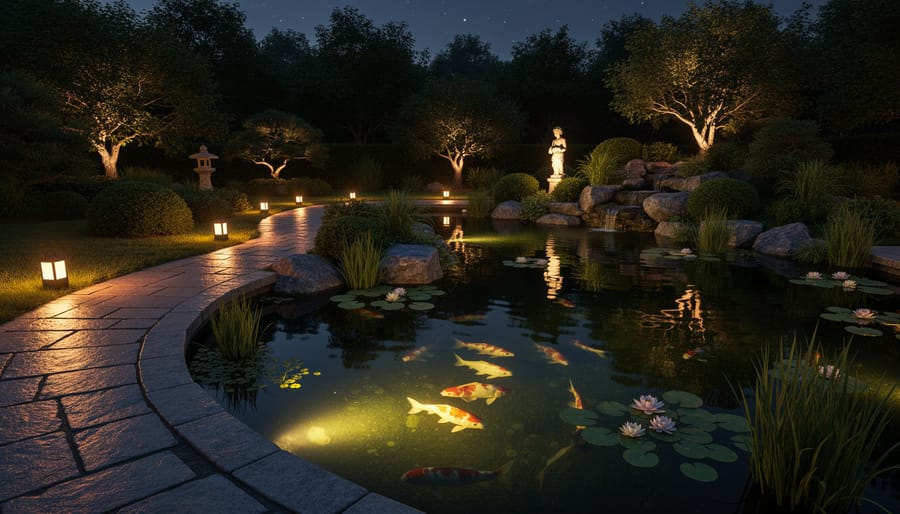
Think of lighting as ornamental magic that serves double duty. Not only does it create stunning visual effects, but it also extends your enjoyment of the water garden well into evening hours. I remember the first time I installed submersible lights in my pond—suddenly my koi became performers in their own nighttime theater, gliding through beams of light like underwater dancers.
Submersible LED lights offer the most versatile options for pond illumination. These waterproof wonders can be placed directly in the water, tucked behind waterfalls, or positioned to uplight fountain sprays. Many come with color-changing capabilities, letting you shift from warm amber tones to cool blues depending on your mood. The best part? Modern LED technology means these lights use minimal electricity and last for years.
Floating solar lights provide an effortless approach that’s perfect for beginners. These decorative orbs drift across your pond’s surface, soaking up sunshine during the day and automatically glowing at dusk. They require zero wiring and create a whimsical, fairytale atmosphere that guests absolutely love.
For highlighting specific ornaments or plantings around the pond’s edge, consider spotlights or path lights. Position them to cast dramatic shadows or illuminate architectural elements like statuary and bridges. Low-voltage systems are safer around water and surprisingly simple to install yourself.
One practical tip from experience: always test your lighting placement before finalizing the installation. Walk around your viewing areas at night to ensure the illumination creates the effect you’re after without creating harsh glare. The goal is enchantment, not interrogation room brightness. Start with fewer lights than you think you need—you can always add more, but removing excess fixtures feels wasteful.
Floating and Submerged Ornamental Features
Adding floating and submerged ornaments opens up a whole new dimension of creativity in your water garden! These decorations bring life and movement to your pond while creating delightful surprises both above and below the surface.
Floating ornaments are probably the easiest to start with. You’ve got classic options like ceramic lotus flowers, decorative lily pads, and floating balls that gently drift across your pond’s surface. I absolutely love watching my floating turtle ornament slowly cruise around the pond—it always gets a smile from visitors who do a double-take! Solar-powered floating lights are another fantastic choice, especially if you enjoy your pond in the evenings. They charge during the day and create a magical glow after sunset without any wiring hassles.
For submerged decorations, think about colorful ceramic fish, underwater sculptures, or even sunken treasure chests that peek through the water. These pieces add depth and create interesting focal points when you look down into your pond. Your fish might even investigate them, which is fun to watch. Just make sure whatever you choose is specifically labeled as aquarium-safe or pond-safe—regular outdoor ornaments might have coatings or materials that could harm your aquatic friends.
One tip I learned the hard way: secure your submerged ornaments properly! Use fishing line or special aquatic adhesive to anchor them, otherwise they might float up unexpectedly. Also, choose pieces with smooth surfaces rather than sharp edges to protect your fish. When placing these ornaments, consider sightlines from different viewing angles around your pond. You want them visible but not overwhelming the natural beauty of your plants and water.
Choosing Ornaments That Support Your Ecosystem
When you’re shopping for ornaments or planning DIY projects, think of yourself as a guardian of your pond’s health. The prettiest decoration isn’t worth much if it’s slowly poisoning your fish or creating a maintenance nightmare! Let me share some friendly guidelines that’ll keep both you and your aquatic friends happy.
Material safety should be your first consideration. Stick with pond-safe materials like natural stone, ceramic glazes specifically labeled as non-toxic, stainless steel, and sealed concrete. I learned this the hard way years ago when a gorgeous copper fountain turned my pond water greenish-blue—beautiful color, terrible chemistry! Avoid untreated metals that can leach harmful substances, especially copper, zinc, and lead. If you’re eyeing a vintage piece or something from a general garden center, do a quick online search about its material composition. When in doubt, seal it with a pond-safe sealant or keep it on the pond’s edge rather than in the water.
Algae growth is another practical concern. Ornaments with lots of crevices and horizontal surfaces can become algae magnets, which isn’t necessarily bad for supporting pond ecosystems, but might require more frequent cleaning. Smooth surfaces are easier to maintain, while textured pieces add character but need regular brushing during summer months.
Think about maintenance access too. Don’t block your filter access with a massive Buddha statue or position decorations where they’ll make net-work difficult during leaf season. Leave pathways around your pond for routine care.
For fish-friendly choices, avoid ornaments with sharp edges, small openings where curious koi might get stuck, or pieces that could topple and injure your fish. Hollow decorations like overturned urns actually make wonderful fish shelters and spawning spots—just ensure they’re stable and won’t trap fish inside.
Placement Strategies for Maximum Impact
Placing your ornaments thoughtfully can mean the difference between a harmonious water garden sanctuary and a cluttered space that misses the mark. I learned this lesson the hard way when I first started decorating my pond—I enthusiastically placed every statue and stone I loved right at the water’s edge, only to realize my garden looked more like a crowded gift shop than a peaceful retreat!
The key to successful ornament placement starts with identifying your primary viewing angles. Walk around your pond and notice where you spend most of your time observing it. Do you admire it from your deck? Through a kitchen window? While sitting on a nearby bench? These perspectives should guide where you position your focal pieces. Place your most eye-catching ornaments in direct sightlines from these favorite spots, creating natural points of interest that draw the eye.
Scale matters tremendously when working with water features. A tiny figurine positioned beside a sprawling pond will simply disappear, while an oversized statue in a small space can feel overwhelming. As a general rule, larger ponds can accommodate bigger statement pieces, while intimate water gardens benefit from delicate, appropriately sized decorations. Consider the rule of thirds—position your main ornament about one-third of the way into your garden space rather than dead center, which creates more visual interest.
Creating depth involves layering ornaments at different distances from the water’s edge. Place taller pieces like statues or obelisks toward the back, medium-height elements in the middle ground, and lower items like decorative stones or ground-level lights closer to the front. This layering technique gives your garden dimension and prevents that flat, lined-up appearance that screams “just decorated.”
Resist the temptation to overcrowd your space. A common mistake I see among water gardening enthusiasts is thinking more equals better. Instead, embrace negative space—those open areas actually help your ornaments shine by giving the eye places to rest. Start with just two or three key pieces, then gradually add more if needed. You can always add, but removing creates those awkward empty spots.
Seasonal rotation keeps your garden fresh throughout the year. I swap out lighter, whimsical pieces in summer for more substantial, weathered elements in autumn. This rotation prevents visual fatigue and protects delicate ornaments from harsh weather. Create a small storage system for off-season items so rotating becomes effortless rather than a dreaded chore.
Finally, maintain cohesion by selecting a unifying theme or color palette. Whether you choose a Zen aesthetic with natural stones and bamboo, a whimsical fairy garden approach, or a classical design with formal statuary, stick with elements that complement each other. This doesn’t mean everything must match perfectly—variety adds interest—but there should be a common thread tying your choices together.
Your water garden is a living canvas that changes with the seasons, and choosing ornaments for it should be just as dynamic and personal as your own taste. Don’t feel pressured to create a magazine-perfect scene overnight. I’ve learned through my own pond adventures that some of my favorite ornament placements happened by accident or evolved over several seasons as my plants matured and the ecosystem found its balance.
The beauty of water garden ornaments is that they’re never really finished. You might start with a single stone lantern this year, add a few floating solar lights next summer, and gradually build a collection that tells your garden’s unique story. What matters most is that each piece brings you genuine joy when you walk past your pond in the morning or unwind beside it in the evening.
Remember, your ornaments are there to enhance the living ecosystem, not overshadow it. Choose pieces that make your heart sing while respecting the fish, plants, and beneficial bacteria that call your water garden home. Start small if you’re feeling uncertain. Place one ornament, live with it for a week, and see how it feels. You can always move things around or add more as your confidence grows. Your water garden is waiting for those special touches that only you can bring to it.